Deep In A Florida Forest, A Crystal-Clear Spring Stays 72 Degrees All Year
I packed a sandwich and low expectations, figuring this would be one more quick swim to escape a hot afternoon. Florida had other plans: deep in a national forest, a spring rises so clear that fish seem to hang in midair, and the water holds the same cool temperature every month of the year.
One step down the stairs and the sticky heat simply disappears. Bring a towel, bring snacks, and give this place the whole day.
A Spring-Fed Pool Inside the Ocala National Forest
Pine trunks crowd both shoulders of County Road 445 for mile after mile, and the scent of warm needles drifts through any open window. Then a modest entrance sign appears, easy to miss at highway speed.
Beyond that gate lies Alexander Springs Recreation Area, a spring-fed swimming hole, picnic ground, and campground inside the Ocala National Forest.
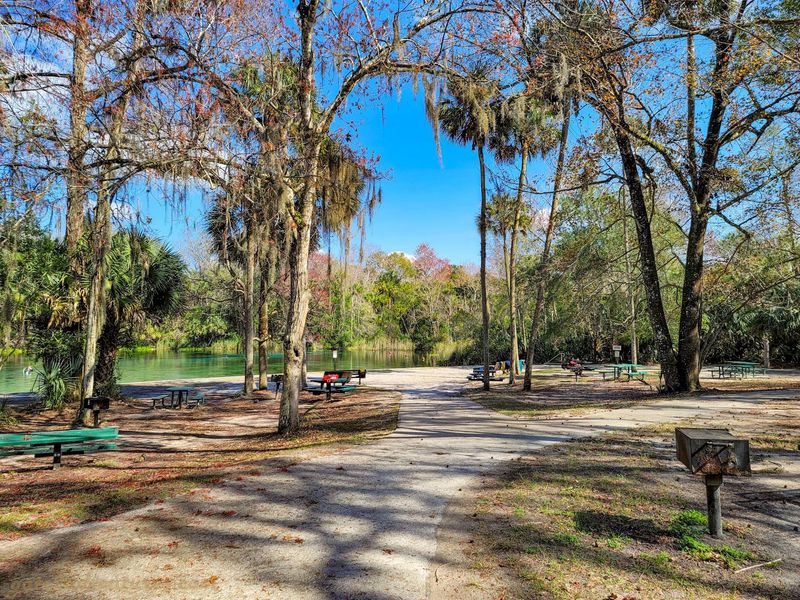
Nothing about the arrival suggests anything unusual. There is a paved parking lot, a bathhouse with restrooms and changing rooms, a small shop, and a lawn scattered with picnic tables under tall trees.
The whole setup could pass for any county park in the state.
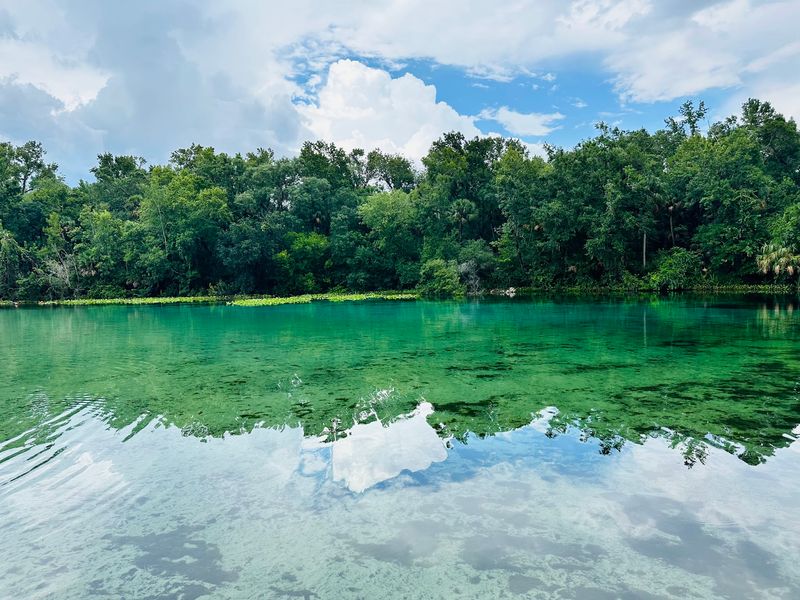
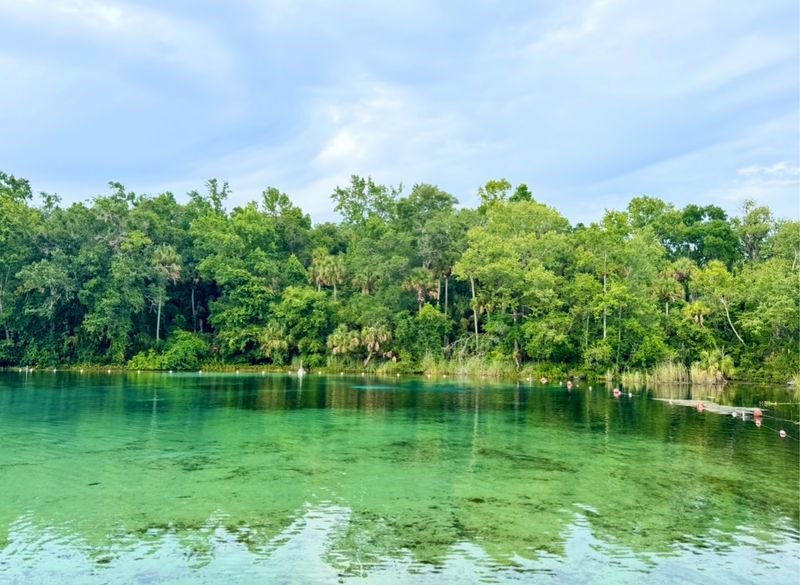
Walk past those tables, though, and the ground slopes toward a wide bowl of blue-green water edged with pale sand. Fish drift over the bottom in plain view while sunlight bounces off the surface in shifting patterns.
The jump from ordinary parking lot to glassy pool takes only a short stroll, and it lands with a jolt.
Set the GPS for Altoona and plan on a little over an hour of driving north from Orlando, with the final stretch running through thick forest. The park sits at 49525 County Road 445, Altoona, Florida 32702.
Roots in Florida’s Oldest National Forest
The Ocala National Forest dates to 1908, which makes it the oldest national forest east of the Mississippi River. Alexander Springs sits inside that protected land, so the spring has been wrapped in public forest for well over a century.
What does that mean on the ground? Mainly, it means no condos, no strip malls, and no billboards anywhere near the water.
The drive in passes stands of pine and scrub, and the park itself is ringed by live oaks and forest edges rather than parking garages.
Stand at the top of the swimming area and look around. The roof of branches, the white sand, and the steady flow heading out into the spring run make up a picture that probably looks much as it did long before anyone thought to add picnic tables.
Plenty of springs in the state sit a short hop from interstates and busy towns. Reaching Alexander Springs requires a deliberate trip into the woods, and the reward for that effort is a setting where birdsong carries farther than traffic noise.
The U.S. Forest Service oversees the recreation area today, and the grounds stay tidy, with bathhouses kept impressively clean.
Seventy-Two Degrees, Every Single Month
Forget checking the forecast for water temperature. The spring holds steady at 72 degrees all year, whether the air outside is a sticky August afternoon or a crisp January morning.
No heater, no pump, and no filter system does the work.
That first plunge on a hot day lands like a cold towel across the shoulders. Breath catches for a second, skin tingles, and then the body settles in and the water starts to feel like relief instead of shock.
Kids tend to squeal on the way in and then refuse to come out.
Alexander Springs ranks as a first magnitude spring, the top category in Florida’s classification system for springs. Millions of gallons rise from the vent every day and roll downstream into the spring run, constantly refreshing the pool.
In winter the equation flips. When the air dips into chilly territory, the spring feels mild by comparison, and the swimming area turns into a calmer, less crowded place to float.
That unchanging temperature explains why the pool works in every season, not only during the steamy months. A dip in March feels about the same as a dip in July, which is a rare kind of reliability.
Stairs, Shallows, and a Deep Blue Drop
How deep is it? That depends entirely on where you stand.
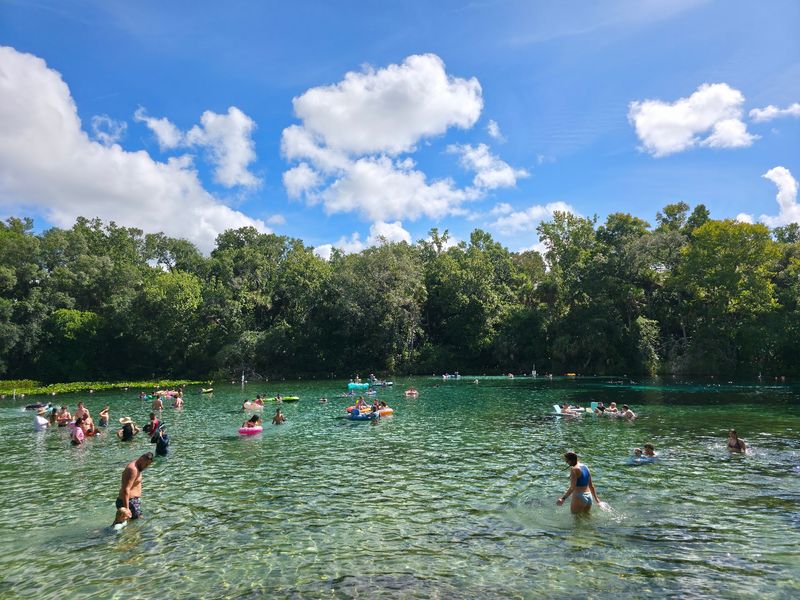
The roped-off swimming area has a gently sloped shallow end where adults can stand easily and little ones can splash, plus a deeper section for stronger swimmers.
Entry comes by way of stairs, and the first step down is deeper than expected, so a steady hand on the rail helps. Water shoes make the sandy bottom and any rough patches more comfortable underfoot.
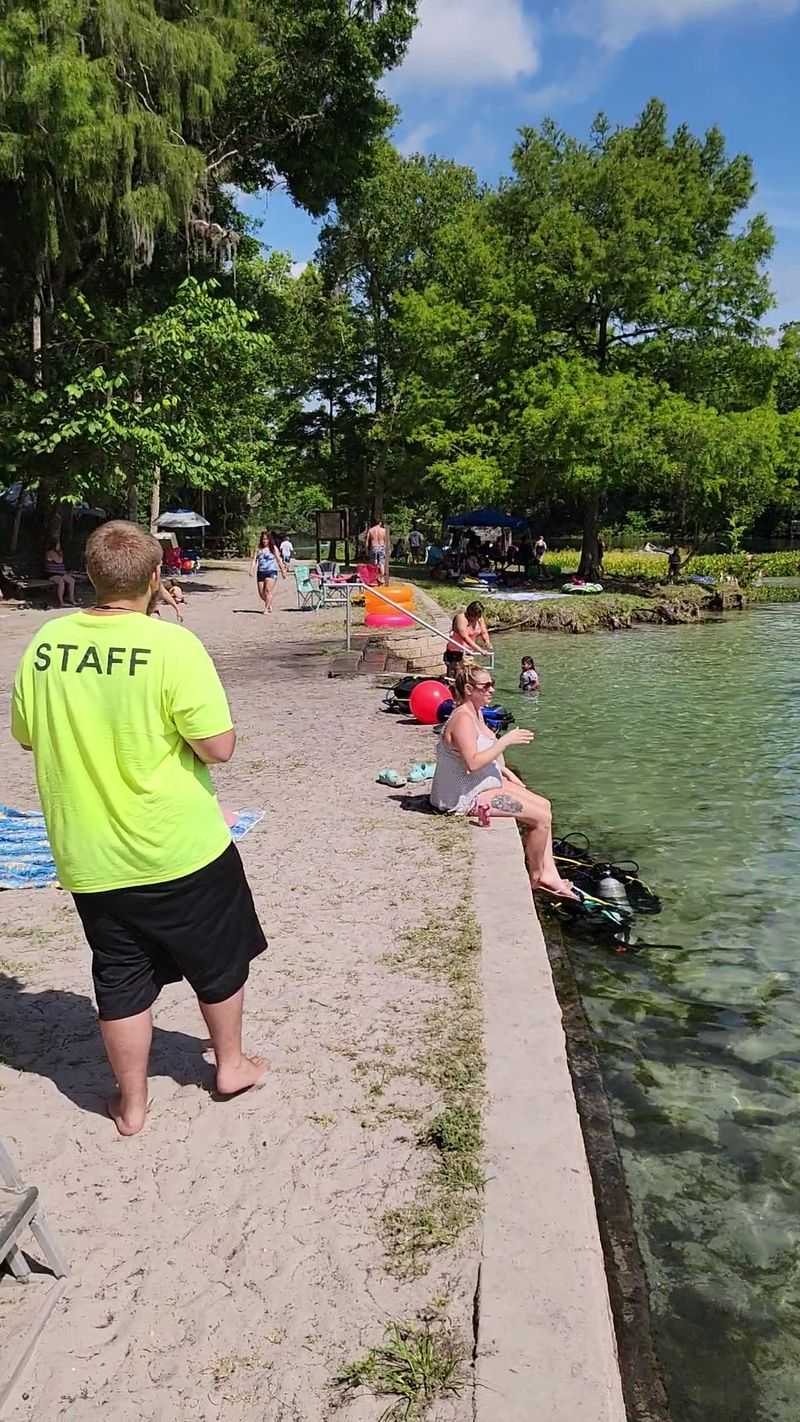
A lifeguard watches from the edge during swimming hours. The fenced area has no strong current, which keeps floating relaxed rather than a workout, and swimmers drift on their backs gazing up at the canopy overhead.
Out in the deep end, the color changes. Sand gives way to darker blue, the bottom seems to fall away, and the whole space starts to feel like another world, one that can stir surprising emotion in a first-time swimmer.
Bring goggles even for a casual swim. The generous size of the area leaves plenty of room to explore, and the visibility turns a basic dip into a peek at fish and turtles going about their day just a few feet away.
Snorkels, Scuba Tanks, and Free Dives
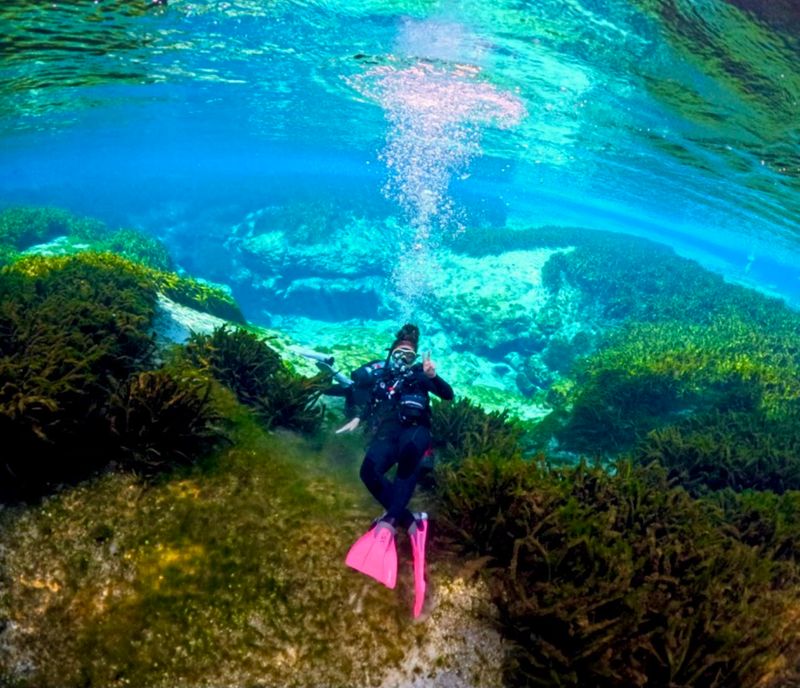
Most swimming holes in Florida ask scuba divers to look elsewhere. Alexander Springs takes the opposite approach and welcomes them on a regular basis, alongside snorkelers and free divers.
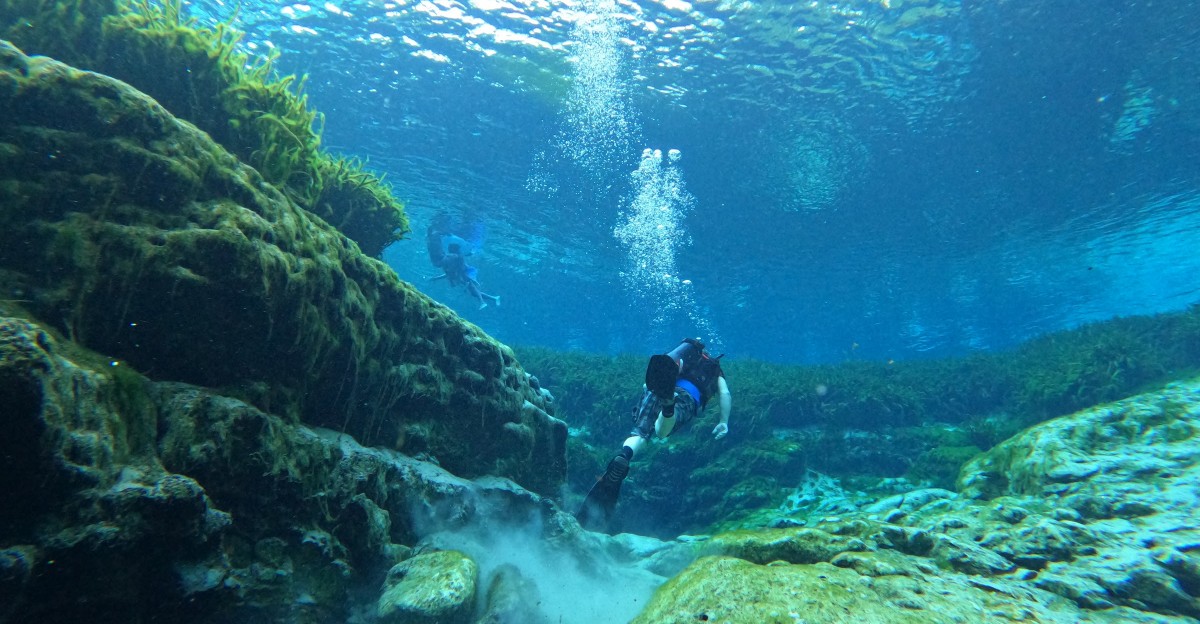
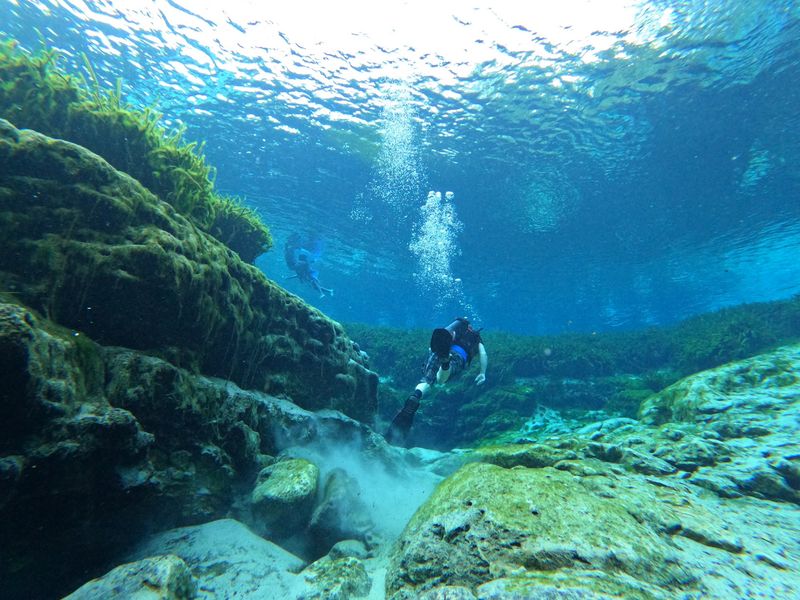
Slip a mask on and the surface chatter vanishes. Below, sunlight ripples across white sand, fish hover in loose groups, and the edge of the deep section fades into rich, inky blue.
Visibility makes the difference. Fish and underwater movement show up plainly even from shore, so once your face is in the water the view stretches remarkably far before the blue swallows it.
Even an inexpensive mask from a big-box store turns the pool into a living aquarium.
Snorkelers, start in the shallow end to get comfortable, then drift toward deeper water once the breathing rhythm settles. Free divers get a spot to practice breath-hold descents with no boat traffic and no strong pull.
Divers planning to haul tanks should confirm current rules with the park before loading the car, since policies can change. Everyone else can simply float on the surface and watch bubbles rise from below, which is its own kind of entertainment on a lazy afternoon.
A Paddle Down the Spring Run
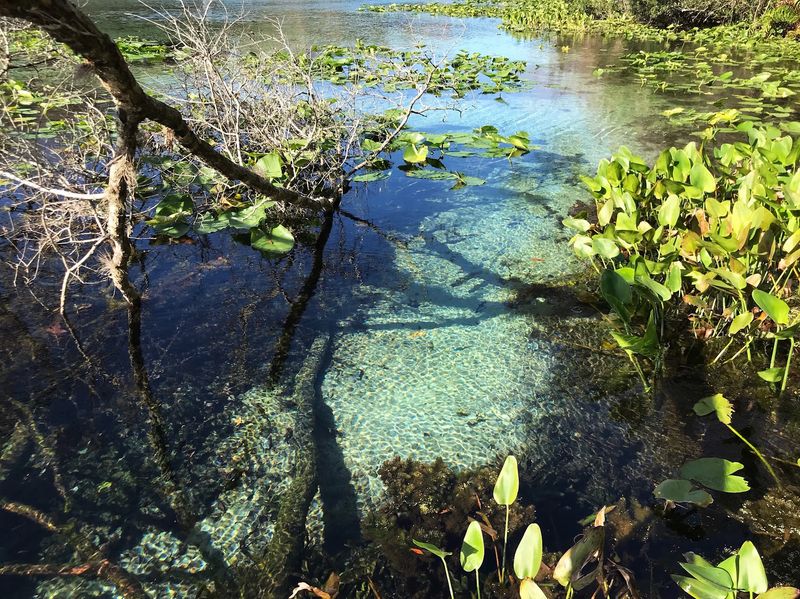
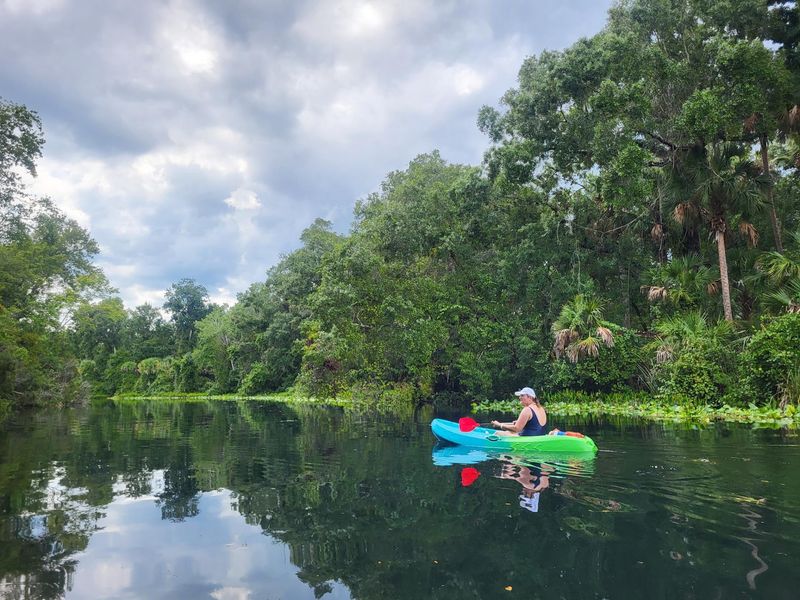
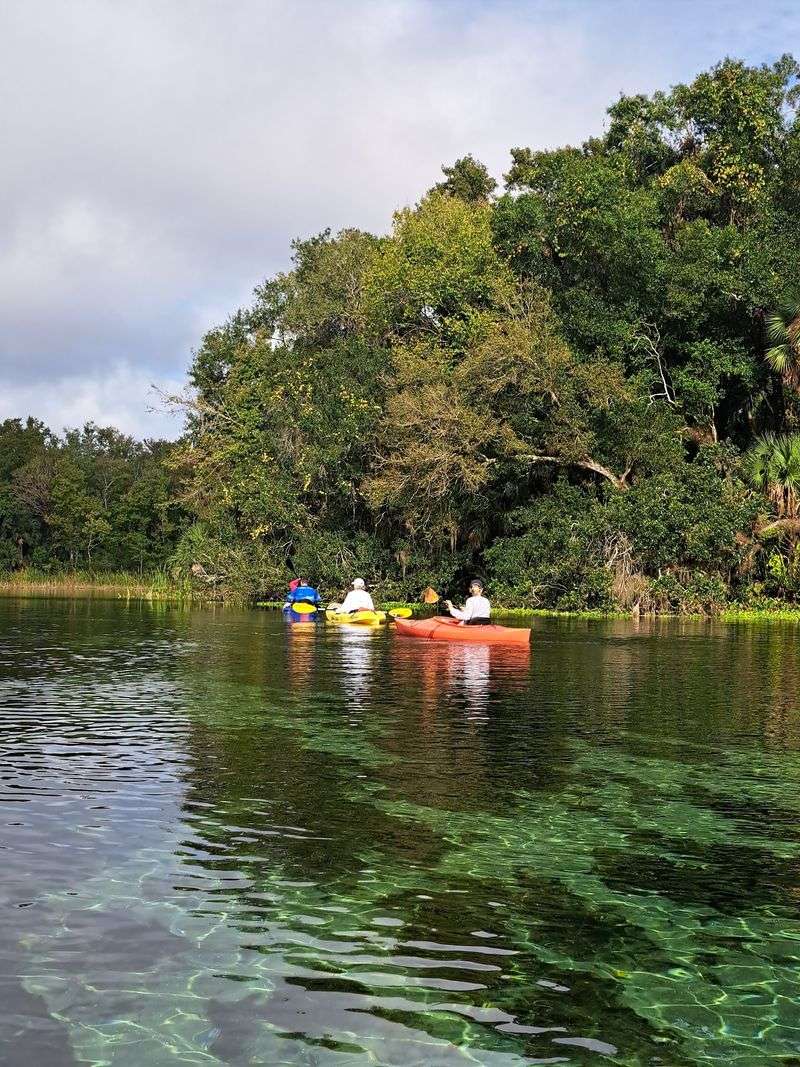
Two kayaks slide off the launch and into the current, and within minutes the swimming area’s noise fades behind a bend. The spring run heads out through the forest, cool and transparent, with trees leaning in from both banks.
From the swimming area to the County Road 445A bridge is about 1.25 miles, making a round trip of roughly 2.5 miles. The trip out rides with the current, while the return means paddling against it, so budget extra time and energy for the second half.
Nearby Silver Glen Springs shares its water with motorboats. Here the run stays hushed, and on a weekday the river can feel almost empty, with only a couple of other paddlers passing by.
No boat? No problem.
Kayaks, canoes, and paddleboards are available to rent right at the park, so nobody has to own gear or strap anything to the roof. Campers bringing their own craft should know that cars cannot drive down to the launch, and a set of kayak wheels saves a lot of grunting on the uphill walk back along the paved road.
Otters, Turtles, and the Occasional Gator
A splash near the bank, a flash of wet brown fur, and suddenly four otters are tumbling through the current like kids at recess. Moments like that happen along the spring run often enough that a waterproof camera belongs in the bag.
Fish glide through the swimming area in full view, turtles sun themselves on logs, and birds work the banks and treetops throughout the day. Armadillos wander the grounds too, and baby armadillos start out pink.
Then there are the alligators. The spring has a few resident gators, and one occasionally cruises through the designated swimming area itself.
Swimming resumes once the animal moves along, and a lifeguard keeps watch the whole time.
Treat every gator sighting with respect. Keep your distance, follow lifeguard directions, and never feed wildlife of any kind.
Early morning and late afternoon bring softer light and a quieter park, a good window for spotting creatures along the edges. Paddlers on the run have the best odds of seeing otters, turtles, and wading birds, since the river corridor offers far more room for animals to roam than the busy pool.
Where Lunch Happens Under the Live Oaks
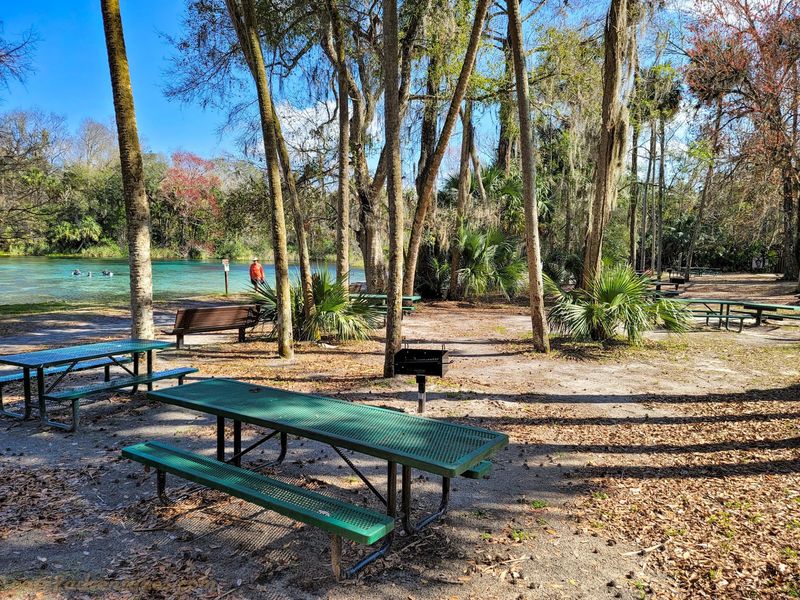
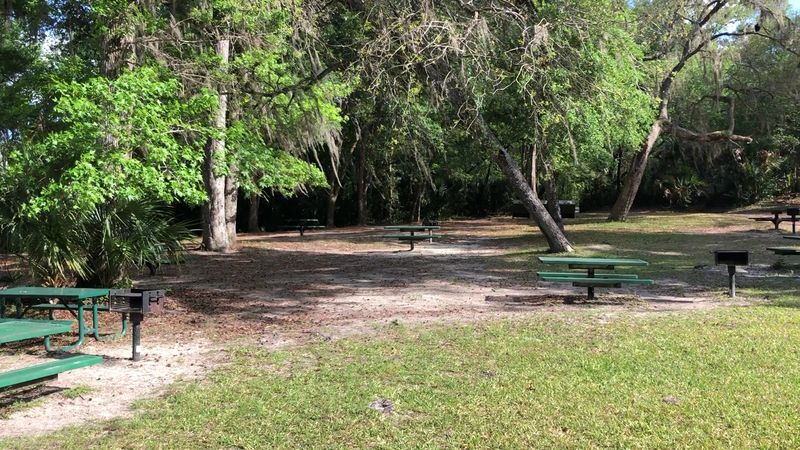
A large shaded picnic area sits between the parking lot and the swimming area, packed with tables, grills, and seating. Live oaks and other hardwoods throw deep shade across much of it.
Pack a cooler the night before. Hot dogs on the grill, a bag of chips, cold watermelon, and a jug of lemonade make an easy lunch between swims, and nobody has to leave the park to eat.
Around noon on a summer weekend, smoke curls up from several grills at once while towels dry over the backs of benches. Kids dart from the table to the stairs and back, dripping the whole way.
Somebody always forgets the ketchup.
Larger groups can reserve one of a couple of pavilions, handy for birthdays or reunions. A small shop near the entrance covers forgotten basics, and restrooms, changing rooms, and showers sit close by, kept spotless.
Need a strategy? Claim a table early.
The shadiest spots near the water fill first, and a table under thick branches makes the difference between a pleasant lunch and a sweaty one in July.
A Night in the Forest Campground
Crickets start up as the sun drops, and the smell of campfire smoke drifts between sites. Spending the night at Alexander Springs turns a day trip into something slower and more unhurried.
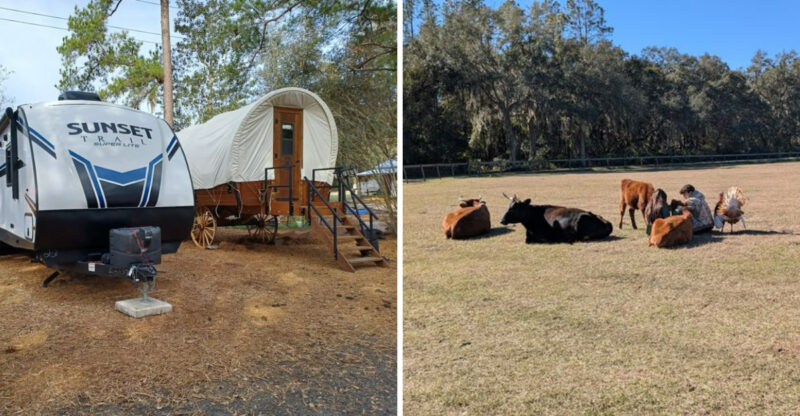
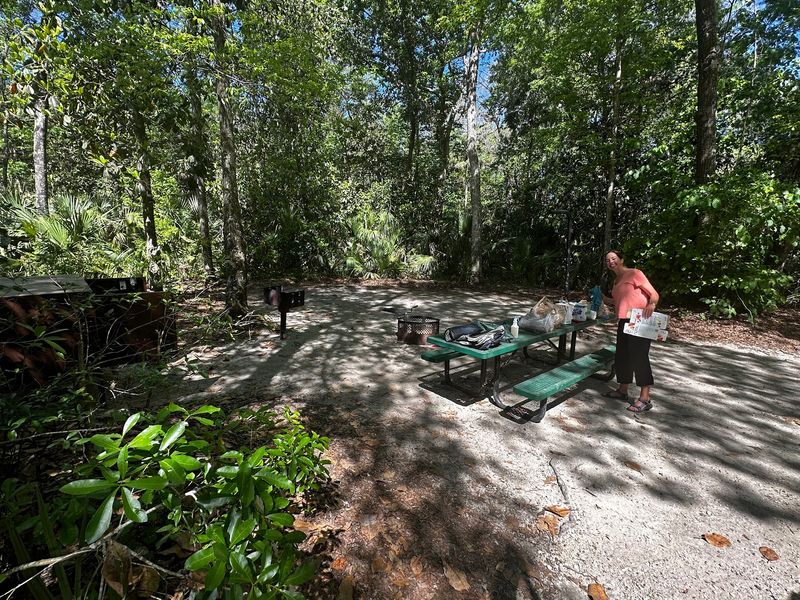
Each campsite comes with a fire ring, a tent pad, a picnic table, and a bear-safe cabinet for food storage, a reminder that this is honest forest country. Drinking water faucets sit throughout the loop, and every site is convenient to the bathhouses.
Don’t expect hookups. Sites have no electricity, so RV campers should arrive prepared to run without shore power.
Tent campers get plenty of room, especially on corner lots, and big live oaks shade many sites from the summer heat.
Book ahead. An advance reservation is required for camping, and the office cannot set one up for walk-ins at the gate.
Showers run warm, though they operate on a push button that shuts off after a short burst, so plan on pressing it more than once.
A large dumpster handles trash, and packing out every scrap keeps the sites pleasant for the next crew rolling in.
Bug Spray, Storm Clouds, and Other Fine Print
Ever been chased by a deer fly? Around the campground and wooded edges, these pests can be aggressive, and horse flies join in with a bite that stings.
Ticks and fire ants turn up in grassy and wooded areas too. A solid insect repellent, long socks on any walk through the brush, and a careful check of skin and scalp after leaving the grass go a long way toward a comfortable trip.
Summer brings its own soundtrack: the low rumble of afternoon thunder rolling across the forest. Storms can build quickly in Florida, and nobody wants to be in open water when lightning is near.
Check the forecast before driving out, especially during hurricane season from June through November, and contact the park if conditions look shaky. Weather refunds are not a given, so a quick look at the radar can save both money and a long, disappointing drive.
None of that should scare anyone off. A bit of preparation keeps the focus on the water, where the bugs matter far less.
Toss spray, sunscreen, and a light rain jacket into the car and forget about them until needed.
Who Feels at Home by the Spring
Loud water parks and packed beach towns sit a couple of hours away, but the mood here runs in the opposite direction. Calm is the default setting.
Birdsong fills the gaps between conversations, and the park manages crowd levels so the swimming area rarely feels jammed.
Families with young children have an easy time of it. Shallow water, a lifeguard, clean bathrooms, and shaded picnic tables cover most of what a parent needs for a full day, and the staff stay friendly and patient with small kids asking a hundred questions.
Photographers, bring a polarizing filter. The shifting reflections and blue-green tones change constantly as clouds pass, with morning and late afternoon light offering the softest glow.
Even a phone camera captures the color well.
Dogs are welcome in designated areas on a leash, though pets are not allowed in the swimming area itself. Paddlers, divers, and campers each find their own corner of the park, and the whole place works as well for a short afternoon float as for a weekend stay.
Anyone craving nonstop action may find it sleepy. For everyone else, quiet is the point.
Planning the Drive, the Gate, and the Clock
Gates open in the morning and close by early evening every day of the week, so the park works best as a full-day outing rather than a sunset stop. Hours can shift, so check the Forest Service page before heading out.
Arrive early. On hot weekends the swimming area can reach its crowd limit, and the first hour after opening is the calmest window of the day, with still water and plenty of empty tables.
Day-use admission is reasonable for a small group, though costs climb with a larger party, especially once boat rentals enter the picture. Day passes are sold at the entrance, while campers need that advance reservation locked in beforehand.
The drive itself sets the mood. From Orlando, head north for a little over an hour; from Ocala or DeLand, the trip winds through long stretches of forest on two-lane roads.
Fuel up before leaving town, since stations thin out once the pines take over.
Pack water shoes, towels, sunscreen, snacks, and bug spray. A weekday visit brings the lightest crowds, and pairing the swim with a paddle on the run fills a day nicely.
Why the Cool Water Keeps Calling
Wet hair, a sandy towel, sunburned noses, and the faint smell of charcoal on the drive home. Those are the souvenirs Alexander Springs hands out, and they tend to last longer than any gift-shop trinket.
Plenty of families return year after year, some for decades, and the reasons are easy to list: water that never changes temperature, a setting free of commercial clutter, and a staff that keeps things friendly and spotless.
It is not the biggest spring in Florida, and it does not try to be flashy. There are no slides and no neon attractions, just a blue pool with a forest wrapped around it.
The nature trail has been closed at times, so the main event remains the water.
So where does it fit on a weekend plan? Somewhere near the top for anyone craving cool water, quiet shade, and a paddle with otters for company.
Pack the cooler, grab the snorkel, and get there early. The spring will be waiting at 72 degrees, same as always.