Diners Keep Coming Back For The Prime Rib At This Monk-Themed Nebraska Steakhouse
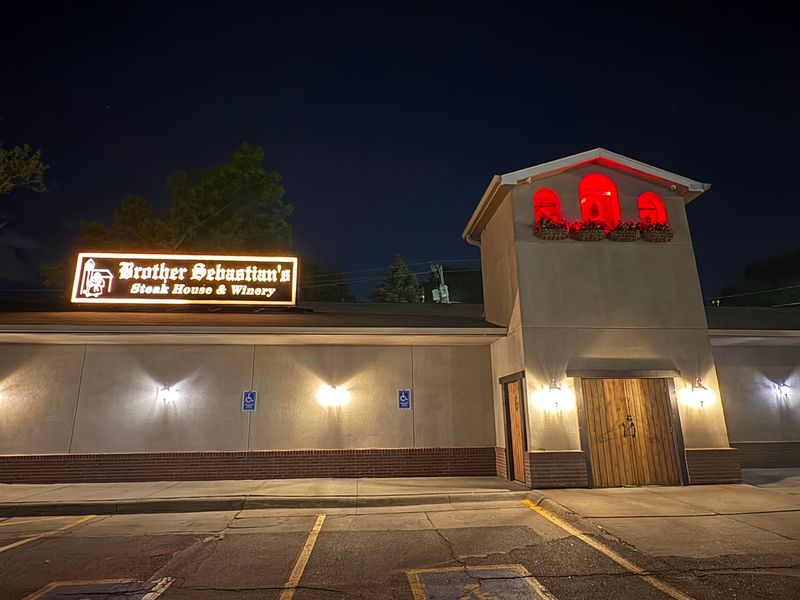
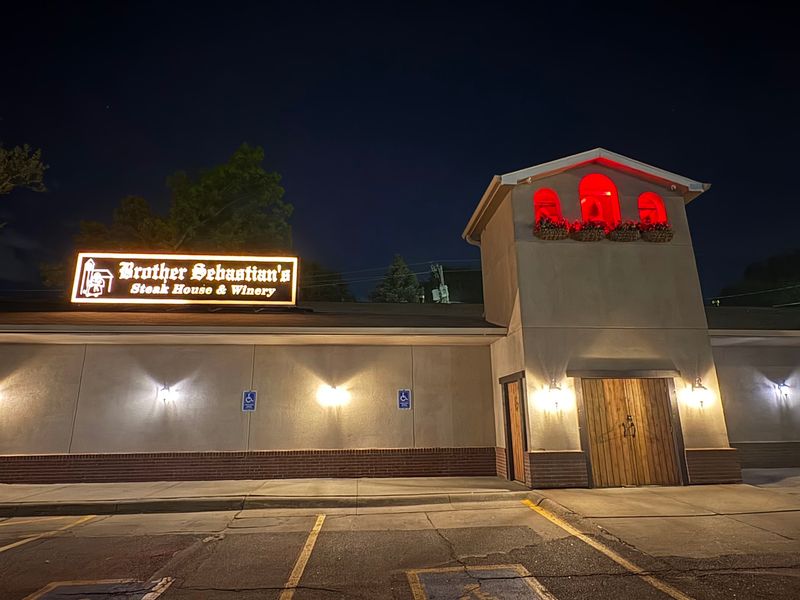
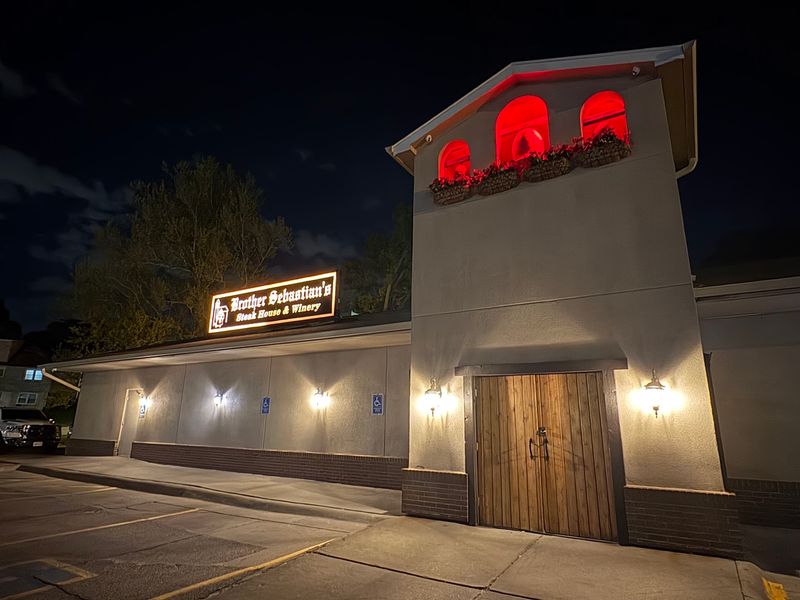
Gregorian chants drifting across a Nebraska parking lot is not what most people expect on the way to dinner. The building itself gives away almost nothing, just a low profile and a bell tower, the kind of place you could pass a hundred times without slowing down.
Then the door swings open and there are stone walls, firelight, shelves of books, and a server in a monk’s robe asking how you’d like your beef cooked. What follows is one of the most unusual steak dinners in the state, and the prime rib is the reason people keep making the drive.
A Monastery Hiding in West Omaha
Stucco walls, heavy timber, and a bell tower rising over the entry set the tone before anyone reaches the door. Brother Sebastian’s sits in west Omaha, in Douglas County, surrounded by the ordinary sprawl of shopping centers and neighborhood streets.
From the curb it reads as modest, almost plain. That flat first impression is part of the appeal, because the interior goes somewhere else entirely.
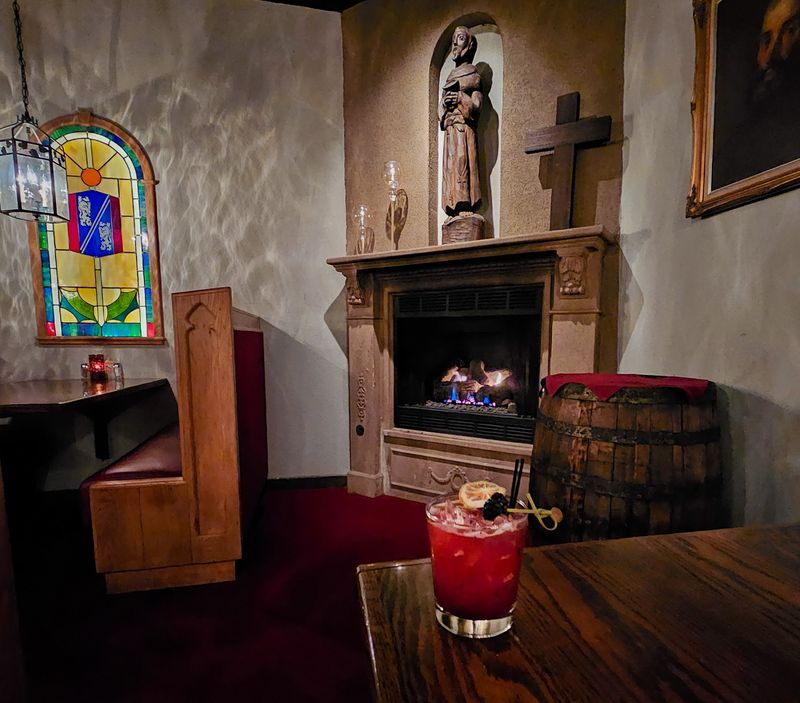
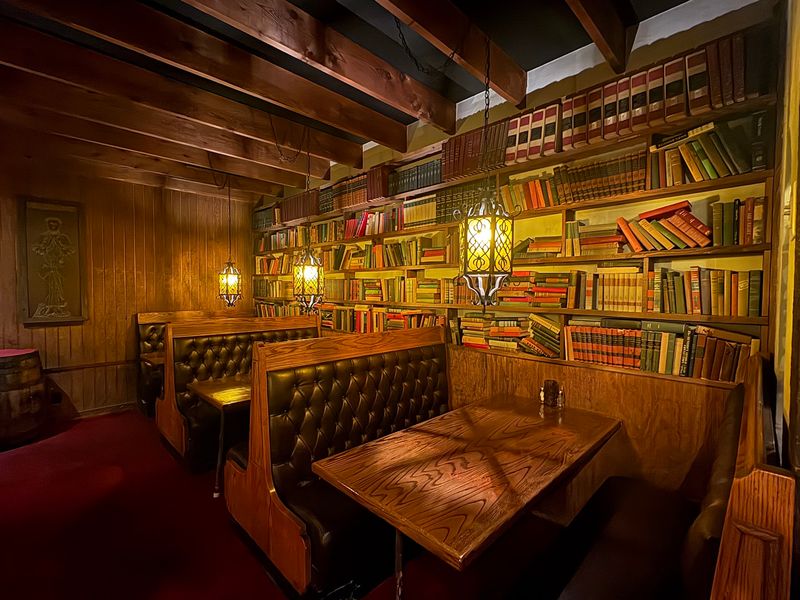
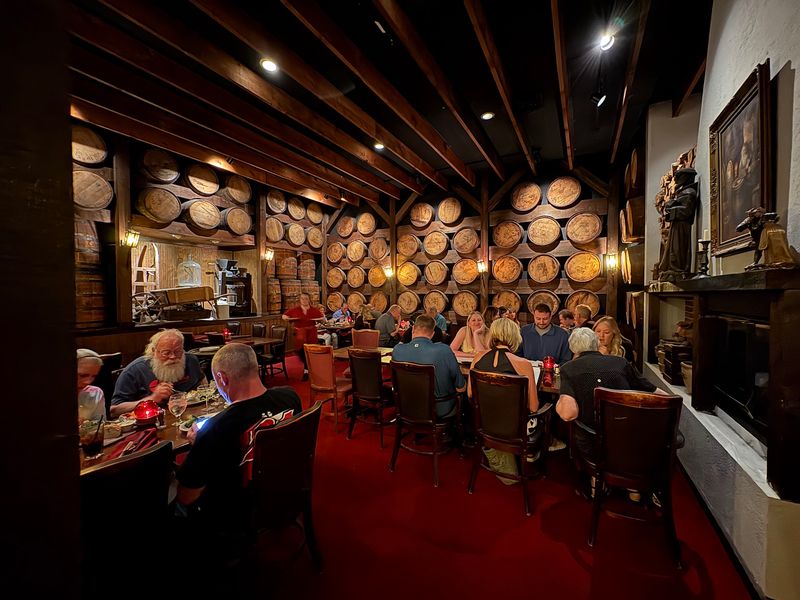
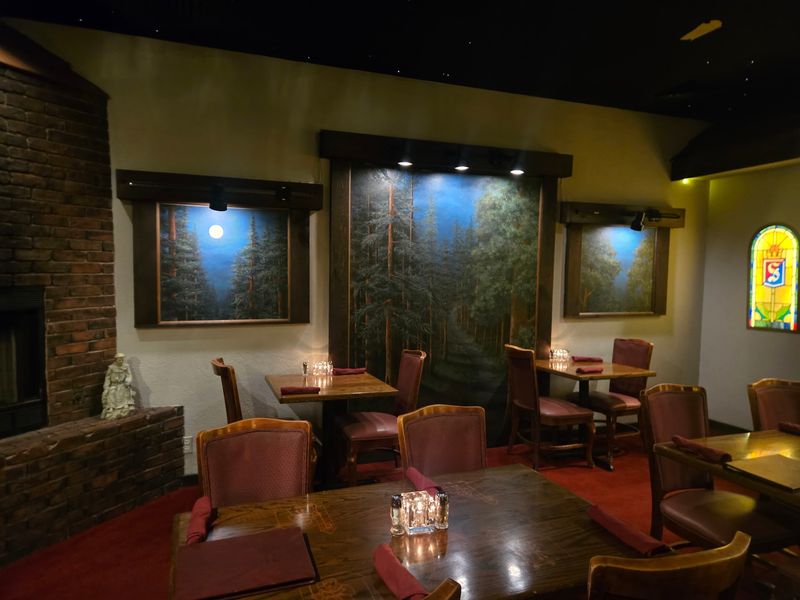
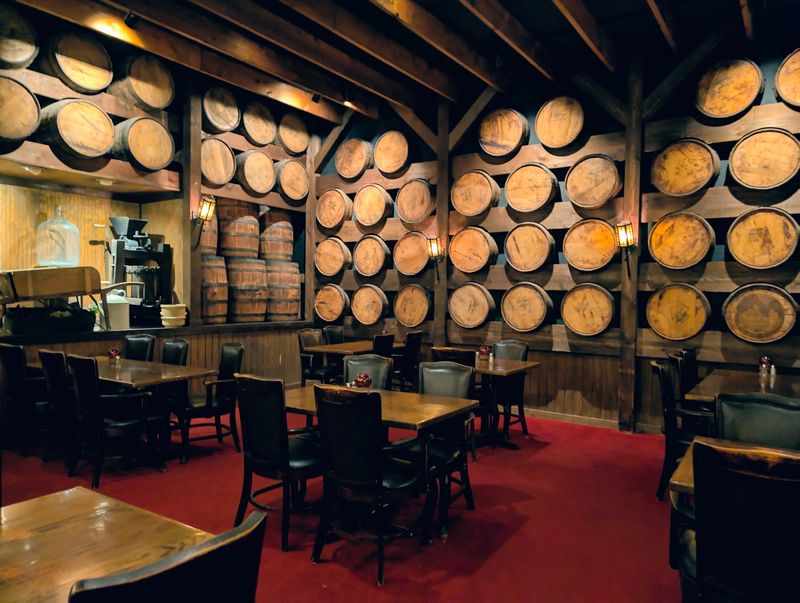
Inside, five separate dining rooms branch off in different directions, built from wood, stucco, and stone. Fireplaces flicker in more than one of them.
Red-tinted glass and stained-glass panels throw color across the tables, and bookshelves lined with volumes fill the gaps between statues of robed monks.
The steakhouse opened in 1977 and has been turning out beef ever since, which makes it a fixture in a city that takes its steak seriously. Gregorian chant plays through speakers out in the lot, so the theme reaches you before the hostess does.
It is a steak house first and a piece of theater second, though the two are hard to separate once you’re seated.
Napkin Sketches and a Pizza Box Blueprint
Most restaurants begin with a business plan. This one began with a journalism student named Loren Koch drawing ideas on napkins, then graduating to the back of a pizza box when the napkins ran out.
Koch had traveled through California and come across Spanish monasteries there, and something about those rustic abbeys stuck with him. He wanted the same feeling in Nebraska: thick walls, low light, quiet corners, a sense that the building had been standing far longer than it had.
The doors opened in 1977. Two years later came an expansion that added more dining space and party rooms, a sign the concept had caught on faster than a themed steakhouse in a suburban strip had any right to.
Koch died in 2023, but the restaurant he sketched out on scrap materials is still running his floor plan and still playing his chants in the parking lot.
Not many Omaha institutions can trace their design back to a pizza box, which is exactly the sort of origin story Nebraskans repeat at the table.
The Fire of 1996 and the Rebuild
In 1996, a three-alarm fire destroyed the original building. For a themed restaurant nineteen years into its run, that could easily have been the end of the story.
Koch chose to rebuild instead. Eight months later the doors reopened, and the new version came back larger: an expanded kitchen, a room set aside just for the salad bar, seating for two hundred, and the bell tower that now marks the entrance.
What’s striking is how little the rebuild changed the character. The stone, the dim corners, the fireplaces, the shelves of books all returned.
Someone who ate there in the eighties would recognize the place immediately.
Nebraska has plenty of buildings that burned and never came back, and plenty more that came back as something unrecognizable. This one returned as itself, only with better plumbing behind the walls.
That salad bar room, carved out during the rebuild, turned into one of the restaurant’s signatures. A design fix born out of necessity became a feature people now plan their meal around.
Slow Cooked Prime Rib, Queen and King
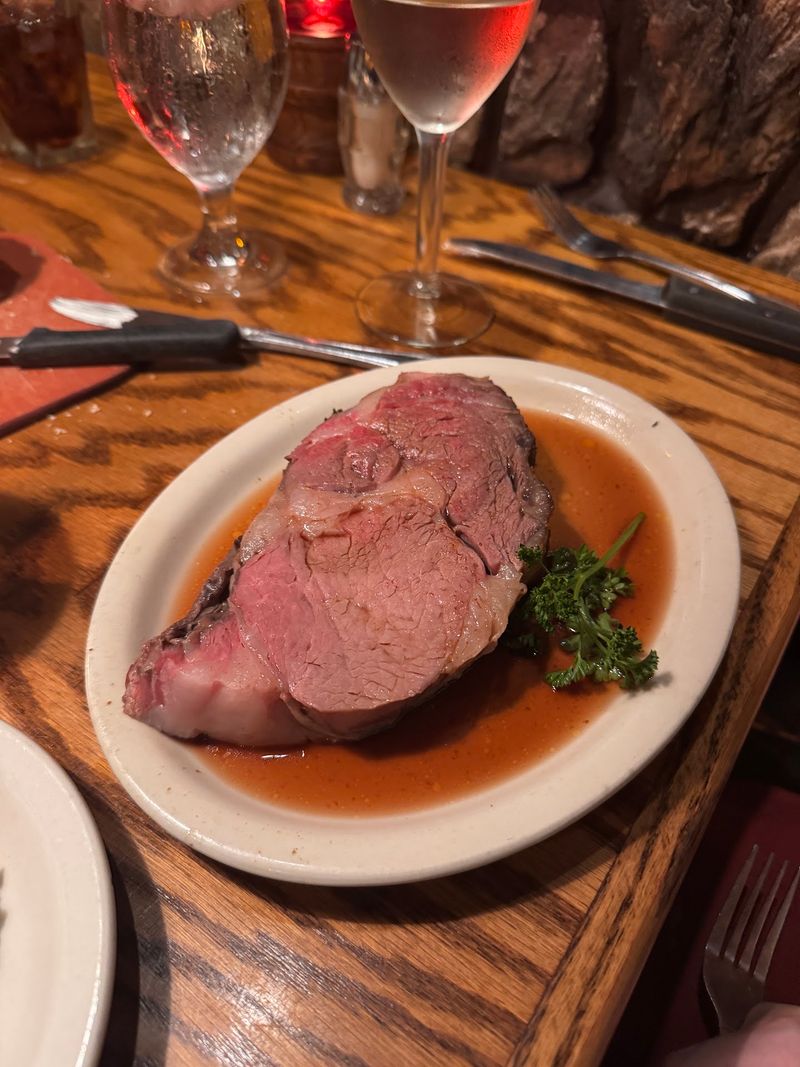
Here’s the dish that fills the tables. The slow cooked prime rib starts a full day before it reaches anyone’s plate, moving into a cook-and-hold oven that coaxes it along at low temperature for hours.
What comes out has a dark, seasoned crust on the outside and a center that stays pink, juicy, and tender enough to cut with light pressure. Two sizes are offered, Queen and King, which sorts out the appetite question before it becomes a debate.
Prime rib comes up in roughly 179 customer mentions, more than almost anything else on the menu, and people who order it once tend to order it again. Several diners call it the most tender they’ve had anywhere.
There’s also the Prime Rib Benedictine, a house variation that draws its own following, mushrooms included.
Beef here is USDA Choice Angus, seared over open flame for the steaks. Current owner Scott Lurry buys weekly from multiple vendors, frequently through Omaha Steaks, leaning toward Angus cuts whenever they’re available.
A Salad Bar With Its Own Room
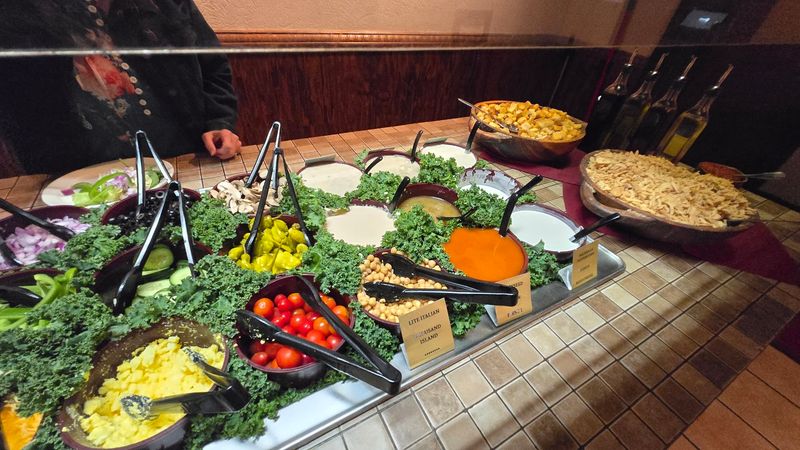
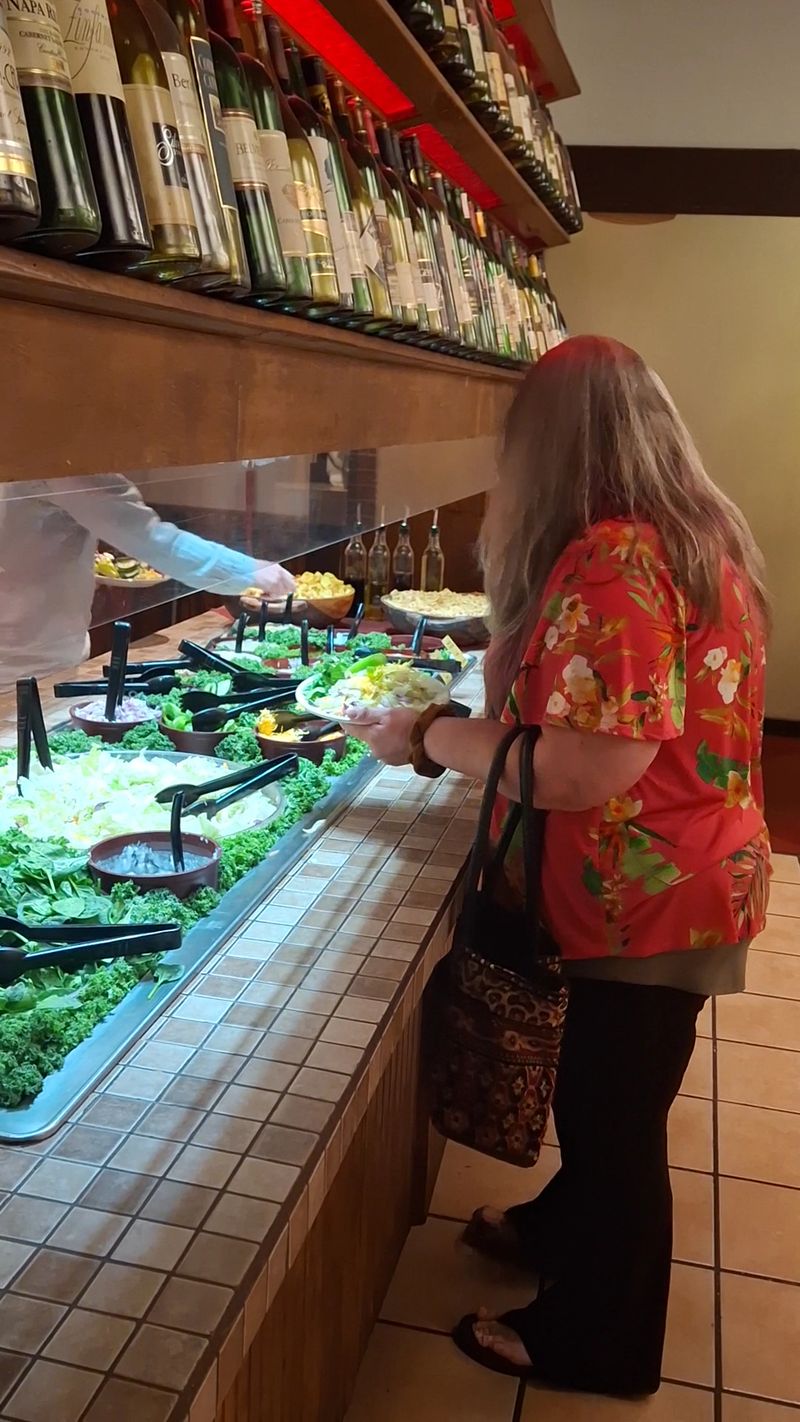
Three hundred fifty-two mentions. That’s how often the salad bar comes up in customer feedback, which is more attention than most steakhouse side dishes get in a decade.
Giving it an entire room was a decision made during the rebuild, and it changed how the meal flows. You get up, walk through a doorway, and load a plate in a space that belongs to nothing else.
The house-made onion dressing, the red one, has quietly become the item people tell each other about. Greens stay crisp, the bar is kept stocked and tidy, and repeat trips are common enough that nobody thinks twice about a second plate.
The room itself runs small, and during a busy stretch it can get tight around the tongs. Timing your trip between courses helps.
Entrees include the salad bar along with bread and a choice of potato and vegetable, so it isn’t an upsell. It arrives as part of the deal, which is part of why the value math works out for a lot of Nebraska families.
Servers in Robes and Chants in the Parking Lot
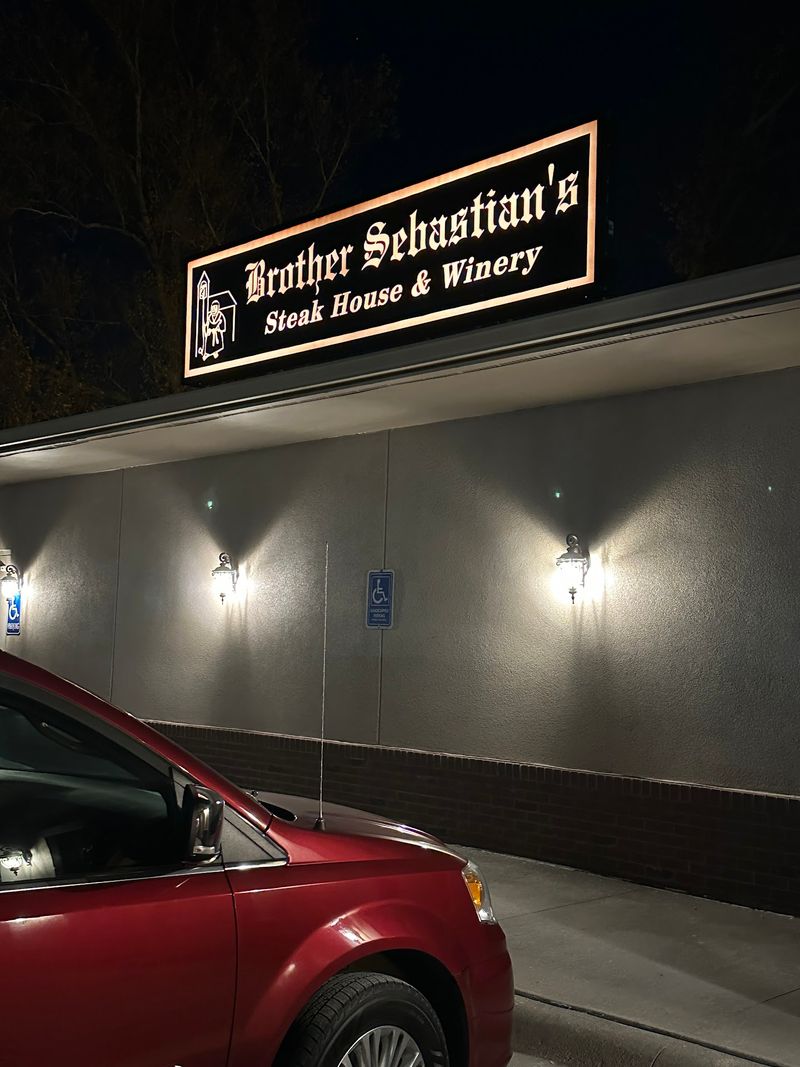
Park the car and roll the window down. The chanting starts before you’ve even taken the keys out, piped through speakers over the lot, and it’s the first clue that this is not a standard steakhouse evening.
Staff wear monks’ robes on the floor. It could easily tip into gimmick, but the execution stays on the right side of the line: the robes are simple, the service is warm, and nobody performs a character at your table.
Servers know the menu cold and make recommendations that land. When the dining room quiets near the end of the night, staff have been known to walk newcomers through the different themed rooms so they can see the whole layout.
Statues of monks stand among the bookshelves. Candlelight and fireplaces handle most of the illumination.
The monastery theme comes up regularly in customer comments, and it’s the detail that pushes people to bring out-of-town relatives here rather than somewhere more predictable. Theming this committed usually feels forced.
Somehow this one doesn’t.
Five Dining Rooms, Each One Different
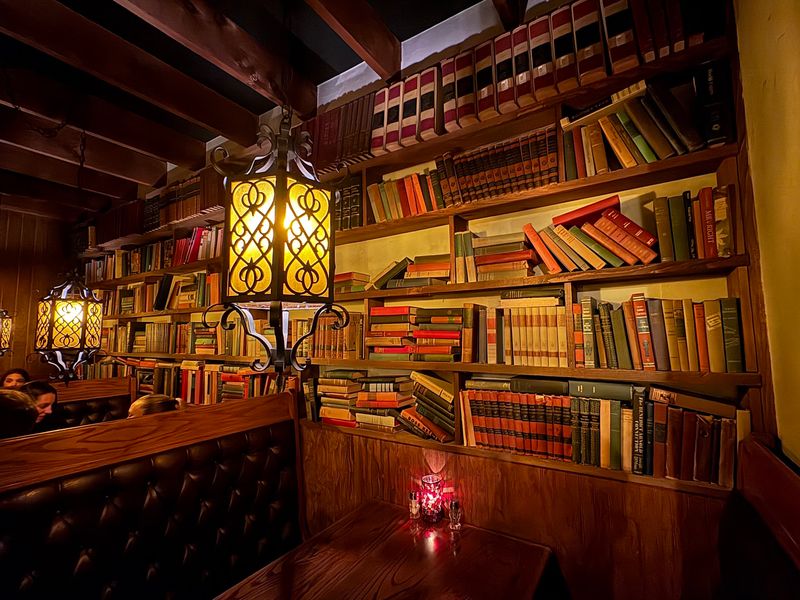
Walk the interior and you’ll count five distinct dining rooms, none of them decorated quite the same way. Some hold a handful of tables.
Others open up wider, with a fireplace anchoring one end.
Moody nooks tuck into corners where two people can eat without hearing the next conversation over. Stained glass filters the light.
Red-tinted panels warm everything a shade further, and the bookshelves are stocked with actual volumes rather than props.
Requesting a particular room isn’t guaranteed, since seating depends on how full the night runs, but it’s worth asking when you call.
For anniversaries and birthdays, the layout does real work. A table beside a fire in a stone alcove makes an ordinary Tuesday feel like an occasion, which is why the same Nebraska families return year after year to mark things here.
The dim lighting is deliberate and consistent throughout. Bring reading glasses if you need them for the menu, because the candles only reach so far.
Beyond the Beef on the Nebraska Menu
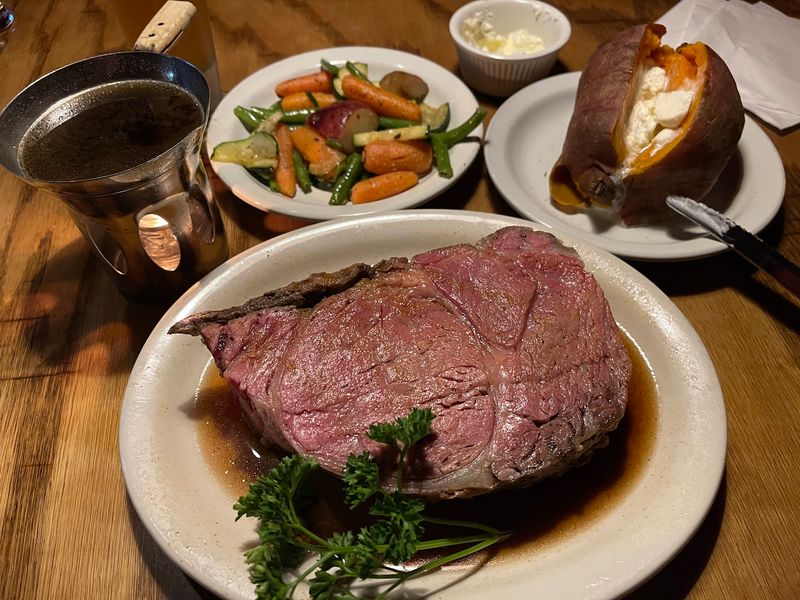
Steak dominates, but the kitchen doesn’t stop there. Walleye turns up on the menu and holds its own, which matters in a state where plenty of people grew up eating fish out of local waters.
Beef stroganoff has a following. So do frog legs, an old-school item that has stubbornly stayed on the list.
Filet Oskar and beef carpaccio round out the range for anyone wanting something other than a plain cut.
French onion soup gets ordered often and delivers, sometimes stealing attention from the entree that follows.
Sides deserve a mention: mashed potatoes, loaded baked potatoes with toppings served alongside, carrots that come out properly cooked, and onion rings as a starter.
Desserts lean classic and generous. Baked Alaska is the showpiece, with raspberry bread pudding, cinnamon cheesecake, and chocolate cake filling out the card.
Bread arrives with the meal. None of this is reinvented cooking, and that’s the point.
The kitchen executes a familiar steakhouse lineup with enough care that the old standards still land.
Scott Lurry and the Handoff
Forty-three years is a long time to work in one building. Scott Lurry started behind the bar in 1980, stayed through the expansion, the fire, the rebuild, and the decades of dinners that followed.
Around 2023, he bought the place. Ownership changes tend to bring redesigns and menu overhauls, and Nebraskans have watched more than a few beloved spots lose themselves that way.
Lurry went the other direction. The theme stayed, the rooms stayed, the robes stayed, the prime rib process stayed.
He handles the beef buying himself, ordering weekly and keeping the Angus standard intact.
Continuity like that is unusual. When the person taking over already knows every quirk of the kitchen and every regular’s name, the transition barely registers from a customer’s seat.
Koch’s vision carried through nearly five decades and two owners without the character getting sanded off. For a themed restaurant in a competitive steak town, surviving that long unchanged is the harder trick than opening in the first place.
The Youngest of Omaha’s Old Steakhouses
Omaha’s steakhouse lineage runs deep, and most of the enduring names got started well before the 1970s. At almost fifty years old, Brother Sebastian’s is the youngest of that group, which is a strange thing to say about a restaurant nearing its golden anniversary.
Being the newcomer in that company means competing against places with a head start of decades. The response was never to out-traditional them.
It was to build something nobody else in the city had.
The gamble worked. A monastery in a suburban Douglas County lot gave the restaurant a lane of its own, separate from the downtown and South Omaha classics.
Very little of the original aesthetic has been traded away over time. The stone, the chants, the robes, the low light, all of it survives.
For anyone working through Omaha’s steak circuit, this is the stop that doesn’t resemble the others. Whatever you ate the night before, dinner here will not feel like a repeat performance.
Who This Dinner Suits Best
Date night is the obvious fit. Low light, fireplaces, private corners, and a pace that doesn’t rush anybody out the door make it a reliable pick for anniversaries and milestone birthdays.
Families use it too, particularly for the once-a-year gathering where everyone’s birthday gets celebrated at one long table. The salad bar keeps picky eaters occupied while the beef finishes.
Out-of-town relatives are the third audience. When someone flies into Eppley and asks to see something they can’t get at home, this answers the question in a single evening.
Kids handle it fine, though the atmosphere runs quiet and dim rather than loud and casual. A restless toddler would be happier elsewhere.
Road-trippers cutting through on I-80 have made a habit of detouring here, and it’s not a long jog off the interstate.
What it isn’t: a fast lunch. Plan on an hour and a half at the table, longer if dessert enters the conversation.
That slowness is a feature, not an oversight.
Getting There and Planning the Visit
The address is 1350 S 119th St in Omaha, sitting in the western part of the city off the main commercial corridors. From most of the metro it’s a short drive, and from Lincoln it’s an easy run up I-80 for a dinner outing.
Reservations are handled by phone rather than online booking, and calling ahead is the smart move, especially on weekends. With a reservation, seating usually happens within a few minutes of arrival.
Lunch and dinner services both run, with a gap in the afternoon, and the schedule shifts depending on the day. Check before you drive out, particularly if you’re coming from outside the metro.
Pricing sits in the range you’d expect for a full steakhouse dinner in Omaha, with the salad bar, bread, potato, and vegetable folded into the entree rather than tacked on separately.
Parking is on site. Leave the windows down for a second when you arrive and listen for the chanting.
It’s the best free preview in Douglas County.
Why the Drive Pays Off
Nearly five decades on, the formula hasn’t drifted. Beef seared over flame, prime rib started a day early, a salad bar with its own address inside the building, and rooms that look like somebody built them out of a memory of Spain.
Not every plate lands perfectly every night. A steak can come back further along than ordered, and a busy service can stretch the wait between courses.
That happens in any kitchen running full rooms.
What holds steady is the prime rib, and it’s the reason the same names keep showing up in the reservation book year after year.
Nebraska has no shortage of good steak. What it has fewer of is a dining room where the light comes from fireplaces, the soundtrack is chanting, and the person refilling your water is wearing a robe.
Bring your appetite, bring someone you actually want to talk to, and give yourself the full evening. The building looks like nothing from the street, and that remains the best part of walking in.