Kool-Aid Was Invented In Nebraska And There’s A Whole Museum Gallery Celebrating It
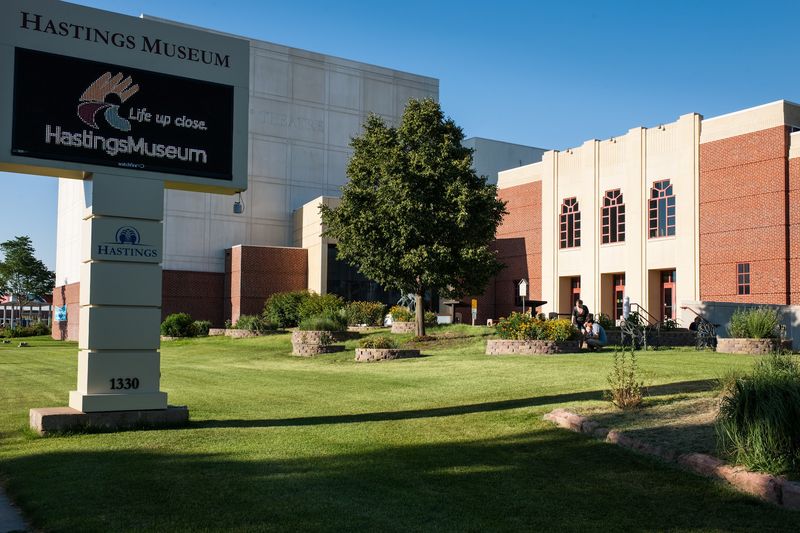
There’s a brick building in south central Nebraska where a fiber optic river of colored light runs through a gallery, and the whole thing exists because a chemist figured out how to dry fruit syrup into powder. I walked in expecting stuffed birds and old farm tools, which are there too, and walked out knowing more about a five-cent packet than I ever expected to.
The drink in question is on shelves in nearly every grocery store in the country, and it started here. Most people drive right past without knowing the story sitting inside.
A Brick Landmark on North Burlington Avenue
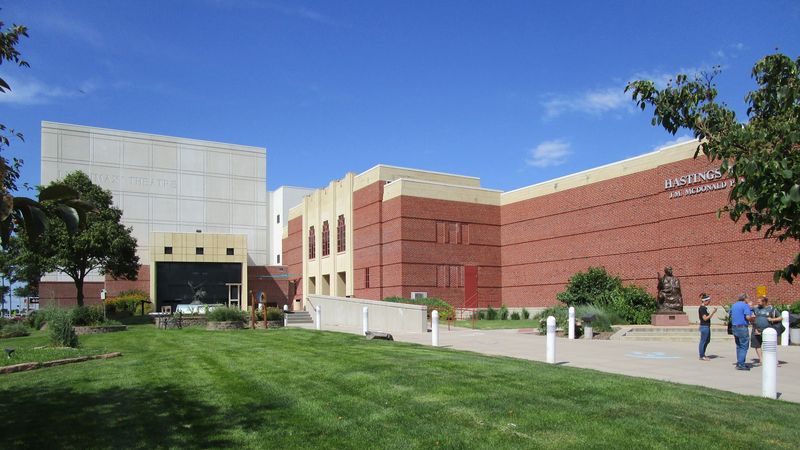
Low brick, broad shoulders, and a parking lot that fills up fast on a Saturday morning. The building sits on the north edge of Hastings in Adams County, close enough to Highway 281 that you can be inside within a few minutes of leaving the highway.
Calling it a small-town museum undersells the square footage by a wide margin. It holds the title of largest municipal museum between Denver and Chicago, which means the floor plan keeps going long after most visitors assume they’ve seen the last room.
Natural history occupies much of the main level, with wildlife dioramas, mounted birds, meteorites, and rocks arranged in glass cases. Downstairs there are antique vehicles.
Upstairs sits the gallery that brings a good share of the traffic through the front door.
An arboretum shares the property, so the outing can stretch into a walk if the weather cooperates. An elevator serves all levels.
Plan on more time than you think, because the building is consistently larger inside than it looks from the curb.
How a Hendley Store Clerk Became a Beverage Baron
Edwin Perkins was born in Iowa, but his family pulled up stakes in 1893 and settled in Hendley, a speck of a town in Furnas County. His father ran a general store, and that counter became an accidental classroom.
Powdered products fascinated him. Jell-O in particular showed what happened when you took the water out of something and let the customer put it back in at home.
Mail order and direct-to-customer selling caught his attention just as strongly.
By 1920 he had moved to Hastings and set up the Perkins Products Company, turning out an assortment of household goods. One of them was a liquid fruit concentrate he called Fruit Smack, sold in glass bottles that broke and leaked in transit and ate into every shipment.
The fix arrived in 1927. Perkins worked out a way to pull the liquid out of Fruit Smack, leaving a powder that could travel in a paper envelope.
He named it Kool-Ade, and the spelling would change before long.
Six Flavors, Ten Cents, and a Depression Price Cut
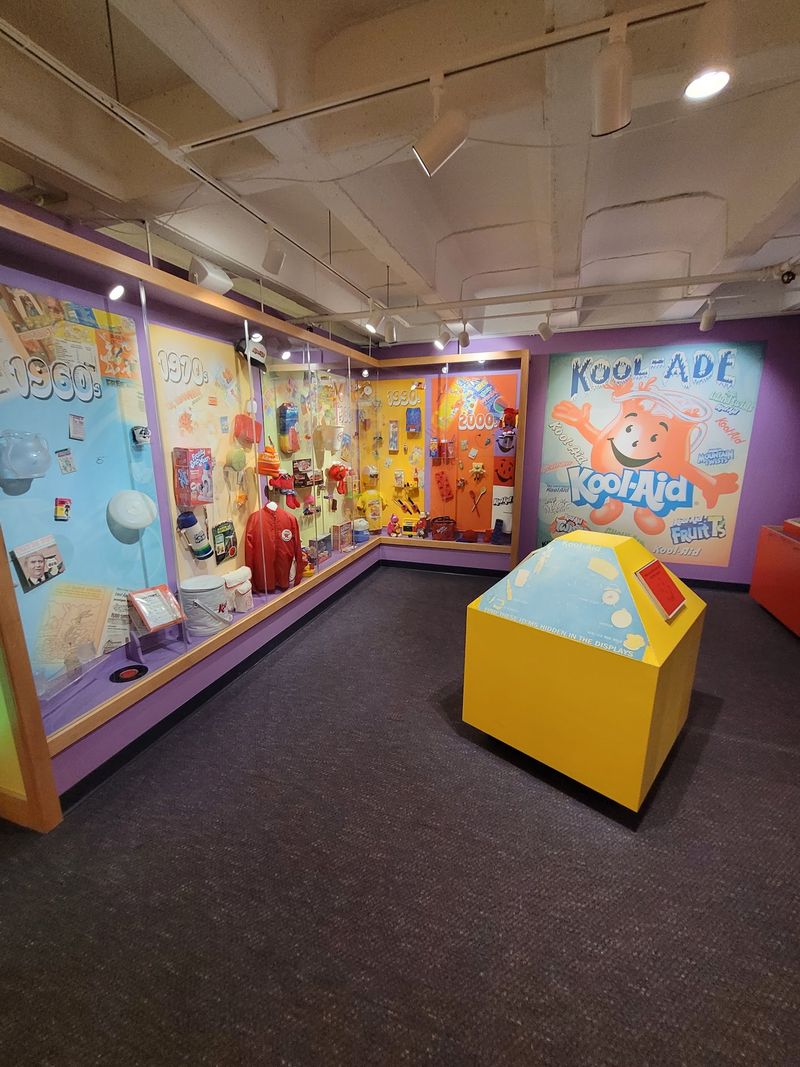
Grape, lemon-lime, cherry, orange, raspberry, strawberry. Six flavors launched the whole thing, and every one of them is still recognizable to anyone who has stood in a grocery aisle.
A packet started out at a dime. When the Great Depression squeezed household budgets across Nebraska and everywhere else, Perkins cut the price in half to a nickel, and sales climbed instead of collapsing.
Cheap sweetness held up when almost nothing else did.
Production moved to Chicago in 1931 as demand outgrew what Hastings could ship. General Foods bought the brand in 1953, and today it belongs to Kraft Heinz.
None of that erased the origin.
Nebraska named it the official state soft drink, which is the kind of legislative decision that tells you how deeply a product can settle into a place’s sense of itself.
The museum lays this timeline out with the receipts: original packaging, advertising art, and printed materials showing how a bottled syrup became an envelope that shipped anywhere for pennies.
Inside Kool-Aid: Discover the Dream
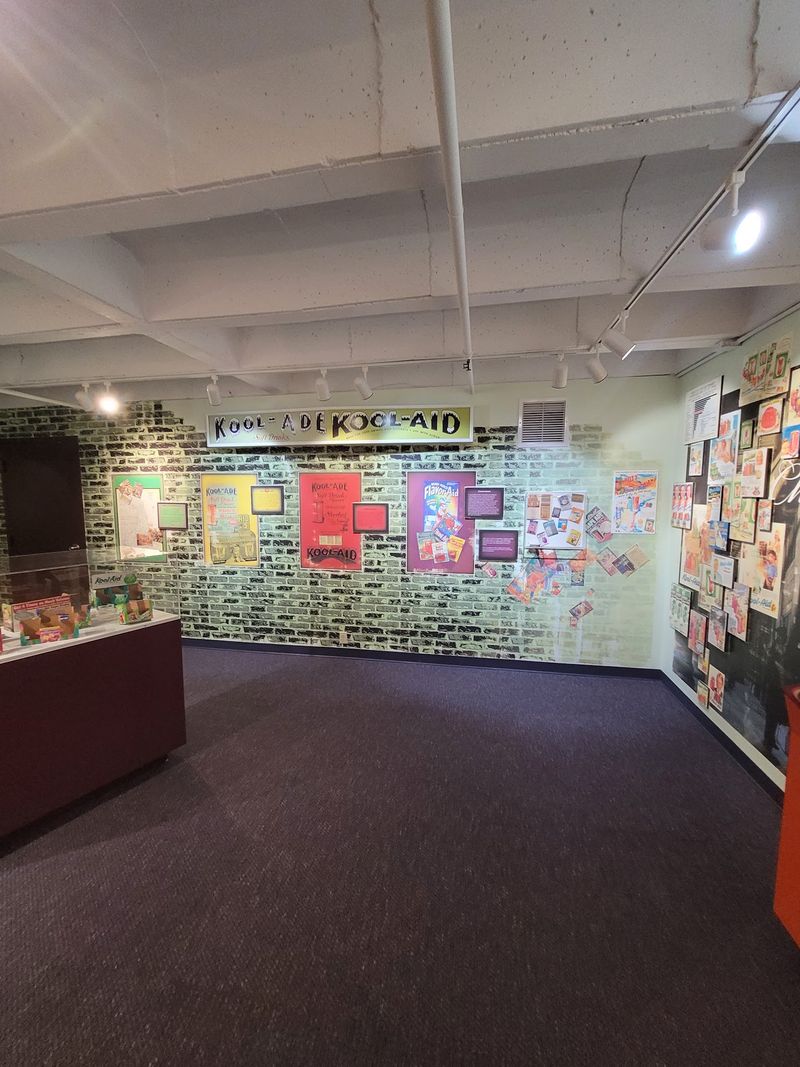
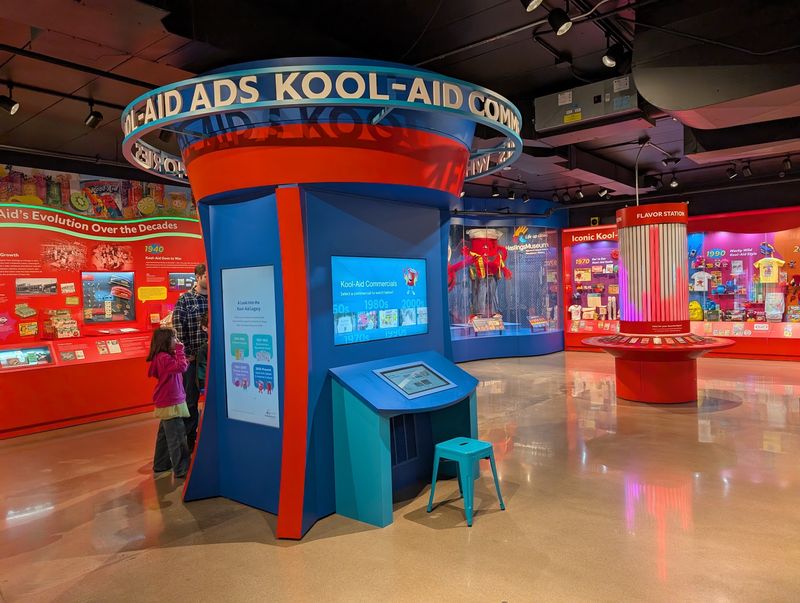
Colored light snakes across the gallery floor. A fiber optic river stands in for the drink itself, running through the exhibit space and giving the room a glow no display case could manage on its own.
Kool-Aid: Discover the Dream covers Perkins, the company, and the long climb from Hastings mixing rooms to international shelf space. Early packaging sits alongside advertisements that track how the marketing shifted decade by decade.
Some of the most interesting objects are the products that didn’t last. Kool-Aid bubble gum.
Sherbet packets. Ideas that got manufactured, sold for a while, then quietly disappeared while the drink mix kept going.
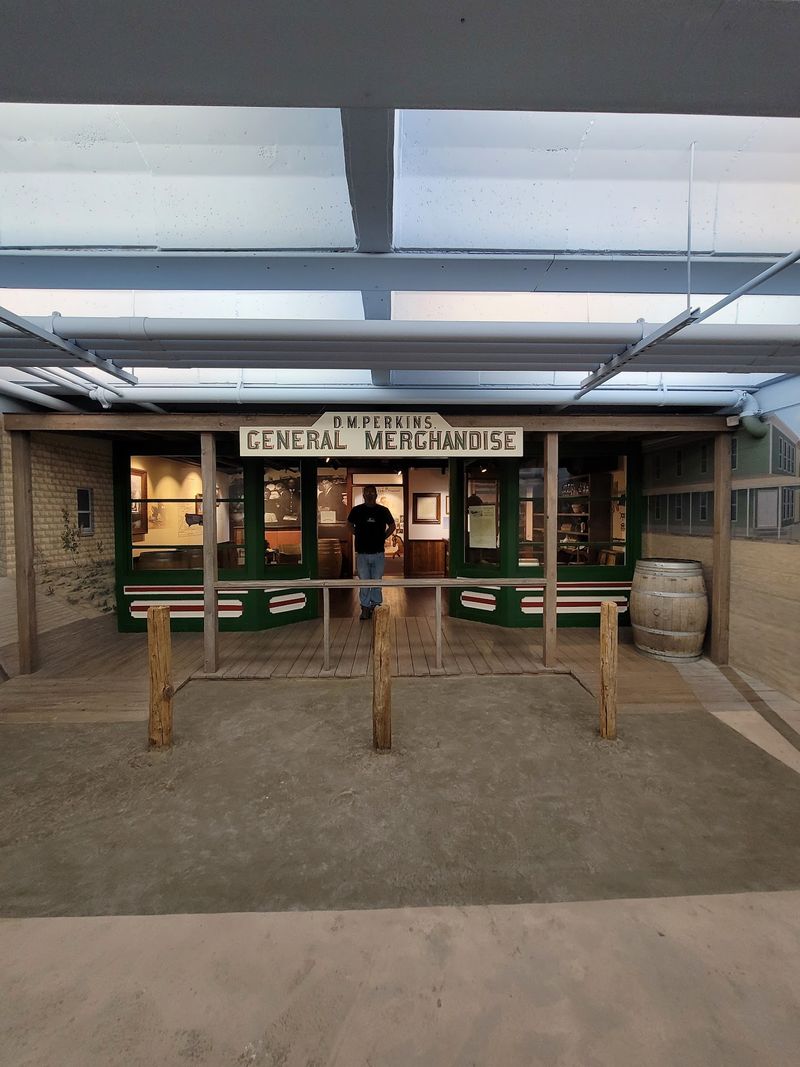
The gallery recently moved to the museum’s second floor and was redesigned in the process. The general store replica and theater elements from the older version were reworked, which changed the feel of the space for anyone who knew it from childhood.
A hands-on Kool-Aid stand gives kids something to do besides read labels, and the layout keeps the pace moving.
The Pitcher Man’s Suit and His Hollywood Footprints
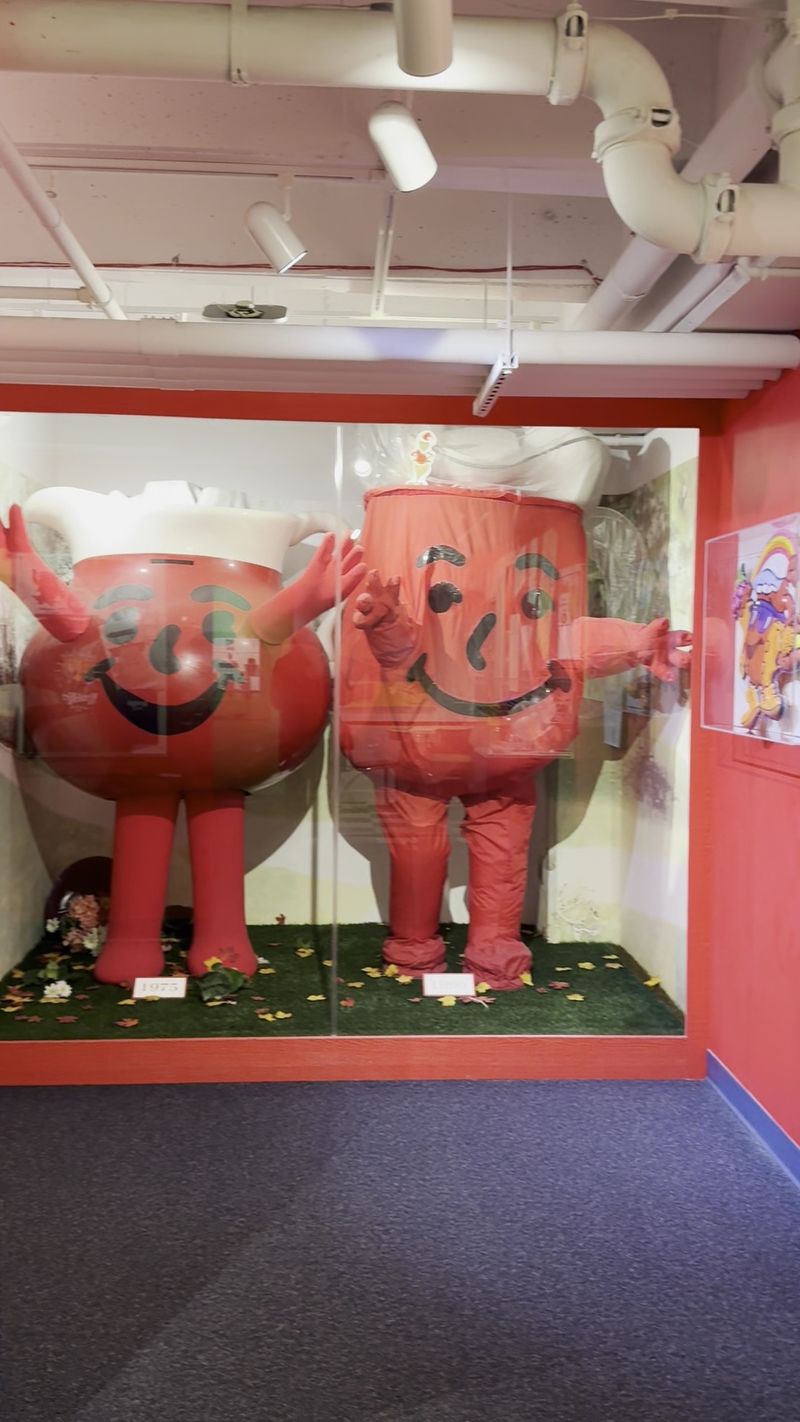
Oh yeah. The giant grinning pitcher has been crashing through walls in commercials since long before most current visitors were born, and the original suit worn by the character is right there in the gallery, donated by Kraft.
Beside it sit the Kool-Aid Man’s Hollywood footprints, the cement slab treatment usually reserved for actors and directors. A cartoon beverage container got the same honor, which says something about how thoroughly the mascot embedded itself in American advertising.
A Kool-Aid Man statue anchors another corner of the space and functions as the unofficial photo stop. Kids line up for it without being told to.
Costume displays of the pitcher character have been part of the museum’s Kool-Aid holdings for years, alongside the photos, product variations, and display advertising that fill out the room.
The gift shop downstairs leans into the same energy with Kool-Aid merchandise and a penny press machine. Plenty of people stop there even when they’re short on time for the full museum.
Dioramas, Meteorites, and a Basement Full of Antique Cars
Skip the rest of the building and you’ll miss most of what’s here. Prehistoric Nebraska fills one section with fossils and fragments from the state’s deep past, while the wildlife dioramas stage mounted animals against painted prairie backdrops.
Bird collections run extensive. Rocks and meteorites occupy their own cases.
Lock, Stock and Barrel covers historic firearms as artifacts of frontier manufacturing.
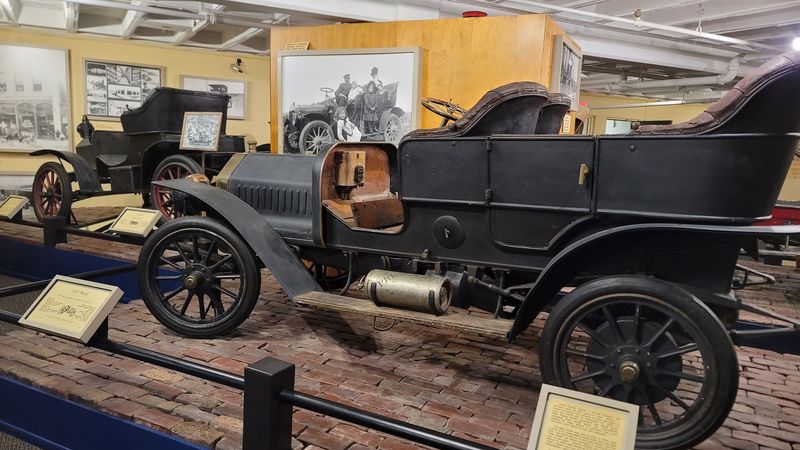
Head to the lower level and the tone changes completely, with restored antique automobiles parked in rows that pull in anyone who likes chrome and old engineering.
The Lied Super Screen theater shows giant-format nature documentaries on a schedule that rotates through titles about whales, fungi, and other natural subjects. A planetarium runs star shows sized right for short attention spans, roughly the length a restless kid can manage.
Theater tickets and museum admission are handled separately, so buying one doesn’t automatically cover the other. Ask at the front desk what’s included before you pay, and check whether planetarium shows are scheduled that day.
Who Has the Best Afternoon Here
Grandparents bring grandkids here and it works, which is not true of every museum. Enough of the collection sits behind glass that nobody has to hover, and enough of it invites touching that kids don’t stall out after twenty minutes.
Rental backpacks hold self-guided tour activities aimed at elementary-age visitors, turning the walk-through into something closer to a scavenger hunt. A ten-year-old can work through it independently.
Staff answer questions rather than just pointing at signs, and the front desk keeps track of what’s running when.
Adults who grew up in Nebraska tend to slow down in the Kool-Aid gallery for reasons that have nothing to do with the exhibit design. The packets and ads pull up summers.
Three hours covers the museum comfortably. Add a theater show and you’ve filled most of a day, which makes it a workable destination from Grand Island, Kearney, or York.
Coming from Omaha, pair it with other Hastings stops to justify the drive.
Getting There and What to Know Before You Go
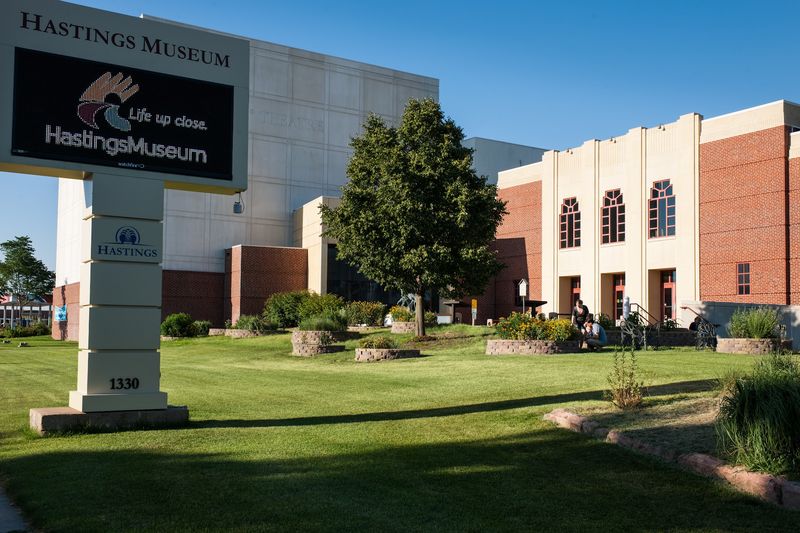
Find it at 1330 N Burlington Ave, Hastings, NE 68901, on the north side of town with its own lot and easy access off the main routes through Adams County.
Doors stay closed one day at the start of the week, and the building opens later on Sundays than the rest of the week. Late-week evenings run longer.
Check the current schedule before you point the car that direction, especially around holidays.
Admission is modest for what you get, and theater tickets are priced separately from general entry. The elevator reaches every level, so the whole building is accessible.
August brings Kool-Aid Days to Hastings the second weekend of the month, a citywide festival built around the drink, and the museum makes a natural anchor for that trip.
The arboretum next door costs nothing and makes a decent stretch of the legs afterward.
A dozen aisles of grocery stores carry the product. Only one place in Nebraska can show you where it started.