10 Dirt-Cheap Fall Day Trips In Colorado You’ll Want To Squeeze In Before Winter
You have a jacket, half a tank of gas, and one sunny fall day before winter starts acting important. That is enough.
Colorado offers cheap outings where golden cottonwoods, aspens, red rocks, hoodoos, wildlife, and riverside trails provide the entertainment without demanding resort money.
Better yet, each trip feels different.
One day is pure foliage. Another looks almost extraterrestrial. A third might involve bison appearing beside the road and completely hijacking the plan.
Fall does not last long here, which makes spontaneity useful.
Skip the elaborate getaway. Sometimes the season only needs a few hours and a reason to get in the car.
1. Garden Of The Gods Visitor & Nature Center, Colorado Springs

My jaw dropped the first time I saw these rocks glow at sunrise. Some views just refuse to look real.
Garden of the Gods rises from Colorado Springs in a sweep of red and white sandstone formations framed by Pikes Peak.
The landscape looks dramatic in every season, but fall adds warmer color through scrub oak and other foothills vegetation.
Start at the Visitor & Nature Center, where free trail maps make it easy to choose a route before heading outside. The park now offers more than 22 miles of trails, ranging from paved walks to rougher dirt paths.
For an easy introduction, the Perkins Central Garden Trail passes through the heart of the formations on a paved, accessible route.
Longer options reach quieter corners with views across meadows, pinyon-juniper woodland, and the surrounding foothills.
This part of Colorado sits where several ecosystems meet, so wildlife can appear close to the city. Mule deer and a wide variety of birds are among the regular possibilities.
Park entry and general access remain free, making this an easy fall outing without a complicated budget. The Visitor & Nature Center is at 1805 N 30th St, and the park stays open well beyond daylight hours in October.
2. Paint Mines Interpretive Park, Calhan
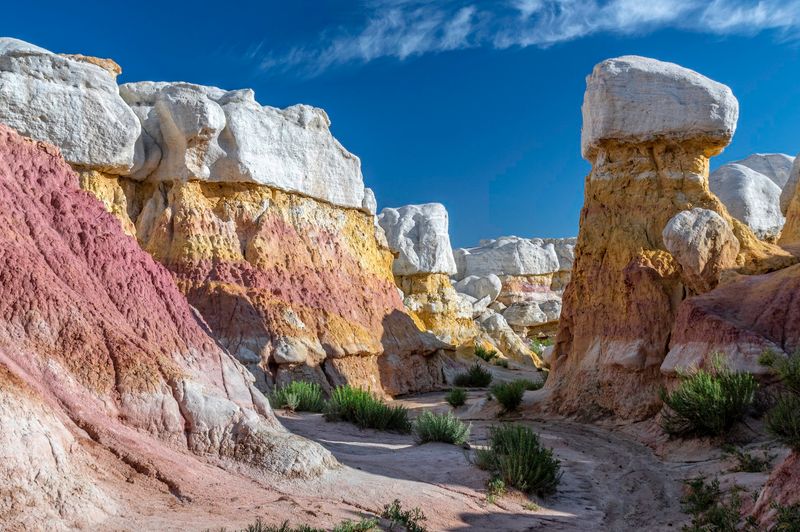
Just imagine for a second a prairie hiding a rainbow underground. Out on the flat grasslands, nobody expects what comes next.
Paint Mines Interpretive Park near Calhan protects roughly 750 acres of colorful clay, hoodoos, spires, gullies, and open prairie.
Oxidized iron compounds create bands of red, yellow, orange, pink, and other shades across the exposed formations.
Evidence of people using this landscape reaches back about 9,000 years. Indigenous communities collected the colored clay for practical and decorative uses, and interpretive signs help connect that history to what visitors see along the trails.
About four miles of paths cross the park, making it manageable for a half-day fall outing. The walking is generally straightforward, though the ground can become slick or difficult after wet weather.
The formations are fragile, so staying on designated trails matters. Climbing, scrambling, bicycles, horses, pets, and drones are not permitted, which helps protect both the geology and archaeological resources.
Cooler fall air makes the exposed prairie far more comfortable than a hot summer afternoon. Soft morning or late-day light also brings out the layered colors without requiring any extra attraction.
The park is open from dawn to dusk throughout the year, and admission is free. Use the designated entrance at 29950 Paint Mines Rd.
3. Red Rocks Park & Amphitheatre, Morrison
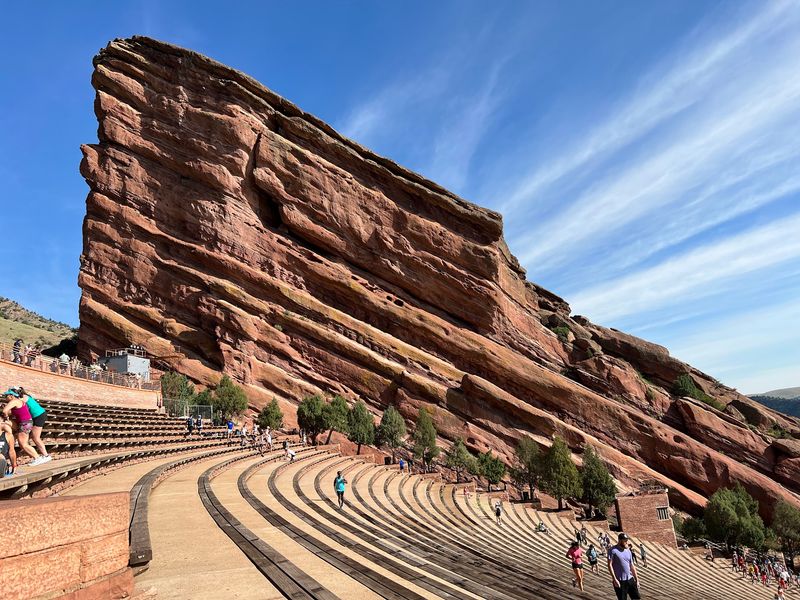
Red Rocks Park & Amphitheatre in Morrison sits where the Great Plains meet the Rocky Mountains, and that transition explains much of its appeal.
The park covers 738 acres at roughly 6,450 feet, combining towering sandstone monoliths with prairie, pines, meadows, and wide Front Range views.
Fall adds warm color through lower-elevation shrubs and grasses without hiding the rock formations that define the setting.
The 1.4-mile Trading Post Trail is a compact way to see the landscape on foot. Its surface is narrow and rough in places, with moderate to steep sections that pass through valleys, meadows, and dramatic stone walls.
A longer option is the Red Rocks Trail, which is open to hikers, mountain bikers, and horseback riders. Several other park trails are pedestrian-only, so checking the trail map before choosing a route keeps the outing simple.
The amphitheatre itself is also worth climbing when it is open to the public. Its long stairways turn sightseeing into an easy workout, while the upper levels open broad views toward the plains.
Admission and parking are free for regular daytime visits. On event days, however, the amphitheatre often closes to daytime visitors by early afternoon even though the surrounding park remains open.
Head to 18300 W Alameda Pkwy and check the event calendar first. A quiet fall day here delivers geology, exercise, and scenery in one stop.
4. Rocky Mountain Arsenal National Wildlife Refuge, Commerce City
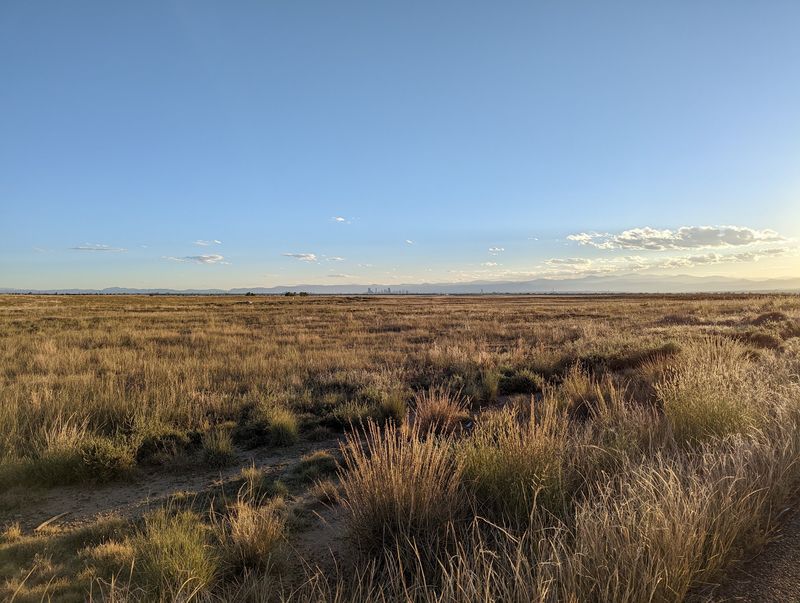
Let’s be real for a second, an old federal site sounds like a strange day trip. Hang in there, because the comeback story is amazing.
Rocky Mountain Arsenal National Wildlife Refuge now protects about 15,000 acres of prairie, wetlands, lakes, and woodland just outside Denver.
After decades of environmental cleanup and habitat restoration, the land supports more than 330 wildlife species.
Bison are the biggest draw, but mule deer, prairie dogs, coyotes, raptors, waterfowl, and black-footed ferrets also live within the refuge. Fall adds rust and gold to the grasses while migrating birds move through the wetlands.
The easiest introduction is the free 11-mile Wildlife Drive, which usually takes 45 minutes to an hour. Drivers must remain inside their vehicles in the one-way bison area and keep at least 75 feet from the herd.
Around 20 miles of hiking trails offer another way to explore. Lake Mary Loop and Bluestem Loop provide relatively gentle options, while most refuge trails are accessible.
This is one of Colorado’s strongest low-cost wildlife outings because general admission, the Wildlife Drive, and the walk-up archery range are free. The refuge is open from sunrise to sunset in fall.
Use 6550 Gateway Rd in Commerce City for the main entrance. Habitat-management work is scheduled to begin later in October 2026, so some areas may have temporary restrictions while crews are active.
5. Clear Creek Trail, Golden
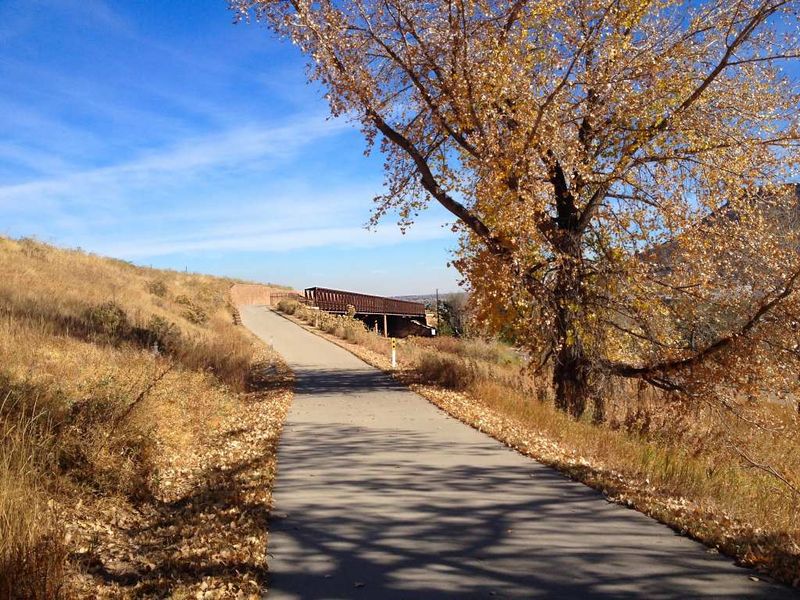
What if fall colors came with a short drive? No mountain passes, no high-country detour, just gold.
Clear Creek Trail runs directly through Golden beside the water, giving visitors a paved fall route without committing to a high-elevation excursion.
Cottonwoods along the creek turn amber and yellow, while downtown remains only a few steps away.
A convenient place to begin is near the Golden Welcome Center at 1010 Washington Ave. Maps and local information are available there during operating hours, and several additional access points connect to the trail through town.
The central section forms an easy paved loop of about two miles. Walkers, runners, cyclists, skaters, and families with strollers all use the corridor, so staying aware of faster traffic keeps the experience comfortable.
The larger trail network continues east toward Wheat Ridge and west into Clear Creek Canyon. Recent extensions have added more paved access beyond town for anyone wanting a longer outing.
Late September into early October is usually the strongest foliage window around Golden. Creekside shade also keeps parts of the route cooler than nearby streets on sunny afternoons.
Downtown shops, parks, picnic areas, and public spaces make it easy to turn a short walk into several relaxed hours.
6. Historic Arkansas Riverwalk, Pueblo
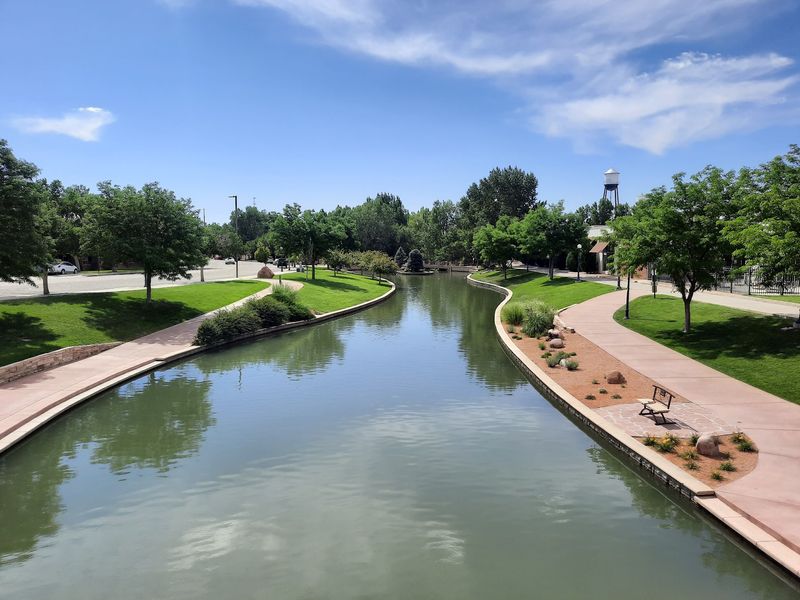
That makes two of us if you love a good comeback story. Some towns rebuild, and some towns reinvent.
The Historic Arkansas Riverwalk in Pueblo returned water to downtown after the Arkansas River had been diverted from the area in the 1920s.
The modern waterfront opened in 1999 and has continued expanding as a public gathering space.
Today the Riverwalk covers 32 acres and extends about 1.3 miles through the center of the city. Paved walkways follow the channel past landscaped areas, bridges, public spaces, restaurants, and historical displays.
Art is one of the strongest reasons to slow down. More than 60 recognized pieces now appear along the Riverwalk, turning an ordinary loop into a self-guided outdoor gallery.
Interpretive stops explain Pueblo’s connection to the river and the development of the downtown district. A new channel extension and boathouse opened in 2026, adding another section to explore on foot.
Seasonal excursion boats normally operate from spring through September, but regular rides have already ended for the 2026 season. The walking areas remain open around the clock throughout the year and cost nothing to enter.
Fall works especially well because the exposed waterfront is more comfortable in cooler weather. Benches and open gathering spaces make pauses easy.
Start near 101 S Union Ave or the newer Riverwalk Place entrance and follow the channel at your own pace.
7. Mineral Belt Trail, Leadville
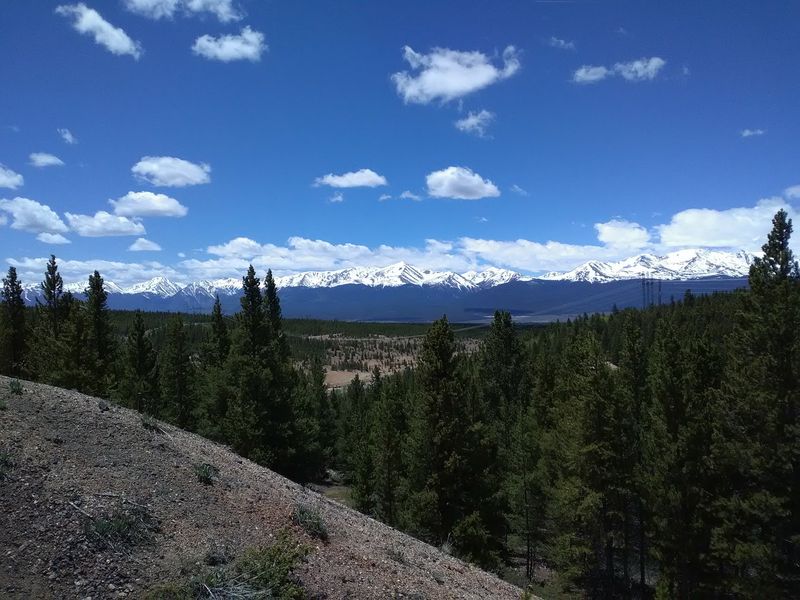
I’m still trying to wrap my head around a paved path above 10,000 feet. Bring your lungs, because the air is thin up here.
The Mineral Belt Trail circles Leadville for about 11.6 miles, linking high-altitude scenery with remnants of the region’s mining and railroad history.
Much of the route sits above 10,000 feet, so even smooth pavement can feel demanding.
The paved trail passes aspen groves, conifer forest, open meadows, and historic industrial features. Interpretive signs along roughly six miles explain the district’s past without requiring another museum stop.
Views reach toward the Sawatch and Mosquito ranges, with several of Colorado’s highest peaks visible from different sections. Fall adds bright aspen color against darker evergreens and weathered structures.
The loop meets ADA accessibility standards, but visitors do not need to complete all of it. Several trailheads make shorter out-and-back walks easy to arrange.
Cyclists can cover the full circuit more comfortably, while walkers may prefer a section near town or the historic district. Staying on the paved route protects fragile features and respects adjacent private property.
After substantial snowfall, the trail transitions into a groomed winter recreation route. Early fall therefore offers a narrow window for golden foliage before conditions change.
8. Boulder Creek Park, Boulder
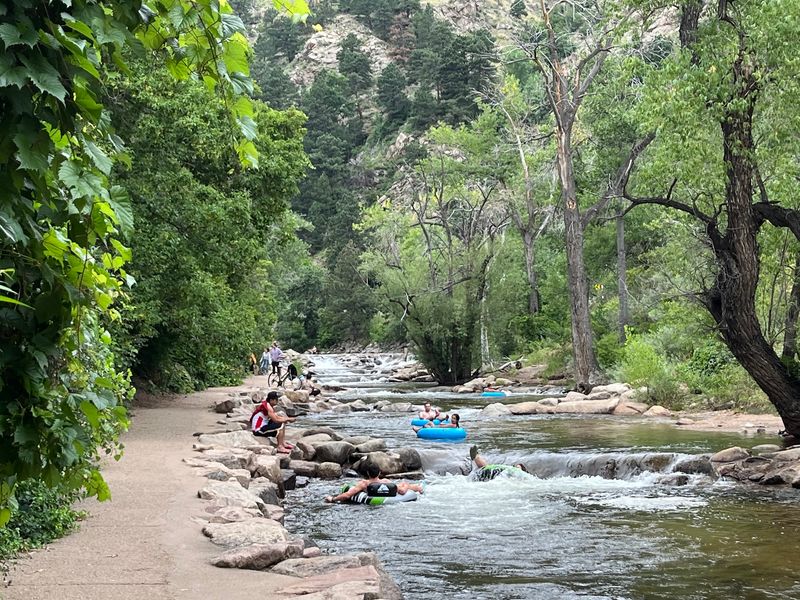
Call me crazy, but a city park can rival a mountain hike. Downtown Boulder makes a strong case for that idea.
Boulder Creek Park sits along Canyon Boulevard beside one of the city’s busiest green corridors.
The area formerly known as the Civic Area and Central Park received its new name in 2026, tying several downtown recreation spaces more clearly to the creek.
The Boulder Creek Path runs through the park as part of a 5.5-mile multi-use route stretching from Boulder Canyon east to the Stazio Ballfields. Its paved surface attracts walkers, runners, cyclists, and other users throughout the day.
Fall changes the experience without requiring a long drive. Cottonwoods and other creekside trees bring yellow and amber color, while open lawns provide room for picnics or a quiet break.
The park includes benches, accessible paths, a playground, a demonstration garden, an outdoor amphitheater, fishing access, and open turf.
Because the path carries mixed traffic, keeping right and watching for passing bicycles makes the walk smoother for everyone. Downtown shops, the library, and other attractions sit within easy reach.
Start near 1236 Canyon Blvd and follow the creek in either direction. It is an easy autumn outing when a full mountain hike feels unnecessary.
9. Yampa River Botanic Park, Steamboat Springs
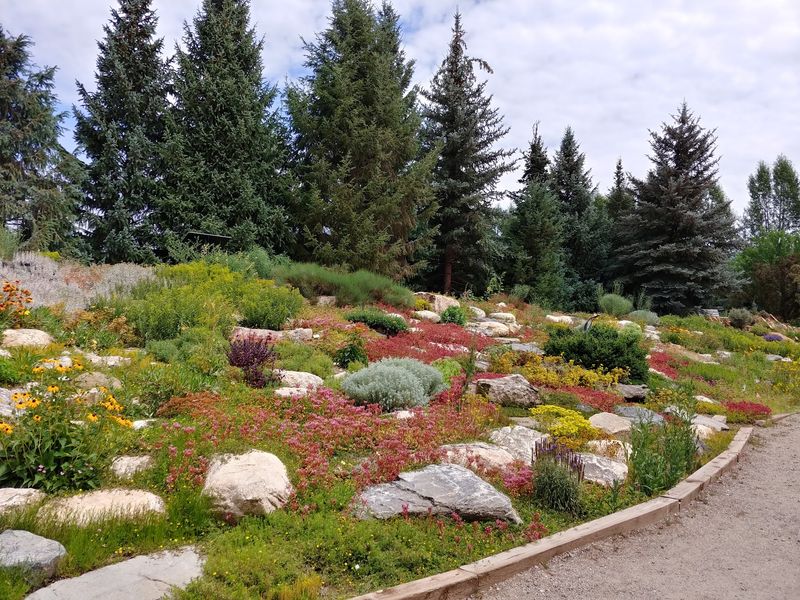
Gardens are not just for spring. Late-season blooms and falling leaves can be just as pretty.
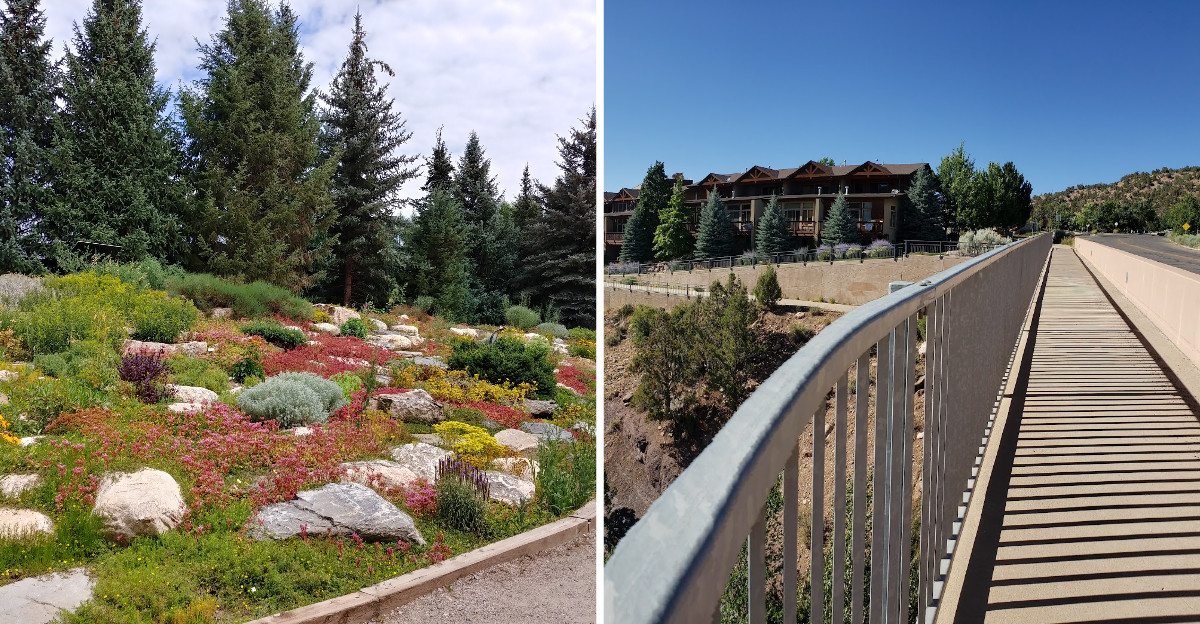
Yampa River Botanic Park in Steamboat Springs fills six acres with ponds, berms, winding paths, sculpture, and about 70 distinct gardens.
What began as a flat horse pasture in the 1990s has grown into a dense collection of plants suited to the Yampa Valley and similar climates.
The variety makes fall surprisingly rewarding. Alpine plants, perennials, annuals, shrubs, and trees occupy different garden rooms, while autumn foliage changes the edges of the property.
Benches appear throughout the grounds, so the visit works for a slow wander or a closer look at individual plantings. Self-guided brochures are available at the entrances.
The Yampa River Core Trail runs beside the park, making it possible to arrive on foot or connect the gardens with a longer walk through Steamboat Springs. Bikes and scooters stay outside the garden gates.
Admission remains free, and the park is currently open daily from dawn to dusk. The 2026 season began in April and continues through October, giving this stop a real fall deadline.
Head to 1000 Pamela Ln. Bring a layer, move slowly, and let the smaller details carry the visit.
10. Animas River Trail, Durango
Have you given any thought to a river shaping an entire town? Some places grow up around their water.
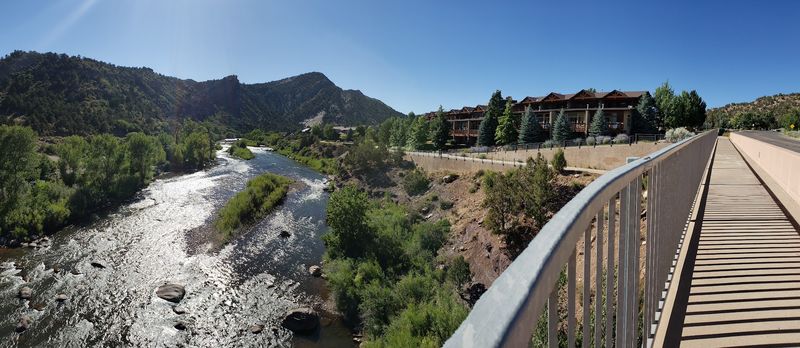
Animas River Trail in Durango shows that idea perfectly.
This paved, shared-use path follows the Animas River for nearly seven miles through the city, connecting parks, open spaces, downtown, the library, and the recreation center.
Visitors can enter from several points rather than completing the full route.
Fall changes the corridor quickly. Aspen, oak, willow, and other riverside trees turn gold and amber, while mountain views frame stretches of the path.
Walkers, runners, cyclists, skaters, and rollerbladers use the route, making it one of the state’s most flexible urban trails.
Fishing access, picnic areas, river put-ins, benches, and public art create easy stopping points. A six-mile scale model of the solar system joined the trail in 2025, adding another feature to this riverside route. Interpretive markers also share local history.
Wildlife habitat remains important along the river corridor, especially around Oxbow Park and Preserve. Birdwatching adds another layer to an outing without turning the walk into a dedicated nature hike.
Schneider Park at 950 Roosa Ave offers parking, picnic tables, restrooms, river access, and a direct trail connection. As of October 2026, the main corridor remains usable, while the Rio Vista Spur is closed during improvements.