These 11 Colorado Alpine Ghost Towns Never Fully Disappeared
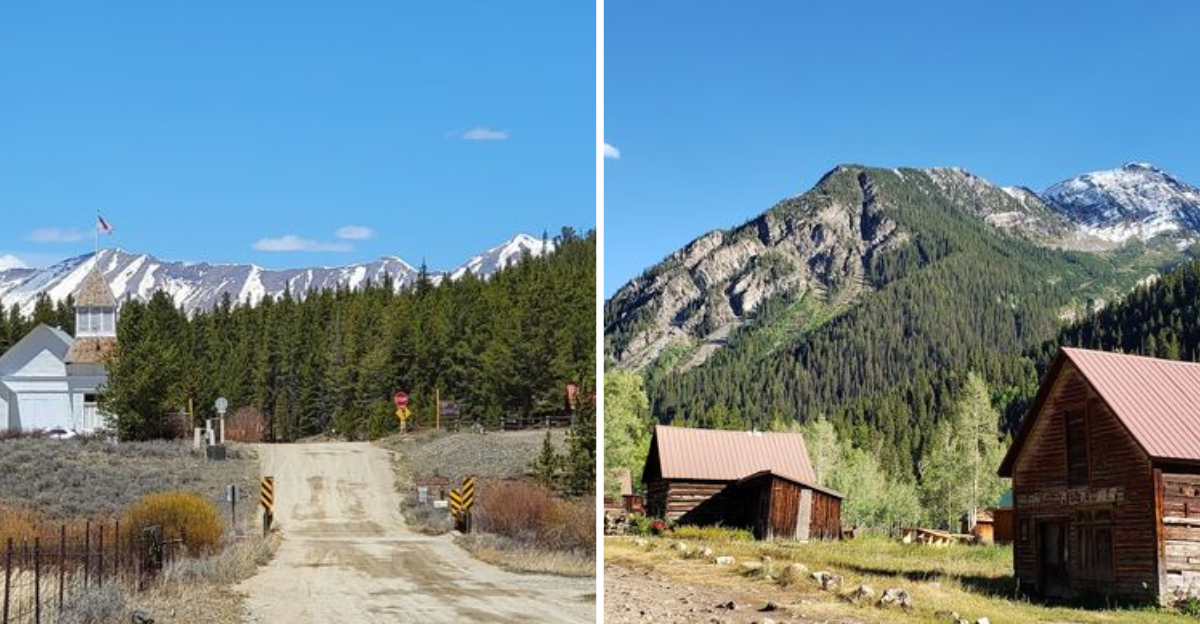
Something strange happens when you stand in the middle of a Colorado alpine ghost town.
The wind moves through broken windows, old timber walls creak.
For a second, you can almost hear the boots and pickaxes of miners who once called these rugged peaks home.
Colorado’s high-country ghost towns are not your average crumbling ruins, they are frozen snapshots of ambition, silver fever, and sheer human grit.
Including the well-preserved streets, and the barely-there remnants, each of these towns holds a story that refuses to stay buried under the snow.
1. St. Elmo
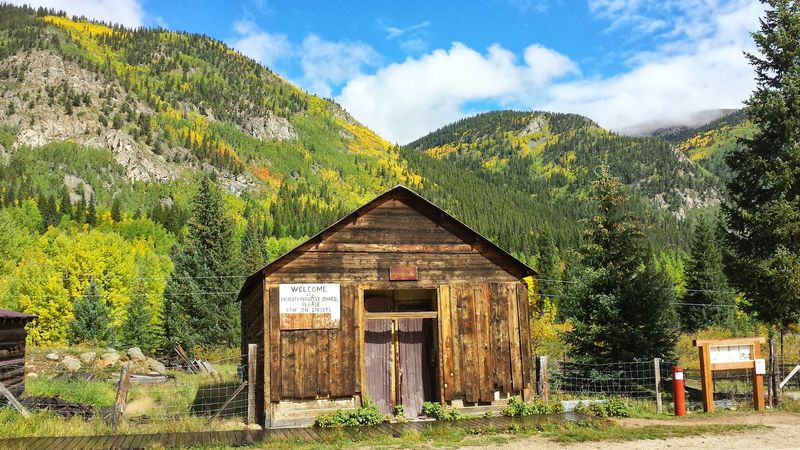
History lovers, photographers, and off-road enthusiasts all find something to love here, making St. Elmo one of Colorado’s most rewarding high-altitude detours.
Few ghost towns in Colorado have aged as gracefully as this one tucked into Chaffee County at about 10,000 feet elevation.
St. Elmo is widely regarded as one of the best-preserved ghost towns in the entire state, and once you see it, you will understand why that reputation is well-earned.
Founded in 1880 during a silver and gold rush, the town once had a population of around 2,000 people, complete with hotels, stores, and a post office.
Today, many of those original wooden structures still stand, giving the whole area a remarkably intact frontier atmosphere that photographs cannot fully capture.
The town sits at the end of Chalk Creek Canyon, making the drive there a scenic adventure on its own.
Summer is the best time to explore, since the road is accessible and the wildflowers are blooming at every turn.
A few buildings can be viewed up close, though many are privately owned, and the local chipmunks have clearly decided they own the place.
2. Ashcroft
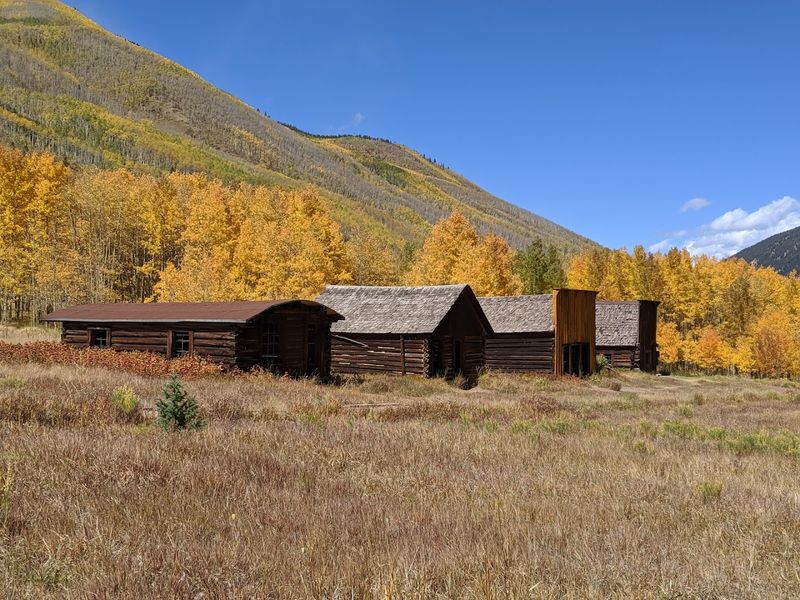
Just nine miles south of Aspen along Castle Creek Road, Ashcroft sits in a narrow valley so scenic it almost feels unfair that the town did not survive.
Founded in 1880, the town briefly rivaled Aspen itself in population and ambition, with a peak of around 2,000 residents and more than 20 saloons lining its main street.
When the railroad bypassed Ashcroft in favor of Aspen, the town emptied out quickly, leaving behind a row of photogenic wooden buildings that have since been carefully restored.
The Aspen Historical Society oversees the site and keeps it open to the public during the warmer months, with knowledgeable guides available on weekends.
Walking through the preserved structures, you can peek inside old cabins and imagine what daily life looked like when silver was king and optimism ran high.
The surrounding scenery is world-class, with the Elk Mountains rising sharply on both sides of the valley and Castle Creek bubbling nearby.
In winter, the road to Ashcroft becomes a popular Nordic skiing trail, meaning the town gets visitors year-round even in its quiet, snow-covered state.
3. Animas Forks
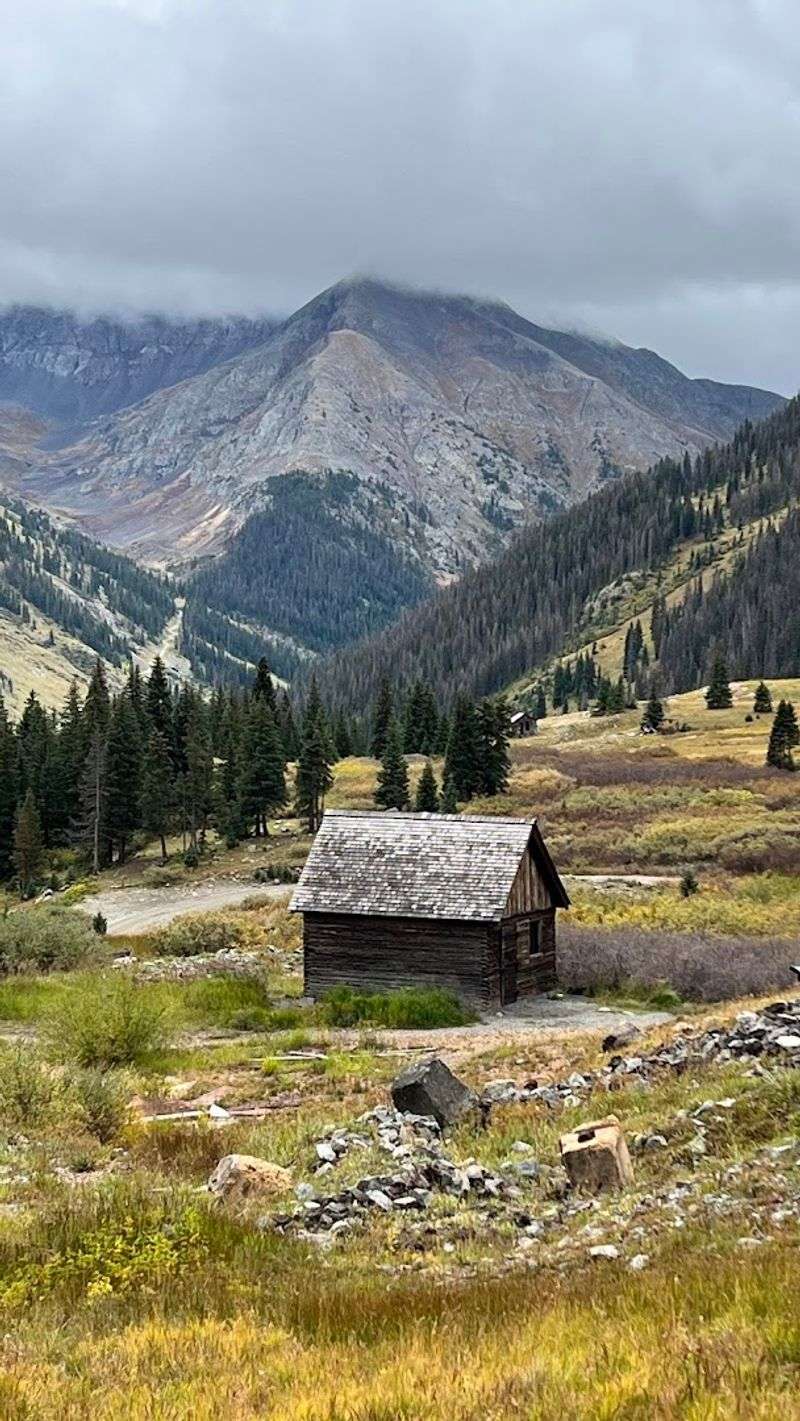
The solitude up here, with no cell service and few crowds, makes the whole experience feel genuinely timeless. It sounds like an adventure, right?
At 11,200 feet above sea level, Animas Forks earns its reputation as one of the highest ghost towns in Colorado, and the scenery up here is nothing short of extraordinary.
The town was established in 1873 and served as a supply hub for surrounding mines, growing to include a post office, hotel, and jail before harsh winters eventually drove most residents away.
Several structures still stand, including a distinctive bay-windowed house that has become one of the most photographed buildings on the entire Alpine Loop.
The Alpine Loop Backcountry Byway runs directly through the townsite. While high-clearance vehicles are strongly recommended, conditions can vary depending on the season and recent weather.
Once you arrive, the combination of crumbling buildings, wildflower-covered slopes, and jagged peaks above creates a scene that feels both melancholy and magnificent.
Summer is the only practical window for a visit, since the passes on either side of town close with the first heavy snowfall of autumn.
Off-road enthusiasts often combine Animas Forks with stops at nearby Engineer Pass and Cinnamon Pass for a full day of high-altitude adventure.
4. Alta
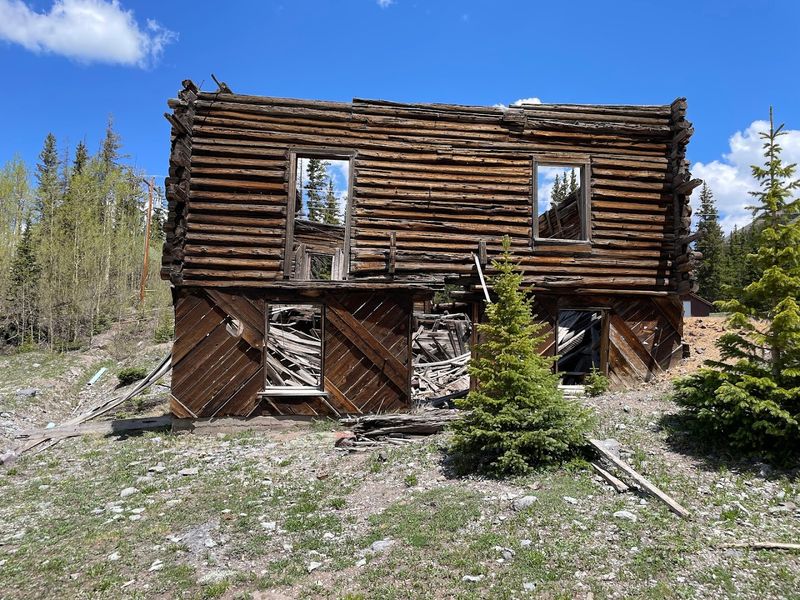
Trust me when I say that the mountain silence here speaks volumes about the ambition that once echoed through these peaks.
Alta is the kind of ghost town that rewards the effort it takes to reach it, though parts of the site sit on private property, tucked into the mountains above Telluride at around 11,000 feet,
The town grew up around the Gold King Mine in the 1870s and 1880s, and at its busiest it supported a mill, boarding houses, and a small but determined community of miners and their families.
Unlike some ghost towns that have been heavily restored, Alta sits in a rawer, more authentic state, with weathered structures slowly merging back into the mountain landscape.
The Gold King Mill building is the most striking remnant, a massive wooden structure clinging to the steep hillside that makes for an unforgettable photograph.
Getting there involves driving a rough dirt road off Highway 145, and a high-clearance vehicle is strongly recommended, especially after rain.
The surrounding terrain is steep, dramatic, and covered in wildflowers during July and August, which makes Alta one of the most visually striking ghost town experiences in the San Juans.
Because it sees fewer tourists than some of the more famous sites nearby, Alta has a quiet, almost private atmosphere that history enthusiasts tend to appreciate deeply.
5. Carson
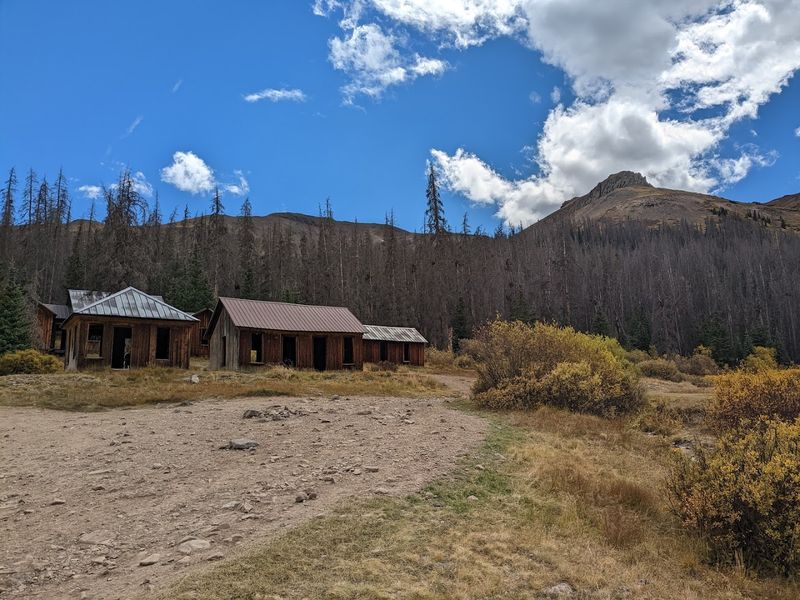
For those who make the effort, Carson delivers an experience of raw, unfiltered Colorado wilderness that feels completely removed from the modern world.
Carson may be the most remote ghost town on this entire list, sitting at roughly 12,000 feet near the Continental Divide in Hinsdale County, one of the least populated counties in the entire United States.
The town was established in the 1880s during a silver rush and named after Christopher Carson, though it never grew much beyond a handful of cabins and a mill.
What remains today is a small cluster of remarkably intact log structures that have survived the extreme altitude and brutal winters largely because so few people ever make it up here to disturb them.
Reaching Carson requires a serious four-wheel-drive vehicle and a willingness to navigate rough, high-altitude roads that are only open during the brief summer season.
The drive itself passes through some of the most remote and spectacular alpine terrain in Colorado, with sweeping views of the San Juan and Rio Grande National Forests stretching in every direction.
Because Carson sits so close to the Continental Divide, the weather can change with almost no warning, so packing layers and checking forecasts is non-negotiable.
6. Capitol City
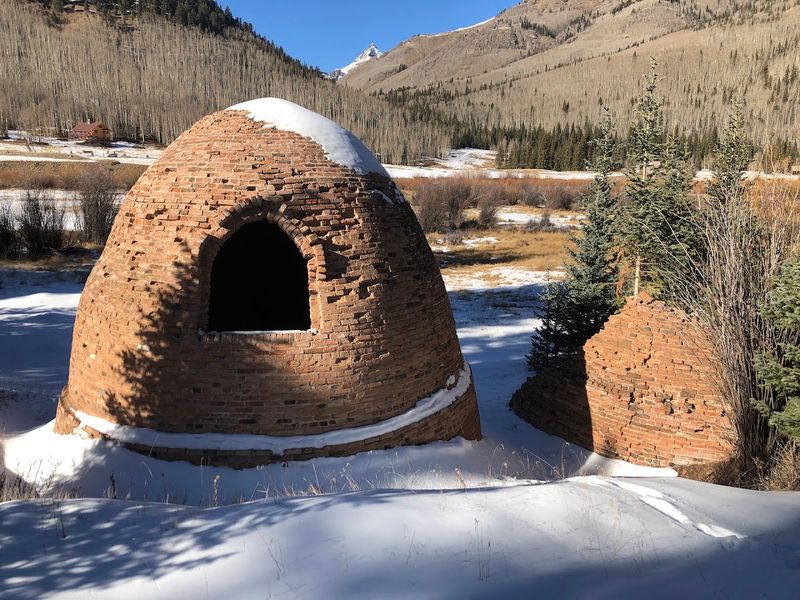
I have to admit, there is something wonderfully audacious about the story of Capitol City.
It’s a silver mining settlement in Hinsdale County whose founder, George Lee, was so confident in its future that he built a governor’s mansion. He fully expected the town to become Colorado’s state capital.
Founded in 1877, the town reached a peak population of around 400 people and included a smelter, post office, and a collection of sturdy buildings that reflected Lee’s enormous ambitions.
The capital never materialized, and by the early 1900s the silver boom had faded, leaving Capitol City as a quiet footnote in Colorado’s mining history.
Today, a few ruins and the remnants of the old smelter are still visible along Henson Creek Road, which runs through the Lake City area in the Gunnison National Forest.
The road is accessible by high-clearance vehicle in summer and connects to other historic sites along the Alpine Loop, making it a natural stop for backcountry explorers.
The wide valley setting gives Capitol City a more open, pastoral feel compared to some of the tighter canyon ghost towns nearby.
Standing among those old stones, it is hard not to smile at the sheer ambition of a man who once looked at these mountains and saw a capital city waiting to be born.
7. Red Mountain Town
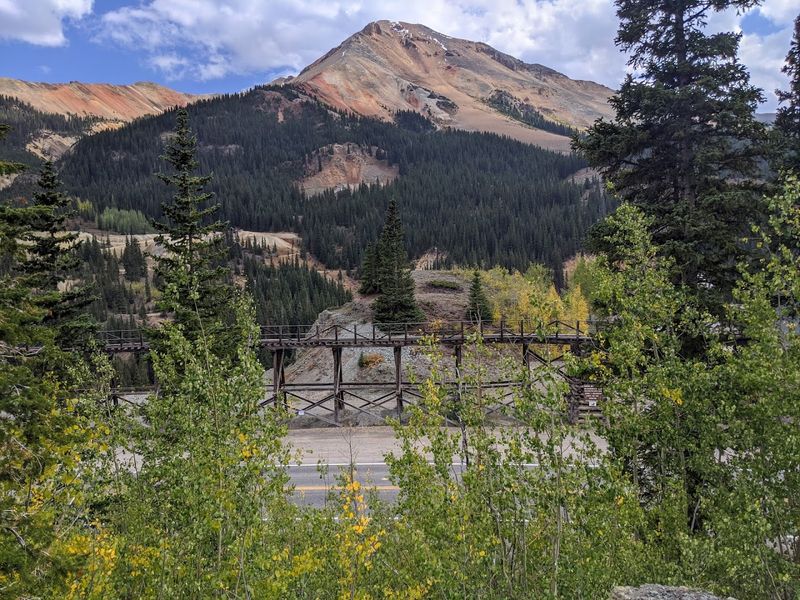
The San Juan Mountains are full of mining history, but Red Mountain Town has a setting so dramatic it practically demands to be noticed.
Named for the striking iron-oxide-stained peaks that surround it, the town developed during the 1880s silver boom along what is now the Million Dollar Highway, one of the most scenic and hair-raising drives in the American West.
At its peak, the Red Mountain mining district supported around 1,000 people, with newspapers, a school, and multiple hotels catering to miners who were pulling serious wealth from the surrounding peaks.
The town actually burned twice and was rebuilt both times, which says something about the determination of the people who chose to live at this altitude.
What remains today includes scattered ruins, old mine structures, and tailings piles that blend almost seamlessly into the red-tinted landscape.
Driving through on Highway 550 between Ouray and Silverton gives you a taste of the area, but getting out and exploring on foot reveals far more.
The combination of vivid geology, mining relics, and mountain scenery makes Red Mountain Town one of the most photogenic ghost town areas in the entire state. The mountains here look like they were painted by someone who had never heard the word subtle.
8. Teller City
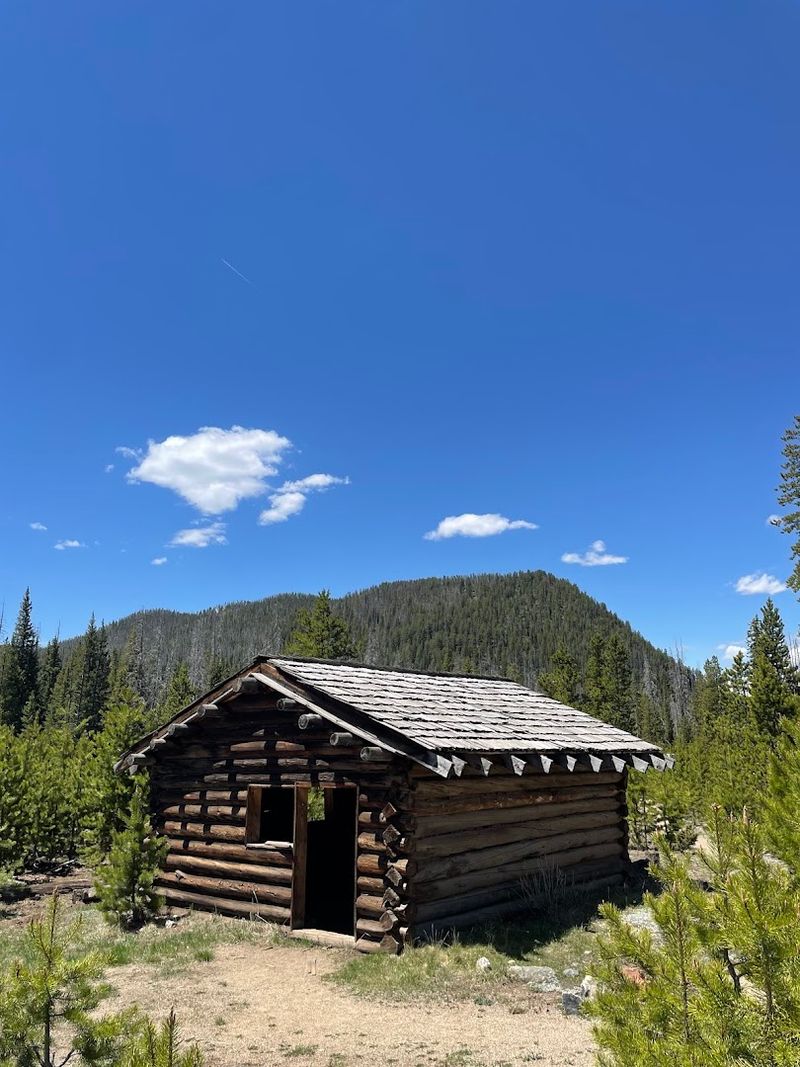
Most Colorado ghost town fans have never heard of Teller City, which is part of what makes it so interesting to those who seek it out. I have to be honest, I didn’t know about it either, but it’s never too late to learn something new, right?
Teller City, located in the North Park region of Jackson County, was founded in 1879 during a brief but intense silver rush and quickly grew to a population of around 1,200 people, complete with hotels, a newspaper, and a school.
The bust came fast, and by the mid-1880s the town was essentially empty, leaving behind a collection of wooden structures that have since collapsed back into the forest floor.
Today, the site is largely overgrown, and finding the remnants requires some effort and a good sense of direction, which is exactly the kind of challenge that dedicated history hunters enjoy.
The North Park area is itself a spectacular and underappreciated part of Colorado, known for its wide-open sagebrush valleys, abundant wildlife, and the towering peaks of the Never Summer Mountains on the horizon.
Because Teller City sees relatively little traffic, a trip here feels more like genuine exploration than a guided tour. Getting there typically involves driving forest roads that require a high-clearance vehicle, so planning ahead is essential.
9. Crystal
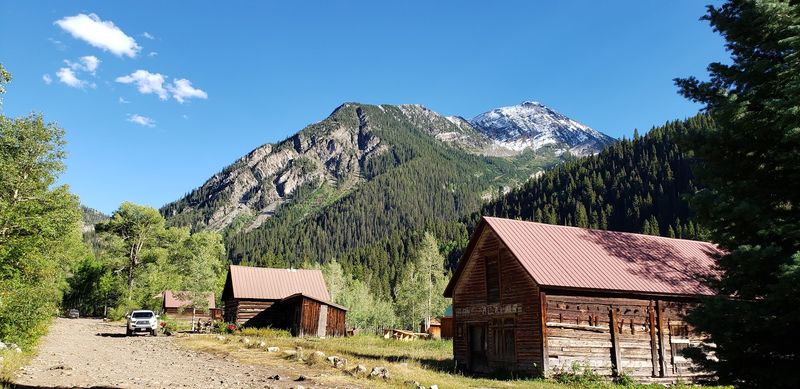
Crystal is one of those ghost towns that has a single image so iconic that it has practically become a symbol of Colorado itself.
The Crystal Mill, a weathered wooden powerhouse, perched dramatically on a rocky ledge above the Crystal River, is one of the most photographed structures in the entire state, and seeing it in person for the first time is genuinely breathtaking.
The town of Crystal was founded in 1880 and served the surrounding silver mines through the early 1900s, sitting at around 8,900 feet in a narrow valley near the town of Marble in Gunnison County.
A handful of old cabins and structures still stand alongside the famous mill, giving the site a complete and evocative sense of what life here once looked like.
Reaching Crystal requires navigating a notoriously rough four-wheel-drive road from Marble, and the last section near the mill is genuinely challenging even for experienced off-road drivers.
The effort is absolutely worth it, especially in late summer when the aspen trees begin to turn gold and the light on the old mill is nothing short of magical. Crystal proves that sometimes the hardest places to reach are the ones that stay with you the longest.
10. Tincup
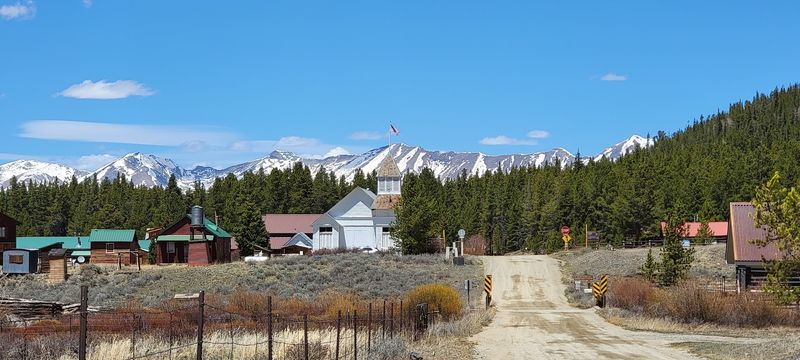
Who would’ve thought that unlike some of the completely abandoned towns on this list, Tincup occupies an interesting middle ground.
It’s technically still a town with a handful of year-round residents, but quiet enough and historic enough to feel genuinely ghost-town-like for much of the year.
Established in 1879 during a gold rush, the town sits at 10,153 feet in the Taylor River Valley in Gunnison County and once had a population of around 6,000 people during its rowdy peak years.
Several original buildings survive, including an old schoolhouse, a cemetery with weathered wooden markers, and a collection of historic cabins that give the town real character.
Tincup is accessible via a scenic dirt road from Taylor Park Reservoir, and the drive through the Taylor River Canyon is stunning in its own right.
The surrounding area offers excellent fishing, hiking, and off-road trails, so Tincup works well as a base for a longer mountain adventure rather than just a quick stop.
In summer, a small number of cabins in and around town are available for rent, which makes spending a night here a genuinely atmospheric experience.
Tincup is the rare ghost town that still has a little life left in it, just enough to make you want to stay a while longer.
11. Animas City
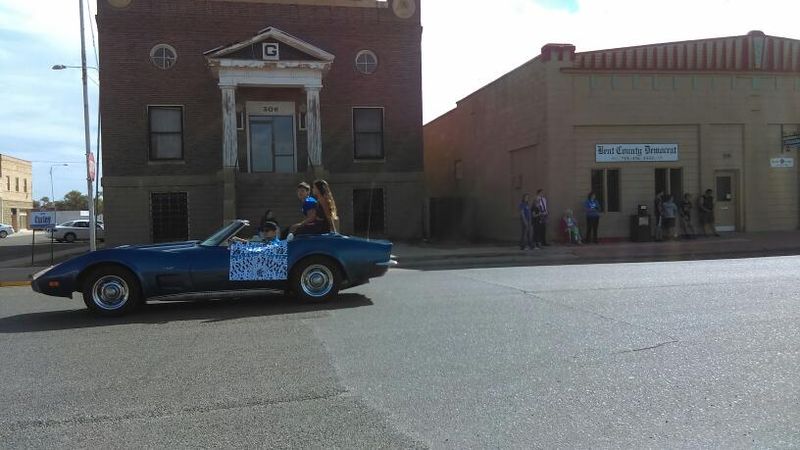
Of all the towns on this list, Animas City has perhaps the most unusual fate. Not quite a ruin, not quite a ghost town, but a settlement that was slowly absorbed by its more successful neighbor rather than simply fading away on its own.
Founded in 1876 along the Animas River in what is now La Plata County, Animas City was the original settlement in the area and predates Durango by several years, serving as a supply hub for the surrounding San Juan mining camps.
When the Denver and Rio Grande Railroad chose to build its depot in the newly platted town of Durango rather than Animas City in 1880, the older settlement’s fate was essentially sealed.
Residents and businesses migrated south to Durango almost immediately, and Animas City was eventually annexed by Durango in 1947, erasing it as a separate municipality.
Today, the North Durango neighborhood roughly occupies the old Animas City townsite, and a few historical markers acknowledge the community that once stood here.
The Animas City story is a reminder that not every town disappears dramatically, some simply get absorbed into the progress happening just down the road.
For history lovers exploring the Durango area, tracking down those markers and standing on the original townsite adds a quietly fascinating layer to an already rich regional story.