Family Adventure Awaits Along Florida’S Easy Lockwood To Barr Waterfall Trail
Nobody in the family needs to conquer a mountain for this one. That is part of the appeal.
This Florida trail keeps the effort reasonable while still giving the walk a proper sense of adventure.
Kids get something to look forward to. Adults get a route that does not feel like punishment.
The landscape changes enough to keep everyone interested, and the payoff feels unusual for such a famously flat state.
Save this for a day when everyone wants outside time without turning it into an expedition. It is simple, scenic, and just surprising enough to make the drive worthwhile.
Where The Forest Begins
Sandy stretches are part of the terrain almost immediately, adding a very Florida feel to the walk.
Little Big Econ State Forest now covers approximately 11,696 acres in eastern Seminole County. Sandhill, scrub, pine flatwoods, and other sandy upland communities help explain the pale ground underfoot.
The forest sits near Geneva and Oviedo, a short drive northeast of Orlando. Several entrances serve different activities, so choosing the right one matters more than most visitors expect.
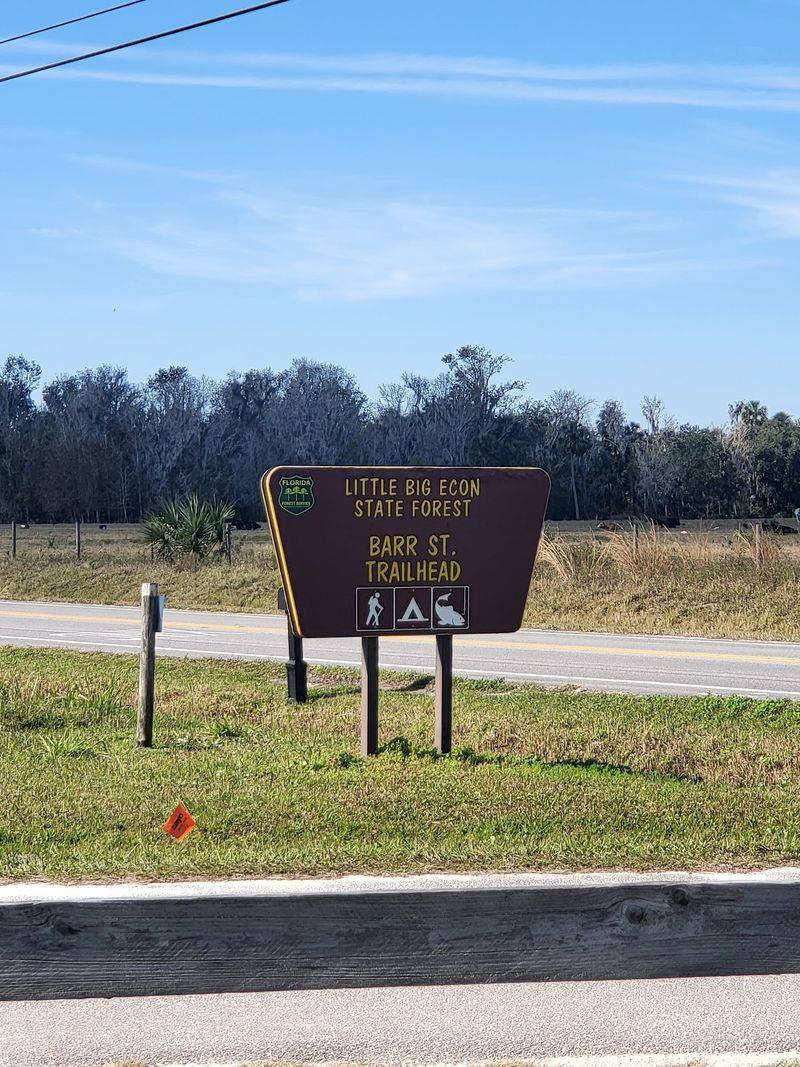
Barr Street is the forest’s designated hiking trailhead, while Jones East serves bicycles and the equestrian trailhead serves horseback riders. Do not count on restroom facilities at the Barr Street trailhead.
Download the official georeferenced hiking map before you arrive and keep a backup copy available for trail junctions.
The current state-forest day-use pass is $2, and passes can be purchased through Florida State Forests’ ReserveAmerica webstore.
Forest headquarters is at 1350 Snow Hill Rd in Geneva, but the Lockwood-to-Barr hike is accessed separately from Lockwood Road or the Barr Street Trailhead at 951 Barr Street in Oviedo.
Arriving early can help with heat and daylight, but parking availability varies by day.
Blackwater River Views
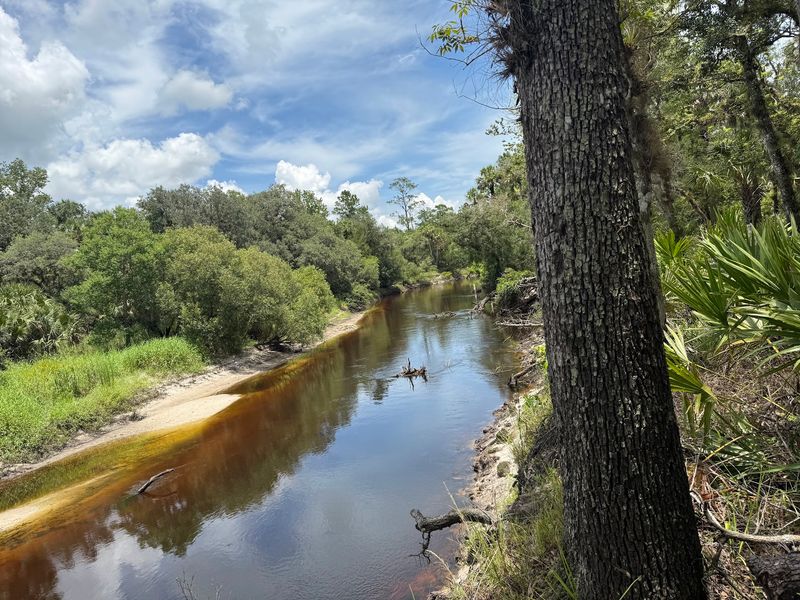
The Econlockhatchee River brings dark, tea-colored water to this stretch of the Florida Trail.
Locals call it the Econ, and the state calls it an Outstanding Florida Waterway. Tannins and other organic material from surrounding vegetation give blackwater rivers like the Econ their naturally dark color.
The river curves hard and often, carving tall sandy banks along the way. From the bluffs above, you look down onto wide beaches of white sand that seem borrowed from the coast.
Some stretches sit glassy and still, mirroring the canopy overhead. Others ripple over shallow shoals with a steady murmur.
Alligators are part of the forest’s documented wildlife, so stay back from the shoreline and treat the river as wildlife habitat rather than a swimming stop.
Water levels shift with the seasons, and dry spells expose enormous sandbars. After heavy rain, the same spots vanish under moving current.
Sandy bluffs above the river offer natural places to pause and take in the water before continuing.
That river soundtrack follows you for much of the hike, and it never gets old.
The Waterfall Nobody Expects
Waterfalls in Florida sound like a tall tale. Then you hear the burble ahead and pick up your pace.
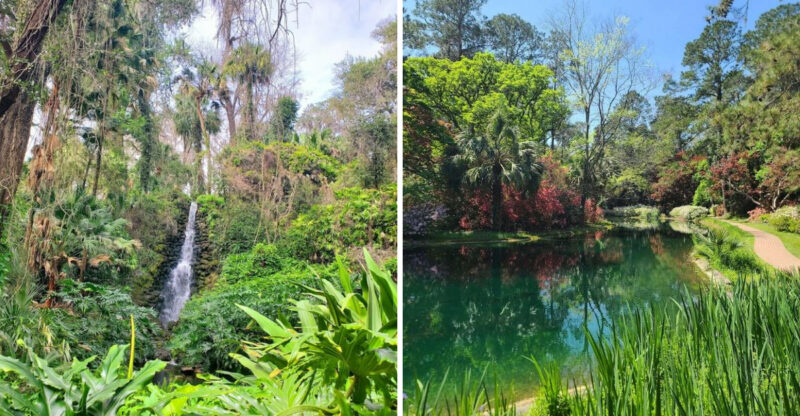
Boonie Falls is a small cascade along the Florida Trail where water rushes through a tangle of roots and cypress knees.
Small scale does not mean small charm. The sound alone feels out of place in a state famous for pancake-flat ground, and that contrast is the whole appeal.
Some hiking guides describe Boonie Falls as the southernmost waterfall along the Florida Trail. Kids love claiming that bragging right.
Flow depends heavily on rainfall, so visit after a wet stretch for the best show. During droughts, the cascades shrink to gentle riffles over rock.
Footing around the cascade can be rooty, muddy, and uneven, especially after wet weather. Hold small hands, and keep phones in zipped pockets.
A nearby bench gives hikers a convenient place to pause beside the cascade.
Manage expectations, and this little cascade delivers far more delight than its height suggests.
Easygoing Miles For Families
Flat does not automatically mean effortless, though this route comes close.
The Lockwood-to-Barr segment is roughly 2.7 to 3.3 miles one way, depending on the mapping source; a roughly 5.5- to 6-mile outing results when the route is completed as an out-and-back.
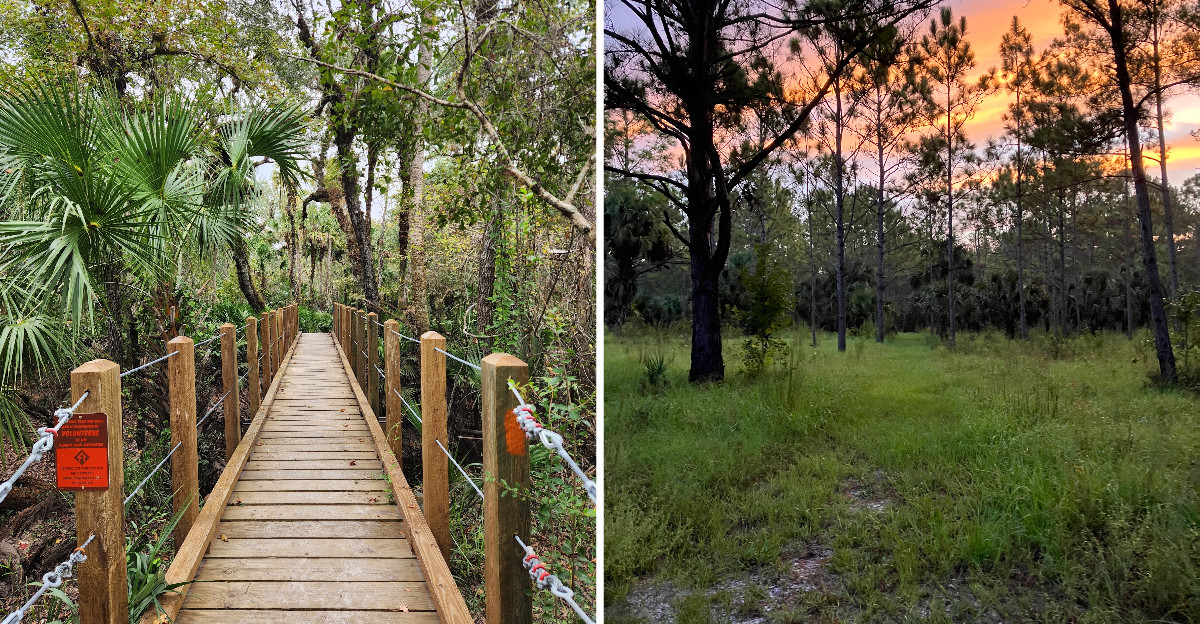
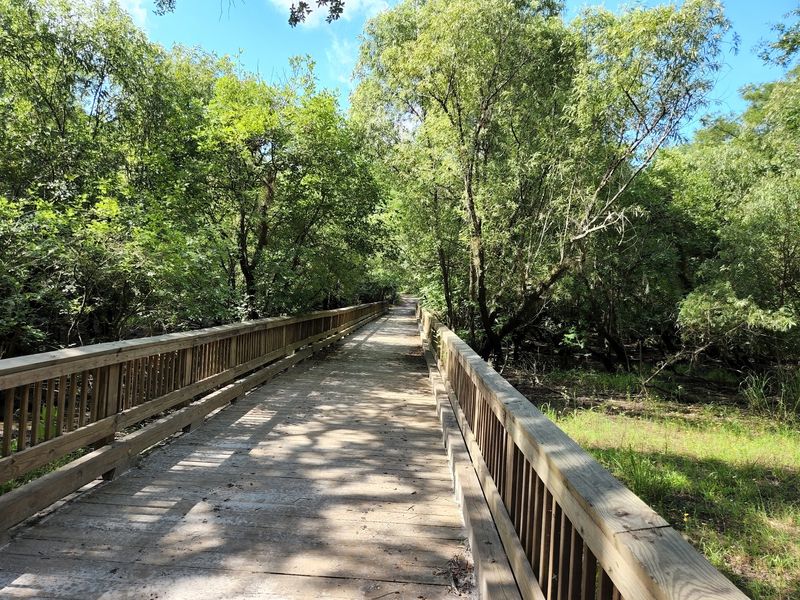
Surfaces keep switching, which honestly makes the walk more fun. Packed dirt gives way to soft sugar sand, then to wooden boardwalks lifted above wet ground.
Exposed roots appear regularly under the oaks, so sneakers with decent grip beat sandals. Sandy patches slow your pace a little, especially for short legs.
Much of the route passes beneath cabbage palms, cypress, live oaks, and other forest canopy, providing substantial stretches of shade. Tall pines and sprawling live oaks do the heavy lifting.
Narrow singletrack, exposed roots, sand, and occasional muddy sections make this a poor fit for most standard strollers; families can shorten the outing by turning around whenever needed.
Families can easily shorten the hike by choosing an out-and-back turnaround point rather than completing the entire Lockwood-to-Barr segment. Nobody checks your mileage.
Dogs are allowed on the forest’s trails but must remain on a leash no longer than 10 feet.
Wildlife Along Every Bend
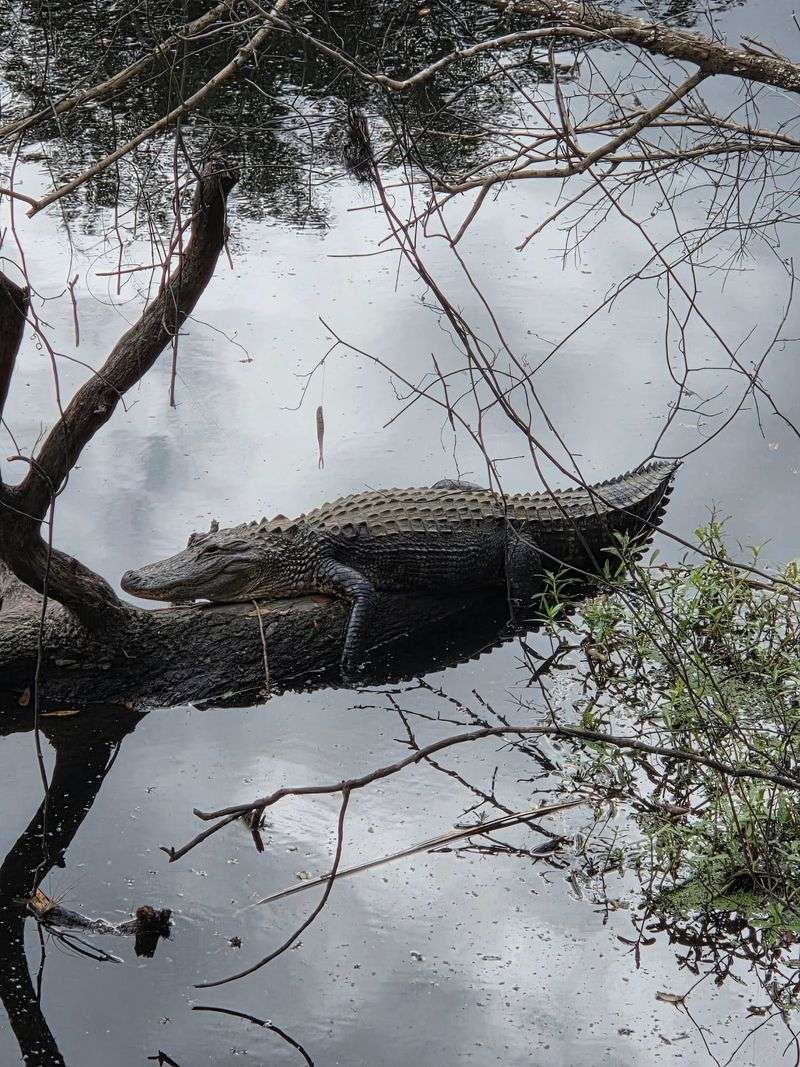
Alligators are among the wildlife officially documented in Little Big Econ State Forest.
The forest supports wildlife including alligators, gopher tortoises, Sherman’s fox squirrels, bald eagles, sandhill cranes, and wood storks. Alligators sun themselves on the sandbars, looking remarkably like driftwood with opinions.
Deer and gopher tortoises both occur within the forest, along with numerous other native species.
Overhead, the canopy fills with cardinals, woodpeckers, hawks, and wading birds near the water. Squirrels, skinks, and anoles rustle the leaf litter nonstop.
Fishing is popular along the Econlockhatchee, where largemouth bass, catfish, crappie, bluegill, and other fish are caught. Turtles may also be seen around the river, but wildlife sightings vary from visit to visit.
Keep a healthy distance from everything, especially reptiles near the shoreline. Children and pets should stay on the trail and close by.
Stay on marked trails to protect sensitive habitat and reduce unnecessary encounters with insects and other wildlife.
Move quietly, pause often, and the forest reveals far more than it does to fast hikers.
Landscapes That Keep Changing
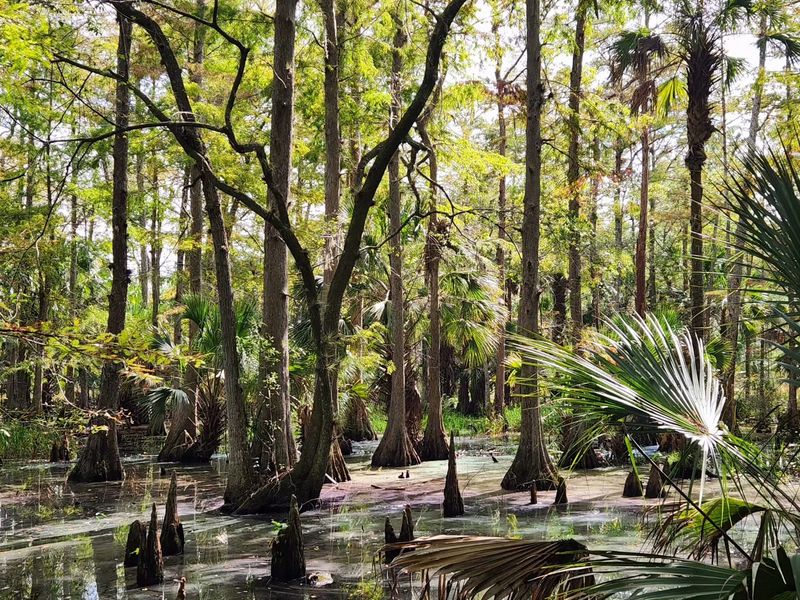
Pine flatwoods, sandhill, scrub, wetlands, and oak-palm hammocks create noticeable changes in scenery along the forest’s trails.
Variety is the quiet superstar of this hike. Pine flatwoods stretch out with wiregrass and saw palmetto crowding the understory.
Oak-palm hammocks create some of the shadiest stretches of the hike beneath mature live oaks, palms, and other dense vegetation.
Cypress swamp appears next, with knobby knees poking from still black water. Boardwalks carry you over those soggy stretches without wet socks.
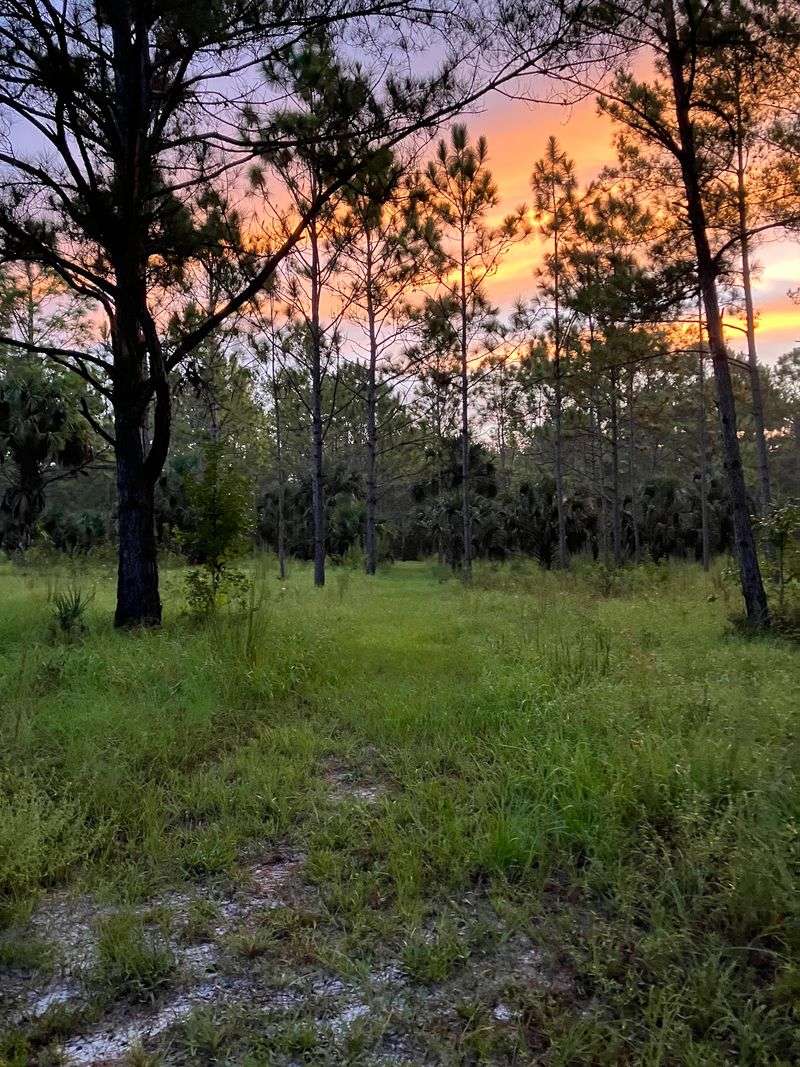
Wet prairie, scrub, sandhill, and pine flatwoods add more open sections between the denser river hammocks. Sunset light across those clearings is worth timing your walk around.
The forest preserves a wide mix of native Central Florida ecosystems within a rapidly developed part of Seminole County.
Bridges and boardwalks carry hikers across several wet or low-lying sections of the route. Bring a camera with a decent wide lens, because the light shifts constantly under the canopy.
The mix of flatwoods, scrub, sandhill, wetlands, and river hammocks gives the trail unusually varied scenery for a relatively short Central Florida hike.
Following The Orange Blazes
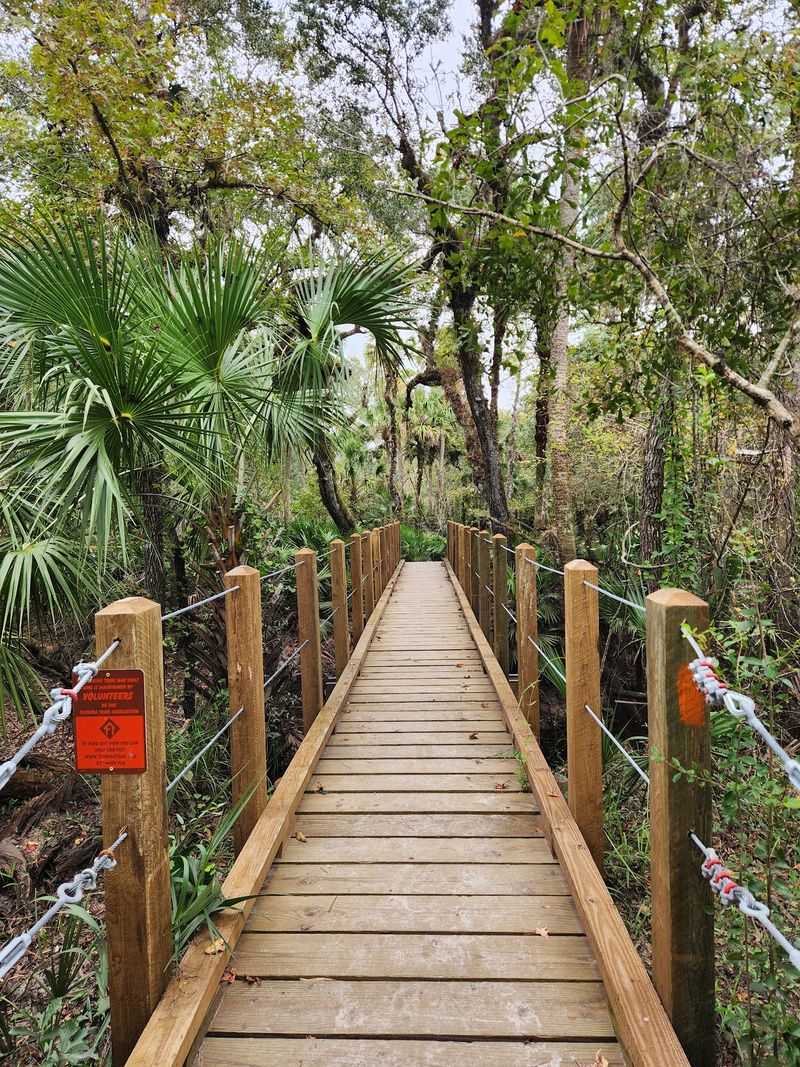
Getting turned around here is genuinely possible, so pay attention at junctions. Trails split more often than newcomers expect.
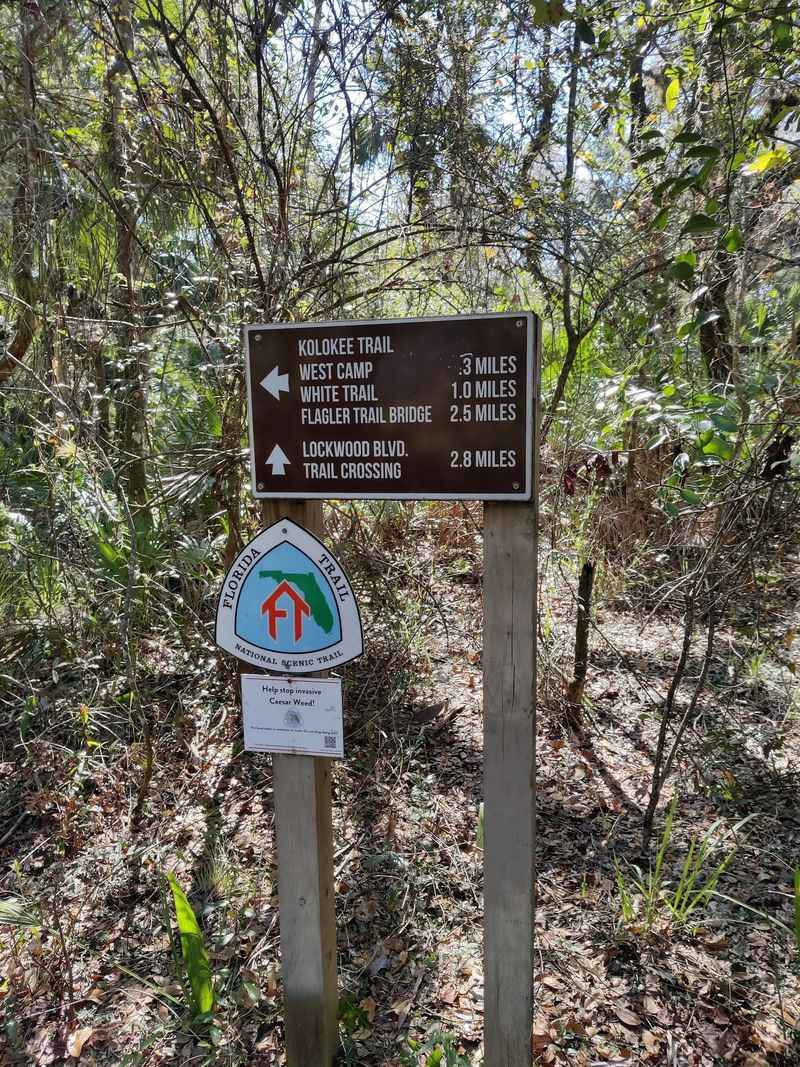
Orange blazes mark the Florida National Scenic Trail sections, painted on tree trunks at eye level. Blue blazes mark connector trails, while orange blazes mark the Florida National Scenic Trail.
Wooden bridges and boardwalks carry hikers over creeks and low wet ground. Some feel sturdy and new, others weathered and charmingly rustic.
Rescue markers sit periodically along the Florida Trail portions, listing location references for emergencies. Snap a photo of one if you feel uneasy.
Download an offline map before losing signal, and carry a printed copy as backup. Batteries fail at inconvenient moments.
Telling someone your planned route is smart practice, particularly on longer loops. Daylight disappears fast under thick canopy.
Flooding can make trail sections unsafe or impassable, so check current Florida Forest Service notices before driving out.
If the blaze color changes unexpectedly, stop and compare your position with the official map before continuing.
Little Big Econ State Forest rewards hikers who navigate with intention rather than autopilot, and the payoff is a calm, confident walk.
Smart Timing And Packing
Summer here tests your commitment. Heat and humidity climb fast, and mosquitoes treat hikers like a buffet.
Cooler months deliver the sweet spot, roughly November through March. Cooler winter months generally make Central Florida hiking more comfortable than the hottest part of summer.
Spring and fall work nicely too, especially early mornings before the heat builds. Start by eight, and you will thank yourself.
Insect repellent is strongly recommended, especially in warm or wet conditions. Apply before leaving the car, then reapply midway.
Carry all the drinking water you expect to need, because the trail itself does not provide water stations.
Sunscreen still matters despite the shade, because prairie and riverbank stretches sit fully exposed. A brimmed hat helps considerably.
Closed-toe shoes protect toes from roots and ants, and long socks discourage ticks. Pack snacks, a small first aid kit, and a trash bag.
An early start can help with heat and daylight, but parking and crowd levels vary by day.
Wet weather can leave sections muddy or flooded, so footwear that can handle wet, uneven ground is useful. Prepare properly, and this corner of Florida feels welcoming rather than punishing.