Florida’s Ancient Cypress Swamp Where Roseate Spoonbills And Wood Storks Nest Above The Boardwalk
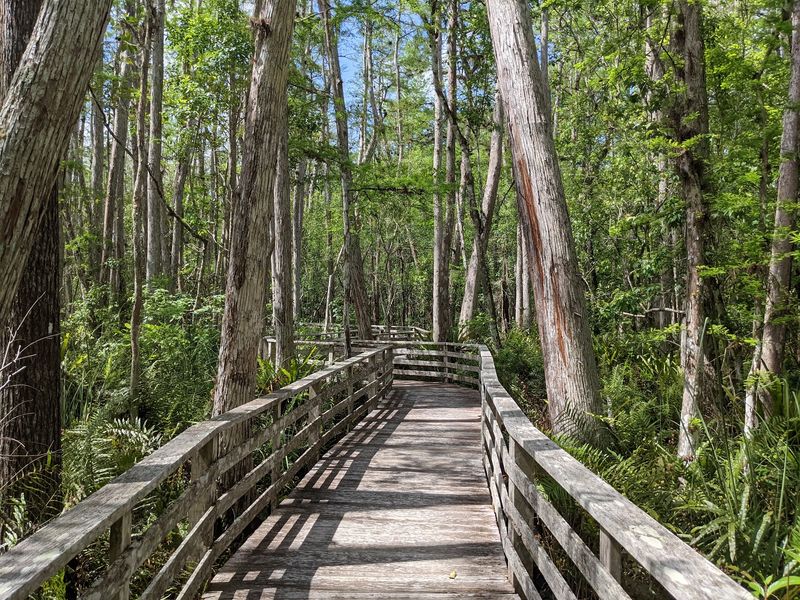
I went in expecting a pleasant walk and maybe one sleepy alligator, which says more about my imagination than about the swamp. Florida still holds a stretch of old-growth cypress where wading birds build stick nests in the branches above a wooden path, and you can stand right underneath them.
Pink feathers flash in the canopy, storks clack overhead, and gators drift through the dark water below like they own the place, because they do. Bring binoculars, wear long sleeves, and get there early enough to hear the swamp wake up.
A Quiet Road Into Cypress Country
Nothing about the drive prepares you. Sanctuary Road runs through flat, scrubby country northeast of Naples, the kind of landscape that seems to promise very little, and then the parking lot appears with a modest visitor center sitting at the edge of a dark wall of trees.
That building is the gateway to Audubon Corkscrew Swamp Sanctuary, and it handles the basics well. Tickets are sold at the front desk, where staff and volunteers walk you through the layout of the trail before you head out.
There is a gift shop with an unusually thoughtful selection, a small cafe with water and snacks, a discovery center, and clean restrooms.
Use those restrooms. Once you step onto the boardwalk, there are no more until you loop back to the start.
Parking is plentiful, which matters on winter mornings when the lot fills with early risers carrying cameras and binocular straps. Signs and a chalkboard near the entrance hint at what has been spotted that day, a small preview of the show ahead.
Find it at 375 Sanctuary Road West, Naples, Florida 34120.
Protected Since 1954
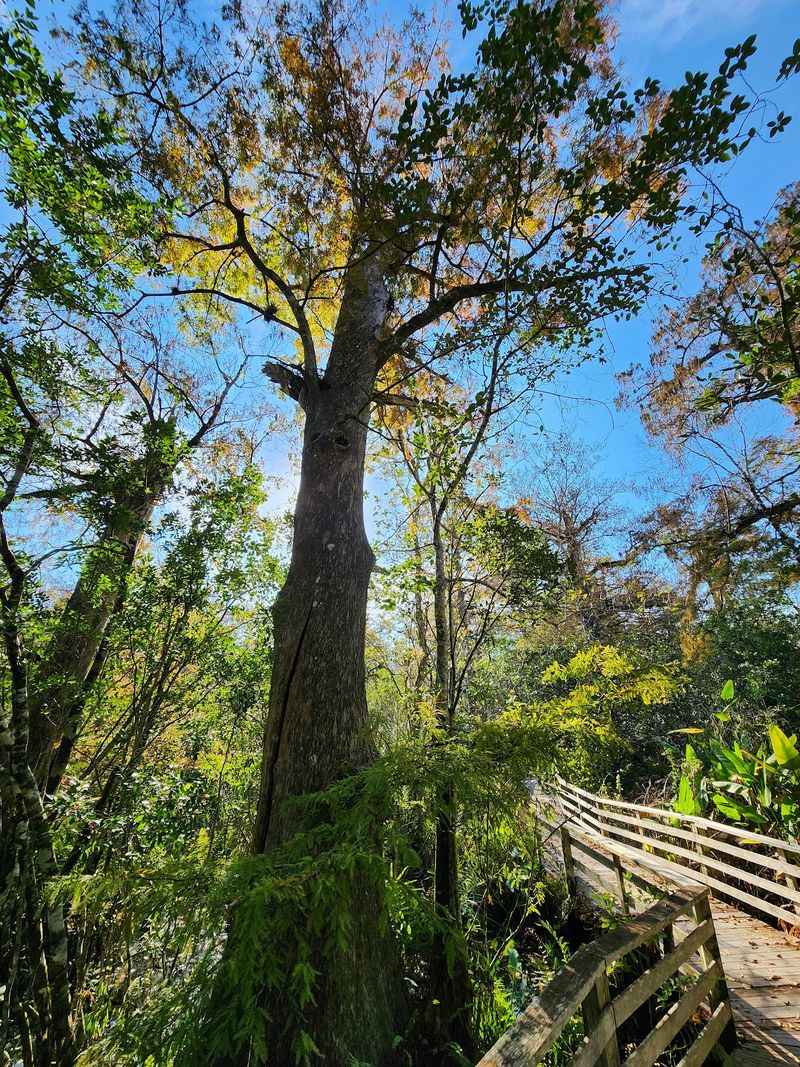
Here is a number that sticks: the sanctuary covers roughly 13,000 acres. That makes it one of the largest tracts of privately owned conservation land in Florida, and it belongs to the National Audubon Society, not the state park system.
Plenty of people assume otherwise. The confusion is understandable, since the grounds feel as polished as any public park, with tidy signage, sturdy walkways, and staff who seem happy to chat about what you saw.
The sanctuary was established in 1954, and the decades since have turned it into a rare thing in this part of the state. Southwest Florida grew fast, with golf courses, gated neighborhoods, and highways spreading across former wetlands.
Corkscrew stayed wild. Stepping off the parking lot and into the cypress feels like crossing a border between two different Floridas.
Education sits close to the center of the mission. Events and programs run throughout the year, and the discovery center gives younger visitors a hands-on way to connect the dots between water, trees, and wildlife.
Membership is an option for anyone planning multiple trips, and it supports the conservation work directly, a quiet way to help keep this place exactly as it is.
Giants That Were Here First
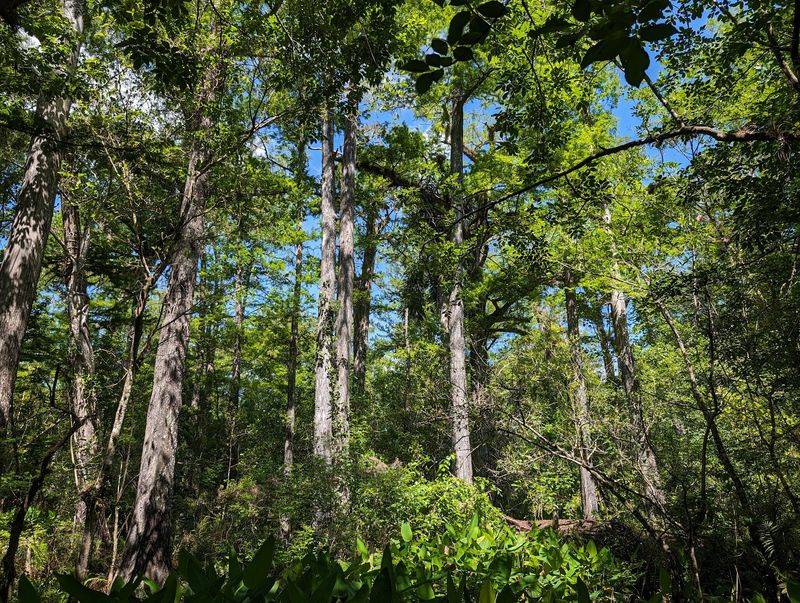
Crane your neck. The bald cypress trees here have stood for hundreds of years, and their trunks rise so high that the canopy seems to belong to another weather system entirely.
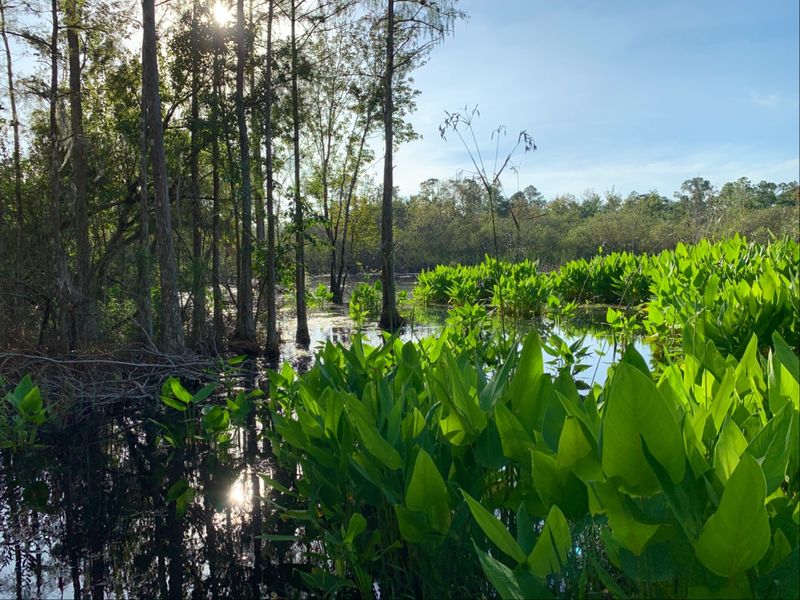
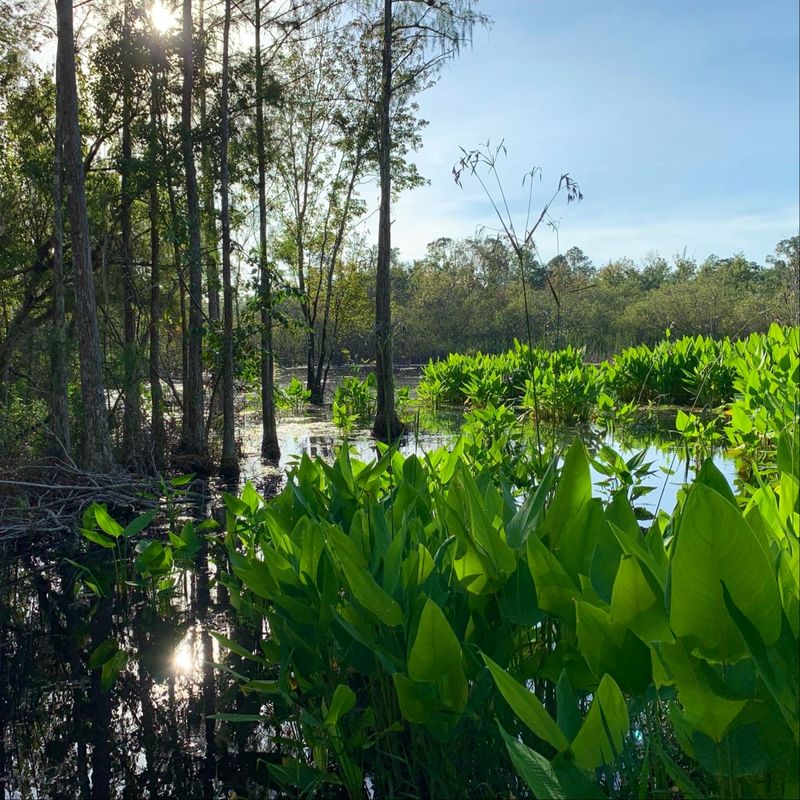
Old-growth forest of this kind has almost vanished from Florida, which makes Corkscrew a living record of what much of the region once looked like. Buttressed bases flare out into the water, and knobby cypress knees poke up from the mud like a crowd of small, curious onlookers.
Look closer at the bark and branches. Ferns, air plants, and mosses hang from nearly every surface, layering green upon green until the light turns soft and filtered.
After a rainstorm the whole forest looks freshly painted, and the air carries an earthy, sweet scent that lingers in memory long after the drive home.
These trees do more than look impressive. Their sturdy limbs, standing above standing water, give wading birds a protected place to build nests away from land-based predators.
Without the cypress, there would be no rookery overhead.
A slow pace pays off here. Pausing at the benches lets your eyes adjust, and the forest starts revealing details that a brisk walk would miss entirely.
Wood Storks Overhead
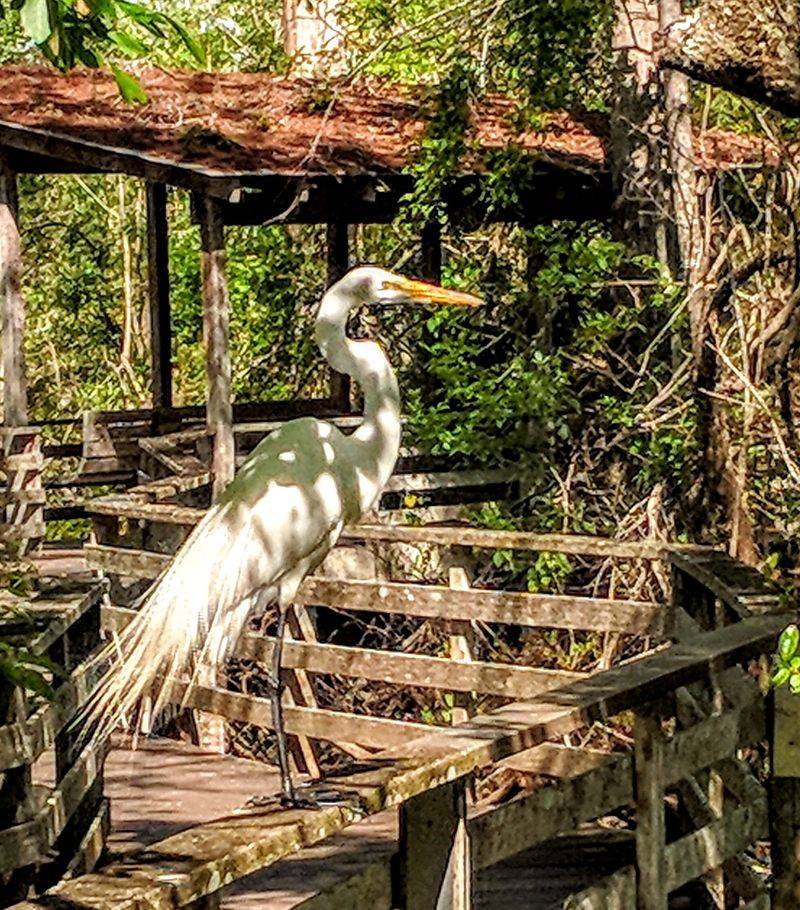
What has a bald, scaly gray head, stands taller than a toddler, and builds a nest of sticks high above alligator-filled water? Meet the wood stork, the bird long tied to this swamp’s identity.
Up close, wood storks look like they were assembled from spare parts. The thick, curved bill, the wrinkled head, the black-edged white wings all seem slightly mismatched.
In flight, though, they transform into elegant gliders, riding thermals in slow circles above the canopy.
Their feeding style is pure instinct. A stork sweeps its open bill through shallow water and snaps it shut the instant it touches a fish, a reflex among the fastest in the bird world.
That technique depends on water levels dropping at just the right pace, concentrating prey in pools.
Because of that sensitivity, wood storks serve as indicators of wetland health. When conditions line up, nesting activity picks up from late winter into spring, and the gawky chicks become visible from the walkway, begging loudly and flapping stubby wings.
Nesting varies from year to year with rainfall and food supply, so call ahead or check the sightings board before planning a trip around the colony.
Pink Feathers in a Green World
A flash of bubblegum pink against dark cypress bark stops people mid-step. From a distance, more than one first-timer has whispered the word flamingo, but the spatula-shaped bill gives the roseate spoonbill away.
That color comes straight from the menu. Spoonbills feed on small fish, shrimp, and other crustaceans rich in carotenoid pigments, and as the birds mature those pigments build up in their feathers.
Younger birds look pale and washed out, while adults glow in shades closer to sunset.
Watch one feed and the bill makes sense. The bird swings its head side to side through shallow water, sensing prey with that flat tip and snapping it up in one motion.
The same bill shows up during courtship, when pairs touch and clatter bills in a surprisingly tender display.
Spoonbills, like wood storks, prefer trees standing over water for their nests, and both parents share the work of incubating eggs and hauling in fresh sticks. Seeing that cooperation from the boardwalk turns a pretty bird into a small domestic drama.
Zoom lenses help, though even the naked eye catches plenty when the birds settle close to the rail.
Two and a Quarter Miles of Wooden Planks
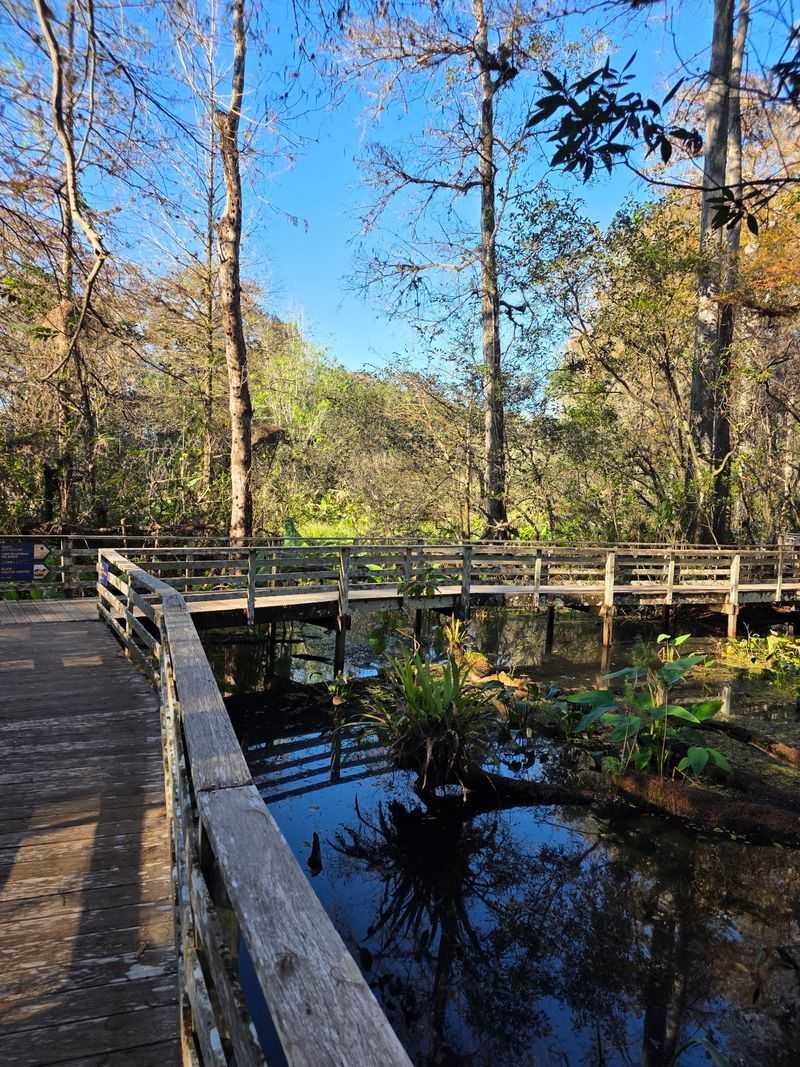
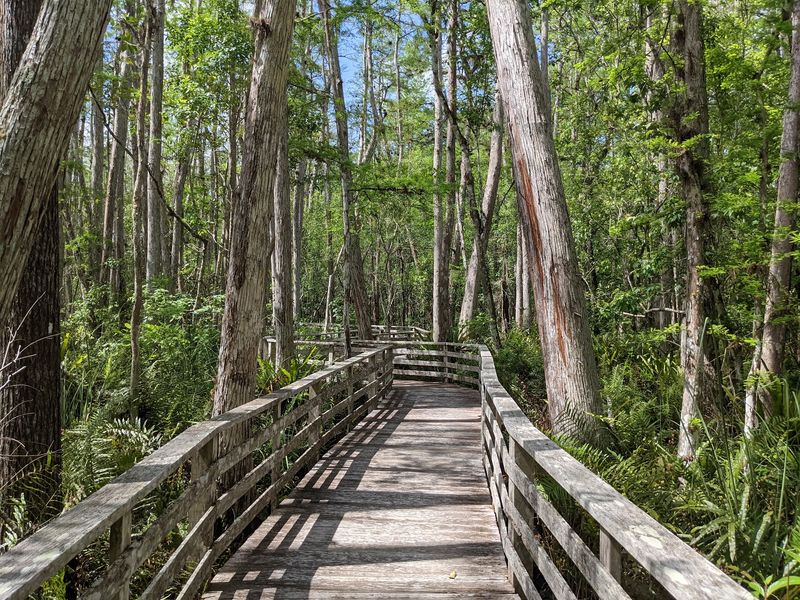
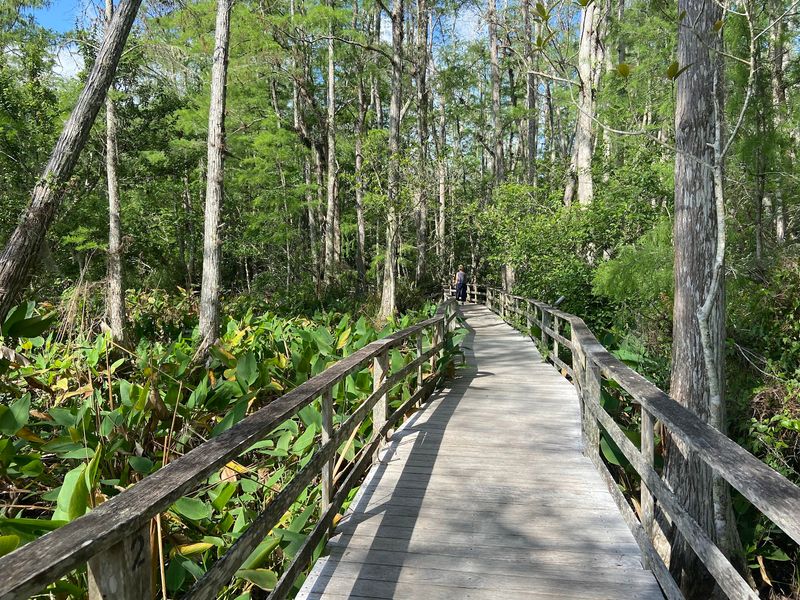
The boards creak softly underfoot, a rhythm that becomes the soundtrack of the morning. Corkscrew’s main loop stretches about 2.25 miles, almost entirely wooden planks with one very short paved section.
Shorter options exist for anyone short on time or energy. The quicker route leads toward the swampier stretches, where bird activity tends to concentrate, and it still delivers cypress, water, and wildlife in a compact package.
The full loop adds pine flatwoods, wet prairie, and marsh, and those miles slip by faster than expected.
Plan on ninety minutes to two hours for the whole thing, longer if you stop at every lookout. And you will stop.
Signage at each viewpoint explains what you are looking at, and the route is laid out so clearly that getting turned around is nearly impossible.
Covered shelters with seating appear at intervals along the way, handy when a summer thunderstorm rolls in or when your legs ask for a break. An observation tower offers a higher perch over the landscape for a broader view.
Shade covers much of the walk, though open marsh sections can feel warm by late morning. A water bottle from the cafe fits neatly in a pocket.
Gators Below, Raccoons on the Rail
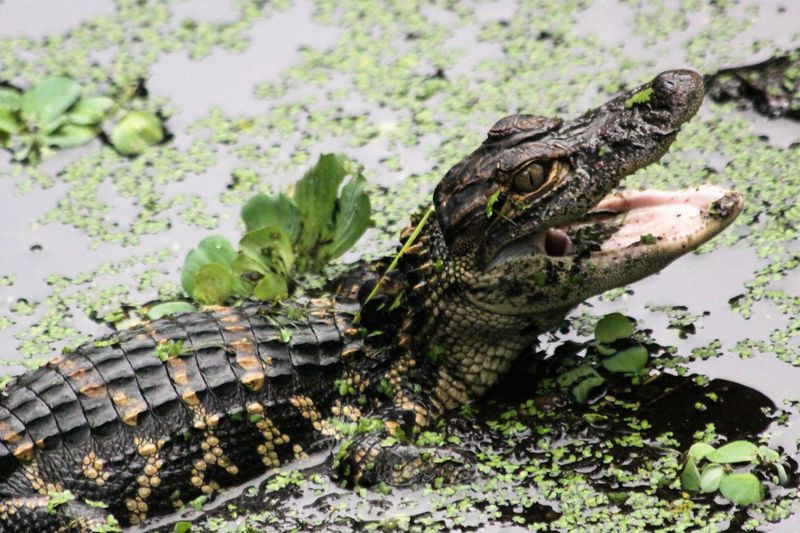
Look down. While the birds hold court above, the real heavyweights cruise the water beneath your feet, and alligators show up along this boardwalk with remarkable regularity.
Some float motionless with only their eyes and nostrils breaking the surface. Others sprawl on muddy banks, soaking up whatever sunlight filters through the trees.
Now and then one goes hunting, and witnessing a gator lunge and catch a meal is the kind of moment that turns a casual walk into a story told at every family dinner for the next month.
Raccoons provide the comic relief. Masked faces pop out from tree roots, little hands dabble through puddles, and an occasional bold one trundles near the planks as if checking your ticket.
Turtles stack on logs, and snakes sometimes drape across branches or slide through the shallows.
Patience matters more than luck. An hour can pass with very little stirring, followed by a burst of activity that feels almost scripted.
Keep voices low and footsteps light, since a quiet walker sees far more than a noisy group.
Every animal here is wild. Admire from the boardwalk, keep hands inside the rails, and never offer food.
Painted Buntings, Limpkins and the Daily Chalkboard
Ask a birder what keeps them coming back, and the answer probably involves the chalkboard. Near the start of the walk, a running list tracks what has been spotted that day, part scoreboard and part treasure map.
Beyond the headline wading birds, the variety runs deep. Painted buntings, splashed with blue, green, and red like a child’s art project, appear in the brushier areas during their season.
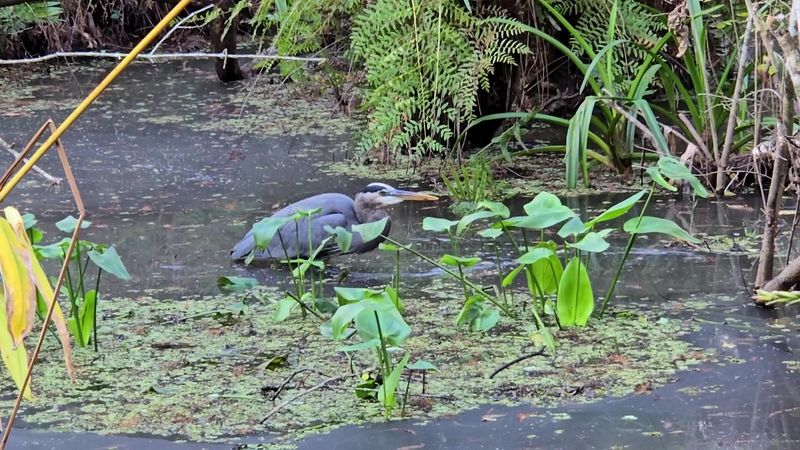
Red-shouldered hawks call loudly from perches. Limpkins wander the shallows hunting apple snails, little blue herons stalk the edges, and great egrets glide past in bright white.
Ibises probe the mud with curved bills, anhingas spread their wings to dry on snags, and woodpeckers hammer away at cypress trunks somewhere out of sight. Some days bring a parade of species within the first hundred yards.
Other days the birds play hard to get.
Binoculars transform the experience, so pack a pair even if you consider yourself a casual observer. A field guide or a bird identification app helps sort the herons from the egrets.
Morning offers the liveliest chorus, when birds feed actively and the swamp still holds the night’s coolness.
Ghost Orchids, Yellow Flies and Swamp Seasons
Summer brings one of the rarest sights in the state. High on a cypress trunk, a ghost orchid sometimes blooms, its white petals dangling like a tiny dancer suspended in midair with no visible leaves to anchor it.
Spotting it takes a good zoom or a spotting scope, and the bloom appears only during the warmer months. Still, the chance alone draws plant lovers from across Florida.
Seasons shape every visit. The dry winter months concentrate wildlife around shrinking pools and bring the coolest walking weather.
Rain returns in summer, filling the swamp and turning everything lush, though afternoon storms and thick humidity come with it.
Then there are the yellow flies. From roughly April through June, these biting insects, sometimes called deer flies, patrol the wetter sections.
Standard DEET spray does little against them. Long sleeves and long pants are the real defense, along with keeping a steady pace on the boardwalk, since the flies target anyone standing still.
Mosquitoes join in during warmer months as well. Dressing in light, breathable layers that cover skin solves most of the problem and lets you focus on the orchids instead of your ankles.
Room for Strollers, Wheelchairs and Junior Naturalists
Kids get a job the moment they arrive. Staff hand younger visitors a pen and a map that doubles as a scavenger hunt, so they can mark off every turtle, heron, and alligator they find along the trail.
That simple sheet changes the whole outing. Suddenly a slow walk becomes a mission, and a seven-year-old scanning the water for gators is a far more patient companion than one asking how much longer.
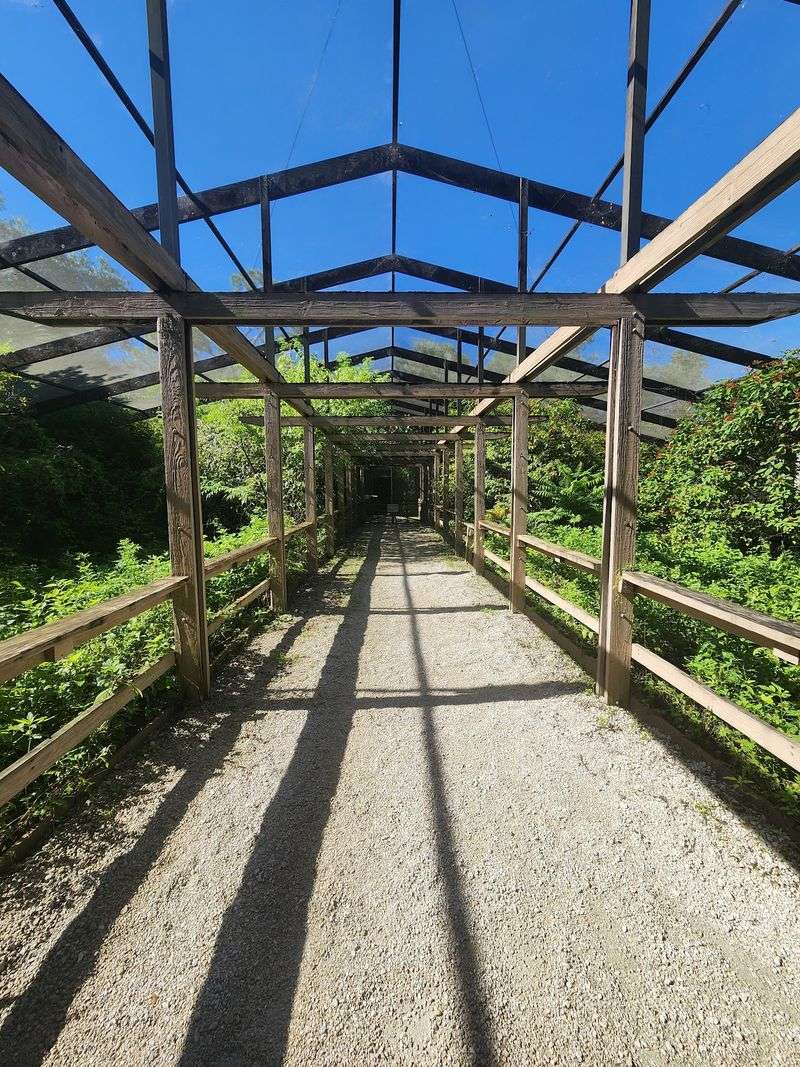
Wide, flat planks make the boardwalk friendly to strollers and wheelchairs alike. Groups have pushed wheelchairs around the full loop without trouble, and the many benches and covered shelters offer regular spots to rest and regroup.
Shade from the canopy keeps the sun from becoming a problem for little ones on most of the route.
Railings run along the edges, giving a sense of security around the water. The discovery center back near the entrance adds indoor exhibits for anyone who needs a cool break, and the cafe handles snack emergencies.
Grandparents, toddlers, and teenagers can share this walk at their own speeds. Few outdoor spots in southwest Florida work this smoothly for every age in a single trip.
Planning a Morning in Southwest Florida’s Wild Heart
Early birds win twice here. The sanctuary opens in the morning and closes by early afternoon, so arriving at opening means cooler air, more active wildlife, and fewer people sharing the rails.
Winter weekday mornings still get busy, especially during peak season when the lot fills quickly. Arrive at the start of the day or later in the visiting window, and leave some space between your group and the next to enjoy a bit of solitude among the trees.
Admission is charged at the front desk, and advance tickets can be purchased online. Check current details before driving out, since policies and nesting conditions shift.
During hurricane season, from June through November, confirm the sanctuary is open after any storm.
The drive heads inland from the Naples area, a short trip off I-75 that swaps strip malls for cattle land and pine. Pack binoculars, a hat, sunscreen, water, and covering clothes.
Moving slowly is the best strategy of all. Sit on a bench, listen, wait.
A spoonbill landing on its nest overhead, a stork chick squawking for breakfast, an alligator sliding past below: those moments arrive for the patient, and they make the early alarm feel like a bargain.