The Florida Everglades Just Added A New Elevated Boardwalk That’S Totally Free To Explore
Free changes the equation. A quick roadside stop suddenly becomes much harder to ignore when there is no ticket booth attached.
Florida now has an elevated boardwalk along Alligator Alley where travelers can pull over, stretch their legs, and look across the Everglades from above.
The best part is how little planning it asks from you. No reservation. No complicated itinerary. No need to stay for hours.
You can walk, watch, wander, and leave when you are ready. That makes it ideal for a spontaneous road-trip break.
A stop this easy should not feel this rewarding, but somehow it does.
From Truck Lot To Wetland Wonder
Hardly any attraction can claim it began life as a truck parking lot. Yet that is exactly the origin story here.
FDOT listed the construction contract at about $8.85 million, while the project’s landscape architecture firm describes the broader undertaking as a $12 million project.
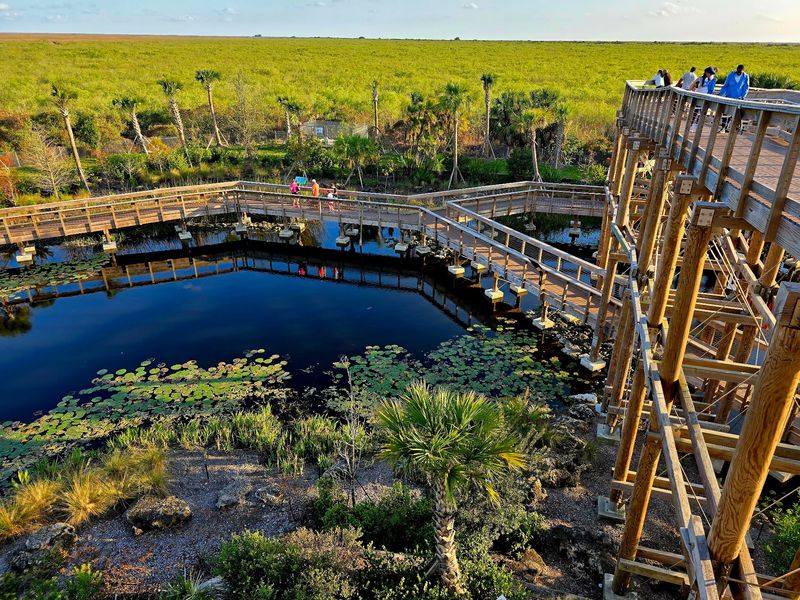
What replaced the asphalt is an environmental education center with real ambition. Three acres of engineered wetlands now sit where trucks once idled.
FDOT designed the center to give travelers a place to enjoy the Everglades, learn about Florida’s environment, and take a break between Southeast and Southwest Florida.
The project transformed part of an existing highway rest area into a free environmental education space built around wetlands, boardwalks, and an observation tower.
More than 600 trees, 10,600 shrubs, and 17,000 aquatic plants were installed, representing dozens of South Florida native species.
An engineered circulation system draws water from nearby canals and moves it through the wetland to imitate the Everglades’ natural sheet flow.
You will find the Everglades Elevated Boardwalk at 35000 Everglades Pkwy, Weston. Plug it into your map and prepare to be pleasantly derailed.
Climbing The Forty Foot Tower
Forty feet does not sound tall until you are surrounded by flat marsh. Then it feels like the roof of the world.
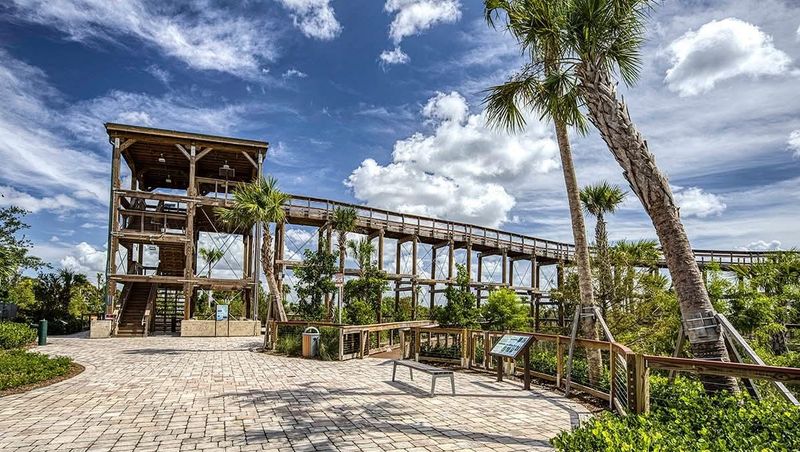
A roughly three-story, 40-foot observation tower anchors the property, reached by stairs or a long gradual ramp.
The gradual ramp provides a step-free route to the observation level and makes the tower wheelchair accessible.
Up there, the sawgrass rolls outward in every direction. Clusters of cypress break the green, and the sky does most of the talking.
Changing weather can give the broad Everglades panorama a very different look from one visit to the next.
The tower was designed to provide panoramic views across the wetland exhibit and surrounding Everglades landscape.
Photographers will burn through storage cards here. Distant rain curtains, circling birds, and shifting cloud shadows keep the scene changing.
The boardwalk and tower have no admission fee, although Alligator Alley itself remains a toll road. Changing light can make the same broad view look noticeably different during a single visit.
Walkways Above The Sawgrass
Forget a straight line from point A to point B. The paths here loop, split, and double back on purpose.
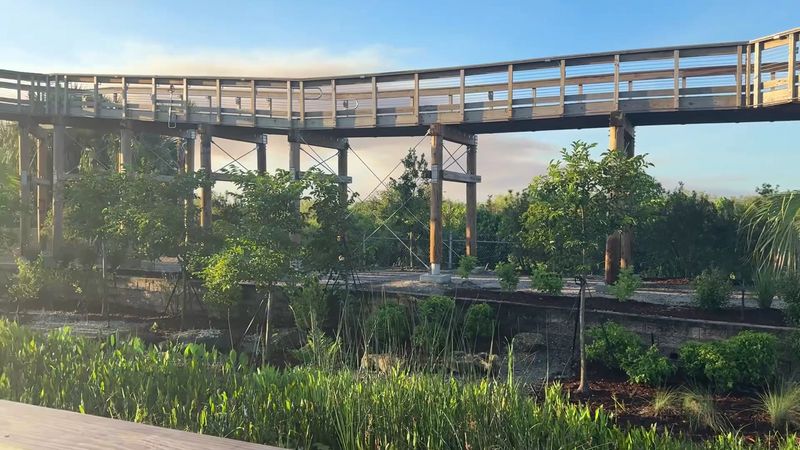
Elevated walkways connect to ground level trails across the three acre site. Each turn hands you a slightly different angle on the marsh.
The upper deck gives sweeping views over the wetland. Lower walkways bring visitors closer to the engineered wetland, while elevated sections provide broader views.
Multi-level boardwalks and walkways form the main pedestrian route through the wetland exhibit.
Native plantings create a living arboretum, with more than 31,000 individual plants representing about 80 aquatic, upland, and transitional species.
Native flowering plants attract butterflies and other insects throughout the landscaped site.
Water circulation through the constructed wetland was designed to mimic the slow sheet flow characteristic of the Everglades.
Benches, pavilions, shade structures, and other seating areas are incorporated throughout the center.
Visit length varies depending on how much time you spend on the different boardwalk levels, tower, signs, and landscaped paths.
Gators, Herons And Lucky Sightings
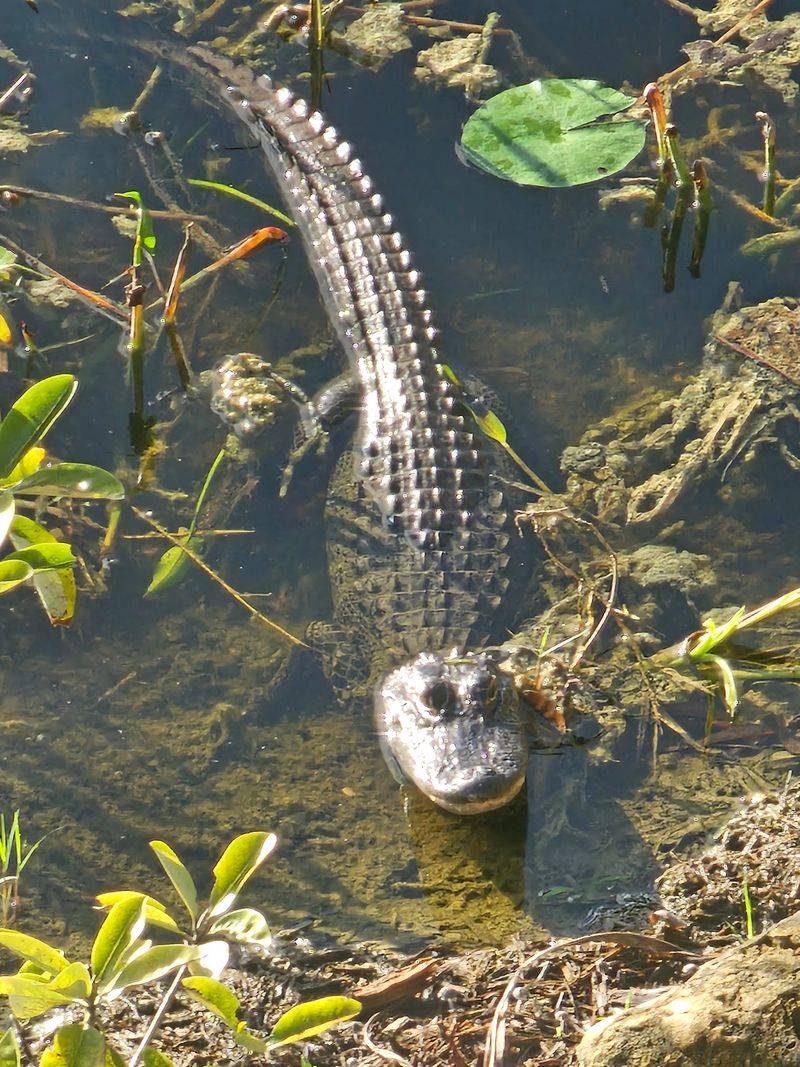
Patience pays off in the wetlands. Wildlife sightings vary, but the surrounding Everglades habitat supports an unusually broad mix of birds, reptiles, fish, and other animals.
Fish, turtles, and baby alligators have already been documented using the new wetland habitat.
The surrounding rest-area wetlands can support herons, egrets, wood storks, limpkins, snail kites, and other Everglades birds.
Turtles and fish are among the animals documented in and around the constructed wetland.
Look upward into the cypress and you may spot air plants clinging to branches. Orchids hide there too, if your eyes are sharp.
Honest expectations help enormously. Some days the marsh stays quiet, and the views carry the visit instead.
FWC says February is especially good for seeing a variety of birds around I-75 recreation areas, while wading birds can concentrate near remaining pools toward the end of the dry season.
Wildlife activity varies with species, season, weather, and water conditions, so no time of day guarantees better sightings.
Stay on the designated boardwalks and paths and give any wildlife plenty of space. My advice is simple. Treat every sighting as a bonus rather than a promise.
Plaques That Teach As You Stroll
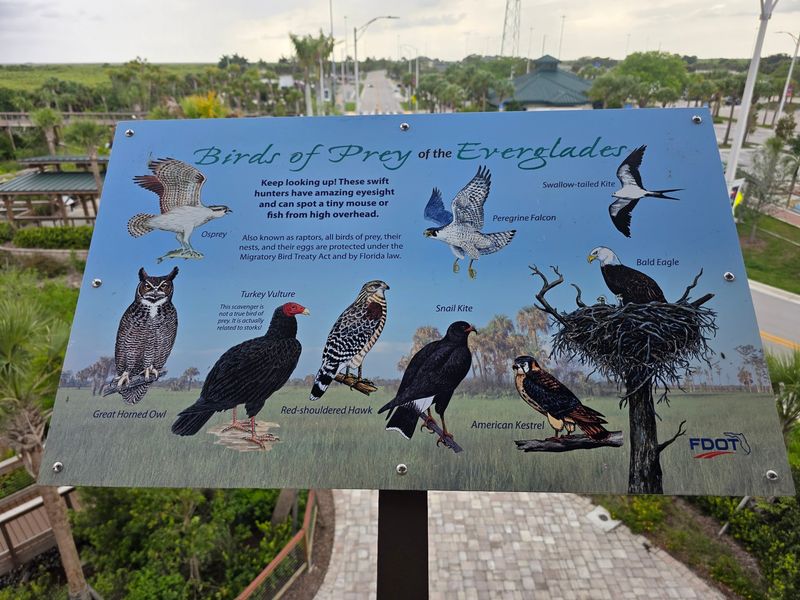
Interpretive displays explain how water, plants, and wildlife interact across the Everglades ecosystem.
Interpretive signs and plant-identification markers appear throughout the boardwalk and arboretum areas.
Topics cover native plants, birds, fish, wildlife, and broader environmental information about the Everglades. The rest-area building also contains indoor interpretive displays about the Everglades ecosystem.
The combination of signs, exhibits, and living wetland features turns the rest area into an environmental education stop rather than a simple roadside break.
Families with curious children will get real mileage here. Turning a bathroom break into a science lesson is a neat trick.
Conservation messaging runs quietly through the displays. Nothing feels preachy, just honest about why this landscape deserves protection.
Knowing what you are looking at changes everything. Sawgrass stops being scenery and becomes a system with a job.
The Everglades Elevated Boardwalk manages to teach without lecturing. That balance is harder to strike than it looks.
Kids, Dogs And Bronze Alligators
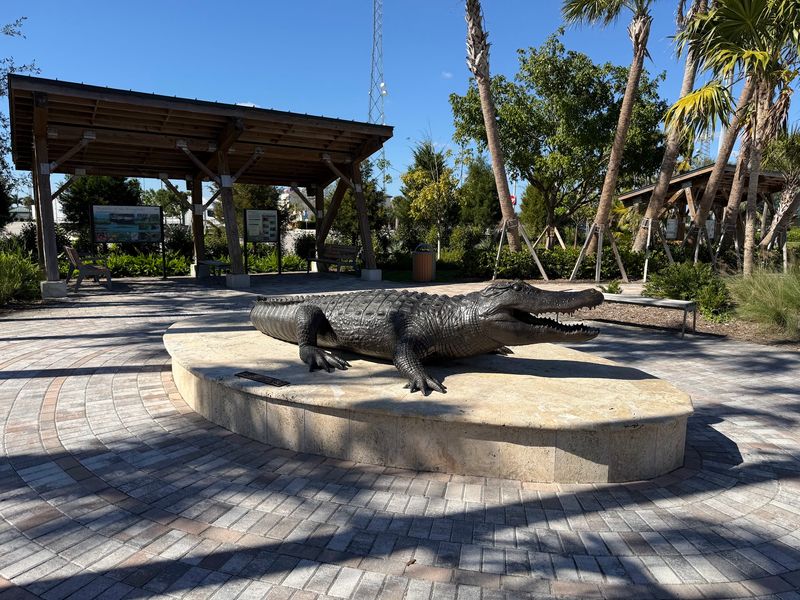
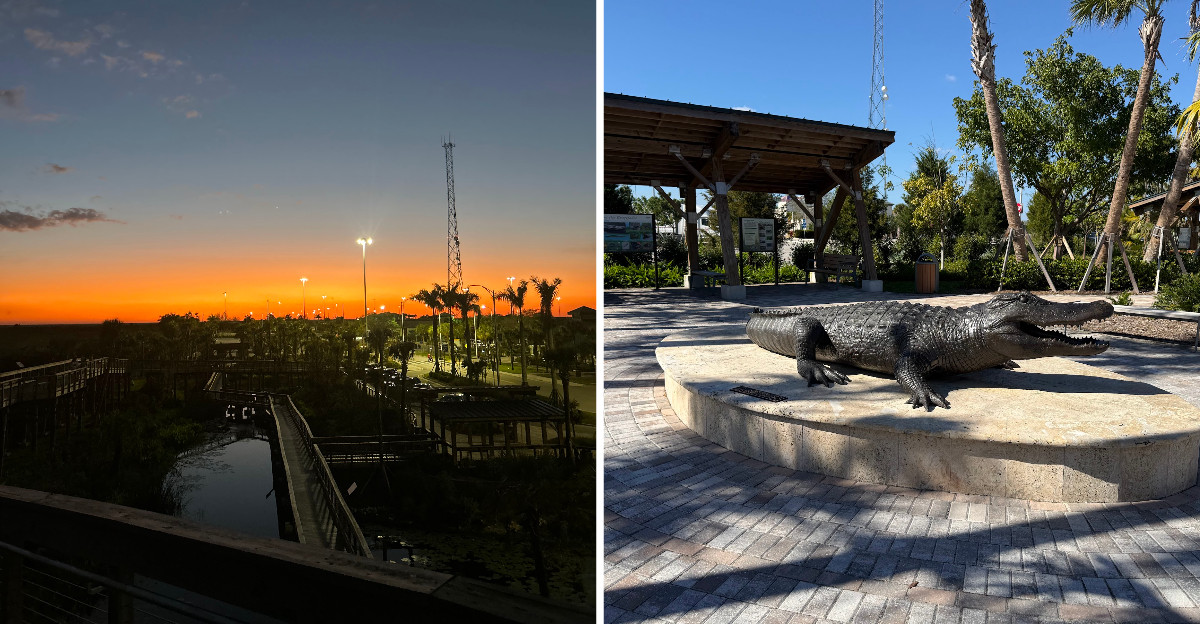
A life-size bronze alligator sculpture creates a prominent photo stop near the entrance.
The sculpture was intentionally designed as a photo opportunity for visitors.
Nearby sits a playground built for younger explorers. Energy gets burned off before the next leg of the drive. Dog-walking areas are part of the center, and leashed pets are permitted on the boardwalk.
A long gradual ramp provides wheelchair-accessible access to the observation tower without requiring the stairs.
The step-free route makes more of the tower experience accessible to visitors who cannot use stairs.
Picnic tables offer a spot for packed sandwiches. Eating outdoors beside a marsh in Florida is a small luxury.
Much of the boardwalk is exposed, although pavilions, gazebos, shade structures, and covered picnic areas provide places to get out of the sun.
Admission to the environmental education center is free, with seating, picnic areas, a playground, and wetland views available around the site. Family outings rarely come this affordable or this scenic.
Sunrise Calm Versus Sunset Color
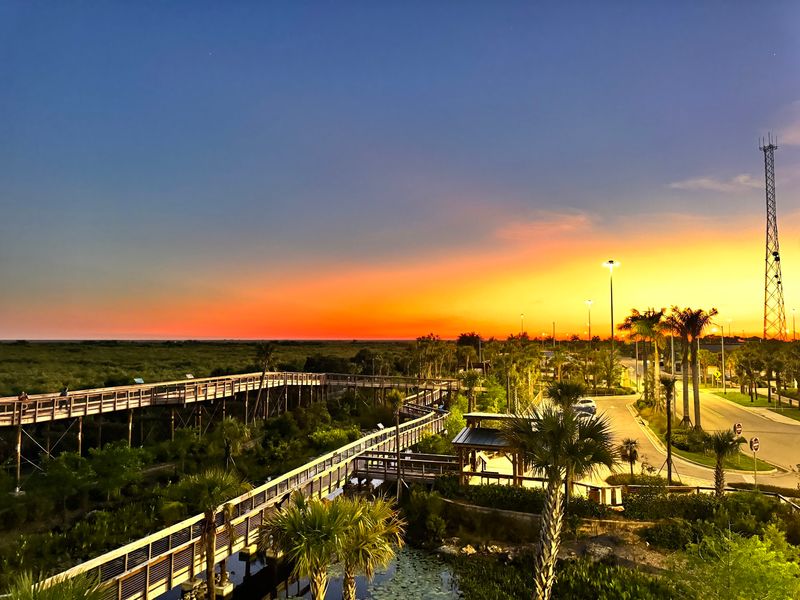
Timing changes this place completely. Same boardwalk, two entirely different moods.
The wider wildlife-management area is open daily from sunrise to sunset, while the boardwalk gate is locked overnight.
Bird activity varies, although FWC identifies winter, particularly February, as a good period for birding near I-75 recreation areas.
Late afternoon flips the script. Golden light spreads across the sawgrass and the sky starts showing off.
The observation tower offers broad sunset views, but visitors should remember that the boardwalk is closed overnight.
The 40-foot tower provides panoramic views across the surrounding wetlands in multiple directions.
Midday works fine if that is your window. Just pack sunglasses, a hat, and sunscreen because shade runs thin.
Insect repellent can be useful in the Everglades, especially in warmer, wetter periods. The wetland circulation system was designed to reproduce natural water movement, not as a documented mosquito-control feature.
Crowd levels can vary, so choose your timing based on weather and available daylight rather than expecting one daypart to be reliably quiet.
Whatever hour you pick, give yourself more than fifteen minutes. Rushing this Florida landscape would be a genuine shame.
Rest Stop Amenities Done Right
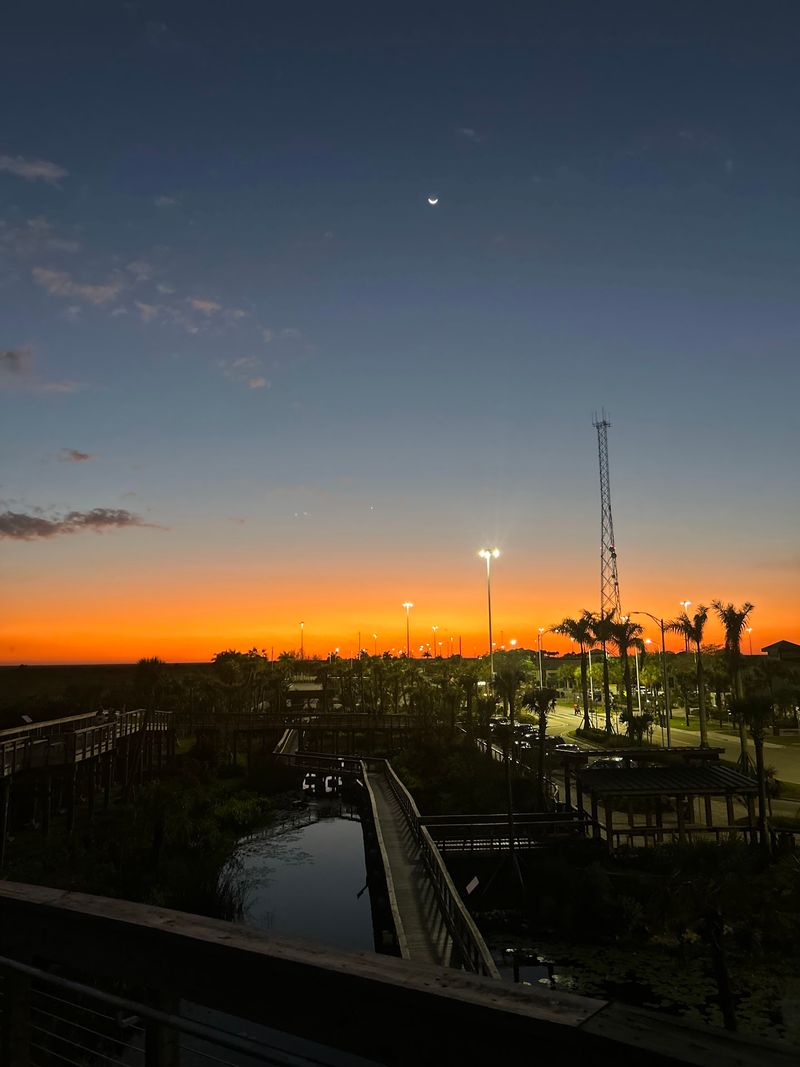
Most highway breaks involve fluorescent lights and a vending machine sigh. Not this one.
The rest area provides parking for passenger vehicles as well as trucks and RVs. Restrooms and accessible facilities are available at the Mile Marker 35 rest area.
Vending machines provide basic snacks and drinks, while picnic areas make a packed meal an easy option.
Picnic tables sit within easy reach of the walkways. Eating outside with marsh views beats a steering wheel meal.
The Broward County rest area can be accessed from both directions of I-75, with the two sides connected at the site.
The boardwalk sits at Mile Marker 35, about 10 miles west of the eastern Alligator Alley toll plaza near Weston.
The boardwalk requires no admission ticket or reservation, although drivers may still owe the applicable Alligator Alley toll depending on their route.
Visit length is flexible, depending on whether you make a quick boardwalk loop or stop for the tower, playground, exhibits, and interpretive signs.
The project turns an ordinary highway rest area into an environmental education stop with boardwalks, wetlands, an observation tower, and family amenities.