11 Forgotten Nevada Silver Mining Towns With Old Churches, Ruins And Desert Silence
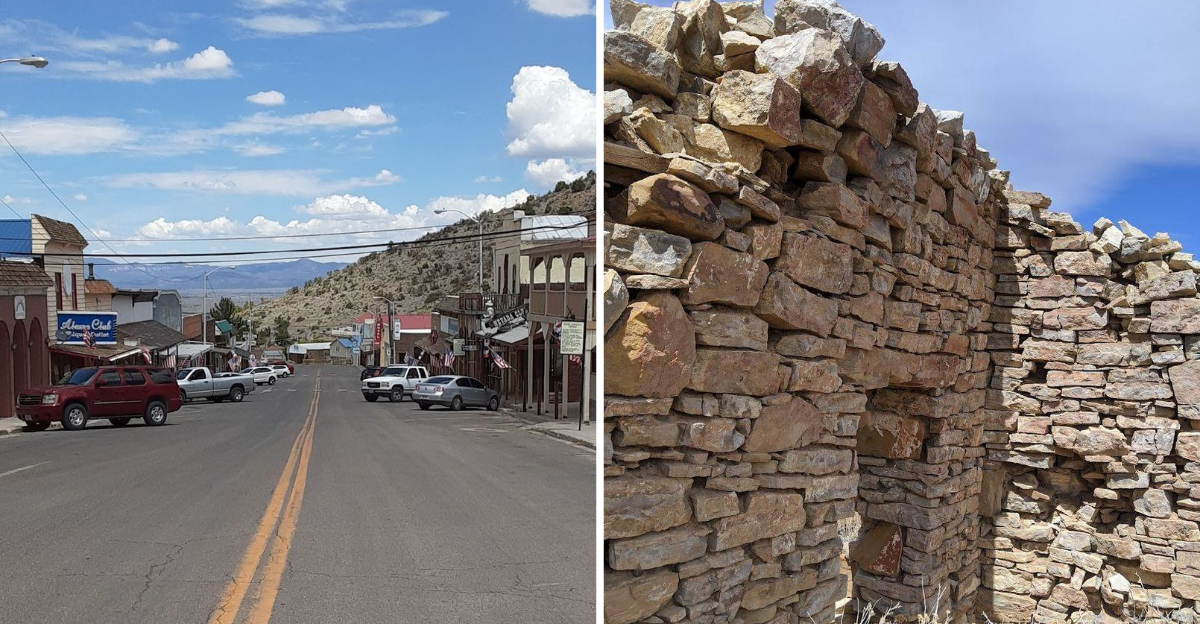
Nevada has a lot of history tied to silver. Back in the day, boomtowns popped up everywhere, full of miners and hopefuls.
But what happens when the silver runs out? Many of these places just… faded away. I’m talking about towns that once buzzed with life, now they’re almost empty.
Today, what remains is often surprising. Scattered buildings remain where entire communities once existed, each holding different traces of the past.
They’re definitely something else. They make you wonder about the people who lived there and why they left it all behind.
1. Virginia City
I have always found that the most legendary stories of the American West are written in the silver dust of the Comstock Lode. This famous boomtown on the slopes of Mount Davidson once roared with the energy of one of the richest strikes in history.
At its peak in the 1870s, the city was home to over 25,000 people and featured grand opera houses and busy newspapers.
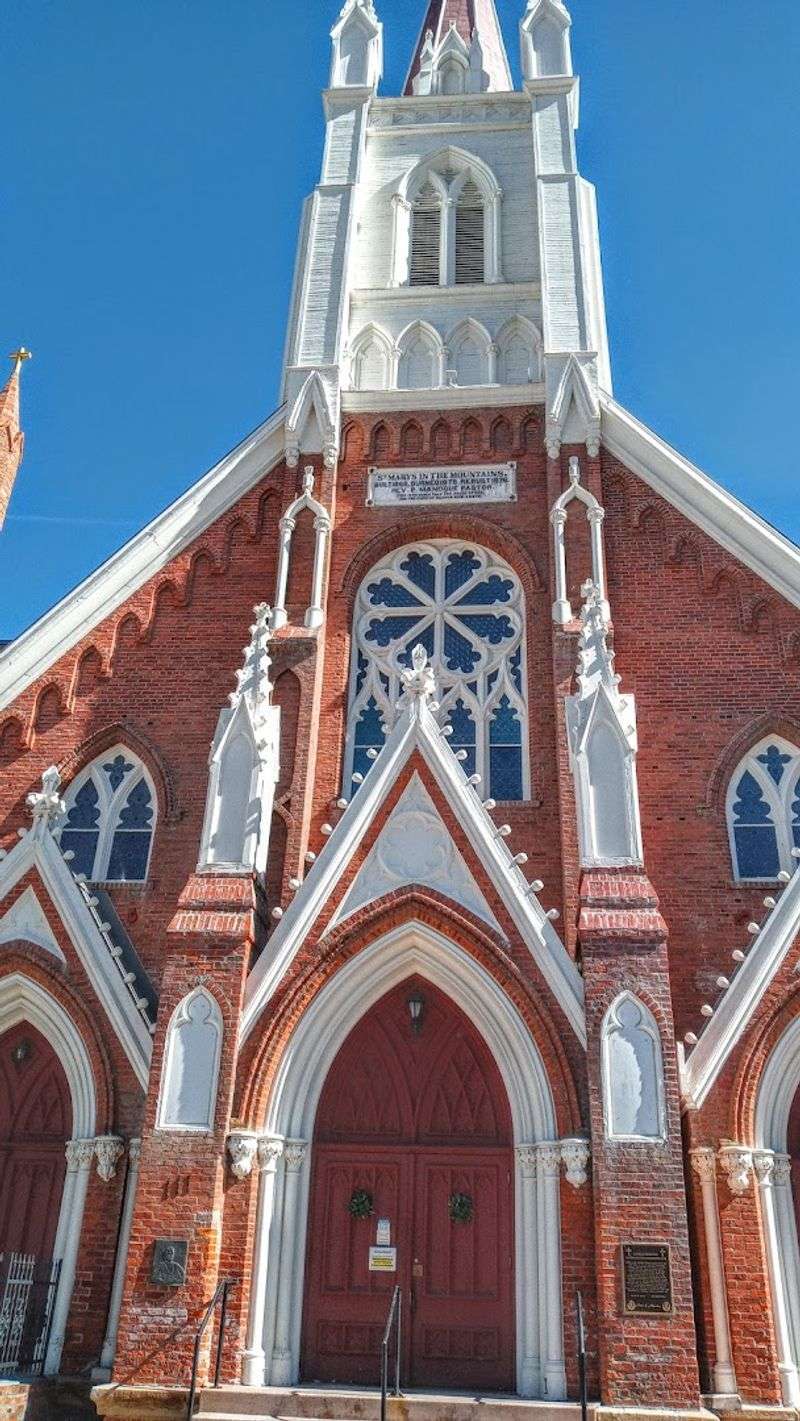
St. Mary in the Mountains Catholic Church at 111 E St, Virginia City, NV 89440 still rises above the rooftops with surprising grace and architectural beauty.
The building was rebuilt after a fire in 1875 and remains the most striking and symbolic structure in town today. Mark Twain once sharpened his writing skills at the Territorial Enterprise newspaper right here on these historic streets.
The wooden boardwalks of C Street feel like a real history textbook where stories are nailed into every weathered plank. You can explore the town during the shoulder seasons of October or March to enjoy a quieter atmosphere during off-peak seasons.
This quiet makes the whole experience feel like a secret that only you have discovered among the mountains. Every corner of Virginia City offers a glimpse into a past that refused to be forgotten by the modern world.
2. Goldfield
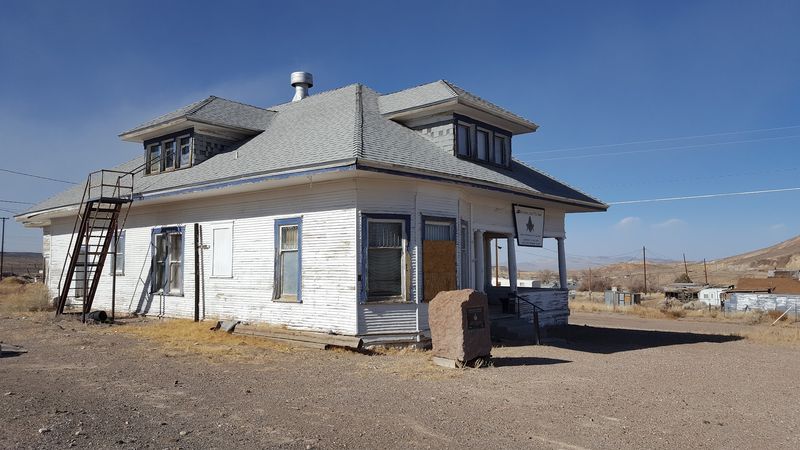
I couldn’t believe how gold and silver can vanish so quickly, leaving behind a place of such heartbreaking and quiet beauty. This town in Esmeralda County exploded to a population of 20,000 before the ore ran thin and the people fled.
The Goldfield Hotel is a four-story Edwardian structure built in 1908 that still stands tall on Crook Avenue today. It manages to look both magnificent and deeply eerie, serving as a silent witness to the town’s golden age.
The Esmeralda County courthouse continues to operate nearby, making this one of the rare ghost towns that still functions. A living population of around 300 residents keeps the spirit of Goldfield alive in the middle of the desert.
Spring is the best time to explore because the desert blooms with wildflowers against the backdrop of abandoned architecture. No camera fully captures the contrast, but every traveler feels compelled to try and document the scene.
3. Tonopah
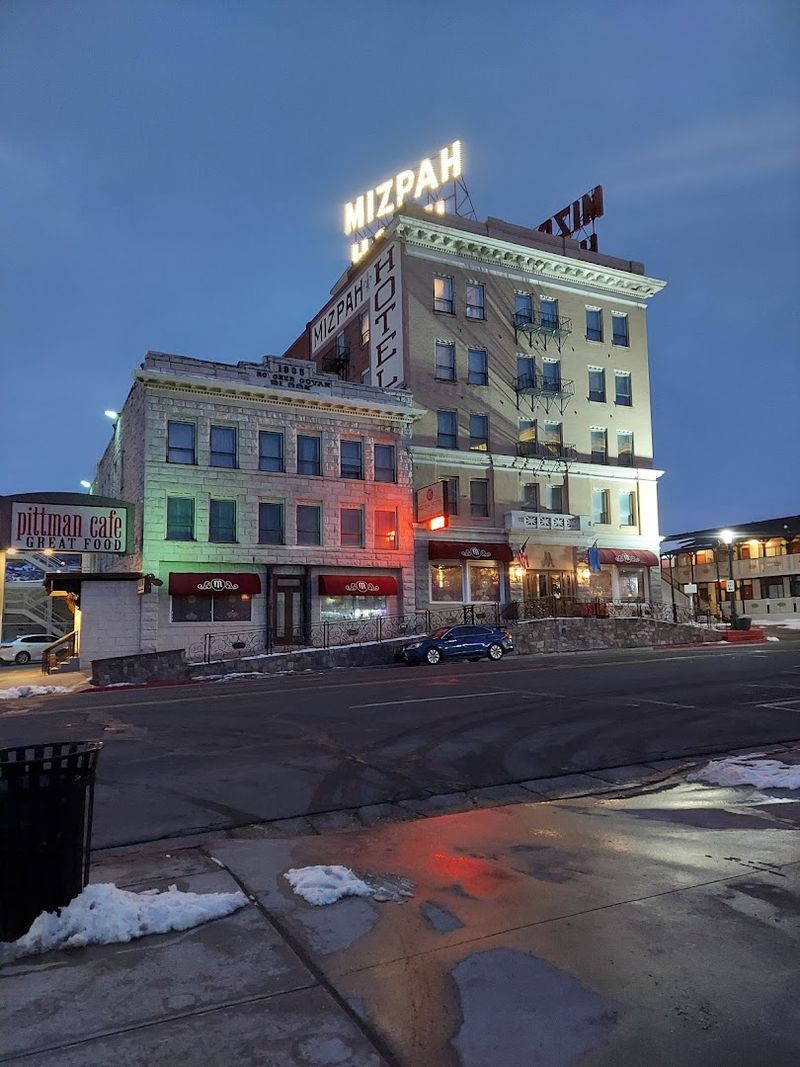
Who would have thought that a wandering burro could lead to a silver bonanza that changed the history of Nevada forever? Jim Butler found the famous rock in 1900, sparking a rush that built a town at the junction of two major highways.
The Mizpah Hotel opened in 1907 and remains one of the most beautifully restored historic hotels in the entire state. Silver barons once negotiated fortunes in rooms that now feature pressed tin ceilings and serve coffee to modern guests.
The Central Nevada Museum on Logan Field Road brings the silver rush to life through genuine artifacts and personal accounts.
St. Mark’s Episcopal Church at 210 University St, Tonopah, NV 89049 is a dignified structure from 1906 that has survived every boom and bust cycle.
The stained glass still filters the desert light into something sacred for those who stop to admire the craftsmanship. Night skies here are internationally recognized as some of the darkest in the United States for stargazing adventures.
You can find Tonopah halfway between Reno and Las Vegas, making it an essential stop for any history enthusiast. It is a place that makes you wish you had stayed just a little bit longer to see the stars.
4. Rhyolite
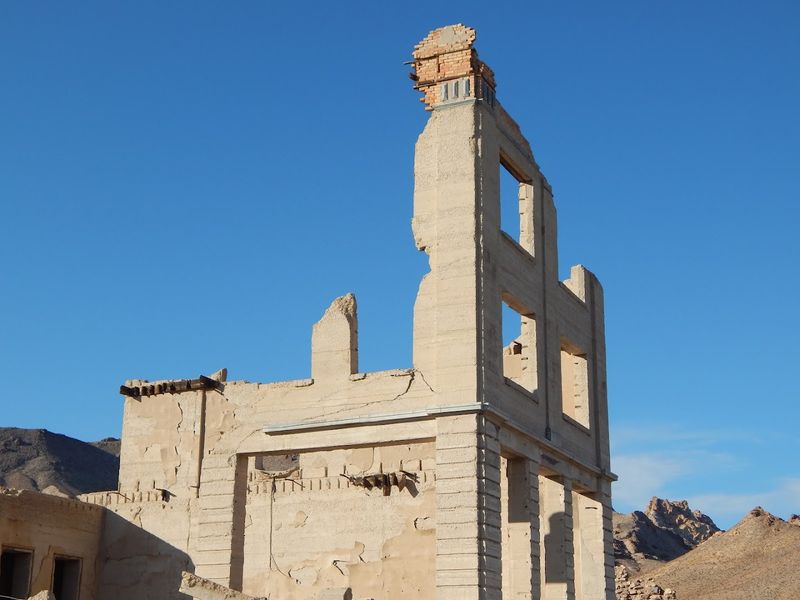
I believe that few ghost towns in the American West have ruins quite as photogenic as those found near Beatty. This city exploded between 1904 and 1908 when thousands of hopeful miners flooded into the scenic Bullfrog Hills.
The collapse happened just as fast when the ore gave out, leaving behind a concrete skeleton known as the Cook Bank. Arched windows now frame views of the Amargosa Valley in a way that no modern architect could have ever planned.
Tom Kelly built his famous Bottle House in 1906 using roughly 51,000 glass bottles collected from the local area. It stands today as one of the most creative and resourceful pieces of construction in the history of ghost towns.
The ruins of a small church sit nearby, alongside other remnants of the town’s early structures, with stone walls still partially upright and a collapsed roof. The silence around the site makes any conversation feel inappropriate as you reflect on the lives once lived here.
Rhyolite is located just outside Death Valley National Park, allowing you to combine two stunning landscapes in one trip. The stark beauty of the decaying buildings provides a hauntingly beautiful contrast to the vast desert floor.
5. Belmont
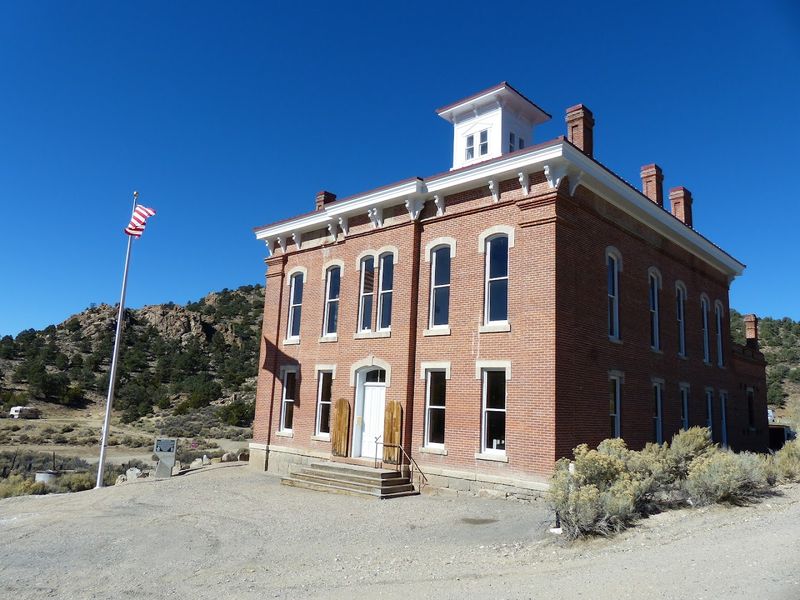
You will find that taking an unpaved road often leads to the most remarkable and untouched historical treasures in Nevada. Tucked into the Toquima Range, this town was once a bustling county seat after silver was discovered in 1865.
The Belmont Courthouse was built in 1876 and remains one of the best-preserved 19th-century government buildings in the state. Its red brick walls and arched windows are still remarkably intact, standing as a Nevada State Historic Monument.
A small church still stands today with a wooden frame that leans against the high mountain winds, remaining one of the town’s surviving historic structures. The drive requires a 45-mile journey northeast of Tonopah, which successfully filters out the casual tourists.
This isolation rewards the dedicated explorer with near-total solitude among the sagebrush flats and historic ruins of Belmont. Nye County moved its seat to Tonopah in 1905, leaving this town to be reclaimed slowly by the desert.
Autumn visits are especially rewarding because the golden light makes the old structures glow with a special intensity. It is the perfect destination for those who seek to hear the whispers of history in the quiet mountain air.
6. Eureka
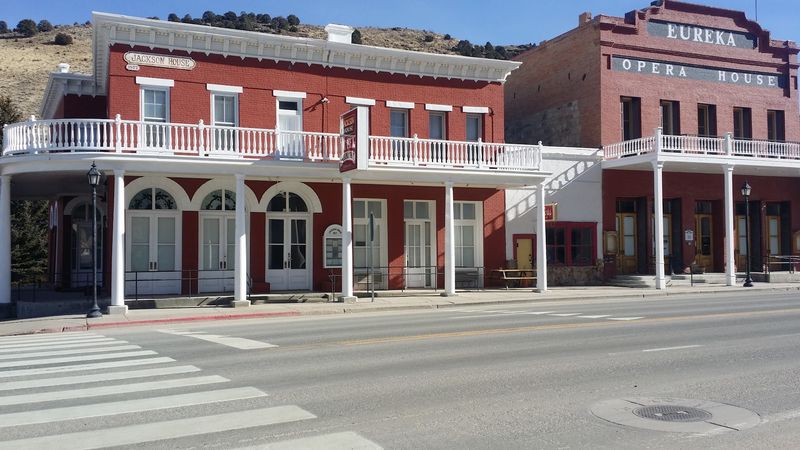
I always feel that a name like this can only be inspired by the raw enthusiasm of a fresh silver strike. This town sits along the “Loneliest Road in America,” and it earns that legendary reputation every single day.
Mining here generated over 40 million dollars in ore and supported 9,000 people during its height in the late 1800s. The Eureka Opera House was built in 1880 and has been beautifully restored to host modern cultural events.
The Eureka Sentinel Museum is housed in an original newspaper office and features authentic printing equipment from the past. Jackson Street is lined with well-preserved Victorian buildings that showcase the wealth once found in these mountains.
A modest church on a quiet side street still occasionally rings its bell for actual services today. This active community distinguishes Eureka from many other historic towns that have completely surrendered to the desert.
Traveling Highway 50 through this area forces a kind of reflection that busy interstate highways never allow. The emptiness between towns makes the arrival at this historic landmark feel like a significant personal discovery.
7. Austin
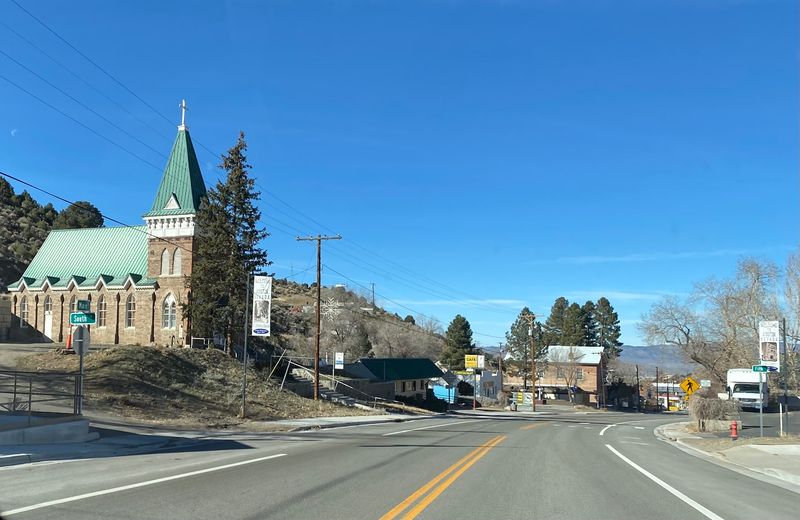
I found myself staring in awe at how this town clings to the steep slopes of the Toiyabe Range. Silver was discovered here in 1862, leading to a rush that produced a town of 10,000 with its own telegraph line.
Stokes Castle is a three-story granite tower built in 1897 that looks like it was transplanted from the European countryside. This strange and magnificent structure sits just outside town, offering a surprising sight for travelers on the highway.
The International Hotel on Main Street has a layered history, having been dismantled in Virginia City and moved here. A small Episcopal church still stands on the hillside with a white steeple that is visible from the valley below.
You can easily stop at Austin since US Highway 50 runs straight through the heart of the historic district. Spring mornings are magical here when fog settles in the valley and the town emerges like an island in the sky.
The geography of the place creates a visual that stops every traveler mid-sentence as they admire the view. It remains one of the most accessible and visually striking stops on a cross-state road trip.
8. Pioche
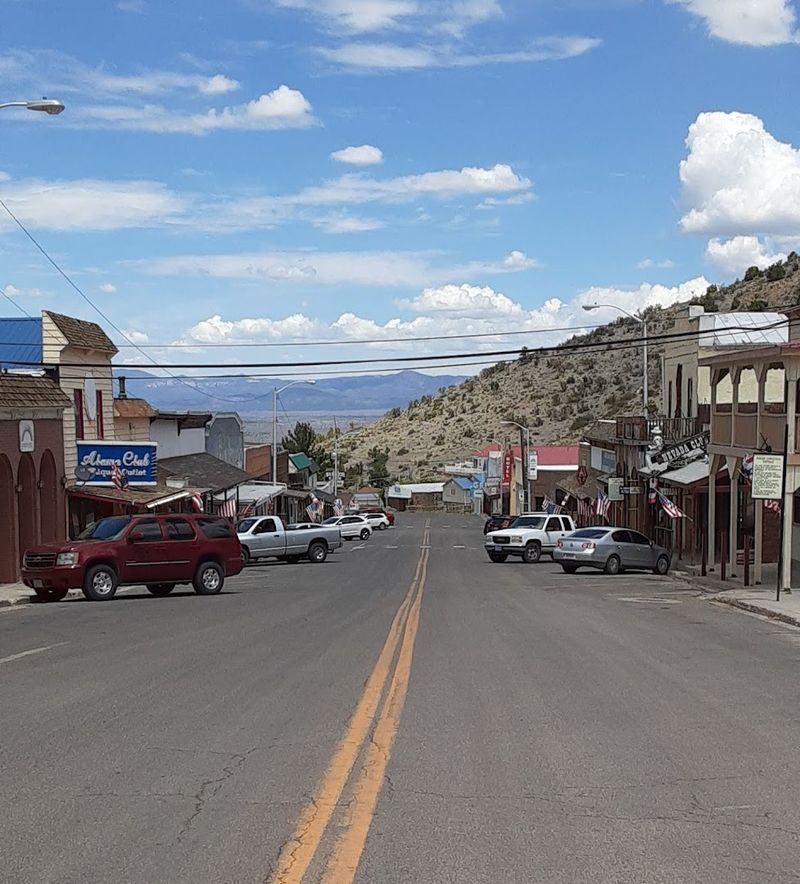
It’s no wonder that this town earned one of the wildest and most lawless reputations in the entire American West. Mining began in 1864, and the community quickly became famous for a boot hill cemetery that filled up remarkably fast.
The Million Dollar Courthouse is the most talked-about landmark, named for the staggering debt accumulated during its 1872 construction. It still dominates the hillside today, standing as a monument to the town’s colorful and expensive past.
A small and tidy church sits near the center of town with fresh white paint that stands out against the weathered wood. This indicates that the local residents of Pioche still care deeply for their history and their community landmarks.
The Overland Hotel and several original buildings along Main Street provide a streetscape that feels authentic and mostly intact. You can visit the Lincoln County Museum on Lacour Street to see fascinating exhibits on early pioneer life.
The town’s history is put into context through a collection of mining equipment and artifacts from the wild silver era. It is a destination that rewards those who travel to the eastern edge of the state near the Utah border.
9. Cherry Creek
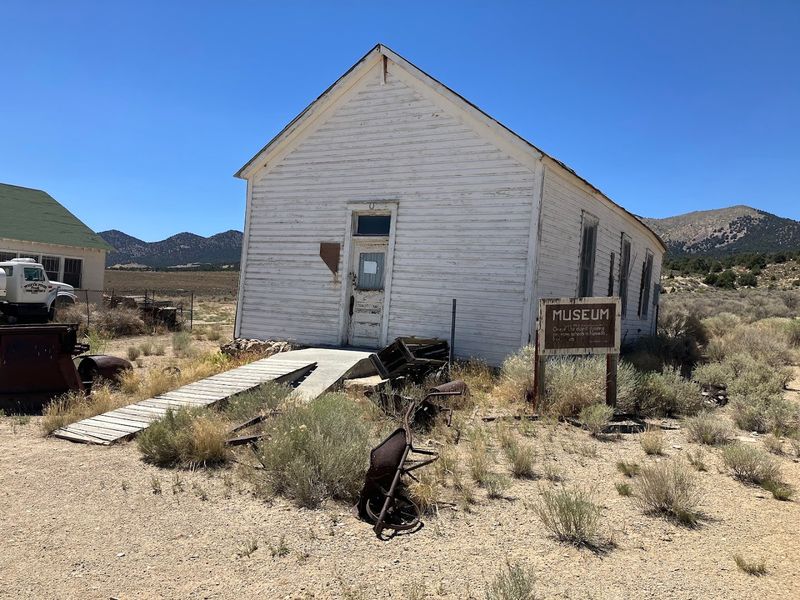
I think that not every silver town needs a grand courthouse to be completely charming and worth the visit. Tucked into the Egan Range, this spot is honest about its history through a collection of stone and adobe ruins.
Silver and gold were found here in 1872, supporting several hundred miners before the population drifted away to other strikes. What makes Cherry Creek different is its total rawness and lack of gift shops or interpretive museum signs.
The ruins simply exist among the sagebrush, leaving you to figure out the story of the town for yourself. Possible church remains structure stands near the edge of the site with boards bleached silver-gray by the sun.
The silhouette of the building remains unmistakably purposeful against the wide Nevada sky despite the missing door and windows. Getting here requires a drive north from Ely through wide-open ranching country that feels like another world.
The journey itself is part of the reward for the traveler who is comfortable with silence and curiosity. This is a place for those who want to see history in its most natural and unvarnished state.
10. Hamilton
I couldn’t believe how a town of 10,000 people could be humbled so completely by a windswept mountain landscape. White silver ore and pine trees defined this city when it roared to life in the mountains east of Ely.
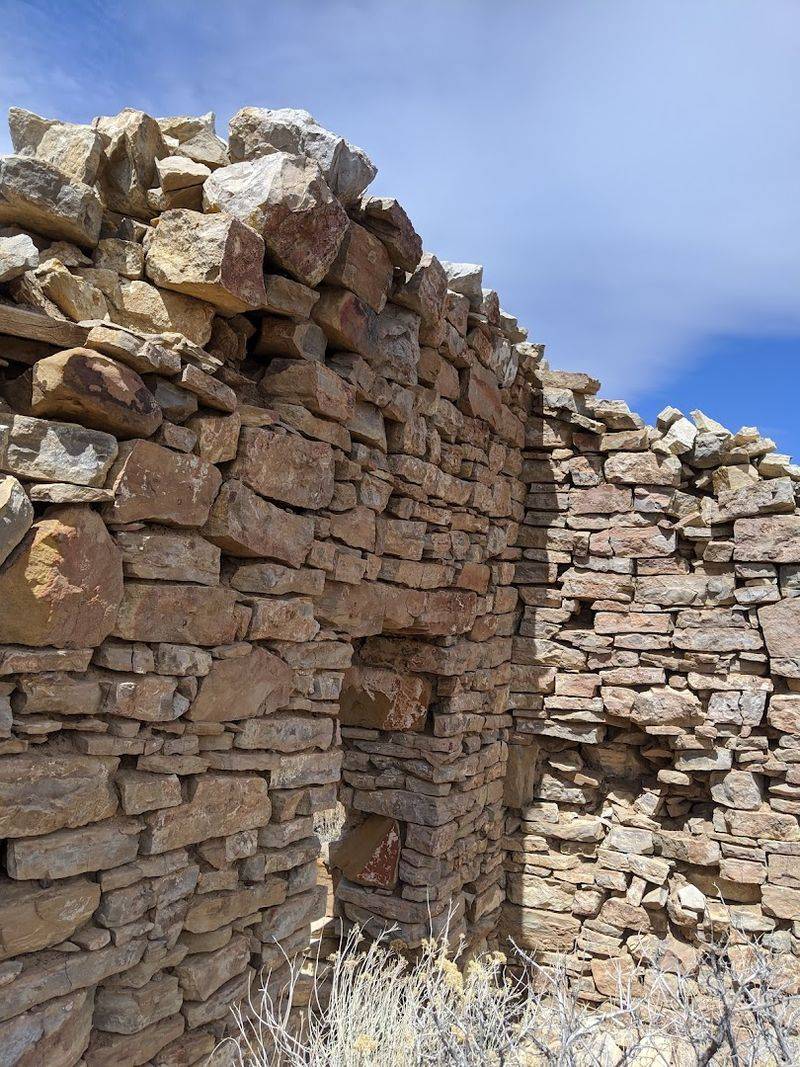
A fire in 1873 destroyed much of the ambition here, and subsequent fires finished what the first one started. Today, only scattered stone foundations and chimney remnants remain on the hillside as a silent memorial to the past.
The foundation of a stone church is still visible among the sagebrush, part of the few remaining traces of the town. This quiet reminder proves that community and faith often outlast commerce in the final accounting of a ghost town.
Reaching Hamilton requires driving a rough dirt road into the mountains, making summer the most comfortable time for a visit. The elevation provides cooler temperatures and a carpet of wildflowers that softens the starkness of the ruins.
Few travelers make the effort to find this location, meaning you will likely have the whole haunted hillside to yourself. That kind of deep solitude is genuinely hard to find anywhere else in the modern world today.
11. Tuscarora
I noticed that this hidden town carries a different kind of quiet that feels more like deliberate preservation than abandonment. Soldiers discovered silver and gold here in 1867, leading to a community where Chinese miners played a significant role.
This cultural layer gives the town a unique history that sets it apart from many other Nevada mining camps. The Tuscarora Pottery School at 138 Main St, Tuscarora, NV 89834 has operated here in recent years, bringing a fresh creative energy to the old townsite.
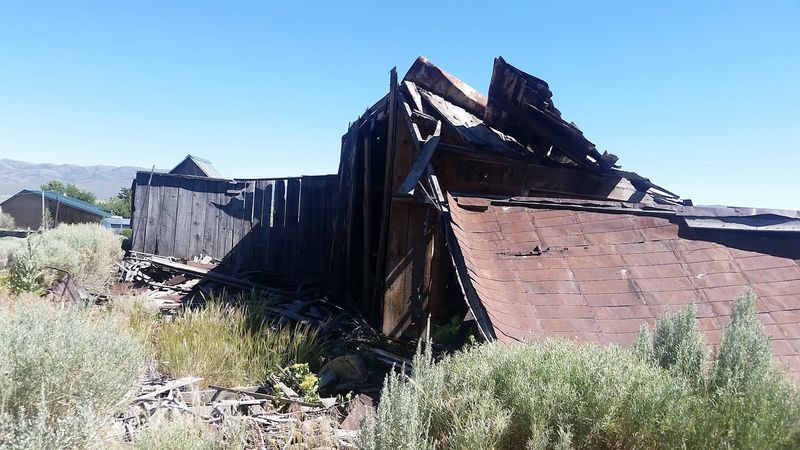
One small church structure remains standing near the center, its wooden frame still solid after a century of winters. Adobe ruins and the remnants of a Chinese quarter make Tuscarora one of the most historically layered sites.
The drive north from Elko passes through dramatically open ranching country that defines the beauty of the American West. You can see how art and history coexist in a remote landscape that remains beautiful and rugged.
It is the kind of town that changes your perspective on what history looks like when no one is watching. The blend of collapsed stone and living art makes it a truly essential stop for any Nevada explorer.