Georgia Has A Gorgeous “Tree Tunnel” And It Looks Straight Out Of A Movie
Hollywood set designers spend fortunes chasing scenes like this one. Georgia simply grew it.
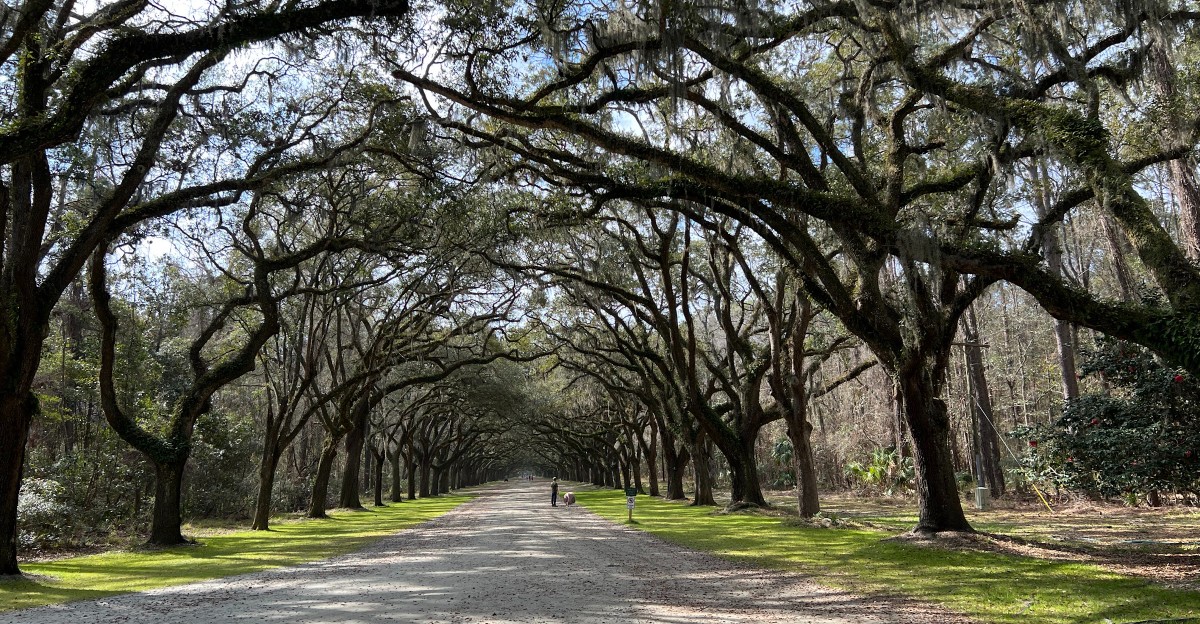
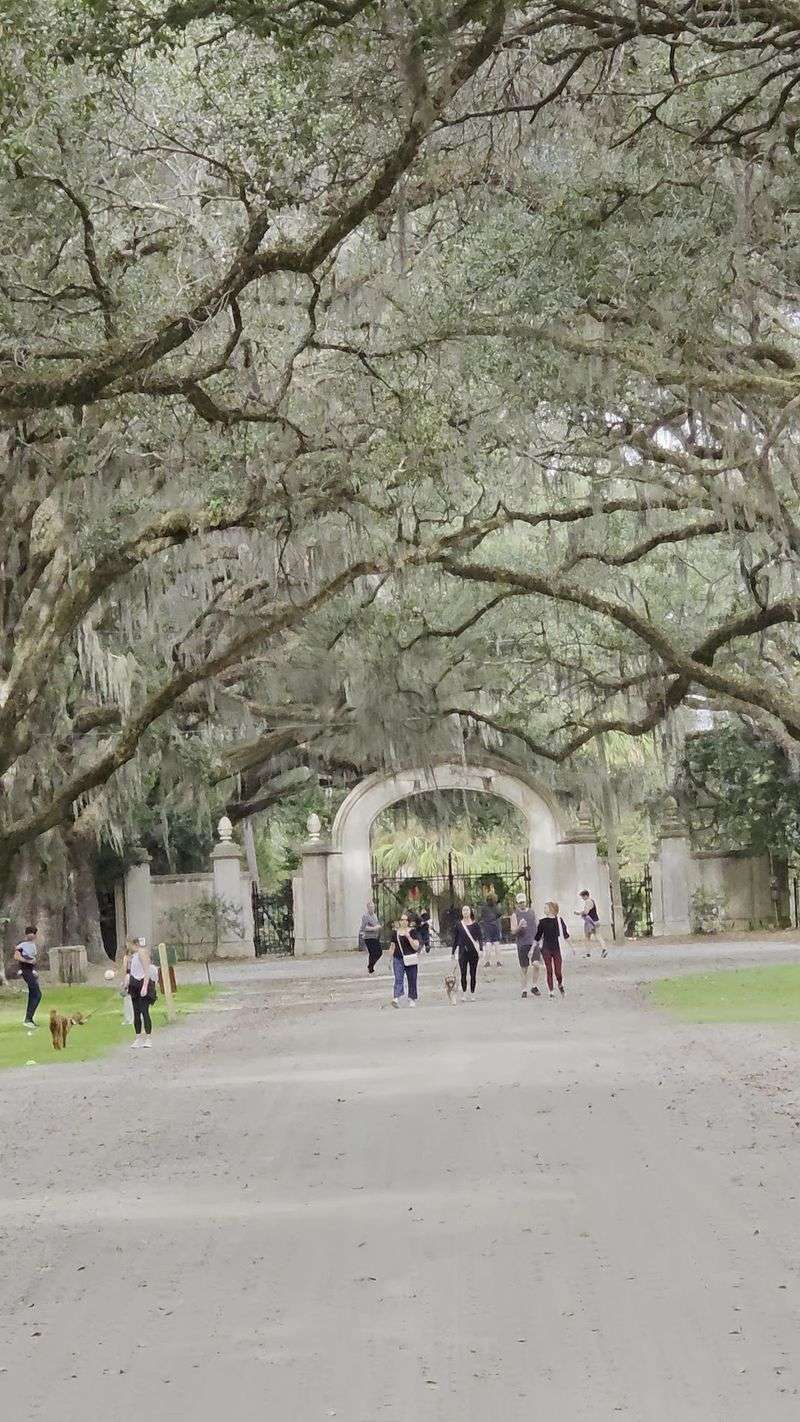
Hundreds of live oaks line a long, sandy avenue, their twisted limbs meeting overhead to form a natural archway. Spanish moss drapes from every branch like lace curtains.
Sunlight filters through in soft, golden patches. The effect feels almost unreal.
Every few steps reveals another frame worthy of a postcard. Photographers adore it.
Couples love it for portraits. Even casual visitors slow down without realizing it.
I have a weakness for places that make you lower your voice and just look. This avenue does that instantly.
Morning light feels dreamy. Late afternoon practically glows.
Bring your camera, but remember to put it down for a moment. A few views in Georgia deserve to be felt, not just photographed.
This one tops the list.
A Mile And A Half Of Pure Green Magic
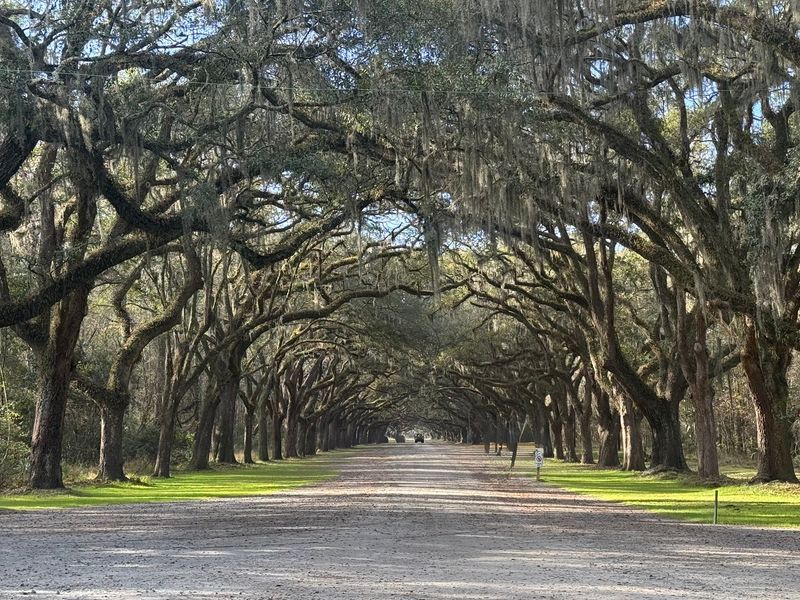
My camera battery gave up before my excitement did. That should tell you how long this road stretches.
The famous avenue runs about 1.5 miles from the entrance gate toward the old estate grounds. It is a sandy dirt road, not a paved highway, which adds to the old-time charm.
More than 400 Southern live oaks stand on both sides of the path. More than 400 Southern live oaks have historically lined the avenue
Their branches reach across the road and meet in the middle. The result is a natural archway that blocks much of the sky and filters the sunlight.
Walking under it feels calm and a little dreamy. Sound seems softer, and the air feels cooler in the shade.
Many people call it one of the most photographed spots in the South. Some sources even claim it is the longest oak-covered road around, though records like that are hard to measure.
My advice is simple. Walk at least one direction if your legs and the weather allow it.
Bring water, wear sneakers, and take your time. Rushing a road this pretty would feel almost rude at Wormsloe State Historic Site.
The site sits at 7601 Skidaway Rd, Savannah, GA 31406.
Younger Trees Than You Might Guess
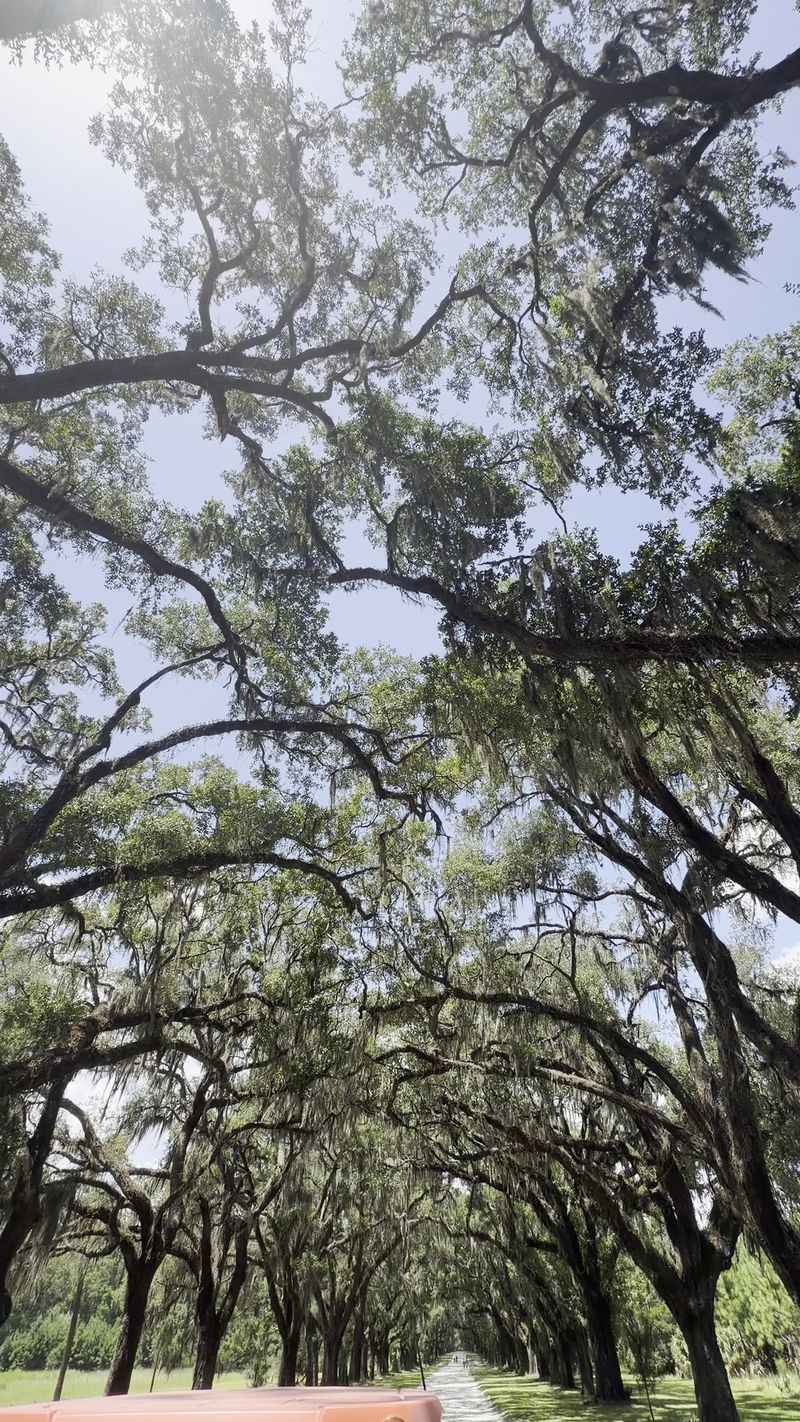
These giants look ancient, but they are teenagers by oak standards. Well, sort of.
The estate itself goes back to the 1700s, yet the oak avenue came much later. The trees were planted in the late 1800s.
Heirs of George Wimberly Jones De Renne, who inherited the property in the 1830s, created this grand oak allée. An allée is a fancy word for a walkway lined with trees on both sides.
Around 2014, the oaks were estimated to be roughly a hundred years old. For live oaks, that is still fairly young.
Live oaks can grow for many generations. Their limbs often spread wider than the tree is tall, which explains how they reach across the road.
I found myself staring at the twisted trunks for a long time. Each one bends in its own way, like no two trees agreed on a plan.
Knowing their age adds a cool layer to the visit. You are seeing a living project that people started over a century ago.
Picture those first small saplings in a row. Someone back then dreamed big, and we get to enjoy the payoff today.
Oyster Shell Walls From The 1700s
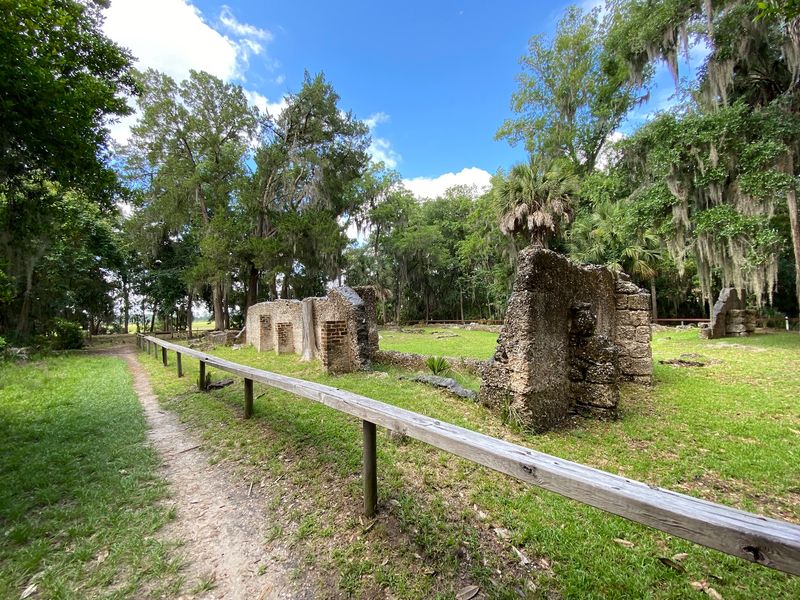
Ever seen a house built partly from seafood leftovers? The ruins at the end of the avenue prove it can work.
Noble Jones founded this estate in 1736. He was an English carpenter who arrived in Georgia in 1733 with James Oglethorpe, one of the colony’s founders.
Around 1745, Jones built a fortified home using tabby. Tabby is a type of concrete made from crushed oyster shells, lime, sand, and water.
Parts of those walls still stand today. The tabby ruins are considered among the oldest standing structures in Savannah.
Up close, you can spot bits of shell pressed into the rough gray surface. Running my eyes over the texture felt like reading a very old recipe.
The ruins are small, so do not expect a grand mansion. Their charm comes from their age and the story behind them.
Signs nearby help explain the layout of the old fortified house. Take a minute to read them before snapping photos.
Fun fact for trivia night. The name of the property comes from Wormslow Hundred, a township in England tied to the Jones family.
Pick Your Ride: Feet, Wheels, Or Tram
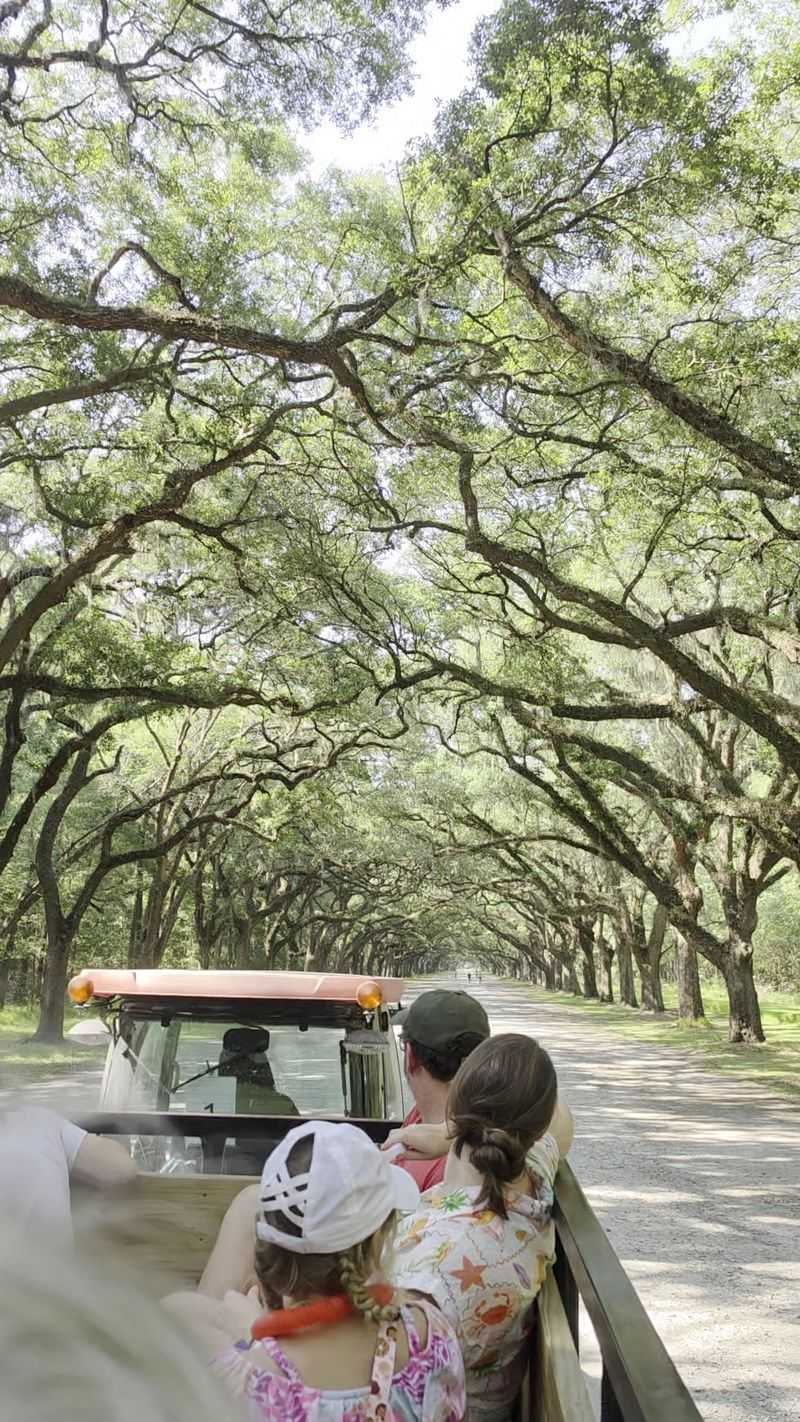
Choosing how to travel down the avenue is half the fun. Each option gives you a different view of the oaks.
Walking is the classic choice. It lets you stop anywhere for photos, but the full stretch is long, so pace yourself.
Bikes are available to rent near the visitor center. Bike rentals may be available near the visitor center, depending on current operations.
Rolling under the trees on two wheels felt like a breezy shortcut. You cover ground quickly without missing the scenery.
Then there is the tram. It is an open-air wagon pulled by a tractor-style vehicle, and the ride comes with your admission.
A guide shares facts about the property along the way. The trams run about every 30 minutes, usually at the top and bottom of the hour.
Keep in mind that the tram drops you off and does not wait. Plan your time so you catch a return ride if you need one.
A smart combo is riding one direction and walking the other. That way you get the story and the slow stroll in one trip.
A Museum Full Of Dug-Up Treasures
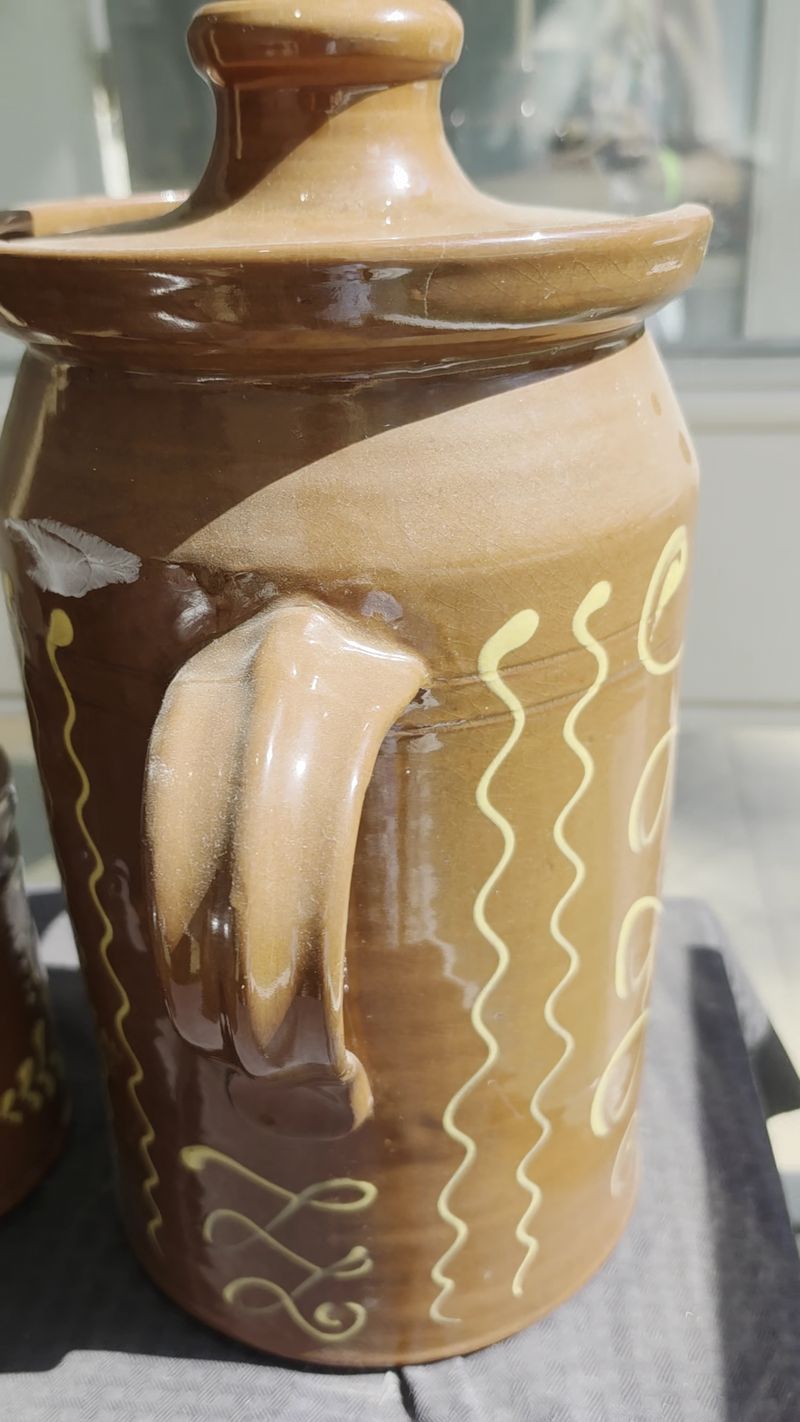
Dirt has secrets, and this museum shows a few of them. Every case holds something pulled from the ground on the property.
The museum sits near the end of the avenue, close to the trails. It features artifacts unearthed right here on the estate.
Exhibits share how people lived during Georgia’s early colonial years. You will learn about the founding of the colony and the families who shaped the land.
The building is not huge. I walked through in a short time, which made it easy to read the displays without getting overwhelmed.
It works well as a quick break from the sun. Cool air and good information make a nice pairing on a warm day.
Kids may enjoy hunting for small details in the glass cases. Old tools and pottery pieces spark plenty of questions.
Visit the museum before heading to the ruins if you can. The background makes the old tabby walls feel much more meaningful.
Think of it as the movie trailer before the main feature. A little context goes a long way when the real history sits just outside.
Trails That End At The Marsh
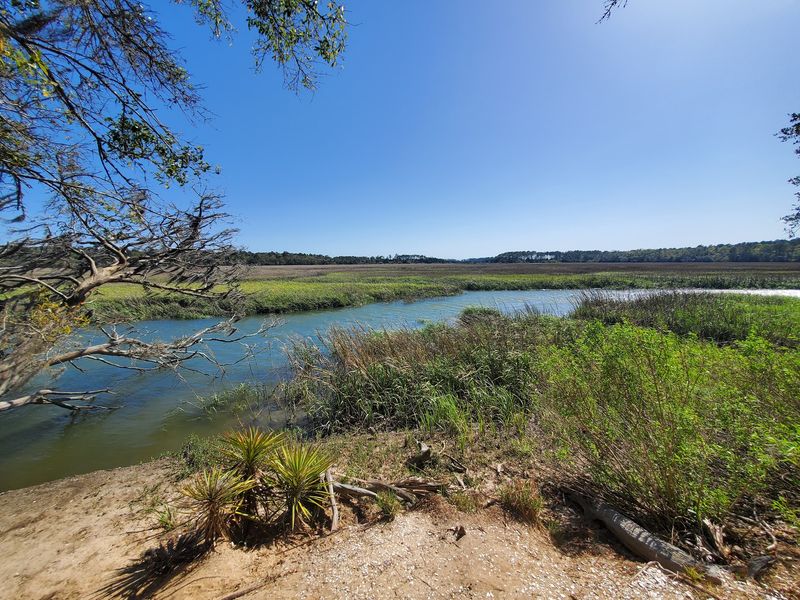
Past the oaks, the scenery changes its outfit completely. Shady forest gives way to wide open marsh and big coastal skies.
An interpretive nature trail winds through maritime forest near the ruins. Along the way, signs point out plants and history worth noticing.
Birds kept me company the whole walk. I heard more chirps and calls than I could name, which made the stroll feel lively.
The trail eventually leads to peaceful salt marsh views. Tall grasses stretch out toward the water, changing colors as the light shifts.
The estate sits on the Isle of Hope, so water is never far away. The marsh overlook gives you a sense of how the land and tides connect.
Paths are mostly flat but sandy in spots. Tree roots can poke up near the shady edges, so watch your step.
Wear sturdy sneakers instead of sandals. Your ankles will thank you later.
Some trails may close at times, so ask staff which ones are open. They hand out a numbered map that makes finding each stop simple and stress-free.
Spanish Moss Steals The Show
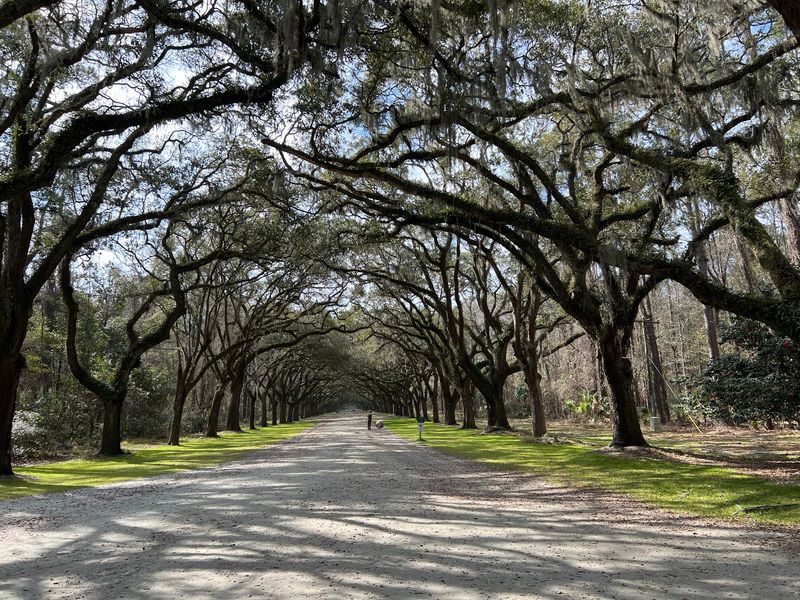
Silver curtains hang from every branch here. They sway in the breeze like the trees are showing off.
That silvery decoration is Spanish moss, and it covers the oaks along the avenue. It gives the whole road a soft, misty look, even on a clear and sunny day.
Here is a fun twist. Spanish moss is not actually moss, and it is not from Spain either.
It is a flowering plant related to the pineapple family. It grabs moisture and nutrients from the air instead of feeding on the tree itself.
The moss is a big reason the avenue feels like a movie set. Light passes through it in thin streams, so photos come out glowing and moody.
Spanish moss is best admired hanging naturally from the trees rather than pulled from the branches.
Those little bugs can leave itchy bumps on your skin. So enjoy the view and keep your hands to yourself.
For the best pictures, visit when the sun sits lower in the sky. Morning light makes the moss look like it is lit from within.
Step Back Into Colonial Days
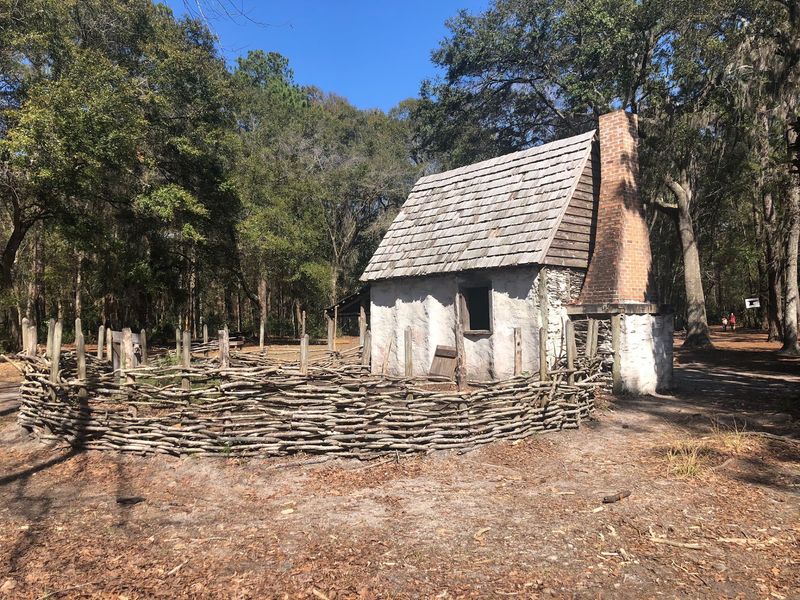
Imagine your chores required an axe and a fire. The colonial life area makes that idea feel very real.
A short forest walk brings you to this small demonstration space. It includes a simple rustic hut and displays of tools from early Georgia.
During programs and special events, costumed interpreters demonstrate tools and skills associated with colonial Georgia. You might see woodworking, cooking methods, or other daily tasks from the 1700s.
The area is not a big village. Still, seeing the cramped space helped me understand how tough early life could be.
Special events bring even more energy. The Colonial Faire and Muster, traditionally held in February, features period demonstrations, music, dancing, and crafts.
That event is a great pick for families. Kids get to see history acted out instead of only reading about it.
Check the park calendar before your trip. Event days can be busier, so arriving early helps.
I left with a new respect for modern kitchens. One look at those old tools made my microwave feel like a superhero.
Smart Tips Before You Roll In
A little planning turns a good visit into a great one. Trust me, my sunburned neck learned this lesson the hard way.
It opens daily from 9 am to 4:45 pm, so morning visits beat the heat and crowds.
An entrance fee covers parking and the tram ride. Adult tickets have been listed around twelve dollars, with lower prices for seniors, youth, and young children.
The modern visitor center has clean restrooms and a gift shop. You can grab cold drinks, snacks, packaged sandwiches, and souvenirs there.
Picnic areas are available if you pack lunch. Leashed dogs are welcome too, which makes it a fun outing for pet owners.
Summer can be very hot and humid. Bring water, a hat, and maybe a small hand fan.
You will need a car or rideshare to get here. Public transit options are limited.
Plan for about two to three hours total. That gives you time for the avenue, museum, ruins, and marsh without feeling rushed.