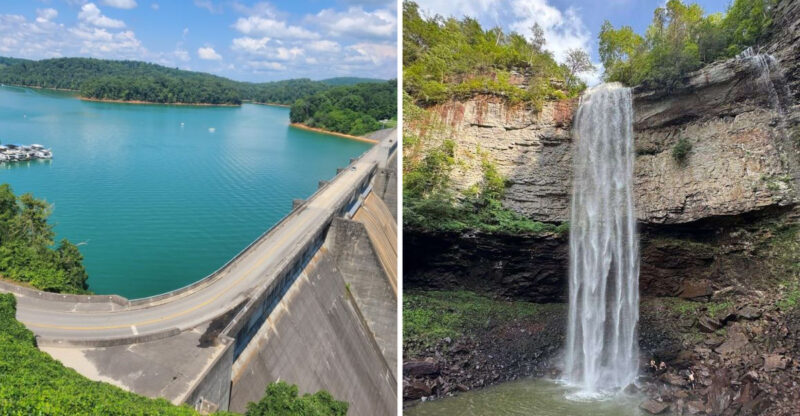
10 Gorgeous Waterfalls In Tennessee Worth Seeking Out In The Wilderness
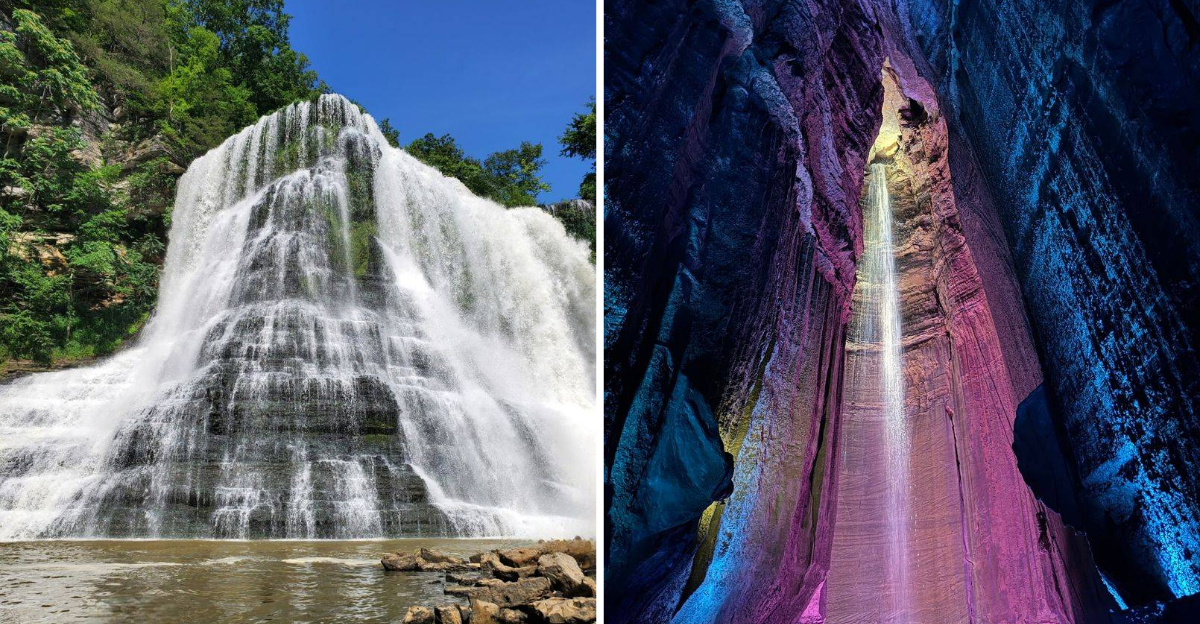
Ready to turn your next hike into a full-blown waterfall hunt?
Tennessee rewards curious explorers with cascades hidden beyond forest trails, rocky gorges, and fascinating underground spaces.
Each destination brings its own adventure, with routes ranging from relaxed walks to longer wilderness outings. That variety makes choosing the next waterfall almost as much fun as reaching it.
Some falls make dramatic plunges, while others appear in wonderfully unexpected settings along the trail.
Add swimming areas, bridges, and interesting historic features at certain locations, and a simple hike becomes much more.
Grab your water bottle and choose your route. Something spectacular could be waiting around the next bend.
1. Fall Creek Falls, Spencer
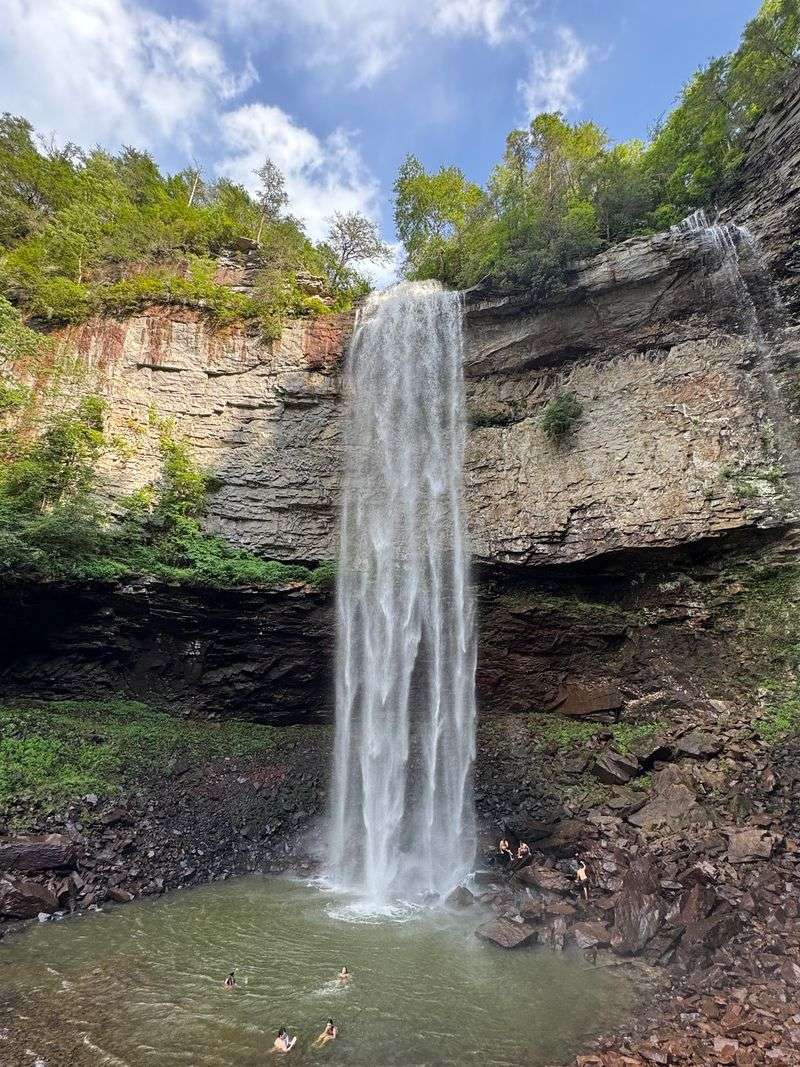
The tallest free-falling cascade in the eastern United States sits quietly in middle Tennessee. Water drops a staggering 256 feet here into a shadowy gorge.
Fall Creek Falls, near Spencer, anchors a state park packed with far more than one view. A short but steep 0.4-mile trail drops hikers straight to the splash zone. Cool mist hits your face before you even see the pool.
The Waterfall Loop connects Cane Creek Falls and Rockhouse Falls too. A swinging suspension bridge crosses the creek along the way. Kids tend to love that part most.
Beyond the cascades, the park has a lake for kayaks and paddleboards. There is also an 18-hole golf course tucked among the trees. Bikes and picnic tables round out the options nicely.
Late spring through early fall brings strong water flow and full services. Autumn swaps volume for color, with red maples framing the gorge rim. Both seasons deliver something worth photographing.
Parking lots fill quickly on warm weekends, so early birds win here. Morning light also catches the rising mist in the most flattering way. Sturdy shoes matter, since the descent gets slick after rain.
Stand at the overlook once, then hike down, and you will understand why this gorge earned its reputation across the whole region.
2. Virgin Falls, Sparta
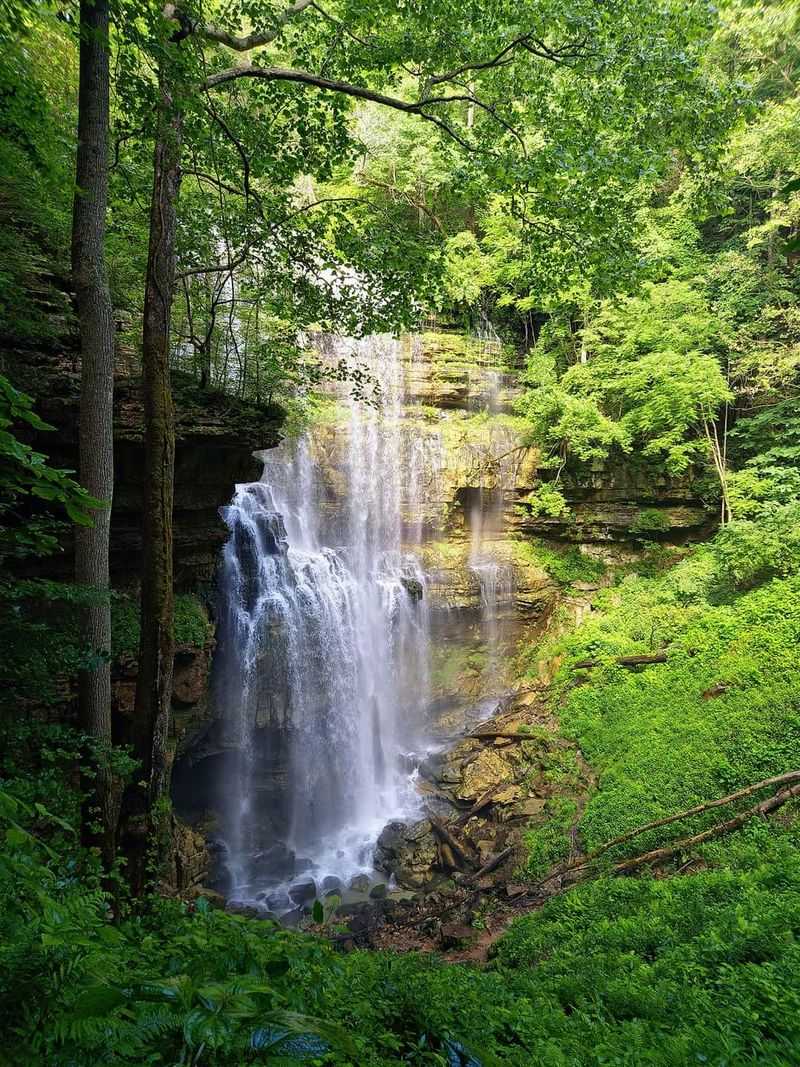
Are you seeing what I am seeing, because this waterfall pours out of a cave and then vanishes into the ground? No river feeds it above, and none flows away below.
Virgin Falls, in the state natural area near Sparta, drops about 110 feet in that disappearing act. Geologists call it a sinking stream, and hikers simply call it unforgettable.
Reaching it means committing to roughly a 10-mile round trip through rugged terrain. The payoff includes bonus cascades like Big Branch Falls and Big Laurel Falls. Martha’s Pretty Point delivers a wide overlook worth the extra steps.
Backcountry campsites let you split the trek across two days. Reservations are required, so plan that part ahead of time. Water filters and headlamps belong in your pack.
The gravel road to the trailhead runs about two miles and stays rough. A vehicle with decent clearance saves you some worry.
Spring and early summer bring the loudest flow, especially a day after steady rain. Caves in the area usually close from August through May to protect resting bat colonies. Respect those barriers, since the bats need the quiet.
Few hikes in the state test your legs this thoroughly, and even fewer end with a cascade that pulls a magic trick right in front of you.
3. Cummins Falls, Cookeville
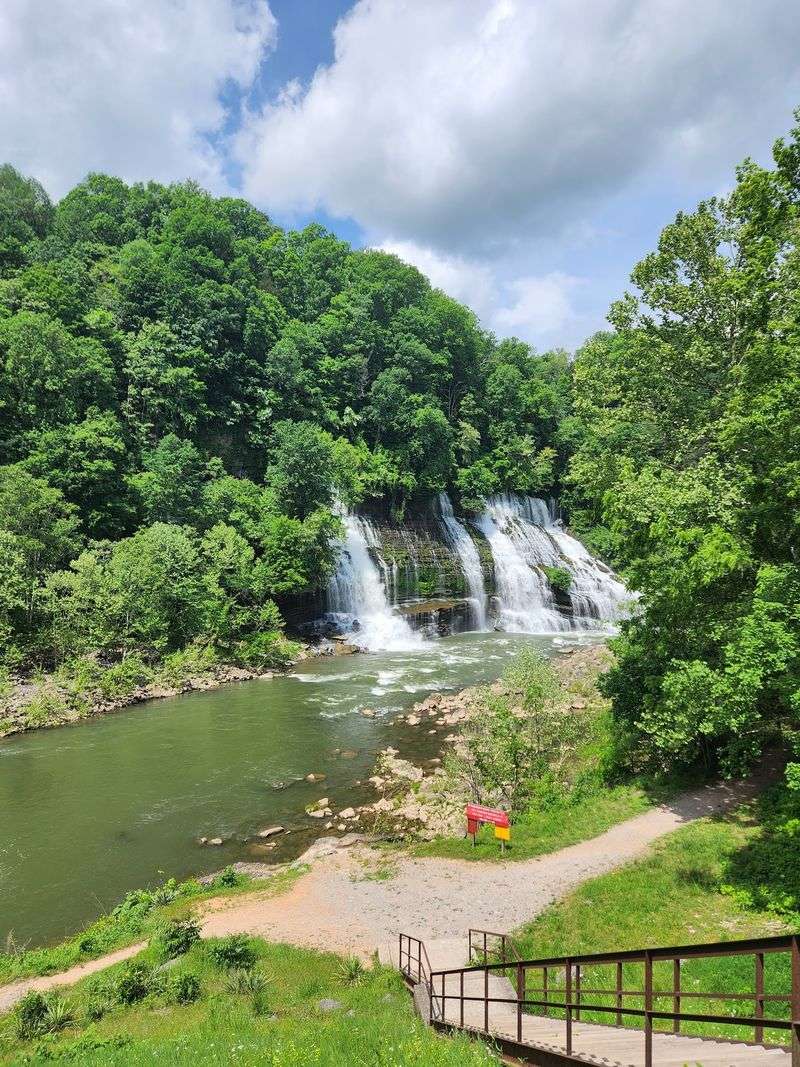
My jaw dropped at the size of the swimming hole waiting under this one. Layered ledges spread out like a giant natural staircase.
Cummins Falls sits about nine miles north of Cookeville inside its own state park. The 75-foot cascade ranks eighth in Tennessee for sheer water volume.
Getting to the base takes a moderately tough 1.5-mile round trip. Expect rocky footing and a couple of river crossings along the route. Water shoes with real grip make the whole thing easier.
The gorge itself has stayed remarkably untouched, which is part of the appeal. Once you arrive, the pool invites long floating breaks under the rushing water.
A gorge permit is required for base access, and quantities are limited daily. Grab yours online before driving out. Rangers also close the gorge during high water, so check conditions first.
Prefer to stay dry? The overlook trail needs no permit and still serves up a great vantage point.
Spring and fall bring cooler hiking weather plus mountain laurel blooms around May. Summer draws big swimming crowds, so an early arrival buys you calm water and shade.
Pack out everything you carry in, and this wild gorge will keep rewarding hikers for many decades to come.
4. Ozone Falls, Crab Orchard
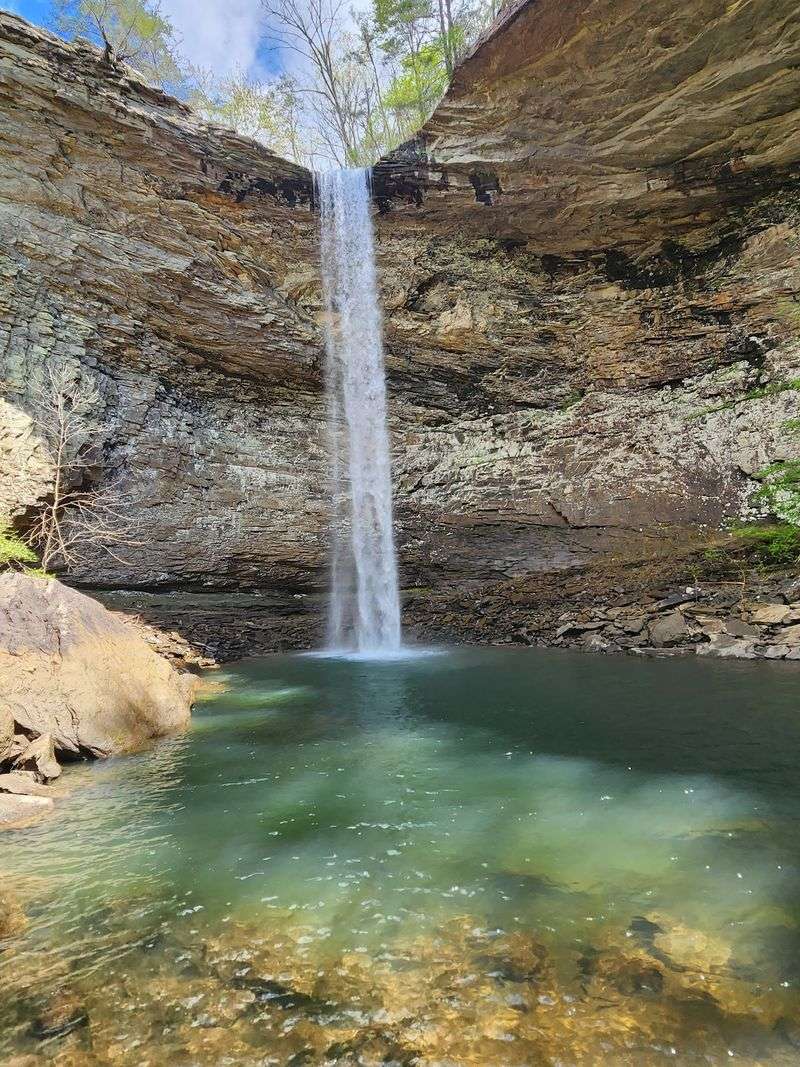
Movie fans, take note, because a famous jungle film borrowed this exact backdrop. The rock amphitheater around it looks purpose-built for a camera crew.
Ozone Falls, near Crab Orchard in Cumberland County, spills 110 feet over a hard sandstone cap. Below waits a deep pool littered with enormous boulders.
Local lore says the crisp, tingly mist gave the falls its unusual name. Stand near the base and you can see why that story stuck.
Access is refreshingly simple at the top, where a very short path reaches viewing spots. Photographers get their shot in minutes.
The descent to the bottom is a different story entirely. Boulder scrambling, slick mud, and awkward footing demand real hiking boots. Take your time and use both hands.
Hikers wanting more mileage can follow a four-mile round trip along the Cumberland Trail. Diverse plant life and wide views line that stretch.
Swimming in the plunge pool draws steady interest through the warm months. April through October generally brings the best combination of flow and comfortable weather.
Wet rock stays slippery even on sunny days, so keep young children close. Leave the flip-flops in the car and this compact wonder will treat you kindly from the first look to the last.
5. Laurel Falls, Gatlinburg
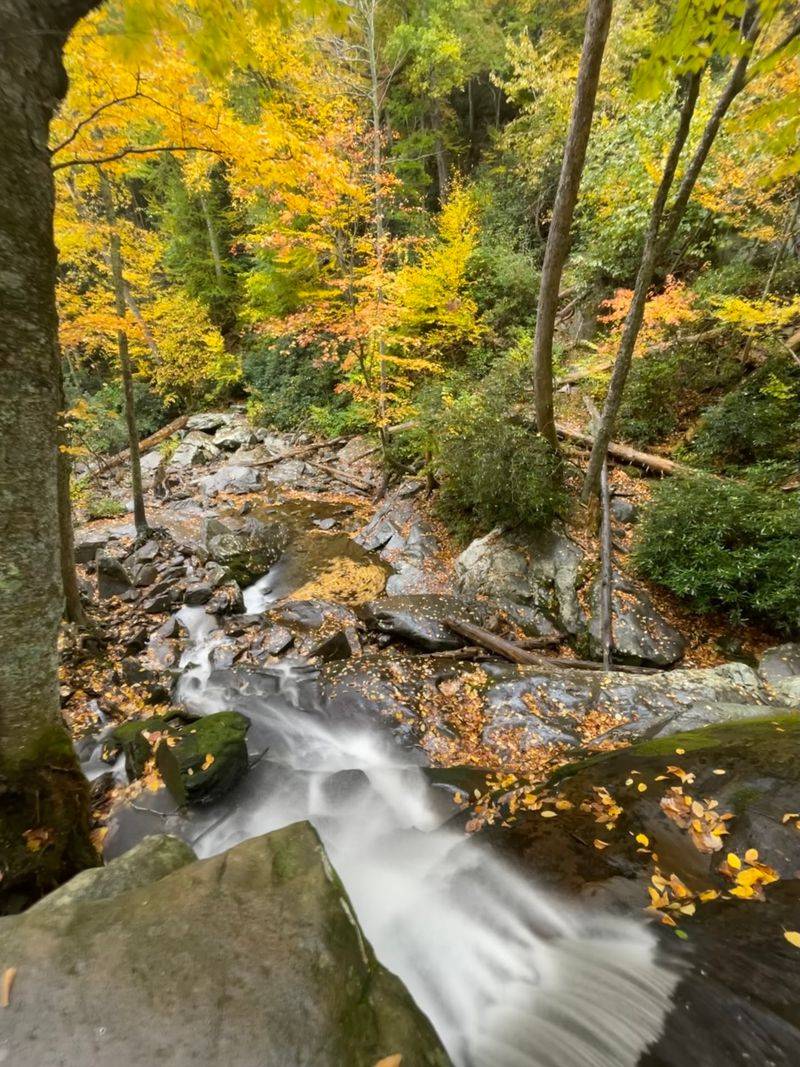
Picture a stone walkway crossing right between the upper and lower halves of a waterfall. That single detail makes this Smokies classic instantly recognizable.
Laurel Falls, reached from a trailhead near Gatlinburg inside Great Smoky Mountains National Park, tumbles about 80 feet across two tiers. The Laurel Branch stream slides beneath your feet as you stand on the bridge.
Its name comes from the mountain laurel shrubs lining the path. Pink and white blossoms peak in late May and early June.
The hike runs 2.6 miles round trip on pavement, though cracked and uneven stretches keep it interesting. The climb stays gentle but steady through pine and oak forest.
Popularity is the main challenge here. The lot often fills by 8 or 9 in the morning during busy months. Arrive early or aim for an off-season weekday.
A Park It Forward parking tag is required for any vehicle parked longer than 15 minutes. Buy one before you go and skip the hassle.
Swimming, wading, and climbing on the falls are all prohibited to protect the fragile stream habitat. Black bears wander through occasionally, so store snacks smartly.
Bring a camera with a wide lens, because framing both tiers plus that stone bridge is genuinely fun.
6. Rainbow Falls, Gatlinburg
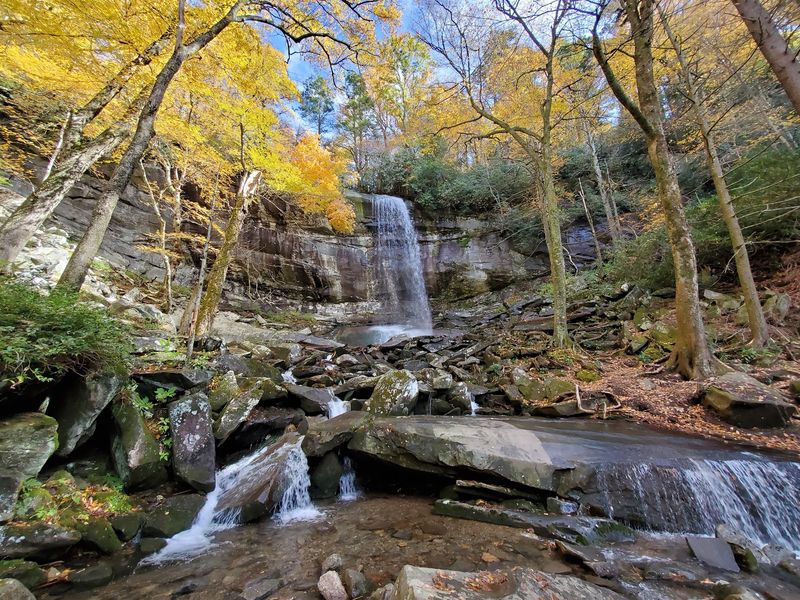
Just imagine for a second catching a rainbow on purpose, timed almost like a train schedule. Sunny winter and early spring afternoons make it happen here.
Rainbow Falls, along LeConte Creek near Gatlinburg in Great Smoky Mountains National Park, drops 80 feet in one clean plunge. Between noon and 3 PM, sunlight hits the mist at just the right angle.
Getting there takes a strenuous 5.4-mile round trip through old-growth forest. Roots, loose rock, and creek crossings keep your eyes on the ground.
Trekking poles help enormously on the descent. So does starting early enough to leave buffer daylight.
The same trail doubles as the shortest route to the summit of Mount LeConte. That means you will share the path with ambitious peak baggers carrying big packs.
Cold snaps transform the cascade into towering ice sculptures, a completely different show. Spring layers the forest floor with wildflowers, while October sets the canopy ablaze.
Rocks near the base stay permanently wet and dangerously slick. Climbing on them is a bad idea no matter how good the photo looks.
Hike it once in July and again in January, and you will swear you visited two entirely separate waterfalls.
7. Ruby Falls, Chattanooga
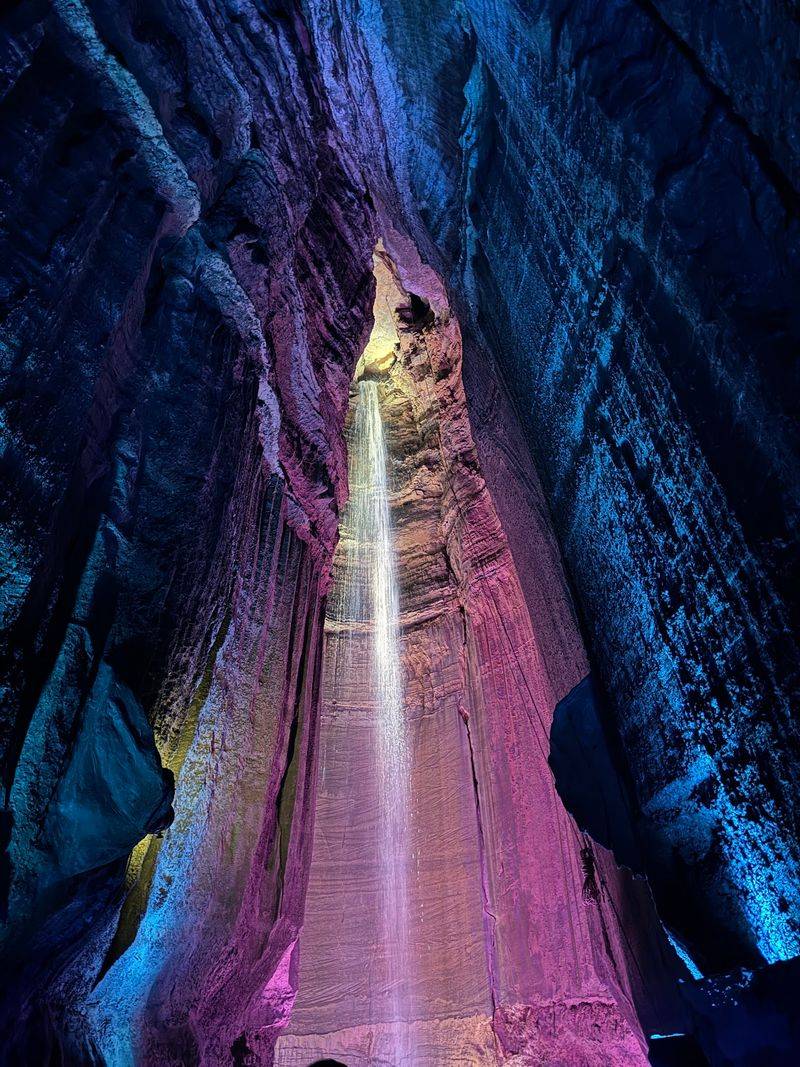
Let’s be real for a second, most waterfalls do not require an elevator ride. This one drops you 260 feet into a mountain before the walking even starts.
Ruby Falls, inside Lookout Mountain at Chattanooga, holds the title of tallest underground waterfall open to the public in the country. The cascade itself measures 145 feet.
A paved, mostly level one-mile round trip leads past stalactites, flowstone, and other slow-grown formations. Guides point out shapes you would otherwise miss.
The cavern holds steady around 60 degrees Fahrenheit all year. Bring a light jacket in July and you will be the comfortable one.
Spring rains crank up the flow dramatically, making the falls roar. Winter trades crowds for intimacy while the water still runs strong.
Above ground, the historic castle building and Lookout Mountain Tower serve up wide views of the Cumberland Plateau and the Tennessee River. The High Point ZIP Adventure adds ziplines and a climbing tower for restless legs.
Timed-entry tickets sell out on busy weekends, so book online well ahead. Strollers are tricky in the narrow passages, and a small backpack works better.
Descending into a mountain to watch water fall in the dark ranks among the strangest, most memorable outings in the state.
8. Foster Falls, Sequatchie
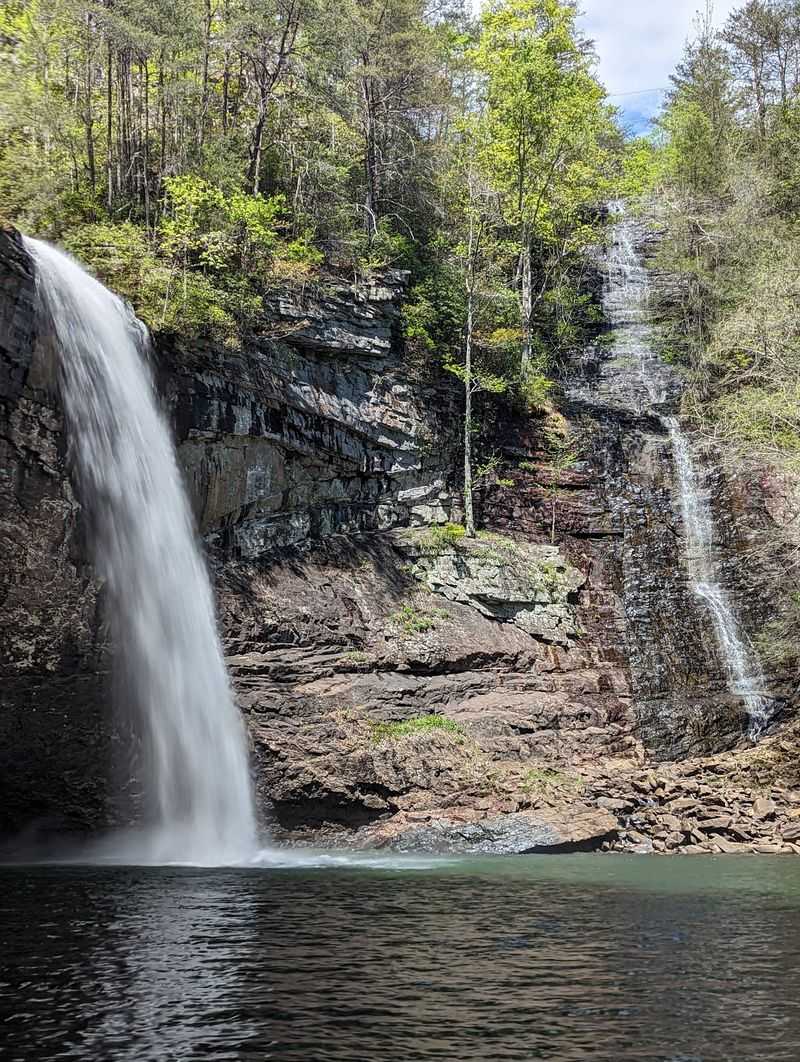
Rock climbers and swimmers rarely share the same playground, yet they do here. Sandstone walls draw one crowd while the plunge pool draws the other.
Foster Falls, at Sequatchie in South Cumberland State Park, drops 60 feet into a broad, clear basin. It marks the southern end of the well-known Fiery Gizzard Trail system.
Hemlocks, azaleas, and thick mountain laurel wrap the whole gorge in green. Climbers need permits before touching those cliff faces.
An easy, partly ADA-accessible path reaches the overlook for a top-down view. Anyone wanting closer contact faces a short but steep rocky descent under a mile.
A suspension bridge over Little Gizzard Creek delivers you almost face to face with the water. The bounce underfoot adds a little thrill.
Swimmers flock to the pool in summer, though the water stays bracingly cold. That chill is honestly the best part after a humid climb.
Flow peaks in spring and right after heavy storms. October turns the surrounding hardwoods into a wall of orange and gold.
Free parking, restrooms, and a picnic area sit right at the trailhead, open sunrise to sunset. Pack lunch and stretch the afternoon out as long as daylight allows.
9. Burgess Falls, Cookeville
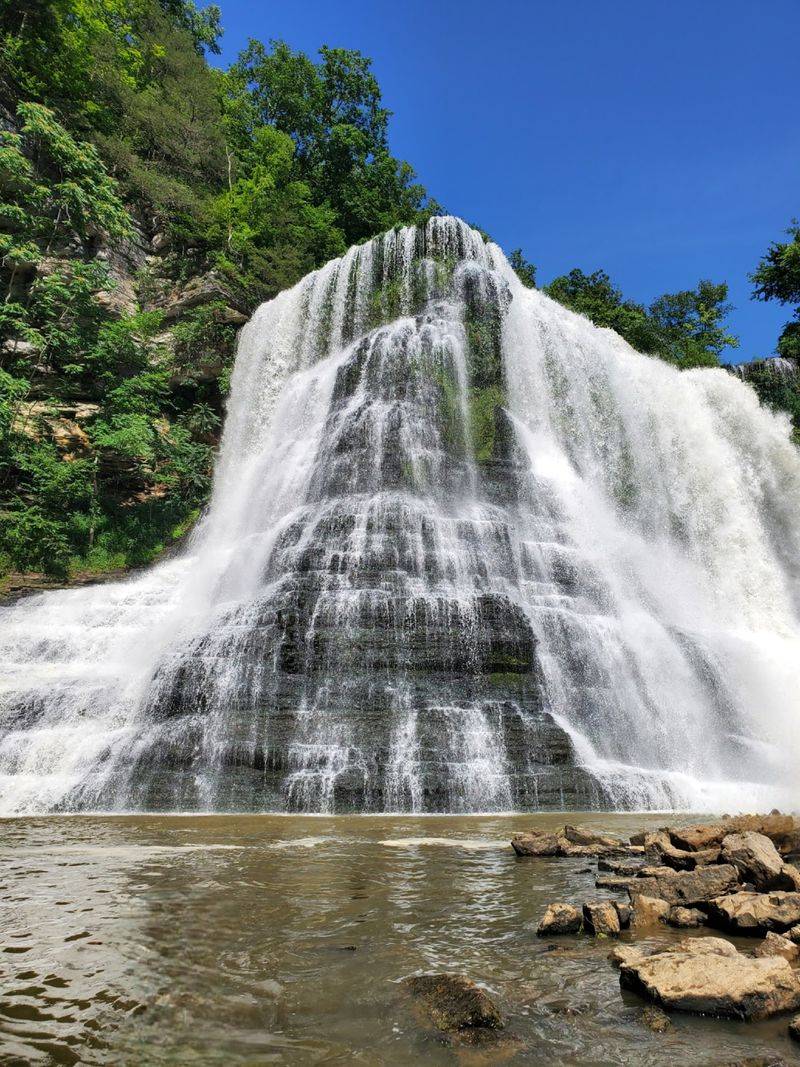
The Falling Water River steps down repeatedly before its grand finale.
Burgess Falls, near Cookeville, saves the biggest drop for last at roughly 130 to 136 feet. The river then rushes on toward the Caney Fork.
The River Trail covers 1.5 miles round trip and passes every cascade. Stairs and uneven rock make it moderately strenuous, especially heading back up.
A service road offers a gentler return route for tired knees. Plenty of hikers take that shortcut without regret.
Swimming at the main falls from inside the park is not allowed. Paddlers, however, can reach the base by kayak from the Cane Hollow Boat Ramp for a rare upward view.
The quieter Ridgetop Trail winds through mountain laurel with downstream overlooks. Fewer people choose it, which is exactly its charm.
Spring rain and snowmelt push the river to full volume, and the roar carries far. Mid-October dresses the gorge walls in warm color instead.
Parking spaces run out fast, so weekday mornings are your friend. Time it right and you will have four waterfalls almost entirely to yourself before lunch.
10. Greeter Falls, Altamont
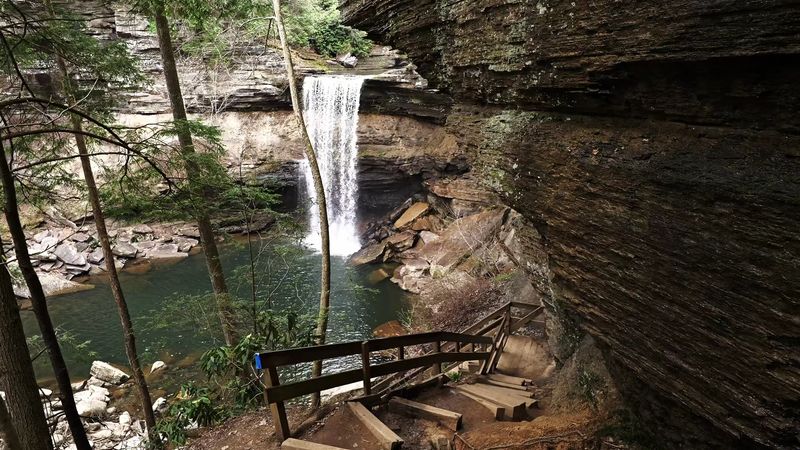
I’ll be the first to admit that a spiral metal staircase inside a gorge sounds made up. It is very real, and it clangs pleasantly under your boots.
Greeter Falls, in Savage Gulf State Park near Altamont, actually delivers two cascades. The upper drop measures around 15 feet, while the lower one plunges 50 feet into a clear basin.
That staircase spirals down through sandstone to reach the lower pool. Handrails help, though wet steps demand slow feet.
The loop trail runs about 1.1 miles and earns a moderate rating. Elevation changes and rocky stretches are the main obstacles.
Spur paths lead to Boardtree Falls and the Blue Hole swimming area nearby. Both make the outing feel much longer than the mileage suggests.
Spring cranks the volume to maximum, which is prime photography weather. Summer fills the lower pool with swimmers seeking relief from the heat.
Autumn turns the hardwood forest above the gorge into a color show worth the drive alone. Weekday visits keep the parking situation simple.
Free parking waits at the Savage Gulf West trailhead, with restrooms only at that lot. Plan accordingly, then let those spiral stairs deliver you to one of the prettiest pools around.