Gothic Towers And Colorful Stained Glass Make This Historic Georgia Church Worth Visiting
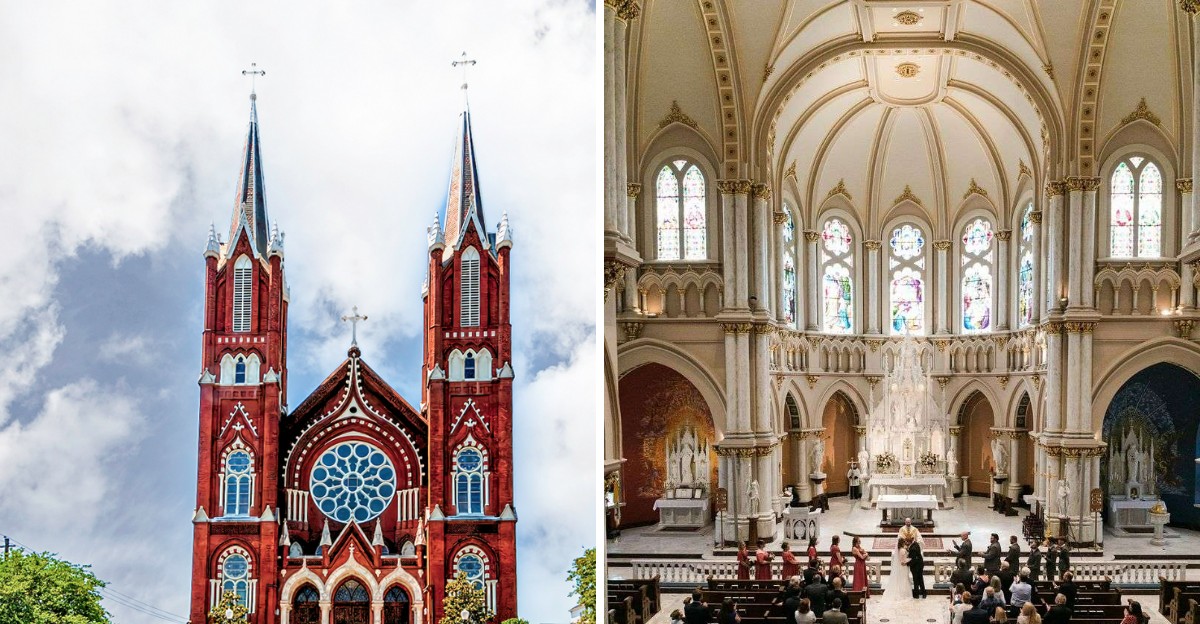
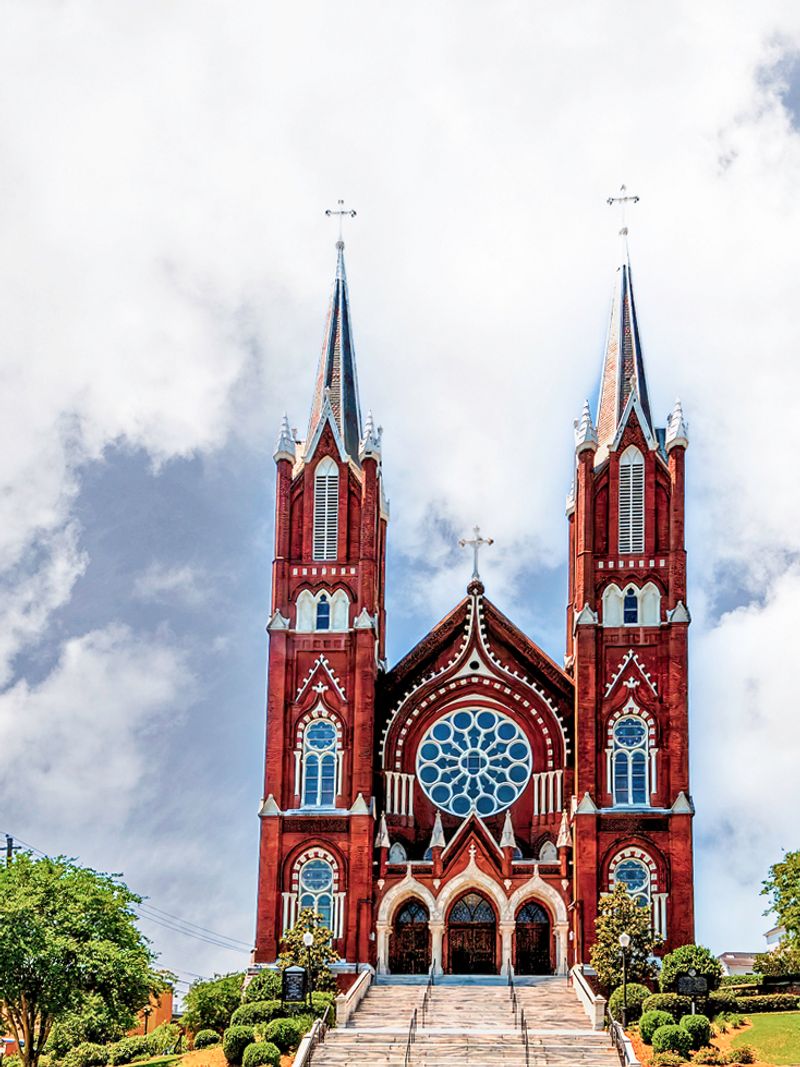
Two cross-topped spires climb 200 feet over one downtown block. That makes them the tallest twin towers in their entire city.
I can’t look at that number without wanting to crane my neck.
The left tower holds three large bronze bells. Inside, more than 60 stained glass windows came from the Mayer workshops in Munich, Germany.
Together, they tell the story of Salvation in glowing color.
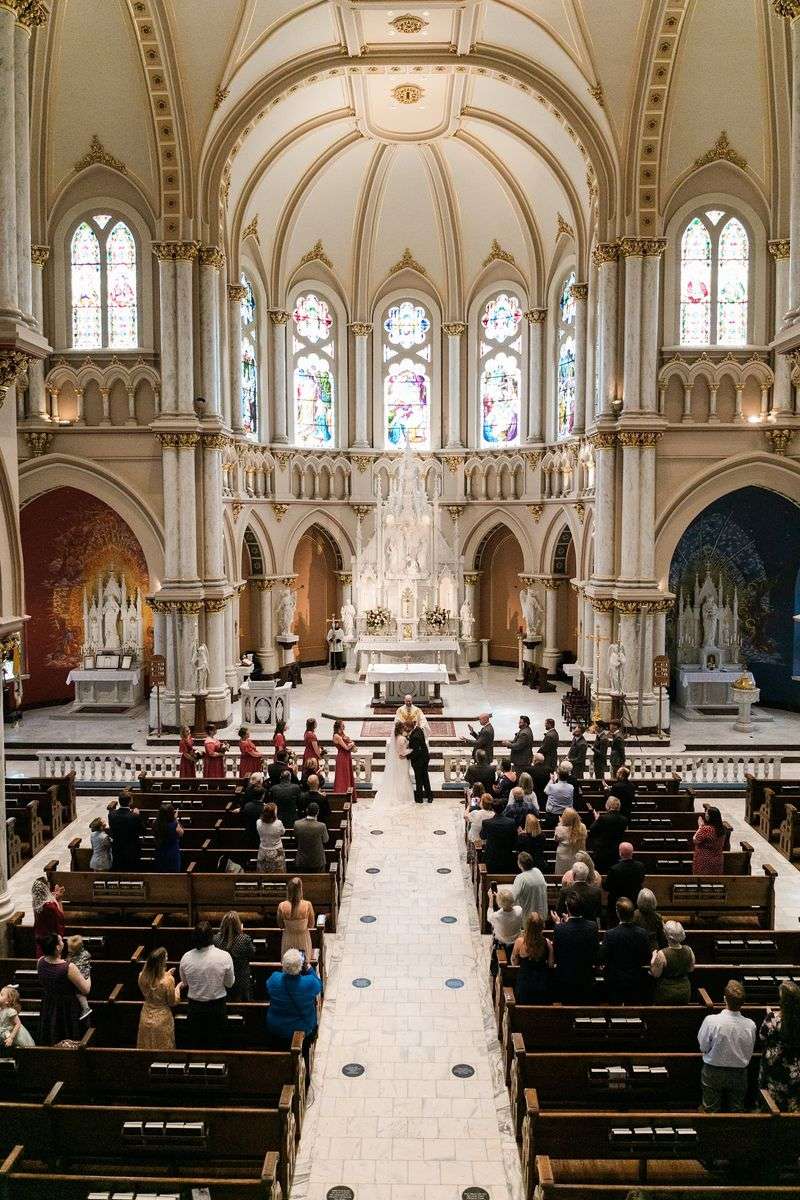
I like how this Georgia landmark mixes Old World craft with homegrown stone. Its massive interior columns rise 80 feet, and they came from Georgia quarries.
Above the altar, a dome reaches 125 feet over the floor.
I believe some buildings deserve a slow walk and a quiet pause. This one feels like it was built for exactly that.
So how does a church this grand end up in a Southern downtown?
Those 200-Foot Spires Will Pull Your Eyes Straight Up
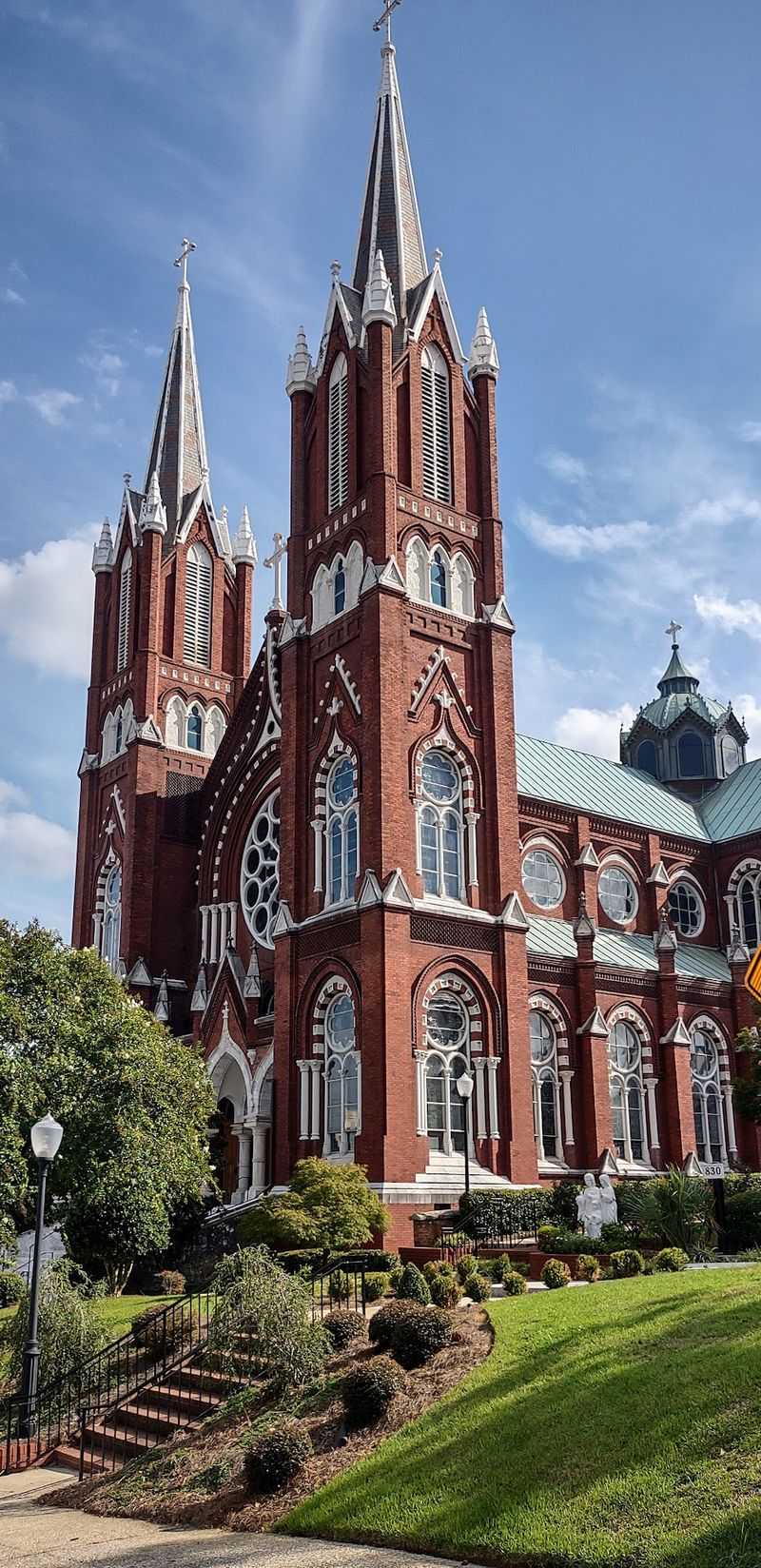
Few skylines get a pair of exclamation points quite this dramatic. St. Joseph Catholic Church in Macon sends two cross-topped spires 200 feet into the air.
Those towers are the tallest twin towers in Macon. They also make the church the city’s third-tallest building overall, which is wild for a structure finished over a century ago.
The style blends Romanesque and Neo-Gothic design. Brother Cornelius Otten designed the church, giving the building its striking mix of strength and height.
Look closely and you’ll spot flying buttresses along the sides. They are the classic Gothic support trick, holding up walls so the windows can stay big and bright.
A domed cupola adds another curve to the roofline. It breaks up all those sharp points in a pleasing way, like a soft note in a loud song.
Bring a camera with a wide lens if you can. Standing across the street gives you a better shot of both spires at once.
Stepping too close means tilting your head way back. Your neck may file a complaint, but the view is worth every second of it.
The church sits at 830 Poplar St, Macon, GA 31201. It occupies an entire block in the middle of downtown, so it’s hard to miss.
Sixty-Plus Windows From Munich Turn Sunlight Into A Storybook
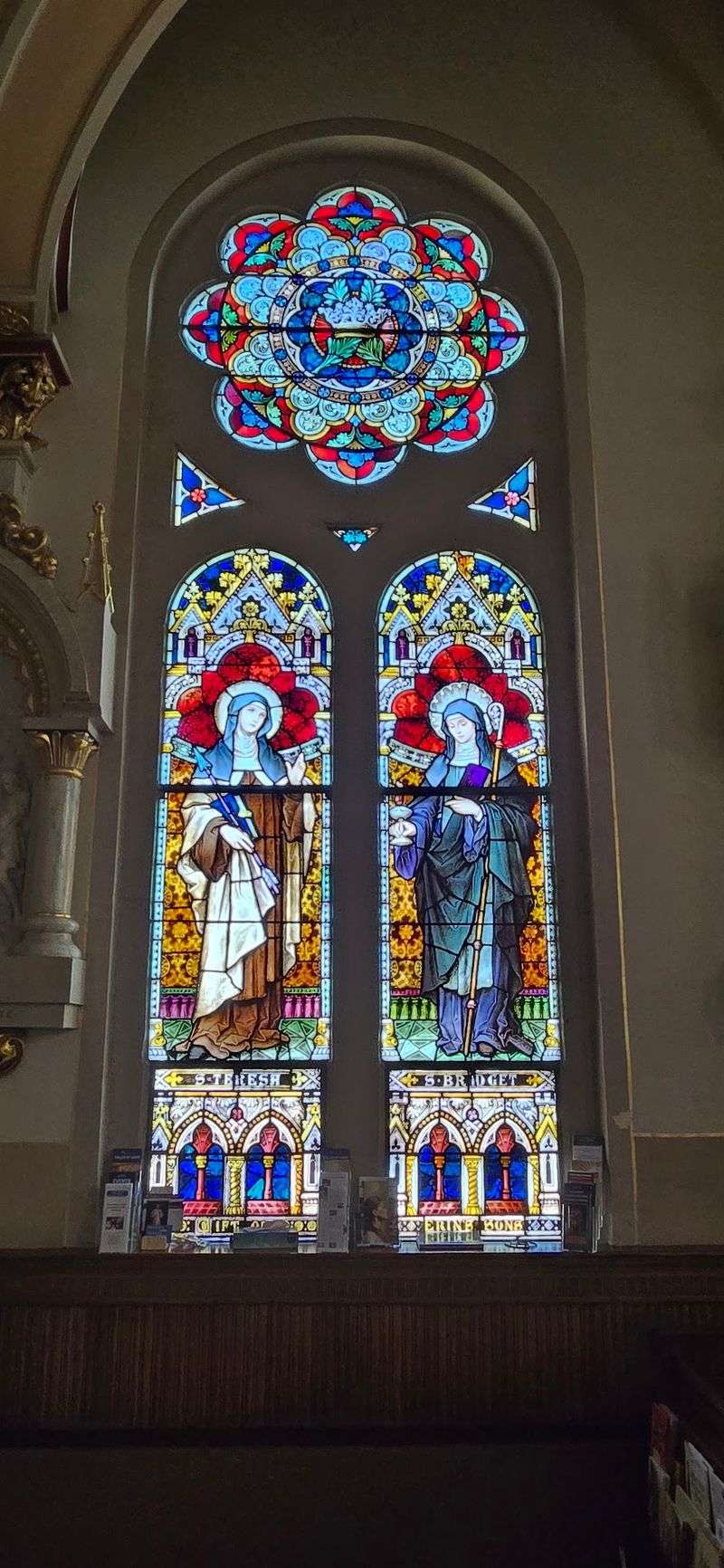
Bavaria shipped a whole lot of color to central Georgia. Most of the more than 60 stained glass windows here came from the Mayer workshops in Munich, Germany.
Each window works like a page in a giant picture book. You’ll find Bible scenes, angels, and saints glowing in rich shades of red, blue, and gold.
Taken together, the windows tell the story of Salvation. That gives you a fun way to explore, since you can follow the story from one window to the next.
Timing makes a real difference here. Sunlight shifts through the day, so the colors can look softer in the morning and bolder later on.
Try picking one window and studying it for a full minute. Faces, robes, and tiny background details start to pop when you slow down.
Families can turn it into a gentle game. Ask kids to spot an angel, a lamb, or a crown, then talk about what each scene shows.
Photos are tempting, and that’s fair. Still, these windows reward patient eyes more than quick snaps, so give yourself time before reaching for your phone.
Italian Marble And Georgia Stone Share The Spotlight Inside
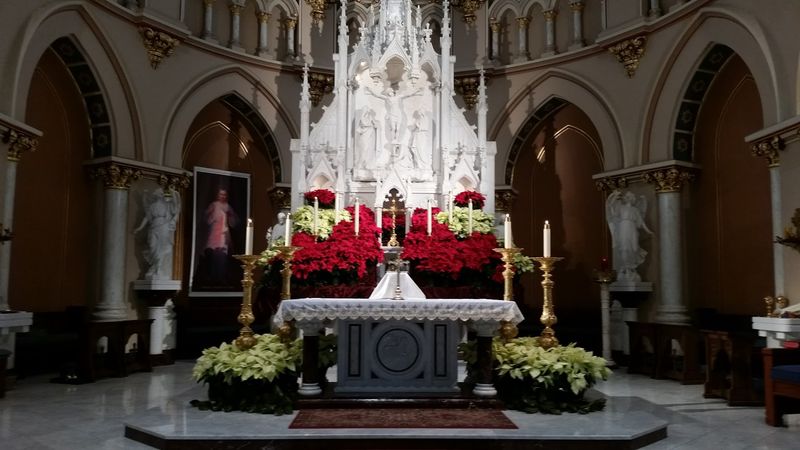
White Carrara marble usually makes people think of Italian sculptures. Here, it forms the grand high altar and the pulpit, with carvings sourced from Italian quarries.
The bright stone stands out against the deeper tones around it. It draws your attention forward the moment you look down the center aisle.
Meanwhile, the massive columns have a local backstory. They reach 80 feet tall and were made from stone out of Georgia’s own quarries.
I love that pairing. Europe brought the polish, and Georgia brought the muscle, and somehow it all fits together beautifully.
A newer piece joins the older treasures too. In 2005, the parish commissioned a new altar table designed by Rolf Rohn and Associates.
That altar was dedicated on July 1, 2006, replacing one from the 1970s. New priest and deacon chairs and a new ambo arrived at the same time.
Spend a moment comparing the old carvings with the newer work. It’s a neat lesson in how a historic church keeps growing while still honoring its roots.
Look for the small details, since the craftsmanship hides in curves, edges, and carved trim.
Look Up, Way Up, At A Dome That Soars 125 Feet
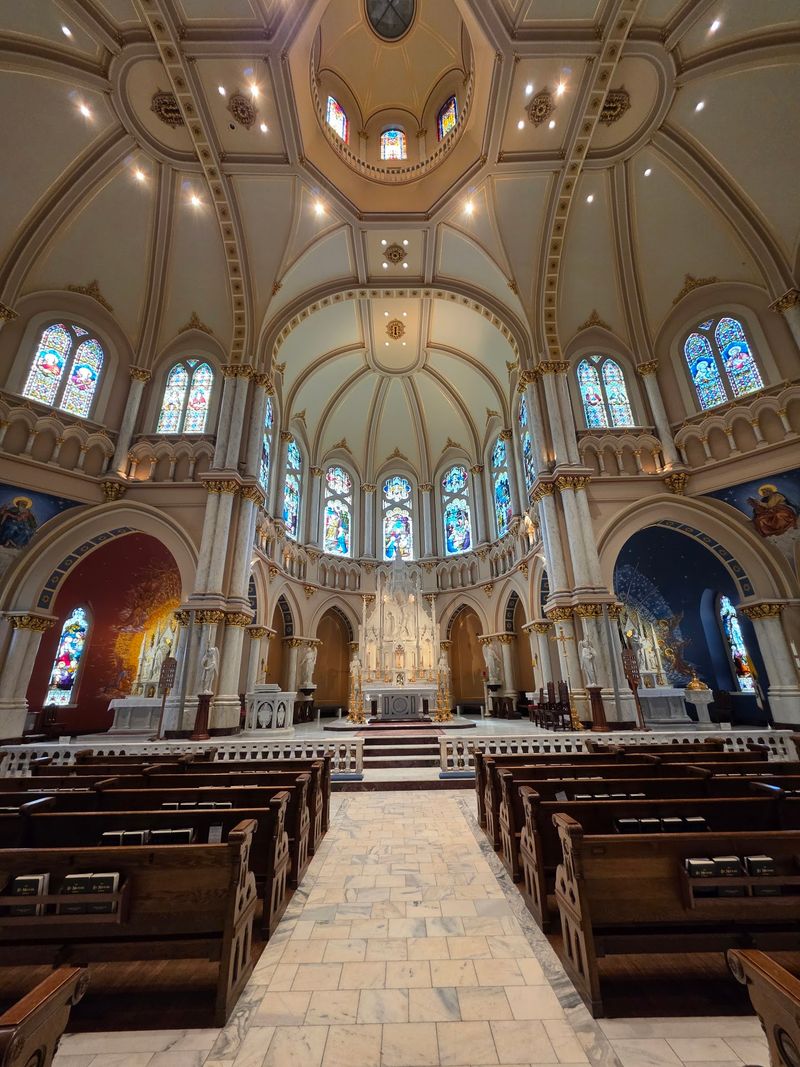
Ceilings rarely steal the show, but this one tries hard. Above the high altar, a great dome rises to an apex 125 feet above the floor.
That’s taller than many downtown buildings. Standing beneath it can make you feel pleasantly small, the way a big night sky does.
Domes have a long history in sacred buildings. Their round shape pulls your gaze upward, which fits a place meant for prayer and reflection.
Here’s a simple tip for enjoying it. Find a pew with a clear view toward the altar, sit down, and let your eyes travel slowly upward.
Start with the marble altar, then move to the columns. Finally, follow the lines all the way to the top of the dome.
This slow approach helps you notice how the whole space connects. Nothing feels random once you see how each part leads toward the next.
Remember that people may be praying nearby. Keep voices low and phones silent so everyone can enjoy the calm.
Honestly, the hush makes the dome feel even taller. Quiet has a funny way of stretching space.
Give it a few minutes and see what stands out.
A Thousand Organ Pipes Have A Comeback Story
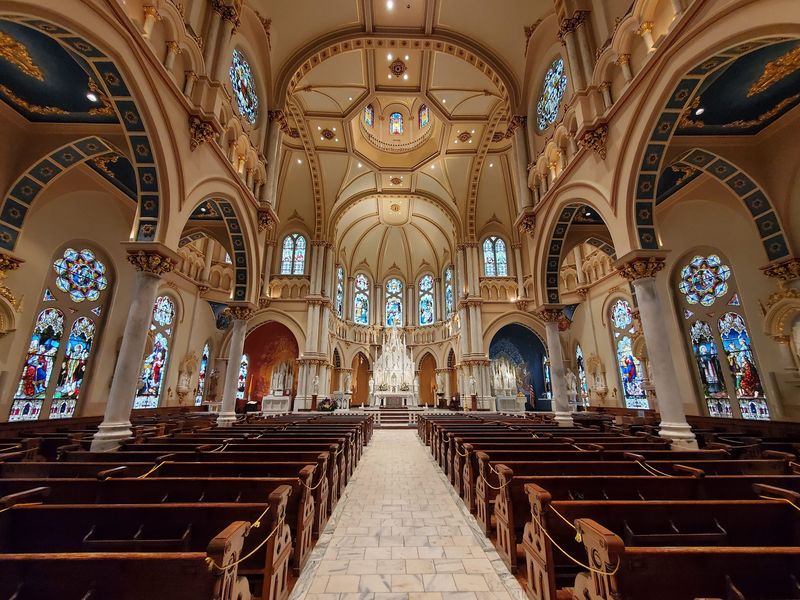
Some instruments get retired. This one got a second act instead.
The church’s organ has about 1,000 pipes. Its original Pilcher instrument was installed in 1903, the same year the main building was dedicated.
Over time, the old organ wore down. The Schlicker Organ Company stepped in and rebuilt it, keeping parts of the original in the new design.
That work wrapped up in 1985. The rebuilt organ was then dedicated on May 27, 1986, giving the music a fresh start.
I like that the old pieces weren’t simply tossed aside. It feels fitting for a building that values history as much as this one does.
Want to hear it in action? Attending Mass is your best chance, since the organ supports the music during services.
Sunday Masses are held at 8:30 a.m., 11:00 a.m., and 5:00 p.m. A Saturday Vigil Mass happens at 4:30 p.m.
Sound fills a tall space in a special way. With a dome and high columns overhead, those notes have plenty of room to travel.
Even a soft hymn can feel big in a room built like this.
Side Chapels Offer A Quieter Corner For Reflection
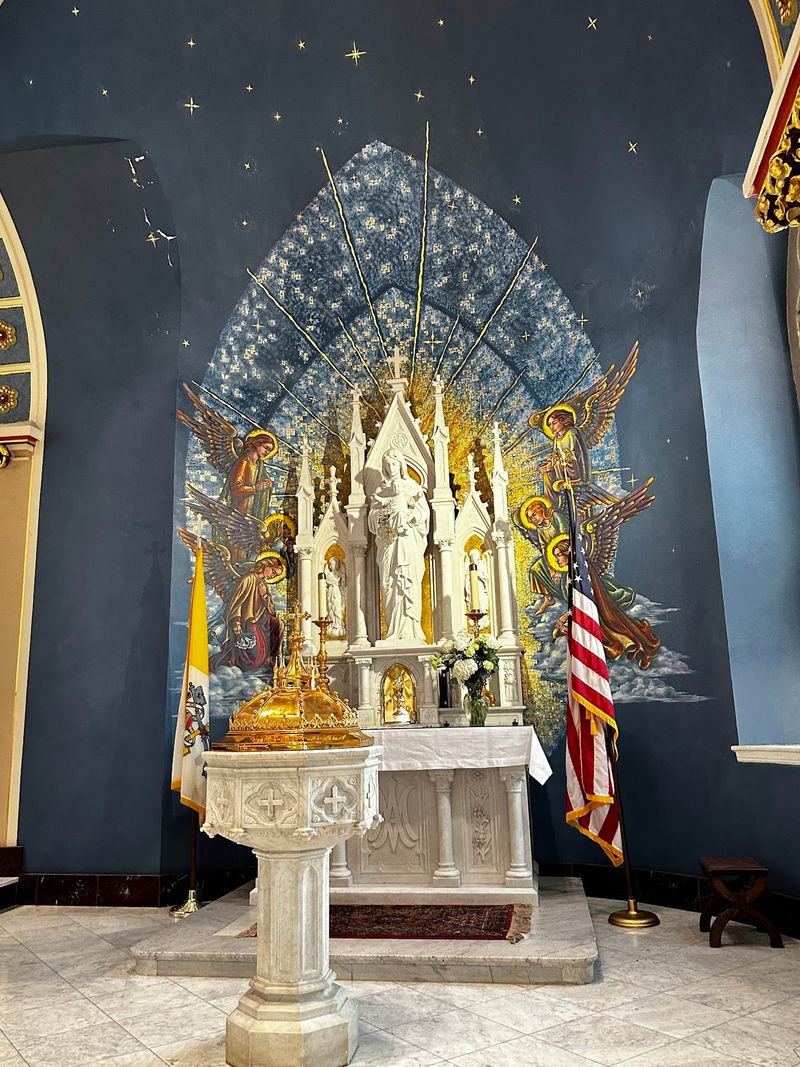
Big spaces are thrilling, yet smaller ones often feel more personal. The side chapels here give you that cozy contrast.
The Sacred Heart Chapel features stained glass with images of Jesus. It offers a quiet spot for meditation away from the wide main aisle.
Our Lady’s Chapel holds its own surprises. An ambry there stores the holy oils used in the church’s sacraments.
The original baptismal font also sits in Our Lady’s Chapel. It has been placed and raised up, so its history stays easy to see.
Lighted vigil candles add a warm glow inside the church. Their small flames make a nice partner to the colorful windows above.
These corners are perfect if crowds or big spaces feel overwhelming. You can sit, breathe, and simply take in the details around you.
Visitors of any background can appreciate the calm here. Just treat the space with care, since many people come to pray.
A few quiet minutes can reset a busy travel day. Sometimes the smallest room in a grand building leaves the strongest memory.
Don’t rush past these spaces on your way out.
Fourteen Years Of Building Paid Off In A Big Way
Patience built this place, one stone at a time. Workers laid the foundation in August 1889, and the finished church came years later.
Catholic roots in Macon run deeper still. The city’s first Catholic parish was established in 1841.
On June 16, 1892, the basement was blessed. Services actually took place down there until 1903, which means a whole congregation worshiped below the unfinished church.
Talk about waiting for an upgrade. The main building was finally dedicated on November 15, 1903.
Recognition followed decades later. St. Joseph Catholic Church joined the National Register of Historic Places on July 14, 1971.
In 2006, the Georgia Historical Society put up a marker for the church. Reading it outside gives you a quick history lesson before you head in.
Today, the Roman Catholic Diocese of Savannah oversees the parish. It remains an active church with regular Masses, not just a museum.
That living history is part of the charm. You’re seeing a building still doing the job it was built for, well over a hundred years later.
St. Joseph Catholic Church remains an active place of worship more than a century after its dedication.
Plan Around Mass Times And You’ll Get The Best Visit
Good timing turns a quick peek into a relaxed visit. The sanctuary is generally open to the public Monday through Friday from 8:00 a.m. to 5:00 p.m.
Daily Mass happens Monday through Friday at 8:00 a.m. On Saturday, it moves to 9:00 a.m.
Hoping to look around freely? Aim for weekday hours between services, when the space is open but not in use for Mass.
The Sunday 11:00 a.m. Mass is livestreamed on the parish Facebook page.
That’s handy if you’d like a preview before you travel.
A Latin Novus Ordo Mass takes place on the last Sunday of each month at 2:00 p.m. A Family Teaching Mass is held on third Sundays.
Schedules can change, so check with the church before planning around special liturgies. The parish office sits at the St. Joseph Center on High Place.
The church is accessible, which helps many visitors. There’s also a gift shop on site for small keepsakes.
Dress respectfully and keep your visit calm. A little courtesy goes a long way in a working church, especially when someone nearby is praying quietly.
A Whole Downtown Block Makes This Stop Easy To Find
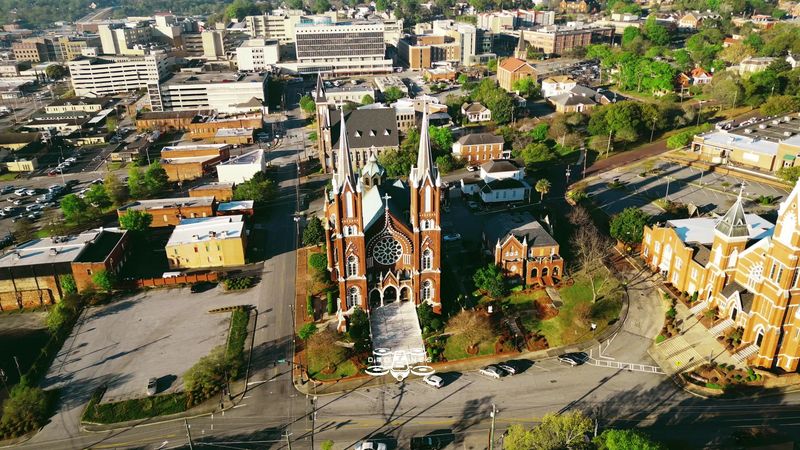
Getting lost here would take real effort. Those twin spires work like a built-in map marker over downtown Macon.
That central spot makes it easy to fold into a bigger day. You can pair your visit with a stroll through other parts of downtown Macon.
Plan to circle the outside before heading in. Each side shows off different angles of the towers, buttresses, and cupola.
Morning light can make the facade glow, while late afternoon may add longer shadows. Either way, you’ll get a fresh look at the stonework.
Remember that the parish office is separate from the church itself. You’ll find it at the St. Joseph Center on High Place if you have questions.
For travelers crossing Georgia, this stop fits nicely into a road trip. It doesn’t demand a whole day, yet it leaves a lasting impression.
Honestly, it’s the kind of place you’ll keep describing to friends. Fair warning, they’ll probably ask to see your photos.