8 Haunted Roads In North Carolina Locals Avoid After Dark
North Carolina has a way of getting under your skin, and not just because of its mountain views or long stretches of coastline. The state carries a deep, layered history that reaches back centuries.
Some of that history has never fully settled into the past. These places hold stories that locals still repeat long after the original events faded from memory.
Driving these roads at night can feel strangely unsettling. Headlights sweep across empty pavement, and the surrounding woods often seem just a little too quiet.
Some legends grow from tragic accidents, while others come from older folklore passed down through generations of local families.
Over time, those accounts become part of local identity. Whether someone believes in the supernatural or simply enjoys a good story, these roads carry an atmosphere that sparks curiosity.
Some tales are unsettling, others simply mysterious, but all have become part of North Carolina’s darker roadside lore, the kind that makes you glance at the treeline and wonder what might still be out there after dark.
Lydia’s Bridge, Jamestown
Few ghost stories in North Carolina have lasted as long or spread as widely as the legend of Lydia’s Bridge in Jamestown, a small community between Greensboro and High Point.
Over the years, the story has become one of the most frequently repeated haunting tales in the Piedmont region.
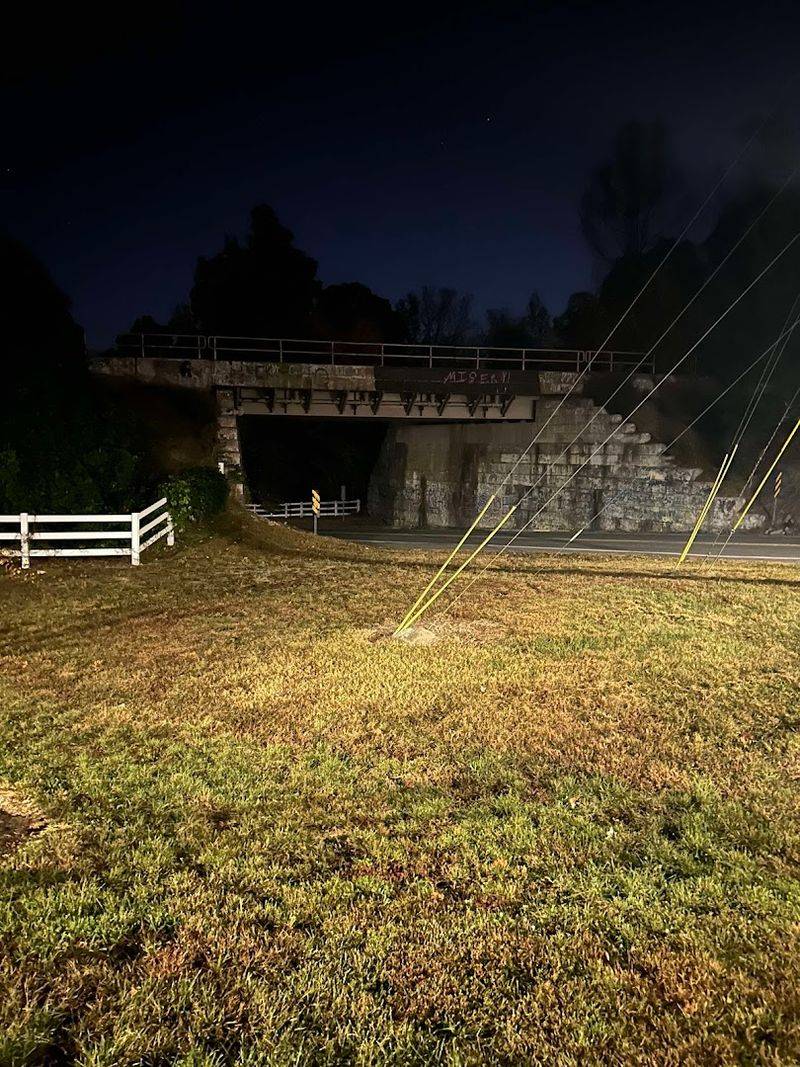
According to local lore, a young woman named Lydia passed away in a car accident near the railroad underpass on US Highway 70A sometime in the early 20th century.
Details of the incident vary depending on who tells the story, but the central event remains the same. A fatal crash occurred near the bridge, and Lydia never made it home.
Drivers traveling through the area late at night have long claimed to encounter a young woman in a white dress standing alone beside the road. She reportedly asks for a ride and quietly gives the address of her home. During the drive she speaks little, often sitting silently in the back seat.
The unsettling moment comes when the driver reaches the address. The passenger has vanished completely. In many versions of the story, the confused driver knocks on the door only to learn from family members that Lydia passed years earlier near that same bridge.
The legend has been recorded in North Carolina folklore collections, helping keep the story alive across generations. Even people who treat it as folklore often admit the underpass feels eerie at night.
A quiet stretch of road, a dim railroad bridge, and very little traffic after dark give the location a stillness that fuels the legend. It is the kind of place where drivers sometimes glance twice at the roadside before continuing on.
Helen’s Bridge, Asheville
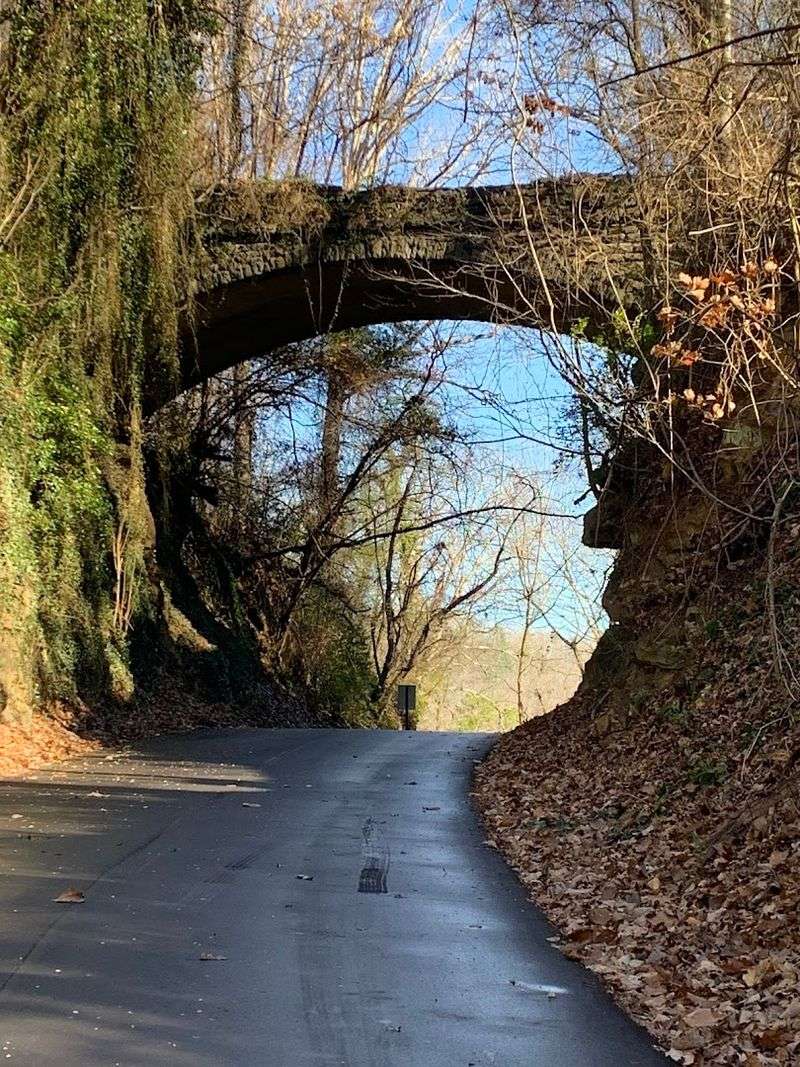
Tucked into the hillside above Asheville’s Zealandia estate, Helen’s Bridge carries a presence that feels older and heavier than its stone structure might suggest.
The narrow bridge sits quietly along Beaucatcher Mountain, surrounded by dense trees that add to the sense of isolation, especially after sunset.
The bridge was built in 1909 as part of the access route to the nearby Zealandia mansion, allowing residents to travel more easily between the hilltop property and the road below.
Over the years, however, the location became known less for its architecture and more for the unsettling legend tied to it.
According to local lore, a woman named Helen lived at the estate and suffered the devastating loss of her daughter in a house fire. The grief was said to have been overwhelming.
In the story most often repeated, Helen later lost her life near the bridge, leaving behind a tragedy that the community never quite forgot.
Since then, visitors have described strange encounters around the bridge at night. Some claim to see a woman dressed in early-20th-century clothing walking slowly along the roadside.
Others report vehicles stalling unexpectedly or electrical issues occurring when cars stop nearby. While none of these accounts have a confirmed explanation, they continue to circulate widely in Asheville folklore.
Atlas Obscura has listed Helen’s Bridge among the more unsettling historic sites in western North Carolina. Locals tend to approach the area with quiet caution once darkness settles over the mountain road.
In the dim light beneath the trees, the bridge often feels less like a landmark and more like a lingering piece of Appalachian ghost lore.
Lakeview Drive (Road To Nowhere), Bryson City
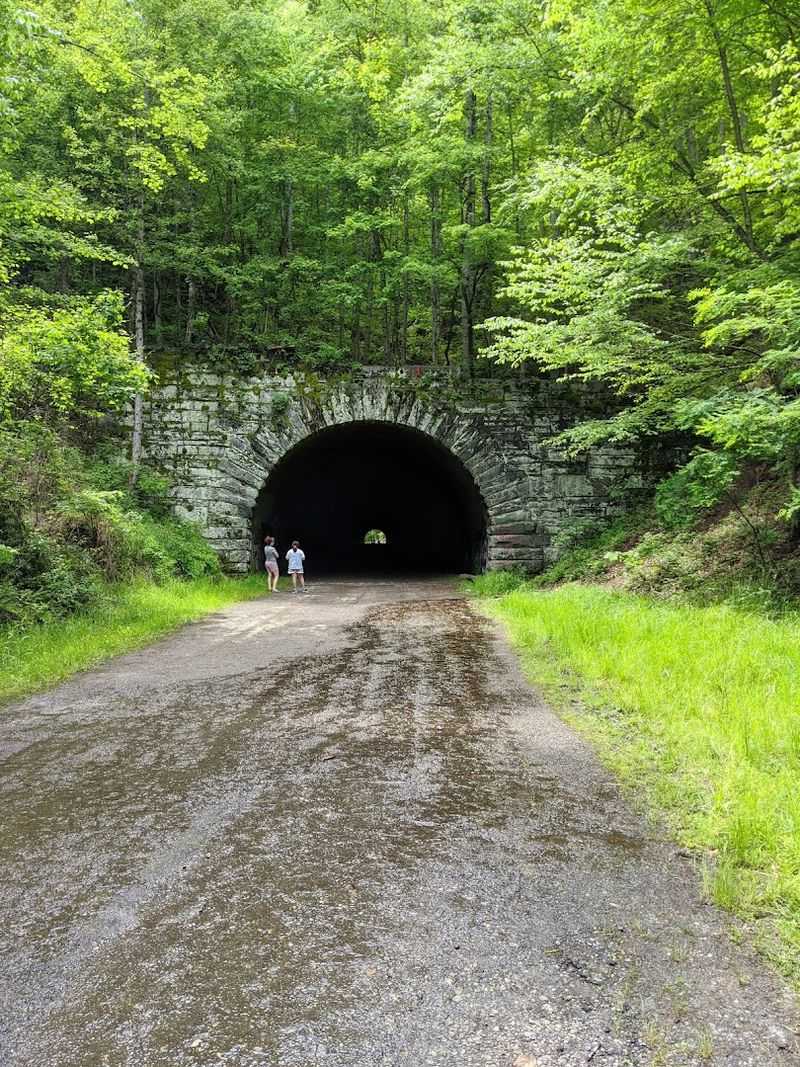
There is something unsettling about a road that simply stops, and Lakeview Drive in Bryson City, North Carolina, does exactly that. The pavement winds through the mountains for several miles before ending abruptly at a dark tunnel.
The road stretches about six miles along the northern edge of Fontana Lake. It was originally planned as a route that would allow displaced Cherokee families and Swain County residents to reach ancestral cemeteries after the valley was flooded in the 1940s to build Fontana Dam.
Entire communities were relocated when the water rose, and the promised road was meant to preserve access to those burial sites.
The project was never completed. Funding disputes and political complications halted construction, leaving the road to end in an unfinished tunnel.
Over time, locals began referring to it as the Road to Nowhere, a nickname that captures both the physical dead end and the lingering sense of unfinished history.
The tunnel itself runs roughly a quarter mile through the mountain. Its interior stays dim and cool, with walls covered in decades of graffiti.
The acoustics inside amplify every sound. Footsteps echo loudly, often creating the impression that someone else might be walking just a few steps behind.
Beyond the tunnel, the pavement gives way to hiking trails that continue deeper into the Great Smoky Mountains. Visitors often pause at the tunnel entrance, aware of the history tied to the place.
The combination of an abandoned road, a flooded valley, and generations of unresolved promises gives this quiet corner of western North Carolina a reputation that feels more haunting than dramatic.
Brown Mountain Lights Viewing Area Road, Morganton
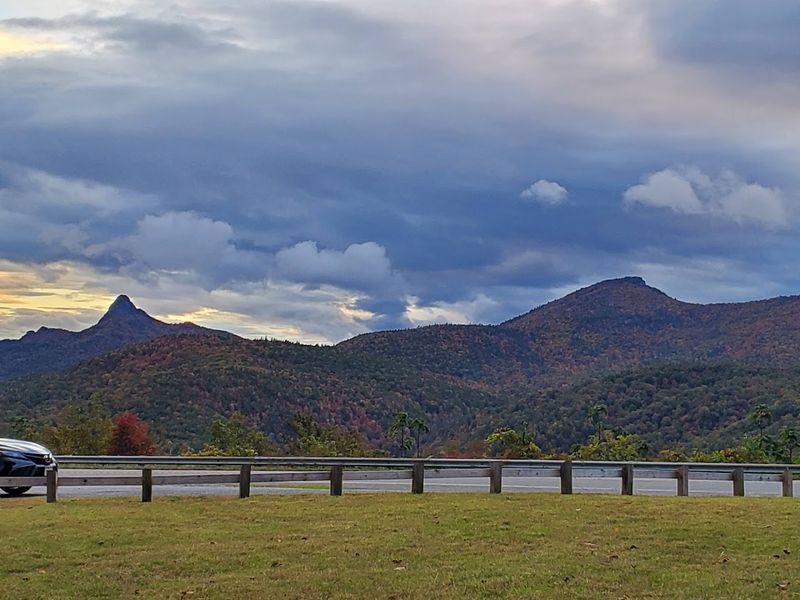
Long before ghost hunters carried cameras and recording equipment, the Cherokee people were already observing strange lights drifting above Brown Mountain in Burke County near Morganton, North Carolina.
Stories of the lights have circulated in the region for generations, long before modern investigations tried to explain them.
Witnesses describe glowing orbs of reddish, pale, and bluish light floating along the mountain ridge. The lights sometimes appear briefly, fade away, and then reappear in a different location without any clear pattern.
Their movement has been described as slow drifting or sudden flashes that hover above the forested slopes.
The mystery attracted scientific attention more than once. The U.S. Geological Survey conducted investigations in the early 20th century, attempting to determine whether the lights could be explained by natural causes.
Some sightings were later linked to distant train headlights or atmospheric refraction, yet a portion of reports never received a clear explanation.
Reaching the overlook usually involves driving along NC Highway 181, a narrow mountain road that becomes especially dark at night.
Visitors often pull into the designated viewing area and watch the treeline, waiting quietly to see if the lights appear.
People who grew up near Morganton often treat the phenomenon with a mixture of curiosity and caution. The lights are less of a tourist attraction and more of a long-standing local mystery.
A phenomenon reported for centuries without a definitive explanation continues to spark fascination, keeping Brown Mountain one of North Carolina’s most enduring and puzzling legends.
Gravity Hill, Richfield
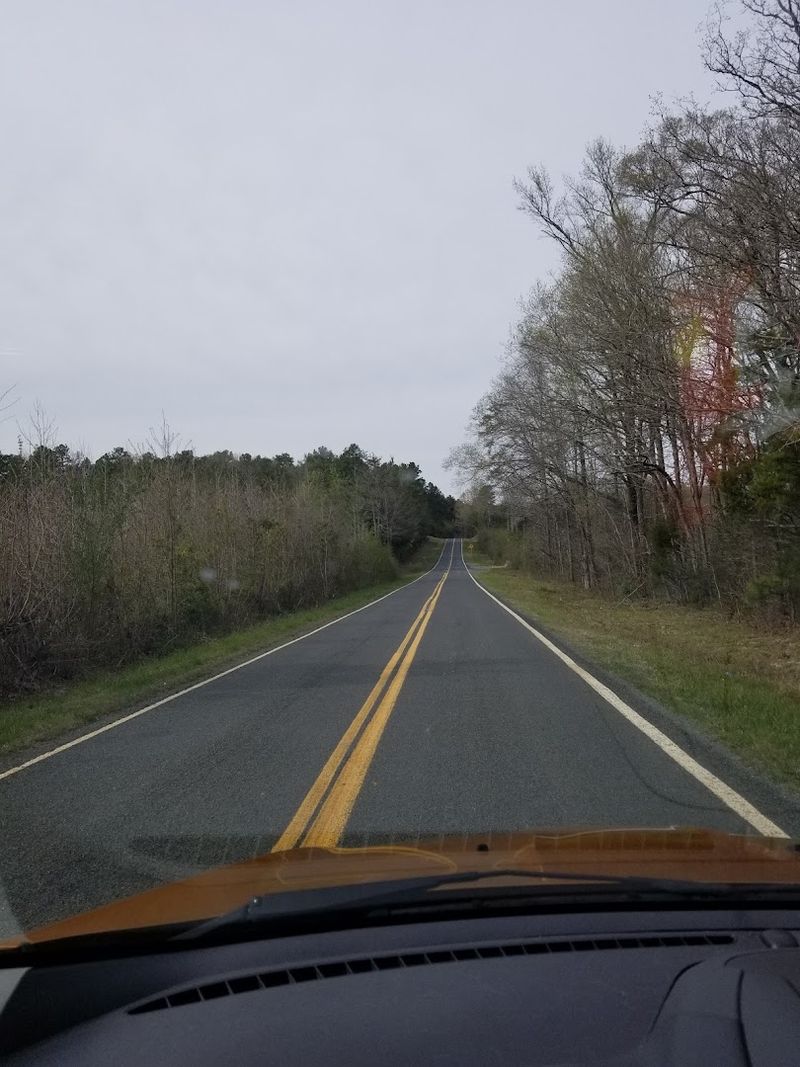
A quiet stretch of road near Richfield in Stanly County holds one of North Carolina’s more curious roadside experiences. Drivers who place their car in neutral at the right spot sometimes watch it begin to move in a direction that appears to defy gravity.
The vehicle slowly rolls uphill, or at least it seems that way. The effect is subtle at first, then unmistakable as the car continues to creep forward without the engine running.
Scientists explain the phenomenon as a classic optical illusion. The surrounding landscape, tree lines, and road angles can distort how the human eye interprets elevation.
What looks like an uphill slope may actually tilt slightly downward, creating the impression that gravity is being reversed.
Local folklore offers a far darker explanation. According to the story passed around Stanly County for years, a school bus carrying children was struck near this stretch of road long ago.
The legend says the spirits of those children now push stalled cars away from danger, preventing another accident from happening in the same place.
Whether someone believes the scientific explanation or prefers the local legend, the moment itself feels strange. Sitting in a silent car while it begins to move on its own along a quiet rural road can be surprisingly unsettling.
Richfield remains a small and largely unassuming community, and Gravity Hill rarely appears on official tourism guides. The story survives mostly through word of mouth, shared between locals and curious visitors who decide to test the hill for themselves.
Bostian Bridge Road, Statesville
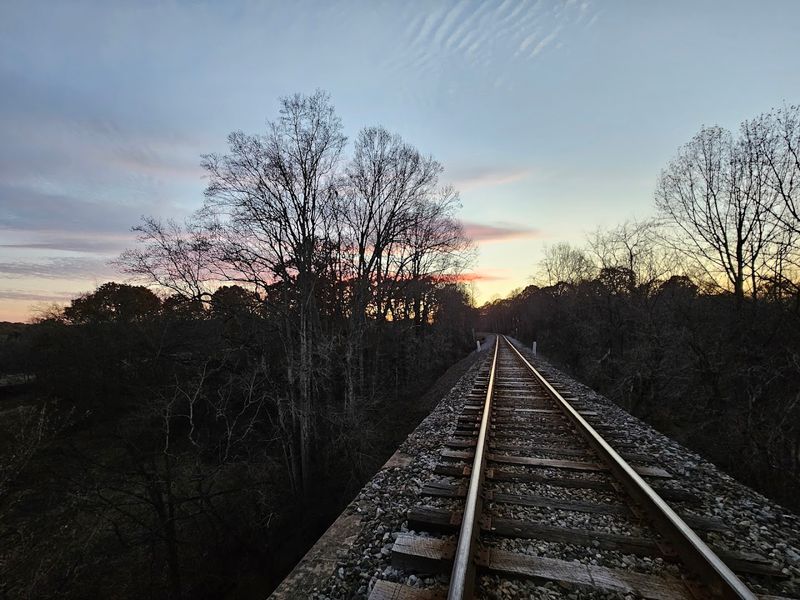
Railroad history runs deep across North Carolina, but few places carry the weight of the past quite like Bostian Bridge Road outside Statesville.
The quiet rural crossing sits above Third Creek in Iredell County, a location tied to one of the most devastating train disasters in the state’s early transportation history.
On August 27, 1891, a passenger train derailed while crossing the trestle bridge. The locomotive and several cars plunged into the creek below, dozens of people lost their lives, and many were injured.
News of the wreck spread across the region at the time, and the tragedy left a lasting mark on the local community.
Over the decades, stories began to circulate about unusual sounds near the bridge on the anniversary of the crash. Some visitors claim to hear echoes that resemble a train approaching, metal grinding, or distant voices drifting up from the ravine.
The accounts vary, but they often center on the idea that the disaster somehow lingers in the atmosphere around the old crossing.
The location drew national attention again in 2010 when a group of ghost hunters gathered at the bridge during the anniversary night.
While they were investigating, an actual train passed through the area and struck one of the participants, seriously injuring him. The incident served as a stark reminder that the bridge remains an active and dangerous rail line.
Historical records preserved by the Iredell County Library document the 1891 disaster in detail, giving the site a grounding in real events.
That history alone is enough to make the quiet stretch of track feel heavy with memory, even before the legends enter the story.
The Demon Dog Of Valle Crucis Road, Valle Crucis
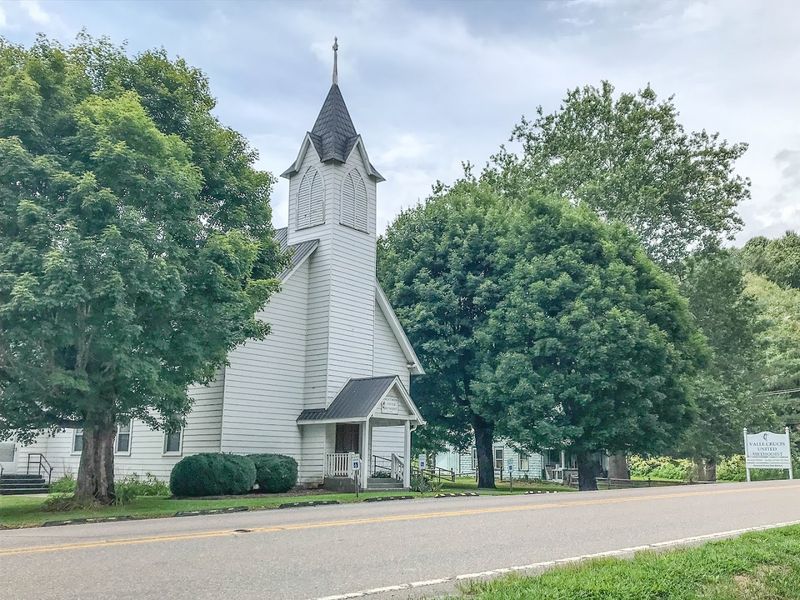
Valle Crucis is a quiet mountain community in Watauga County, tucked into the Blue Ridge Mountains of northwestern North Carolina. That calm setting makes the local legend tied to the region feel especially out of place.
For generations, residents and drivers traveling the back roads around Valle Crucis have shared stories about encountering a massive black dog that appears suddenly in the roadway.
Witnesses say the animal stands still in the headlights, staring directly at the vehicle before vanishing without leaving any clear trace.
Unlike many ghost stories that center on human spirits, the Demon Dog of Valle Crucis fits into an older thread of Appalachian folklore.
In many traditions across the region, unusual animal figures are sometimes described as omens or guardians tied to places where boundaries between worlds are believed to be thin.
Descriptions of the creature tend to follow a similar pattern. Witnesses say the dog appears far larger than a typical animal and moves with an unnatural stillness.
The eyes are often described as reflecting light in a strange way that does not resemble the glow seen in ordinary wildlife.
Several accounts place sightings near rural crossroads, locations that hold symbolic meaning in many Southern folk traditions. Valle Crucis roads feel gentle and welcoming during the day, winding past orchards and quiet farmland.
After dark, though, the same landscape can feel very different once the stories about the black dog begin to circulate.
Chicken Alley, Asheville
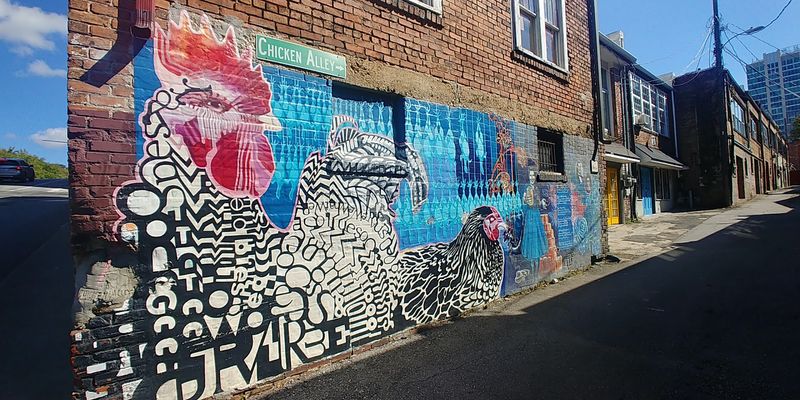
Chicken Alley is a narrow passage tucked into downtown Asheville’s arts district. By day, the space attracts visitors with colorful murals and street art. At night, however, the alley carries a reputation as one of the city’s most haunted corners.
Local legend centers on a figure believed to be Dr. Jamie Smith, a physician from the late 1800s. According to the story, Smith entered a tavern in the alley during an altercation and was injured while attempting to calm the situation.
His attacker was never identified, and the tavern later burned down, adding another layer of mystery to the tale.
Witnesses claim the doctor’s spirit still appears in the alley. The figure is usually described wearing a long coat and a wide-brimmed hat while carrying a medical bag and a cane.
Some people report hearing the rhythmic tapping of the cane on the pavement before seeing a shadowy figure pass through the narrow corridor.
Today, Chicken Alley blends public art, local history, and folklore in one small downtown space. Whether the ghost is real or simply a long-standing legend, the alley remains one of Asheville’s most talked-about haunted locations.