Here’s The Best City In Massachusetts You Should Visit At Least Once
Inside a Harvard museum sits a garden of more than 4,000 flowers and plant models, and every single one is made of glass.
Think of the fake fruit bowl at your aunt’s house, then upgrade it to scientific art that took two craftsmen decades to finish.
That collection is only one stop in a city packed with surprises along the Charles River in Massachusetts.
George Washington took command of the Continental Army here in 1775. Today, the same streets hold robots, research labs, and a fully legal alley covered in spray paint.
There’s even a stone arch where a whisper on one side travels clearly to a friend on the other.
Finally, a place where talking to walls actually gets results.
History Started Early In This Riverside City
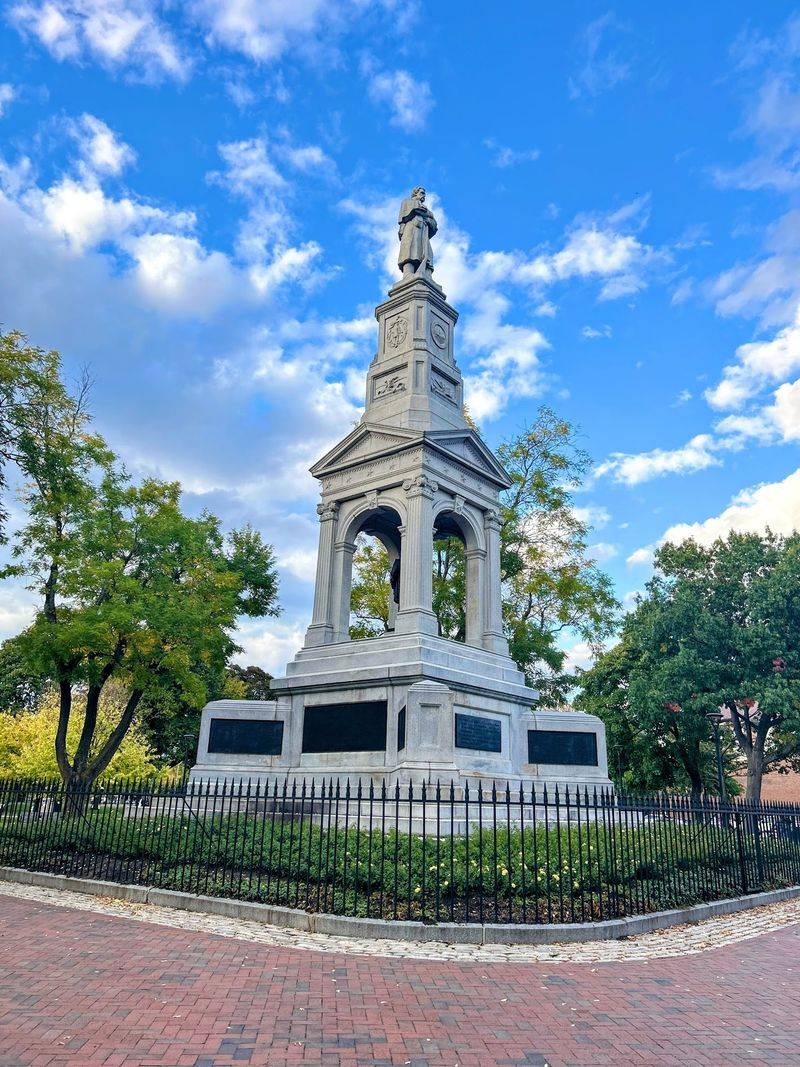
Long before anyone said the word startup, Cambridge was already making headlines.
English Puritans established a settlement called Newtowne in 1630, on land long inhabited by Indigenous communities.
The settlement was originally chosen as a possible capital of the Massachusetts Bay Colony. Boston ultimately took that role, and Newtowne became Cambridge in 1638, following the first street layouts.
Head to Cambridge Common for the most famous chapter. George Washington assumed command of the Continental Army in Cambridge on July 3, 1775.
A familiar legend places the ceremony beneath an elm tree, but its exact location was never documented.
The Common has monuments and markers, while the nearby Longfellow House served as Washington’s headquarters.
Across the Charles sits Boston, close enough to combine both cities in one trip. Give Cambridge time of its own before crossing the river. Locals call it the City of Squares, and those neighborhood centers tell remarkably different stories.
Two Famous Campuses Sit Just A Short Trip Apart
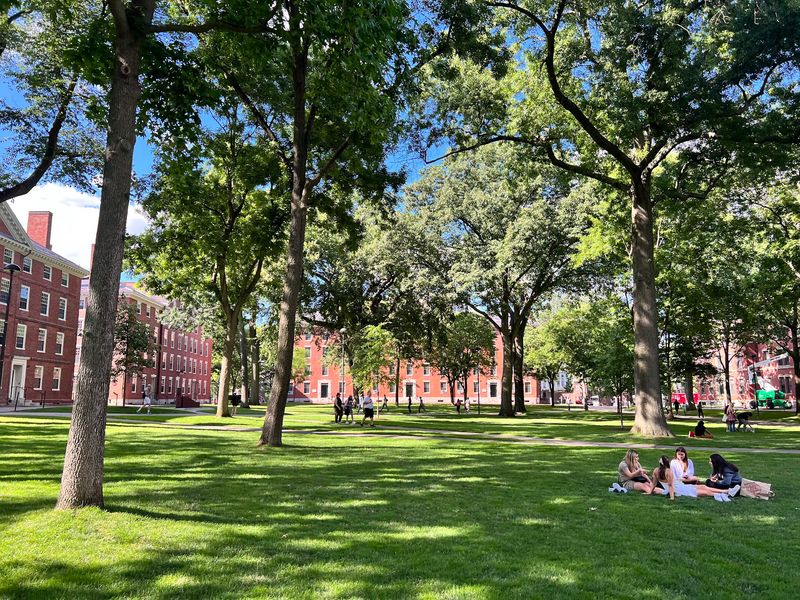
Few places on Earth can brag about Harvard and MIT living in the same city. Cambridge can, and it does so without much fuss.
Harvard Yard is the university’s historic center, with redbrick halls, leafy paths, and the famous Widener Library. Visitors can usually explore the grounds, although access may change for special events. Student-led tours add historical context.
Here’s a fun trick waiting at Sever Hall. The curved brick arch at its entrance carries a soft whisper from one end to the other. Try it with a friend.
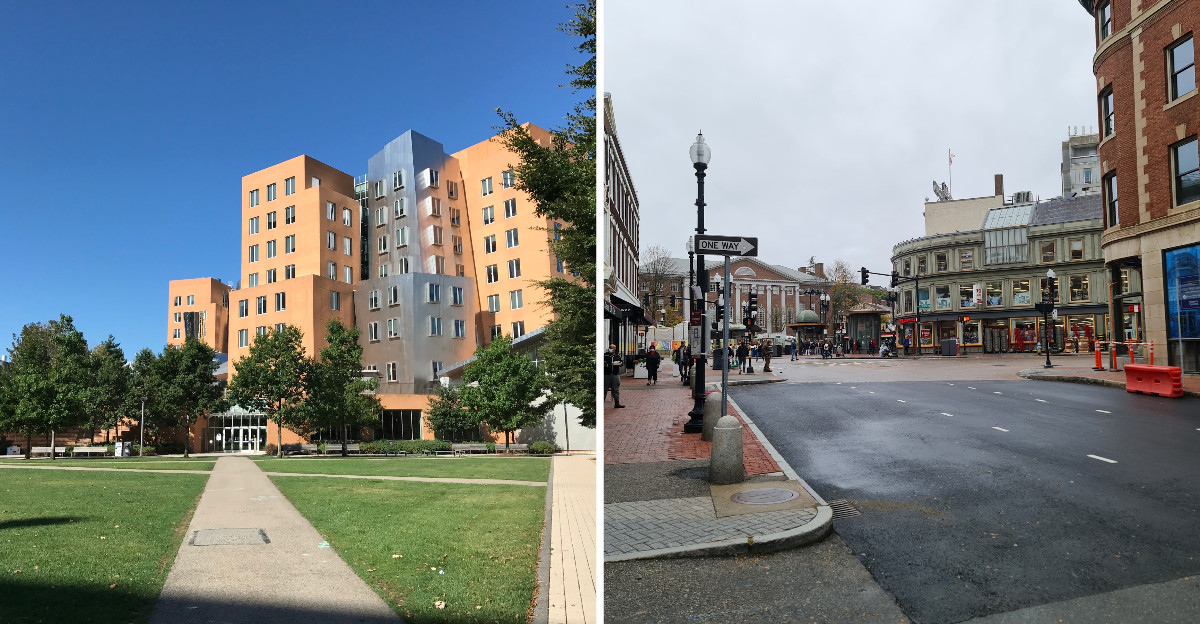
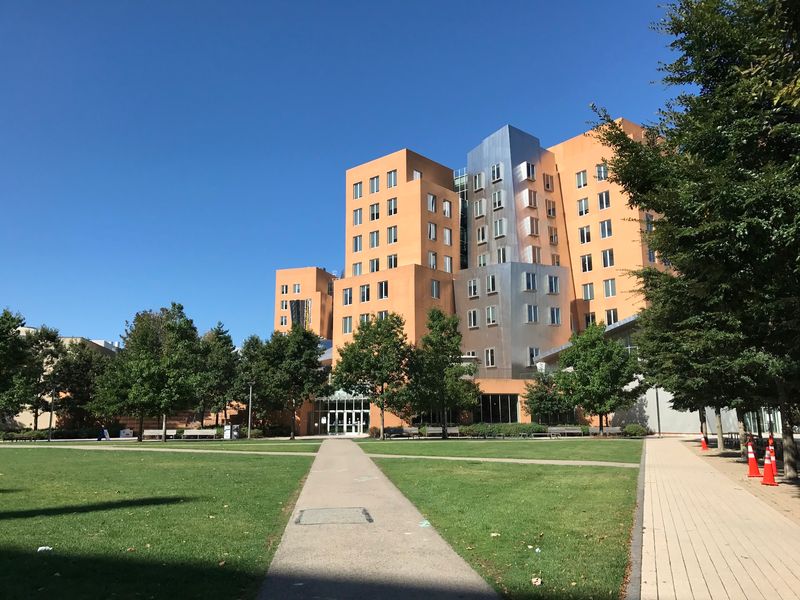
A short ride away, the Massachusetts Institute of Technology introduces a very different architectural personality. Its Great Dome overlooks Killian Court, while the Stata Center looks like a drawing brought to life.
You don’t have to enroll to appreciate the contrast between old traditions and modern design. Classrooms and residences remain private spaces.
Harvard’s academic history reaches to 1636, making the two campuses a fascinating comparison across centuries.
You Will Stare At Glass Flowers Longer Than Planned
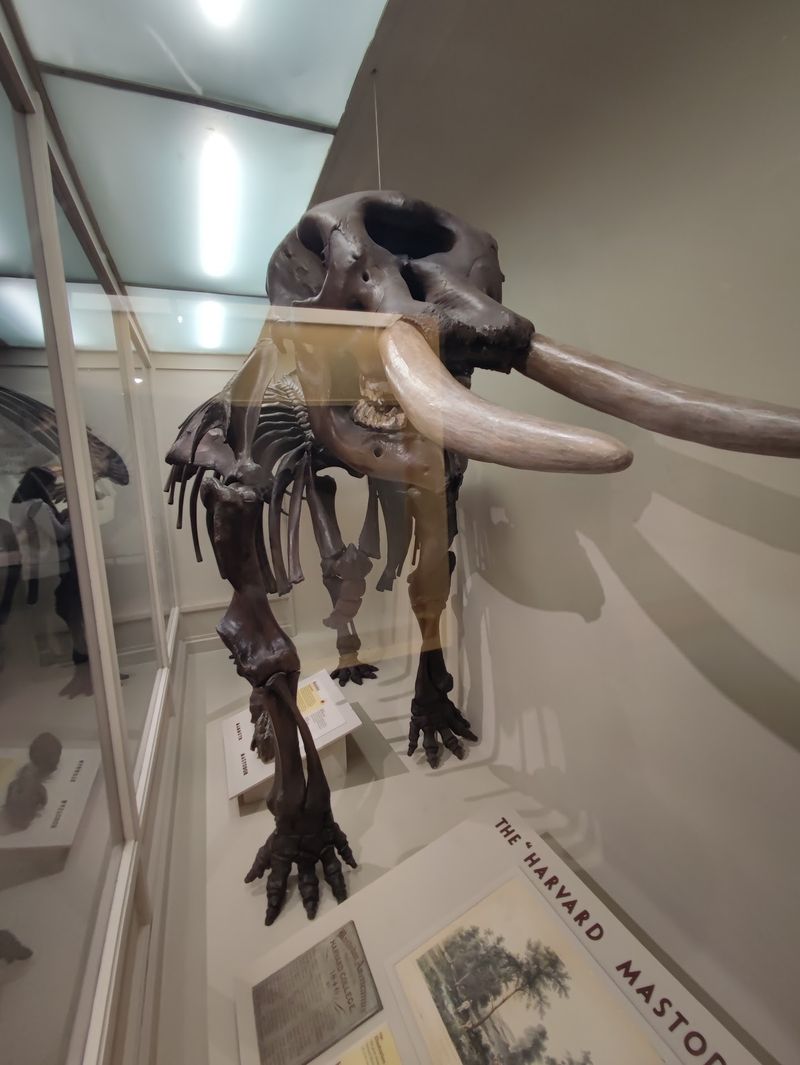
Glass that looks like petals sounds impossible until you see it. The Harvard Museum of Natural History holds the famous Glass Flowers collection at 26 Oxford Street.
Father and son Leopold and Rudolf Blaschka created 4,300 models between 1886 and 1936, representing hundreds of plant species. Their glass blossoms, leaves, and roots even illustrate stages of plant life.
The artists worked in Germany, making the collection specifically for Harvard’s botany teaching. Some delicate blossoms look freshly picked.
The gallery’s renovated display cases and lighting help protect these fragile works while revealing every botanical detail.
The rest of the museum keeps the surprises coming. A towering giraffe shares the Great Mammal Hall with other animal displays, while minerals and gemstones bring vivid colors into another gallery.
Admission includes the adjoining Peabody Museum, featuring cultural artifacts and exhibitions.
Allow time for both museums. That first glass flower might hold your attention longer than you planned.
Robots And Big Ideas Fill This Busy Square
Some neighborhoods are known for pizza. Kendall Square is known for inventions.
Research laboratories and technology companies cluster around MIT. Google and Microsoft have operated offices here, alongside biotechnology ventures and university research spaces.
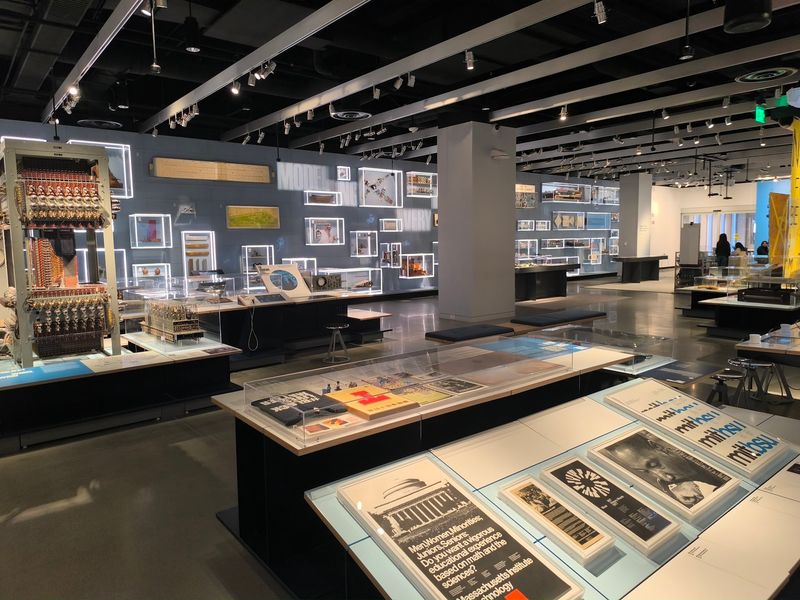
For something you can actually explore, head to the MIT Museum at 314 Main Street.
Its exhibitions bring together artificial intelligence, robotics, holography, kinetic sculpture, and the relationship between technology and everyday life. Interactive installations encourage experimentation.
The museum moved into its Kendall Square home in 2022. Children can explore how things move and how computers make decisions.
Public spaces around the square bring the activity outdoors. During the annual Cambridge Science Carnival, the Kendall/MIT Open Space hosts hands-on activities and even a robot petting zoo.
Kendall feels like a peek at tomorrow, with a café break conveniently available between experiments. Even its public installations encourage you to stop and examine something unfamiliar.
Bring A Camera To This Colorful Alley
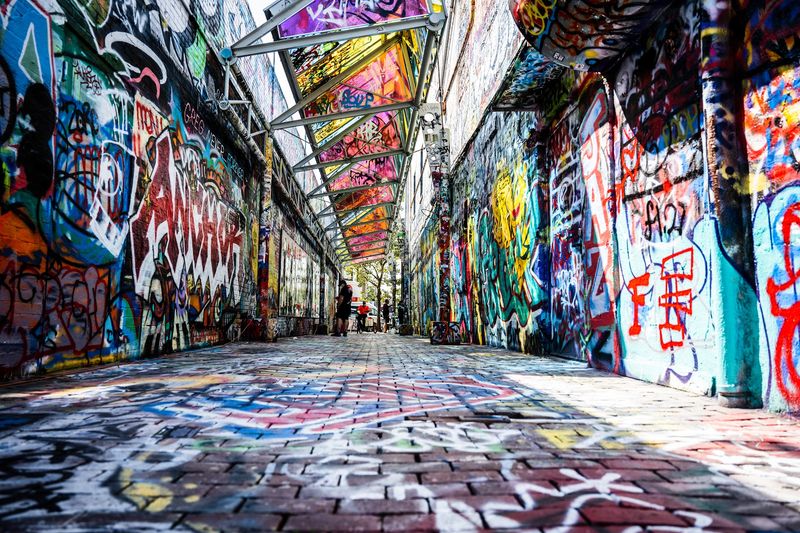
Spray paint usually gets people in trouble. In Graffiti Alley, it’s the whole point.
Modica Way is a narrow passage in Central Square, where artists have permission to paint a constantly changing surface. Colorful artwork extends across the walls and overhead, making even a short stroll feel like an open-air exhibition.
Find the passage just off Massachusetts Avenue. New paintings replace older ones, so every visit can look different.
Central Square has more to offer than its famous alley. Music venues, independent shops, murals, and restaurants from many culinary traditions fill the nearby blocks. It’s a designated cultural district, with murals beyond the alley.
Give working artists space, and remember that the permission applies to the alley, not neighboring buildings.
Look up before leaving. Some of its most surprising colors are overhead. The nearby Red Line station makes this an easy stop between Harvard’s brick courtyards and Kendall’s glass towers.
Green Spaces Make City Life Feel Calm
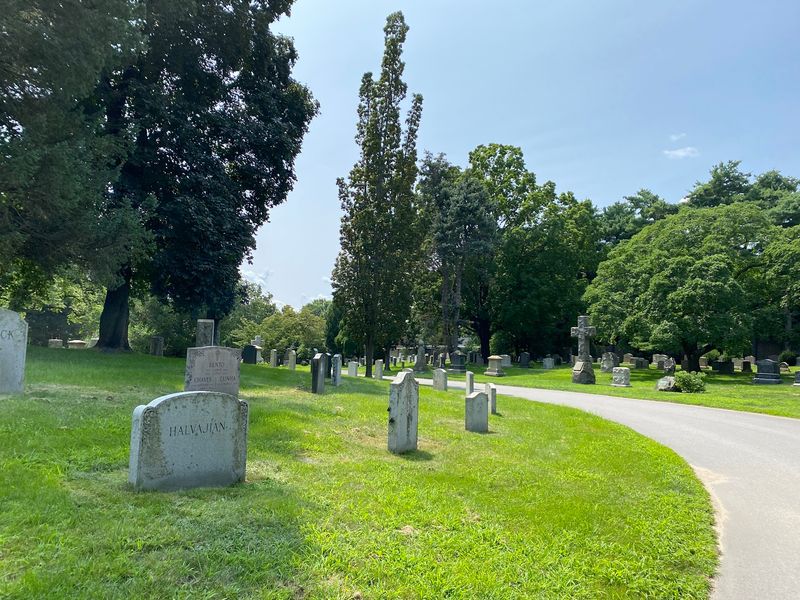
Over 80 parks and open spaces dot the map of Cambridge. That’s a lot of grass for a city famous for brainpower.
The Charles River paths are a natural favorite. Walkers and cyclists follow the waterfront, and rowing crews sometimes glide past with Boston’s skyline rising beyond them. Benches invite a break after the museums.
For a completely different landscape, visit Mount Auburn, established in 1831 as America’s first rural garden cemetery. Winding lanes and impressive trees create a peaceful arboretum atmosphere.
Washington Tower offers broad views when seasonal access permits. The grounds are for quiet exploration, not picnics or cycling.
Fresh Pond Reservation on the western side of the city adds another scenic walking route, circling a large reservoir that supplies Cambridge’s drinking water.
Spring brings blossoms; autumn colors the trees along the water. The city manages Fresh Pond as a reservoir, so paths offer views without turning its shores into a swimming spot.
Movie Night Gets Old-School At The Brattle
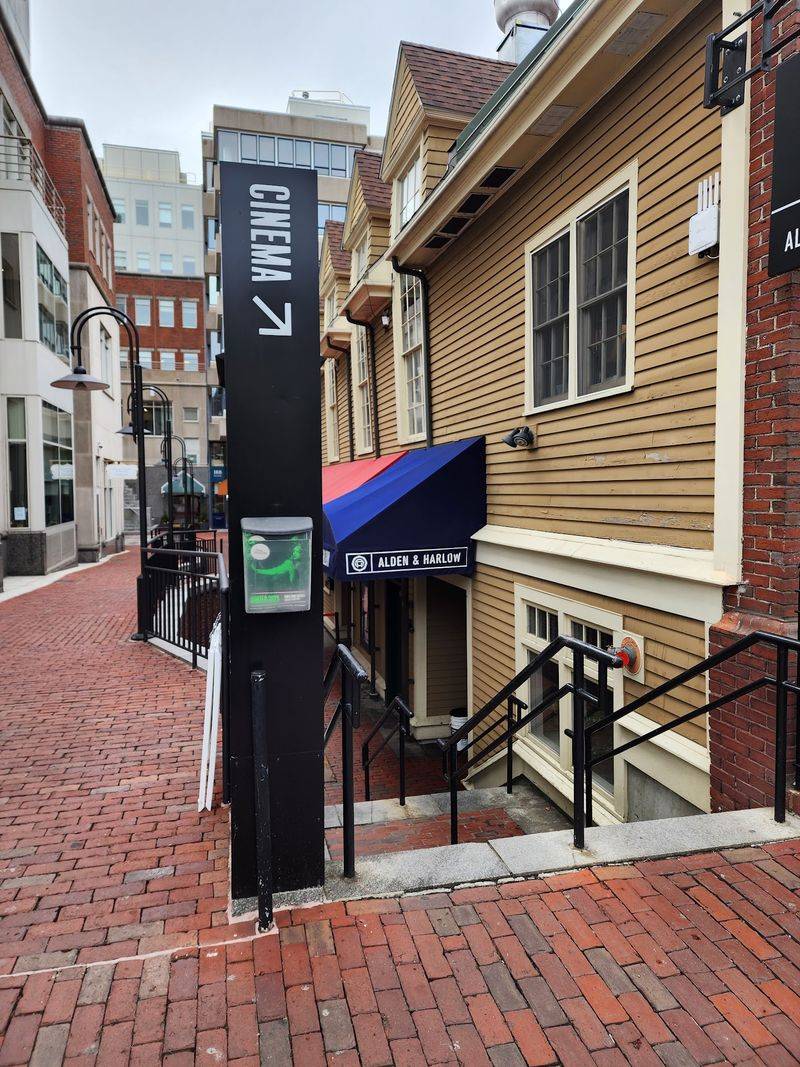
Popcorn tastes better with a little history on the side. The Brattle Theatre in Harvard Square proves it.
You’ll find it at 40 Brattle Street, in a building that dates back to the nineteenth century. Since 1953, the cinema has shown classics, international films, and independent releases, plus themed double bills.
Here’s the unusual part: the Brattle retains a rare rear-projection setup.
Rather than shining toward the screen from behind the audience, the projection system works from behind the screen itself. Digital equipment complements it.
A little farther along Harvard Square, the Harvard Art Museums combine the Fogg, Busch-Reisinger, and Arthur M. Sackler collections beneath one roof. European paintings, Asian art, and modern design fill its galleries.
The American Repertory Theater adds another theatrical option in the area, with productions at the Loeb Drama Center through 2026 before its planned move to Allston.
Pick a showtime, then leave room for dinner afterward.
Your Taste Buds Get Their Own Tour
Julia Child, the famous television chef, once called Cambridge home. Her Irving Street kitchen became the setting for many years of culinary experimentation and is now preserved at the Smithsonian.
International students and longtime residents shape the varied dining scene. Harvard Square combines cafés and bakeries with casual meals, ideal for a pause between booksellers and museums.
Central Square brings a different energy, with eateries serving flavors from across the world. Inman Square adds its own neighborhood restaurants and bakeries, while Kendall Square offers quick lunches among the technology offices.
Choose a district, wander a few blocks, and let the menus decide. A pastry makes a fine museum break.
For an evening, pair a meal with a Brattle screening or a performance. Cambridge makes that kind of spontaneous combination remarkably easy.
Porter Square adds another dining neighborhood, especially appealing when you want something different from the busier university squares.
Skip The Car And Explore On Foot
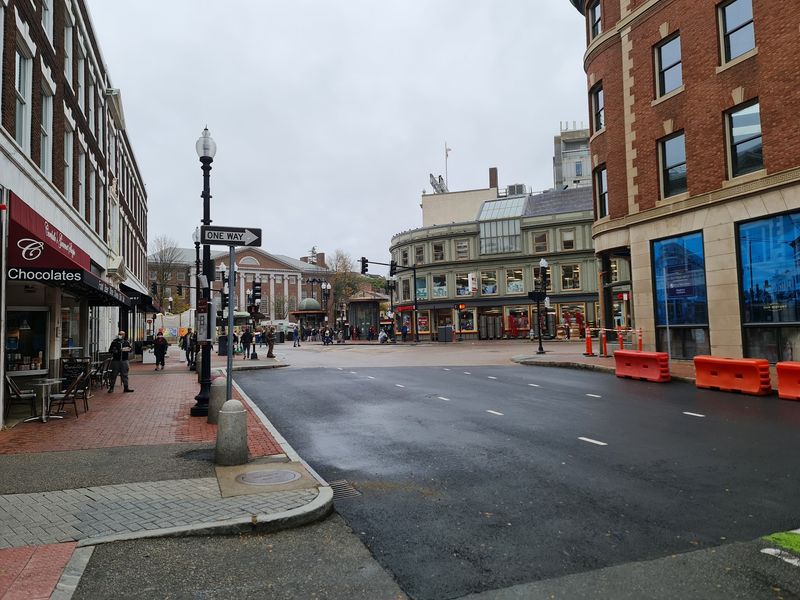
Good news for anyone who dislikes parking. Cambridge is one of the easiest cities in Massachusetts to explore without a car.
The MBTA Red Line stops at Harvard, Central, and Kendall/MIT, connecting three very different neighborhoods.
The Green Line reaches eastern Cambridge, with buses filling gaps. Service arrangements can change during track work, so check the day’s schedule before heading out.
Bluebikes stations provide another option for shorter trips. Pick up a bicycle at one dock and return it at another.
Walking is especially rewarding around Harvard Square. Historic buildings, shops, and museums sit close together.
For a first visit, start with Harvard’s architecture and glass flowers, continue toward Central Square’s colorful alley, and finish in Kendall with a look at tomorrow’s inventions.
By the end, you’ll have sampled history, science, street art, and a few memorable bites in one compact city. Bring comfortable shoes and a curious mind.