21 Historic Georgia Mansions That Capture The Grandeur Of A Bygone Era
Georgia holds some of the most stunning historic mansions in the American South, each telling stories of wealth, artistry, and a time when grand architecture defined status and elegance.
From Greek Revival estates to Italian Renaissance palaces, these homes showcase intricate craftsmanship, period furnishings, and gardens that transport visitors back centuries.
Walking through their halls offers a rare chance to experience the lives of governors, cotton barons, and influential families who shaped the state’s history.
Exploring these architectural treasures is like stepping into a living museum where every room whispers secrets of the past.
1. Old Governor’s Mansion
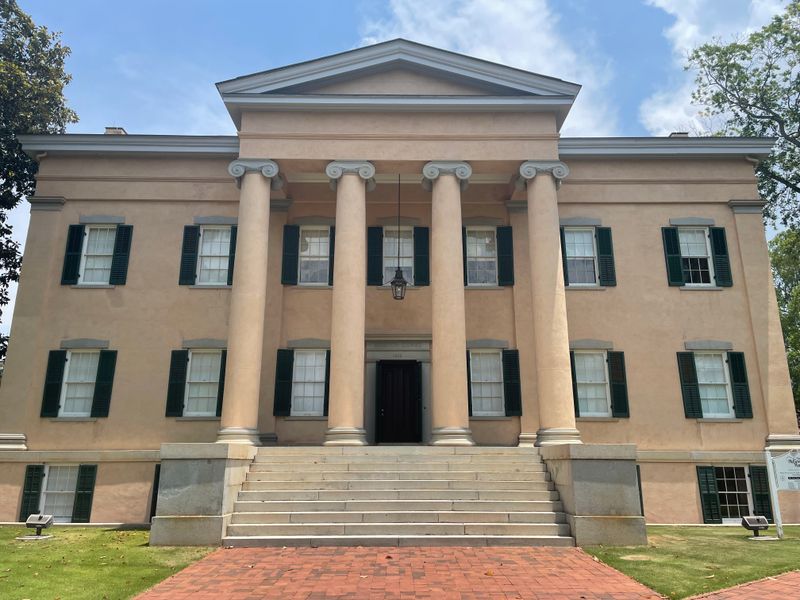
Greek Revival architecture reaches perfection in this stately building that once housed Georgia’s most powerful leaders.
Built in 1839, the Old Governor’s Mansion stands at 120 S Clarke St, Milledgeville, GA 31061, a testament to antebellum elegance.
Period furnishings fill each room, while ornate plasterwork decorates ceilings and walls with intricate patterns that craftsmen painstakingly created by hand.
A stunning spiral staircase curves upward through the heart of the home, drawing eyes skyward with its graceful lines.
Governors lived here until 1868, making decisions that shaped Georgia during turbulent times.
Tours guide visitors through parlors, bedrooms, and reception halls where history unfolded in real time.
The mansion now serves as a museum, preserving stories of political intrigue, family life, and Southern tradition.
Students and history enthusiasts alike find fascinating details in every corner, from furniture arrangements to architectural innovations that were cutting-edge for the 1830s.
2. Swan House
Hollywood discovered what Atlantans already knew – this mansion possesses a timeless beauty that cameras love.
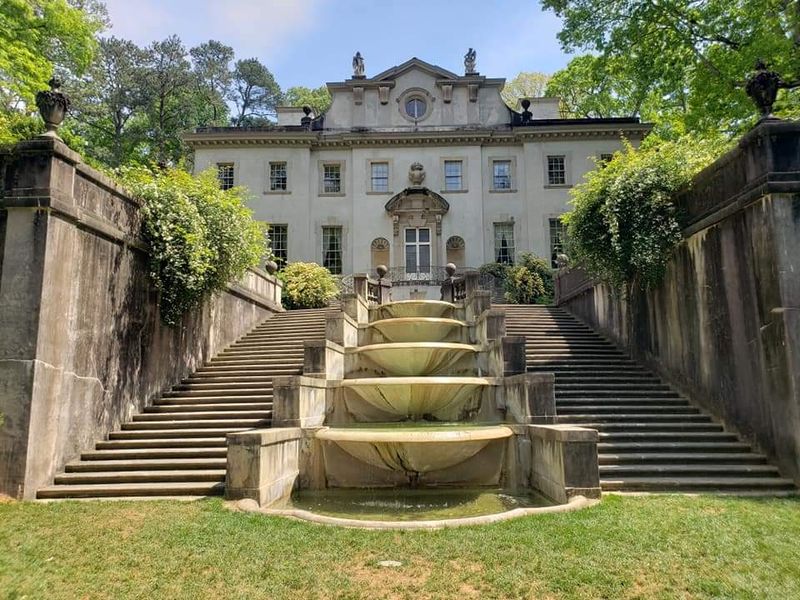
Completed in 1928, Swan House sits at 130 W Paces Ferry Rd NW, Atlanta, GA 30305, blending Italian villa style with English manor house charm in a way that feels both grand and welcoming.
Philip T. Shutze designed every detail with precision, creating spaces that flow naturally from formal dining rooms to cozy libraries.
Scenes from “The Hunger Games” were filmed here, introducing the estate to millions of moviegoers worldwide.
Original furnishings and art collections remain in place, showing how wealthy families lived during the Roaring Twenties.
Gardens surrounding the house feature terraced lawns, fountains, and carefully planned sightlines that frame the architecture beautifully.
Visitors often spend as much time exploring the grounds as they do touring the interior rooms.
The mansion belongs to the Atlanta History Center, ensuring its preservation for future generations to study and admire.
3. Hay House
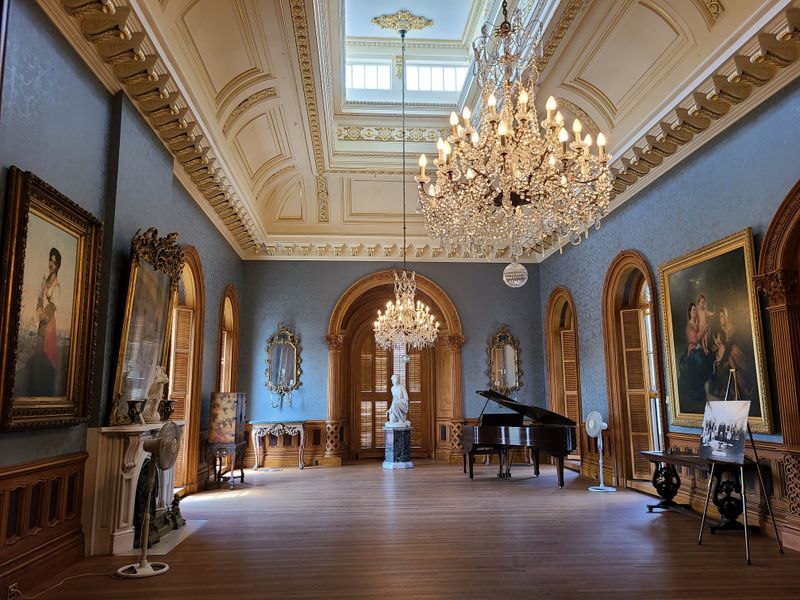
Locals call it the “Palace of the South,” and one step inside explains why that nickname stuck for over 150 years.
This 18,000-square-foot Italian Renaissance Revival mansion stands at 934 Georgia Ave, Macon, GA 31201, built between 1855 and 1859 with innovations that seemed like magic at the time.
Indoor plumbing, a speaker-tube communication system, and advanced ventilation made this home a technological marvel decades before such features became common.
Twenty-four rooms spread across multiple floors showcase elaborate frescoes, marble mantels, and stained glass windows that cast colored light across polished floors.
The Johnston, Felton, and Hay families each added their own touches over generations of ownership.
Guided tours reveal hidden details like secret passageways and a rooftop cupola offering panoramic city views.
Visitors often gasp at the sheer scale and luxury packed into every square foot.
Preservation efforts keep the mansion looking much as it did when carriages pulled up to its front steps.
4. Mercer-Williams House
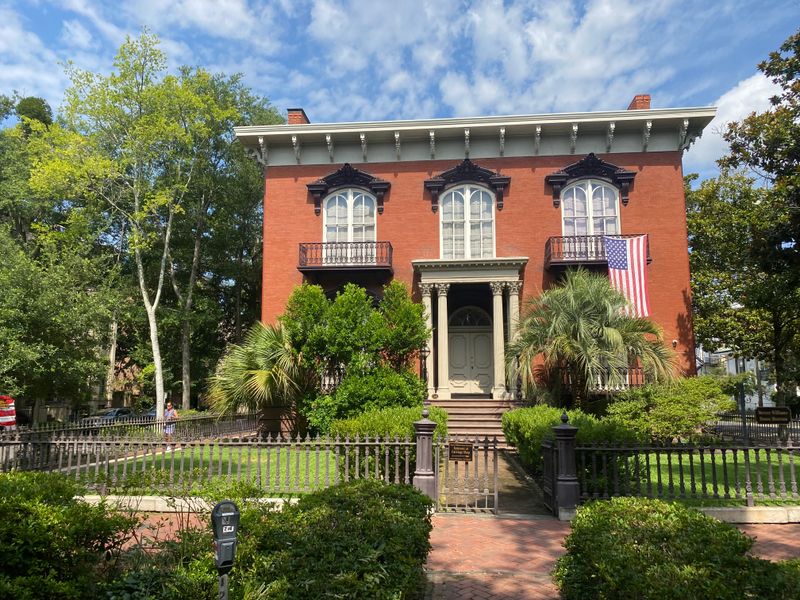
Fame found this Italianate beauty through a bestselling book that turned it into one of Savannah’s most talked-about landmarks.
Built in the 1860s, the Mercer-Williams House stands at 429 Bull St, Savannah, GA 31401, featuring museum-quality antiques and rare art that fill rooms designed for entertaining and impressing guests.
“Midnight in the Garden of Good and Evil” brought international attention to the mansion, though its architectural merit alone justifies a visit.
High ceilings, tall windows, and carefully proportioned rooms create a sense of spacious elegance without feeling cold or unwelcoming.
Original owner General Hugh Mercer never actually lived here, as financial troubles forced him to sell before completion.
Later residents included Jim Williams, an antiques dealer whose life story became the book’s central focus.
Tours allow visitors to see the main floor where Williams displayed his impressive collection.
The mansion sits in Monterey Square, one of Savannah’s prettiest public spaces, making the approach as lovely as the destination.
5. Bulloch Hall
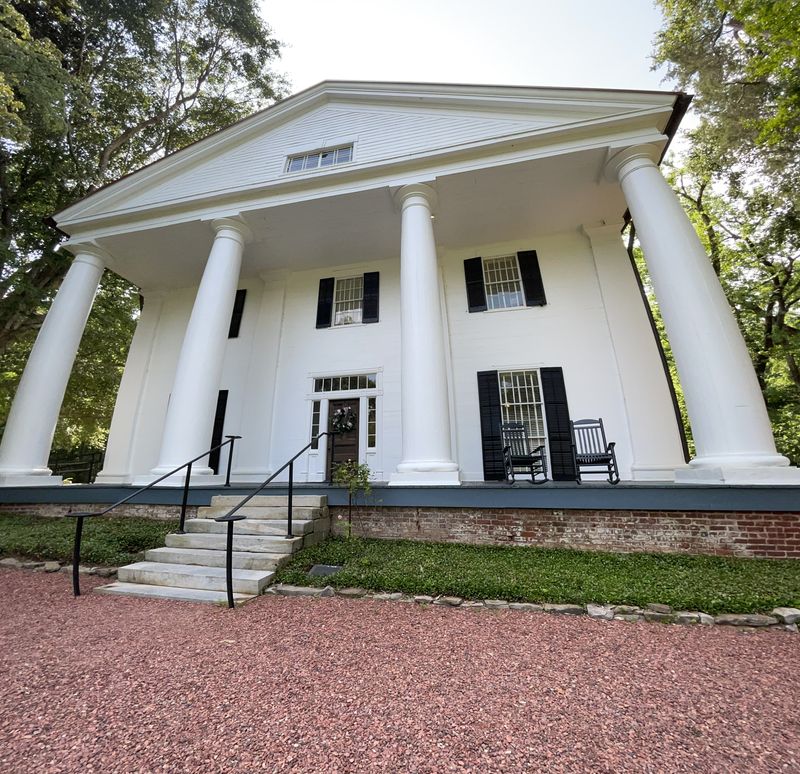
Presidential history runs through this graceful home where a future first lady spent her childhood years.
Completed in 1839, Bulloch Hall stands at 180 Bulloch Ave, Roswell, GA 30075, serving as the childhood home of Mittie Bulloch, who later became Theodore Roosevelt’s mother.
Greek Revival columns frame the entrance, while period furnishings inside recreate the atmosphere of a prosperous planter’s household.
Family artifacts and historical documents help visitors understand daily life in antebellum Georgia, from social customs to economic realities.
The mansion hosted Mittie’s wedding in 1853, an event that connected this Georgia family to New York society and eventually to the White House.
Guided tours share stories about the Bulloch family’s role in Roswell’s founding and their complex legacy.
The property includes outbuildings that show how large estates functioned, with separate structures for cooking, storage, and other tasks.
Special events throughout the year bring history to life with period demonstrations and educational programs.
6. Wormsloe Historic Site
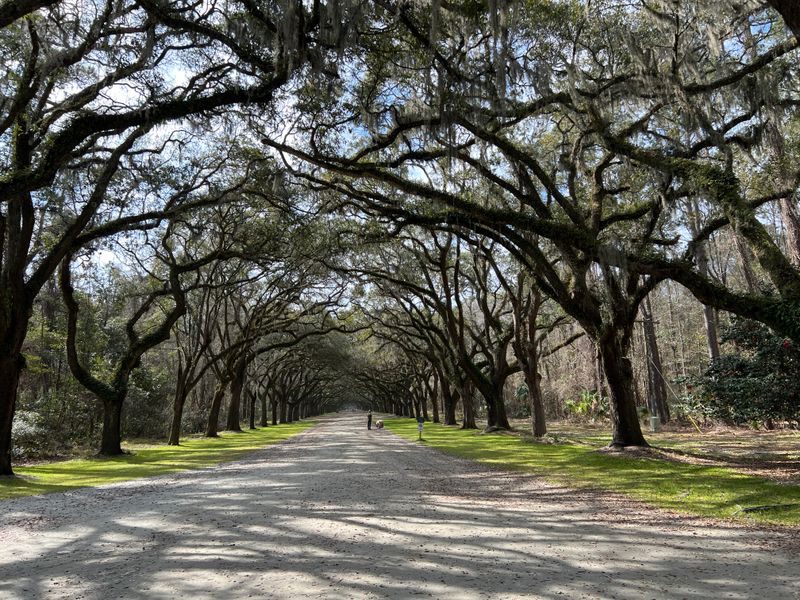
Moss-draped oaks create a tunnel of green leading to ruins that whisper of Georgia’s earliest colonial days.
Located at 7601 Skidaway Rd, Savannah, GA 31406, Wormsloe showcases tabby ruins of what was once Noble Jones’s fortified home, built in the 1740s when Georgia was still a brand-new colony.
The estate’s famous oak-lined drive stretches for a mile and a half, offering one of the most photographed scenes in the entire state.
While not a traditional mansion, the site includes a later Colonial Revival house that demonstrates how wealthy families reimagined life in the early 1900s.
Archaeological work continues to uncover artifacts from centuries of occupation, adding new chapters to the site’s story.
Walking trails wind through maritime forest where interpretive signs explain the natural and human history of the land.
Living history demonstrations show colonial skills like blacksmithing and musket firing during special events.
The combination of natural beauty and historical significance makes this a must-see for anyone interested in Georgia’s roots.
7. Owens-Thomas House
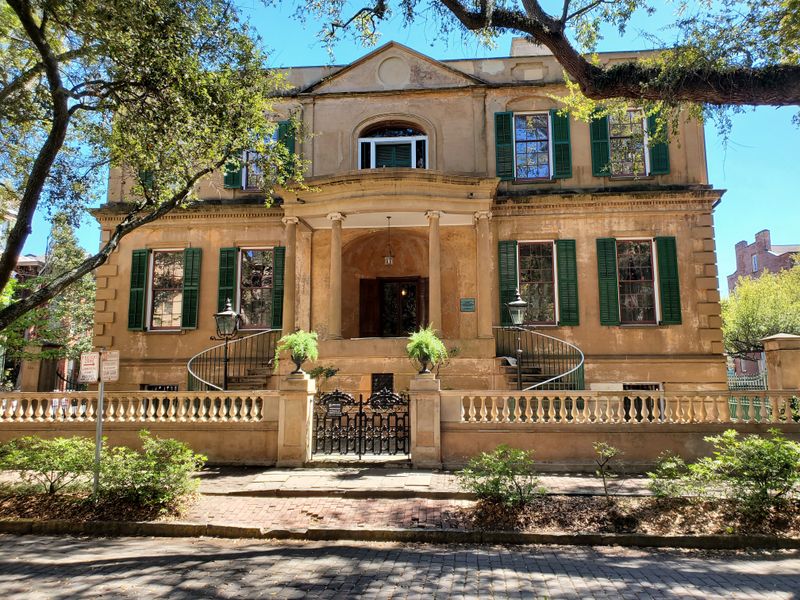
Regency architecture rarely appears in America, making this Savannah treasure architecturally significant beyond its already compelling history.
Built between 1816 and 1819, the Owens-Thomas House stands at 124 Abercorn St, Savannah, GA 31401, designed by British architect William Jay with curves, geometric precision, and sophisticated urban style.
The mansion gained fame when the Marquis de Lafayette addressed Savannah citizens from its balcony during his 1825 tour of America.
What sets this site apart is the remarkably intact living quarters, which offer honest interpretation of people’s lives rather than glossing over uncomfortable truths.
Original furnishings, decorative arts, and architectural details demonstrate the wealth that was generated for owners.
Tours explicitly connect the mansion’s luxury to the labor that made it possible, providing educational context often missing from historic house museums.
The carriage house, work yard, and quarters create a complete picture of how differently life functioned.
Visitors leave with a deeper understanding of how beauty and brutality coexisted in the antebellum South.
8. Lapham-Patterson House
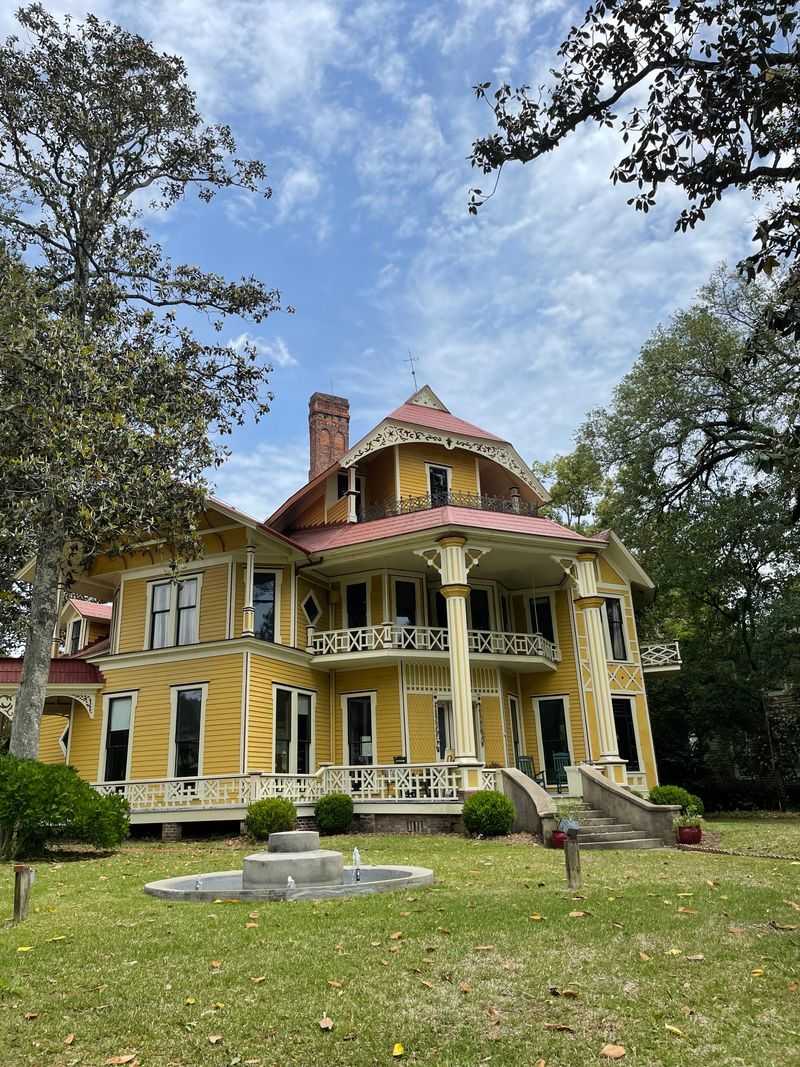
Victorian eccentricity reaches delightful heights in this mansion where no two rooms share the same shape or size.
Constructed in 1884, the Lapham-Patterson House sits at 626 N Dawson St, Thomasville, GA 31792, built as a winter cottage for Chicago shoe merchant Charles Lapham.
Asymmetrical design, double-flue chimneys, and a complete absence of right angles make this house architecturally unique even among quirky Victorian homes.
Fish-scale shingles, cantilevered interior balconies, and a walk-through closet demonstrate innovations that were experimental for the era.
Lapham’s fear of fire influenced many design choices, including multiple exits and fireproof materials wherever possible.
The mansion changed hands several times before becoming a state historic site, with each owner adding their own modifications.
Guided tours point out unusual features like the indoor fishpond and the gas lighting system that still has original fixtures.
Architecture students and Victorian-era enthusiasts find endless details to study and appreciate throughout the three-story structure.
9. Rhodes Hall
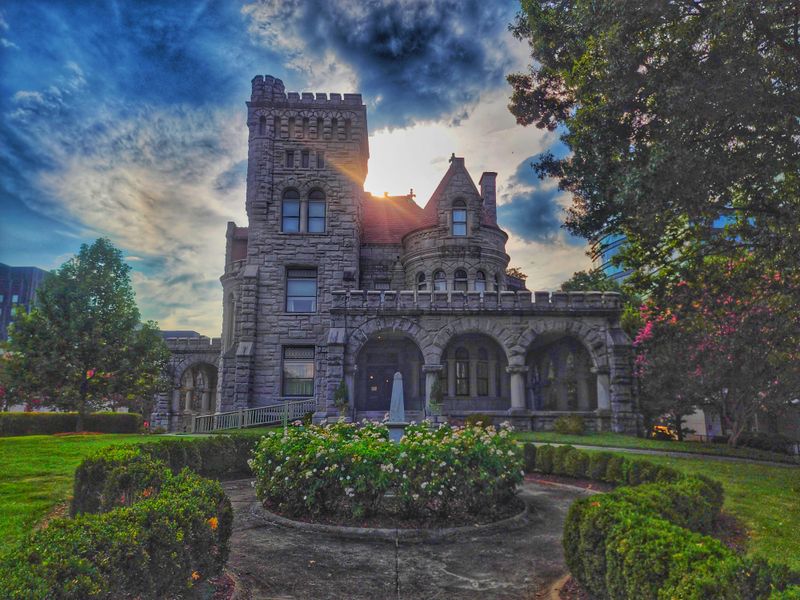
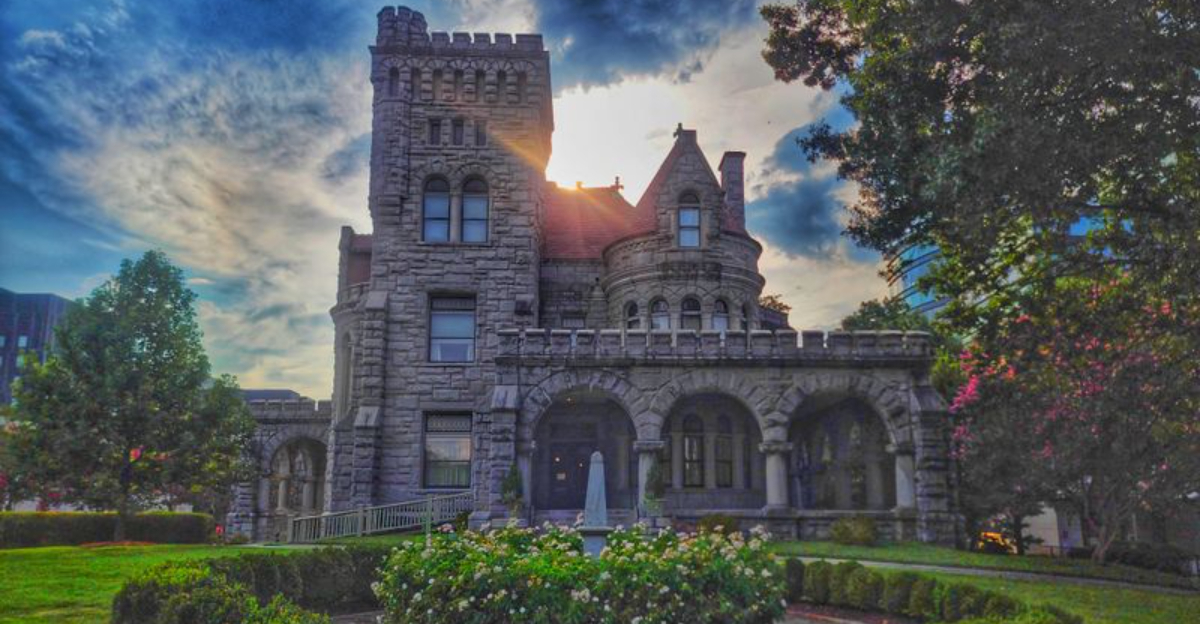
Stone towers and Romanesque arches give this Atlanta mansion a castle-like appearance that stands out among its neighbors.
Built in 1904, Rhodes Hall rises at 1516 Peachtree St NE, Atlanta, GA 30309, designed as the home of furniture magnate Amos Giles Rhodes and his family.
Stained glass windows depicting Confederate history line the main staircase, creating a controversial but historically significant artistic statement.
The mansion’s exterior uses Stone Mountain granite, connecting it visually to Georgia’s most famous geological feature.
Interior woodwork showcases mahogany and oak craftsmanship that represented the height of luxury during the early 1900s.
Rhodes Hall now serves as the headquarters for the Georgia Trust for Historic Preservation, ensuring its own preservation while supporting conservation efforts statewide.
Victorian-era furnishings and decorative arts fill the rooms, though some pieces are reproductions replacing items lost over the years.
The mansion’s position along Peachtree Street makes it easily accessible for visitors exploring Atlanta’s Midtown neighborhood.
Tours reveal both architectural beauty and the complex history embedded in its artistic elements.
10. Green-Meldrim House
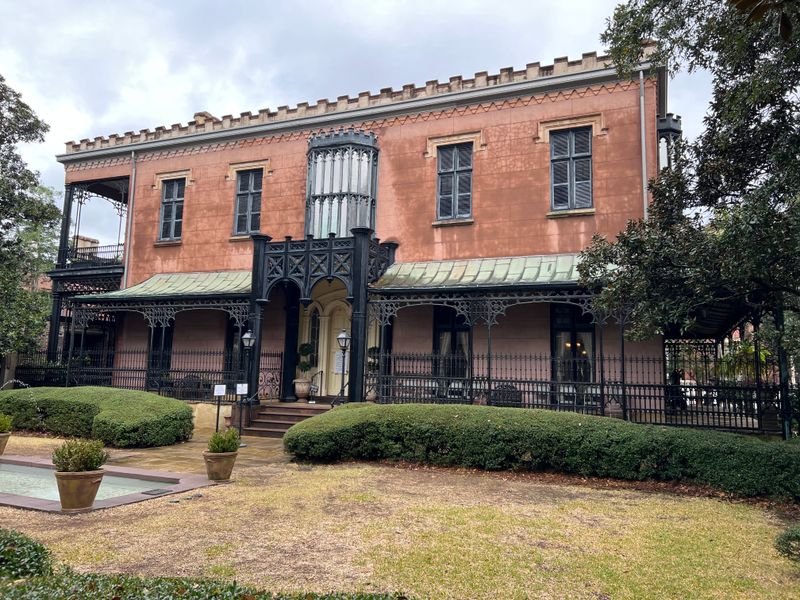
Gothic Revival details and a starring role in 1861 history make this mansion one of Savannah’s most significant landmarks.
Completed in 1853, the Green-Meldrim House stands at 14 W Macon St, Savannah, GA 31401, built for cotton merchant Charles Green with a price tag of $93,000 – an astronomical sum for the time.
General William T. Sherman used the house as his headquarters after capturing Savannah in December 1864, and from here he sent his famous telegram offering the city to President Lincoln as a Christmas gift.
Gothic arches, elaborate ironwork, and a cast-iron veranda demonstrate the architectural ambitions of Savannah’s wealthiest citizens.
Interior spaces feature plaster moldings, marble mantels, and gas chandeliers that have been carefully maintained.
St. John’s Episcopal Church now owns the property, limiting tour availability but ensuring the mansion’s continued preservation.
The connection to Sherman’s March to the Sea attracts historians and enthusiasts from around the world.
Gardens surrounding the house provide peaceful green space in the heart of downtown.
11. Barnsley Resort Ruins
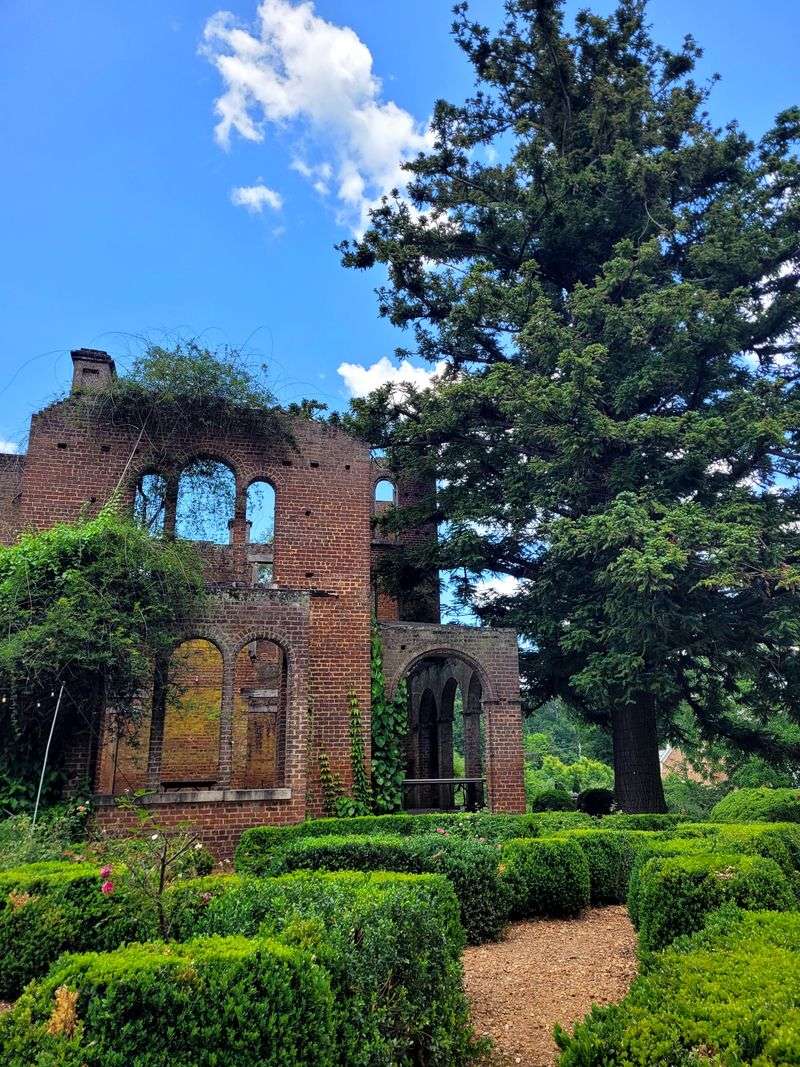
Romantic ruins tell a story of ambition, tragedy, and a dream that nature slowly reclaimed over decades of abandonment.
Construction began in 1840 at what is now 597 Barnsley Gardens Rd NW, Adairsville, GA 30103, where Godfrey Barnsley envisioned an Italianate manor house surrounded by elaborate gardens rivaling anything in Europe.
Tragedy struck repeatedly – his wife died before the house was finished, the social events of the era devastated the property, and later family members faced financial ruin.
The mansion never reached completion, and what was built gradually fell into picturesque decay.
Today, the ruins stand as a haunting reminder of antebellum aspirations, with columns and walls rising from manicured lawns.
A luxury resort now surrounds the ruins, offering guests a chance to explore the remains while staying in modern accommodations.
Gardens have been restored to something approaching Barnsley’s original vision, with walking paths winding through planted areas.
The combination of history, natural beauty, and melancholy atmosphere creates an unforgettable experience.
Photography enthusiasts find endless compositions among the weathered stone and climbing vines.
12. Hofwyl-Broadfield
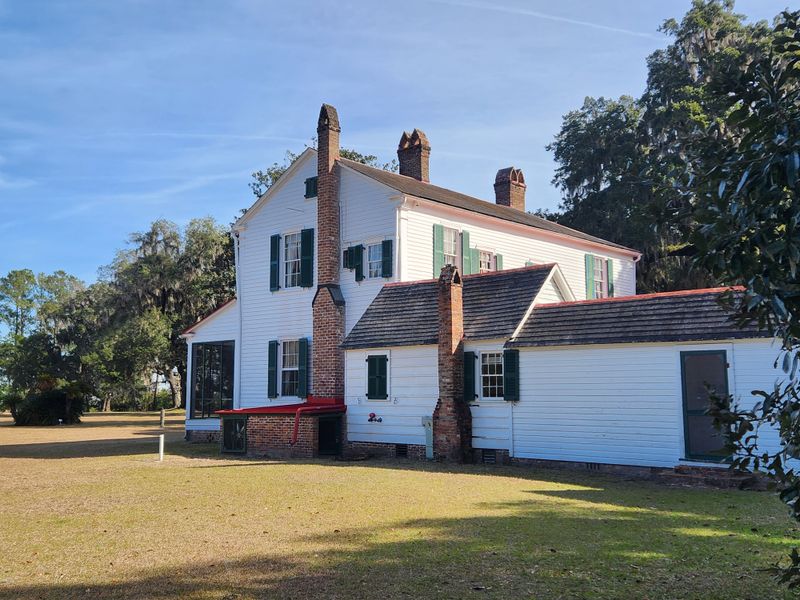
Rice fields shaped Georgia’s coastal economy for generations, and this site preserves that history with uncommon completeness.
Located at 5556 US-17, Brunswick, GA 31525, Hofwyl-Broadfield’s main house dates to the 1850s, though the field itself was established decades earlier.
Wide porches wrap around the frame structure, designed to catch coastal breezes during hot, humid summers.
The last owner, Ophelia Troup Dent, donated the property to the state in 1973, ensuring its preservation as an educational site.
Original furnishings, family documents, and agricultural equipment help tell the story of rice cultivation and the people whose labor made it profitable.
Walking trails lead through remnants of rice fields where dikes and canals still mark the landscape.
Interpretive materials explain the complex water management systems that rice farming required.
The site sits in a beautiful coastal setting where wildlife viewing opportunities abound among wetlands and forests.
Visitors gain understanding of an agricultural system that defined coastal Georgia’s economy and culture for over a century.
13. Chief Vann House
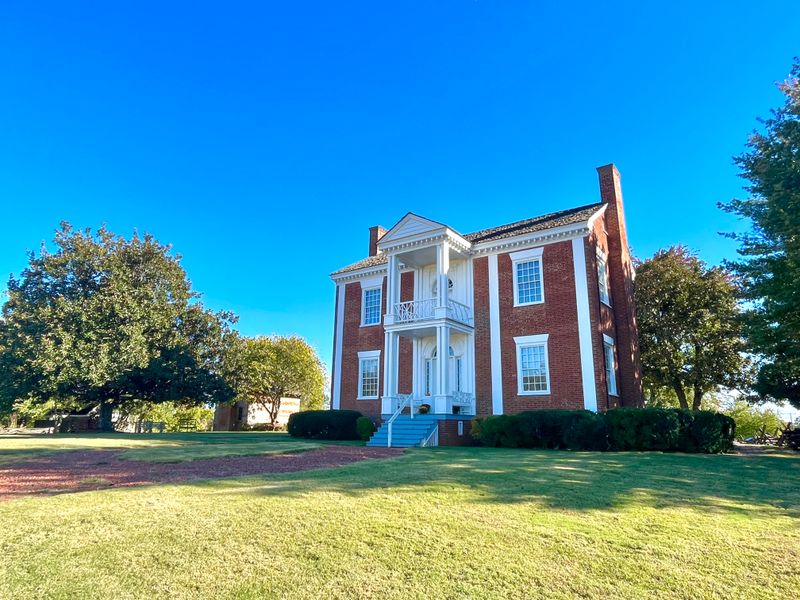
Cherokee prosperity and cultural adaptation shine through in this brick mansion that challenges simplistic narratives about Native American history.
Built in 1804, the Chief Vann House stands at 82 GA-225, Chatsworth, GA 30705, constructed for James Vann, a wealthy Cherokee leader who embraced some European customs while maintaining his cultural identity.
Two-story brick construction and Federal-style architecture demonstrate sophistication that contradicts stereotypes about Native American life in the early 1800s.
Vann owned a successful fields, ferry business, and trading post, accumulating wealth that allowed him to build the finest house in the Cherokee Nation.
Interior details include elaborate hand-carved mantels and a cantilevered staircase that rises without visible support.
The mansion survived the Cherokee removal and served various purposes before becoming a state historic site.
Original paint colors have been restored, revealing vibrant blues, reds, and yellows that decorated rooms.
Tours emphasize Cherokee history and the complex realities of assimilation, resistance, and forced removal.
The site offers important perspective on Georgia’s Native American heritage.
14. Stately Oaks
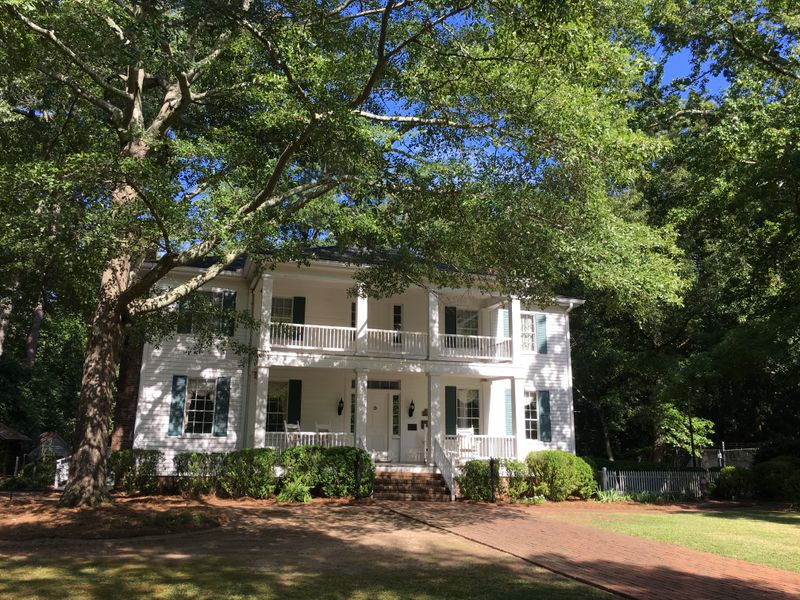
Greek Revival elegance meets 1861 history at this Clayton County landmark that witnessed Sherman’s army passing through Georgia.
Built around 1839, Stately Oaks stands at 100 Carriage Ln, Jonesboro, GA 30236, representing the comfortable lifestyle of successful cotton planters before the 1861 upended their world.
White columns support a front portico that provides shade and architectural drama in classic Southern style.
The site sits near the site of the Battle of Jonesboro, a pivotal engagement that helped seal Atlanta’s fate during Sherman’s 1864 campaign.
Period furnishings and artifacts recreate antebellum domestic life, while interpretation includes discussion of people who worked the land.
Outbuildings include a kitchen, barn, and other structures that demonstrate operations beyond the main house.
Costumed interpreters sometimes conduct tours, adding theatrical flair to historical education.
The site hosts events throughout the year, including 1861 reenactments and seasonal celebrations.
School groups frequently visit for hands-on history lessons that textbooks alone cannot provide.
Gardens and grounds offer pleasant walking areas when the Georgia weather cooperates.
15. Lockerly Arboretum Historic House
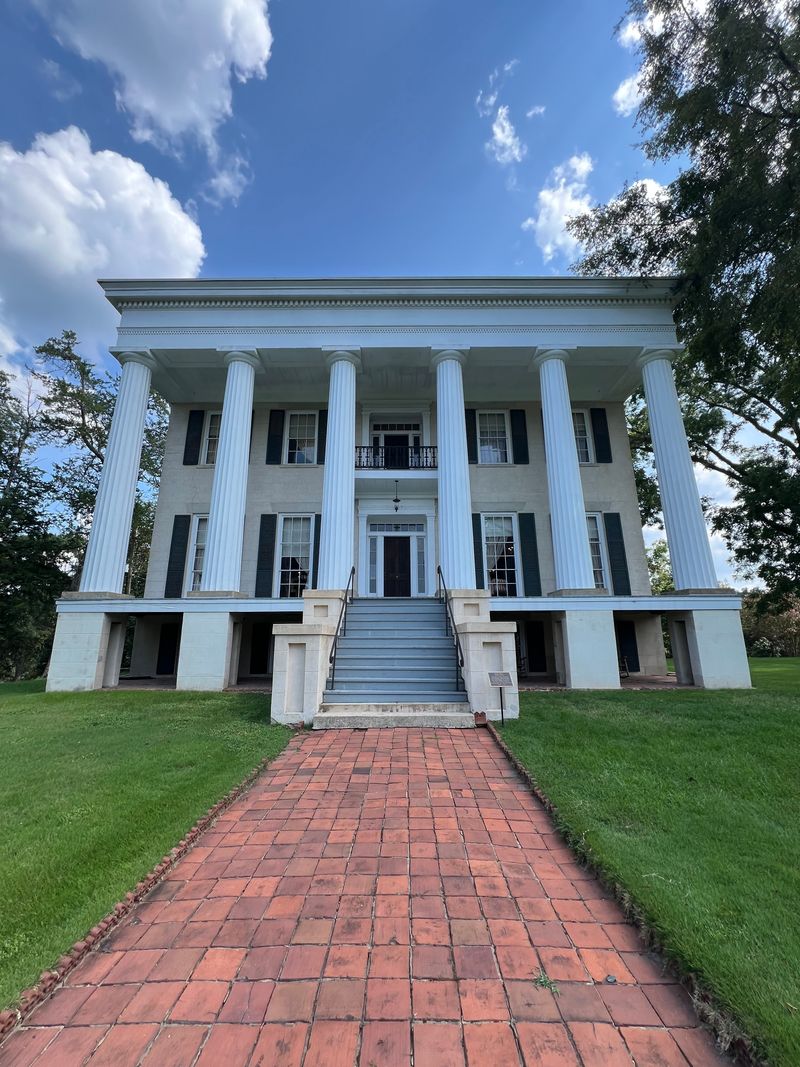
Botanical beauty surrounds a Greek Revival house where gardens claim as much attention as architecture.
The mansion at 1534 Irwinton Rd, Milledgeville, GA 31061 dates to the mid-1800s, though the Lockerly estate gained its current character in the 20th century when owners developed extensive gardens and plant collections.
Greek Revival details on the house provide elegant contrast to the wild beauty of surrounding nature.
The arboretum now encompasses 50 acres of gardens, walking trails, and native plant displays that change with the seasons.
Inside the house, period rooms show how wealthy Georgians lived, though the real attraction lies outdoors.
Educational programs focus on horticulture, conservation, and environmental stewardship, making this more than just a historic house museum.
Spring brings spectacular blooms, while fall colors transform the landscape into a painter’s palette.
Visitors can easily spend hours exploring trails, identifying plants, and enjoying the peaceful atmosphere.
The combination of history and nature appeals to diverse interests, from architecture buffs to birdwatchers.
Seasonal events celebrate the gardens and provide opportunities to learn from horticultural experts.
16. Westville Historic Handicraft Village
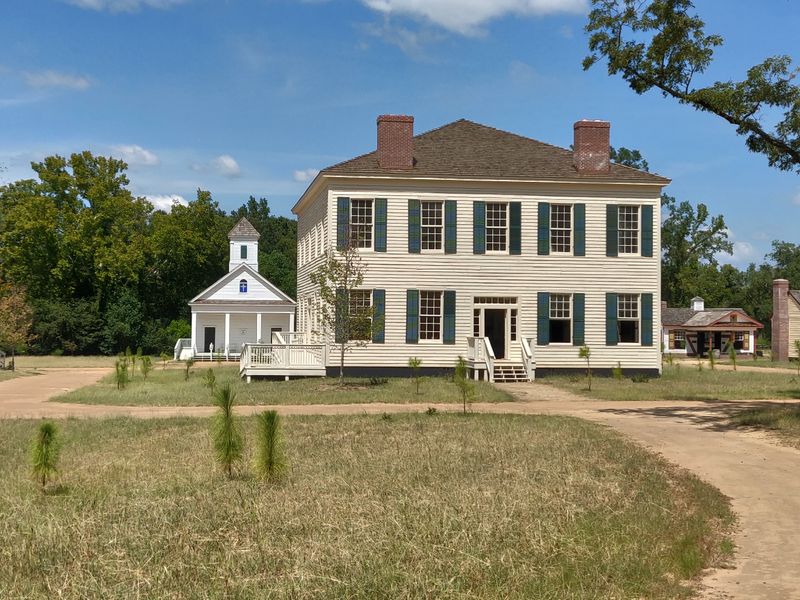
An entire 1850s village comes to life through relocated buildings that recreate Antebellum Period of Georgia with remarkable authenticity.
Located at 3557 S Lumpkin Rd, Columbus, GA 31903, Westville assembles historic structures moved from various locations to create a living history museum of antebellum rural life.
Several houses represent different economic levels, from simple log cabins to more substantial frame dwellings with Greek Revival touches.
Costumed interpreters demonstrate period crafts, farming techniques, and daily activities that bring the past to life in tangible ways.
Buildings include a courthouse, church, school, and various workshops where blacksmiths, potters, and other artisans ply their trades.
The village layout recreates the social structure of small-town Georgia before the catastrophe transformed everything.
Special events throughout the year feature period music, foodways, and seasonal celebrations.
School groups find the hands-on approach more engaging than traditional museum displays.
Visitors gain appreciation for the skills and hard work that daily survival required in the 1850s.
The site emphasizes both the ingenuity and limitations of pre-industrial life.
17. Pebble Hill
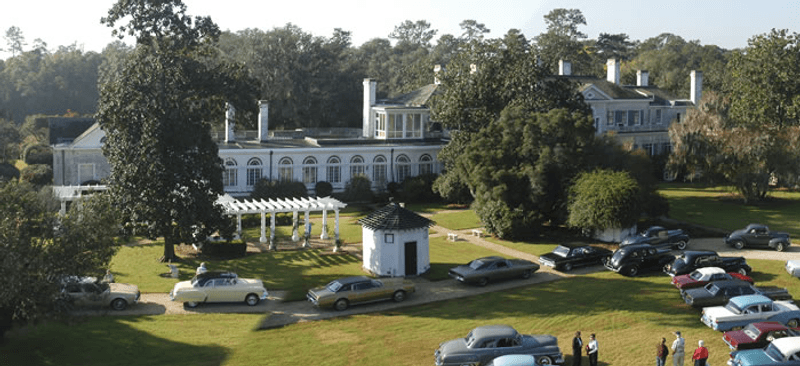
Hunting tradition and high society converge at this site that served as a winter retreat for wealthy Northerners seeking Southern sunshine.
The main house at 1251 US-319, Thomasville, GA 31792, was rebuilt in 1936 after fire destroyed an earlier structure, creating a grand residence filled with fine art, antiques, and sporting memorabilia.
The Hanna family owned Pebble Hill for generations, entertaining guests who came to hunt quail in the famous Red Hills region.
Original furnishings remain in place, including European antiques, American decorative arts, and an impressive collection of sporting art.
The place encompasses thousands of acres that once supported elaborate hunting parties and outdoor recreation.
Outbuildings include stables, kennels, a school, hospital, and other structures that show how a large estate functioned as a self-contained community.
Gardens designed by landscape architects feature native plants and formal elements.
Tours reveal the lifestyle of America’s wealthy elite during the early-to-mid 20th century.
The site preserves not just a house but an entire way of life centered on seasonal migration and outdoor sport.
18. Hills And Dales Estate
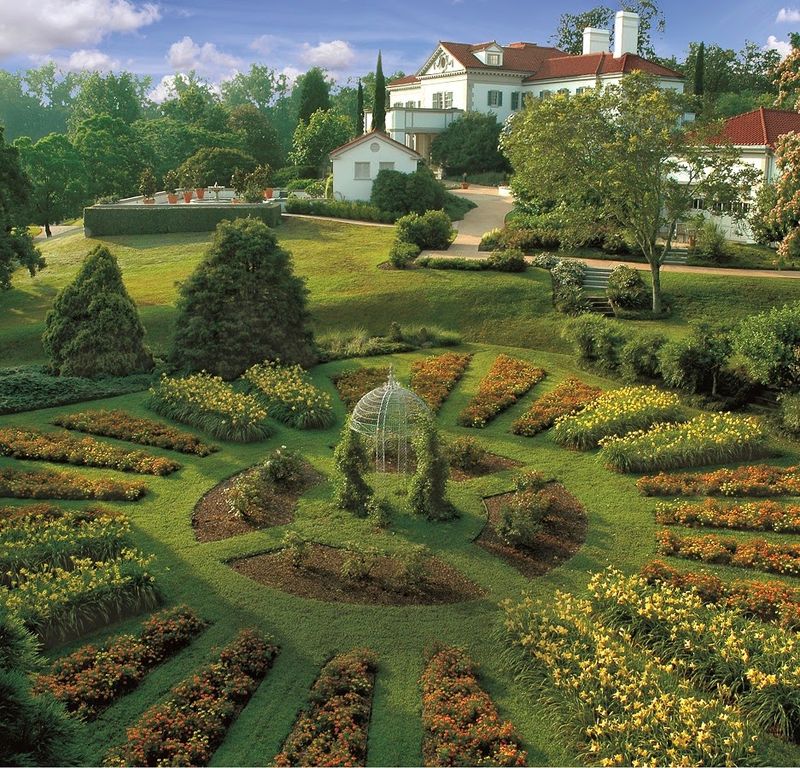
Italian villa architecture and terraced gardens create a scene that belongs in Tuscany rather than West Georgia.
Built in 1916, the mansion at 1916 Hills and Dales Dr, LaGrange, GA 30240 replaced an earlier house on land that textile magnate Fuller E. Callaway Sr. developed into a showplace estate.
Architect Neel Reid designed the house in the Italian villa style, with stucco walls, tile roofs, and loggias that blur the line between indoor and outdoor spaces.
Gardens designed by noted landscape architects feature boxwood parterres, reflecting pools, and statuary arranged in formal patterns.
The estate remained in the Callaway family until 2004, when it opened to the public as a house museum.
Original furnishings, art, and family belongings fill the rooms, providing insight into how Georgia’s industrial elite lived during the early 20th century.
Seasonal changes in the gardens make repeat visits worthwhile, as different plants bloom throughout the year.
The combination of architectural refinement and horticultural beauty creates an experience that appeals to multiple interests.
Educational programs explore both the family’s history and the estate’s artistic significance.
19. Traveler’s Rest Historic Site
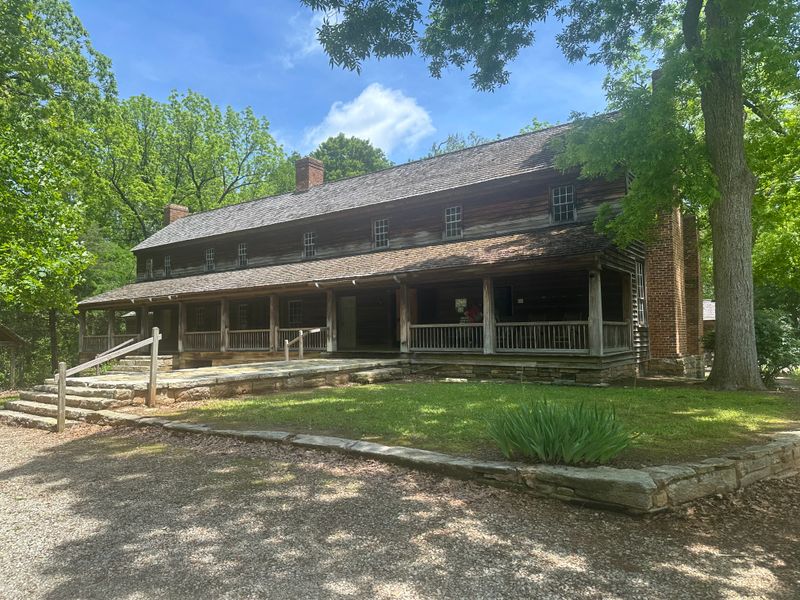
Frontier history takes center stage at this house that served as a stagecoach inn when North Georgia was still rough, barely-settled territory.
Built around 1815, Traveler’s Rest stands at 4339 Riverdale Rd, Toccoa, GA 30577, constructed by Devereaux Jarrett as both a home and a stopping place for travelers heading through the mountains.
Simple frame construction reflects frontier practicality rather than architectural pretension.
The house expanded over the years as Jarrett prospered through farming, innkeeping, and operating a post office.
Original furnishings are sparse, but the building itself tells stories about early 19th-century life in upcountry Georgia.
Jarrett’s involvement in removing Cherokee people from their land complicates the site’s history, and interpretation addresses this difficult legacy.
The house witnessed Georgia’s transformation from frontier to settled agricultural region.
Outbuildings and grounds show how a combination home and business operated when travel was difficult and accommodations scarce.
The site offers perspective on a period of Georgia history that grander mansions don’t capture.
Educational programs explore both daily life and the broader historical forces that shaped the region.
20. Woodruff House
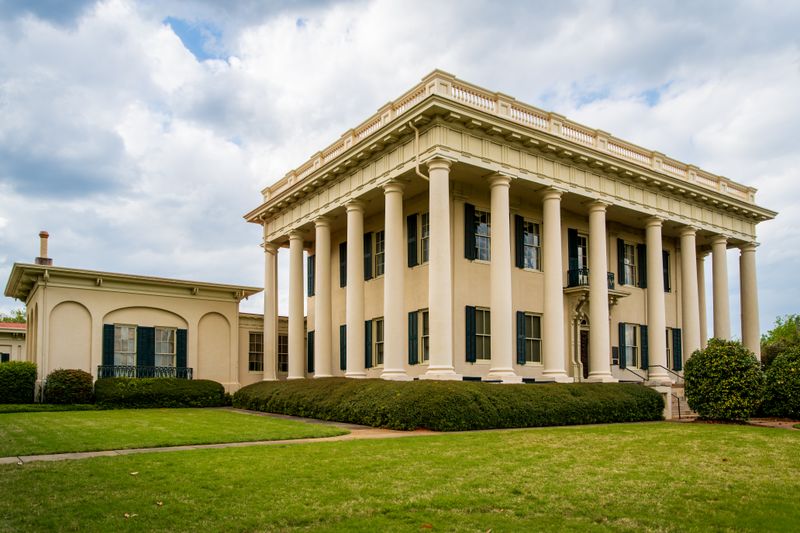
Urban sophistication defines this townhouse where Macon’s elite entertained guests in rooms designed to impress.
Built in 1836, the Woodruff House stands at 988 Bond St, Macon, GA 31201, representing the Greek Revival style adapted for city living rather than rural locations.
Three stories rise above a raised basement, with interior spaces arranged for both family life and formal entertaining.
The house belonged to Senator George Woodruff, whose political career brought prominent visitors to Macon throughout the antebellum period.
Original architectural details include plasterwork, mantels, and woodwork that showcase skilled craftsmanship.
The Cannonball House and Museum complex now includes the Woodruff House, connecting it to broader interpretation of Macon’s experience of the era.
Period furnishings recreate the atmosphere of a wealthy urban household in mid-19th-century Georgia.
The house survived largely intact, unlike many Georgia mansions that suffered damage or destruction.
Tours emphasize both architectural significance and the social history of Macon’s antebellum elite.
The urban setting provides context different from rural houses, showing how Greek Revival style adapted to city lots and neighborhoods.
21. Archibald Smith Home
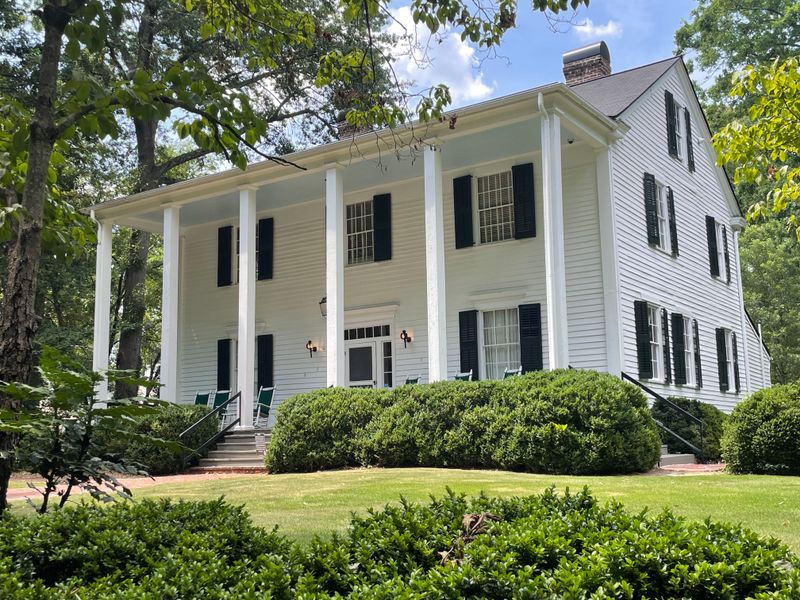
Simplicity and authenticity make this farmhouse more relatable than grander estates that can feel distant from most people’s experience.
Built in the 1840s, the Archibald Smith Home sits at 935 Alpharetta St, Roswell, GA 30075, representing the comfortable but not extravagant lifestyle of a successful farmer.
Plain frame construction and straightforward design show that not all antebellum prosperity manifested in columned mansions.
Original outbuildings include a barn, corn crib, kitchen, and other structures that demonstrate how a working farm operated.
Costumed interpreters sometimes conduct tours, explaining daily routines, seasonal work cycles, and the labor that farming required.
The site emphasizes honest history over romanticized nostalgia.
School groups find the manageable scale and hands-on interpretation more accessible than larger, more formal house museums.
Gardens include heritage plants that would have grown in 19th-century Georgia.
The location in Roswell makes this easy to combine with visits to nearby Bulloch Hall and other historic sites.