10 Historic Georgia Streets Where Centuries Of Southern History Come To Life
Some streets feel like they remember things. You walk them and sense that the pavement has seen more than it lets on, that the stories did not end when the people left.
Few states carry that weight as openly as Georgia. Here the past does not hide behind glass in a museum.
It lingers in the moss draped over Savannah’s squares and echoes through the Atlanta blocks where the civil rights movement found its voice. Centuries press up through the sidewalks, close enough to touch if you slow down long enough to notice.
You do not need to be a historian to feel the pull. A curious traveler or someone who just loves a good walk will get it instantly.
Get ready to wander 10 remarkable roads where Southern history stays right beside you.
1. Bull Street – Savannah
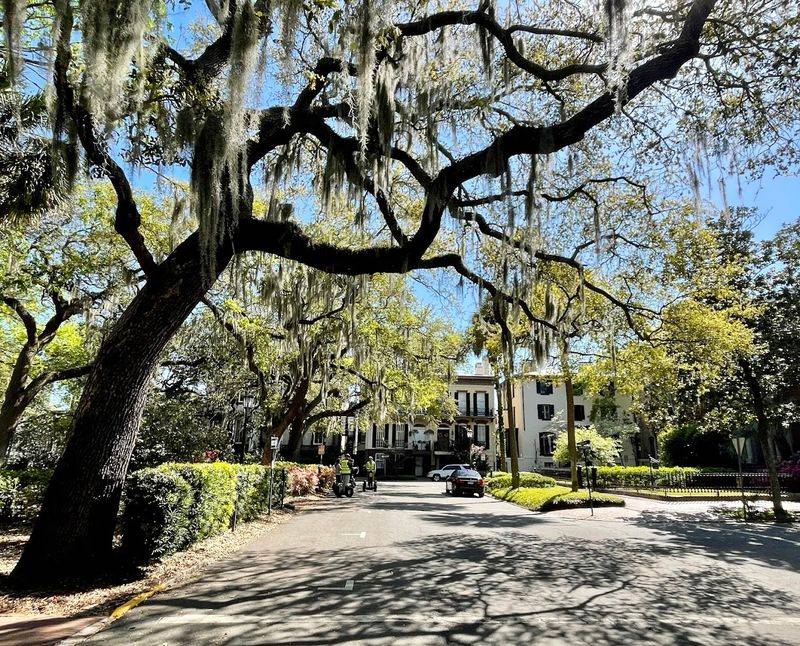
Few streets in all of Georgia carry the quiet elegance of Bull Street in Savannah. Located at Bull St, Savannah, GA 31401, this corridor runs straight through the heart of the city, connecting several of Savannah’s famous public squares in a single, walkable stretch.
Strolling along Bull Street feels like moving through a living timeline, with antebellum mansions, independent boutiques, and shaded squares appearing at almost every block.
Johnson Square, the oldest of Savannah’s squares, sits right along this route and is worth a slow stop. The street tends to be busiest on weekend afternoons, so a weekday morning visit offers a more relaxed pace.
Comfortable walking shoes are strongly recommended since the historic brick sidewalks can be uneven in spots.
Bull Street gives visitors a genuine sense of Savannah’s architectural character without requiring a tour guide, making it one of the most rewarding self-guided walks in the entire state.
2. Abercorn Street – Savannah

Abercorn Street is one of those roads that rewards slow walkers and curious eyes in equal measure. Running through Savannah, GA 31401, this long avenue passes through multiple historic squares, including the famously eerie Calhoun Square and the stately Lafayette Square, each carrying its own layer of Georgia history.
The street blends residential grandeur with quiet civic spaces in a way that feels genuinely unhurried.
Local lore gives Abercorn Street a slightly spooky reputation, particularly around the 432 Abercorn address, which has long been the subject of ghost stories that Savannah residents love to share. Whether or not the supernatural interests you, the architecture along this corridor is stunning enough to justify any visit.
Wrought iron fences, brick facades, and canopies of live oak trees create a visual rhythm that is distinctly Savannah.
Visiting during the golden hour before sunset makes the light filter beautifully through the Spanish moss, turning an ordinary walk into something genuinely memorable.
3. Jones Street – Savannah
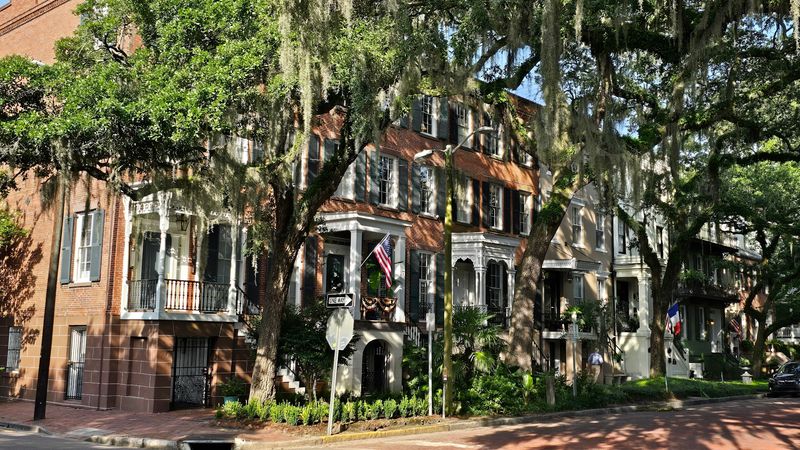
Consistently ranked among the most beautiful streets in America, Jones Street earns that reputation every single day.
Located along Jones St, Savannah, GA 31401, this narrow, tree-canopied block is lined with immaculately preserved antebellum row houses in shades of soft pastel, warm brick, and painted wood that seem almost too picturesque to be real.
The street is primarily residential, which gives it a calm, lived-in charm that more touristy corridors sometimes lack.
Mrs. Wilkes Dining Room, a legendary Savannah institution serving Southern comfort food family-style, is located just steps from Jones Street and makes an excellent stop before or after a walk. The best time to enjoy Jones Street is early morning, when the light is soft and foot traffic is minimal.
There are no major attractions demanding your attention here, just beauty, history, and Georgia atmosphere doing all the work.
Bring a camera, walk slowly, and let the street speak for itself.
4. Forsyth Park – Gaston Street – Savannah
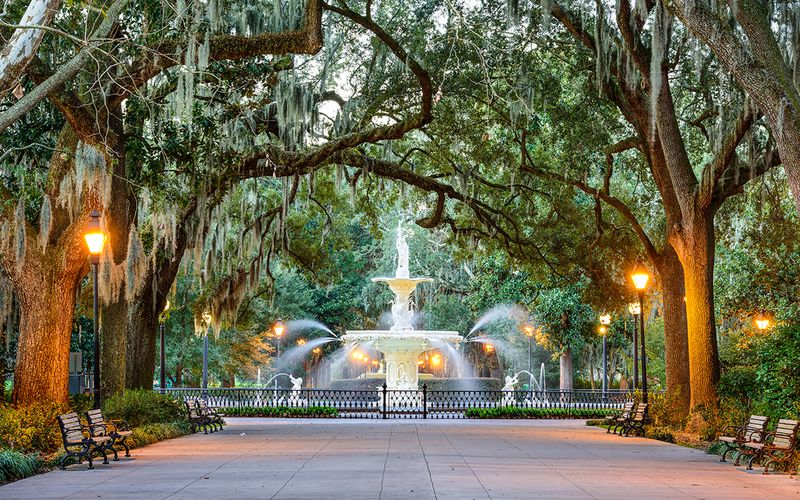
Gaston Street earns its place on this list by bordering one of the most iconic green spaces in all of Georgia. At 1 W Gaston St, Savannah, GA 31401, this address marks the northern edge of Forsyth Park, a 30-acre public park that has anchored the southern end of Savannah’s historic district since 1851.
The park’s famous white cast-iron fountain, which has appeared on countless postcards and travel magazines, sits just inside the park’s boundary and is visible from the street itself.
The surrounding Gaston Street homes are among the grandest in Savannah, with large porches, ornate ironwork, and carefully tended gardens that reflect the prosperity of the city’s 19th-century era. Saturday mornings bring a farmers market to the park, making the whole area feel especially lively.
Joggers, dog walkers, and families share the wide pathways throughout the week.
The combination of the park’s open beauty and Gaston Street’s architectural elegance creates one of Georgia’s most layered and satisfying historic streetscapes.
5. Broad Street – Augusta
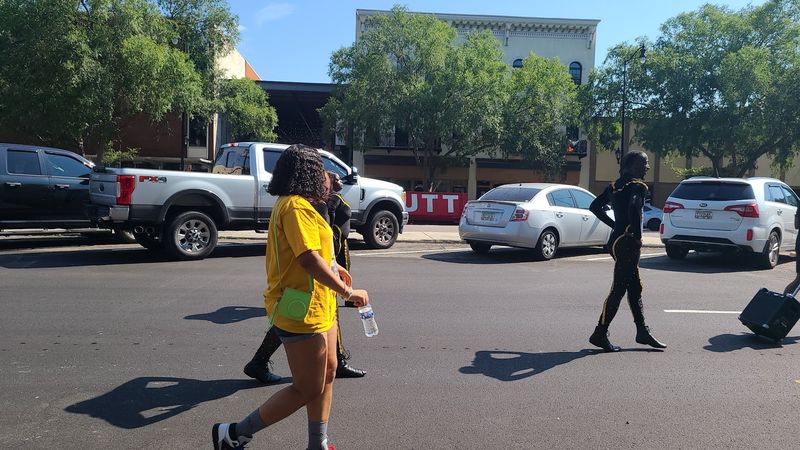
Augusta’s Broad Street is wide, bold, and unmistakably Southern in the best possible way.
Running through Augusta, GA 30901, this major downtown corridor has served as the commercial and civic spine of the city since the colonial era, when Augusta was one of Georgia’s most important trading posts along the Savannah River.
The street’s generous width was intentional, designed to accommodate the heavy wagon traffic of a busy 18th-century market town.
Today, Broad Street still hums with activity, mixing locally owned restaurants, historic storefronts, and cultural venues along its generous median. The Augusta Museum of History, which chronicles the city’s deep ties to Georgia’s past, is located nearby and pairs perfectly with a walk down this storied avenue.
Masters week each spring transforms Broad Street into a particularly festive stretch, drawing golf enthusiasts from around the world.
Even outside tournament season, the street’s scale and historic texture make it one of Georgia’s most underrated urban walking experiences.
6. Auburn Avenue – Atlanta
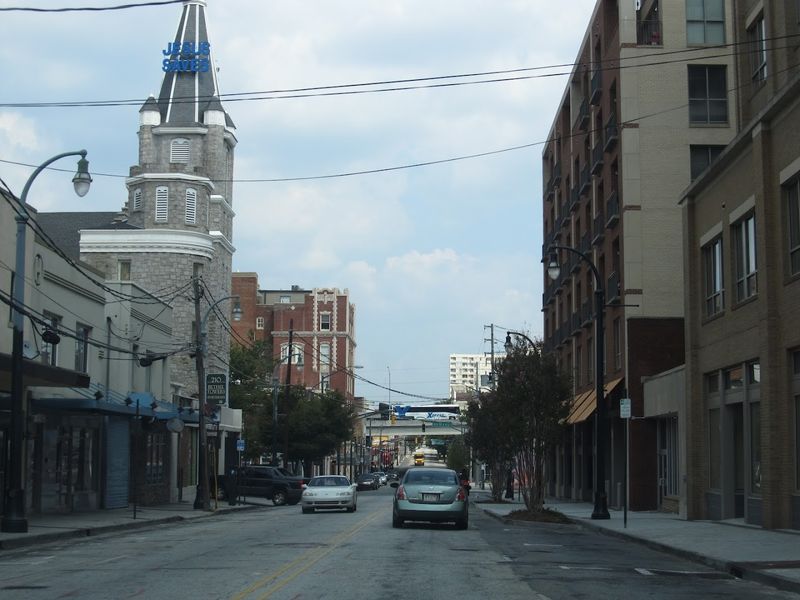
Auburn Avenue holds a significance in Georgia history that extends far beyond the boundaries of Atlanta.
At Auburn Ave NE, Atlanta, GA 30303, this corridor was once called the richest Negro street in the world by Fortune magazine in 1956, a tribute to the thriving African American business community that flourished here during an era of segregation.
The street is also the birthplace of Dr. Martin Luther King Jr., making it one of the most historically important addresses in the entire nation.
The Martin Luther King Jr. National Historic Site encompasses several blocks of Auburn Avenue, including his birth home and the original Ebenezer Baptist Church where he and his father both preached. The site is free to visit and managed by the National Park Service.
Plan to spend at least two to three hours to fully absorb the depth of history concentrated in this relatively short stretch of Georgia road.
Auburn Avenue is not just a street, it is a chapter of American history written in brick and memory.
7. Main Street – Senoia
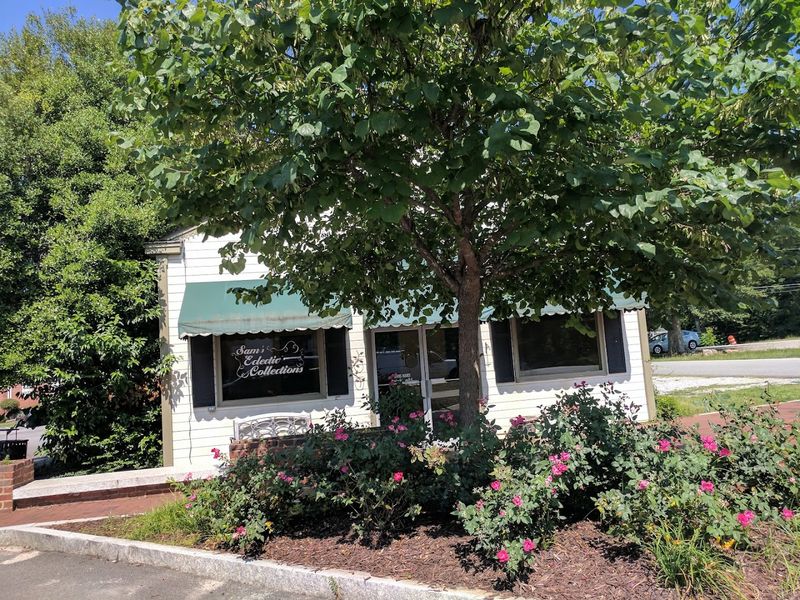
Senoia is one of those small Georgia towns that seems to have slipped through time without losing much in the process. Along Main St, Senoia, GA 30276, the downtown district is an exceptionally well-preserved collection of Victorian-era commercial buildings that give the street a storybook quality.
The town gained wider recognition when it served as a filming location for the television series The Walking Dead, but its historical character predates Hollywood interest by well over a century.
The Senoia Area Historical Society maintains a small museum nearby that provides excellent context for the architecture and community stories visible along Main Street. Local shops, a bakery, and a few casual dining spots make the street easy to explore at a comfortable, unhurried pace.
Weekends bring more visitors, particularly fans of the show, but the historic buildings remain the real draw.
For anyone curious about small-town Georgia life in the late 19th and early 20th centuries, Main Street Senoia is a genuinely charming and informative stop.
8. Main Street – Gainesville
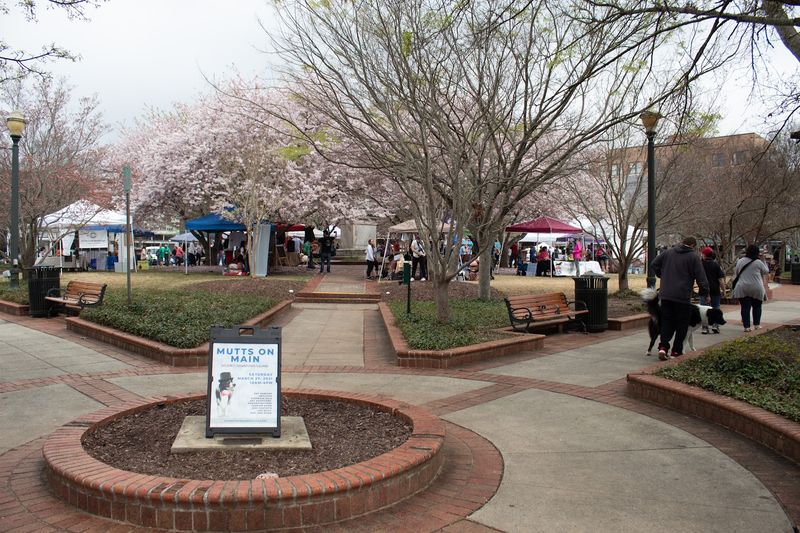
Gainesville sits at the foothills of the Blue Ridge Mountains, and its downtown Main Street corridor reflects the particular blend of mountain heritage and New South ambition that defines northeast Georgia. Near 311 Henry Ward Way, Gainesville, GA 30501, the downtown area anchors a community that has been an important regional hub since the 19th century.
Gainesville is also known as the poultry capital of the world, a title that speaks to the agricultural identity woven into this part of Georgia’s history.
The Georgia Mountains History Museum, located downtown, provides a strong introduction to the region’s cultural and natural heritage before a stroll along the surrounding streets. The area is compact and walkable, with local restaurants and shops filling historic storefronts that date back several generations.
Parking is available in downtown lots and is generally easy to find outside of special events.
Gainesville’s downtown offers a grounded, community-focused side of Georgia history that feels distinct from the more famous corridors in Savannah or Atlanta.
9. Marietta Street – Atlanta
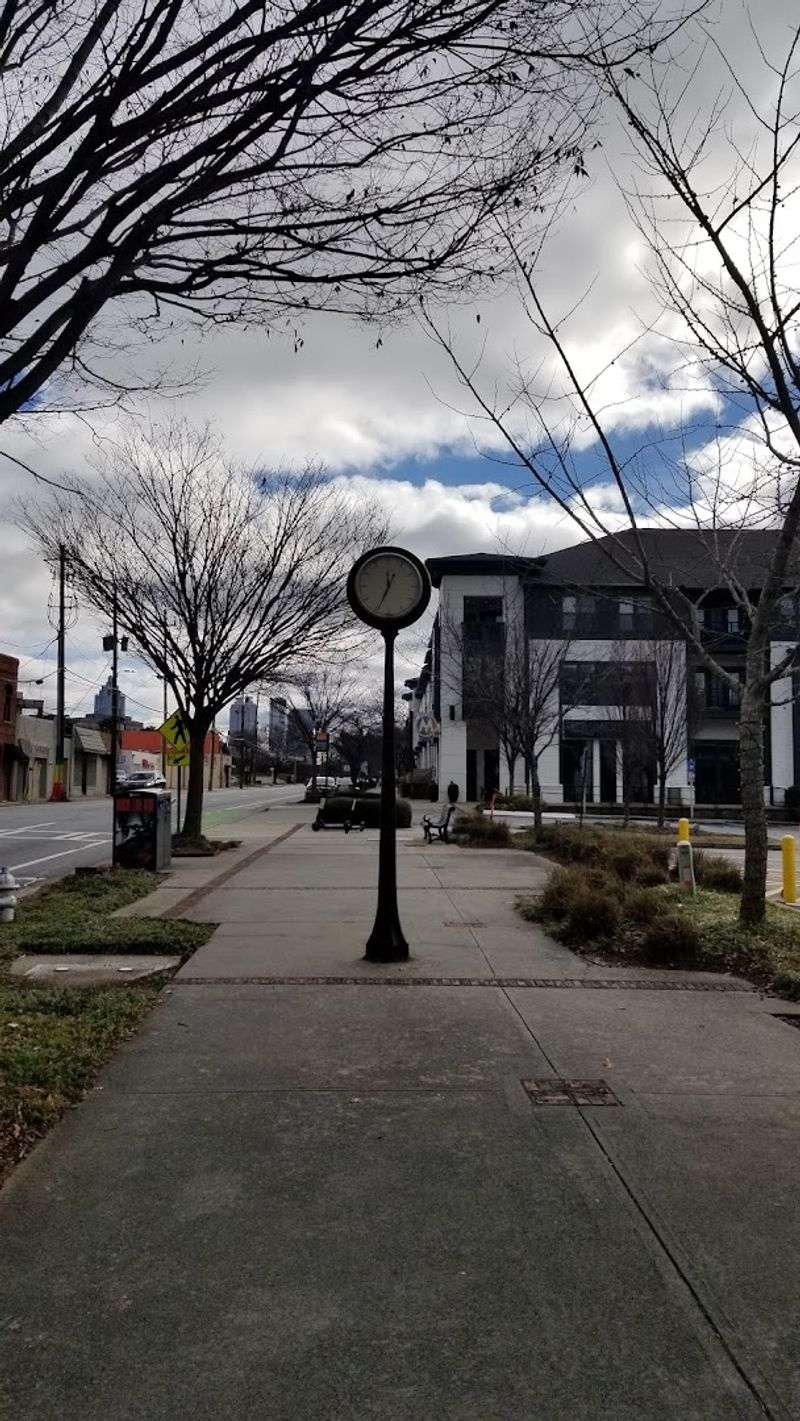
Marietta Street has reinvented itself more than once in Atlanta’s history, and that resilience is part of what makes it so interesting. Running through Marietta St NW, Atlanta, GA 30318, this corridor began as a key commercial route in the post-Civil War era, serving the working-class neighborhoods that grew up around Atlanta’s rail yards and factories.
The street’s industrial past is still visible in the scale and construction of its older buildings, many of which now house creative businesses and restaurants.
The area sometimes called the Marietta Street Artery has become a hub for Atlanta’s arts community, with galleries and design studios occupying former warehouse spaces. Castleberry Hill, one of Atlanta’s oldest neighborhoods, sits adjacent to this corridor and adds additional historical texture to any visit.
Weekend afternoons tend to bring out the most activity in this part of the city.
Marietta Street is a reminder that Georgia history is not always polished or preserved behind velvet ropes, sometimes it is raw, honest, and actively evolving.
10. River Street – Savannah
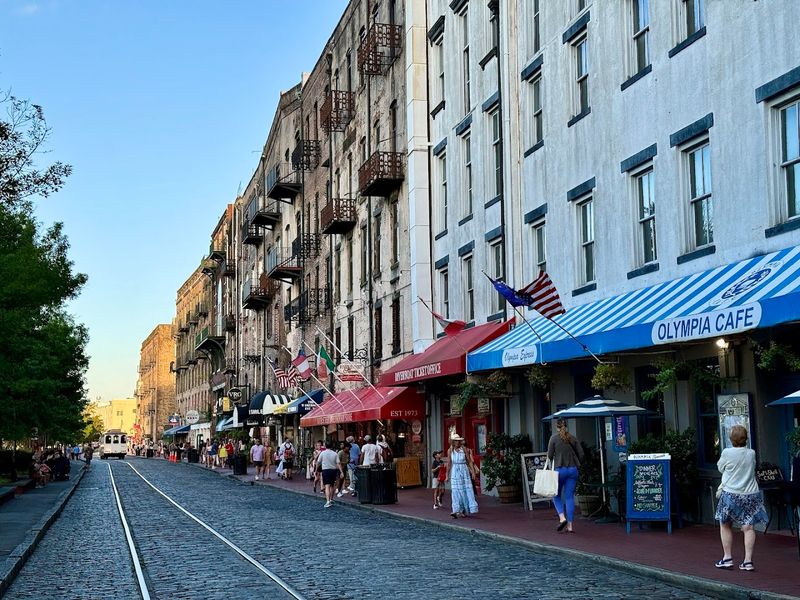
Cobblestones worn smooth by centuries of foot traffic tell the first chapter of River Street’s story before a single word is spoken. Situated at 1 W River St, Savannah, GA 31401, this waterfront stretch once served as the backbone of Georgia’s cotton trade, and the thick-walled warehouses that lined the river have since been transformed into restaurants, galleries, and candy shops.
The transformation is remarkable, yet the bones of the original 18th-century port city remain clearly visible.
Walking here on a weekday morning offers a calmer experience, while weekend evenings bring live music spilling out onto the cobblestones. Comfortable shoes with grip are a smart choice since the uneven stones can be slippery after rain.
The riverboats docked along the waterfront add a nostalgic visual backdrop that is hard to find anywhere else in Georgia.
River Street rewards visitors who take their time, look up at the old facades, and imagine the busy port life that once defined this entire region.