9 Historic Small California Towns With Stunning Architecture
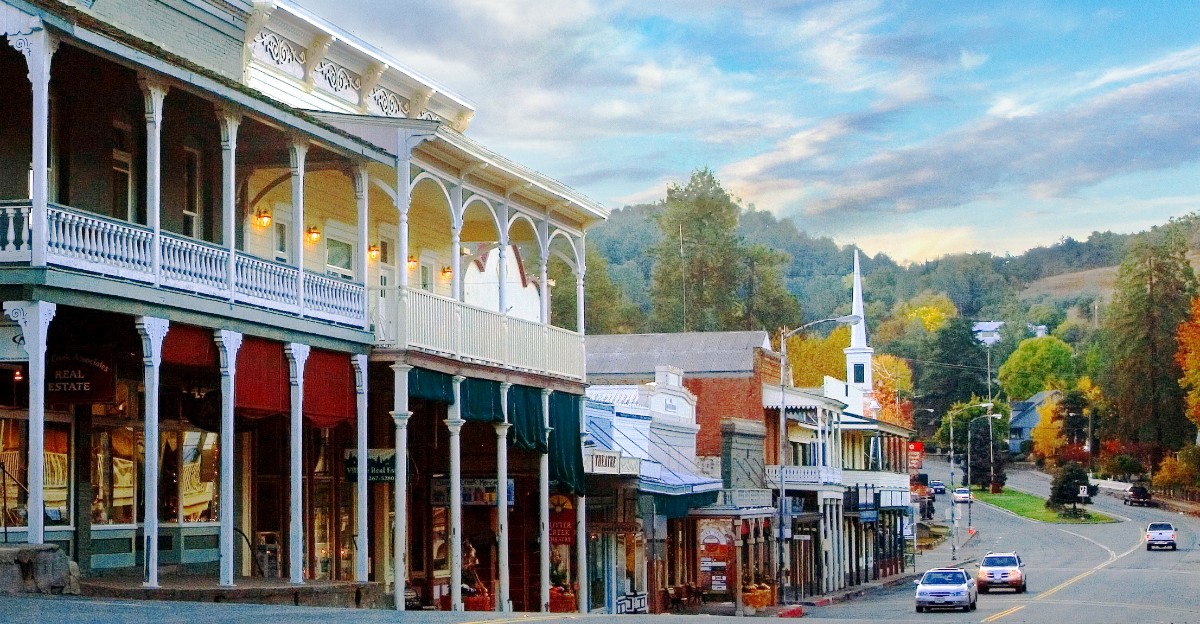
The fanciest Victorian homes in one small California town earned a funny nickname: Butterfat Palaces.
Dairy money paid for those turrets, towers, and gingerbread trim, and I love that cows basically bankrolled the whole skyline of Main Street.
That’s only the first surprise on this list. Another stop holds the oldest existing theater building in the state, and the curtain first went up there in 1865.
A third town changed its entire look after a 1947 magazine story put it in the spotlight.
Within a few years, half-timbered walls, thatched roofs, and decorative windmills were popping up in the Santa Ynez Valley.
I can’t get enough of places where the buildings do the storytelling for you.
1. Ferndale
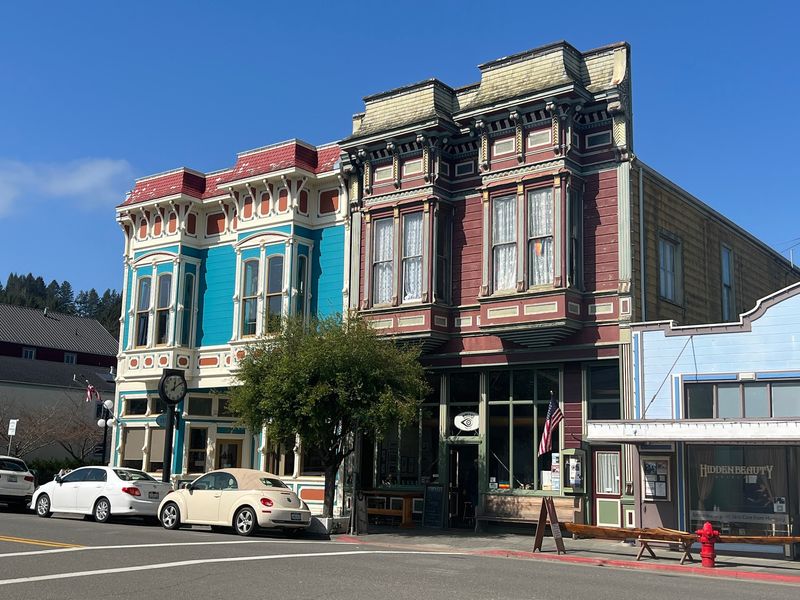
Cows paid for this town’s good looks, and honestly, they did a fantastic job. Dairy wealth in the late 1800s funded the ornate Victorian homes locals nicknamed Butterfat Palaces.
Settlers arrived in 1852, and the town incorporated in 1893. Today, fewer than 1,500 people live here, which makes the fancy architecture feel even more surprising.
You’ll spot Queen Anne, Eastlake-Stick, and Italianate styles packed with turrets, towers, and stained glass. Bold paint colors make the gingerbread trim pop like frosting on a cake.
Start at the Ivanhoe Hotel at 315 Main Street. Built in 1875, it’s the oldest building in the Main Street Historic District, which joined the National Register in 1994.
Next, swing by the Shaw House at 703 Main Street, a Carpenter Gothic beauty from 1854. It once served as the area’s first courthouse and post office, and it now runs as a bed and breakfast.
Book lovers should peek at the 1909 Carnegie library on the way. It’s the last Carnegie library in northwestern California still working as a public library.
Before you leave, cross Fernbridge, a 1,320-foot concrete arch bridge over the Eel River from 1911. People call it the Queen of Bridges, and it even showed up in the 1995 movie Outbreak.
Isolation helped save these buildings, since the town sat a bit off the beaten path. That’s lucky for you, because the town’s historic core now counts as California Historical Landmark No. 883.
Address: Ferndale, CA 95536
2. Nevada City
Sharing a name with a whole neighboring state got so confusing that this town officially added City to its name in 1864. Before that, folks simply called it Nevada, Spanish for snow-covered.
Gold seekers showed up in 1849, and the town grew fast around Deer Creek. Several big fires in the 1850s and early 1860s pushed builders toward sturdier brick.
That rebuilding left you a real treat in the 16-acre Downtown Historic District, listed on the National Register in 1985. Victorian, Italianate, and Queen Anne styles crowd its hilly streets.
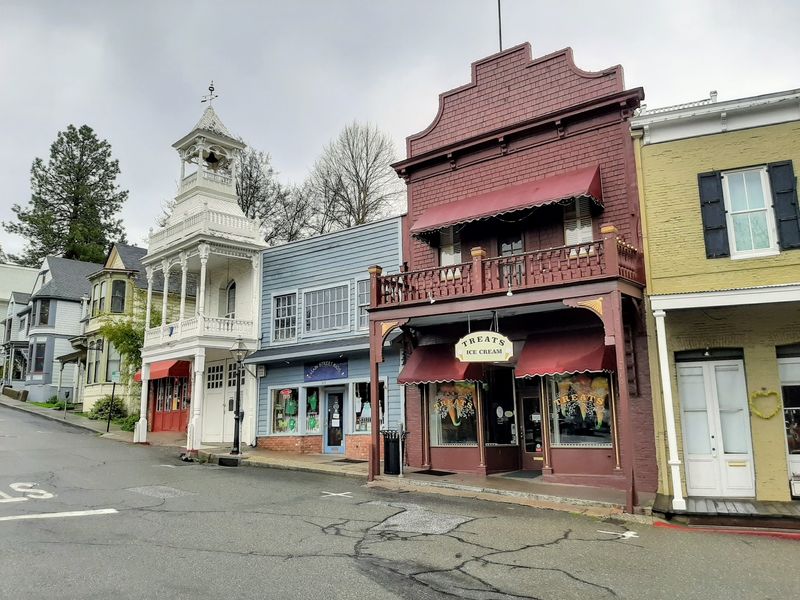
Look up as you stroll Broad Street. Ornate wooden balconies hang over the sidewalks, and church spires poke above the red brick storefronts.
The National Exchange Hotel at 211 Broad Street dates to 1856. A restoration kept its original architecture, and it houses the Lola restaurant today.
A few doors up, the Nevada Theatre at 401 Broad Street holds a big title. It’s the oldest existing theater building in California, opening in 1865.
The Stone House, built in 1857, is one of the oldest commercial buildings still standing here. Its granite masonry shows just how seriously builders took fire after those early blazes.
Want more history in one stop? The Firehouse No. 1 Museum on Main Street sits in an old firehouse with a striking bell tower and covers Nevada County’s past.
Train fans can head to the Nevada County Narrow Gauge Railroad Museum for tours of the railyard and restoration shop. Wear comfy shoes, since those hilly lanes give your calves a real workout.
Address: Nevada City, CA 95959
3. Mendocino
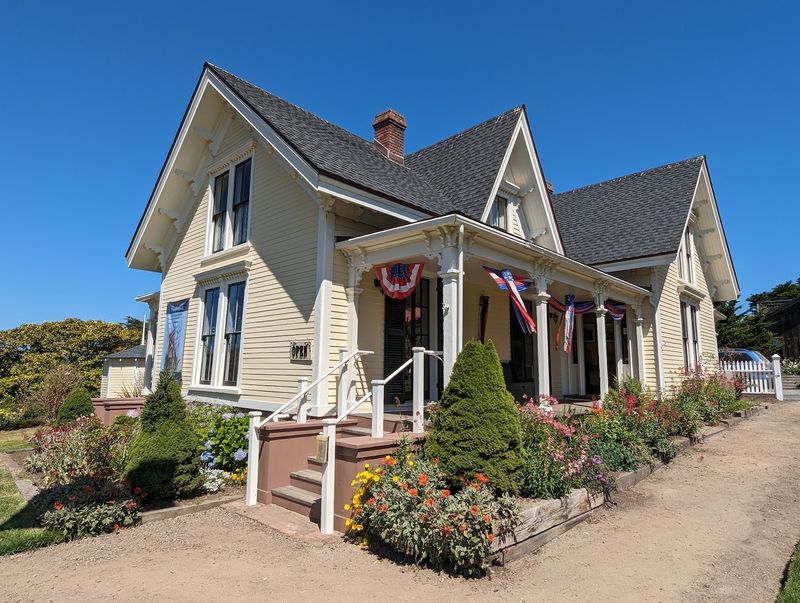
Hollywood once used this little coastal village as a stand-in for New England, and you’ll see why fast. Many early settlers came from Maine, and they built homes that look straight out of their old neighborhoods.
The village grew around a redwood mill founded in 1852. Local redwood went into many of the buildings, from saltbox cottages to Carpenter Gothic homes.
Keep an eye out for the weathered redwood water towers. They rise above backyards and gardens like wooden lighthouses with no light.
The village sits inside the Mendocino and Headlands Historic District, listed on the National Register in 1971. That protection explains why the skyline still looks so old-fashioned.
Begin at the Ford House Visitor Center on Main Street, built in 1854. Inside, a scale model shows the town as it looked in 1890, which makes a great before-and-after game.
The Kelley House Museum sits in an 1861 home and covers logging history and local architecture. Docents in period clothing lead walking tours, so you get stories with your scenery.
Don’t skip the Temple of Kwan Tai, built in 1854 and restored in 2001. It’s a California landmark that honors the town’s 19th-century Chinese community.
Lumber slowed down in the 1930s, and the village got quiet. The Mendocino Art Center arrived in 1959 and helped bring fresh energy, galleries, and workshops back to town.
When your eyes need a break from gables, the headlands are right there. Mendocino Headlands State Park wraps the village on three sides with trails, sea arches, and rugged coastline.
Address: Mendocino, CA 95460
4. Carmel-by-the-Sea
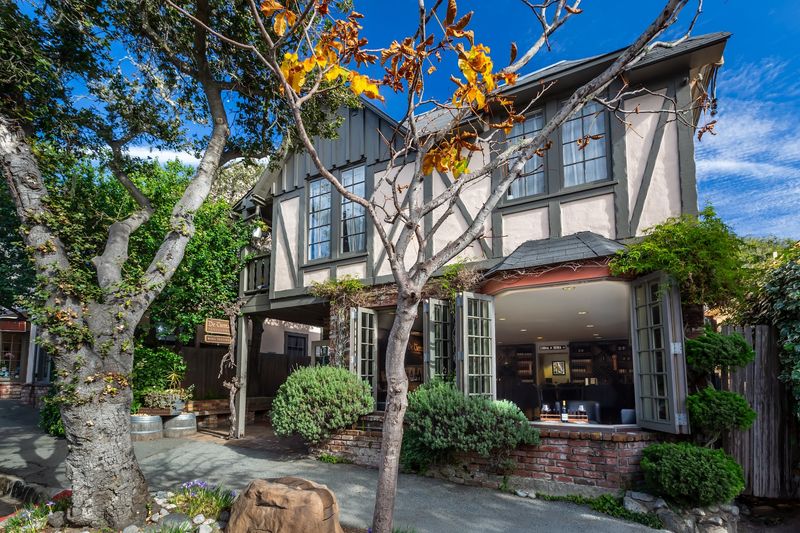
A few houses here look like a fairy tale illustrator sketched them on a napkin. Hugh Comstock built his storybook cottages in this town in the 1920s, and they still steal the show.
Look for rounded stone chimneys, curvy cedar-shingle roofs, and playful timber framing. They feel like homes built for elves who also happen to love the beach.
The town dates to 1902, when it started as a retreat for writers and artists. That creative streak shows up in the quirky, handmade feel of the older buildings.
Carmel-by-the-Sea covers about one square mile and has around 3,200 residents. That small size makes it easy to explore the village center on foot.
Strict historic zoning helps keep the original character in place. So the charm you spot isn’t an accident, it’s protected on purpose.
Plan to wander slowly through the streets near the village center. The best part is noticing small details like doors, chimneys, and rooflines.
Bring your camera, but please be respectful. Many of these cottages are private homes, so admire them from the sidewalk and keep voices low.
The pedestrian-friendly center makes a great base between cottage hunts. Grab a bite, rest your feet, and then head back out for another round of storybook spotting.
California has plenty of beach towns, but few look like they hopped out of a picture book. This one earns its spot through sheer whimsy.
Address: Carmel-by-the-Sea, CA 93921
5. Solvang
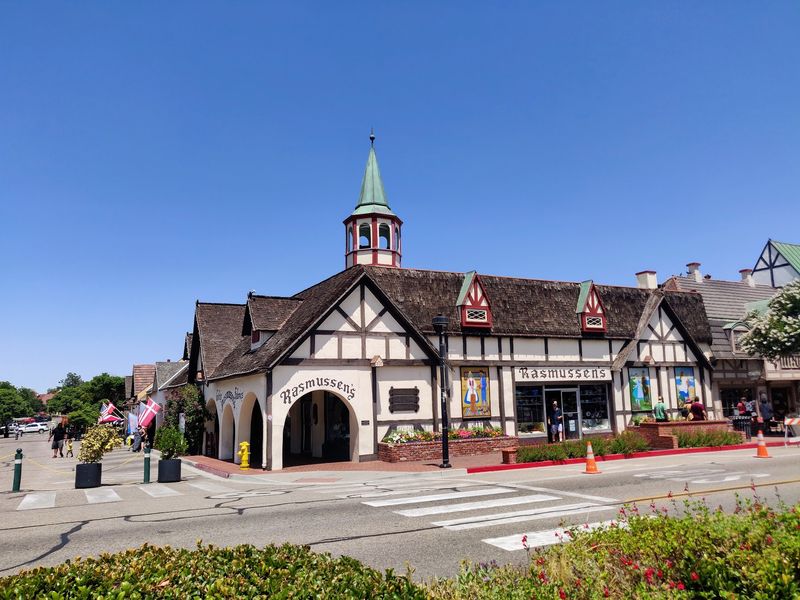
A single magazine article changed this town’s whole wardrobe. After a 1947 Saturday Evening Post story, new buildings and remodels started wearing Danish style.
Danish-American educators founded the town on January 12, 1911. They named it Solvang, which means sunny field, and the name fits the Santa Ynez Valley nicely.
Today you’ll see half-timbered facades, thatched roofs, and decorative windmills around the core. The Paaske Windmill on Alisal Road ranks as the most photographed.
Want to see where Danish design first took root here? Bethania Lutheran Church at 603 Atterdag Drive was the first truly Danish-style building, finished in July 1928.
Its nave is shaped like an upside-down ship hull, a classic Scandinavian touch. You’ll never look at a church ceiling the same way again.
The Elverhøj Museum of History and Art lives in a handcrafted 1949 building styled after 18th-century Jutland farmhouses. Fun fact: Elverhøj means Elves’ Hill.
On Alisal Road, the Round Tower is a one-third scale copy of Copenhagen’s Rundetaarn, finished in 1991. Nearby, a half-scale Little Mermaid statue has sat since 1976.
History runs deeper than the Danish era, too. Old Mission Santa Inés, founded in 1804, still serves as an active church with its original adobe church building.
Hungry after so much sightseeing? Local bakeries serve aebleskiver, the round Danish pancakes that make a perfect sightseeing reward.
Address: Solvang, CA 93463
6. Sutter Creek
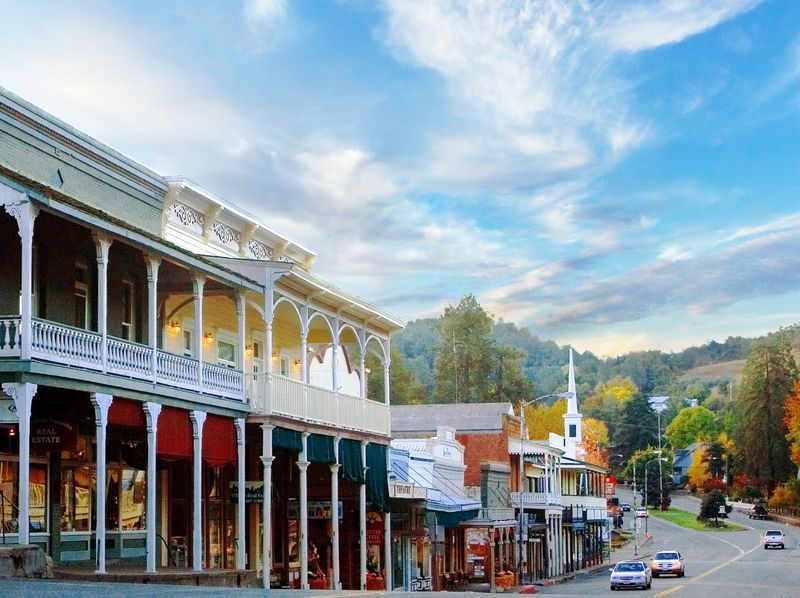
Nicknamed the Jewel of the Mother Lode, this foothill town wears its Gold Rush past right on its sleeve. Its Main Street doubles as Highway 49, so history literally lines your drive.
Quartz gold turned up here in 1851, and people stuck around for the long haul. By the 1860s, several quartz mines kept the local economy humming until 1942.
Look up from the wooden boardwalks and you’ll see two-story covered verandas hanging over the sidewalk. Brick storefronts and Victorian cottages fill in the rest of the picture.
After fires, builders went back to work with brick, stone, and wood, and some added iron doors. Carpenter Gothic columns add a fancy touch to otherwise practical buildings.
For a real time machine, visit the Monteverde Store Museum at 11 Randolph Street. The country store looks the way it did when it closed in 1971, penny candy displays included.
Gearheads, this one’s for you. Knight Foundry at 81 Eureka Street, founded in 1873, is America’s last water-powered foundry and machine shop, and it’s a National Historic Landmark.
The foundry opens to the public on the second Saturday of each month. Plan around that date, since watching the blacksmithing forge beats reading about it.
Don’t miss the two-story brick schoolhouse from 1870, listed on the National Register. The community paid for it after the first school burned.
Miners’ Bend Park adds outdoor history with mining artifacts and plaques. It’s a nice spot to stretch your legs between shops and galleries.
Address: Sutter Creek, CA 95685
7. Julian
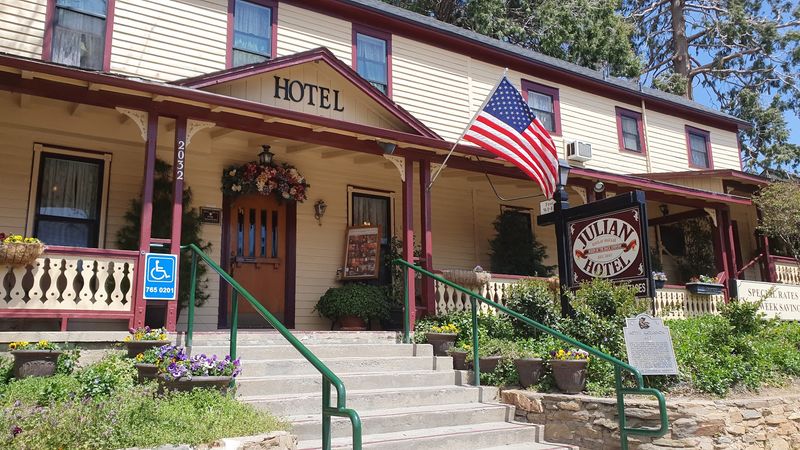
Apple pie fame might lure you up the mountain, but the old buildings deserve equal billing. This Cuyamaca Mountains town grew up fast after a gold strike in 1869.
Fred Coleman, a formerly enslaved man, found that gold. The rush lasted until around 1900, and apple orchards took over the economy after mining faded.
Main Street still shows its frontier roots with wood-clad false-front buildings and corrugated metal roofs. Shaded walkways make window shopping easy.
That look isn’t luck. San Diego County’s Julian Historic District rules ask new buildings to resemble structures from the 1870 to 1913 period.
The Julian Gold Rush Hotel at 2032 Main Street opened in 1897. It’s Southern California’s oldest continuously operating hotel, and it’s listed on the National Register.
Fans of tiny buildings should find the 1914 jail at 4th and C Streets. Fun fact: this concrete lockup was the town’s first building with indoor toilets.
The Julian Pioneer Museum at 2811 Washington Street sits inside an 1888 blacksmith shop. Inside, you’ll find mining artifacts, old clothing, and one of the finest lace collections in California.
Stay after dark if you can. Julian became an International Dark Sky Community in 2021, so the stars put on their own historic show.
Apple Day traditions date to 1909, so grab a slice of pie before heading home. Pie and Gold Rush architecture make a pretty great pairing.
Address: Julian, CA 92036
8. Dunsmuir
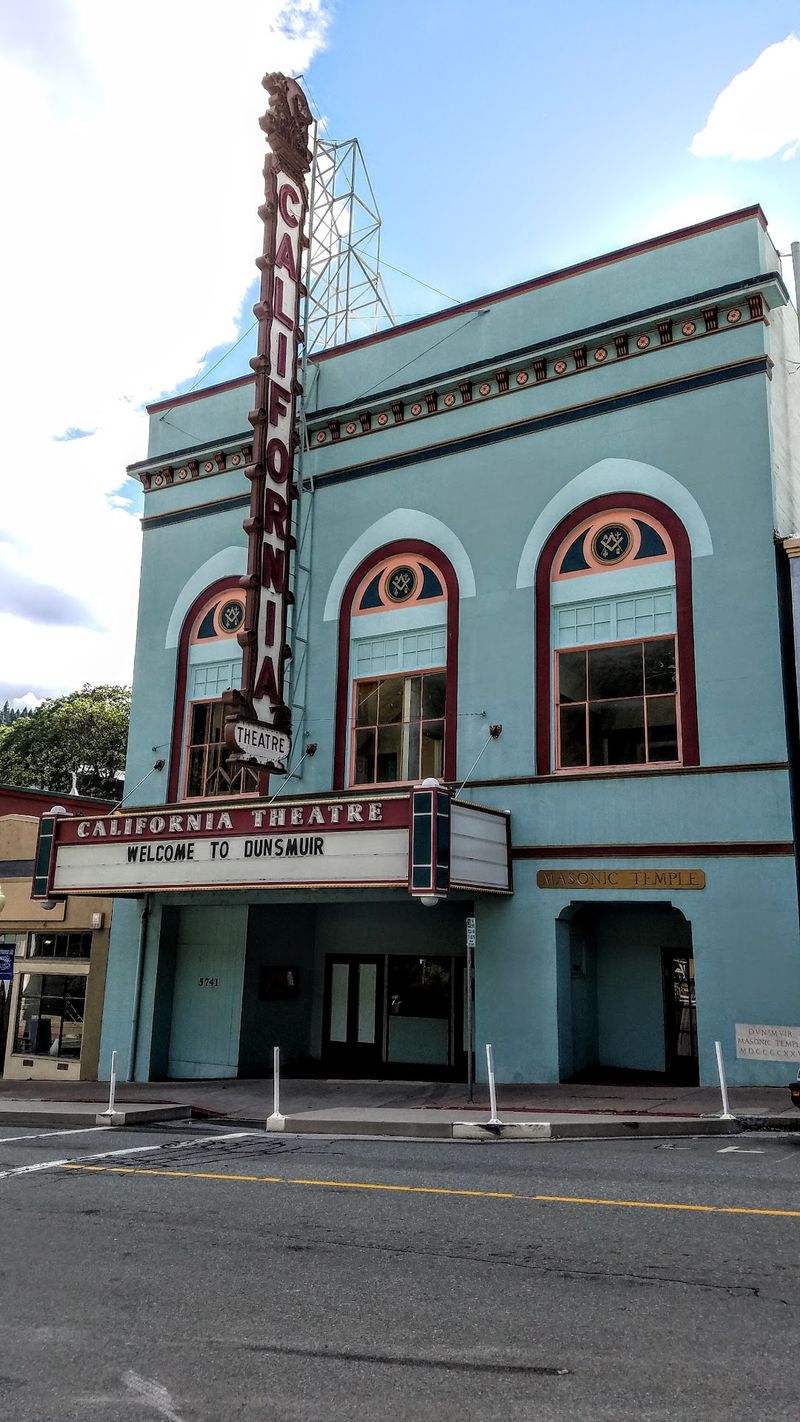
Steam trains built this canyon town, and you can still read that story in its brick. Dunsmuir grew in the late 1800s as a key division point for the Southern Pacific Railroad.
The town sits along the upper Sacramento River in Siskiyou County. Its compact layout squeezes homes and shops into a narrow mountain-river setting.
About 1,700 people live here today. That small size makes the downtown easy to explore in an afternoon stroll.
The federally designated Historic Commercial District is the main event. It preserves intact brick buildings from the 1920s railroad era.
Notice how solid these storefronts feel compared to wooden boomtown buildings elsewhere. They were built to last, and a century later, they’re still doing their job.
Then there’s the California Theatre, an Art Deco showpiece from 1926. Its style brings a splash of Jazz Age glamour to a mountain town best known for trains.
Art Deco in a railroad canyon might sound like an odd combo. Somehow it works, and it makes this stop feel different from the Gold Rush towns on this list.
Train lovers will enjoy imagining the steam era as they walk the old streets. History buffs get a rare look at intact 1920s small-town architecture.
Pair your visit with a stroll near the river. Then take your time reading the old storefronts like pages in a scrapbook.
Address: Dunsmuir, CA 96025
9. Columbia
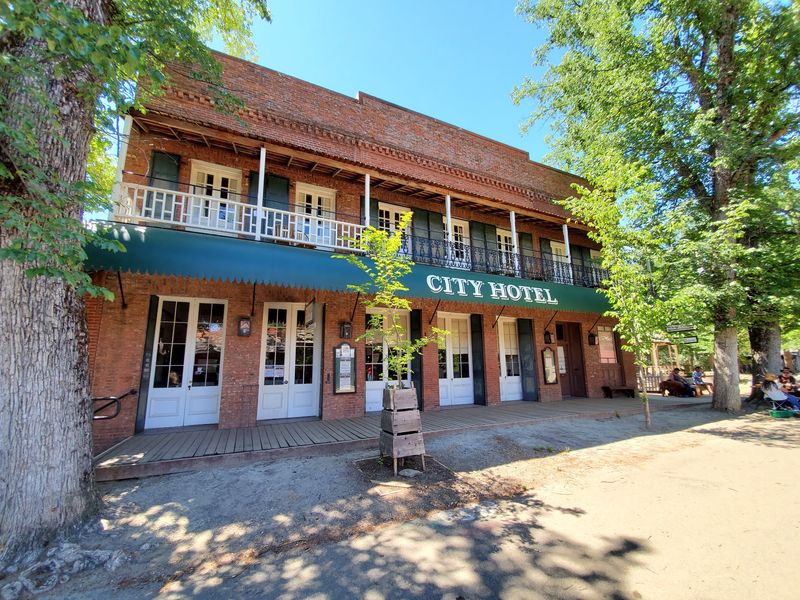
Back in 1853, this tiny foothill spot was one of California’s largest cities, with an estimated 25,000 to 30,000 people. Today around 2,300 residents live nearby, and the old downtown runs as a state park.
Gold turned up in March 1850, and the area first went by Hildreth’s Diggings. People later dubbed it the Gem of the Southern Mines.
Brick walls and iron fire shutters saved the day here. While wooden boomtowns kept burning, these tougher buildings survived and stuck around.
Columbia State Historic Park now holds more than 30 restored buildings. It’s the largest single collection of Gold Rush-era structures in the state.
Main Street is closed to cars, so you can stroll the boardwalks without dodging traffic. Wooden verandas shade the walkways and frame the brick storefronts.
The Fallon Theatre on Washington Street still hosts live shows from Sierra Repertory Theatre. Its 1885 dance hall once had a springy, bouncy floor, which sounds like a blast.
Costumed interpreters work in period shops, and a working blacksmith shop shows old skills in action. You can also try gold panning, which beats any arcade game.
Ride a stagecoach when the season and weather allow. Some rides even include a playful robber reenactment, so hold onto your hat.
Hollywood noticed the scenery too, filming Westerns like High Noon and Pale Rider here. After a visit, you might feel like an extra yourself.
Address: 11255 Jackson Street, Columbia, CA 95310