Hunters Of Old Bottles And Rail Spikes Love These 5 Idaho Ghost Towns Hidden In The Hills
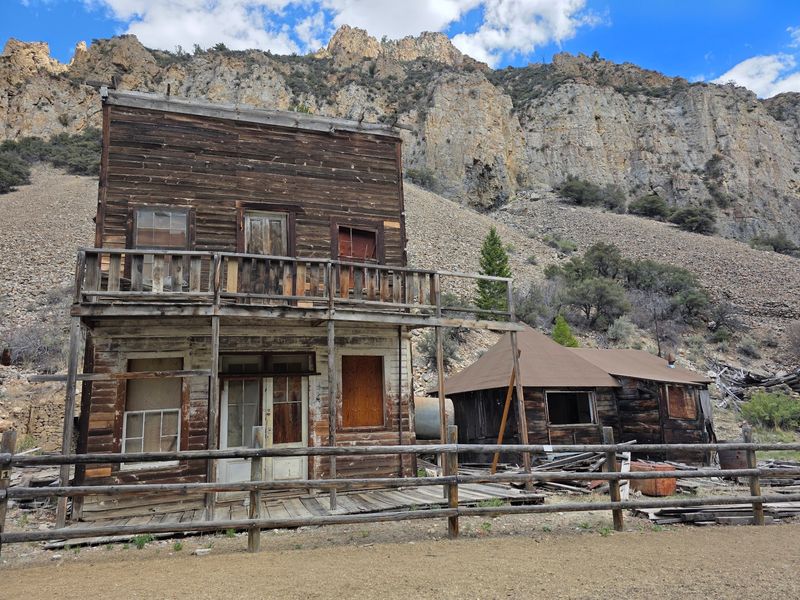
One Idaho ghost town once printed the state’s first daily newspaper, and its old hotel still rents rooms in summer. Another sits beside a gold dredge so big it left miles of rock piles behind.
I love that these places aren’t sealed behind glass. You can walk dirt streets past schoolhouses, stamp mills, beehive charcoal kilns, and hillside cemeteries that tell the mining story better than a textbook.
For anyone who scans the ground for a purple bottle neck or a rusty rail spike, these hills feel like a treasure map. Most of the roads disappear under snow, so late spring through early fall is your window.
Just remember that parks and historic districts ask you to look, snap photos, and leave relics where they rest.
The real question is which bumpy canyon road you’re willing to drive first, and how much dust your car can handle.
1. Silver City, Idaho, Murphy, ID
Idaho’s first daily newspaper rolled off a press here in 1874, deep in the Owyhee Mountains. The town also had Idaho’s first telegraph, which is a lot of firsts for a place with no gas station today.
Gold and silver strikes on War Eagle Mountain built Silver City in the 1860s. By the 1880s, about 2,500 people lived here and supported around 75 businesses.
Here’s the surprising part. Roughly 70 to 75 original buildings still stand, partly because the town never burned down or grew into a modern city.
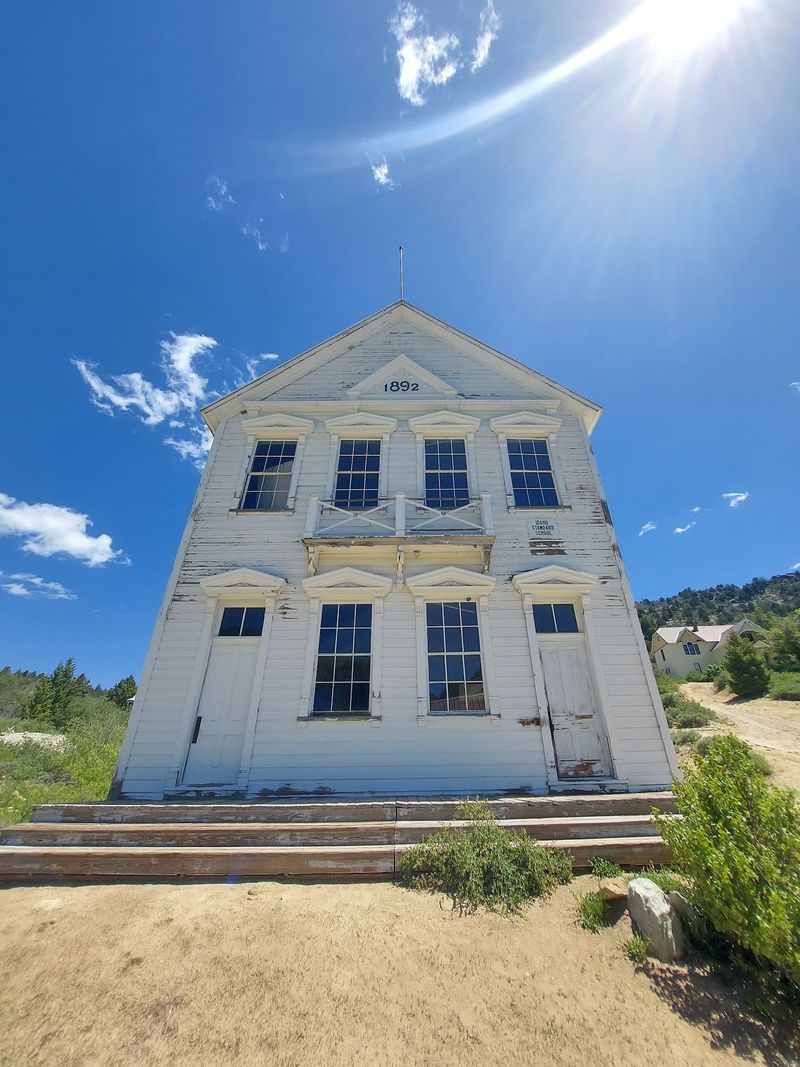
You can stroll past weathered homes, a hilltop church, a schoolhouse, and several cemeteries. Interpretive plaques fill in the backstory, so you’re never just guessing at an old doorway.
The Idaho Hotel, furnished with antiques, still takes guests during the season. Pat’s What Not Shop carries books, souvenirs, and local mineral samples, which beats pocketing a relic any day.
Silver City also served as the Owyhee County seat from 1867 to 1934. The whole area is a National Register historic district, and local rules help keep that 19th-century look intact.
Plan for a dirt road drive from the Murphy side or from Jordan Valley, Oregon. Snow closes the access roads in winter, so aim for late May through October and fill your tank first.
Address: 23989 Jordan St, Murphy, ID 83650
2. Custer Idaho
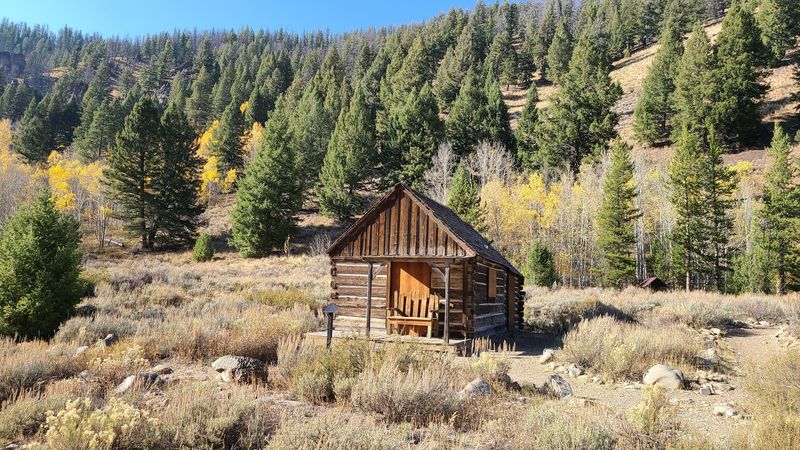
Six hundred people called this Yankee Fork camp home in 1896. Fourteen years later, the mines had played out and Custer was a ghost town.
Founded in early 1879 by gold speculators, the town leaned on the Lucky Boy and Black mines. Today it belongs to the Land of the Yankee Fork State Park, inside the Salmon-Challis National Forest.
Wondering what’s left to see? Quite a lot, actually, and it’s kept in good shape.
The old schoolhouse now works as a museum. You’ll also find a jail, the Empire Saloon building, and a hillside cemetery, plus plenty of old mining equipment saved from the scrap heap.
Signs explain each building, and docents share history during the summer season. Guided and self-guided walking tours run from Memorial Day through Labor Day.
Kids tend to have fun here too. The Empire Saloon building sells gifts and refreshments in summer, including homemade ice cream, which makes the history lesson go down easier.
Getting there is half the adventure. Turn off Highway 75 at Sunbeam and follow the gravel road about nine miles up the canyon.
Custer joined the National Register of Historic Places in 1981. Check road conditions before driving, since the gravel is happiest from late May through early October.
Address: Stanley, ID 83278
3. Bayhorse Ghost Town
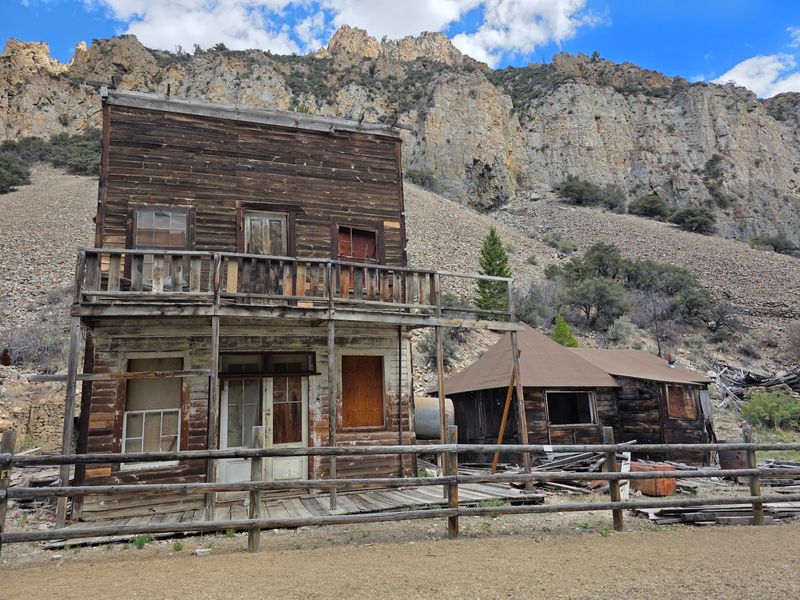
Beehive charcoal kilns still stand intact at Bayhorse, looking like giant stone gumdrops in the canyon. They once helped fuel a silver operation that later turned to lead.
Bayhorse ranks among the best-preserved boomtown mill sites in the western United States. That’s a big claim for a spot at the end of a gravel road near Challis.
Mineral discoveries started in 1864, and real development kicked off around 1880. The town peaked somewhere between 300 and 500 residents before a fire in 1889 damaged many buildings.
Falling silver prices and high costs finally shut the mines down by 1915. Then Idaho Parks and Recreation acquired the site in 2006 and opened it to the public in 2009.
You can wander stone buildings, original log cabins, an assay office, and a blacksmith shop. The Gilmer and Salisbury Stamp Mill steals the show.
A 0.9-mile loop links the highlights, with wide but somewhat steep trails. Interpretive signs describe the lives of miners and their families along the way.
Expect a rough dirt road in, though most cars manage it fine. There’s a small per-vehicle fee, and a park ranger is often on hand with stories and answers.
Address: Challis, ID 83226
4. Bonanza
Fire hit Bonanza twice, first in 1889 and again in 1897. That one-two punch explains why so little of this Yankee Fork town survives.
People started living here around 1876, and the mining town took shape in 1878. At its busiest, about 600 residents filled the valley just down the road from Custer.
By 1910, slowing mines and lost buildings left the place completely abandoned. What remains today is rougher and wilder than its tidier neighbor.
Honestly, that’s the appeal for some explorers. You’ll see rundown timber cabins and leftover relics from the mining days, without much polish.
The overgrown cemetery is the big draw. It’s one of many Boot Hill cemeteries in the West, and the setting among the trees feels quiet and reflective.
The site is privately owned but open to the public, so treat it with respect. Leave any bottle glass or rusty hardware you spot exactly where it lies.
Bonanza sits within the larger Land of the Yankee Fork area in Idaho’s Custer County. The massive Yankee Fork Gold Dredge is close by, so you can easily pair the two.
Gravel roads are clearest from late May through early October. Pack snacks, since services are scarce out here.
Address: Idaho 83278
5. Burke
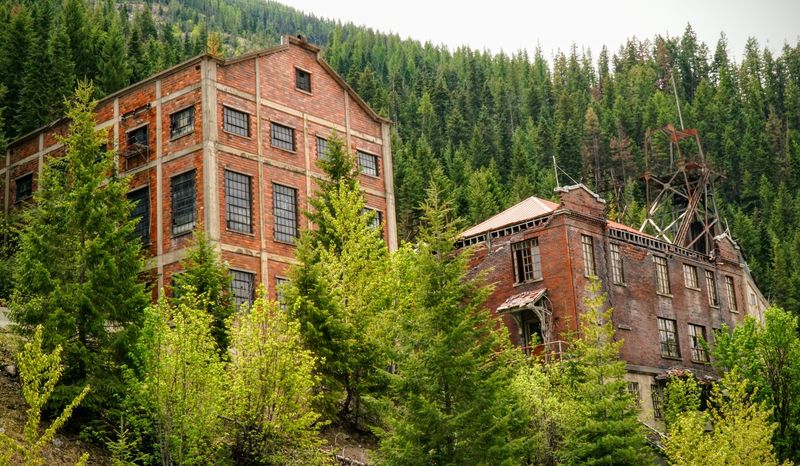
Burke Canyon is so narrow that the town once had to squeeze buildings, tracks, and a road into the same tight strip. Few mining camps anywhere packed this much into so little space.
Burke sits up Burke-Canyon Creek Road from Wallace in northern Idaho’s Silver Valley. The name traces back to James Burke, an early prospector in the Coeur d’Alene mining district during the 1880s.
So what’s the draw for rail spike hunters? Remnants of old rail lines run through the canyon, along with mine headframes and abandoned foundations.
The Star Mine area is a highlight. There’s plenty to look at right near the road, which makes this a good stop if you’d rather not hike far.
Steep walls rise on both sides, and the creek runs close by. It’s a different mood from the open valleys farther south in the state.
Much of the land and many structures here may be private, so stay on public ground. Photos make the best souvenirs, and they never rust in your trunk.
Pair the drive with time in Wallace for food and fuel. The canyon road is paved part of the way, but check conditions before heading up in winter.
Address: Burke-Canyon Creek Rd, Wallace, ID 83873