13 Iconic Movie Locations Across California That Are Open To Visitors
Some places look strangely familiar before you can explain why.
A staircase seems recognizable. A stretch of coastline suddenly feels like you have already seen it, even though this is your first visit. Then it clicks: the movies got there first.
California is packed with real locations that became part of film history without disappearing behind studio gates afterward.
That means you can stand where a famous scene was shot, compare the real setting with what appeared on screen, and discover how much movie magic came from clever framing.
These 13 locations make film history surprisingly tangible.
Bring the camera, but leave a little room for the odd sensation of stepping into a place you have technically visited dozens of times from the couch.
The credits may have rolled years ago. The locations are still waiting.
1. Griffith Observatory, Los Angeles
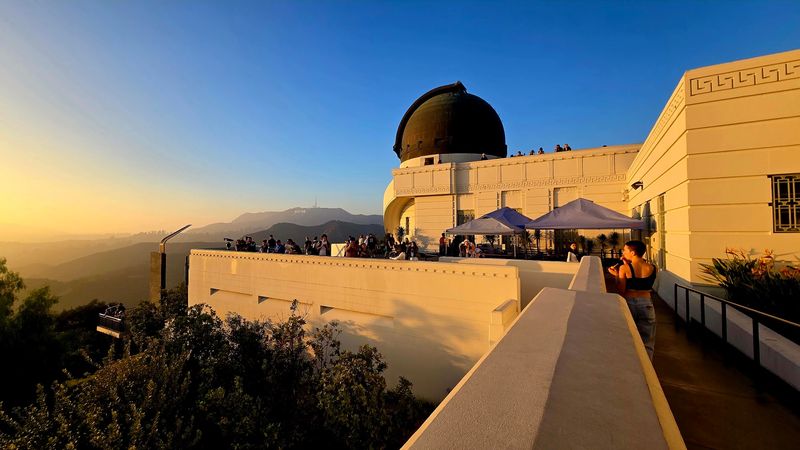
Few buildings have carried a movie’s mood the way this one has.
James Dean brawled here in Rebel Without a Cause, and decades later La La Land filmed Observatory scenes here, although Emma Stone and Ryan Gosling’s dance was shot on a studio replica inspired by the Samuel Oschin Planetarium.
The white domes sit high on the south slope of Mount Hollywood at 2800 East Observatory Road, Los Angeles, CA 90027, with the city stretched out below like a lit-up circuit board.
Getting in costs nothing. The building opens Tuesday through Friday from noon to 10:00 p.m., and weekends from 10:00 a.m. to 10:00 p.m., staying closed on Mondays.
The grounds and roads stay open daily from 5:00 a.m. to 10:30 p.m., so sunrise walkers get the place nearly to themselves.
Parking near the Observatory is paid, while free parking is available downhill; planetarium shows require tickets, but general admission is free.
Parking fills up fast on weekend afternoons, so many locals ride the DASH Observatory shuttle from the Vermont/Sunset Metro station instead of circling the hill for an hour.
Bring a light jacket even in summer, since the wind off the ridge picks up once the sun drops. Photographers usually aim for the west-facing terrace about twenty minutes before sunset, when the Hollywood Sign and the downtown towers glow at the same time.
Inside, the Foucault pendulum in the front rotunda has been swinging since 1935, quietly marking the Earth’s rotation while tourists take selfies around it.
2. Bradbury Building, Los Angeles
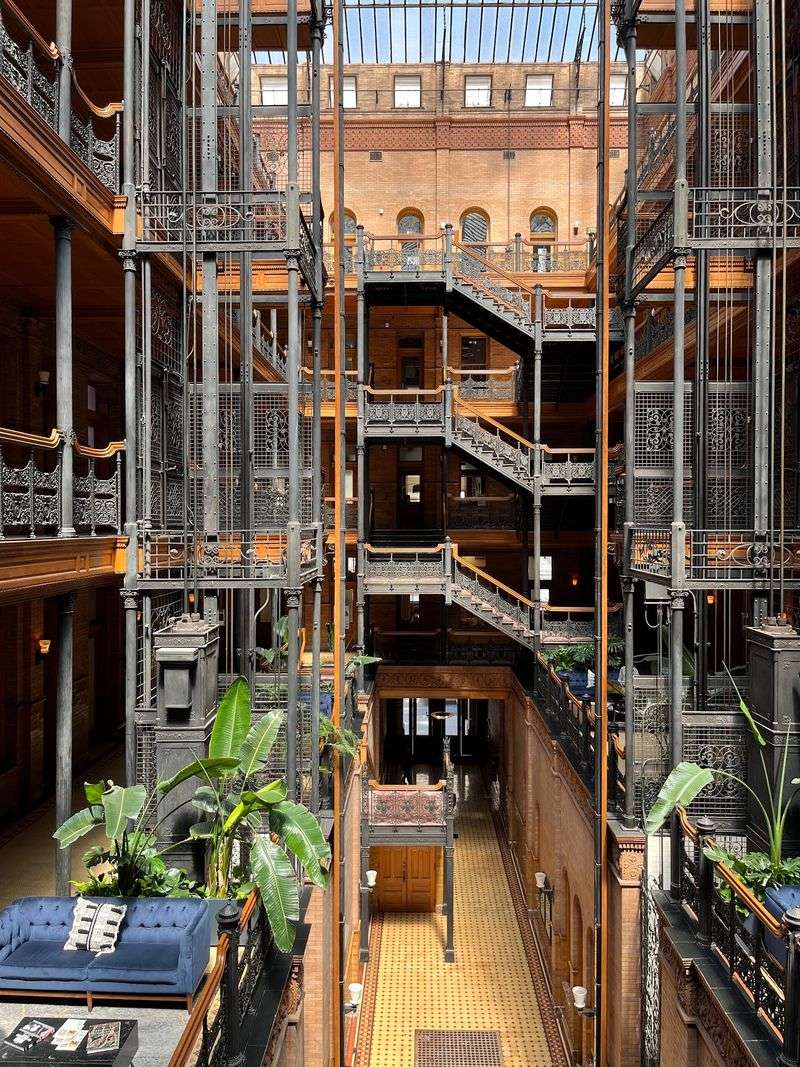
Step through the doors at 304 S Broadway, Los Angeles, CA 90013, and the year suddenly feels uncertain.
Iron railings twist upward five stories, open-cage elevators hang in the air, and a giant skylight pours daylight over marble stairs.
Ridley Scott used the space as the crumbling home of J.F. Sebastian in Blade Runner, and the building has since appeared in dozens of other productions, from The Artist to 500 Days of Summer.
Built in 1893, it was designed by a draftsman named George Wyman, who reportedly took the job after consulting a Ouija board.
Whether or not that story is true, the result became one of the most photographed interiors in the country.
Public access runs roughly 9:00 a.m. to 5:00 p.m. on weekdays, and admission is free.
Visitors are usually kept to the ground-floor lobby and the first landing, since offices fill the upper levels and workers actually use those elevators.
Photography is allowed, though tripods are not, so plan on a steady hand or a wide phone lens pointed straight up.
Since the building sits directly across from Grand Central Market, most people pair the two. Grab a taco or an egg sandwich, then walk over and spend fifteen quiet minutes staring at the ironwork.
3. Angels Flight Railway, Los Angeles
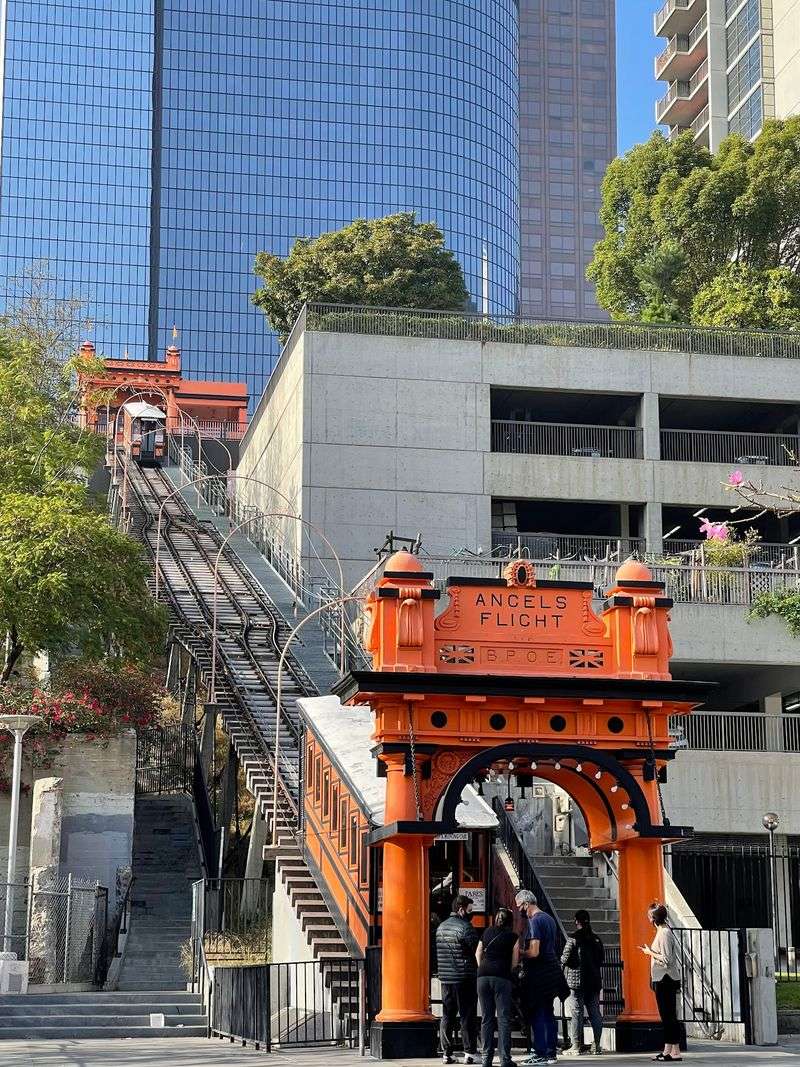
A one-minute train ride does not sound like much of an attraction until you climb aboard.
The orange and black cars of Angels Flight have been hauling passengers up Bunker Hill since 1901, and the whole trip covers about 300 feet of track.
La La Land put the funicular back in the spotlight, and riders now line up partly for the view and partly for the movie.
The lower entrance sits at 351 S Hill Street, directly across from Grand Central Market, while the upper station lets you out at California Plaza, 350 S Grand Avenue, Los Angeles, CA.
Trains run daily, and the fare is famously cheap, with a discount if you tap a TAP card.
Because the ride is so short, the smart move is to treat it as a shortcut rather than a destination. Eat lunch at the market below, ride up, then walk to The Broad museum, the Disney Concert Hall, or the Bradbury Building nearby.
Fun bit of history: the railway was dismantled in 1969 and sat in storage for almost thirty years before being rebuilt half a block from its original spot.
Kids tend to love it, and the operators are used to people filming the whole descent. Ride in the front seat facing downhill for the best shot of the tracks dropping toward Hill Street.
4. Los Angeles Union Station
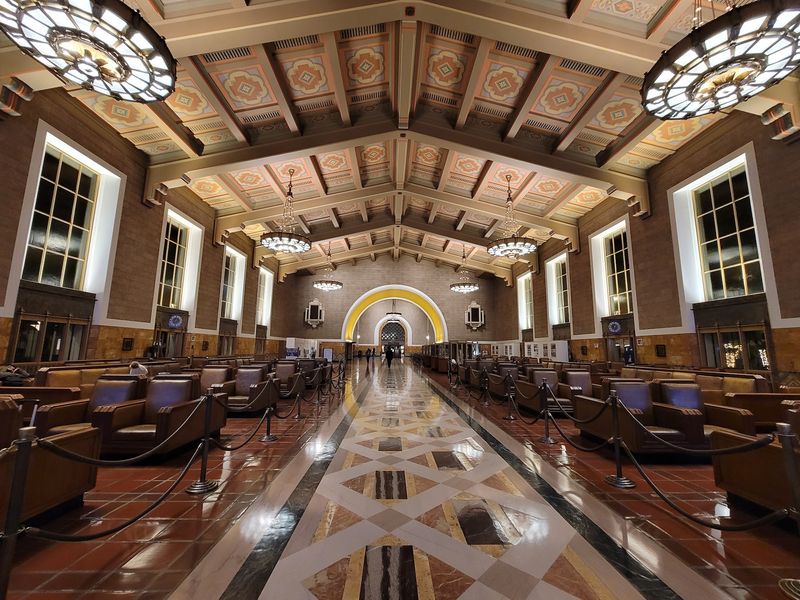
Commuters rush past without looking up, which is a shame, because the waiting room at 800 N Alameda St, Los Angeles, CA 90012, is one of the great rooms in the American West.
Opened in 1939, it blends Spanish Colonial arches with Art Deco details, all under a painted wooden ceiling that seems to go on forever.
Filmmakers have used it constantly. Blade Runner turned the halls into a police station, Catch Me If You Can staged a chase through the corridors, and The Dark Knight Rises borrowed it as Gotham’s stock exchange.
Blade Runner 2049, Pearl Harbor, and Bugsy all shot here too.
Since it is a working station serving Metro, Metrolink, and Amtrak trains, you can walk in free of charge any day of the week.
Anyone can sit in the original leather chairs of the old waiting hall, which is still one of the most peaceful places downtown on a weekday morning.
Look for the enclosed garden courtyards on either side of the main hall, planted with palms and fig trees and usually nearly empty.
Practical tip: arrive by Metro rather than car, because parking rates add up quickly. Photographers should aim for late morning, when sunlight cuts through the tall arched windows and stripes the tile floor.
Guided history walks are offered periodically by local conservancy groups if you want the full backstory.
5. Greystone Mansion & Gardens, Beverly Hills
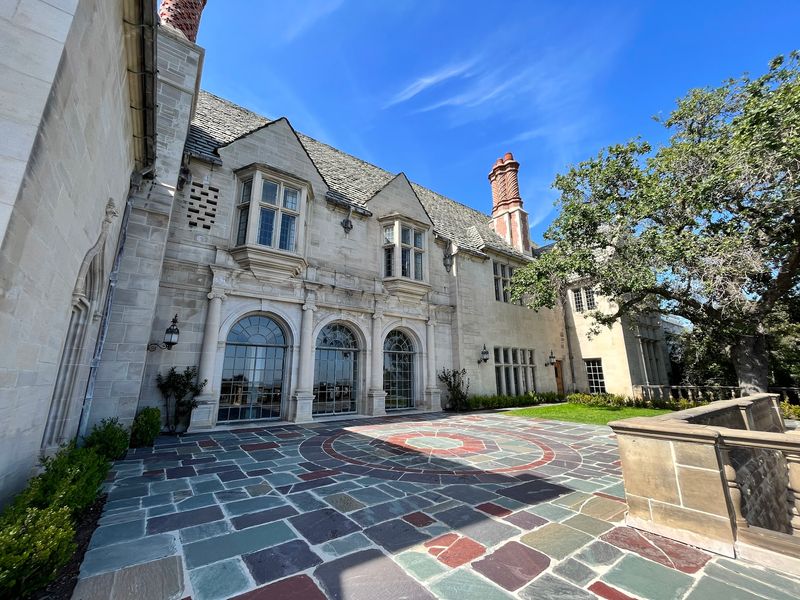
Oil money built it, and Hollywood never let it rest. Greystone Mansion, a 55-room Tudor Revival estate completed in 1928, has stood in for mansions, hotels, and villains’ lairs in an astonishing number of films.
The Social Network shot its Silicon Valley party house here. Spider-Man used it, and so did There Will Be Blood, The Big Lebowski, and Ghostbusters.
Visitors are welcome to wander the 18 acres of terraces, courtyards, reflecting pools, and hedge-lined paths.
Gates open daily from 10:00 a.m. to 6:00 p.m., shifting to a 5:00 p.m. close during winter months, and both admission and parking are free, which feels almost unreasonable given the setting.
Interior access is the catch. The mansion itself opens only for special tours, concerts, theater performances, and ticketed events, so check the Beverly Hills city calendar before you go if seeing inside matters to you.
Head to 905 Loma Vista Drive, Beverly Hills, CA 90210, and follow the driveway up. Wear shoes you can walk hills in, since the property slopes steeply and the best views sit at the lower terraces.
Photography for personal use is fine, though commercial shoots need permits, and drones are not allowed anywhere on the grounds.
Mornings on weekdays are quietest. Bring water, since there are no food stands, and plan on an easy hour of exploring.
6. Randy’s Donuts, Inglewood
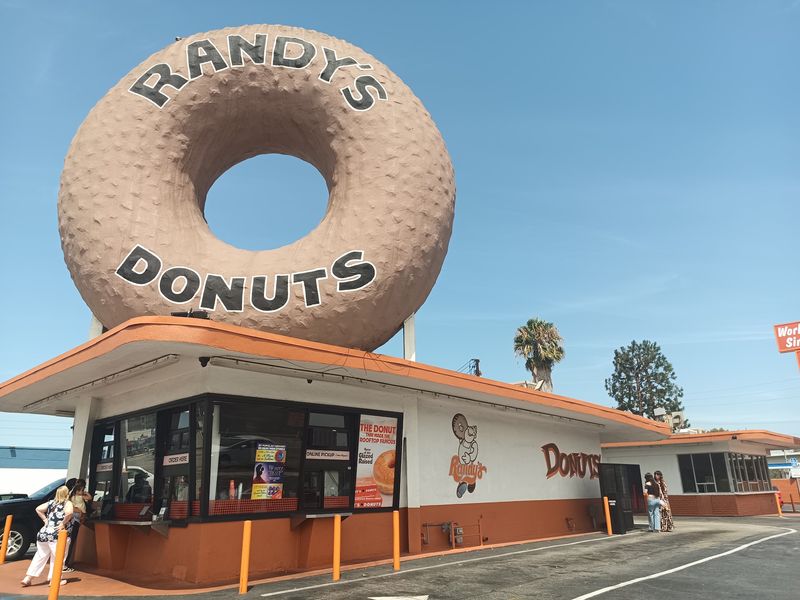
That giant concrete doughnut is 32 feet across, and Iron Man 2 gave it the best cameo any pastry has ever had when Tony Stark climbed inside it to eat breakfast in his suit.
Built in 1953 as part of a small chain, the rooftop ring has become one of Southern California’s most photographed pieces of roadside architecture.
Find it at 805 W Manchester Blvd, Inglewood, CA 90301, just minutes from LAX, which makes it a favorite first or last stop for travelers with a rental car.
The shop still operates, and the walk-up window and drive-through keep long hours, so late-night doughnut runs are absolutely part of the experience. Cash and cards both work, and prices stay refreshingly reasonable.
Order the buttermilk bar or the classic glazed if you want the traditional pick, though the apple fritters get plenty of loyal votes too.
For photos, park in the small lot and shoot from the corner of the sidewalk so the whole doughnut fits in frame with the sign. Late afternoon light hits the front best.
Other movies have used it as well, including Mars Attacks! and Get Shorty, plus countless music videos and commercials.
Weekend mornings bring lines, but they move quickly. Grab a box, sit on the hood, and enjoy a snack under a landmark.
7. Vasquez Rocks Natural Area Park, Agua Dulce
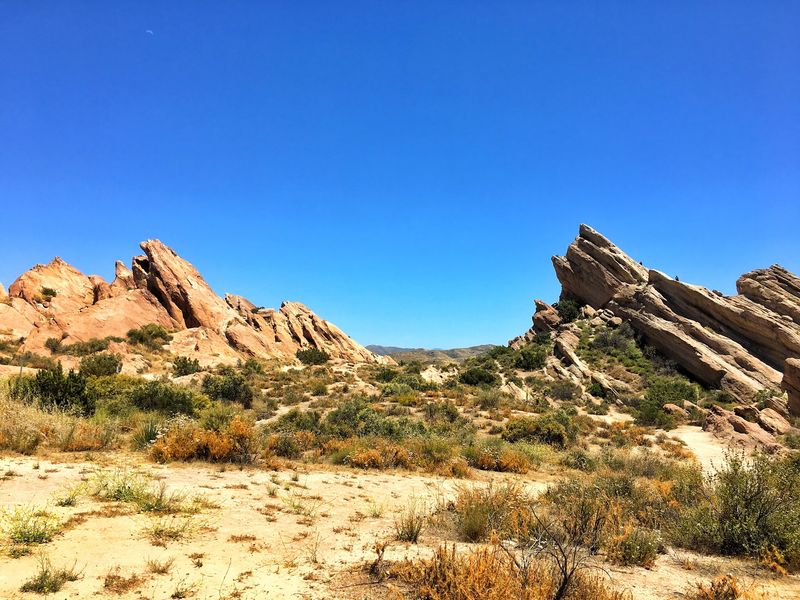
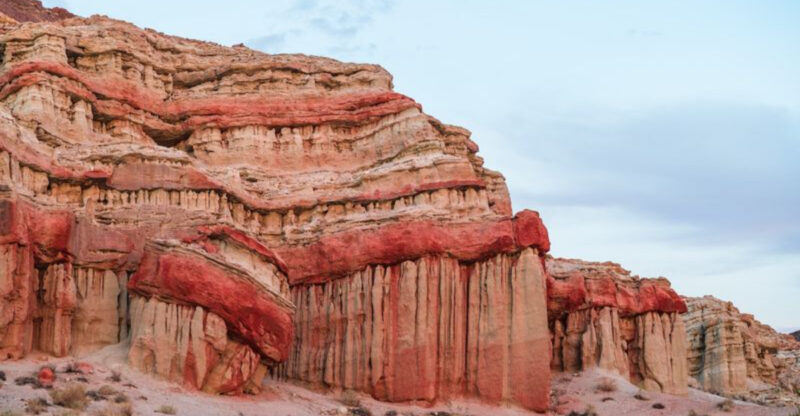
Those slanted sandstone slabs tilting out of the desert have played alien planets, Wild West canyons, and prehistoric neighborhoods.
Captain Kirk fought the Gorn here in the original Star Trek, and the rocks turned up again in The Flintstones, Blazing Saddles, and a long list of westerns and sci-fi shows.
The formations got their angles from millions of years of movement along the San Andreas Fault system, which pushed the rock layers up on their sides.
The park opens daily from sunrise to sunset and sits about an hour north of downtown Los Angeles.
Trails range from short loops to longer connections with the Pacific Crest Trail. The famous main formation is only a few minutes from the parking area, so even young kids can reach it.
Heat is the real hazard. Summer afternoons regularly climb past 95 degrees with almost no shade, so go early, wear a hat, and carry more water than you think you need.
Scrambling on the rocks is allowed and enormously fun, but the sandstone is slick and grainy, so shoes with grip matter.
The park is named for Tiburcio Vasquez, a bandit who reportedly hid among these rocks in the 1870s. Rangers at the interpretive center can point out which formations appeared in which films.
8. The Gamble House, Pasadena
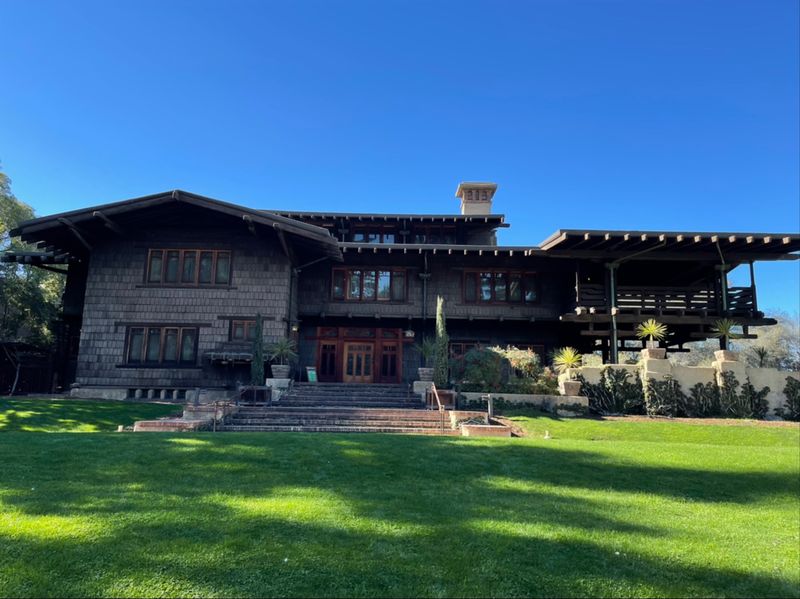
Doc Brown supposedly lived here, at least according to Back to the Future, which used the exterior as his home while Marty banged on the door in 1955.
In real life, the Gamble House is a masterpiece of the American Arts and Crafts movement, designed by brothers Charles and Henry Greene in 1908 for the Gamble family of Procter and Gamble.
Everything inside was custom made: the teak staircase, the leaded glass front door with its spreading oak tree design, the built-in cabinets, even the light fixtures. Woodworkers travel across the country just to look at the joinery.
Public tours run on Tuesdays and Thursdays through Sundays, and booking ahead online is strongly recommended because groups are kept small.
The bookstore in the old garage keeps similar hours and is worth a browse.
Visitors are welcome to explore the exterior and gardens at their leisure without a tour ticket, which is exactly what film fans usually come for.
The house sits at 4 Westmoreland Place, Pasadena, CA 91103, tucked on a private lane just off Orange Grove Boulevard.
Still photography is permitted inside for non-commercial use, but flash, tripods, monopods, and selfie sticks are not allowed.
Parking is available nearby on Walnut Street. Combine the visit with the Norton Simon Museum or Old Town Pasadena to fill out an easy afternoon.
9. Leo Carrillo State Park, Malibu
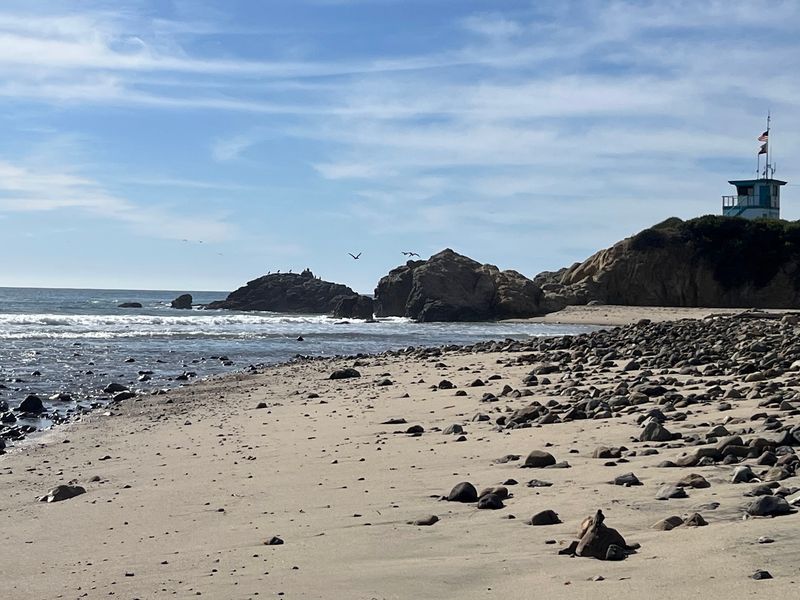
Sea caves, tide pools, and a mile and a half of sand make this stretch of Malibu coast look almost too cinematic to be real, which is probably why the cameras came.
California State Parks names Leo Carrillo as a filming site for both The Karate Kid and That Thing You Do!, and the beach has appeared in plenty of commercials and TV episodes as well.
Day-use parking is available from 8:00 a.m. to 10:00 p.m., and a vehicle fee applies.
You will find it at 35000 West Pacific Coast Highway, Malibu, CA 90265, right where the highway meets the Ventura County line.
Low tide is when the place really shines. Rock arches open up, tide pools fill with anemones and small crabs, and the caves at the north end become walkable.
Check a tide chart before driving out.
Across the highway sits a shaded campground under sycamores, popular enough that summer reservations disappear months ahead.
Bring water shoes, since the cobbles get slippery, and remember that everything in the tide pools is protected, so look but leave it where it is.
Surfers gather at County Line just up the road. Even on busy weekends, walking north along the sand thins the crowd quickly and gives you a stretch that feels private.
10. Alabama Hills National Scenic Area, Lone Pine
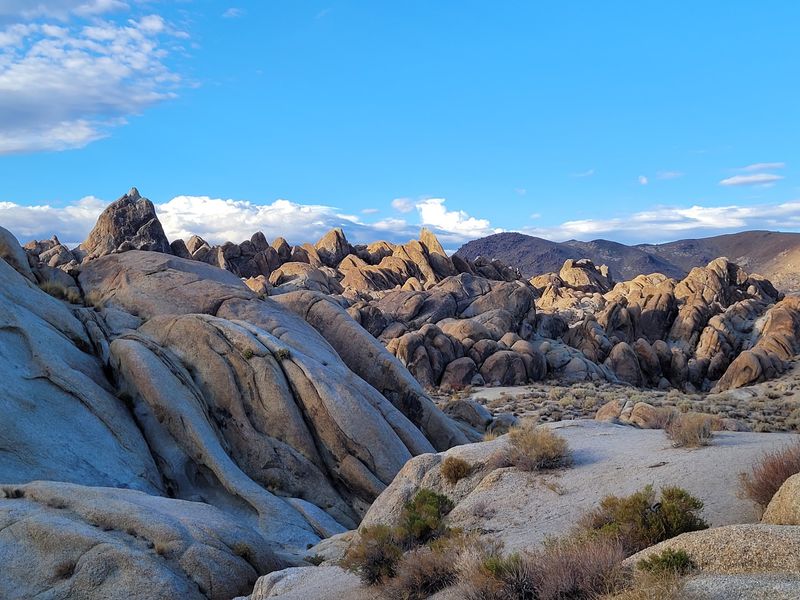
More than 400 feature films have been shot among these weathered boulders, which might make Alabama Hills the hardest-working landscape in California.
Gladiator opened scenes here. Iron Man staged its Afghanistan sequences among the rocks.
Django Unchained, Tremors, and hundreds of classic westerns starring John Wayne and Roy Rogers used the same terrain, with the snowy Sierra Nevada rising behind everything.
Coming from Lone Pine, turn west onto Whitney Portal Road from Highway 395, then go right onto Movie Road after roughly 2.5 miles.
The dirt road loops through the formations, and most of it is fine for a regular car in dry weather.
Stop at the Eastern Sierra Visitor Center, located at US-395 and CA-136, Lone Pine, CA 93545, to pick up a movie site map that matches specific rocks to specific films.
It is public land managed by the Bureau of Land Management, free to enter and open around the clock. Dispersed camping is allowed only in designated spots and requires a free permit; stargazing out here is remarkable because there is almost no light pollution.
Mobius Arch is the must-find feature, a short walk from its own trailhead, framing Mount Whitney perfectly at dawn.
Pack water, a spare tire, and layers, since the desert swings from hot afternoons to near-freezing nights. Cell service is spotty, so download maps ahead.
11. Hotel del Coronado, Coronado
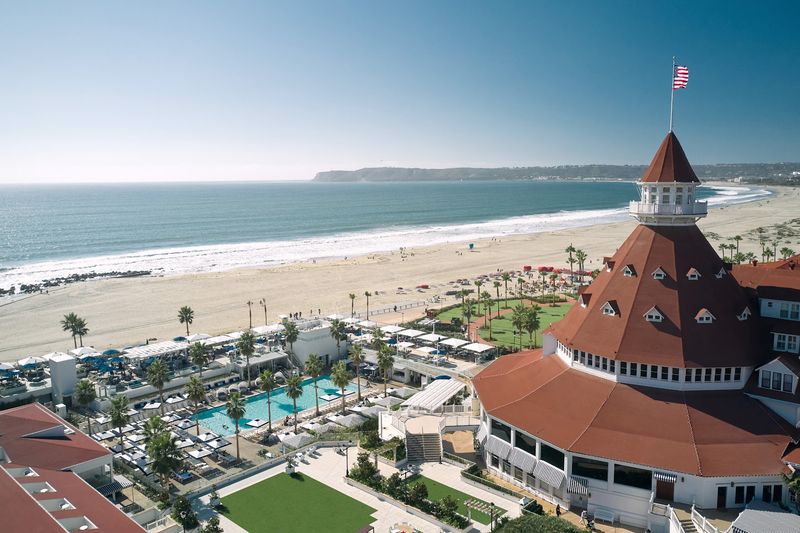
Marilyn Monroe, Tony Curtis, and Jack Lemmon turned this red-roofed Victorian into the fictional Seminole Ritz in Some Like It Hot, and the 1959 comedy still draws fans to the beach out front.
Opened in 1888, the hotel is one of the largest wooden buildings in the United States, with turrets, verandas, and a soaring wood-paneled ballroom that has hosted presidents and celebrities for well over a century.
You do not have to book a room to visit. Day visitors are welcome to walk the grounds, browse the shops in the lower level, eat at the restaurants, and stroll onto the wide public beach beside it.
The address is 1500 Orange Ave, Coronado, CA 92118, a short drive across the Coronado Bridge from downtown San Diego, or a pleasant ferry ride plus a walk if you would rather skip traffic.
History buffs can visit the Ice House Museum, currently home to the Marilyn Monroe: The Defining Roles exhibition through August 30, 2026.
Staff-led Legendary Tours are offered daily at 10:00 a.m., with additional 2:00 p.m. tours Friday through Sunday.
Winter brings an outdoor ice rink right on the sand, which is about as California as it gets.
Parking is valet-heavy and pricey, so many people leave the car in town and walk over. The beach itself is free, wide, and famously sparkly thanks to mineral flecks in the sand.
12. Palace of Fine Arts, San Francisco
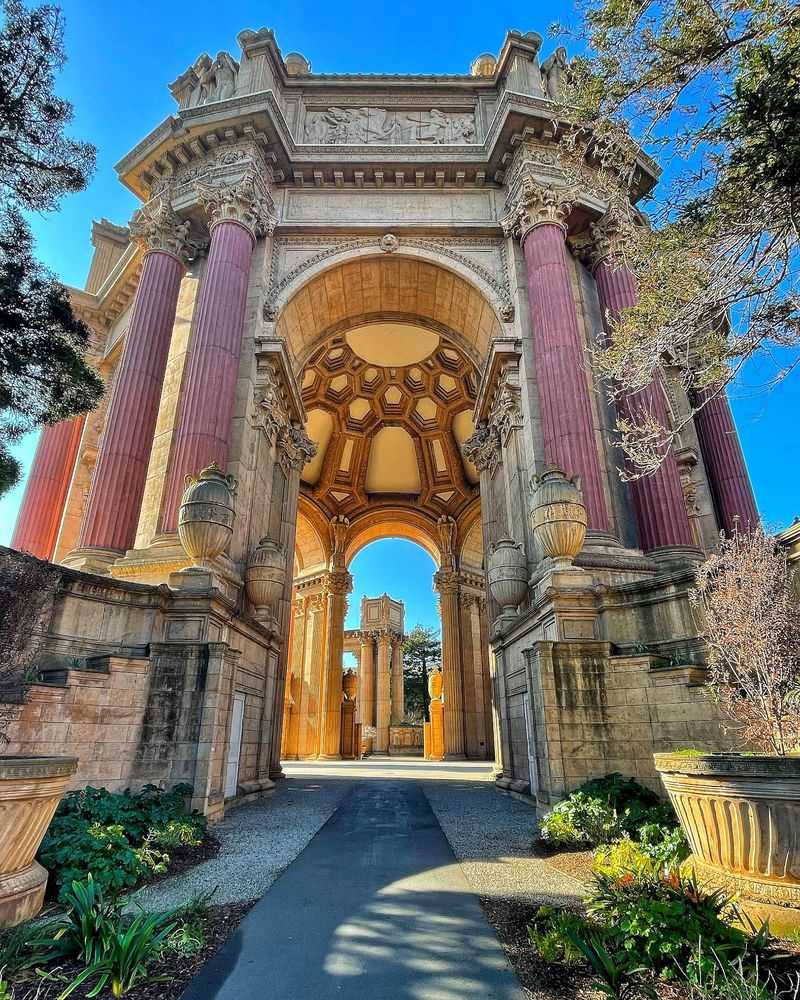
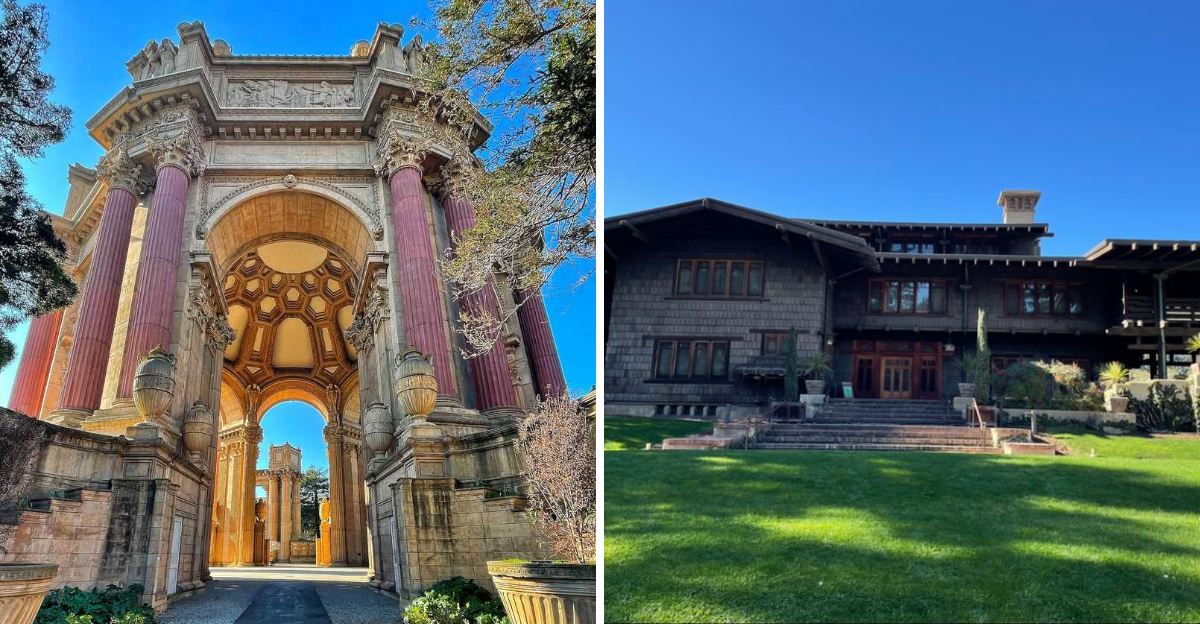
A Roman-looking rotunda beside a swan-filled lagoon seems like an odd thing to find in a San Francisco neighborhood, and that is part of its charm.
Built for the 1915 Panama-Pacific International Exposition, the Palace of Fine Arts was meant to be temporary. Locals loved it so much that it was rebuilt in permanent concrete in the 1960s.
The Rock filmed here, and so did Vertigo, The Room, and Star Trek IV among many others. Wedding photographers arrive by the dozen on weekends, which tells you something about how the columns photograph.
Head to 3301 Lyon St, San Francisco, CA 94123, in the Marina District. The outdoor park and rotunda are generally accessible from 5:00 a.m. to midnight with no entrance fee.
Early morning gives the best reflections in the lagoon, before the wind picks up and ripples the surface. Ducks, geese, and the occasional swan patrol the water.
Look up inside the dome at the carved weeping women leaning over the urns, meant to symbolize the sadness of art without a viewer.
Street parking exists but takes patience. Many visitors walk over from Crissy Field or bike in along the waterfront path, then continue toward the Golden Gate Bridge afterward.
13. Alcatraz Island, San Francisco
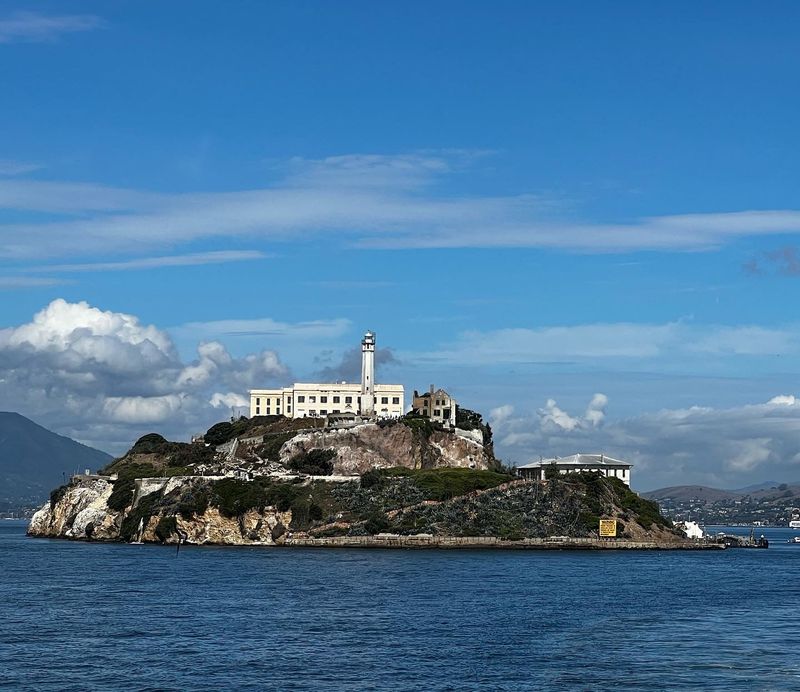
Sean Connery and Nicolas Cage tore through these corridors in The Rock, and plenty of other films have used the notorious island, including Escape from Alcatraz and Birdman of Alcatraz.
The real history is stranger than the movies.
Before it held famous inmates like Al Capone, the island served as a military fort and prison, and it later became the site of a 19-month occupation by Native American activists starting in 1969.
Only one authorized ferry operator serves the island, departing from Pier 33, Alcatraz Landing, San Francisco, CA 94111.
Book weeks ahead in summer, because sailings sell out routinely and tickets from unofficial resellers are a common trap.
Once ashore, the audio tour of the cellhouse is included and genuinely excellent, narrated partly by former guards and prisoners.
Hearing cell doors slam through the headphones while standing in D Block is unforgettable.
Some areas close periodically for preservation work, so check current conditions before you sail.
The walk from the dock to the cellhouse climbs the equivalent of about 13 stories, though a shuttle helps visitors who need it. Wear layers and closed shoes.
Night tours are worth the extra cost for the boat ride past the city lights. Gardens tended by volunteers now bloom along the paths, a soft contrast to the concrete.