Most People Don’t Know About This Beautiful 5.5-Acre Rose Garden In Northern California
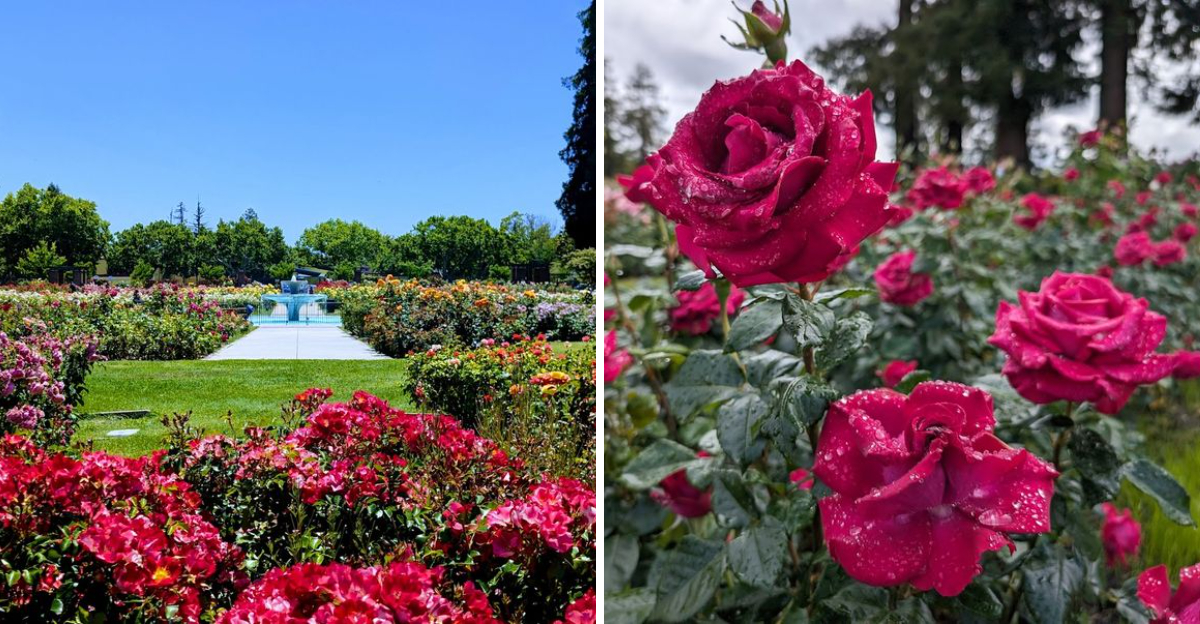
Roses are usually polite about being pretty. Not here. Here they show off.
You walk in thinking a garden will be a quick little stop, and then suddenly you are judging every flower bed like you came prepared with opinions.
Who knew 5.5 acres of roses could feel this dramatic?
Northern California keeps this place oddly under the radar, which feels almost rude once you see how much color is waiting there.
Bring a camera or bring someone who claims they “doesn’t care about flowers” and watch how quickly that changes.
The paths make wandering too easy, the blooms do all the flirting, and the whole garden has that rare quality where even a short visit starts feeling suspiciously peaceful.
A place this beautiful should not be able to sneak up on people. Yet somehow, it does.
A Garden With Deep Roots
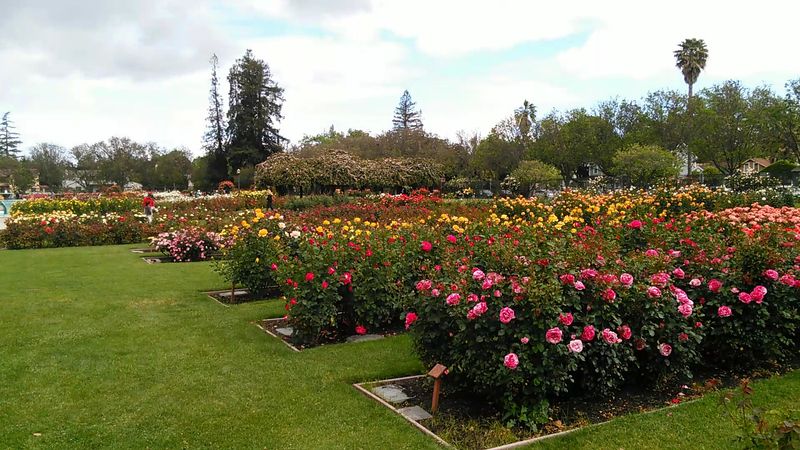
Before the roses arrived, this land was a working prune orchard.
The City of San Jose purchased the property and officially set aside 5.5 acres for a rose garden on November 20, 1927, following strong advocacy from the Santa Clara County Rose Society, which pledged to supply the roses themselves.
Groundbreaking took place on April 7, 1931, and the garden was officially dedicated exactly six years later on April 7, 1937.
That kind of patient, community-driven effort gave the garden a foundation that has held up across nearly a century of public use.
The garden is recognized as a City of San Jose historic landmark, which reflects how deeply it is woven into the city’s identity.
Its long timeline from orchard to award-winning garden tells a story about what a city can build when residents and local organizations commit to something lasting and beautiful together.
Nearly 200 Rose Varieties And Thousands Of Blooming Bushes
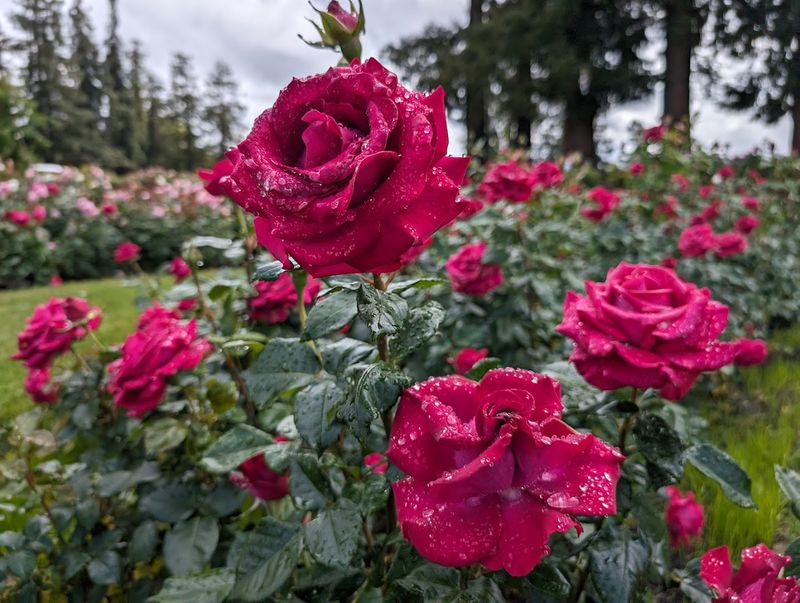
Walking through the garden feels less like a casual stroll and more like a living catalog of what roses can actually be.
The collection includes more than 4,000 rose bushes representing 189 distinct varieties, ranging from classic hybrid teas to floribundas, grandifloras, miniature roses, climbers, and polyanthas.
Hybrid teas make up roughly 75 percent of the plantings, which gives the garden that full, traditional rose garden look that many visitors expect.
However, the variety tucked throughout the beds adds surprising texture and color combinations that keep the space visually interesting at every turn.
Small signs near the rose beds identify each variety by name, which makes the garden genuinely educational for anyone curious about specific cultivars.
Visitors who want to recreate a look at home often photograph both the bloom and the label together, turning a relaxing walk into a practical research trip without it feeling like homework.
An Official Test Site For New Rose Varieties
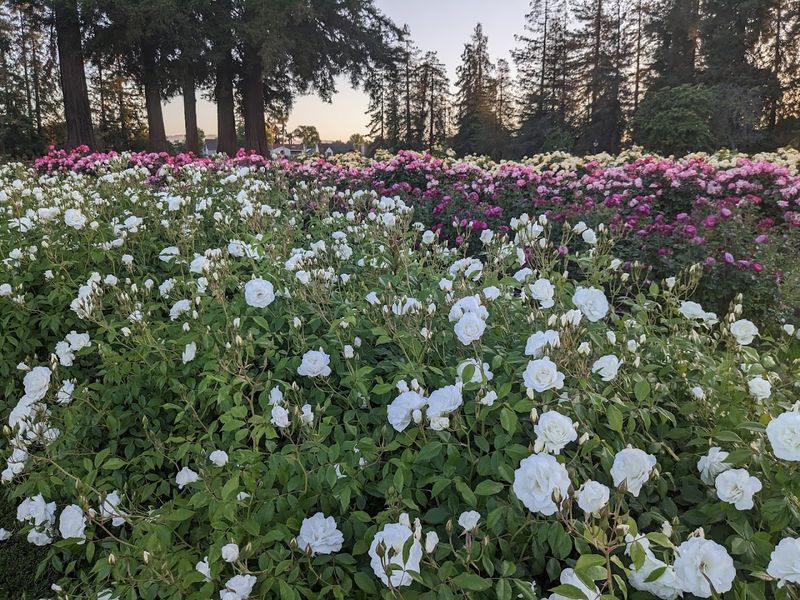
Most visitors enjoy the garden without realizing it plays an active scientific and horticultural role.
The San Jose Municipal Rose Garden serves as an official Display Garden and test site for the All-America Rose Selections program, commonly known as AARS, where new hybrid varieties are evaluated before they are ever released to the public.
That means some of the roses growing in the garden are varieties that have not yet reached nurseries or home gardens anywhere in the country.
The evaluation process looks at how well a new variety performs across different climates and conditions, which makes a garden like this one a genuinely useful data point in the rose industry.
In 2010, the AARS named the San Jose Municipal Rose Garden America’s Best Rose Garden in the first nationwide competition of its kind.
The selection was based on beauty, creativity, and community involvement.
Four years later, in 2014, the garden was inducted into the Great Rosarians of the World Hall of Fame, recognized for its design, collection, and volunteer program.
The Best Time To Visit And What The Seasons Actually Look Like
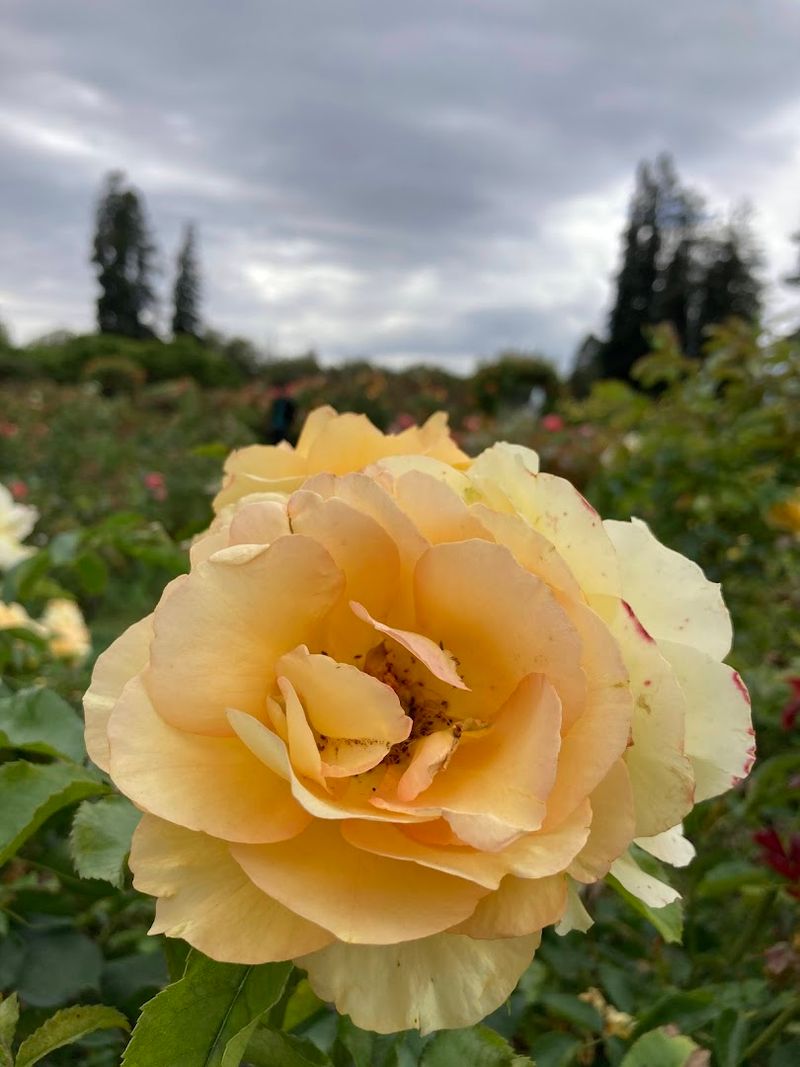
Colorful blooms are visible from April through November, which gives the garden a remarkably long active season compared to many other rose gardens in the country.
May tends to be the peak bloom period, when the roses are at their most aromatic and the beds look their fullest and most vibrant.
Early April visits can catch the first wave of blooms just opening, which has its own quiet appeal before the crowds arrive.
Summer visits are warm and the roses continue to perform well, though the heat may make a morning or early evening visit more comfortable than midday.
Fall visits in September and October can still offer solid color across the beds, and the light tends to be softer and more flattering for photography.
Winter months, particularly December and January, see very little bloom activity, so planning around that window helps ensure the visit matches expectations.
Free Admission, Easy Access, And A Layout That Welcomes Everyone
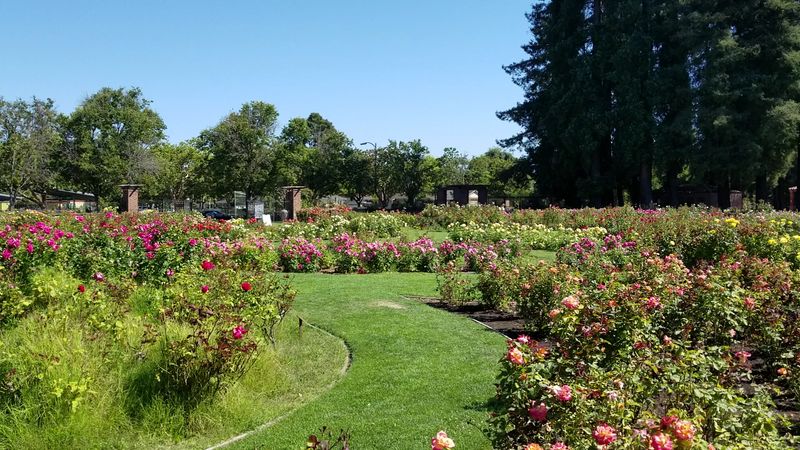
Admission to the garden is completely free every day of the year, which removes the usual barrier that keeps people from exploring a place more than once.
Located at 1649 Naglee Ave, San Jose, CA 95126, the garden sits at the intersection of Naglee Avenue and Dana Avenue in the Rose Garden District, a quiet residential neighborhood that gives the space a calm, unhurried atmosphere.
Wide, accessible walkways wind through the rose beds and connect to open lawn areas where visitors spread out on the grass for picnics or simply sit on benches and take in the surroundings.
Restrooms are available on site, and street parking can be found along the perimeter roads without much difficulty on most days.
The layout divides naturally into two sections, with the formal rose beds on one side and a more open green space on the other.
Weekday visits tend to feel quieter and more relaxed, while weekends can bring more foot traffic, especially during peak bloom season or when a private event such as a wedding is scheduled at the garden.
Community Volunteers And The Comeback Story Worth Knowing
Not every well-loved garden stays that way without effort. In the early 2000s, budget cuts led to a period of neglect at the Municipal Rose Garden, serious enough that the All-America Rose Selections program placed it on probation and threatened to pull its accreditation entirely.
That pressure sparked something meaningful.
A volunteer nonprofit organization called the Friends of the San Jose Rose Garden formed in 2007 specifically to restore and renovate the space.
Their sustained work paid off quickly, with the AARS restoring full accreditation in 2008 and over 800 new roses being planted in 2009 alone.
The garden’s national recognition in 2010 came just a few years after it had been struggling, which makes the award feel especially earned.
Today, the garden continues to be maintained through a combination of city support and volunteer involvement, and that community ownership shows in the cleanliness and care visible throughout the beds.
Visiting the garden means experiencing the result of real, ongoing dedication from people who genuinely care about keeping it beautiful.
Weddings, Photos, And Everyday Moments That Happen Here
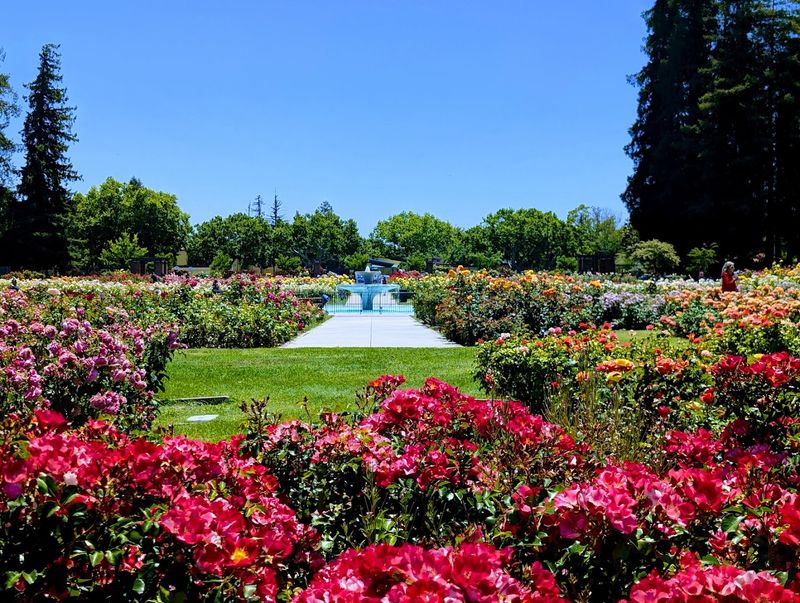
Beyond casual visits, the garden functions as an active event space that draws people for some of the most personal moments in their lives.
Two dedicated wedding sites are available on the grounds, the Fountain Arbor and the Rose Garden Stage, both set against backdrops of flowering rose beds that need very little additional decoration.
Photographers use the garden regularly for portrait sessions, engagement photos, and family shoots because the variety of colors and textures across the beds offers a lot of visual range without requiring much travel between setups.
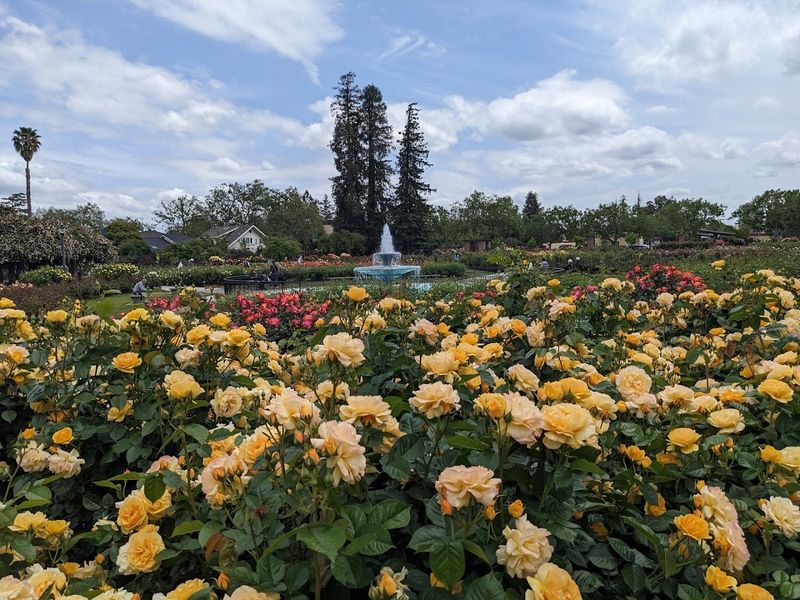
The central fountain adds a classic architectural element that photographs well in almost any season when blooms are present.
Everyday visitors tend to use the space just as naturally, sitting on the lawn for a quiet lunch, walking slowly through the beds after work, or bringing children who are seeing roses up close for the first time.
The garden holds all of these uses comfortably without feeling crowded or overly managed, which is part of what makes it feel like a genuinely shared community space rather than just a tourist stop.
A Calm Neighborhood Escape That Still Feels Public And Open
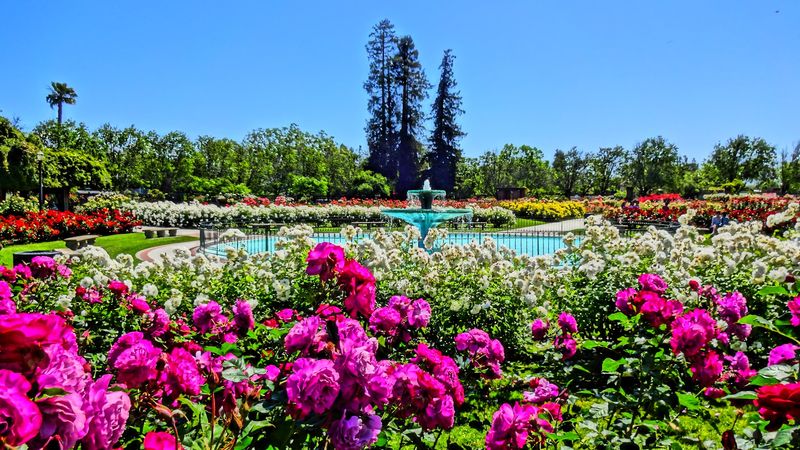
Quiet residential surroundings give the Municipal Rose Garden a softer personality than many big-city attractions.
Nothing about the experience feels rushed, ticketed, crowded with vendors, or designed around a quick photo stop.
People can move at their own pace, wander between beds, pause under mature trees, or settle onto the grass without feeling like they are blocking anyone’s view.
That easy rhythm matters because the garden works just as well for a short reset as it does for a longer afternoon visit.
Nearby streets add to the charm, with older homes, leafy sidewalks, and a neighborhood atmosphere that makes the garden feel naturally woven into San Jose rather than separated from it.
Visitors do not need an itinerary to enjoy it, and that simplicity is part of the appeal.
A few minutes beside the roses can feel surprisingly restorative, especially in a city better known for tech campuses and traffic than old-fashioned public gardens.
Instead of demanding attention, the place quietly earns it through color, space, and the rare pleasure of finding something beautiful that still feels easy to share.