Idaho Falls Spills Across A Wide Lava Rock Ledge Right Beside A Downtown Greenbelt Path
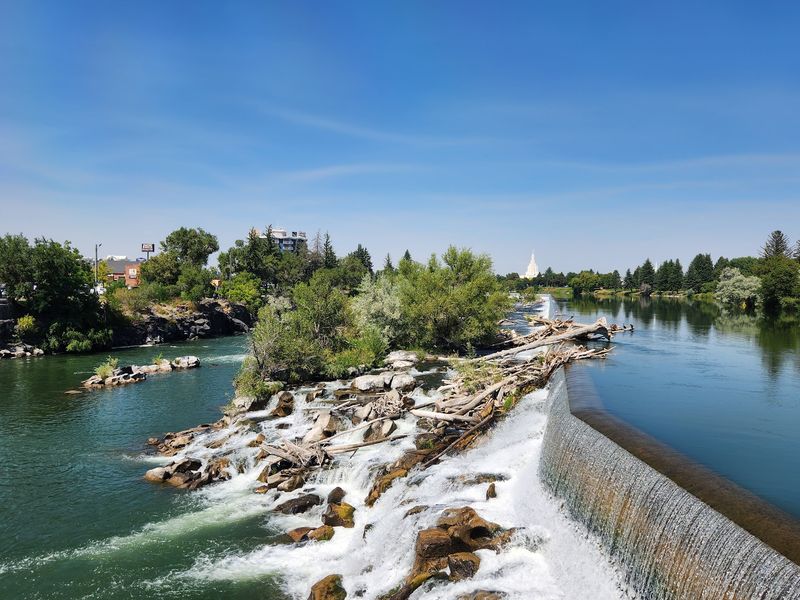
A whole waterfall roars across black lava rock, and the best seat is a park bench a few steps from downtown traffic. No hiking boots required.
No trailhead fee, either.
The water pours over a wide, jagged ledge of the Snake River. Part of it is natural rock, and part of it was shaped by people who wanted electricity.
I like how honest that mix feels, because the city never hid the engineering.
A paved path follows both banks of the river. It passes a Japanese garden, a temple view, and a railing full of padlocks left by strangers.
You can walk it at sunrise or after dark, since the path never closes.
I can’t imagine a more Idaho pairing than volcanic rock and a power plant. So how did a city end up with its own waterfall right on Main Street’s doorstep?
A Waterfall That Lives Downtown
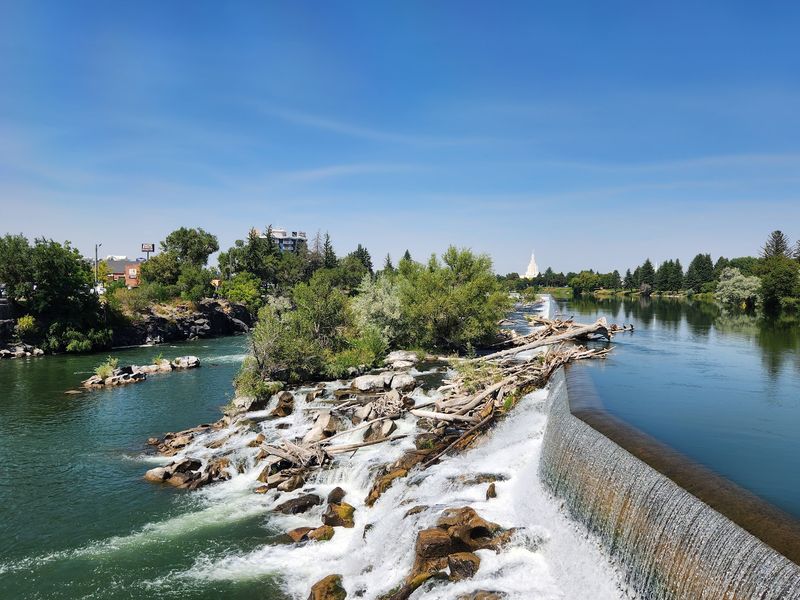
Most waterfalls make you earn them with a long drive and a dusty trail. The Idaho Falls River Walk – Greenbelt Trail skips all that and puts the show right downtown.
The park sits along the Snake River in Idaho Falls, Idaho. Water spills across a broad ledge of dark rock while cars roll past on nearby streets.
City records describe it as riverside park space with benches, sculptures, and views of the falls. That plain description undersells it a little.
The falls stretch a long way across the river instead of dropping from one tall spot.
A paved path hugs the water on both banks. Walkers, runners, and cyclists all share it, and grassy lawns roll out beside it.
Shade trees and picnic tables break up the green space. Restrooms are on site, which matters more than any brochure will admit.
The whole setup works because it asks almost nothing of you. Park the car, walk a few steps, and the river is already talking.
Eastern Idaho has plenty of big scenery hiding in canyons. The Idaho Falls River Walk – Greenbelt Trail is the rare one sitting next to a coffee run.
How Eagle Rock Got A Wetter Name
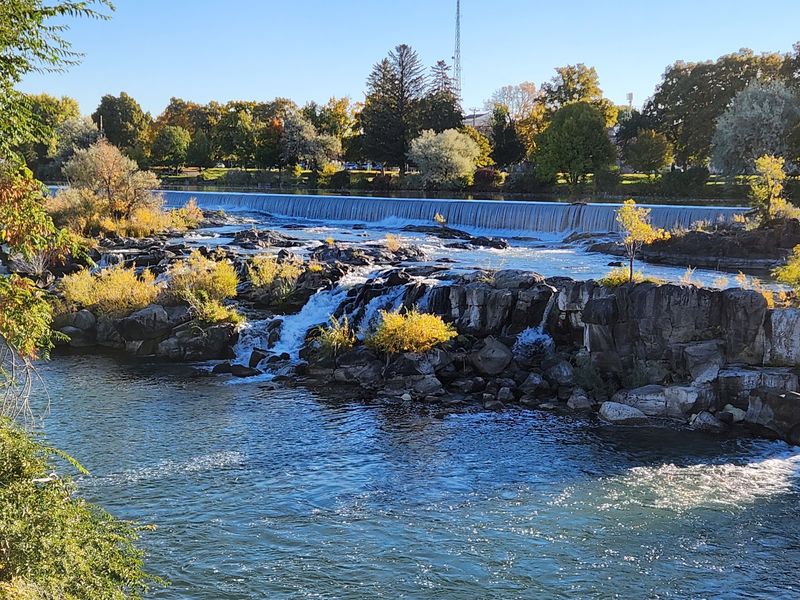
Long before the greenbelt existed, this town answered to Eagle Rock. The name came from a rocky spot in the Snake River where eagles nested.
In 1891, the community chose a new name. Idaho Falls was meant to honor the rapids and rocky outcrops churning through the river here.
Fun detail for trivia night: the falls you see today are not exactly what those early residents saw. Back then, the river tumbled over rapids rather than one long engineered spill.
That makes the name feel a bit like a promise. The town named itself after falls, and later the river got reshaped to match the title.
Plenty of towns change names to sound fancier. Few end up building the landmark to back it up.
The history still shows along the path. Interpretive signs explain the river, the town, and the power story in detail.
Read a few panels and the walk turns into a slow history lesson. It’s the kind you absorb without noticing, because the water keeps pulling your eyes back.
Not bad for a place that used to be named after a bird.
Half Natural Rock, Half Clever Engineering
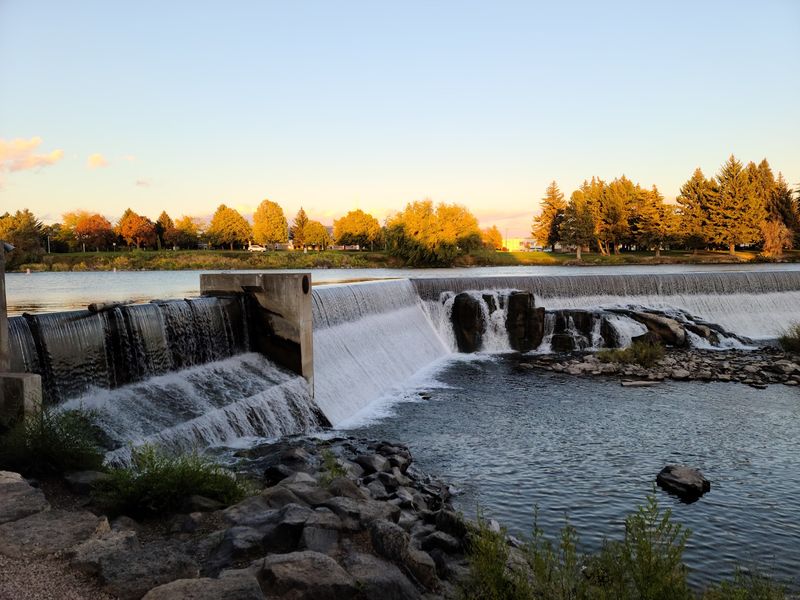
Here’s a twist worth knowing before you arrive. The falls are partly a spillway, built to manage the river for power.
Some purists hear that and shrug. Then they see the water and stop shrugging.
The drop isn’t tall. What it lacks in height it makes up in width, running across the river over many rocky sections.
White water slides over dark stone in long, foamy sheets. The result looks less like a single cascade and more like a moving wall.
The natural lava rock still does a lot of the work. Water splits around it, bunches up, and spills in uneven ribbons.
Engineering keeps the flow steady under normal operations. That means the falls rarely vanish the way some seasonal creeks do in late summer.
I believe that honesty is part of the appeal. The Idaho Falls River Walk – Greenbelt Trail doesn’t pretend this is untouched wilderness.
It shows how a river city lives with its river. Wild stone and human planning share the same view, and both get credit.
The Power Plant Story Behind The Spray
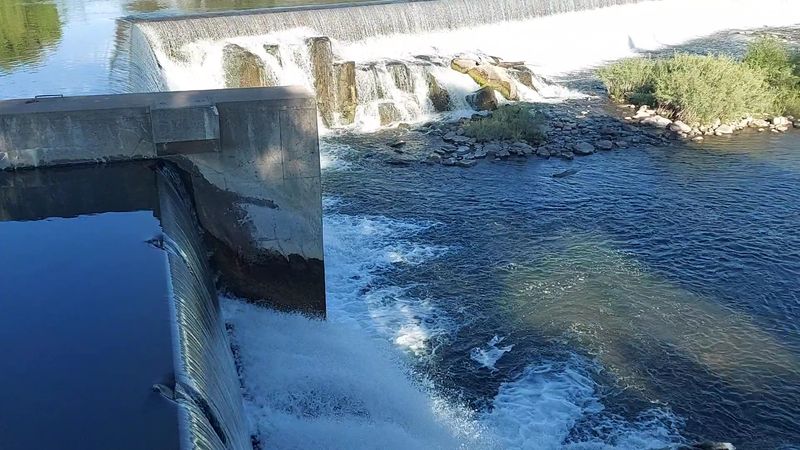
Electricity is the hidden plot line here. As early as 1912, city leaders built a dam along the falls to feed a hydroelectric plant.
That move tied the waterfall to everyday life in Idaho Falls. Lights, homes, and businesses drew power from the same water people now photograph.
Then came 1976. The Teton Dam failed upstream, and the flood damaged river infrastructure across the region.
The city rebuilt instead of walking away. Between 1978 and 1982, its run-of-river plants were constructed and rebuilt.
Run-of-river means the system uses the Snake River’s natural flow. It doesn’t rely on a massive reservoir to stockpile water.
Idaho Falls Power runs this network today. Local hydro supplies a meaningful share of the community’s electricity.
Plant tours have been paused for modernization work. Check with the utility before planning around one.
Knowing all this changes how the falls look. That steady roar isn’t just pretty background noise, it’s a working part of the town.
Volcanic Bones Under The River
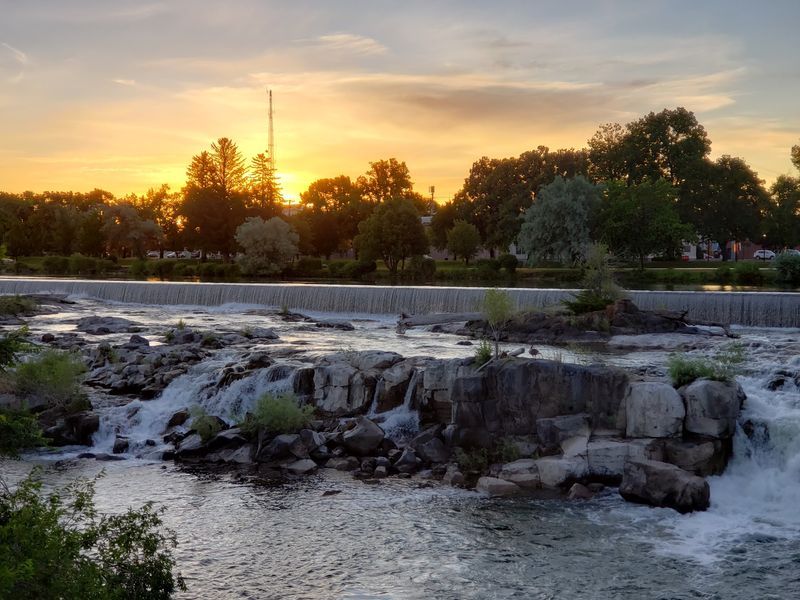
That black, craggy stone isn’t decoration. It’s lava rock, a reminder that this part of Idaho sits on the Snake River Plain.
Ancient volcanic activity laid down layers of basalt across the region. The river has been carving and polishing it ever since.
At the falls, the contrast does the heavy lifting. Bright white water against nearly black rock makes for photos that barely need editing.
Look closely at the ledge and you’ll see it isn’t smooth. The rock is jagged, pitted, and broken into chunks that send water in every direction.
That roughness explains why the falls look busy rather than glassy. Each knob of stone kicks up its own little splash.
Geology fans get a free lesson without leaving the pavement. Kids get something wild to point at.
The basalt also ties the River Walk to the wider landscape of eastern Idaho. Drive out of town and the same dark rock pops up in fields and canyons.
Downtown, it just happens to have a river running over it. Hard to ask for a better frame.
Loops For Every Kind Of Walker
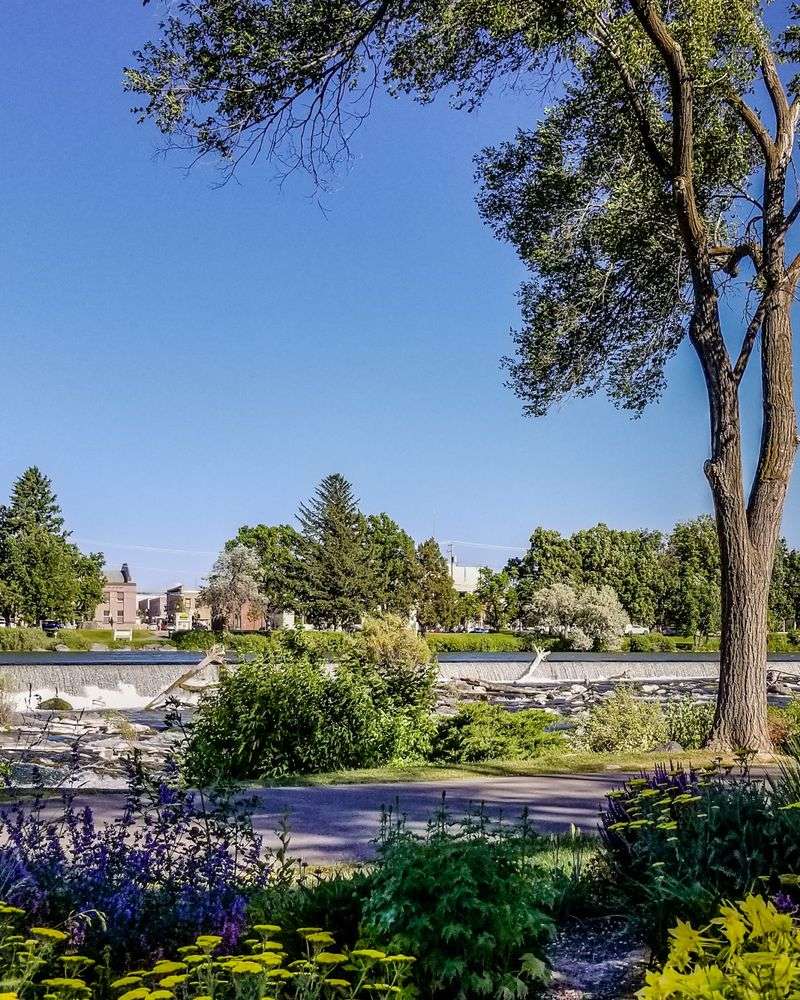
Short attention span? Big step goal?
The greenbelt has a loop for both moods.
Asphalt runs along both sides of the Snake River. Bridges connect the banks, so you can make a circuit instead of doubling back.
The Temple Loop covers about 2.3 miles and ranks among the busiest segments. The Memorial Loop is shorter, at roughly 1.4 miles.
The full greenbelt system runs longer, with figures often landing above ten miles total. Measurements vary depending on which loops get counted.
Benches show up often enough that nobody needs to tough it out. Picnic tables wait along the route for snack breaks.
Trees, plants, and flowers line many stretches. The scenery shifts from lawns to river views to downtown edges without warning.
Runners like the steady pavement. Strollers and wheelchairs appreciate it too, since the path stays paved throughout.
A casual walk can easily fill an hour. A determined one can fill a morning, and nobody will judge either choice.
The West Bank Stretch Worth Saving For
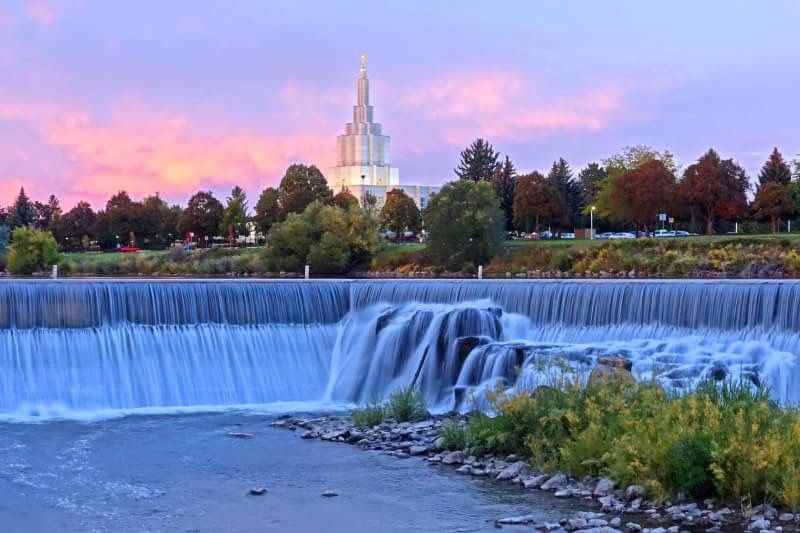
If time is tight, aim for the west side. The stretch just north of the Broadway Bridge delivers the falls and the temple in one sweep.
That half mile packs in the classic views. Water spills on one side while the white Idaho Falls Temple rises ahead.
The temple belongs to The Church of Jesus Christ of Latter-day Saints. Its grounds are known for flower beds, and a visitor center sits nearby.
From the path, the spire lines up neatly above the river. Photographers tend to find that angle quickly.
A small island sits in the river along this section too. It breaks up the water and adds a patch of green to the scene.
Walk the loop through both sides of this area and you’ll cover around 2.3 miles. That’s the Temple Loop, and it earns its popularity.
Swings appear along the way, which feels like a small gift. Grown-ups use them as freely as kids do.
Save this stretch for golden hour if you can. The light on the water does the rest.
A Quiet Japanese Garden Across The Road
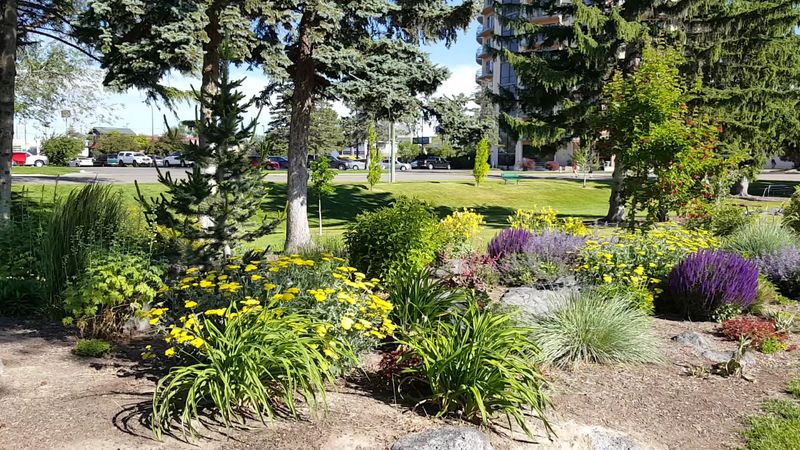
Just across the roadway, the mood drops a few notches. A small Japanese-style garden waits there, connected to the River Walk.
It sits within Sportsman Park, which also offers a gazebo and picnic tables. The setting feels deliberate and calm.
After the steady rush of the falls, the garden reads like a deep breath. Pathways invite slow steps instead of brisk laps.
It isn’t huge, so don’t plan a full afternoon around it. Think of it as a palate cleanser between river views.
The gazebo makes a handy meeting spot for groups. Picnic tables nearby turn takeout into a proper lunch.
Families with little ones might enjoy the change of pace. Kids who have been running the trail can reset for a minute.
Pairing the garden with the falls makes sense. One is loud and moving, the other hushed and still.
Together they give the Idaho Falls River Walk – Greenbelt Trail a wider range than a plain riverside path. That variety keeps the walk from feeling repetitive.
Padlocks, Sculptures, And Signs Worth Reading
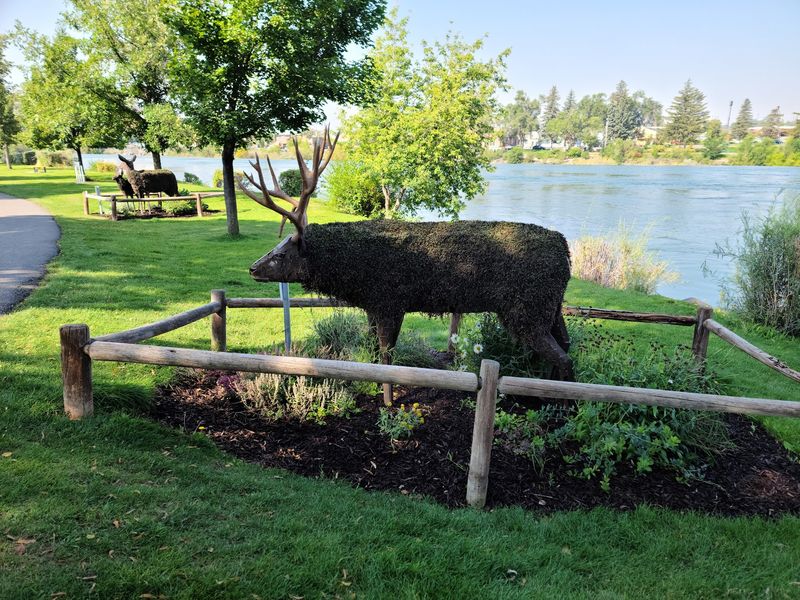
Hundreds of padlocks cling to one spot along the walk. Each one was clipped on by someone, and none come with an explanation.
Love locks, memory locks, inside jokes? Only the people who left them know.
That mystery is part of the fun. Plenty of folks slow down just to read the names and dates scratched into the metal.
Sculptures also dot the River Walk. They give the green space a gallery feel without any walls.
Then there’s the informational signage. It’s thorough enough to feel like a national park, covering history and the river.
Read a few and you’ll know more about Idaho Falls than most passersby. The panels on power and floods are especially eye-opening.
These small touches matter. A riverside path could easily be just pavement and grass.
Instead, the greenbelt rewards curiosity. Every few hundred feet, there’s something to stop for besides the water.
Bikes, Scooters, And Rolling Along
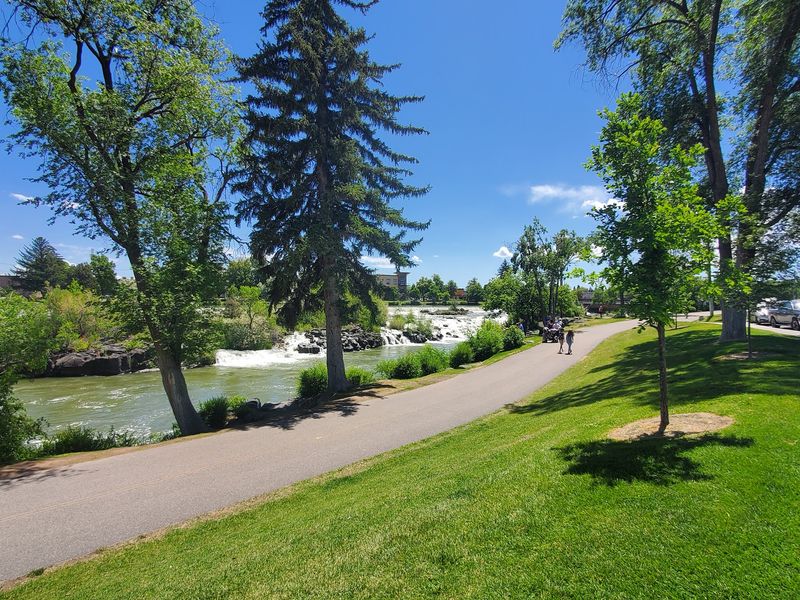
Wheels change the whole experience. Biking ranks among the most popular ways to cover the greenbelt.
Smooth asphalt makes it easy for casual riders. Nobody needs a fancy road bike to enjoy a few loops.
Electric scooters have also shown up along the route. They let you zip between viewpoints when your legs call it quits.
That’s handy for mixed groups. Grandpa can scoot while the kids pedal ahead and the dog trots along.
Bridges link both banks, so riders can build their own circuit. Longer rides stretch well past the downtown falls.
The path is shared, though. Walkers, runners, and strollers all use it, so a friendly bell and slower speeds go a long way.
Morning rides tend to feel especially peaceful. The river is loud, the air is cool, and the pace feels unhurried.
Whatever you ride, the views stay the same quality. Falls, temple, island, garden, all strung together on one easy route.
Sunrise, Sunset, And The Night Shift
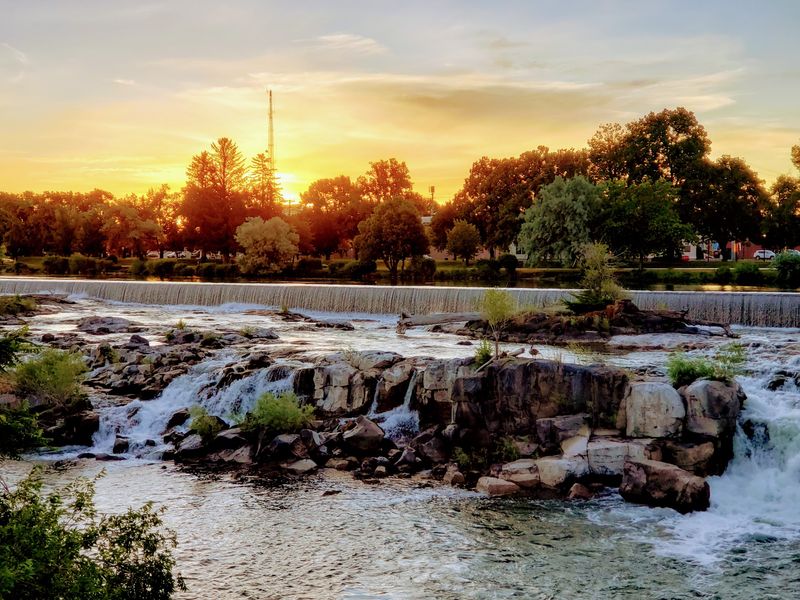
Early birds get a show here. Sunrise paints the river in soft color, and the falls catch every bit of it.
Sunset works just as well from the opposite angle. Photographers chase both, and neither disappoints.
Since the River Walk stays open around the clock, timing is entirely yours. That flexibility is rare for a scenic spot this good.
After dark, the setting turns calm and pretty. City lights shimmer on the water while the falls keep rumbling.
Evenings tend to bring families and young people out for a stroll. Restaurants nearby make dinner and a walk an easy combo.
The overall vibe leans peaceful. Peaceful atmosphere comes up again and again in descriptions of the place.
Wave at a stranger and you might get a wave back. It’s that kind of path.
I like how the same falls feel different by the hour. Morning feels fresh, evening feels social, and night feels almost private.
Market Mornings And Rubber Duck Races
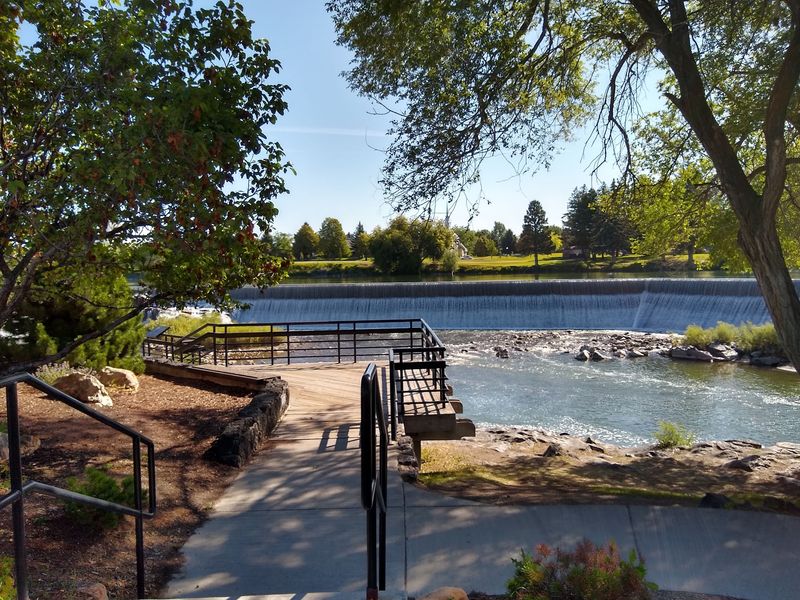
Rubber ducks racing down the Snake River? Yep, that’s a real thing here.
The annual Idaho Falls Duck Race draws a crowd along the River Walk. It’s goofy, cheerful, and very on brand for a river town.
The farmers market adds a regular reason to show up. Produce, crafts, and local goods fill the riverside during the season.
Market days turn a quiet walk into a lively outing. Grab something fresh, then stroll the path with your haul.
Summer brings more energy too. Community gatherings and music events pop up along the river in warmer months.
The Snake River Roaring Youth Jam is another fixture tied to the area. It brings a younger crowd and plenty of noise.
Schedules shift from year to year. Check with the city before driving in for a specific event.
Even without an event, the space feels like a town square. It just happens to have a waterfall instead of a fountain.
Know Before You Park By The Falls
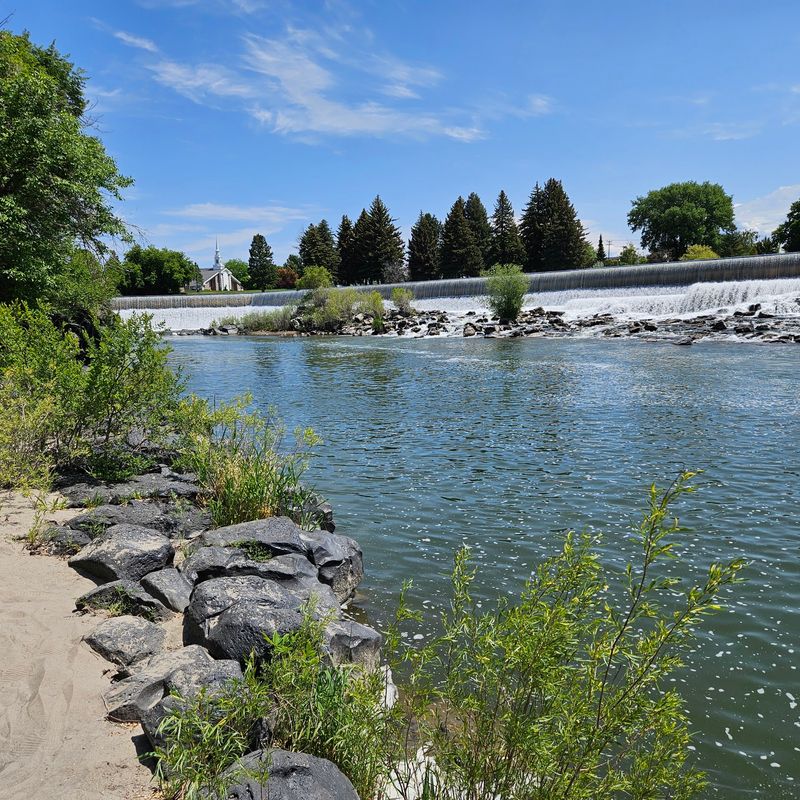
Getting there is the easy part. The Idaho Falls River Walk – Greenbelt Trail sits at 525 River Pkwy, Idaho Falls, ID 83402.
It’s open 24 hours, every day. Swing by on a road trip and you won’t find a locked gate.
Street parking lines the area, with more spots at points along the greenbelt. South Tourist Park is another handy access point.
Restrooms are available, a big relief after a long drive. Picnic tables and shade trees make lunch simple.
Dogs are welcome on a leash. Bring bags and water, especially in the warmer months.
Restaurants and hotels sit close by. That makes it easy to fold a walk into an overnight stay.
Families should know kids sometimes fish here. Keep little ones close near the water’s edge, since the current is strong.
Nearby, the Museum of Idaho and the Art Museum of Eastern Idaho round out a full day. The river walk ties them together nicely.
Why This Detour Earns A Spot On Your Route
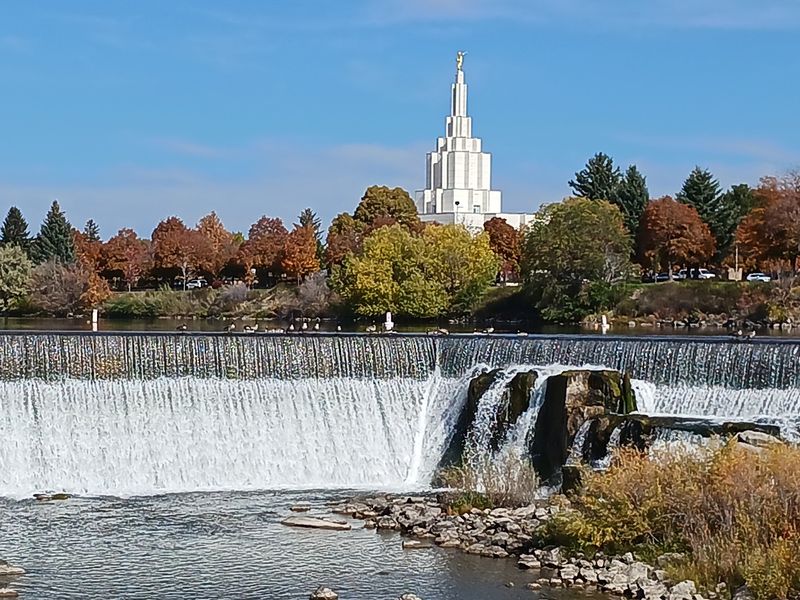
Some road trip stops are just gas and snacks. This one leaves you with a real memory.
The Idaho Falls River Walk – Greenbelt Trail packs a lot into a small radius. Falls, lava rock, a temple view, a garden, and history all sit within easy walking range.
It costs nothing to wander the path itself. That makes it ideal for families, retirees, and anyone stretching a budget.
Travelers heading toward Yellowstone or the Tetons often pass right by Idaho Falls. A short detour pays off fast.
Locals get something different. They get a daily loop, a meeting spot, and a place to take visiting relatives.
I believe the best part is how unpretentious it feels. Nobody pretends the falls are untouched, and nobody needs them to be.
The water still roars across that dark Idaho rock. The path still winds along both banks, open whenever you show up.
Bring comfortable shoes and a little time. The river will handle the rest.