Idaho’s Oldest Standing Building Still Holds Its Original Hand-Hewn Beams Today
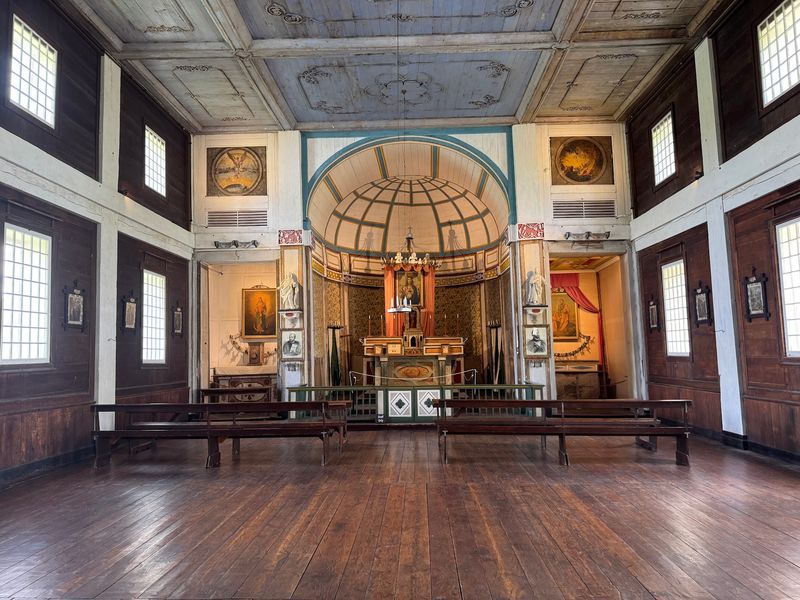
The ceiling inside one Idaho church was tinted with huckleberry juice back in the early 1850s. Not store-bought paint.
Actual berries.
That same building went up without a single nail. Wooden pegs hold its beams together, and the walls were built from woven sticks packed with mud.
It’s the oldest standing building in Idaho, and it still sits on a green hilltop above a quiet river valley. Members of the Coeur d’Alene Tribe and Jesuit missionaries raised it by hand, one heavy timber at a time.
I love that you can still walk right inside it today. You can look up at that tinted ceiling and spot chandeliers made from tin cans.
I can’t imagine how many interstate drivers have zipped past without a clue it was there. So what else is waiting up on that hill?
The Oldest Building In Idaho Sits On A Hill You’ve Probably Driven Past
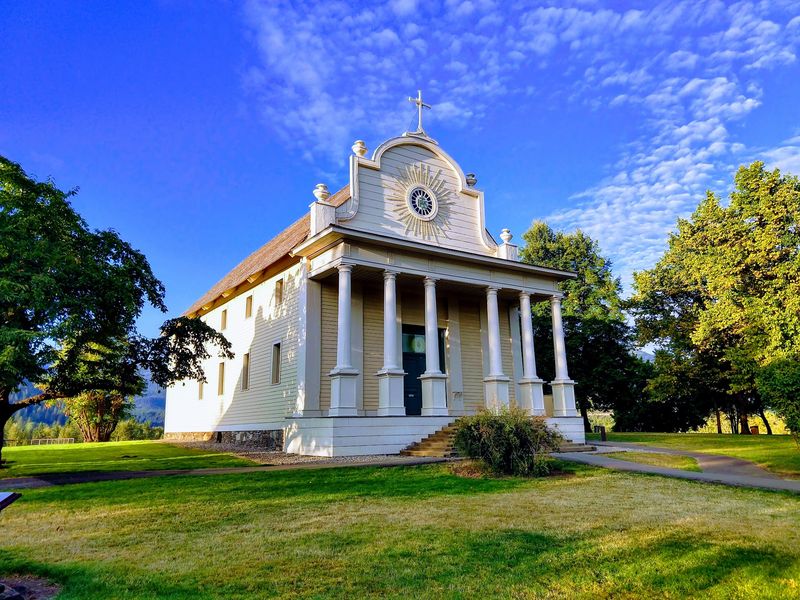
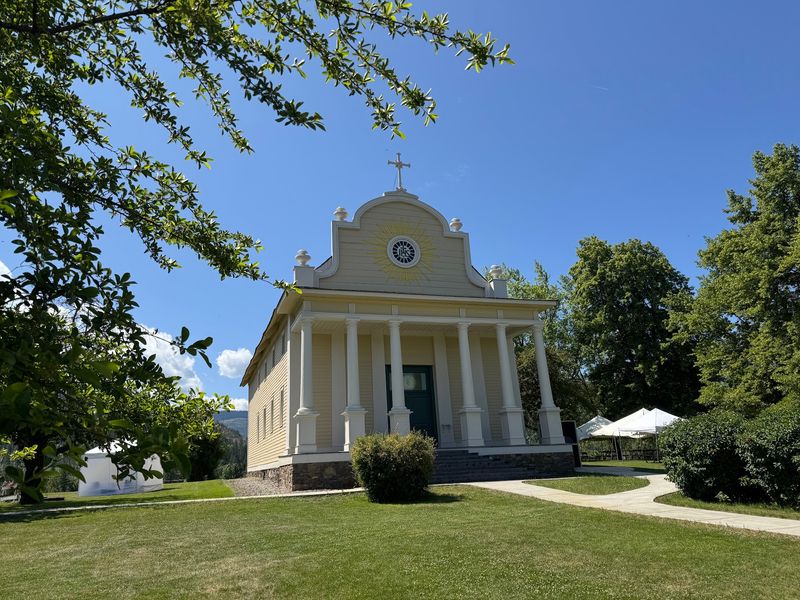
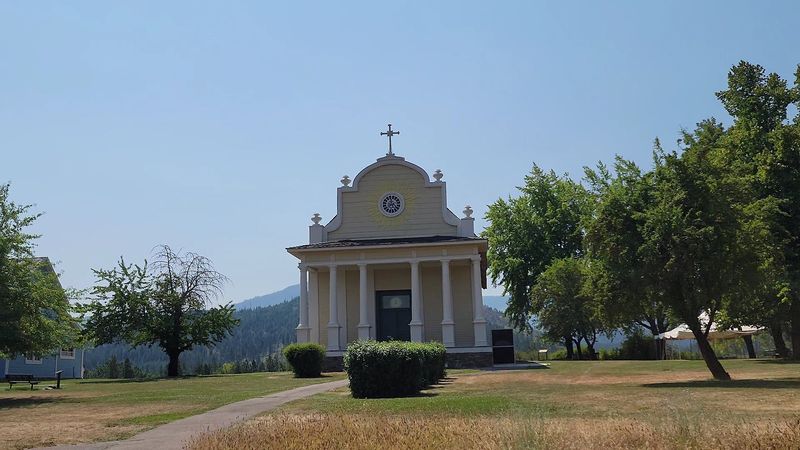
Plenty of Panhandle drivers have glanced up from Interstate 90 and wondered about that white church on the hill. Its name is the Mission of the Sacred Heart, and most folks call it the Cataldo Mission.
It anchors Coeur d’Alene’s Old Mission State Park, sitting about 25 miles east of the city of Coeur d’Alene. The church is the oldest standing building in Idaho, which is a pretty big title for a structure made of wood and mud.
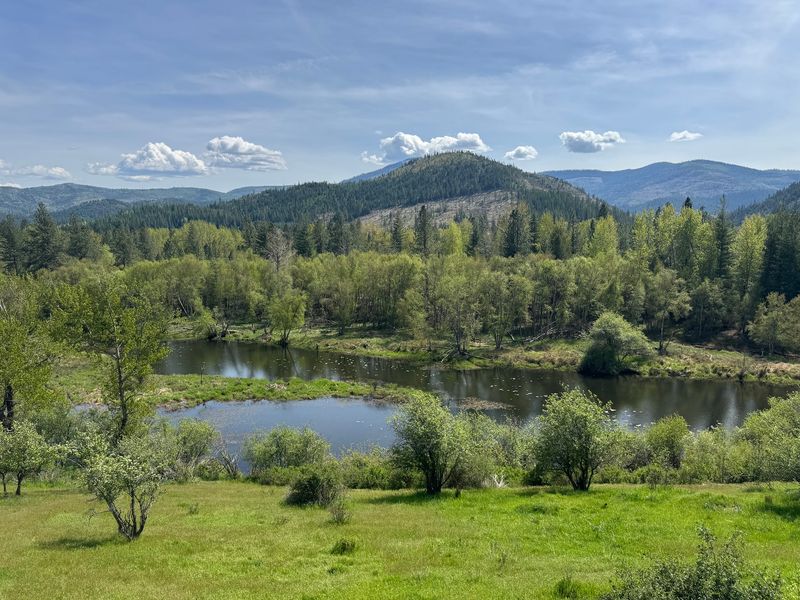
The building looks out over a wide river valley from an expansive green hilltop. Forested hills roll away in every direction, so the setting does a lot of the talking before you even reach the door.
Here’s the part that hooks history fans. The original framework still relies on timber shaped by hand and joined with wooden pegs.
The park around it covers about 18 acres. You’ll find a modern visitor center, a historic parish house, two cemeteries and walking trails dotted with interpretive signs.
It’s a compact place, but it packs more story per square foot than most stops along this stretch of North Idaho.
A Flood Sent The Mission Uphill, And That Choice Stuck
Floods have a way of changing plans fast. An earlier mission site sat lower and kept getting soaked, so a new spot was chosen in 1846.
The higher ground made sense for a building meant to last. Nobody back then could have guessed it would still be standing in the 21st century.
Construction began in 1850 and wrapped up in 1853. Members of the Coeur d’Alene Tribe worked alongside Jesuit missionaries to raise it, and that partnership sits at the center of the whole story.
The design came from Antonio Ravalli, an Italian Jesuit missionary who also served as the architect. He had big ideas and very few supplies to work with in this corner of the West.
That gap between ambition and resources shaped nearly everything about the church. Builders used the forest, the soil and whatever creative fixes they could invent on the spot.
The result is a building with a complicated and layered past. The visitor center tackles that complexity head on, exploring the relationship between the missionaries and the tribe.
It’s a story worth hearing in full before you head up the hill.
Not One Nail Holds Those Hand-Hewn Beams Together
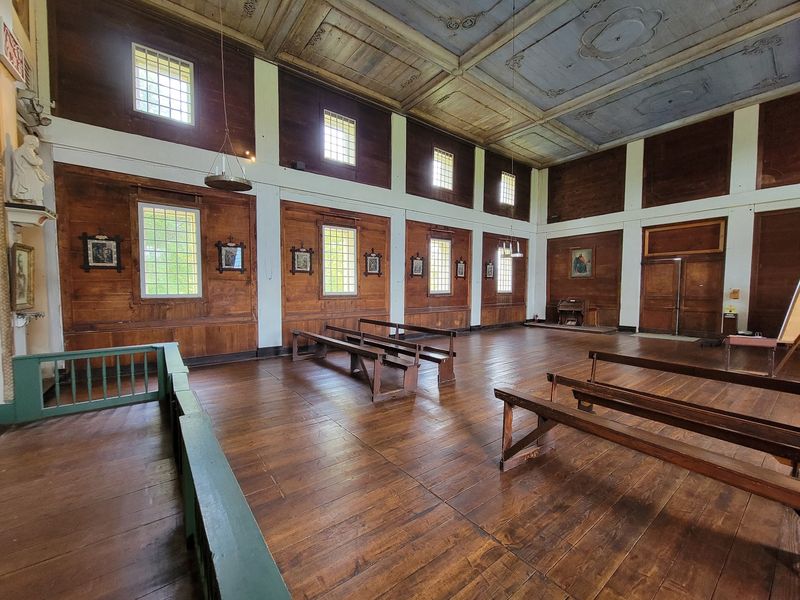
Count the nails in this building and you’ll come up with a perfect zero. The Mission of the Sacred Heart was built without a single one.
Wooden pegs secure the beams instead. Builders used mortise and tenon joints, where one shaped end of timber slides snugly into a carved opening in another.
That kind of joinery takes patience and serious skill. Every beam had to be worked by hand so the pieces would lock together properly.
Think about the tools available in the early 1850s out here. There were no lumber yards down the road and no power saws humming in a nearby shop.
So the timber was shaped by human muscle, one stroke after another. Those hand-hewn beams are still part of the structure today, more than 170 years later.
It’s easy to rush past structural details in an old church. Here, they’re the headline.
Take a minute to really look at how the pieces meet, because that craftsmanship is the reason Idaho still has this building at all. Honestly, modern flat-pack furniture could learn a thing or two.
Walls Made From Sticks, Mud And A Whole Lot Of Grit
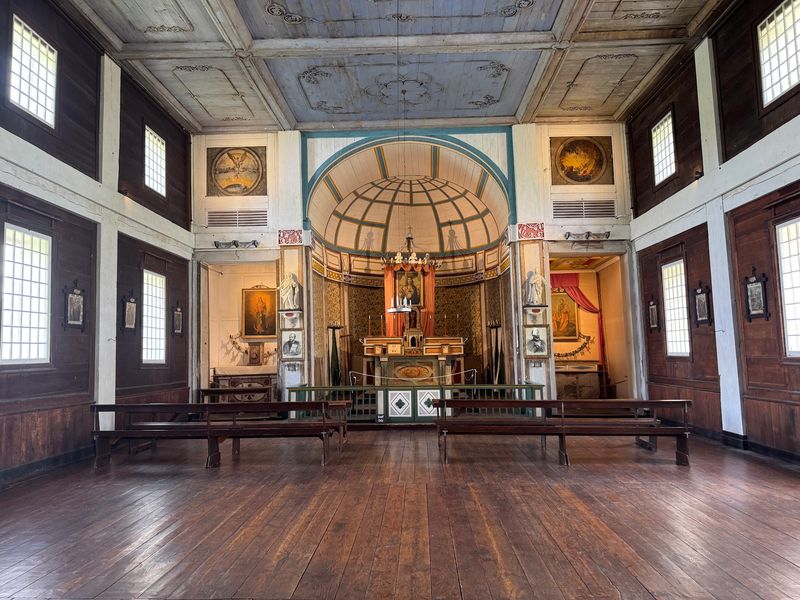
Mud might not sound like a smart building material for a church that’s supposed to last. Somehow, it worked beautifully here.
The walls were made with a method called wattle and daub. Builders wove a framework of sticks, then packed it with a mud mixture to fill the gaps and seal it up.
It’s an old technique with roots far older than the mission itself. Using it here meant the crew could rely on materials pulled straight from the surrounding land.
Pair those walls with the pegged timber frame and you get a building made almost entirely from its own valley. That’s resourcefulness on a level most of us will never need to reach.
Ranger-led tours help explain how all this comes together. A guide can point out details that are easy to miss when you’re simply admiring the room.
Ask questions while you’re inside. The construction story makes a lot more sense when someone walks you through it in person.
You’ll leave with a fresh respect for mud, which is not a sentence many travel stops can promise.
Look Up, Because That Ceiling Has A Huckleberry Secret
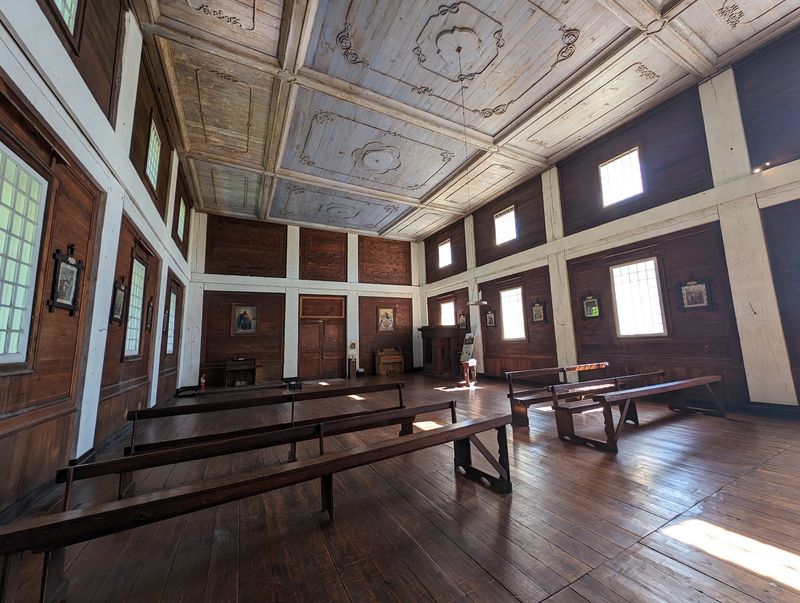
Huckleberries are practically an Idaho love language. At this church, they went straight onto the ceiling.
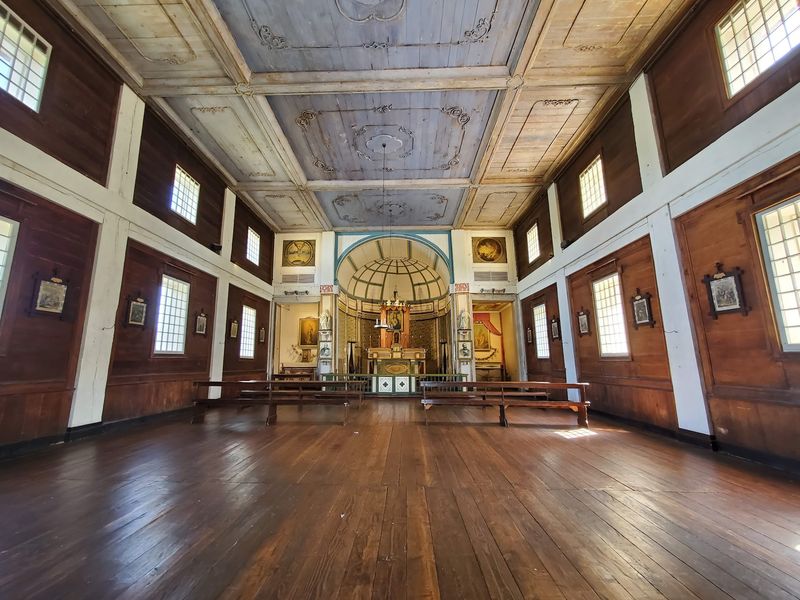
Builders tinted the ceiling with huckleberry juice. It’s one of the most talked-about details inside the Mission of the Sacred Heart, and for good reason.
Store-bought paint simply wasn’t an option back then. So the crew turned to a local berry that people in this region already knew well.
I love that the most famous Idaho fruit ended up as decor in the state’s oldest building. It feels fitting in a way no designer could plan.
Picture how much juice it would take to cover a whole ceiling. That’s a lot of picking, and probably a lot of purple fingers.
When you step inside, tilt your head back and give it a good look. Rangers can share more about the color and how it was applied, so it’s worth asking if one is nearby.
It’s a small detail that sticks with you. Next time you order a huckleberry shake, you’ll have a much better story to tell the table.
Tin Can Chandeliers And Walls Dressed In Newspaper
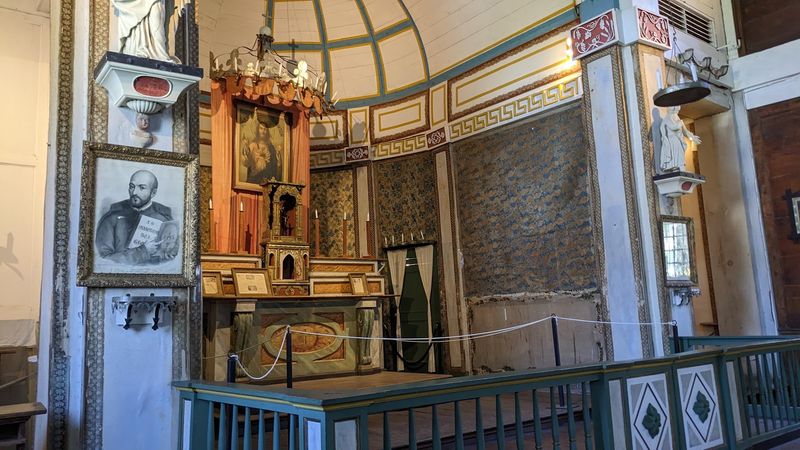
Recycling wasn’t a trend in the 1850s. It was just survival, and the decor inside this church proves it.
The chandeliers were crafted from tin cans. Someone looked at empty containers and saw lighting fixtures, which is the kind of creativity that makes this place so fun to explore.
The walls got the same inventive treatment. Builders hung fabric purchased from the Hudson’s Bay Company, the big trading outfit of that era.
Then there’s the newspaper. Father Ravalli received papers from Philadelphia, and those pages were hand-painted and used to decorate the walls.
That’s a long journey for a newspaper. It traveled across a whole continent only to end up as wall covering in North Idaho.
All of these touches show how far the builders stretched every resource. They wanted beauty inside this church, and they found it in tin, cloth and newsprint.
Give yourself time to spot each piece. The room rewards slow looking, and it’s a great game for kids who like hunting for clues.
Who knew yesterday’s headlines could become interior design?
Statues Carved By The Same Hands That Drew The Plans
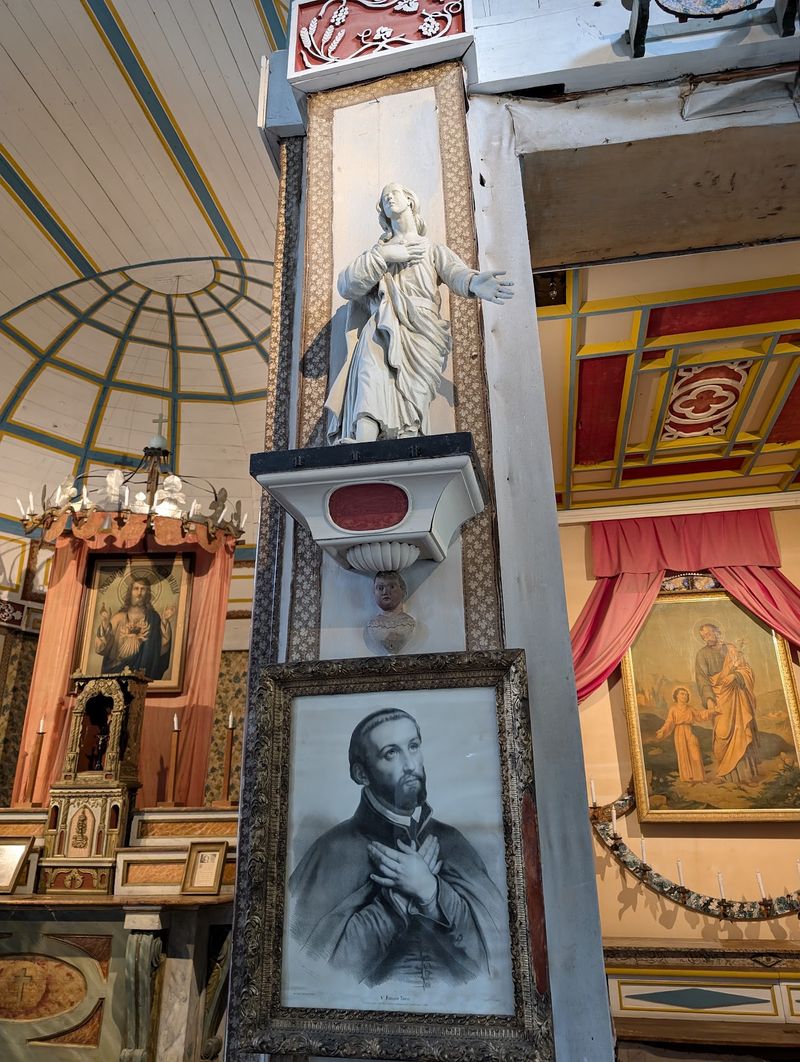
Antonio Ravalli didn’t stop at blueprints. The Italian Jesuit missionary also picked up carving tools and made art for the church.
He hand-carved the wooden statues you’ll see inside. That means the person who designed the building also shaped some of its most personal details.
Most architects hand off the decorating to someone else. Ravalli, apparently, preferred to do it himself.
The statues add warmth to a space that’s otherwise all timber, mud and clever improvisation. They give the room a focal point and a sense of care that feels very personal.
Each figure was shaped by hand, just like the beams overhead. There’s a nice harmony in that, with the same handmade spirit running from the frame to the finishing touches.
Take a slow walk around the interior and look closely at the carving work. Notice how much effort went into pieces that could easily have been simpler.
It’s a reminder that these builders weren’t only aiming for shelter. They were aiming for something meaningful and lasting, and Ravalli’s statues show exactly how far that commitment reached.
Next Door, A Parish House Joins The Story
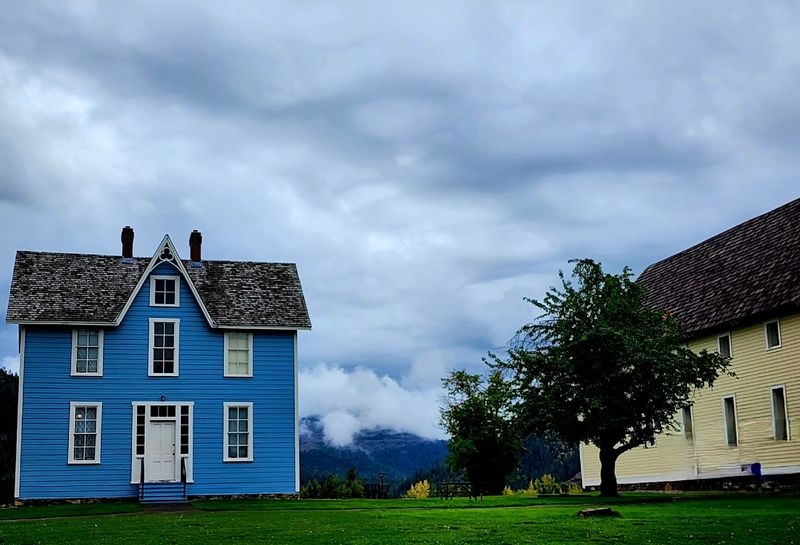
A church this old deserves a neighbor with some history too. The restored 1887 Parish House sits right on the grounds.
You can head inside this building as well. It offers a different angle on daily life at the mission, beyond the sanctuary next door.
The house came along more than three decades after the church was finished. That gap shows how the site kept growing and changing over time.
Seeing both buildings together helps the whole place click. One was built for worship, and the other shows the practical side of keeping a mission running.
The restoration work keeps it looking cared for without losing its age. It sits comfortably beside the church, like an old friend that never moved away.
Plan to visit both while you’re up on the hill. They’re close together, so there’s no long walk between them.
Families with curious kids will appreciate the contrast. It’s one thing to hear about history and another to stand in rooms where people actually lived and worked.
Bonus points if your kids start asking how anyone managed without Wi-Fi.
Start Downhill At The Visitor Center, Then Climb
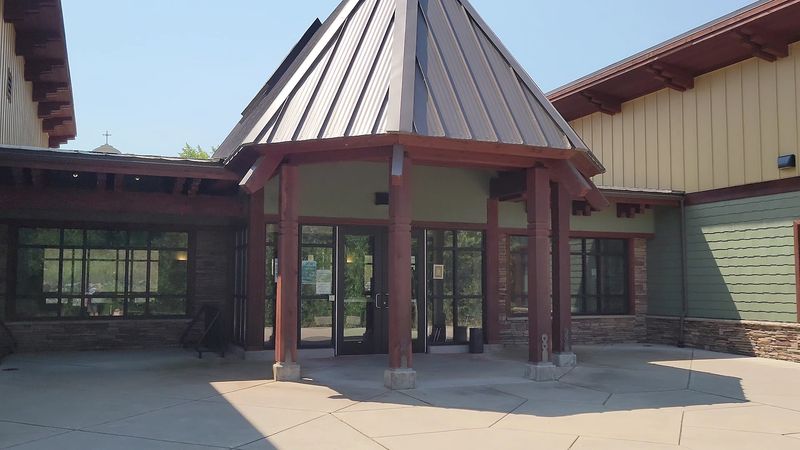
Smart visitors begin at the bottom of the hill. The park’s modern visitor center sets up everything you’re about to see.
Inside is an award-winning exhibition called Sacred Encounters: Father De Smet and the Indians of the Rocky Mountain West. It digs into the complex relationship between the missionaries and the Coeur d’Alene Tribe.
The museum is larger than many people expect from a small state park. Exhibits include artifacts, historic sketches, watercolors and photos spread across several rooms.
A short film runs inside too, sharing the history of the mission and its buildings. Watching it first makes the church feel far more meaningful once you’re standing in it.
The museum carries its own separate fee from park entry. Check before you go so there are no surprises at the desk.
You’ll also find a gift shop and restrooms here. It’s a comfortable place to regroup before heading up the hill.
Think of this stop as your trailer before the main feature. Skipping it is like walking into a movie halfway through, and this story deserves its opening scenes.
Short Trails Lead To Cemeteries And River Wetlands
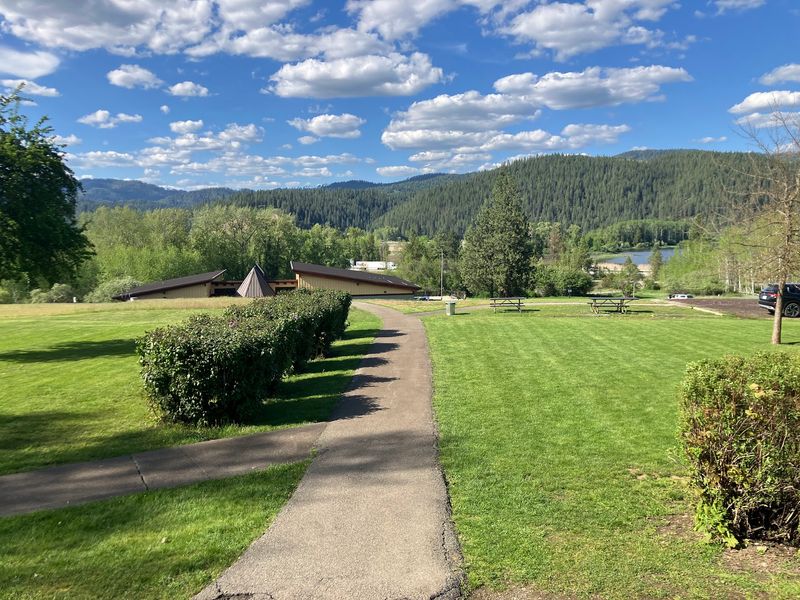
Once you’ve explored the buildings, your feet will want to keep going. Outdoor trails wind across the park grounds.
These paths come equipped with interpretive panels and audio stations. You can learn as you stroll, which beats juggling a guidebook in one hand.
Two historic cemeteries sit within the park. Short trails lead to them, offering a quiet and reflective stop for anyone interested in the people tied to this place.
Another trail heads down toward the wetlands near the river. It’s a nice change of scenery after the hilltop views.
Wildlife fans should keep their eyes open. The river valley around here supports plenty of birds, and moose sightings have come up around the park too.
None of these walks is especially long. That makes them easy to add on, even if you only planned a quick stop.
Wear decent shoes, since the grounds include hills and uneven ground. Then just wander a bit.
The combination of history signs, open sky and river views makes the outdoor part of the visit feel like a reward for finishing the museum homework.
Pack A Picnic, Because That Hilltop Earns It
Some stops are built for rushing. This one practically begs you to slow down and grab a sandwich.
Picnic tables sit beneath mature shade trees across the grounds. The view behind the church stretches out over the valley, and it’s a peaceful spot to linger.
Families will find plenty of room for kids to explore. The open lawns give little legs space to roam without anyone feeling cooped up.
History buffs, road trippers and quiet-time seekers all fit here. It’s calm, scenic and easy to enjoy without a packed schedule.
School groups visit too, since the park offers field trips for students. Plenty of North Idaho kids have their first brush with state history right on this hill.
Bring your own food, since there’s no restaurant on site listed. A cooler of snacks turns a history lesson into a proper afternoon outing.
Budget-minded families and near-retirees looking for an easy day trip will appreciate the pace. Nobody’s hurrying you along.
You can sit, eat, look at a building older than the state itself and call it a very good Saturday.
Getting There Is Easy Once You Know The Exit
Finding the park is simple, even if it feels a little hidden from the highway. It’s just off Interstate 90, with easy access from both directions.
The address is 31732 Mission Rd, Cataldo, ID 83810. That puts it roughly 25 miles east of Coeur d’Alene in the Idaho Panhandle.
The park generally opens in the morning and closes late afternoon. Hours can shift with the seasons, so check before driving out.
Entry runs a few dollars per vehicle, and an Idaho state park pass covers it. The visitor center museum carries its own small separate fee.
Parking matters more than you might think. The lower lot sits below a steep hill with steps, which isn’t suitable for wheelchairs.
An upper parking area offers much easier access to the church. It isn’t obvious at first, so look for it if anyone in your group needs a gentler route.
Cyclists have a bonus option. The park sits near the Trail of the Coeur d’Alenes, a well-known paved bike trail, making it a natural pedal-in stop for a history break.
A National Landmark That Still Rewards An Afternoon
National recognition came early for this hilltop church. The Mission of the Sacred Heart was designated a National Historic Landmark in 1961.
It’s also listed on the National Register of Historic Places. Then in 1975, the building and its surrounding acres became Coeur d’Alene’s Old Mission State Park.
Those titles are impressive, but the real appeal is simpler. You get to stand inside Idaho’s oldest building and see exactly how it was made.
Pegged beams, mud walls, huckleberry tint and tin can chandeliers all tell the same story. People worked with what they had and built something that outlasted almost everything around it.
A couple of hours is plenty for most visits. That’s enough time for the museum, the church, the parish house and a stroll around the grounds.
I believe this is one of the easiest history stops to justify in the whole state. It’s close to the interstate, affordable and genuinely fascinating.
So the next time that white church catches your eye from the highway, take the exit. Those old beams have been waiting a long time.