9 Idaho Scenic Drives You Will Want To Take Again
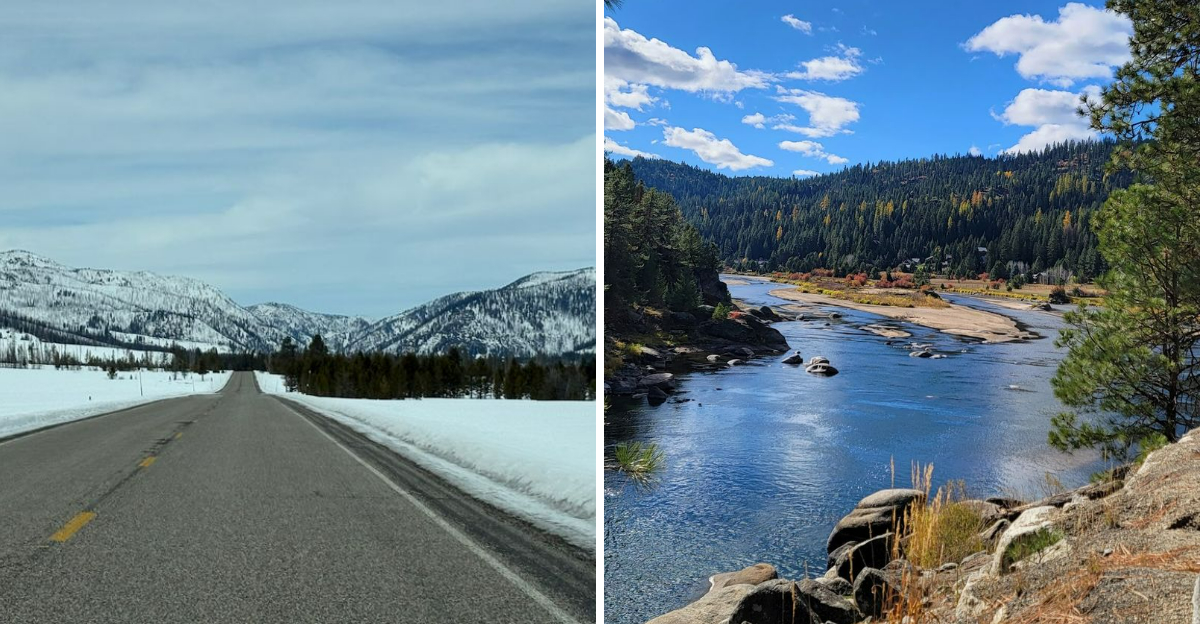
Nobody talks about this state the way they should. While everyone else is fighting for parking in Yellowstone or crowding the Oregon coast, Idaho sits there, patient, stunning, and almost entirely yours.
You cruise through high desert, turn a corner, and suddenly you are gripping the wheel along a river gorge that drops your jaw and your speed limit. The landscape keeps surprising you like that.
It rewards the curious, the spontaneous, and anyone willing to leave the highway for a back road that looks almost too good to be real. Pack snacks.
Tell someone where you are going. And whatever you do, do not rush.
1. Sawtooth Scenic Byway
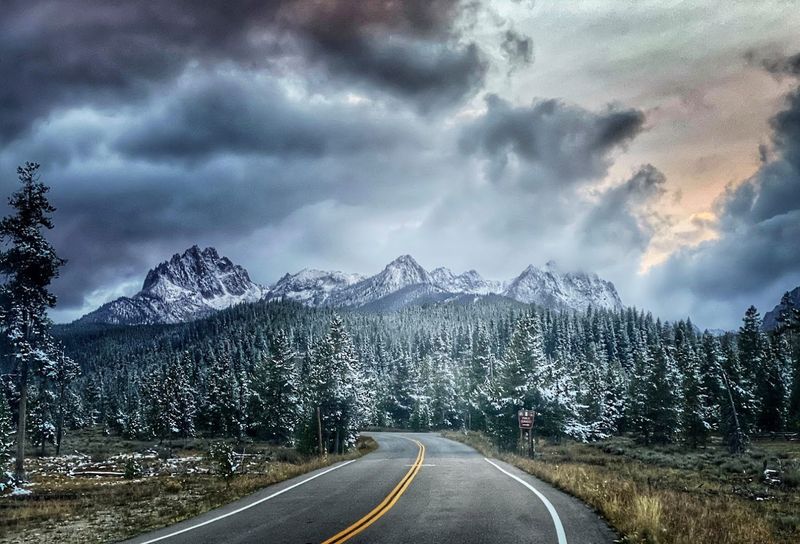
Some drives just hit different. The Sawtooth Scenic Byway earns its name in the first five minutes, and it never lets up.
Stretching about 116 miles along Idaho Highway 75, it cuts through the Sawtooth National Recreation Area where the scenery shifts fast. The Sawtooth Mountains rise sharply above the valley floor, their jagged ridgelines looking almost too dramatic to be real.
Redfish Lake sits right along the route. On calm mornings it mirrors those peaks so perfectly you will want to pull over and just stare.
Trust me, plan extra time here.
Stanley, a tiny mountain town near the center of the drive, makes a great base. It sits above 6,200 feet, the air is crisp, and the sunsets are worth staying for.
Grab coffee before pushing on.
The byway passes through sagebrush flats and thick forests. Wildlife sightings are common, elk near the road, bald eagles overhead.
Keep your camera on the seat.
Fall is the sweet spot. The aspens turn gold, the crowds thin, and the whole route feels like it belongs to you.
Summer brings wildflowers and full campgrounds. Every season gives you a reason to come back.
2. Salmon River Scenic Byway
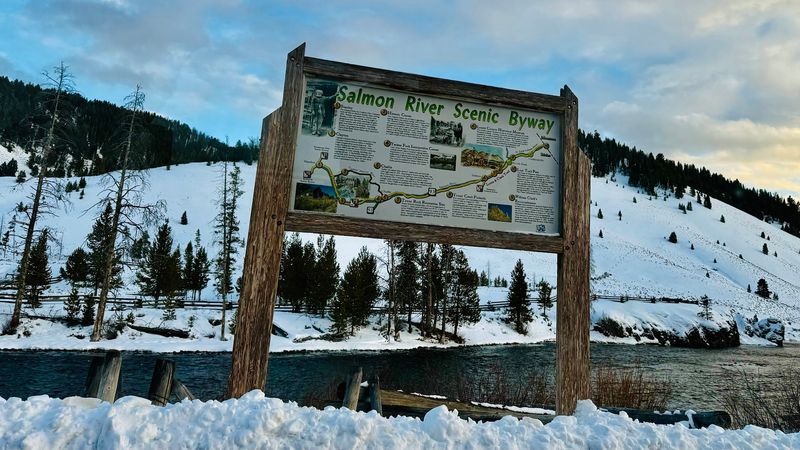
161 miles of river and almost nobody around. That is the Salmon River Scenic Byway, and it earns every bit of its reputation.
The drive follows US Highway 93 from the Montana state line to Challis, then continues toward Stanley. Canyon walls rise high on both sides, and the Salmon River runs hard through the valley below.
The nickname River of No Return was not given lightly.
Whitewater rafting outfitters launch trips from several points along the highway. But even from the car, the views do the work.
Pullouts along the route let you park, get out, and just listen to the river move.
Near the northern end, the town of Salmon gives you a chance to fuel up before the road gets more remote. Historic mining sites and old homesteads appear along the way.
Lewis and Clark passed through this exact region, and that history still feels present.
Cell service drops out in long stretches. Plan for a full day, bring a paper map, and enjoy the quiet.
In a state full of remarkable drives, this one feels the most like disappearing.
3. Pend Oreille Scenic Byway
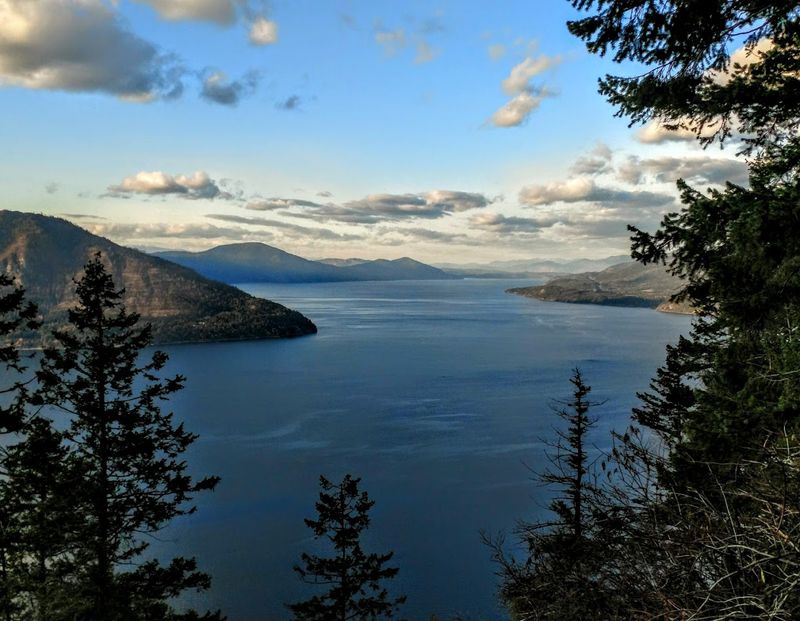
Lake Pend Oreille is one of those places that stops people mid-sentence. The Pend Oreille Scenic Byway runs about 34 miles from Sandpoint along Highway 200 to the Montana state line, hugging the northern edge of the largest lake in the state.
The water is a deep, clear blue that stands out the moment you see it.
Sandpoint is a lively small city with a strong arts scene, good restaurants, and a relaxed mountain town energy. Starting your drive there gives you time to slow down before heading east along the lakeshore.
Schweitzer Mountain Resort is visible from parts of the route, ski runs stretching across the hillside above town.
The byway passes through the Panhandle National Forest, where trees press close to the road and lake views open up without warning. Near the eastern end, Cabinet Gorge Dam offers a look at how the Clark Fork River is managed in this stretch.
It sits in sharp contrast to everything natural around it.
Wildlife is active along this corridor year-round. Osprey and bald eagles work the lake, while deer and occasional black bears appear along the forest edges.
Keep your eyes moving.
At just over 30 miles this is one of the shorter drives on this list, but it punches well above its weight from start to finish.
4. International Selkirk Loop
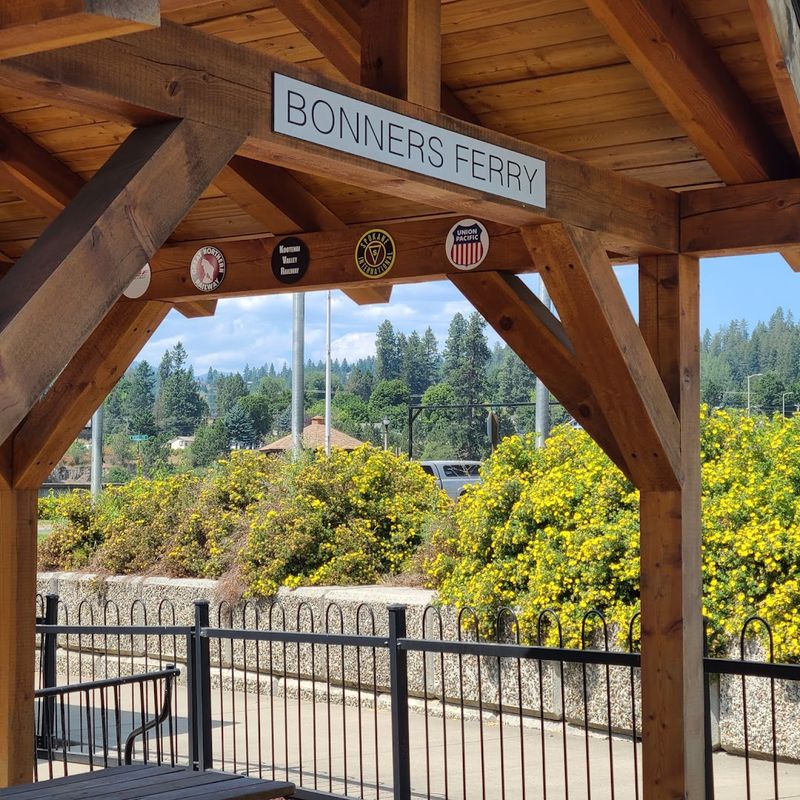
Most scenic drives keep you in one state. This one takes you through two countries.
The International Selkirk Loop covers about 280 miles through the northern panhandle, northeastern Washington, and British Columbia. It is one of the few drives in North America where your passport is part of the packing list, and crossing that border never gets old.
The panhandle portion alone is worth the trip. The route passes through Bonners Ferry, a laid-back town along the Kootenai River, then climbs into the Selkirk Mountains where old-growth cedar forests close in overhead.
The trees are enormous in a way that is genuinely hard to put into words without sounding like you are overselling it. You are not overselling it.
Just west of Bonners Ferry, the Kootenai National Wildlife Refuge is one of the best spots in the region for migratory birds, white-tailed deer, and moose. Walk the refuge if you have time.
Bring binoculars if you have them.
Plan two or three days for this loop. Overnight stops in small communities on both sides of the border are part of the experience.
On the Canadian side, Creston and Kaslo carry a completely different cultural flavor, and that shift makes the whole trip feel like something bigger than a Sunday drive.
Mountains, rivers, wildlife refuges, international borders, and lakeside towns, all in one continuous loop. The panhandle is just the beginning.
5. Thousand Springs Scenic Byway
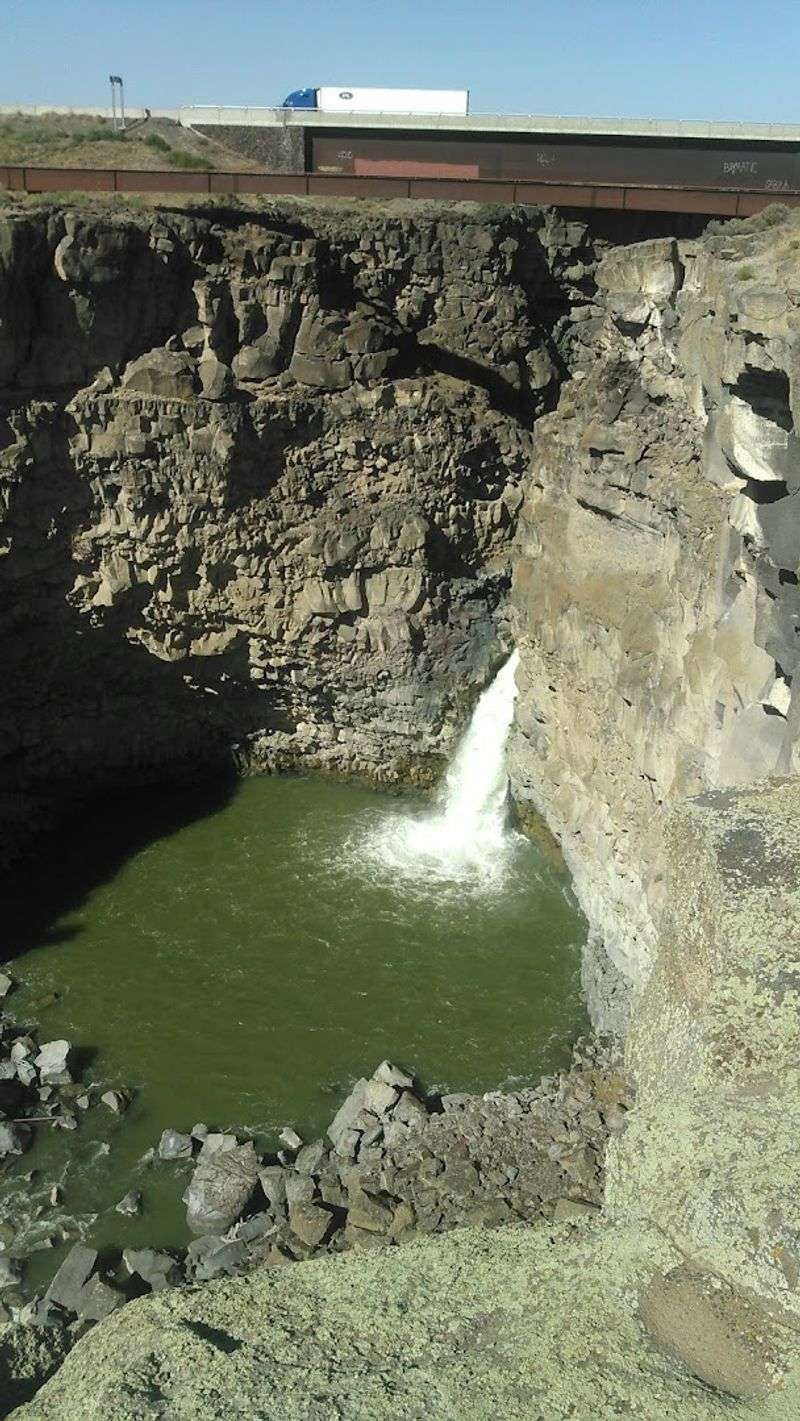
Picture waterfalls pouring straight out of a cliff face with no obvious source above them. That is exactly what you see along the Thousand Springs Scenic Byway, and it is one of the most genuinely strange and beautiful sights in the state.
The springs emerge from the base of the Snake River Canyon wall, fed by water that has traveled underground through lava rock from as far away as the eastern part of the state.
The byway runs about 60 miles along US Highway 30 through the Magic Valley region, passing through Bliss, Hagerman, and Buhl. Hagerman is known as the Fossil Capital of the state, home to the Hagerman Fossil Beds National Monument just outside of town.
Horse fossils found here rank among the most significant discoveries in the region.
Malad Gorge State Park sits along the route and features a 250-foot deep gorge carved by the Malad River. A footbridge spans the canyon and gives you a dizzying look straight down.
It is not for the faint of heart, but it is absolutely worth the stop.
The Snake River through this stretch is prime trout fishing territory. Anglers work the banks throughout the warmer months, and fish farms operate nearby, taking advantage of the constant spring water flow.
It is an unexpected sight alongside all the natural drama.
Spring and early summer are the best times to catch the springs flowing at full force. The whole byway feels quietly spectacular, and that quiet is a big part of the appeal.
6. Payette River Scenic Byway
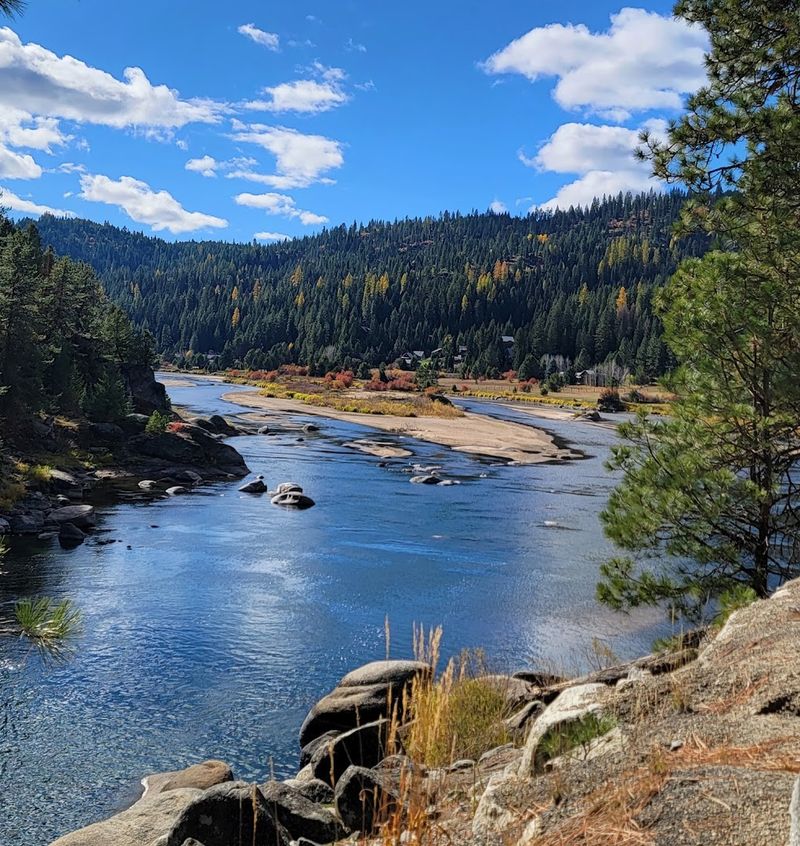
Boise is only the starting point. The moment you leave the city behind and hit State Highway 55, the Payette River takes over and does not let go.
The byway runs about 110 miles north toward McCall, tracing the river through a canyon that gets more dramatic with every mile. Horseshoe Bend, Cascade, and Donnelly sit along the way, each one a little quieter and slower than the last.
That slowness is the whole point.
Natural hot springs are a serious draw here. Trail Creek and Burgdorf are both worth the detour.
Soaking in a natural spring surrounded by pines, with nothing on your schedule, is the kind of thing you think about for weeks after.
Spring brings rafters and kayakers to the Payette River when snowmelt pushes the water up hard. Watching them run rapids from a pullout above the canyon is its own kind of entertainment.
McCall sits at the end of the route on the shores of Payette Lake. Give it an afternoon.
In winter the whole corridor turns snowy and leads straight to ski terrain. Every season on this drive earns its place.
7. Mesa Falls Scenic Byway
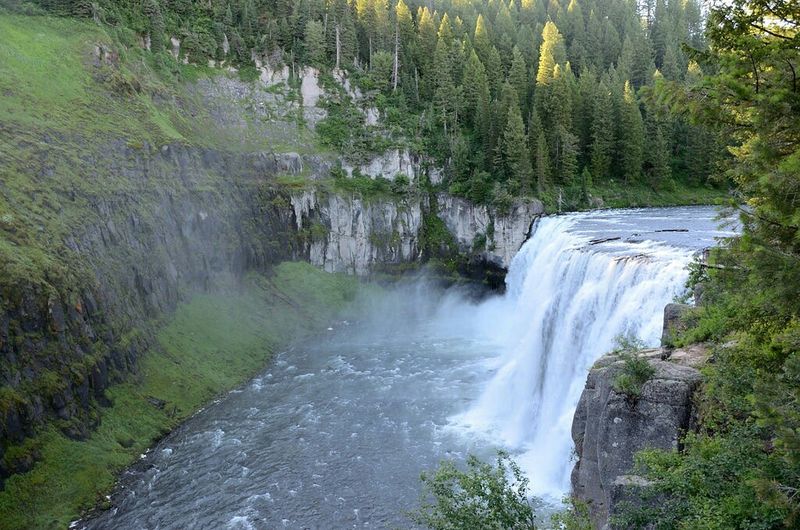
Upper Mesa Falls drops 114 feet into a basalt canyon, and you hear it before you see it. That moment, when the sound reaches you through the trees, sets the tone for everything that follows.
The Mesa Falls Scenic Byway is a 28-mile loop off US Highway 20 near Ashton in the eastern part of the state. It winds through Targhee National Forest, past open meadows and thick lodgepole pine, and it exists almost entirely to deliver you to this waterfall.
That is not a complaint.
A restored historic log lodge at Upper Mesa Falls serves as a visitor center during summer. Standing on the viewing platform above the falls is one of those experiences that makes you go quiet without meaning to.
The scale of it catches you off guard every time.
Lower Mesa Falls sits just downstream at around 85 feet. Reaching it requires a short hike through the forest, and the trail is worth every step.
Canyon walls at both falls are draped in moss and ferns, giving the whole area a lush, almost unexpected feel for this part of the country.
Moose are frequently spotted along the byway, especially in early morning. Summer wildflowers line the road before you even reach the falls, making the drive itself worth slowing down for.
The loop does not take long to complete, but you will not want to rush it.
One of the most underrated detours in the entire state. Take it.
8. Ponderosa Pine Scenic Byway
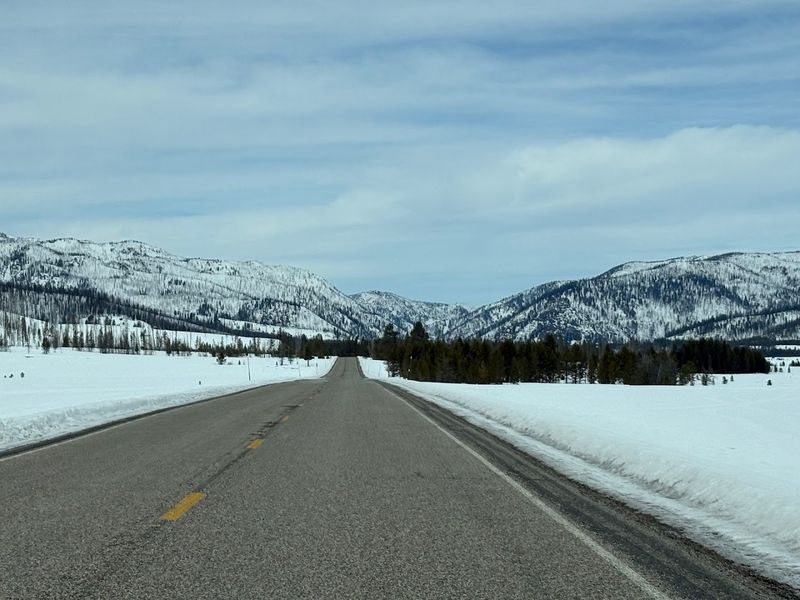
Some roads smell as good as they look. The Ponderosa Pine Scenic Byway earns its name the moment you roll down your windows and warm vanilla pine fills the car.
This 131-mile route runs along State Highway 21 from Boise to Stanley, connecting the city to the mountains in the most satisfying way possible.
The drive climbs steadily out of the Boise foothills, passing through Idaho City and Lowman before entering high mountain terrain near Banner Summit.
Idaho City is one of the best stops on the entire route, a former gold rush town with well-preserved historic buildings and a genuine sense of its own past. It was once the largest city in the Pacific Northwest during the 1860s gold rush, a fact that surprises nearly everyone who hears it.
Between Lowman and Banks, the South Fork of the Payette River runs alongside the highway, offering good fly fishing and swimming holes worth stopping for. Kirkham Hot Springs, just east of Lowman, is one of the most popular natural soaking spots in the region.
The springs flow directly into the river, mixing hot and cold water in a way that is hard to leave.
Black bears, white-tailed deer, and osprey are all common sightings along this corridor. The forest is dense, the road is mostly two lanes, and traffic stays light outside of summer weekends.
It feels like a route that rewards people who actually go looking for it.
9. Teton Scenic Byway
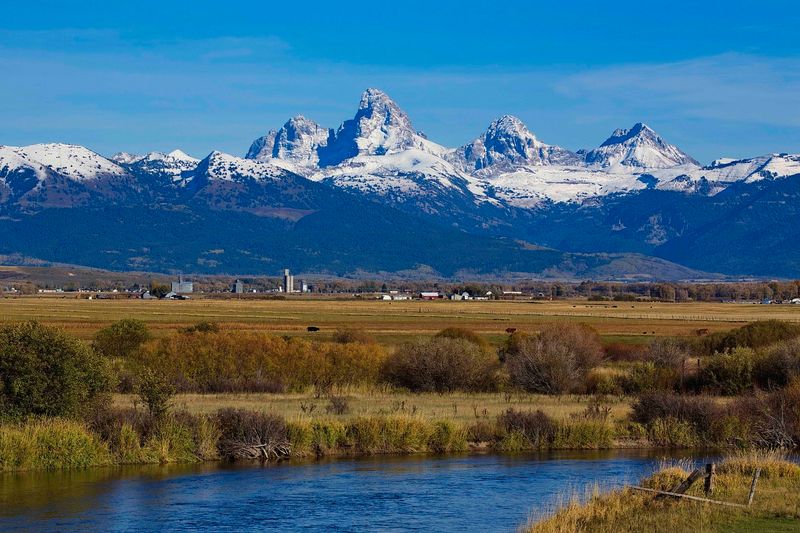
Everyone knows the Tetons. Almost nobody sees them from this side.
The Teton Scenic Byway runs along the western slope of the range in eastern Idaho, covering roughly 67 miles through Teton Valley on State Highway 33 and State Highway 32. Same peaks, completely different perspective, and a fraction of the crowds.
While visitors pack the Wyoming side, this route gives you room to breathe and views that hit just as hard.
The valley floor is wide and agricultural, potatoes and grain stretching toward the mountains. That open farmland gives you unobstructed views of the Tetons rising sharp to the east.
No trees blocking the skyline, no buildings in the way. Just the peaks doing what they do.
Sunrise and sunset light on those ridgelines will stop you cold, so time your drive accordingly.
Driggs is the main stop along the route, a small but lively town with good food, outdoor gear shops, and direct access to Grand Targhee Resort on the western slopes.
The resort pulls serious powder, some of the deepest snowfall in the Rockies, making it a legitimate winter destination on its own.
The valley sits at around 6,000 feet, which keeps summers cool and winters serious. Moose, sandhill cranes, and raptors are common sightings if you slow down and pay attention.
Fall is the peak of it all, aspens turning gold above Driggs, the air going sharp and clean, the mountains looking impossibly clear against a blue sky.
The state does not always get credit for this view. It absolutely should.