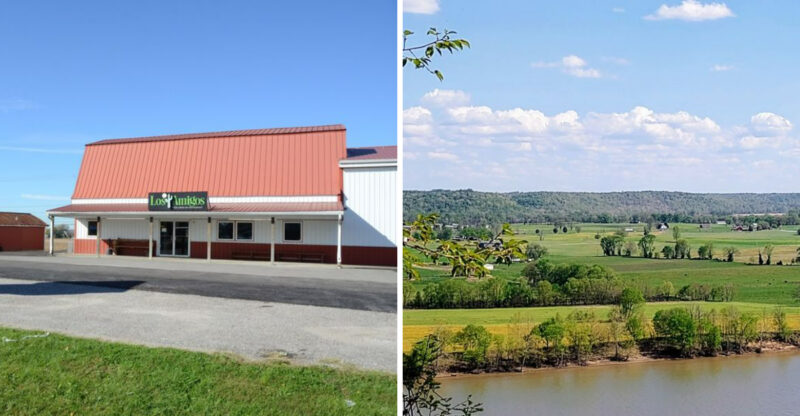
Indiana Has A Trail Where The Rocks Tell A Million-Year-Old Story
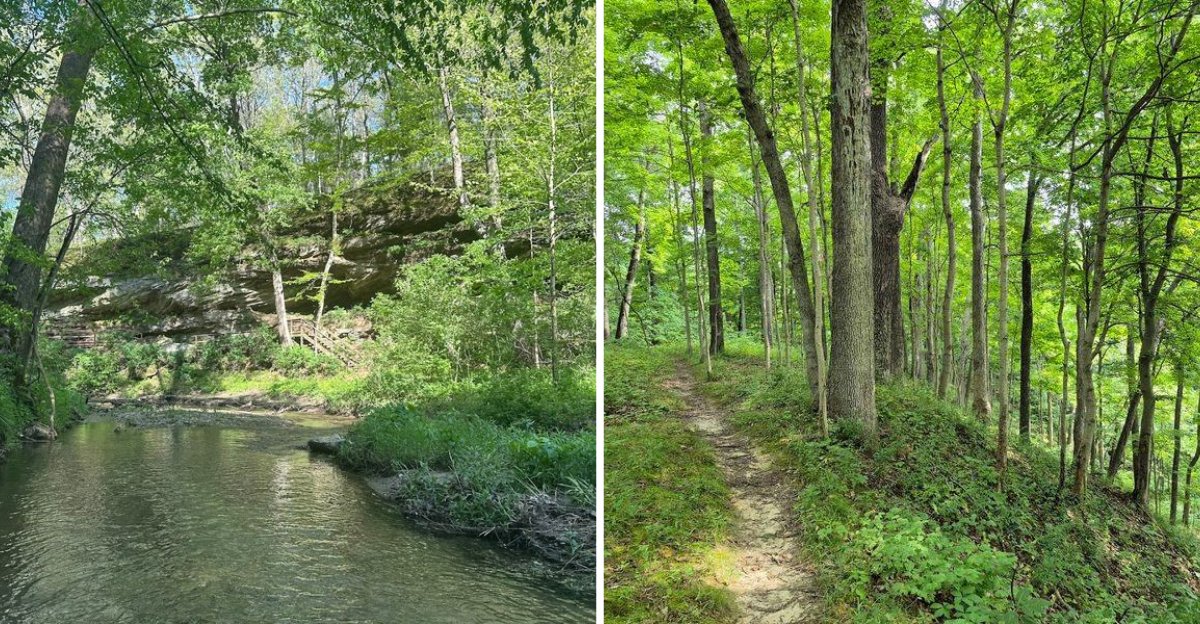
Rocks at this Indiana trail hold a story spanning millions of years. Each geological layer represents an era predating everything most people call ancient.
The formations compress time into something visible and accessible to all visitors. Geologists and curious walkers both find something worth examining closely here.
The trail is navigable and the information along it is genuinely interesting. Looking at these formations requires patience and that patience rewards you beautifully.
I walked slowly and kept stopping in completely unplanned ways throughout. Indiana has geological wonders that get overshadowed by other destinations entirely.
Walk here without urgency and let it shift how you see time.
The Million-Year Story Carved In Stone
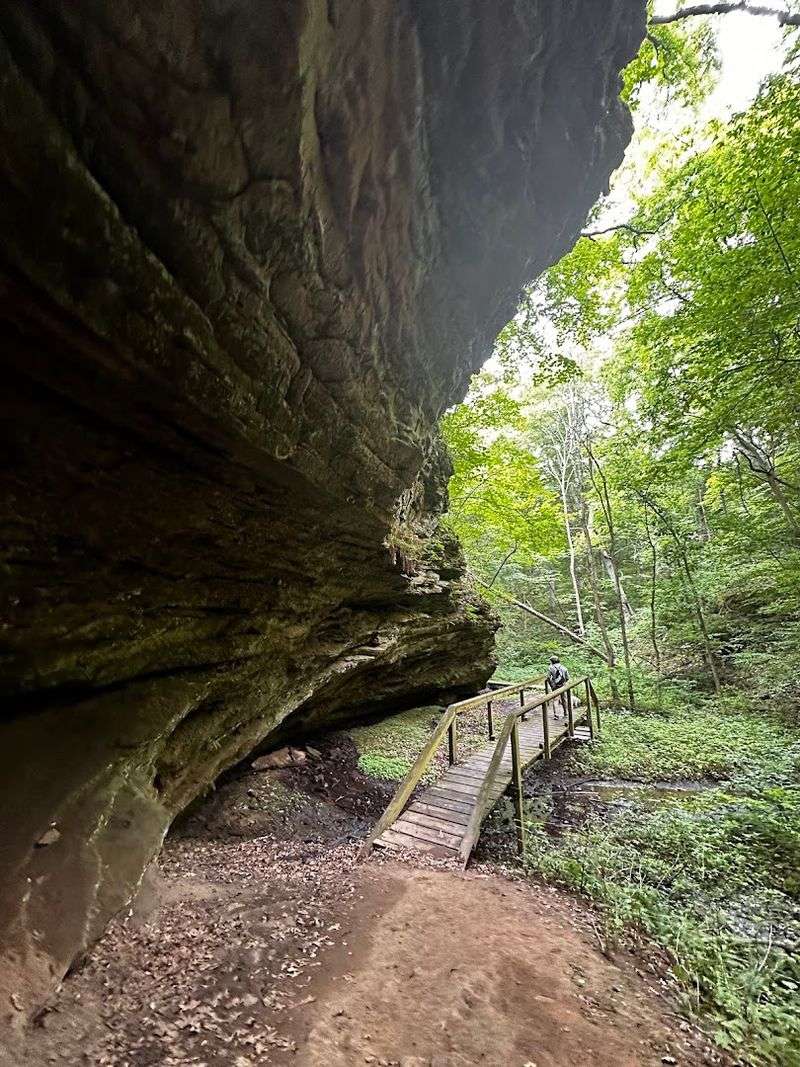
Long before Indiana was a state, before any road or town existed here, water was already doing its quiet work.
The sandstone formations at Portland Arch Nature Preserve were shaped by erosion over millions of years. Every curve in the rock tells part of that story.
The arch itself is the largest natural sandstone arch in the state. That is not a small claim.
Most people do not realize the state holds something this geologically rare, hidden behind cornfields near Covington.
What makes the rock especially striking is the color. Natural algae growth creates streaks of green, orange, and rust across the sandstone face. No paint, no filter needed. The stone practically glows in the right morning light.
Geologists would have a field day here, but you do not need a science degree to appreciate it. The layers visible in the rock walls show different periods of sediment deposit. Each stripe is a chapter from a very long book.
Standing under the arch and looking up, you feel the weight of deep time in a way that is hard to describe.
The access point of the preserve is at 1599 W Scout Camp Rd. That long drive through flat farmland makes the reveal even more dramatic.
What The North Trail Actually Looks Like
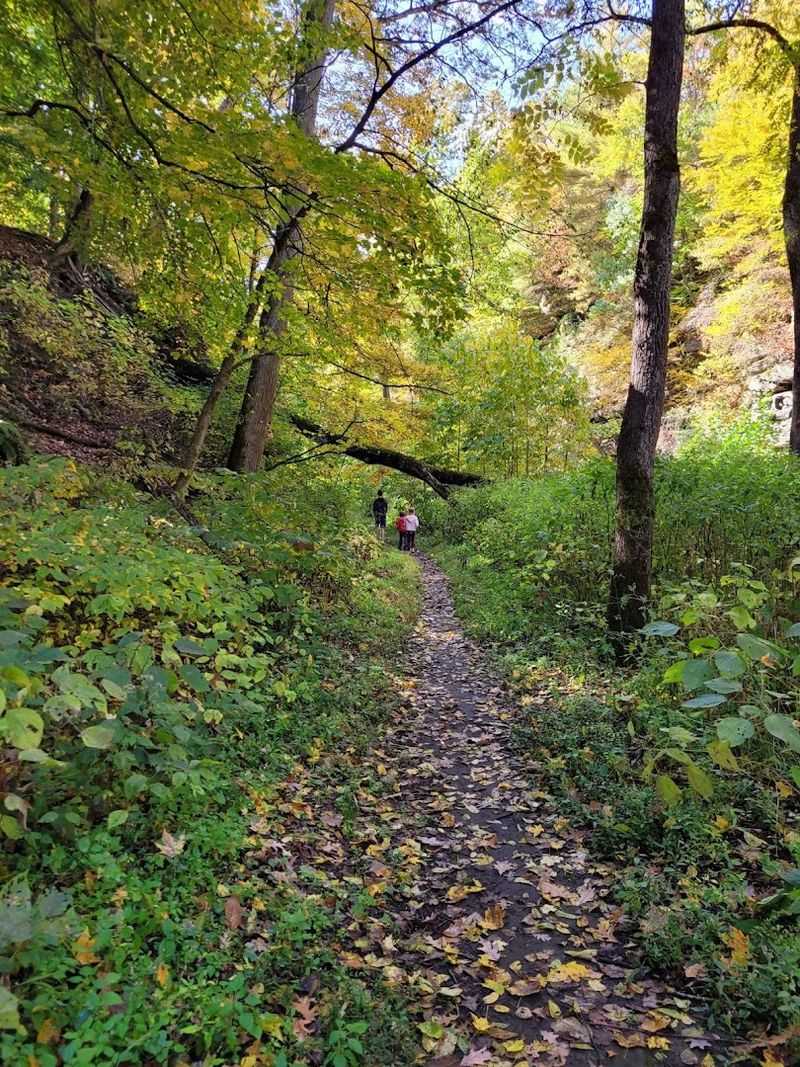
The North Trail is short, but do not let that fool you into thinking it is boring.
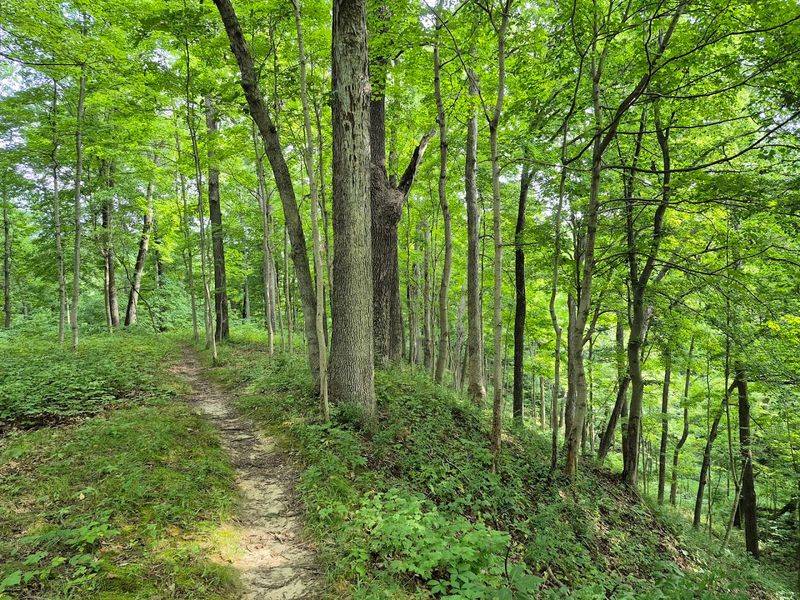
From the parking area, the path winds downward into a small river valley. The forest closes in quickly, and the noise of the outside world fades almost immediately.
The trail runs just over a mile as part of a loop. You can go left or right from the trailhead, and both directions eventually lead to the arch. Going left tends to get you there faster, which is handy if you are short on time.
Tree roots cross the path in several spots, and some sections involve stepping over exposed rock. Sturdy shoes are a smart choice.
The terrain is rated easy overall, but a few rugged patches add just enough challenge to keep things interesting.
Wooden walkways and steps appear along certain sections, helping you navigate the steeper parts near the creek. Some of the railings show wear, so watch your footing on wet days. The trail feels wild without being reckless.
The Creek That Steals The Show
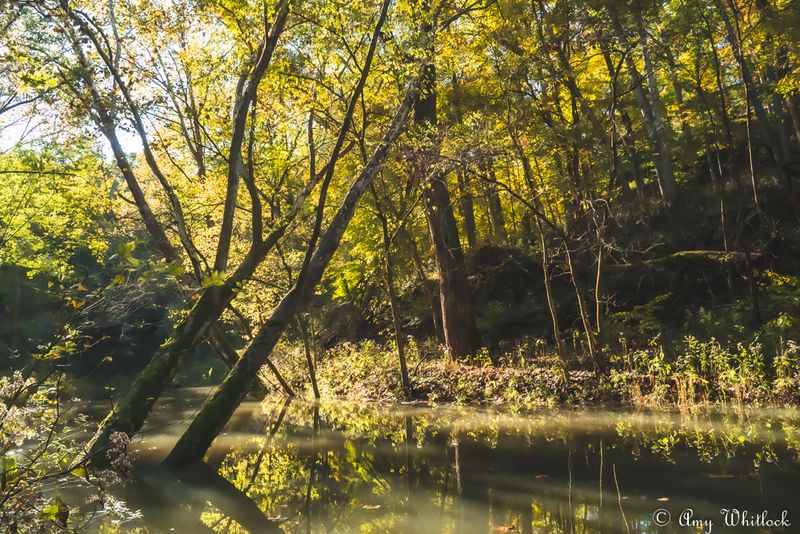
There is a moment on the trail when you hear the creek before you see it.
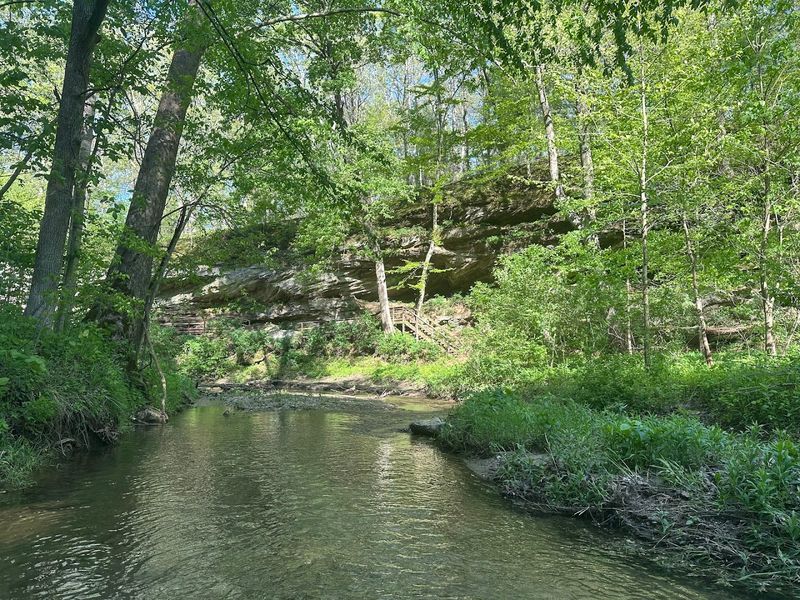
That soft rushing sound pulls you forward, and then the trees open up just enough to reveal a scene that belongs in a nature documentary. The water is genuinely clear.
Bear Creek runs through the preserve, cutting through the sandstone valley floor. You can see the creek bed through the water, smooth and pale with occasional patches of moss. Fish are sometimes visible near the calmer pools.
The creek is shallow enough to wade through in most seasons. Many visitors take off their shoes and walk right in. It is the kind of spontaneous decision that turns a quick trail visit into a full afternoon.
Rock formations line the creek banks on both sides. Some of the boulders are large enough to sit on comfortably. Spending time here, with the sound of moving water and no crowd in sight, feels like a genuine reset.
Indiana does not have a reputation for dramatic waterways, but Bear Creek inside Portland Arch Nature Preserve quietly challenges that idea.
How Seasons Change Everything Here
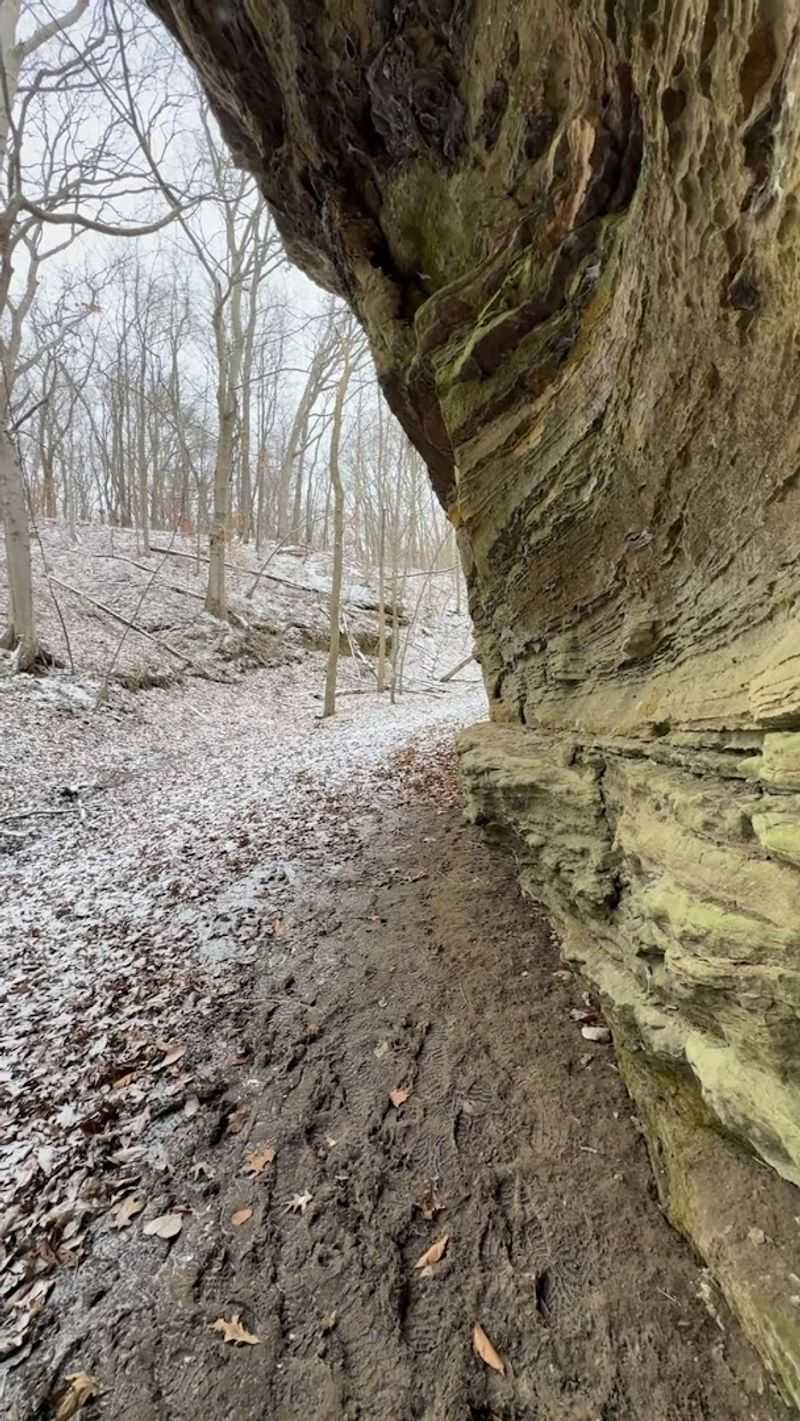
Visiting Portland Arch Nature Preserve once is not really enough. The preserve shifts dramatically with every season, and each version of it offers something different.
Spring brings fresh green growth that makes the rock colors pop even more. Summer is lush but comes with a trade-off. The forest canopy is thick and beautiful, but insects can be aggressive near the creek.
Autumn turns the whole preserve into something almost theatrical. The sandstone arch framed by red and orange leaves is a photographer’s ideal composition. Early morning visits in October offer the best light and the fewest other hikers.
Winter has its own quiet appeal. Ice formations appear along the rock faces and near the creek edges when temperatures drop.
The bare trees open up sight lines that are hidden during warmer months, revealing more of the valley structure.
Weather can be unpredictable, so checking conditions before you go is always wise. Each season rewards the effort of making the drive out to Covington in its own distinct way.
Wildlife And Plants Worth Noticing
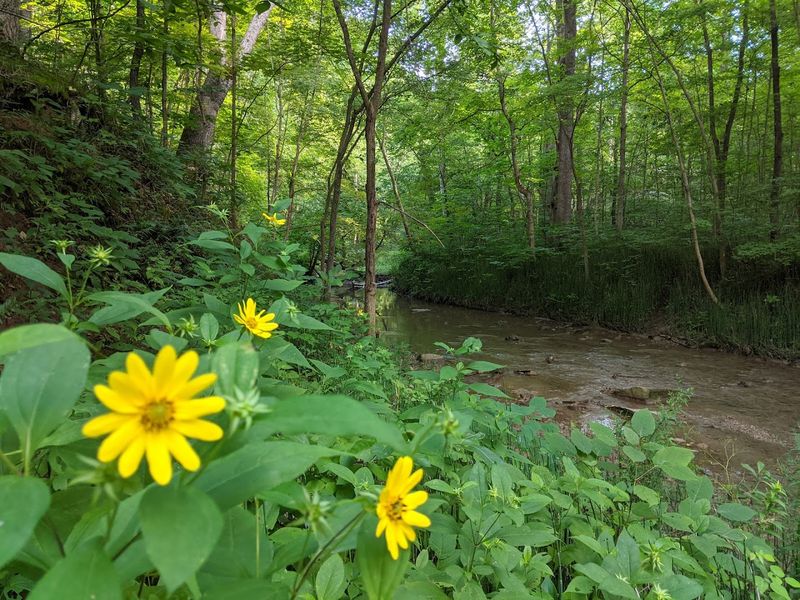
The ecological variety inside Portland Arch Nature Preserve is easy to overlook when the arch is pulling all your attention.
But slow down and look around, because the plant and animal life here is genuinely rich. The forest floor is dense with ferns and mosses.
Native wildflowers appear in spring along the creek banks and shaded trail sections. Species like trillium and wild ginger grow in the understory where sunlight is limited.
These plants thrive because the preserve is protected from development and foot traffic stays on the marked path.
Bird activity is consistent throughout the year. Woodpeckers work the older trees, and songbirds are active in the canopy during warmer months. Early morning visits tend to reward the most bird sightings before the day heats up.
The creek supports a healthy fish population, visible in the clearer pools. Crayfish and aquatic insects also live in and around the water.
This biodiversity signals a healthy ecosystem, which is not always easy to find in a heavily farmed region.
Photography Opportunities Around Every Bend
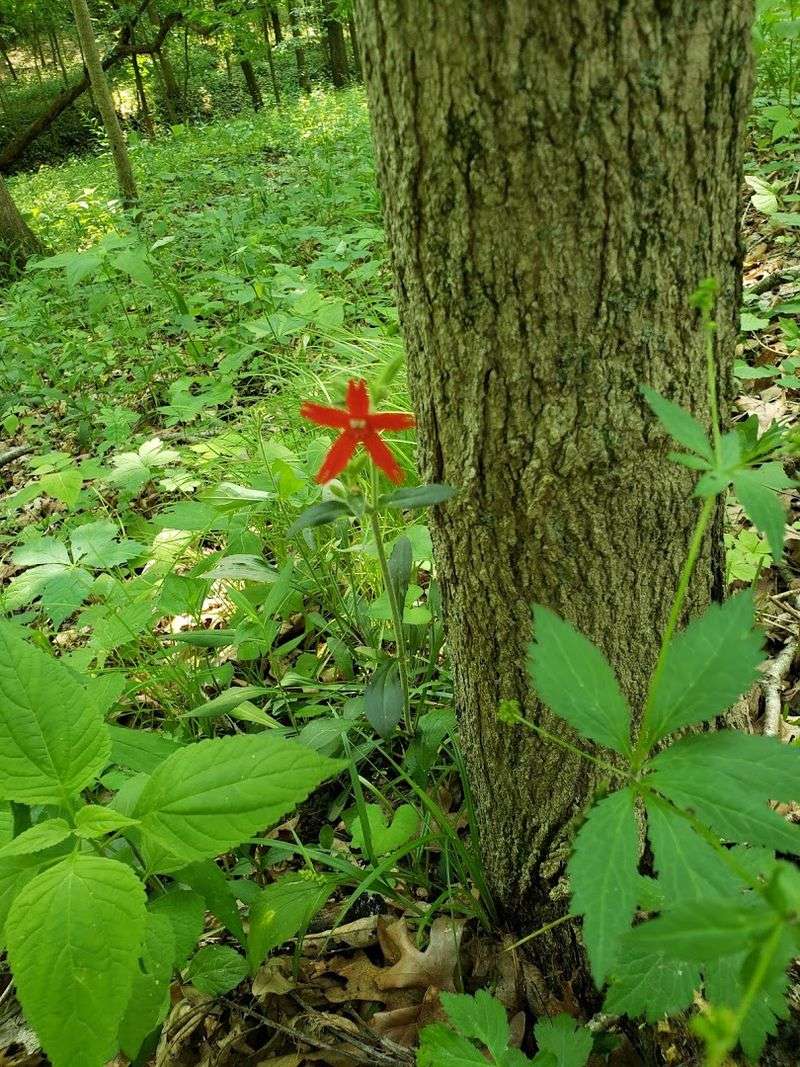
Few places in Indiana offer this density of photogenic subjects in such a compact area.
The arch alone could fill a memory card. But the creek reflections, the layered rock walls, and the forest light all compete for attention in the best possible way.
The arch is most dramatic in the morning when light enters the valley at a low angle. That warm directional light hits the sandstone and makes the natural colors almost electric. Midday light is flatter and less interesting for photography.
The algae streaks on the sandstone create color combinations that look almost artificial. Greens, oranges, deep reds, and creamy tan all appear on the same rock face. No single filter or preset could replicate what the natural environment produces here.
Wide-angle lenses work well for capturing the full arch with the creek in the foreground. A macro lens or close-up setting reveals the texture of the rock surface and the tiny plant life clinging to it.
Both approaches yield completely different but equally compelling images.
Practical Tips Before You Go
Getting to Portland Arch Nature Preserve requires a bit of commitment.
The drive involves rural roads through farmland, and the parking area is small and unpaved. A registration box sits at the trailhead, but there are no facilities on site whatsoever.
No bathrooms, no water fountains, no visitor center. The nearest restroom is about fifteen minutes away by car.
Handling that detail before you arrive will make your visit much more comfortable. Bring your own water and snacks as well.
Cell service can be spotty in this part of Indiana. Downloading a trail map or the official trail guide before you leave home is a practical step. It also helps you identify the numbered signposts along the route.
Dogs are welcome on the trail and seem to enjoy it thoroughly. Keep them on a leash and carry out any waste.
The preserve is open every day from 7 AM to 7 PM, so there is plenty of window to plan a relaxed visit without rushing.
Why This Place Stays Memorable
Some places are impressive for a moment and then fade from memory once you are back in the car.
Portland Arch Nature Preserve is not one of those places. Something about the combination of geology, quiet, and surprise keeps it lingering in your thoughts.
Part of it is the contrast. You drive through flat, open farmland for what feels like forever, and then suddenly you are standing in a forested valley beneath a sandstone arch.
The state does not prepare you for this. That contrast is part of the experience. Part of it is solitude. Crowds are rare here.
On many visits, you can walk the entire trail without encountering another person. That sort of quiet is increasingly hard to find, and it gives the place a private, almost secret quality.
The geological scale also plays a role. Knowing that the rock under your feet was shaped over millions of years puts daily concerns in a different perspective.
It is a quietly humbling experience that does not require any dramatic scenery to deliver its effect.
Indiana holds more natural surprises than most people expect, and this preserve is one of the best examples.