Inside This Nebraska Park Sits A Log Fort Rebuilt Exactly Where Soldiers Guarded The Missouri In 1820
I only pulled off the highway for a quick stretch and a look at a sign I had passed a dozen times. Twenty minutes later I was standing inside a log fort in eastern Nebraska, staring at a parade ground where more than a thousand people once lived on the edge of the known country.
The place looks modest from the road, but the story behind it is huge. It is a piece of Nebraska history that most folks never learned in school, and it sits closer than you think.
A Frontier Outpost Above Fort Calhoun
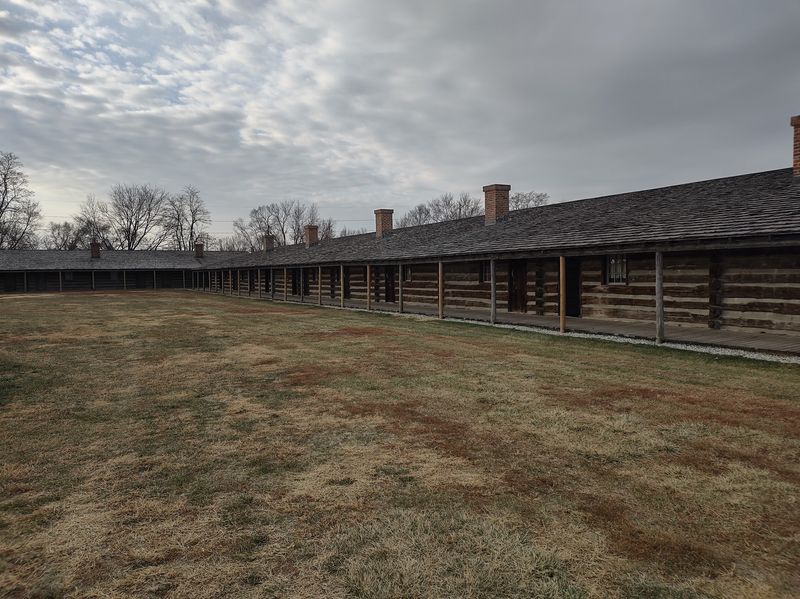
Picture a green bluff just north of Omaha, where the land rolls gently toward the Missouri River valley. On that high ground stands Fort Atkinson State Historical Park, home to a log fort rebuilt on the same spot where the original outpost rose in 1820.
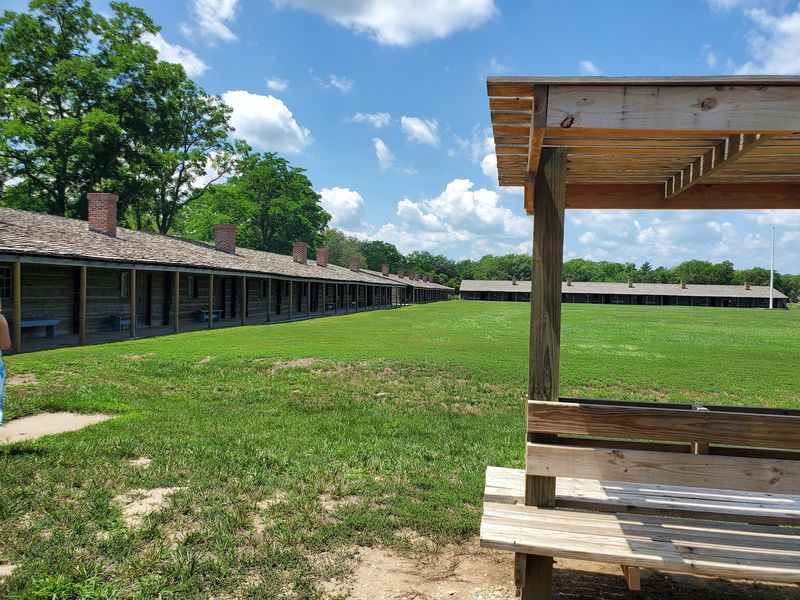
The park sits in the small town of Fort Calhoun, a short drive from the city. From the parking area, you can see the long rows of timber barracks forming a rectangle around an open parade ground, with a flag snapping overhead on breezy days.
It is a state historical park and a National Historic Landmark, which means the site carries weight far beyond its quiet setting. The fort you walk through is a replica, but the ground under your feet is the real deal.
Archaeologists spent decades confirming exactly where each building once stood.
Around the fort, open grass and walking trails spread across the grounds. A visitor center holds exhibits and a short film to set the scene before you head outside.
Give yourself at least a few hours here, since the story keeps unfolding the longer you stay.
Why the Army Came to Council Bluff
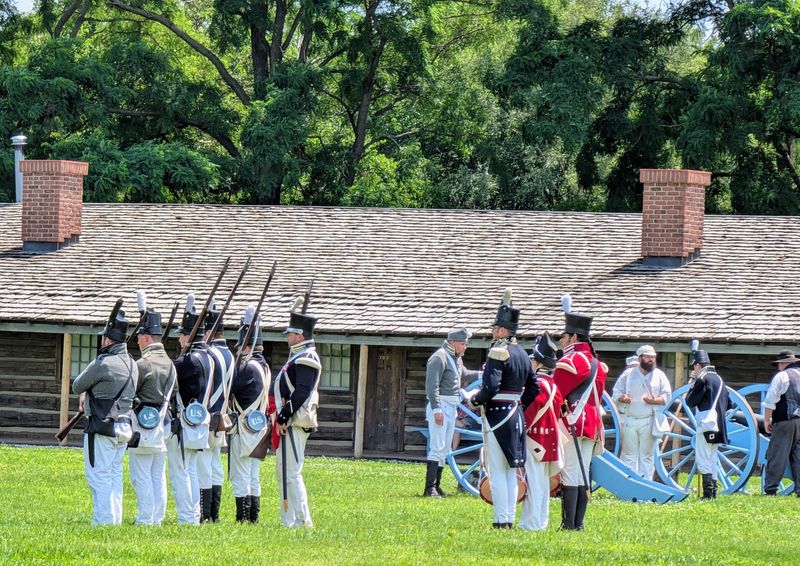
In 1820, this was the westernmost military post in the United States. Beyond it, there was no other government authority across the huge territory west of the Missouri River.
The story starts a year earlier. Troops under Colonel Henry Atkinson set up a camp called Cantonment Missouri near the river in late 1819.
When spring floods swept through in 1820, the soldiers packed up and moved to higher ground, building a sturdier fort on the bluff.
The choice of location was no accident. Known as Council Bluff, it was the very place where the Lewis and Clark Expedition first met with the Oto-Missouria people in 1804.
Lewis and Clark had even written about the spot as a smart location for a future post.
The fort’s main job was protecting the American fur trade and serving as a gateway to the west. At its peak, roughly a quarter of the entire United States Army was stationed here.
The post stayed active only until 1827, but those few years landed at a turning point for the young country, connecting the Corps of Discovery era to the push westward.
Lewis and Clark’s Footprints
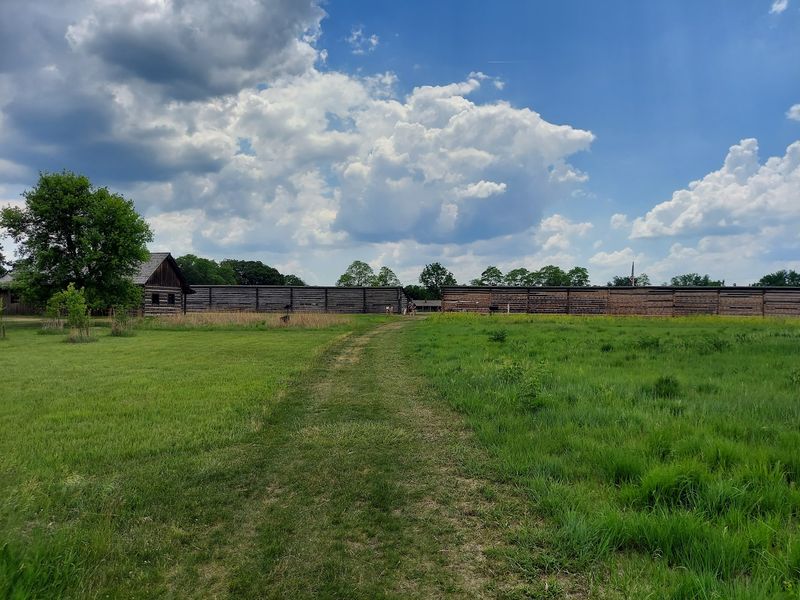
Long before a single log was stacked here, the Corps of Discovery paused on this bluff. In the summer of 1804, Lewis and Clark held their first council with the Oto-Missouria people at this spot, which is how Council Bluff got its name.
Standing on the grounds today, it takes little effort to imagine that meeting. The land still opens up in wide views, and the breeze carries the same prairie smell of grass and river air.
Two historical markers near the visitor center help tie the pieces of the story together.
Here is a fun detail: the expedition’s journals recommended this very area as a good place for a military post. Sixteen years later, the Army followed that advice.
So the fort is more than a stand-alone chapter. It is the sequel to one of the most celebrated journeys in American history.
For families tracing the Lewis and Clark route across Nebraska, this stop fills in a gap that textbooks tend to skip. The connection between the expedition and the fort makes the whole visit feel like a thread you can follow from start to finish.
Barracks, Bastions, and a Parade Ground
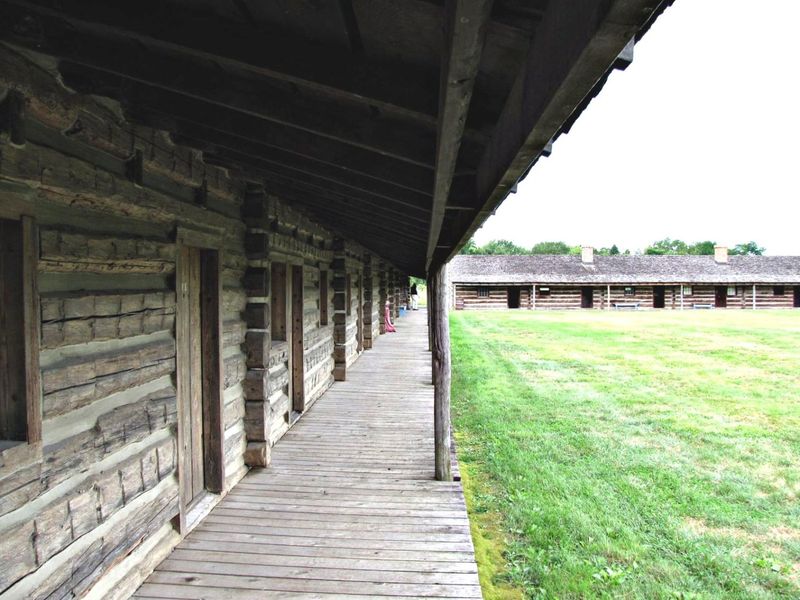
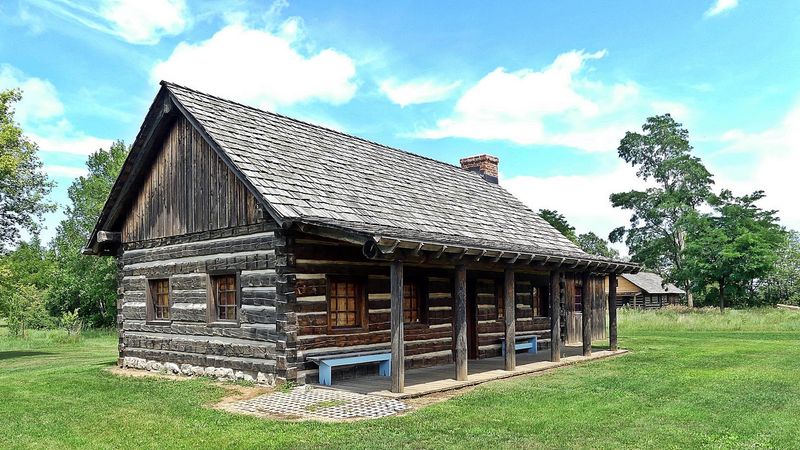
Horizontal logs, stacked tight and weathered gray-brown, make up the long one-story barracks. They form a rectangle, and every main door faces inward toward the parade ground where soldiers once drilled.
Walk the outside walls and look closely. Narrow slits called loopholes cut through the timber, letting soldiers keep watch while staying protected.
At opposite corners, bastions jut outward, each built to hold cannons that could cover the approaches to the fort.
Inside, some doors stand open so you can wander through the rooms. The spaces feel compact, with plain wooden floors and simple furnishings that hint at crowded quarters.
It becomes easy to see how hundreds of men lived shoulder to shoulder through long Nebraska winters.
The layout is simple but clever. Everything was designed to keep people safe while also serving as homes, offices, and workshops.
Even without anyone in period dress, the barracks tell their own story through the wood, the angles, and the sheer size of the square. Take a slow lap around the whole perimeter before stepping inside, since the scale hits differently from the corners.
More Town Than Fortress
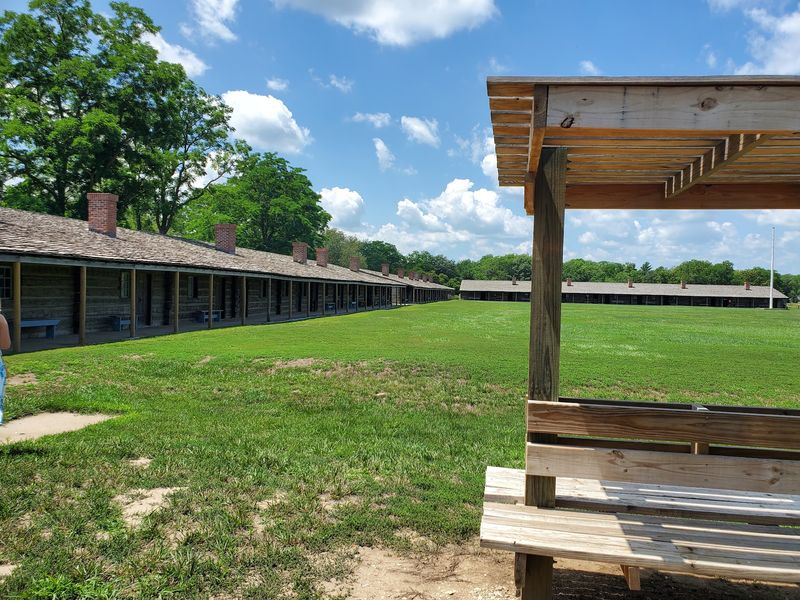
Few people expect a frontier fort to have a schoolhouse. Fort Atkinson did, along with a gristmill, a sawmill, and a council house for meetings with Native American tribes.
The post grew into something closer to a small community than a lonely stockade. More than a thousand soldiers and civilians lived here, and some counts put the population at over two thousand during its busiest years.
That made it the largest military installation west of the Mississippi at the time.
Self-sufficiency drove much of daily life. With supply lines stretched thin, the people at the fort farmed, milled their own grain, cut their own lumber, and built what they needed.
Blacksmiths, tinsmiths, and weavers all had work to do.
The council house stands out as a sign of the fort’s purpose. It was a peaceful post, focused on trade and diplomacy far more than conflict.
Talks with tribes happened here regularly, shaping relationships across the region.
Knowing all of this changes the way the grounds feel. You are not just touring a military building.
You are walking through the remains of an early Nebraska town that thrived for a few busy years.
The Archaeology Behind Every Log
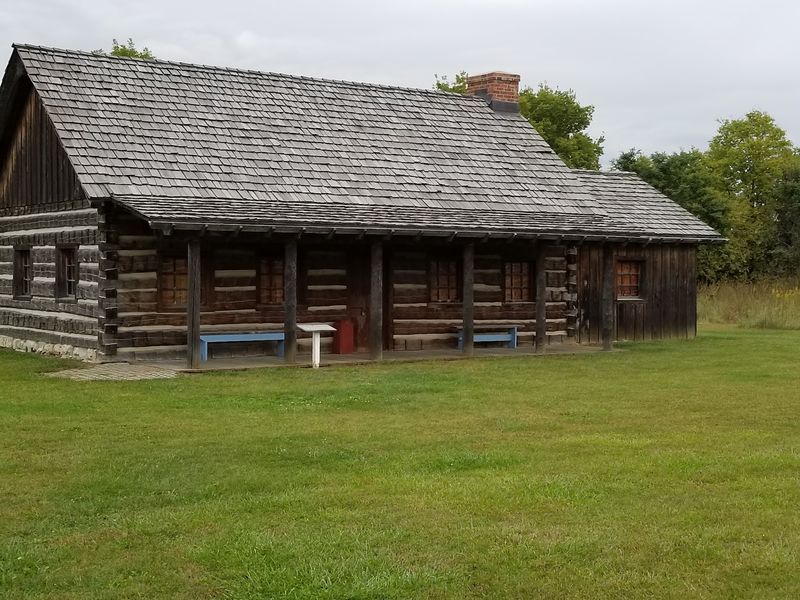
How do you rebuild a fort that vanished nearly two centuries ago? You dig, carefully and for a very long time.
Starting in 1956, archaeologists with the Nebraska State Historical Society began investigating the site on and off. They used excavation, surface surveys, and geophysical tools that read what lies underground without disturbing it.
The work turned up more than 200 archaeological features, including foundations, cellars, and old trash dumps.
Those trash piles might sound dull, but they are treasure to researchers. Broken dishes, buttons, and tools reveal what people ate, wore, and used every day.
Foundations showed exactly where walls stood and how big each room was.
All of that research guided the reconstruction of major parts of the fort. Instead of guessing, builders followed the evidence left in the soil.
That is why the replica sits precisely on its original footprint rather than somewhere nearby.
Keep this in mind as you stroll the grounds. Every corner and doorway reflects years of patient work with brushes, trowels, and notebooks.
The fort you see is a careful answer to a puzzle buried under Nebraska grass.
Living History Weekends
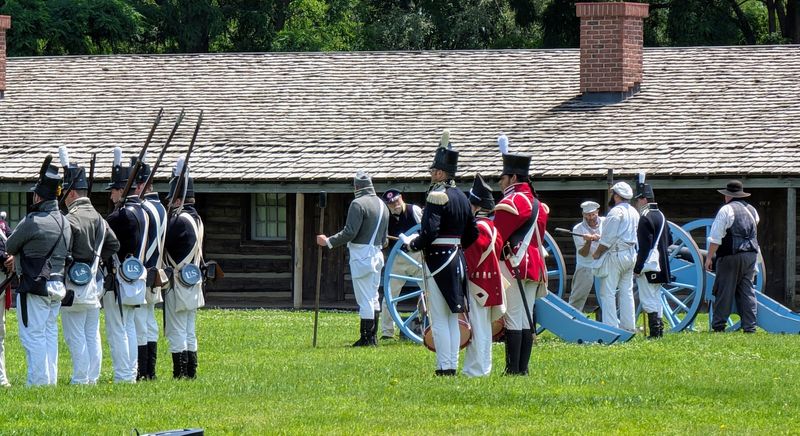
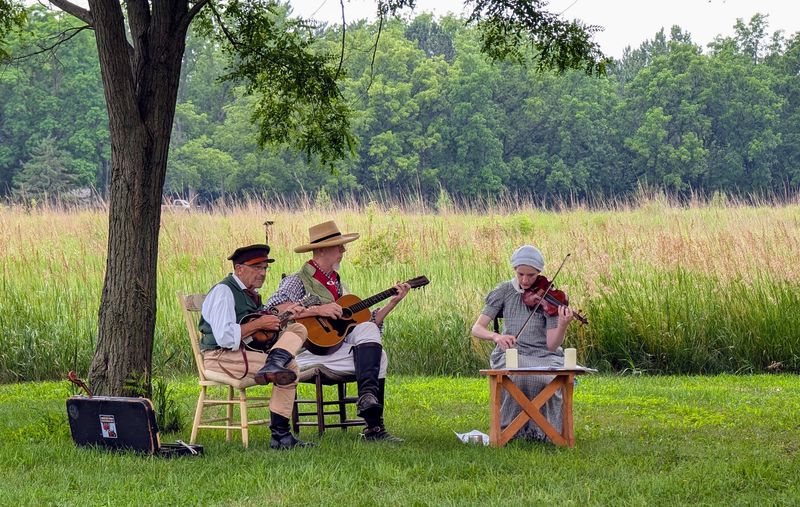
Boom. A cannon rolls its thunder across the bluff, and suddenly the fort is full of people in wool uniforms, long skirts, and leather shoes.
Living history days bring the whole place to life. Volunteers from the Fort Atkinson living history organization re-create the routines of soldiers, artisans, and civilians from the 1820s.
They run on the first weekend of each month during the season, which stretches through November, including weekends when one month ends and the next begins.
The volunteers dress in full period clothing and know a remarkable amount about the fort. Ask a question, and you might get a detailed answer about rations, uniforms, or treaties.
The mood is friendly and relaxed, with plenty of time for conversation.
Military drills march across the parade ground, and real cannon firings echo off the logs. Late in the day, the flag comes down in a ceremony capped with another cannon shot.
Special events, like a Fourth of July living history program, add extra energy. Plan ahead and check the schedule, because a regular weekend and a living history weekend are two very different experiences at this Nebraska fort.
Tinsmiths, Butter Churns, and Spinning Wheels
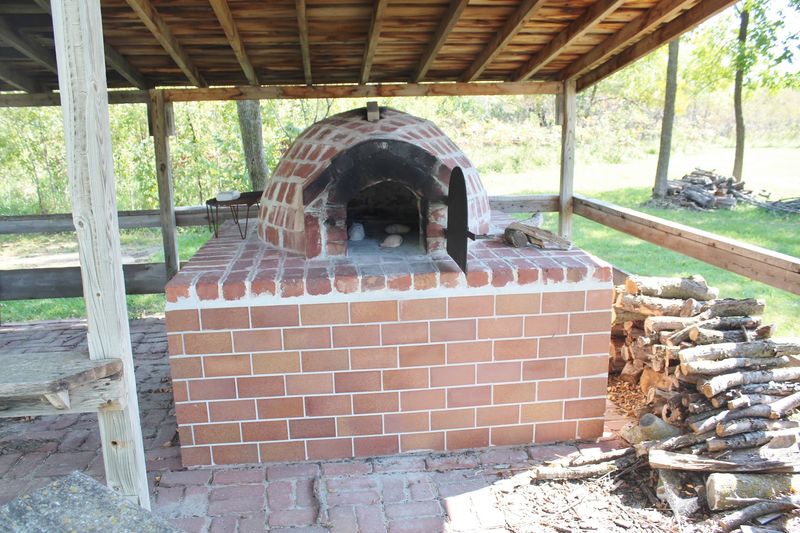
The clink of a tinsmith’s hammer shaping a cup is hard to forget. On living history weekends, crafts take over the fort’s rooms and yards.
A blacksmith works iron at the forge, while nearby a tinsmith turns flat metal into mugs and pails. Someone churns butter by hand, showing just how much elbow grease went into a simple spread for bread.
In the library, a woman spins thread on a wheel, pulling fibers into long, even strands.
The weaving room is a favorite corner for anyone who likes slow, careful work. The looms clack in a steady rhythm, and the weavers happily explain each step.
Conversations can easily stretch on far longer than planned.
These demonstrations show that frontier life was mostly about skill and patience. Clothing, tools, and food all came from hands working hard every day.
Watching the crafts up close makes history feel practical rather than distant. Kids can see exactly how a cup was made or how cloth came together.
Adults often leave with a fresh respect for how much effort ordinary items required two hundred years ago.
A Children’s Craft Room With Real Heart
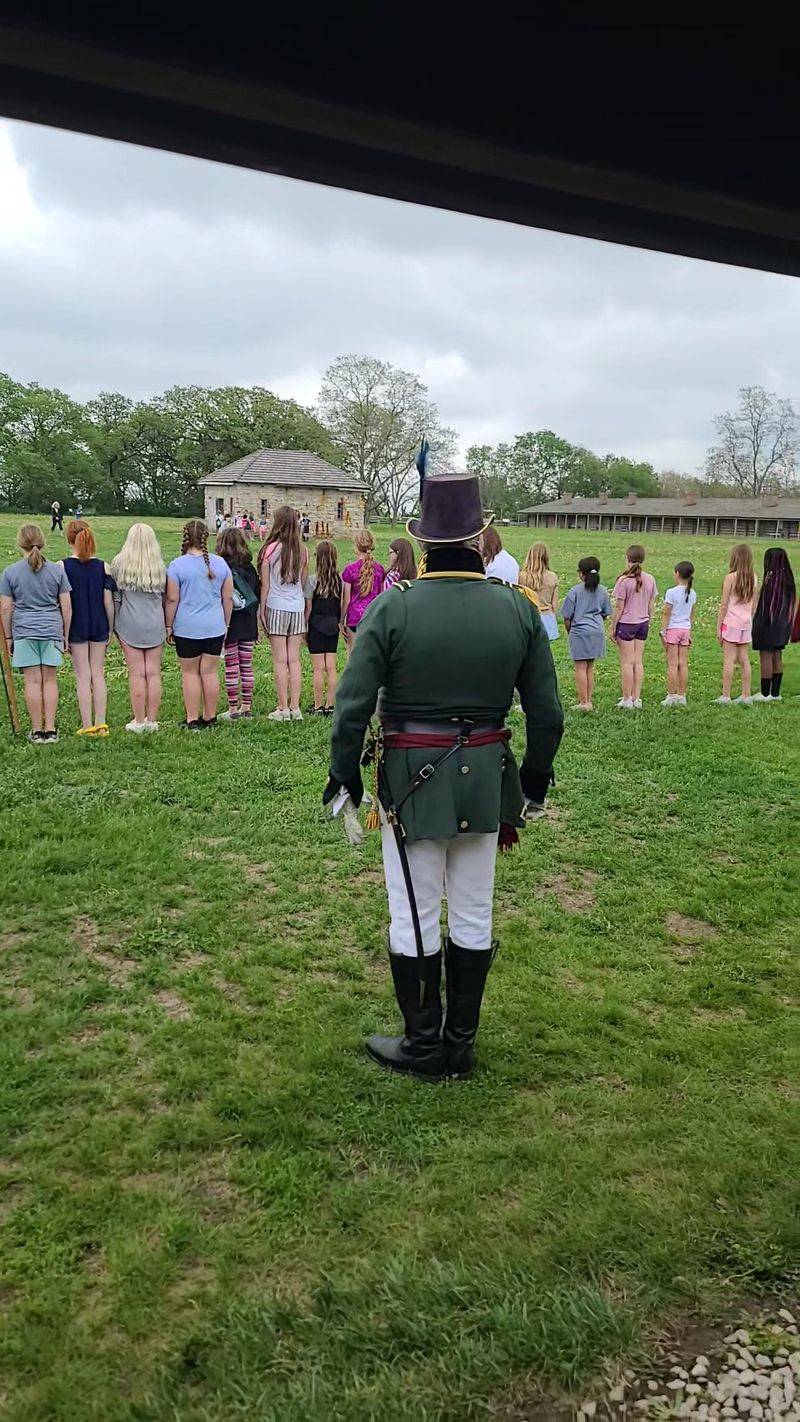
Small hands, simple wooden toys, and patient helpers make the Children’s Craft Room one of the brightest spots in the fort during living history days.
Young volunteers in period clothing guide kids through making old-fashioned toys, then teach them how to play with their creations. The pace is gentle, and every child gets attention.
Nobody rushes, and families can easily spend an hour here without noticing the time slipping by.
Outside, the fun continues with the Game of Graces, a traditional pastime where players toss and catch hoops using wooden sticks. It looks easy until you try it, which is exactly the point.
Laughter tends to follow.
The volunteers welcome kids of all abilities with warmth and care. That inclusive spirit turns a history lesson into a real memory for the whole family.
For parents hoping to spark curiosity, this room delivers. Children leave with a handmade toy and a better sense of what childhood looked like on the frontier.
The drive home often fills with questions about soldiers, cannons, and why kids back then did not have tablets, which is a pretty good sign the day worked.
The Visitor Center and Its Short Film
Cool air and a comfortable seat await in the visitor center, and that is a welcome combination on a hot Nebraska afternoon. More importantly, this is the best place to begin your visit.
The building houses a small museum with exhibits on the fort, the Louisiana Purchase, early territory history, and the relationship between the United States and Native American nations. Displays walk through the timeline from the Lewis and Clark council to the fort’s closing in 1827.
A short film sets the scene before you head outside. It helps explain why the Army came here, how people lived, and why the post mattered so much at the time.
Staff members are helpful and ready to point you toward trails or answer questions. Two historical markers sit outside near the entrance, adding extra context before you walk up to the fort.
Families with children will find the exhibits easy to follow. The center is sized just right, not overwhelming, with enough detail to make the walk through the barracks far more meaningful.
Spend twenty minutes here first, and the rest of the grounds will make much more sense.
Grass Trails and Wide-Open Grounds
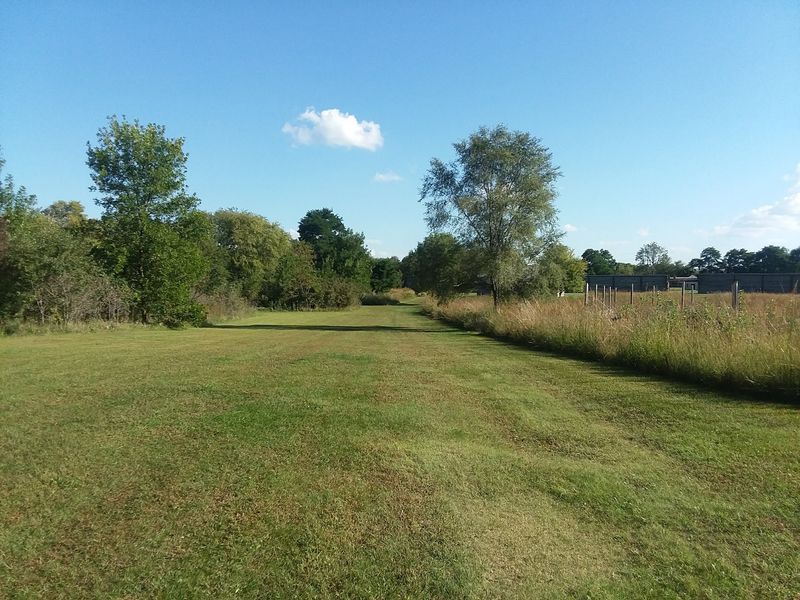
Beyond the fort walls, mowed grass trails loop across the park and wander toward the tree lines. They make the grounds as much a walking destination as a history stop.
A long ramble can easily cover four miles, which takes close to two hours at a comfortable pace. Shorter strolls work just as well for anyone who wants a taste without the full hike.
The paths are well maintained, and the scenery shifts from open prairie to shady patches along the way.
Dogs are welcome company on these trails, and they seem to enjoy the sniff-worthy grass as much as their owners enjoy the views. The park is a pleasant spot for a picnic too, a quiet break from city noise.
One note from the river’s nature: heavy rains can flood parts of the trail system, and closures happen when water rises. Checking conditions before a hike saves disappointment.
On a still day with nobody else around, the grounds can feel wonderfully quiet, almost spooky in a fun way. The silence invites you to imagine the busy frontier town that once filled this bluff.
Who Will Love a Day at the Fort
History buffs are an obvious fit, but the fort reaches well past that crowd. Its mix of open space, hands-on crafts, and big stories makes it a solid pick for many kinds of outings.
Families with young kids get cannons, costumes, and a craft room, all in one trip. Retirees can enjoy a relaxed pace, friendly conversations with volunteers, and a peaceful walk around the grounds.
The space is accessible and easygoing.
Hikers and dog owners will appreciate the trails, which make a good workout on quiet weekdays or event-free weekends. Teachers and homeschool families can use the visitor center and fort as an outdoor classroom about westward expansion.
Anyone from the Omaha area looking for a short drive with a meaningful payoff should put this on the list. It is close enough for an afternoon trip, yet it feels far removed from the city.
Nature lovers can also pair the visit with the neighboring Boyer Chute area, making it a fuller day outdoors. Some of the most satisfying trips here come from combining a morning hike with an afternoon of living history.
Planning the Visit: Timing, Shade, and Getting There
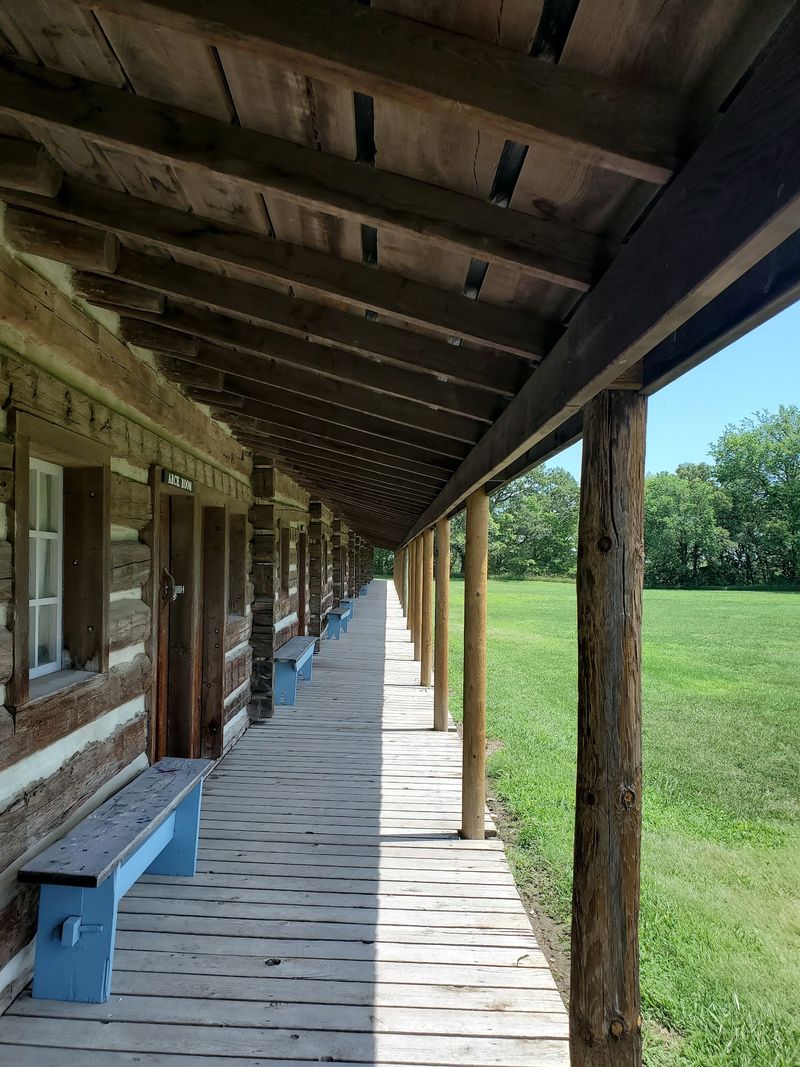
Fort Calhoun sits a short drive north of Omaha, making the park an easy half-day or full-day trip. The address is 201 South 7th Street in Fort Calhoun, and parking is simple and close to the visitor center.
Timing matters more than anything else. Living history events happen the first weekend of each month during the season, running through November.
Visiting on a regular day brings peace and room to roam, while event weekends deliver crafts, drills, and cannon fire.
Shade is limited once you step onto the open grounds. Shelter comes mainly from the display rooms inside the fort and from a scattering of trees outside the walls.
Bring water, sunscreen, and a hat during summer months.
Comfortable shoes help, because a fair amount of walking is involved between the visitor center, the fort, and the trails. Allowing at least half a day gives you time to enjoy it all without rushing.
Event schedules and details can shift, so checking with the park before heading out is smart. A little planning turns a quick stop into a full, satisfying day.
A Quiet Bluff With a Loud Story
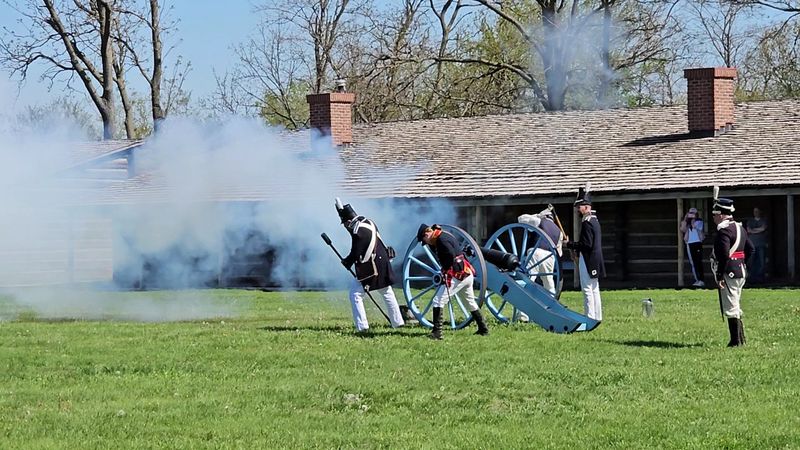
Late afternoon light turns the log walls golden, and the flag comes down as a cannon booms across the bluff. Moments like that stay with you long after the drive home.
Fort Atkinson State Historical Park packs a surprising amount into a modest setting. You get the Lewis and Clark connection, the story of the westernmost Army post of its day, and a reconstruction built on decades of careful archaeology.
Add friendly volunteers, hands-on crafts, and miles of walking trails, and the day fills up quickly.
It stands as a reminder that some of the biggest chapters in Nebraska history happened in places that look quiet today. A quarter of the nation’s army once gathered on this ground, and now families picnic where soldiers drilled.
For a first trip, aim for a living history weekend to see the fort at its liveliest. Then come back on a calm day to walk the trails and soak in the silence.
Both visits reveal different sides of the same remarkable spot.
Either way, this bluff above the Missouri has a story worth hearing firsthand.