Interstate 80 Runs Straight Under This Nebraska Museum You Can Walk Across From End To End
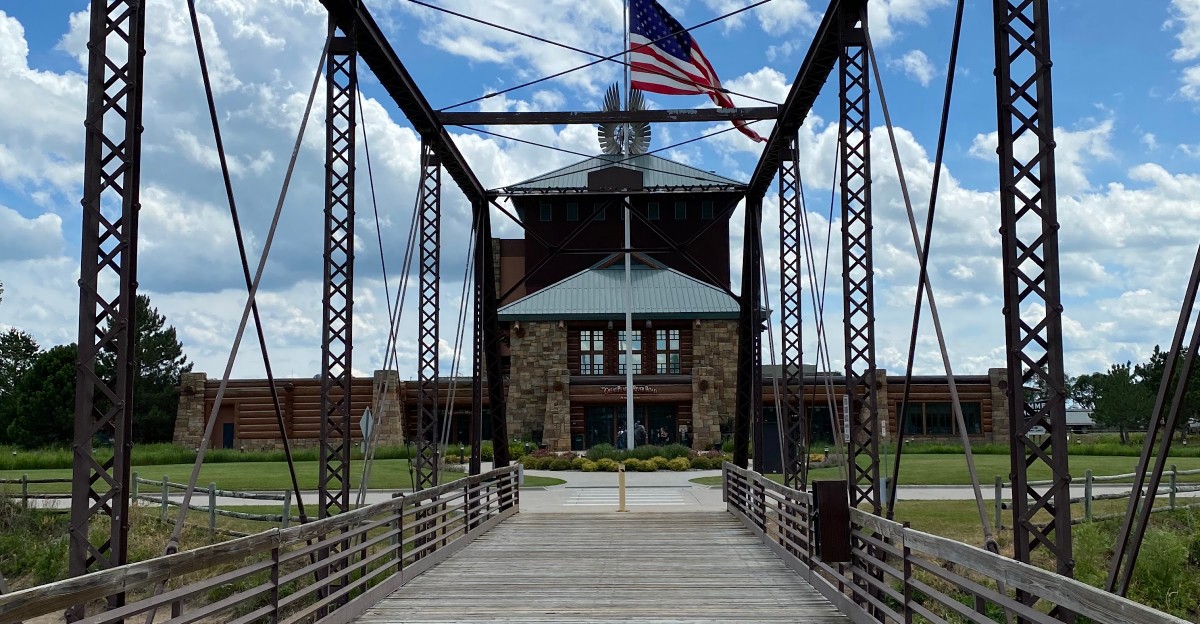
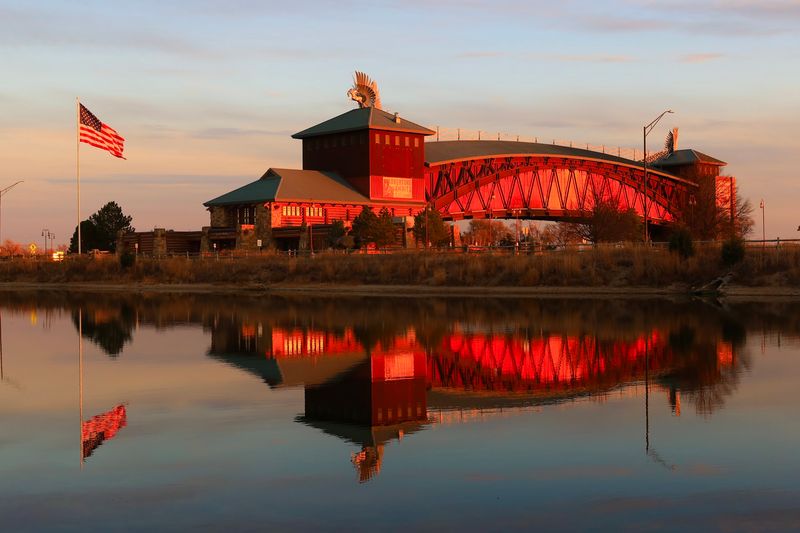
Driving across Nebraska, you get used to the horizon doing very little. Then something enormous appears over the interstate ahead, a wooden-looking arc bridging both directions of traffic, and you have about twenty seconds to decide whether to take the exit.
Plenty of people have waved at it for twenty-five years and never stopped. Inside that span is a full museum about 180 years of travel, and you cross the highway on foot to see all of it.
A Building That Straddles the Interstate
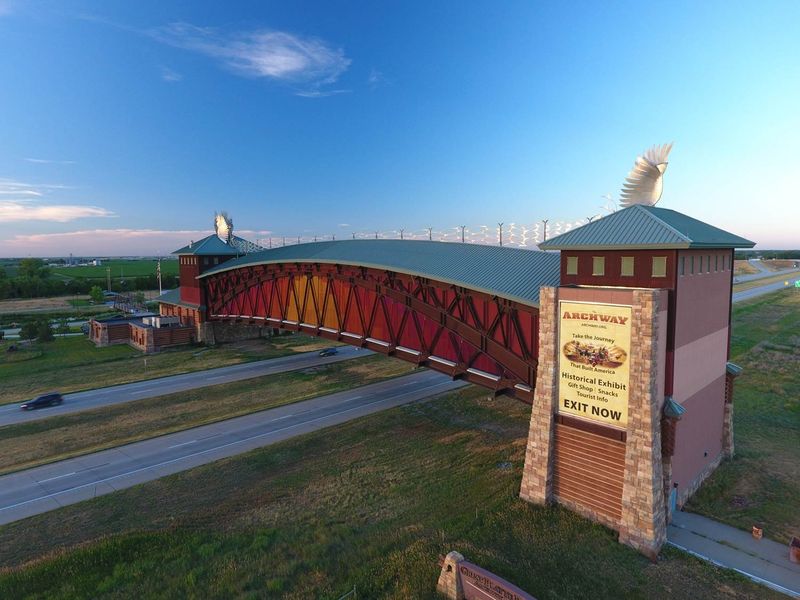
Semis roll underneath at seventy miles an hour while you stand above them, looking down through the floor of a museum. That is the basic trick of the place, and it never stops being odd.
The structure spans more than 300 feet across Interstate 80 just east of Kearney, in Buffalo County, right in the middle of the Platte valley. Officially it carries a longer name, The Great Platte River Road Archway Monument, though almost nobody uses the full version.
Google Maps files it simply as a historical place, which undersells what is happening inside. The exhibit space fills the span itself, so walking the museum end to end means physically crossing the highway on a bridge with displays lining both sides.
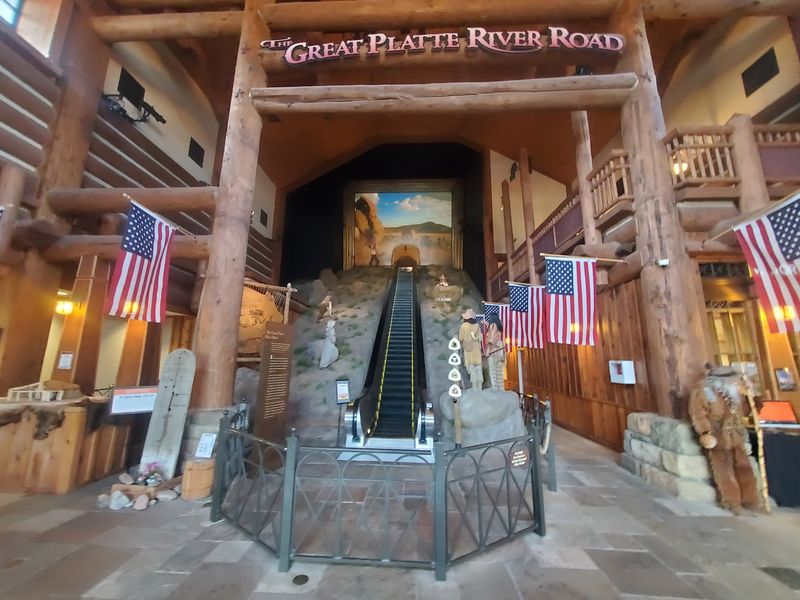
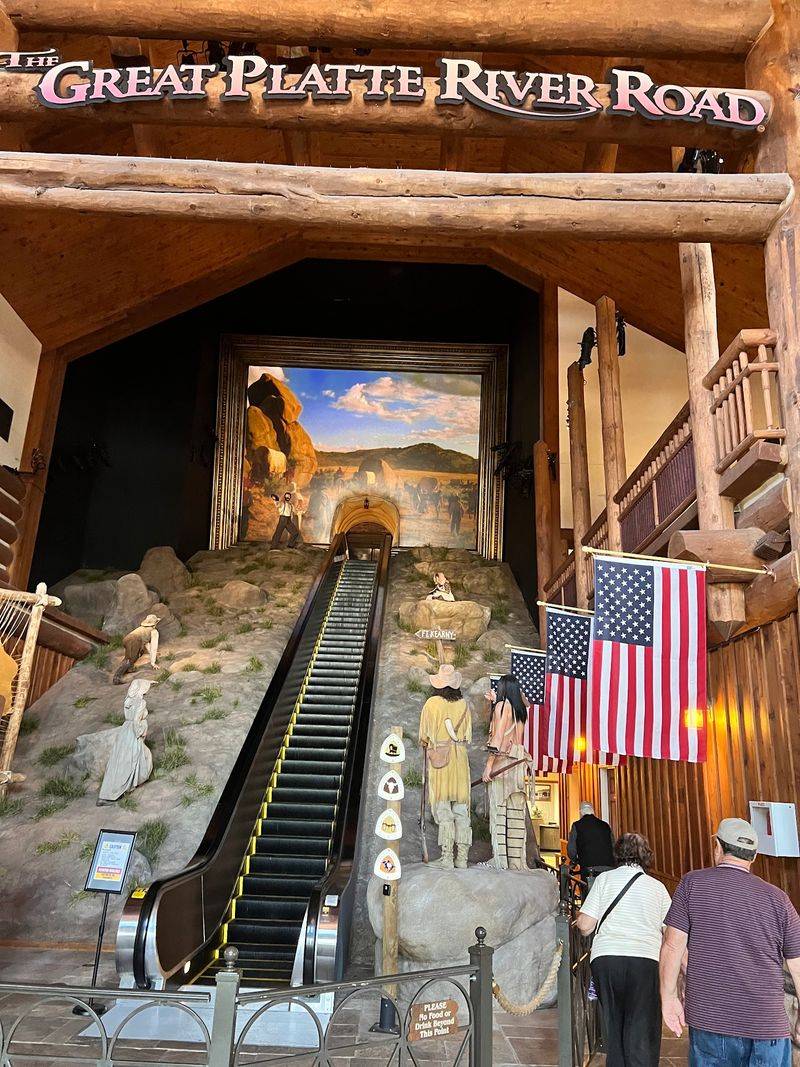
An escalator carries you up from the ground floor, past displays on either side, into the story. Below, the rest stop functions as it looks: parking, restrooms, grounds.
Above, it becomes something else entirely, and the traffic noise fades into a low hum you stop noticing after a few minutes.
Where Three Trails Came Together
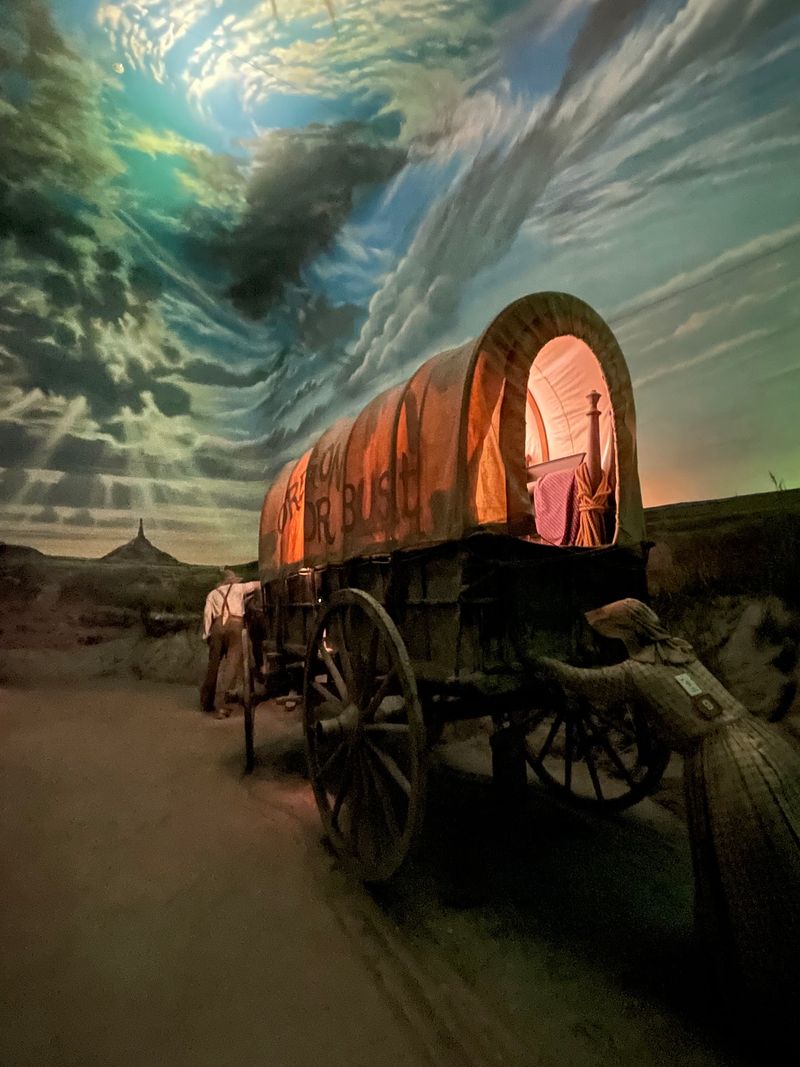
Ground matters here. The land under the arch sits where the Oregon, Mormon and California trails ran together near old Fort Kearny, which makes the monument less a decoration and more a marker planted exactly where the traffic always was.
Wagon parties followed the Platte because the river gave water, grass and a flat road west. Later the railroad chose the same corridor.
Later still, the Lincoln Highway did, and after that the interstate.
So the museum has an argument built into its foundation: the route never changed, only the vehicles. Standing on the walkway and watching modern traffic pour through the same gap is the whole point delivered without a word of narration.
Opened in July 2000, the monument covers roughly 180 years of movement through this one stretch of Nebraska. Workers setting the beams over the highway were visible to every driver on I-80 at the time, which is part of why so many long-haul drivers remember watching it go up before they ever went inside.
The Audio Tour and How It Works
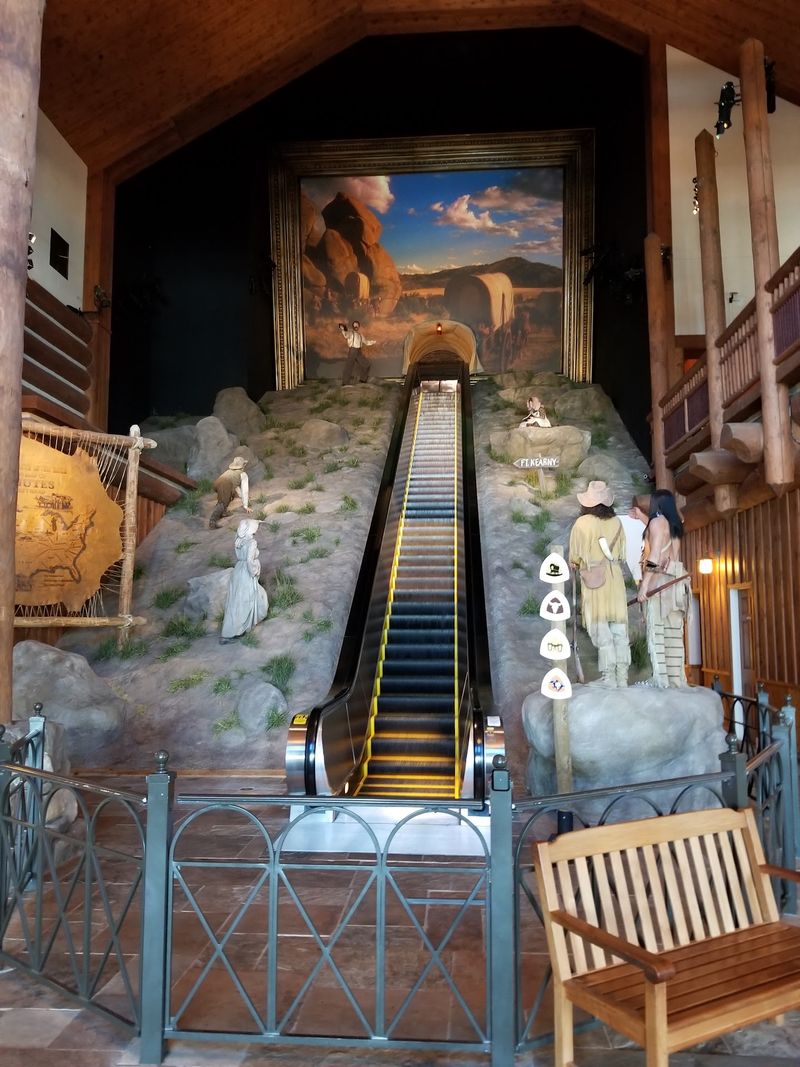
Handed a small portable speaker at the ticket counter, you become the one deciding what gets explained. Numbered stations run the length of the exhibit, and the device picks up each one as you reach it.
There’s a QR code option too, if you’d rather use your own phone and earbuds, and guided tours are available as well. The self-guided route works closer to a choose-your-own-adventure than a fixed march through galleries.
Kids handle the devices easily, which matters more than it sounds. Young children can run their own audio, skip ahead, or linger at whatever caught their eye without waiting on an adult to read a placard aloud.
Reading material sits alongside the narration for anyone who prefers text. Most people move through in an hour to an hour and a half, though the exhibit rewards a slower pace if you have the time.
Audio tour and self-guided tour are two of the most mentioned features of the whole visit, with dozens of separate references between them, so the format clearly does its job.
Dioramas, Life-Sized Figures and Covered Wagons
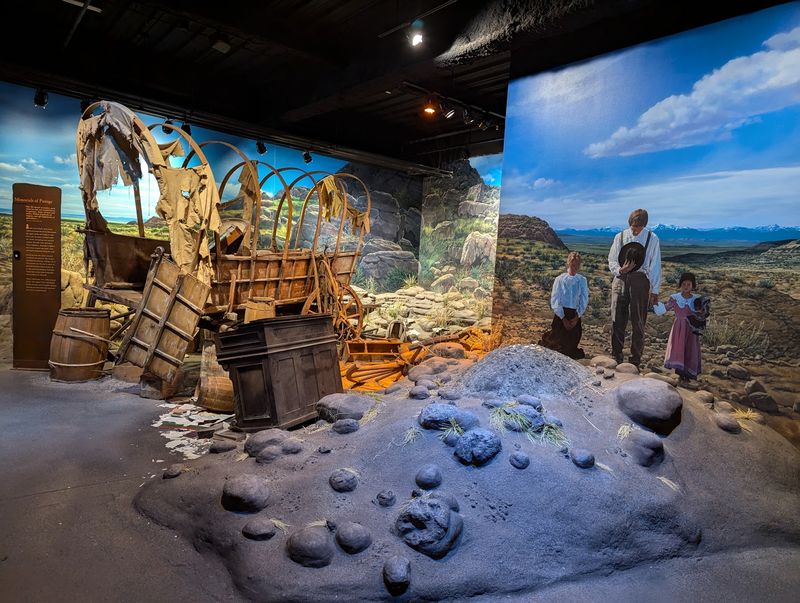
Full-size figures stand beside covered wagons, staged against painted prairie, close enough that you notice the wear on the canvas and the load strapped to the wagon box. Nothing sits behind glass at arm’s length.
Pony Express riders, telegraph operators and railroad crews each get their own scene as the exhibit moves forward in time. The sequence is deliberate: wagons, then rails, then automobiles, then the interstate you’re standing over.
Artifacts back up the staging rather than replacing it. The result reads as a story with characters instead of a display case inventory, told from several viewpoints rather than one.
Craftsmanship on the dioramas and displays is high, and that holds true even for people who wish the building leaned harder into its own architecture. One thoughtful critique argues the arch itself deserves more of the spotlight, with bigger windows or a glass walkway over the highway, since pioneer artifacts exist in plenty of other museums.
Fair point. The storytelling still lands, particularly the sheer physical difficulty the trail figures make plain.
The 1950s Diner Looking East Over the Highway
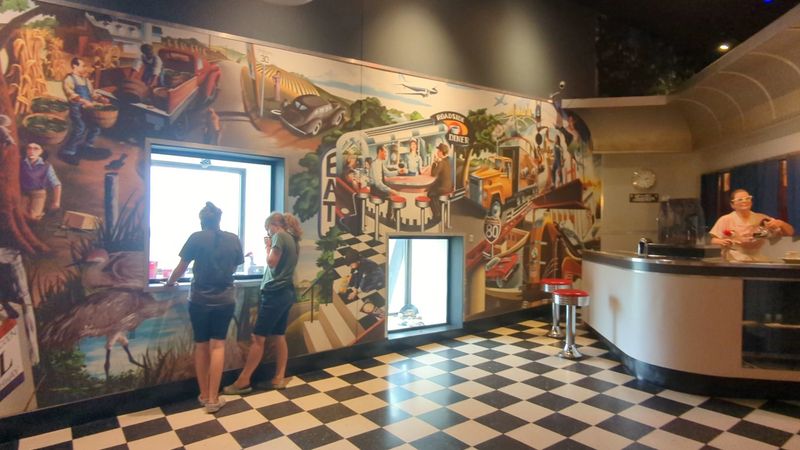
Chrome, vinyl and checkerboard floor announce the last chapter. A replica 1950s diner sits near the end of the walk, standing in for the era when cross-country driving turned into something families did for fun.
Two windows face east over Interstate 80 from inside the diner, giving the only real look down the highway from within the museum. They’re modest windows, and that’s the one design choice people push back on, but the view still connects the room to the road.
Upstairs there’s a spot where you can watch traffic and clock how fast it’s moving. Kids gravitate straight to it, calling out speeders with the enthusiasm of small highway patrol officers.
The Lincoln Highway section leading into the diner covers the stretch when motorists finally got dependable coast-to-coast access. Nebraska sat squarely on that route, which is why the state shows up so often in early auto-travel history.
From wagon ruts to a lunch counter takes about an hour of walking, and the jump feels startlingly short.
The Maze and the Interactive Screens
Not everything here asks you to stand still and read. A walk-through maze section turns part of the exhibit into something closer to play, and it gets mentioned dozens of times by people describing their visit.
Screens scattered through the galleries handle the interactive side, and children tend to find them first. Between the personal audio speakers and the touch displays, the museum gives younger visitors jobs to do rather than rules to follow.
Seven-year-olds can move fast or slow with no penalty either way. That flexibility is what keeps a family visit from collapsing twenty minutes in.
Adults get plenty from the same setup. The trail sections make the physical toll of the crossing unmistakable, and that tends to reframe the drive you just complained about on the way in.
Interactive exhibits alone come up in around thirty-five separate visitor accounts. For a museum built over a highway, it’s a notably hands-on place, and the balance between spectacle and substance holds up across age groups.
Grounds, Gardens and the Catfish Under the Bridge
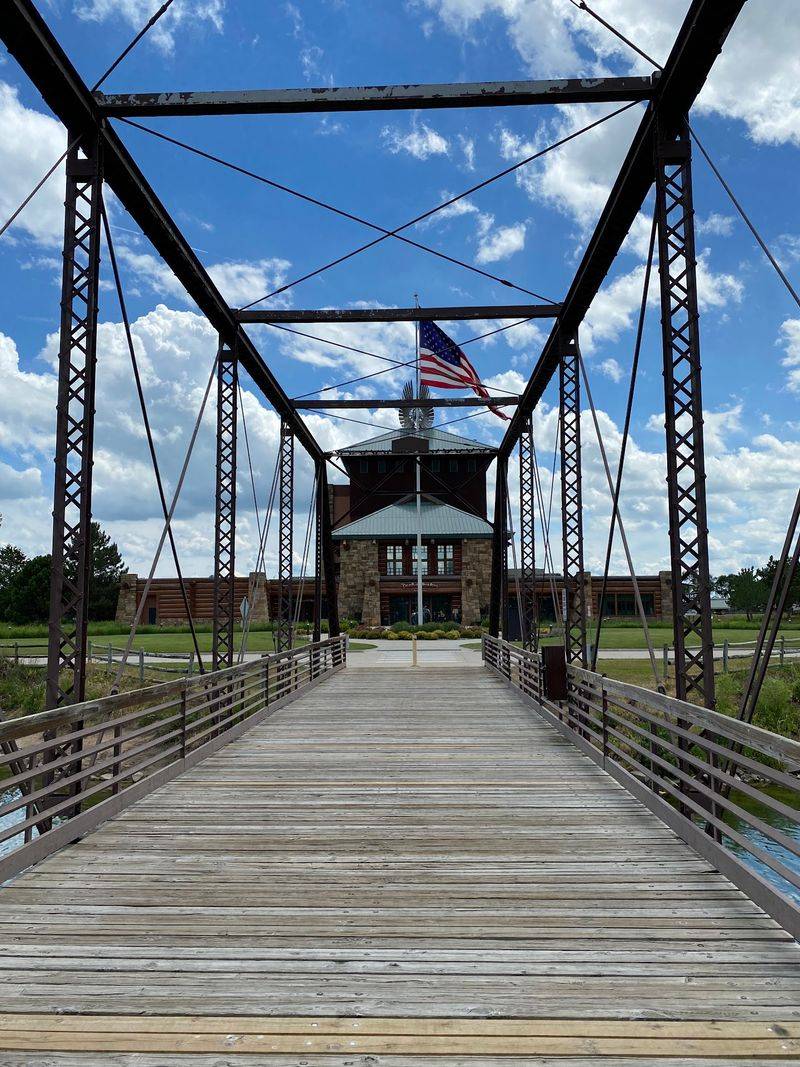
Buy a container of fish food at the gift shop, walk out to the bridge, and drop it over the rail. Catfish come up for it.
That small ritual is one of the more charming things going at a highway rest stop.
Outdoor gardens and picnic areas surround the building, kept tidy and open for wandering. Cross the river bridge and a hiking trail continues on the far side, running as far as seven miles depending how much you take on.
Plenty of the exterior experience costs nothing. Historical information panels line the grounds, so even arriving after the museum closes leaves something to see and read outdoors.
Restrooms deserve a mention, unglamorous as that is. They’re a clear step up from the standard interstate rest area, which counts for a lot on a long Nebraska drive.
The gift shop stocks locally made items and gets referenced more than any other single feature, well over a hundred times. Snacks are available on site too.
Staff Who Clearly Like the Subject
One detail comes up again and again: the people working the floor know the history and enjoy talking about it. Enthusiasm that specific is hard to fake and harder to train.
Arrival can be mildly confusing. The ground level doesn’t look like a museum entrance, and the escalator up to the ticket counter isn’t obvious until you spot other people heading for it.
Follow the escalator and someone will point you the right way.
Staff explain the tour options at the counter, sort out the audio devices, and answer questions about the trails and the grounds. Rating across more than 3,100 reviews sits at 4.7 stars, and the welcome is a recurring reason why.
Small operation, big building. That combination usually produces either indifference or genuine pride, and here it lands firmly on pride.
Ask about the fish food, the hiking trail, or which trail crossed where. The answers tend to come with more detail than you bargained for, in the best possible way.
Planning the Stop in Buffalo County
Address first: 3060 E 1st St, Kearney, NE 68847. The exit sits just east of town, and access from the interstate is about as easy as roadside attractions get, with ample parking and no complicated approach.
Doors open at 9 in the morning most days, with a later start on Sundays, and the museum runs until late afternoon. Hours can shift seasonally, so a quick check before a long drive saves disappointment.
Admission is affordable, in the range of a normal small-museum ticket rather than a big-city one. Some of the grounds and outdoor displays are free to walk regardless.
Budget an hour and a half for the exhibit at a comfortable pace, more if you add the trail or the gardens. Families with young children often take longer because the audio devices invite dawdling.
Kearney makes a natural midpoint for anyone crossing Nebraska on I-80, whether you’re driving from Colorado toward Omaha or heading the other direction toward Cheyenne.
Why the Exit Is Worth Taking This Time
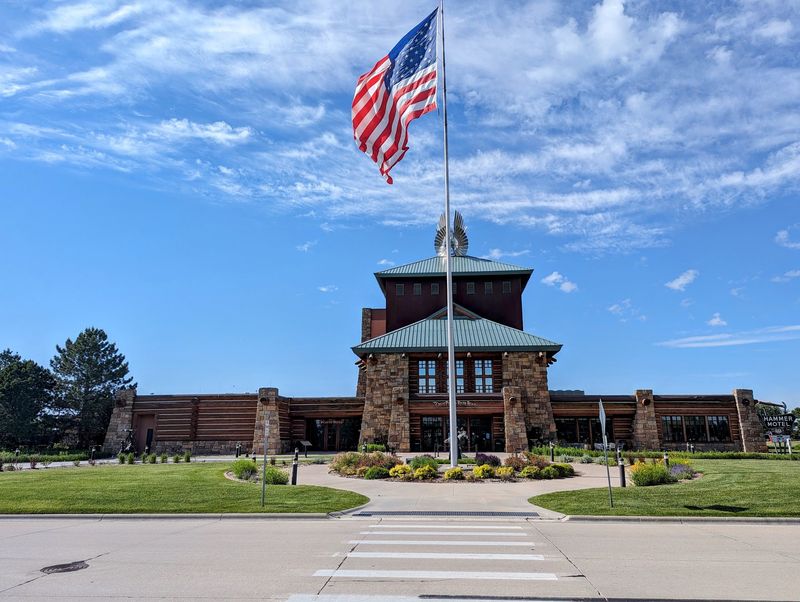
Semi drivers who have passed under the arch thousands of times over decades finally pull off, and come away wondering why they waited. The gift shop even sells a shirt about it, which tells you how common the story is.
Here’s the honest summary. It’s a well-built, well-maintained museum with a clear narrative, an audio system that actually works, exhibit craft above what a roadside stop requires, and grounds pleasant enough to stretch your legs on for half an hour.
Would a glass floor over the traffic be more dramatic? Probably.
The building still does something no other Nebraska museum can claim by simply existing where it does.
Best suited to families with school-age kids, anyone curious about how the Platte valley shaped American travel, and drivers who need a break that isn’t another vending machine alcove.
Next time that arc appears over the windshield east of Kearney, take the exit. An hour and a half is a small price for finally knowing what’s up there.