Is There Really A Florida Town Where Every Wall Turns Into A Giant Outdoor Mural?
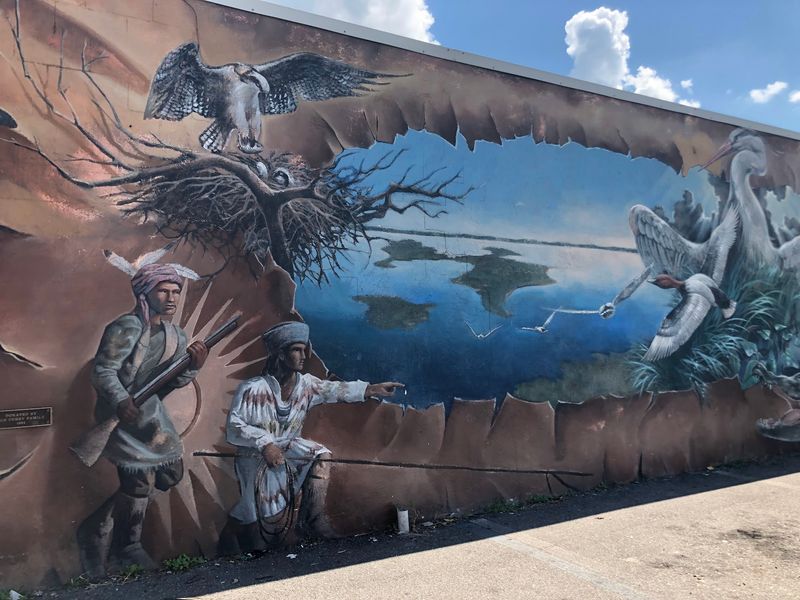
I pulled off the highway for a snack and a stretch, fully expecting nothing more exciting than a gas station restroom. Instead, a small Florida downtown started talking to me through its walls, with painted cowboys, citrus groves, and steam engines staring back from the sides of old buildings.
A ten-minute pit stop quietly turned into an entire afternoon of wandering, and I kept wondering how many drivers roll right past without looking up. Here is the story behind all that paint, plus everything you need to see it for yourself.
A Plain Downtown With Painted Secrets
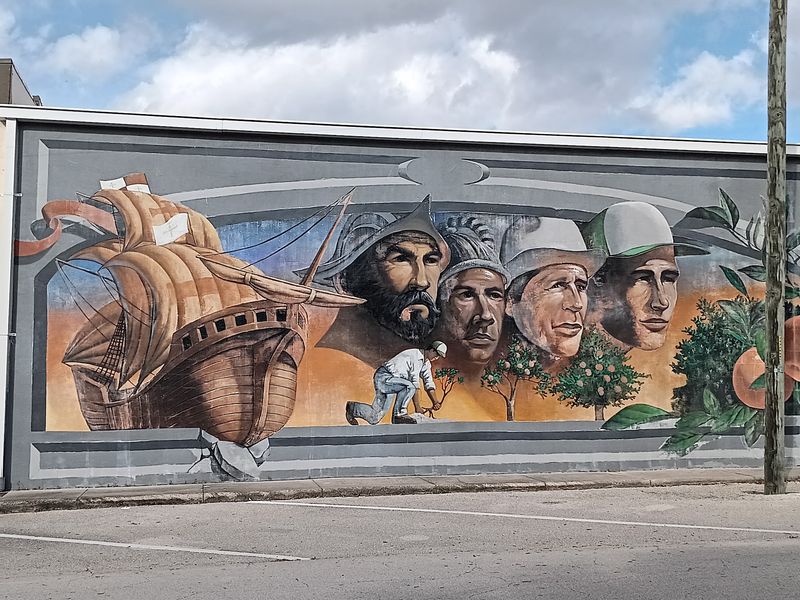
Rolling down Main Avenue for the first time, the scene looks like plenty of other small central Florida downtowns: low storefronts, wide sidewalks, and a pace that never seems to be in a hurry. Then a building corner swings into view, and its whole side is alive with color, faces, and history.
So is every single wall painted? Not quite, although the tally is high enough to make the question fair.
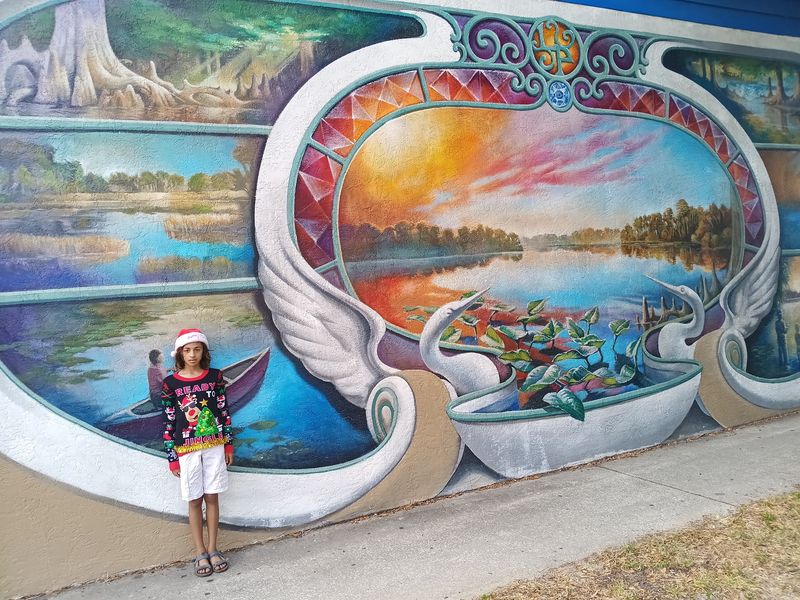
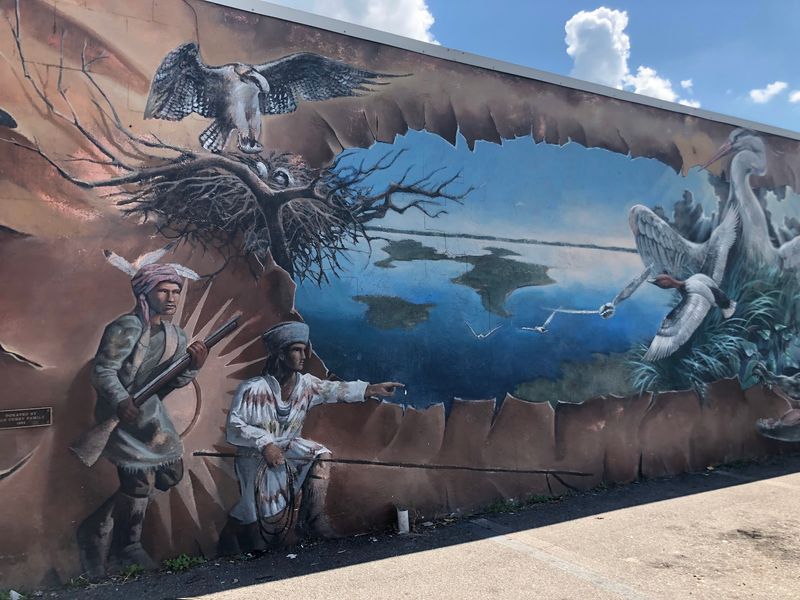
Lake Placid, in Highlands County, carries the nickname “The Town of Murals,” and more than 40 large outdoor artworks decorate exterior walls around downtown, with some counts landing closer to 50.
Treat the place as an open-air gallery with no doors, no ticket booth, and no closing bell. Paintings stretch across shops, offices, and side walls, so a lap around the block doubles as a crash course in local history, with little stores sprinkled between the big pieces for breaks.
The Lake Placid Mural Society, the group that manages the collection, makes a natural first stop for getting your bearings. Park nearby, grab a sense of direction, and let the walls handle the rest.
Find it at 103 N Main Ave, Lake Placid, Florida 33852.
One Motorcycle Trip, One Big Idea
Picture two Florida residents on a motorcycle trip, cruising into a small town in British Columbia and spotting buildings covered in enormous painted scenes. That moment belonged to Harriet and Bob Porter, and the town was Chemainus, a Canadian community that had turned its walls into a storytelling project of its own.
Why not try the same thing back home? The Porters carried the idea south and founded the Lake Placid Mural Society in 1992.
Their mission had two halves: refresh downtown buildings that were showing wear, and record the area’s history and culture somewhere everyone could see it without paying a cent.
Plenty of beautification efforts fizzle after a single painting. This one kept going.
One finished wall led to a second, the second to a third, and over the years the effort grew into a sprawling collection that pulls road-trippers from far outside Highlands County.
Knowing the origin story changes the experience on the sidewalk. Each piece stops being simple decoration and becomes part of a long community project that started with one couple, one ride through Canada, and an idea they refused to let go of, even when the work stretched on for years.
Rules Behind Every Brushstroke
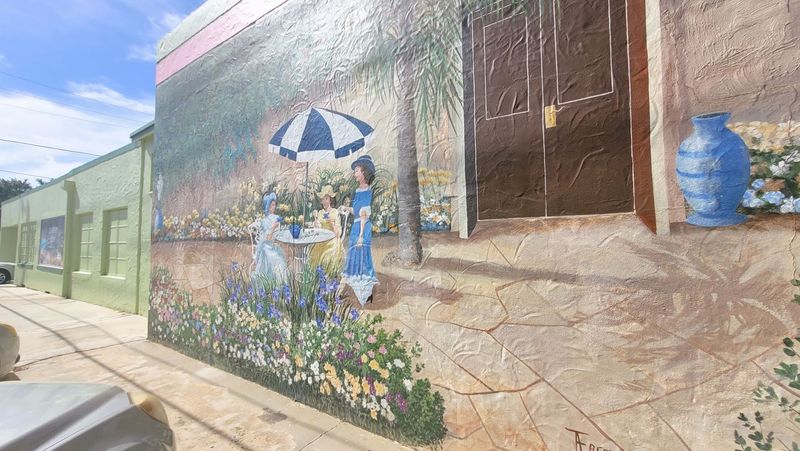
Unlike a random splash of street art, these walls follow a clear set of guidelines. Every mural must tell a story about local culture, history, agriculture, or notable figures from the community, which keeps the entire collection pointed in one direction.
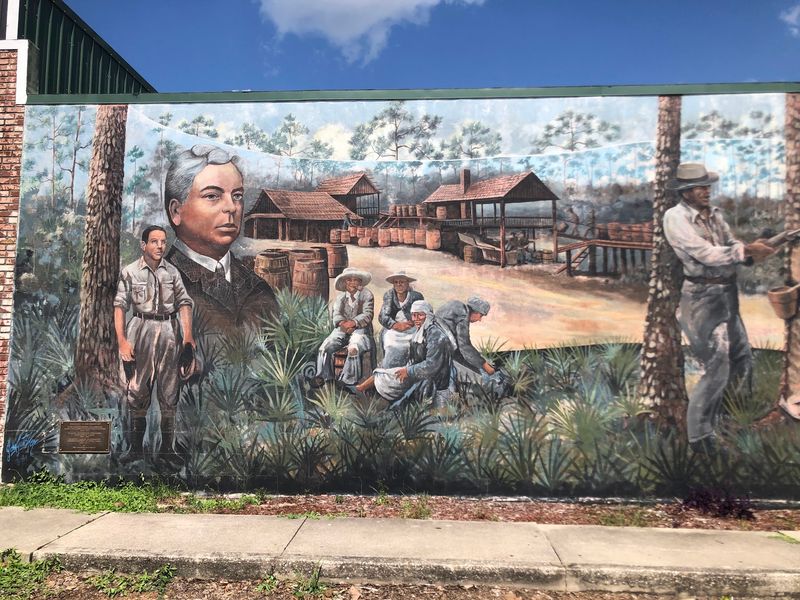
Many of the painted figures are real people who lived and worked in the area. Instead of generic farmers or anonymous travelers, the faces belong to residents whose labor and choices shaped the place, so the art reads almost like a family photo album blown up to building size.
Stand in front of one for a few minutes and the details start stacking up, from period clothing to the look of the land before paved roads arrived. The storytelling rule means nothing up there exists only to look pretty.
Every choice points back to something that happened in this corner of the state.
How does that change a visit? It turns sightseeing into a light history lesson that never feels like homework.
Kids can ask who a person was, adults can guess the decade, and everyone leaves knowing more about Highlands County than they expected when they parked.
Citrus Groves and Cattle Drives
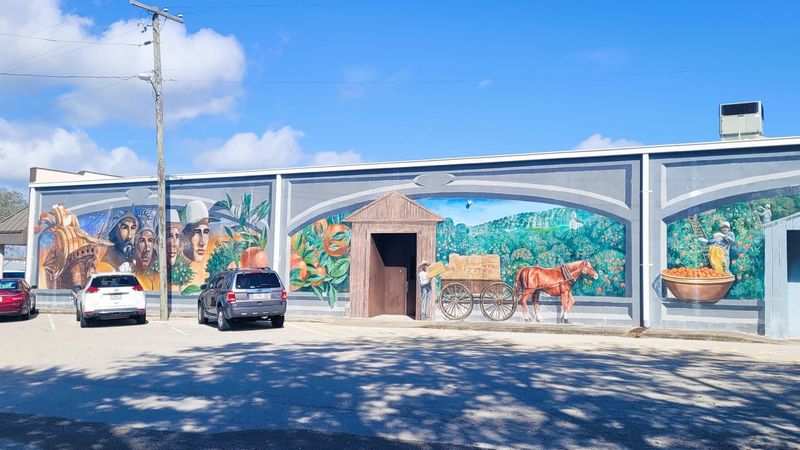
Orange blossoms and dusty cattle trails might seem like opposite ends of Florida life, yet both show up downtown in bright, oversized form. Agriculture ranks among the biggest threads running through the collection, and several paintings trace the region’s farming roots through scenes of citrus growing and cattle drives.
Central Florida’s interior has long been ranch and grove country, a side of the state that rarely lands on postcards. Beaches and theme parks grab the spotlight, while the working land that fed families and built small communities usually stays in the background.
On these walls, it moves front and center.
Ranching is not just a Western thing, and the cattle drive scenes make that point with plenty of Florida cowboy flavor. Citrus murals, by contrast, focus on the groves and harvest work that shaped so much of daily life in the region.
Try viewing these pieces as a set rather than one at a time. Seeing cattle and citrus scenes close together gives a clearer sense of how people in Highlands County made a living before tourism, and it sparks good questions from kids who assume oranges simply appear in grocery bags.
Turpentine, Pioneers, and Deeper Roots
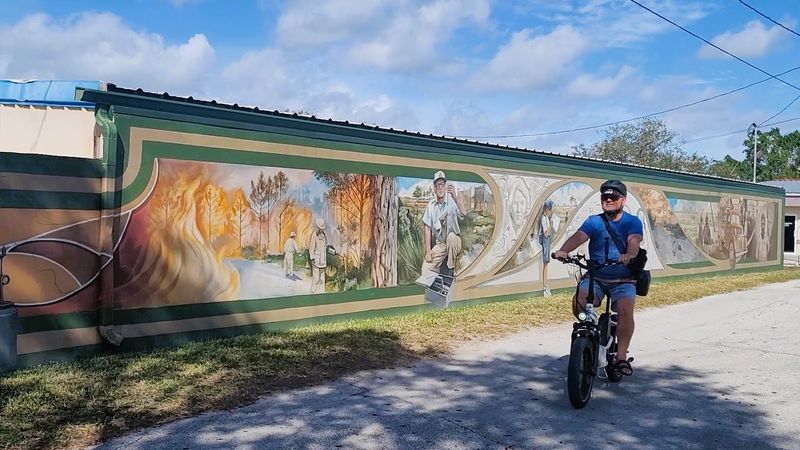
Ever heard of turpentine production? Long before the region became a relaxed weekend escape, Florida pine forests were tapped for sticky resin, and that pioneer industry earns its own spot on the downtown walls.
Resin work was hot, tedious, and physically demanding, the kind of labor history books often skip. Giving it space on a public wall treats those workers as part of the story instead of a footnote.
The pioneer theme also stretches into early settlement, when families carved out homes in a landscape of scrub, lakes, and pine.
Older than any settler timeline, Native American heritage appears in the collection too. Those murals serve as a reminder that people lived on and cared for this land long before the first storefront rose along Main Avenue, and they add depth that a purely pioneer-focused gallery would lack.
Warm light washing over the paint, traffic humming softly in the distance, centuries of local history lined up within a short walk: standing between a pioneer scene and a Native American one makes those layers of time easy to feel. Give these pieces a few extra minutes, because they reward a closer look.
Steam Engines and Hometown Legends
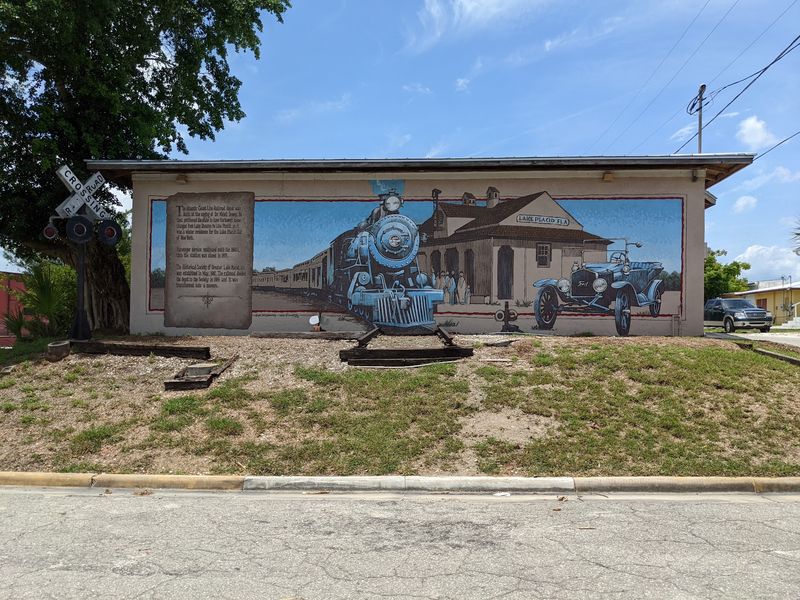
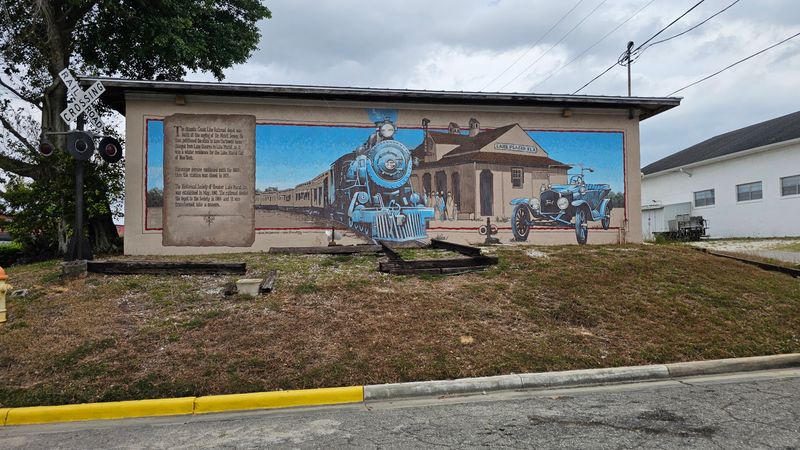
Historic steam engines rank among the themes painted around town, and a locomotive rendered at building size has a way of stopping foot traffic. Young train fans in particular tend to forget they were bored five minutes earlier.
Why trains? Across central Florida, rail lines helped small towns move goods, welcome newcomers, and grow beyond a handful of homesteads.
An engine on a wall nods to how this community linked up with the rest of the state, a detail easy to overlook when highways do all the work today.
Local legends share the spotlight, too, painted with the kind of color and drama that make old tales feel fresh. These are the stories that give a small place its personality.
The murals hint at them without spelling everything out, which often leads to a quick phone search right there on the sidewalk.
Bring a fully charged phone. Between the engines and the legends, camera rolls fill up fast here, and the sheer scale of the work makes for dramatic photos even without fancy gear or any photography training.
Back up for the full frame, then move in close for the fine detail.
Wildlife Painted Larger Than Life
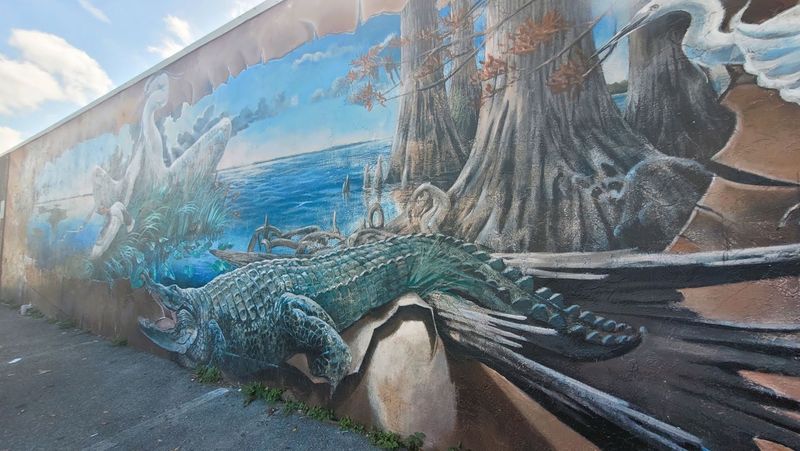
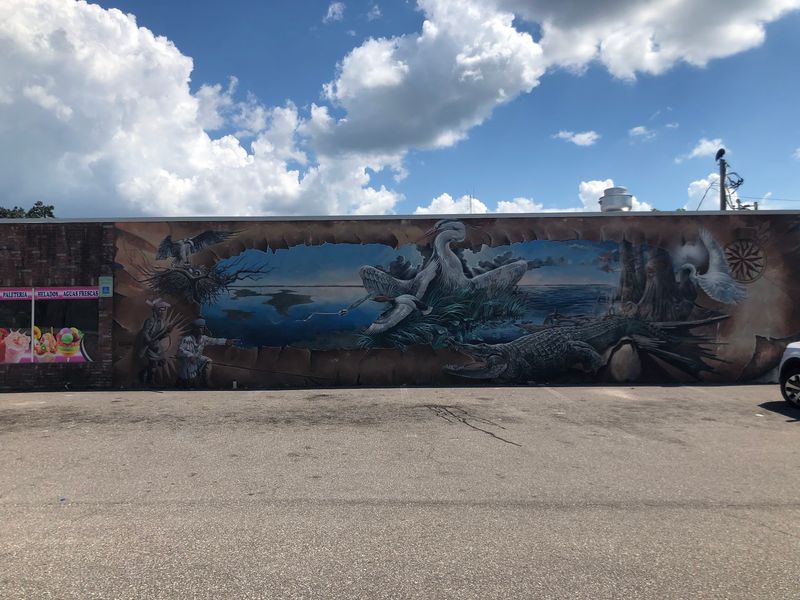
Feathers, scales, and fur look different when they stretch across an entire wall. Abundant wildlife is a recurring subject in the collection, bringing creatures of the Florida interior right into the middle of downtown.
Highlands County sits in lake country, surrounded by water and open land, so wildlife is part of everyday life here rather than a rare sighting. The murals celebrate that natural splendor and give a small community a way to show off the neighbors who never pay rent.
Compared with the history-heavy scenes elsewhere, these pieces feel lighter and more playful. Younger kids who drift away from dates and names often perk up fast when an animal the size of a delivery truck appears on the side of a building.
Grown-ups, for their part, get a break from reading and can simply enjoy the artistry.
Ask children to keep a running list of every critter they find in paint. The game keeps little legs moving between blocks, gives everyone something to compare over ice cream later, and settles the eternal family debate over who spotted what first, as long as someone took a photo for proof.
Hidden Details for Sharp Eyes
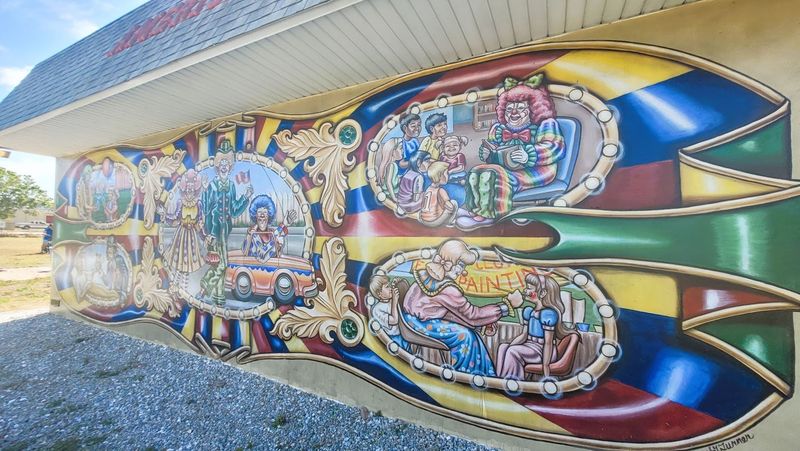
From across the street, a mural reads as one big picture. Up close, it becomes something else, because many of the pieces include hidden details woven into the design, waiting for patient eyes to find them.
What kind of details? Spoiling them would ruin the fun, so the only hint offered here is simple: slow viewers win, and the edges of a painting matter as much as the center.
Snapping one photo and moving on means missing the layer that turns a painting into a puzzle.
Finding every mural in town is a challenge of its own. Explorers on bikes can cover plenty of ground and still come up short, since the artwork is scattered across main streets, side streets, and less obvious corners.
That leftover mystery makes a strong case for a second trip, and maybe a third.
Grab a mural tour book from the Visitor’s Center before starting. It works as both a map and a checklist, so the hunt feels organized instead of random.
Mark off each piece as it appears, jot down any secret detail spotted along the way, and compare notes with your group at the end of the loop.
Murals That Make Noise
A walker pauses in front of a painted scene, and suddenly there is sound, audio tied to the story on the wall. Some murals come equipped with sound systems that play recordings connected to what they depict, a layer most outdoor art never attempts.
Why does that matter? Paint shows what a moment looked like, while sound hints at how it felt.
Hearing audio beside a historic scene makes the past seem closer, especially for kids who absorb more by listening than by reading a sign.
Not every piece talks, so the audio murals feel like a bonus discovery rather than a standard feature. Keep an ear open during the walk, and pay attention to spots where speakers or prompts might be mounted near the artwork.
Hearing one for the first time tends to catch people off guard in the best way.
Interactive touches like these help explain why the collection works so well for homeschool outings and school groups. Art, history, and a bit of technology come together outdoors, with no admission fee and no stuffy museum rules.
Nobody has to whisper, nobody has to stay behind a velvet rope, and questions can be asked out loud.
Even the Trash Cans Got Dressed Up
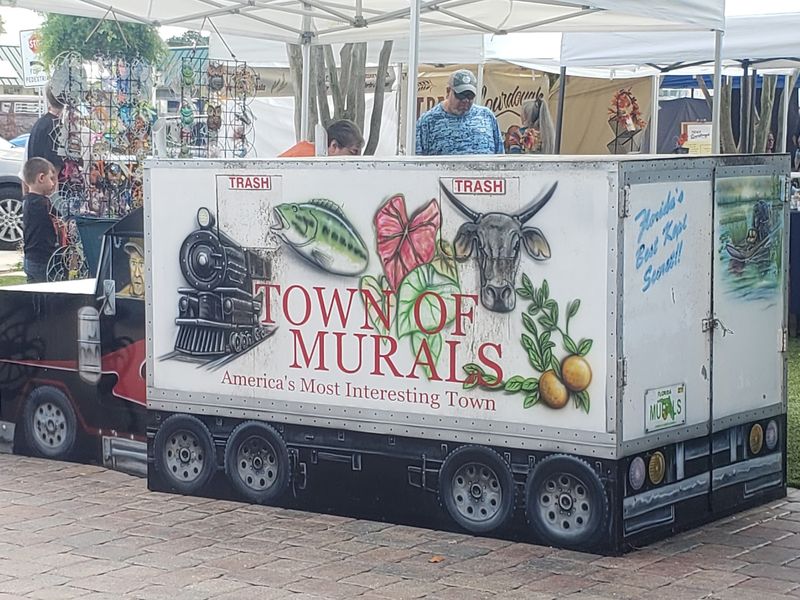
Look down for a second, because the art does not stop at eye level. Downtown includes 17 hand-painted trash containers, each decorated to complement the larger murals around it.
It sounds like a tiny detail, and it is, yet tiny details shape how a place feels. A plain garbage can fades into the background.
A painted one joins the show and signals a community that pays attention to corners most towns ignore.
Seventeen containers means another mini scavenger hunt layered on top of the main one. Kids who have already tallied animals and trains can switch to trash-can bingo, which is about as exciting as garbage will ever get.
Keeping score adds a little friendly competition to the afternoon.
A family lines up beside a painted bin, grinning, while someone across the sidewalk tries to fit the whole design into the frame. Posing next to a trash can on purpose feels silly for about two seconds, then it becomes the funniest photo of the day.
The containers prove the mural spirit reached every corner of downtown, right down to where the lunch wrappers go.
Florida’s Caladium Capital Blooms Next Door
Roughly 90 percent of the world’s caladium bulbs come from this area, which is why the town also holds the title “The Caladium Capital of the World.” Those heart-shaped leafy plants brightening porches and garden beds far from here very likely began their journey in Highlands County.
Summer transforms the surrounding landscape. Fields fill with pink, white, and red foliage, forming a living patchwork that echoes the painted colors downtown, just spread across acres of farmland instead of building walls.
The display is at its most vivid in the warm months, so a winter trip centers on the murals instead.
Does a garden bulb belong in an article about murals? Here, the answer is yes.
The caladium story ties straight back to the collection’s focus on agriculture, and it adds a seasonal reason to time a visit, pairing farming scenes on the walls with working fields just outside town.
Heat comes with the territory in a central Florida summer, along with humid afternoons and pop-up thunderstorms. Plan field viewing for the morning, save the shops for the steamy hours, and check the weather before driving out, especially during hurricane season, which runs from June through November.
A Name Borrowed From New York
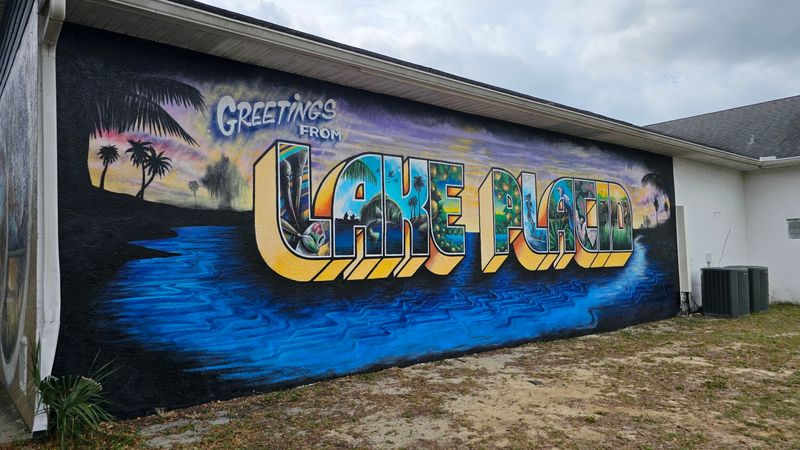
Snowy mountains and Winter Olympics history feel a world away from palmettos and orange groves, yet the two places share a name. This Florida town was named after Lake Placid, New York, a connection that makes northern travelers do a double take when they see the welcome signs.
A visitor from upstate New York strolling past painted cattle drives and citrus harvests gets a funny mix of the familiar and the foreign: the same name on the map, a completely different world on the walls. It makes for a great story to carry home.
National attention arrived in 2013, when Reader’s Digest named Lake Placid “America’s Most Interesting Town.” For a community of its size, that is a big headline, and it put the mural project in front of readers across the country. Plenty of small towns have a single mural, but few can point to a national honor like that.
What likely helped earn the title? The combination is hard to match: dozens of story-driven murals, painted trash bins, talking walls, and caladium fields ringing the town.
Add a name borrowed from a famous northern village, and the label starts to make plenty of sense.
Homeschoolers, Cyclists, and Camera Lovers
A parent with a notebook, a couple on bicycles, a retiree with a camera hanging from a strap: downtown sidewalks suit all of them at once. The pace is unhurried, the streets stay calm, and the art handles most of the entertaining.
Homeschool families get a ready-made field trip. The murals cover history, agriculture, wildlife, and local figures, which turns a few blocks into an outdoor classroom where worksheets are optional and curiosity does the heavy lifting.
Older students can research a figure they spot, then share what they learned on the drive home.
Prefer wheels over feet? Bikes cover more ground between paintings, although even a dedicated ride around town can leave a few pieces undiscovered.
Driving works too, since plenty of the art is visible from the car window, and a leisurely cruise is a smart option on the hottest days.
Friendly faces and neat little shops round out the atmosphere, along with a spot for ice cream and a park for stretching legs. Holidays and off-peak days can leave downtown especially peaceful, which is good news for photographers hoping to frame a mural without strangers wandering through the shot.
Planning a Florida Mural Day Trip
Plan on roughly two hours behind the wheel from Orlando or Tampa, which puts this stop squarely in day-trip territory. US-27 serves as the main north-south route through Highlands County, and Sebring sits a short drive north for anyone who wants to stretch the outing.
Seeing the murals costs nothing. There are no tickets, no admission booth, and no timed entry, and many of the paintings sit within a few blocks of Main Avenue.
The mural tour book from the Visitor’s Center keeps the route simple, so confirm its current hours before heading out.
Sun on bare shoulders gets old fast in central Florida, so pack comfortable shoes, water, sunscreen, and a hat. Mornings bring softer light for photos and kinder temperatures, while afternoon storms in summer can send everyone ducking into shops.
In the stormy months, look at the forecast the night before and again in the morning.
So, is every wall in town painted? Not every one, but enough that the question stops mattering after the first few blocks.
For a slow, free, story-packed Florida outing, this little downtown delivers far more than its sleepy streets suggest.