15 Japanese Spots in Northern California That Locals Actually Love
California is the only U.S. state with all three remaining historic Japantowns: San Francisco, San Jose, and Los Angeles. That is no accident.
For over a century, Japanese immigrants built something lasting in Northern California, quietly shaping its food culture one kitchen at a time. What grew from that dedication is something rare: a living tradition, not a trend.
The state’s northern half holds restaurants where that history still shows up on the plate. In the way broth is pulled from scratch each morning.
In fish aged days before it’s sliced. In noodles cut by hand the way they were cut a generation ago.
These aren’t fusion experiments or tribute acts. They are the thing itself.
1. Kenzo, Napa
Some meals don’t announce themselves. They simply arrive, and you understand.
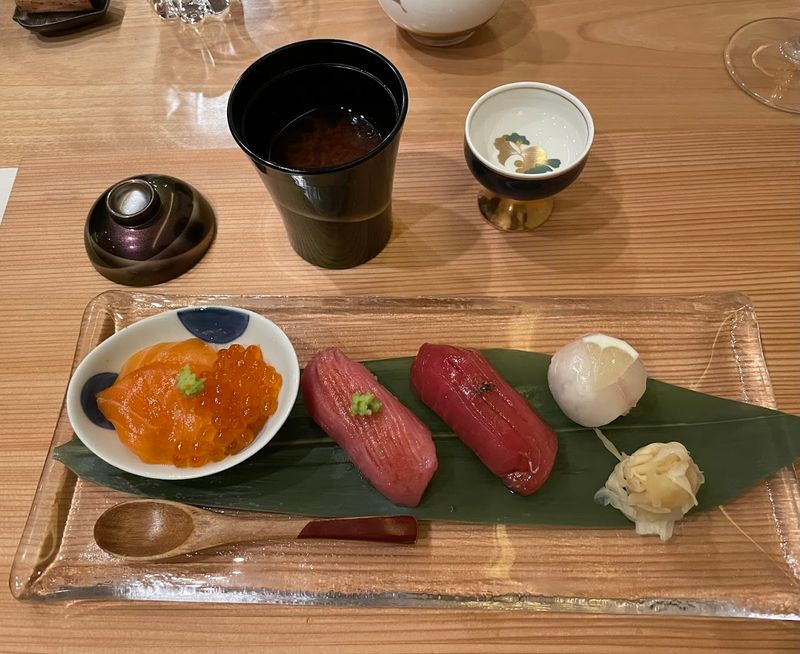
Kenzo earns that kind of quiet confidence. At 1339 Pearl Street in Napa, Japanese culinary philosophy meets the quiet beauty of the valley, and the space around it feels chosen rather than accidental.
Clean lines and natural materials set a tone before the food even arrives.
Nothing on the menu is overdone, and each plate looks like it was composed with the same care a painter gives a canvas. The fish is sourced with intention.
The rice courses carry a depth that takes years to develop, the kind that can’t be rushed or replicated.
Napa is better known for other things, but Kenzo makes a strong case for the valley as a serious destination for Japanese cuisine. The omakase format asks you to slow down and pay attention to each course as it comes.
That patience is rewarded with flavors that are subtle but unforgettable.
A meal here doesn’t rush toward an ending. It unfolds.
2. Wako, San Francisco
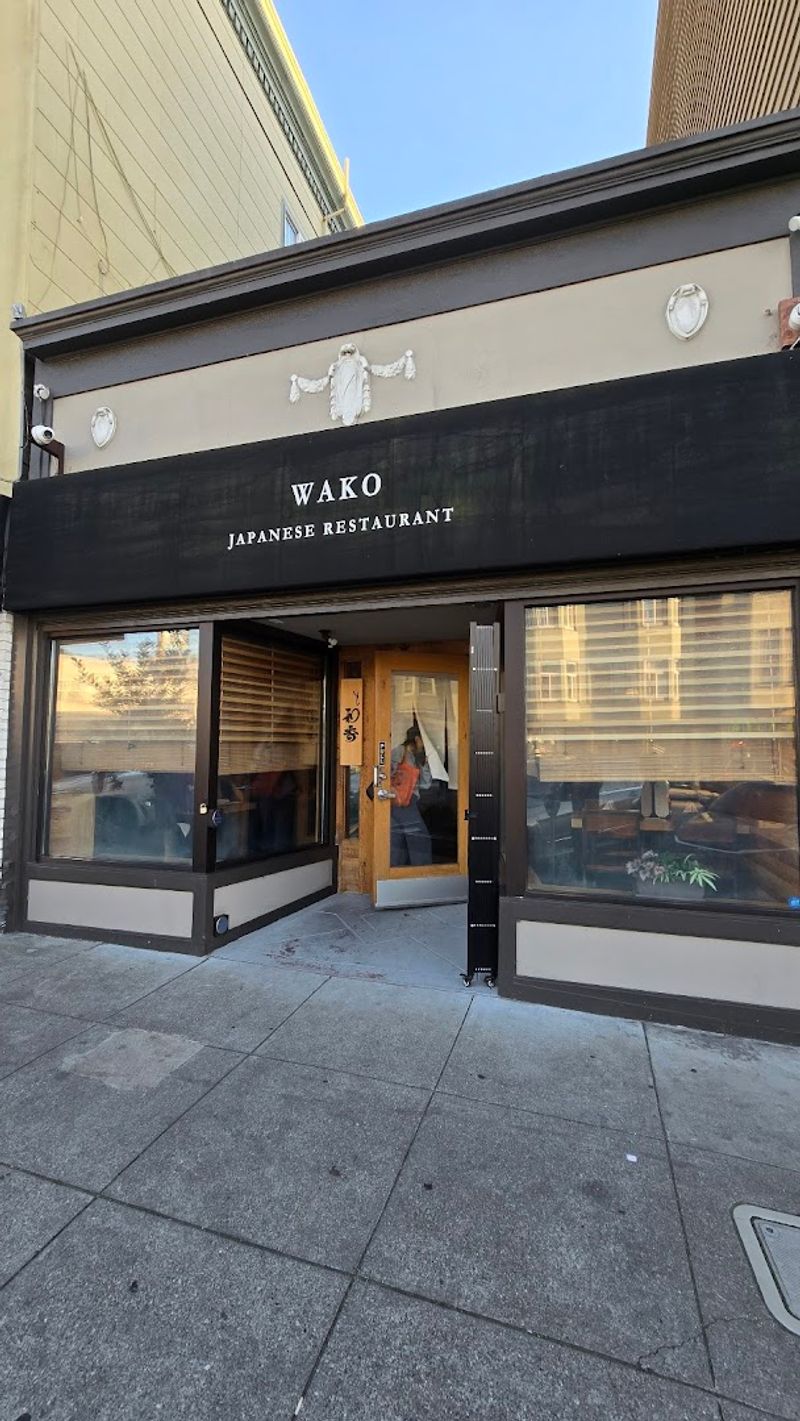
There are restaurants that dazzle, and there are restaurants that make you understand why simplicity is harder. Wako is the second kind.
The dining room is compact and focused, with a sushi counter that puts you face to face with the craft. That foundation shows in every piece of nigiri, from rice temperature to knife work and balance.
Wako doesn’t try to impress with dramatic presentations or exotic ingredients. The power is in the fundamentals.
A clean slice of fatty tuna over seasoned rice, a dot of house-made soy, simple on the surface and deeply considered underneath.
Few places in the city execute classic sushi with this level of consistency and care. You’ll find it at 211 Clement Street, in the heart of San Francisco’s Inner Richmond neighborhood.
Reservations fill fast, so planning ahead is essential. The experience is worth organizing your schedule around.
3. Sushi Yoshizumi, San Mateo
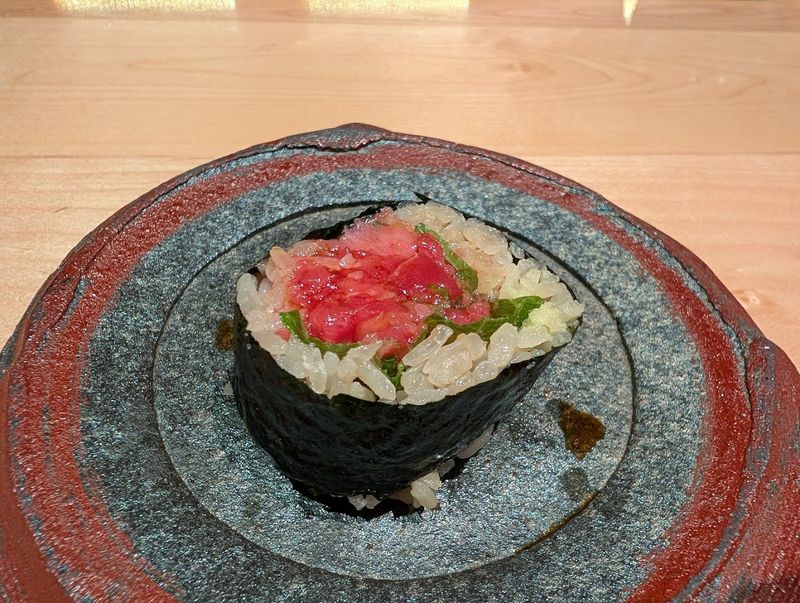
Nine seats. No shortcuts.
No substitutions. That is the whole philosophy at Sushi Yoshizumi.
The counter is run with a level of precision where every movement feels intentional, and even the timing of each piece matters.
The fish changes based on what’s available from Japanese suppliers, and the rice is carefully prepared in small batches to match each piece of fish. That kind of commitment to process is rare anywhere in the country.
Each piece of nigiri is pressed by hand and served at the exact moment it should be eaten. Waiting even a minute changes the texture.
This becomes clear without making you feel rushed, more like being let in on a secret.
The meal moves at a natural pace, and by the end you’ve eaten around twenty courses without feeling heavy. It is a masterclass in proportion and timing.
You’ll find it at 325 East 4th Avenue in San Mateo, and it remains one of the most memorable dining experiences in the Bay Area.
4. Ju-Ni, San Francisco
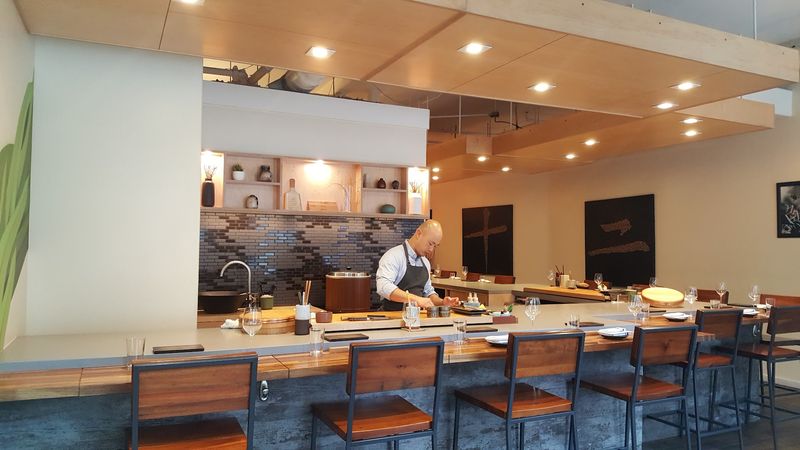
Some restaurants know exactly what they are. Ju-Ni is one of them, and that clarity shows in every course.
Ju-Ni means twelve in Japanese, reflecting balance and precision. The restaurant offers a 14-course omakase experience.
That structure gives the meal a sense of narrative, a beginning, a middle, and a finish that lands cleanly.
The approach blends Japanese training with a California sensibility, which shows up clearly in each course. The result is nigiri that feels rooted in tradition but isn’t afraid to reflect where it’s being made.
Local Dungeness crab might appear alongside imported Japanese uni, and both feel equally at home.
The room is sleek without being cold. Counter seating keeps the focus on the food and the movements behind the counter, which are precise and unhurried.
The pacing between courses gives you time to reflect on what you just ate before the next piece arrives.
Ju-Ni sits at 1335 Fulton Street in San Francisco, and it is one of those places where you leave with a clear memory of specific bites, not just a general feeling of satisfaction. That specificity is what separates a good omakase from a great one.
5. Omakase, San Francisco
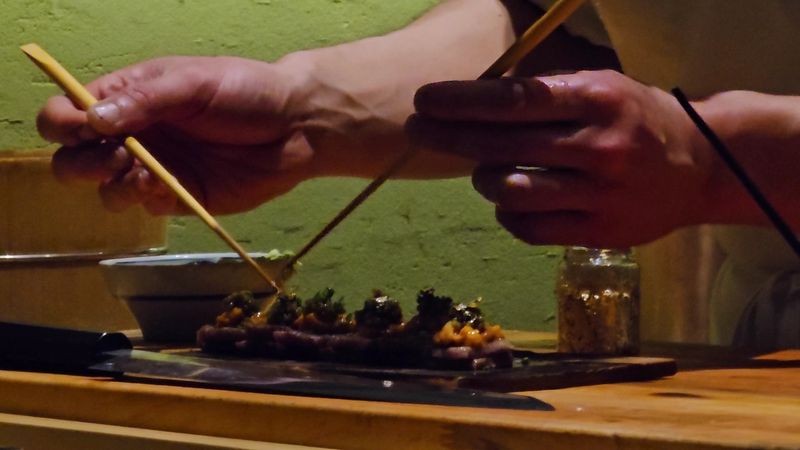
The name says it all. Omakase, at 665 Townsend Street in San Francisco’s SoMa neighborhood, is built entirely around the philosophy of trust, trust the process, trust the season, and follow each course as it arrives.
These techniques add layers of flavor that take experience to develop and patience to appreciate.
The tasting menu rotates based on what’s freshest, and the kitchen’s relationships with both local and Japanese suppliers are evident in the quality of every course. The dining room holds only a small number of guests at a time, which keeps the atmosphere calm and personal.
Courses arrive in a rhythm that feels planned but not rigid. By the final bites, the meal has built into something that feels genuinely complete rather than simply finished.
6. Kusakabe, San Francisco
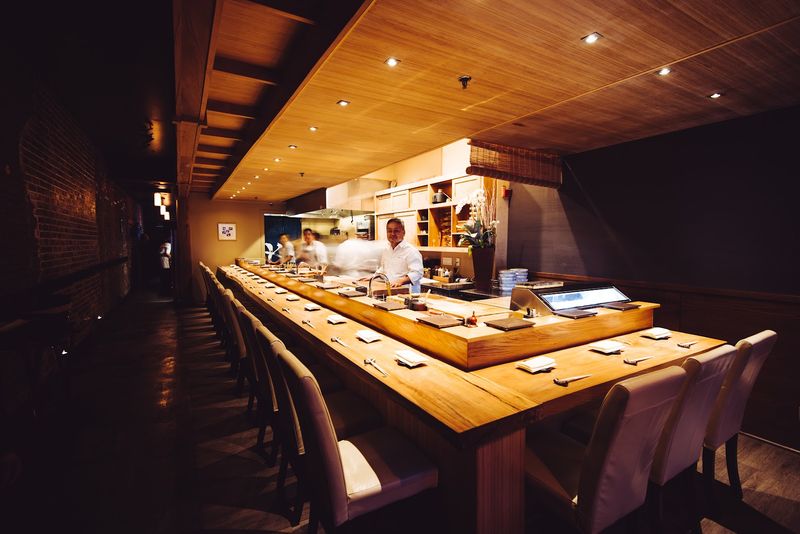
Tradition and creativity don’t always coexist easily. At Kusakabe, they rarely seem to be in conflict at all.
The omakase menus reflect a Kyoto-influenced sensibility, where subtlety matters more than spectacle. Dashi-based preparations, lightly cured fish, and seasonal vegetables from local farms appear throughout the meal.
The space is refined, with warm wood tones and a counter layout that keeps the focus on what’s being prepared a few feet away. The pacing is one of Kusakabe’s real strengths.
Courses arrive with enough space between them to fully register what you’ve just experienced. The staff is knowledgeable and present without hovering.
There’s a sense that everyone in the room, from the chef to the servers, is working toward the same goal, a meal that feels complete and considered.
Kusakabe sits at 584 Washington Street in San Francisco, and for anyone building a list of essential Japanese dining experiences in the region, it belongs near the top.
7. An Japanese Restaurant, San Francisco
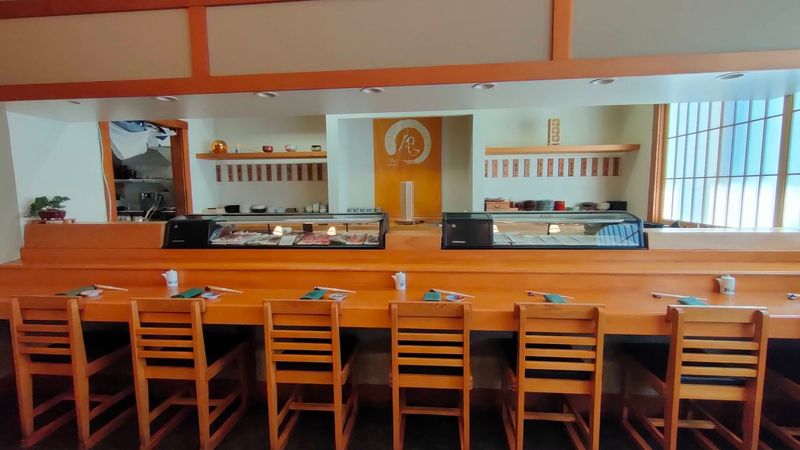
San Francisco’s Japantown is one of only three remaining in the United States, and An Japanese Restaurant sits right at its center.
Inside the Japan Center complex at 22 Peace Plaza, the restaurant has anchored this neighborhood for decades, and eating here carries a sense of place that’s hard to replicate anywhere else in the city.
Nothing on the menu tries too hard. The food is straightforward and satisfying in the way that good everyday Japanese cooking is meant to be.
The atmosphere is relaxed, with families, solo diners, and groups of friends all sharing the same comfortable space. Service is warm and unpretentious.
An doesn’t demand your full attention the way a high-end omakase does. It invites you to settle in and stay awhile.
For visitors exploring Japantown for the first time, it’s a natural starting point. For regulars, it’s a dependable return.
Either way, it earns its place on any list of meaningful Japanese spots in Northern California.
8. Mensho Tokyo SF, San Francisco
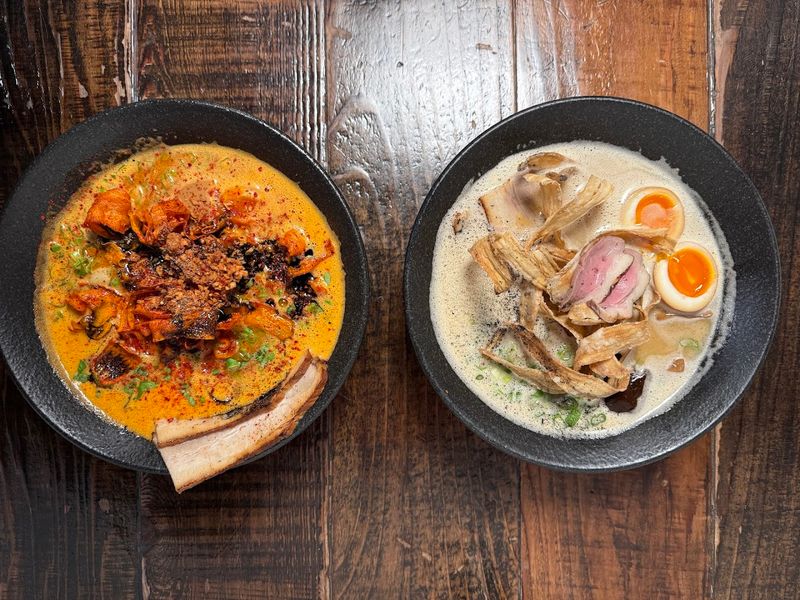
A bowl of ramen sounds simple until you taste one built on a deeply developed, slow-cooked broth. That is where Mensho Tokyo SF begins.
This is the American outpost of a Tokyo shop that built its reputation on pushing the boundaries of what broth can do, and the menu at 672 Geary Street in San Francisco reflects that same ambition. The space has a focused, workshop-like quality, with the kitchen visible during service.
The toro ramen is the signature dish, a rich layered bowl built from a blend of chicken, pork, and dashi. Toppings are chosen for contrast: a soft egg, thin-sliced chashu, and a drizzle of house-made tare that ties everything together.
Each element is considered rather than decorative.
Mensho doesn’t aim for the quick and casual end of the ramen market. This is ramen as serious cooking, made by people who have studied the craft.
Lines form outside before opening on busy evenings, and the wait is generally worth it. Bring patience and an empty stomach.
9. Marufuku Ramen, San Francisco
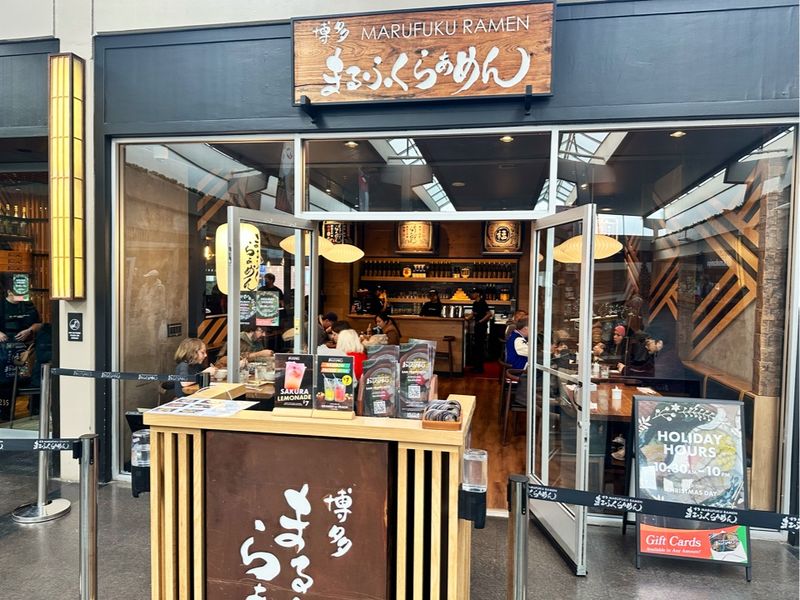
Hakata-style ramen has a devoted following in Japan, and Marufuku Ramen has built an equally devoted one in San Francisco.
The broth is the foundation of everything. Marufuku’s tonkotsu is creamy and deeply savory, the result of boiling pork bones for over eighteen hours.
The noodles are thin and firm, built to hold up in the rich broth without turning soft too quickly. The balance between noodle, broth, and toppings is the kind of thing that takes years of daily cooking to get right.
Situated at 1581 Webster Street inside the Japan Center, it’s a natural stop for anyone spending time in Japantown. The dining room fills up quickly during peak hours, and the line outside is a regular feature of the streetscape.
The wait moves at a reasonable pace, and once seated, the food arrives quickly.
Marufuku is not a place for a long, leisurely meal. It’s built for a focused, satisfying bowl and a clean exit.
That efficiency is part of its appeal and part of what makes it feel authentically Japanese.
10. Taishoken Ramen, San Mateo
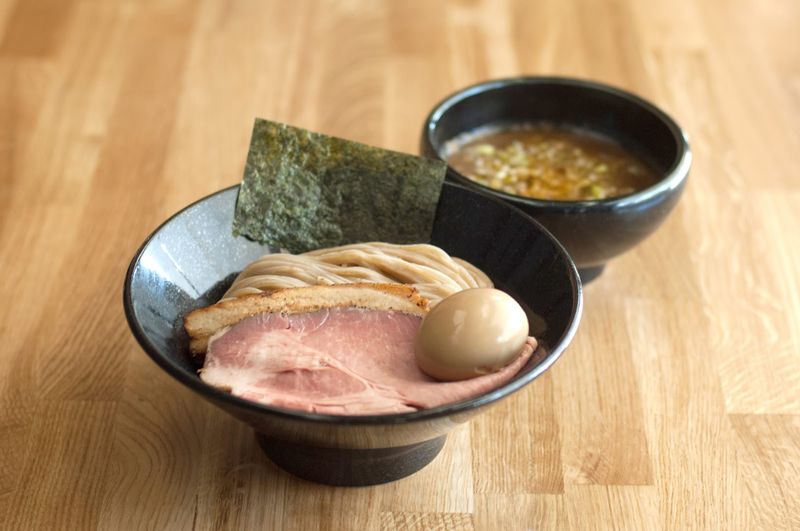
Most people have never dipped a noodle. After one visit to Taishoken Ramen, they rarely go back to the bowl.
Tsukemen, the style where noodles are served separately and dipped into concentrated broth, has a specific fanbase, and Taishoken Ramen in San Mateo serves one of the best versions in the Bay Area.
Its origins trace back to Tokyo’s Higashi-Ikebukuro district, where the style was essentially invented, and this location carries that lineage seriously.
The broth is thick and intensely flavored, built from a combination of fish and pork that creates a savory depth unlike standard ramen soup. The noodles are firm and chewy, designed to carry the broth rather than absorb it.
Dipping each bundle and pulling it back out is a tactile experience that makes you eat more slowly and with more attention.
The menu is compact and focused, which signals confidence rather than limitation. You’ll find Taishoken Ramen at 47 East 4th Avenue in San Mateo, a short walk from the Caltrain station and worth the trip from anywhere in the Bay Area.
For anyone new to tsukemen, this is an excellent introduction. For those already familiar, it is a reliable benchmark.
11. Himawari, San Mateo
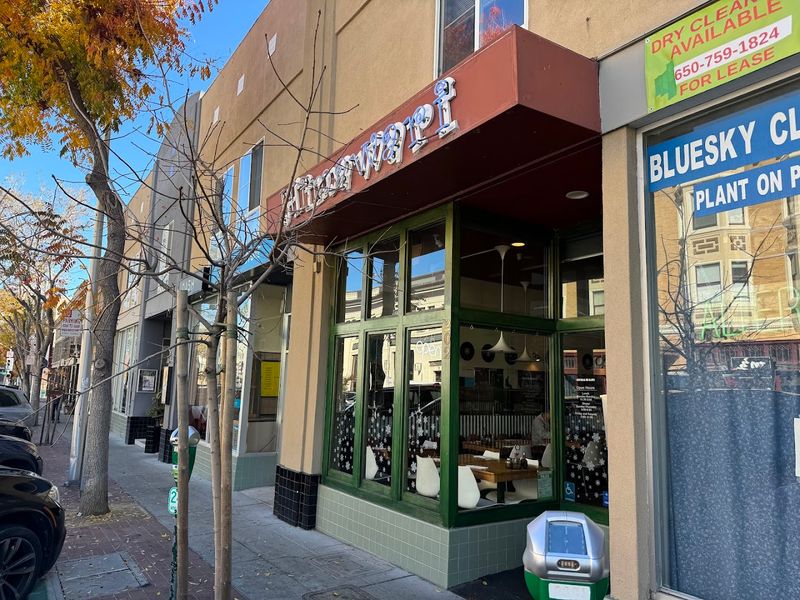
Not every great Japanese restaurant announces itself loudly. Himawari, at 202 2nd Avenue in San Mateo, earns its reputation through consistency and a menu that reflects genuine care for traditional Japanese home cooking.
The name means sunflower in Japanese, and there’s something in that choice that speaks to the restaurant’s character, bright, unpretentious, and oriented toward warmth.
The menu covers a range of Japanese comfort dishes, from grilled items and rice bowls to daily specials that change based on what’s fresh. The cooking doesn’t aim for drama or novelty.
It aims for the kind of satisfaction that comes from food made with good ingredients and practiced technique.
San Mateo has become a quiet hub for serious Japanese dining, partly because of its large Japanese-American community and partly because rents allow smaller restaurants to operate without the financial pressure of San Francisco. Himawari benefits from both factors.
The dining room is relaxed and welcoming, with a pace that suits a long lunch or an early dinner. For anyone exploring the Peninsula’s Japanese food scene beyond ramen and sushi, Himawari offers a different and equally rewarding perspective on what this cuisine can be at its most grounded.
12. Rintaro, San Francisco
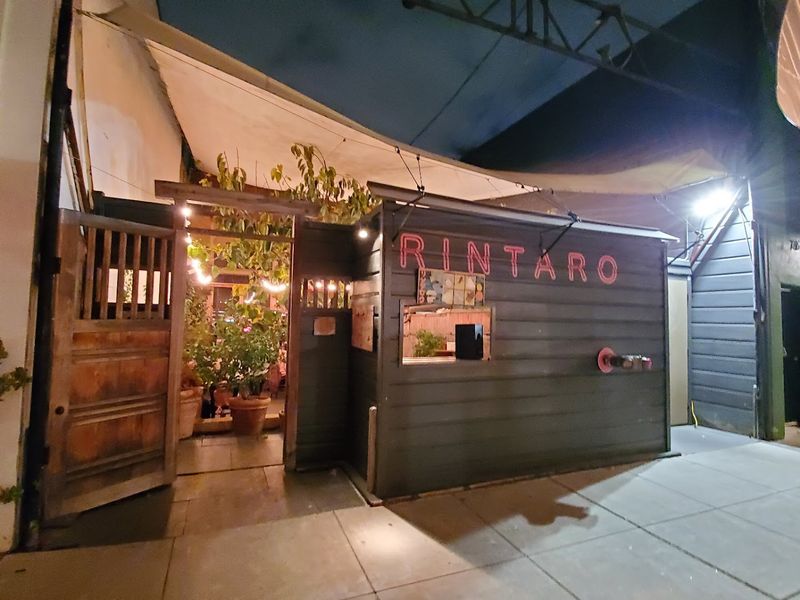
There’s a specific kind of evening that Rintaro was made for, one built around shared plates, grilled skewers, and good conversation.
The restaurant was constructed by hand using traditional Japanese joinery techniques, and the space itself makes a statement about craft before a single dish arrives.
The menu is seasonal and rooted in the izakaya tradition, which means small, shareable plates designed for a relaxed, social dining experience. Yakitori, house-made tofu, pickled vegetables, and grilled fish all appear in rotation.
The kitchen sources from local farms while maintaining a firmly Japanese sensibility in how ingredients are treated.
Rintaro feels different from the omakase-driven restaurants on this list. It is louder, more communal, and built for a different kind of social experience.
Evenings here tend to stretch longer than planned, which is generally a sign that something is working.
For anyone who wants to experience Japanese food culture beyond the sushi counter, you’ll find one of the most genuine izakaya experiences outside of Japan at 82 14th Street in San Francisco’s Mission District.
13. Soba Ichi, Oakland
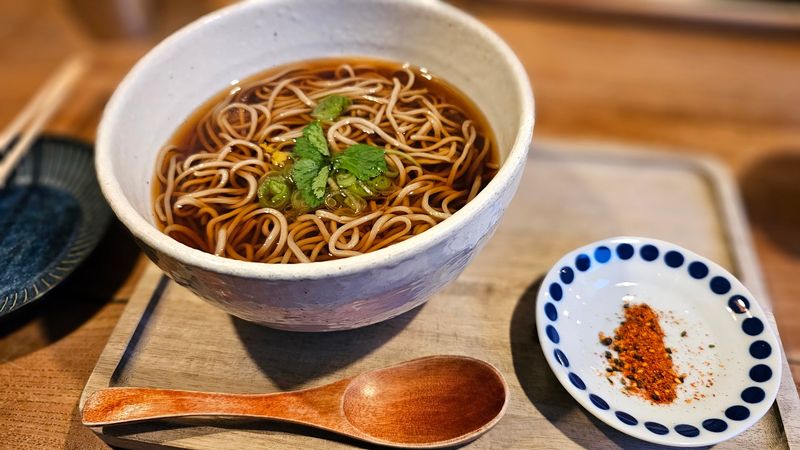
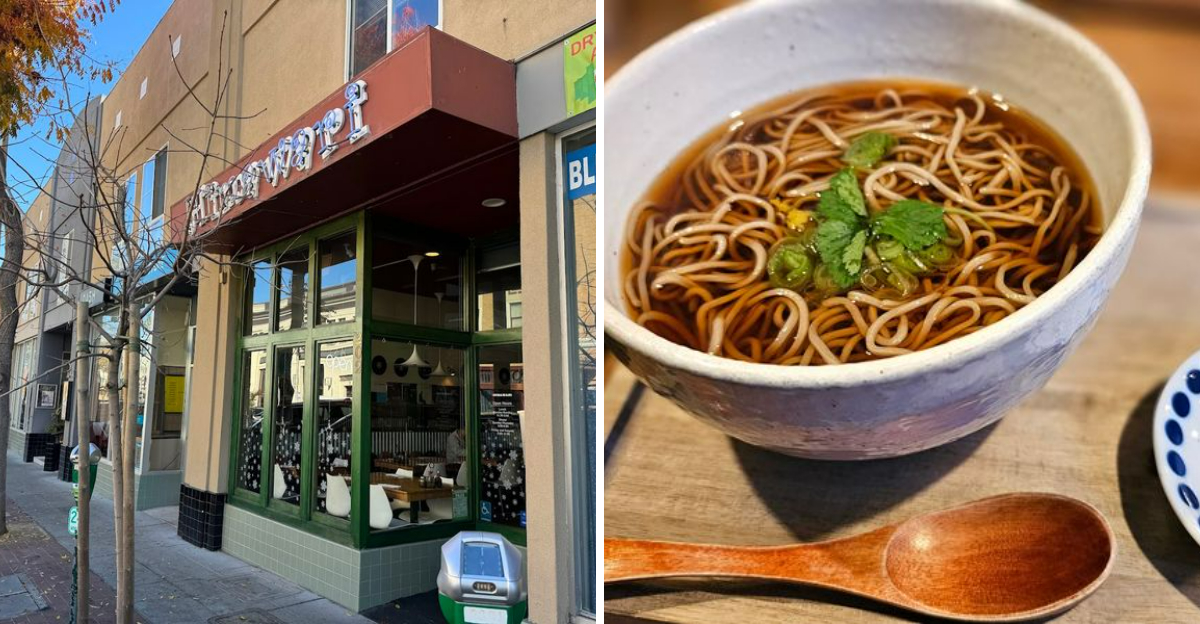
Handmade soba is one of the most demanding disciplines in Japanese cooking, and Soba Ichi in Oakland has built its entire identity around doing it properly.
The soba is made fresh each day from buckwheat flour, and the difference between fresh and dried is immediately apparent in the texture. The noodles have a subtle earthiness and a firm bite that dried soba can’t replicate.
They are served simply, either chilled with dipping sauce or in a light, clean broth, because the noodle itself is the point.
Soba Ichi operates on a schedule that reflects how much work goes into the product. Hours are limited, and once the soba runs out for the day, service ends.
That constraint is part of the honesty of the place. The kitchen makes what it can make well and stops there.
The Oakland food scene has grown significantly in recent years, and Soba Ichi stands as one of its most distinctive contributions. It is a rare place where a single ingredient receives this level of focused attention.
You’ll find it at 2311A Magnolia Street in Oakland, in a converted warehouse space that suits the craft-first philosophy of the kitchen perfectly.
14. Cha-Ya, Berkeley
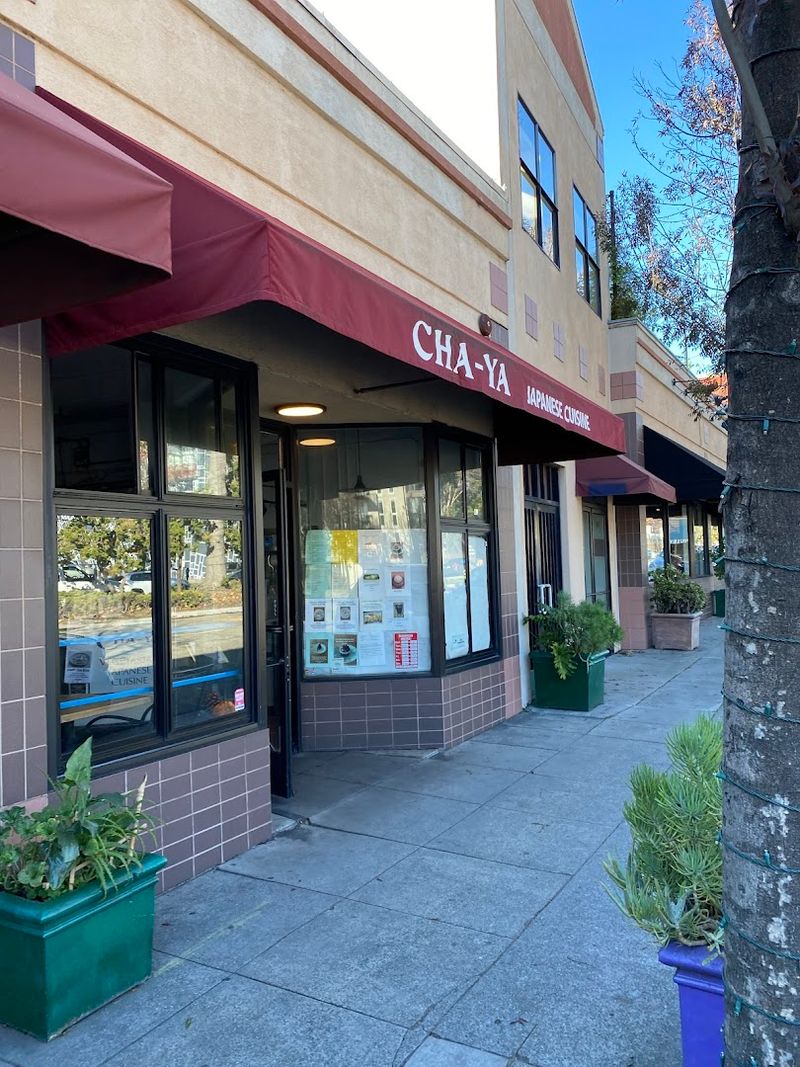
The most disciplined cooking in Japanese culinary history never used meat. Cha-Ya in Berkeley has been proving that point for years.
The restaurant draws from shojin ryori, the centuries-old Buddhist monastic cooking style that prizes simplicity and seasonal ingredients. Cha-Ya is entirely plant-based, but it doesn’t frame itself around absence.
It is built around what Japanese cooking can do with vegetables, tofu, and seaweed.
Dishes like agedashi tofu, miso soup with house-made kombu dashi, and seasonal vegetable tempura demonstrate how satisfying this approach can be when executed with care. Nothing here feels like a compromise.
It feels like a different set of priorities, applied with the same precision you’d find anywhere else on this list.
Berkeley’s food culture has always leaned toward produce-driven cooking, and Cha-Ya fits naturally into that context while maintaining a distinctly Japanese identity.
The dining room is calm and unhurried, suitable for a solo meal or a table of friends with different dietary preferences.
For anyone curious about Japanese culinary tradition beyond raw fish and rich broth, this is a perspective worth seeking out. You’ll find it at 1686 Shattuck Avenue in Berkeley, on a stretch of street long associated with thoughtful, ingredient-focused dining.
15. Delage, Oakland
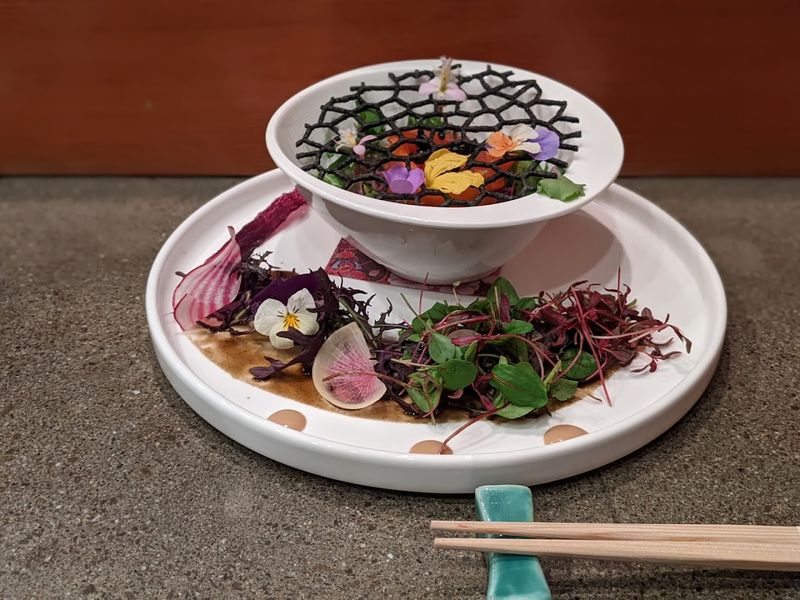
Some restaurants borrow from two traditions and end up belonging to neither. Delage is the rare exception that makes both feel necessary.
The menu draws from both Japanese and French training, which shows in the way each course is constructed. A dish might use dashi as its base but finish with a French-style reduction.
Another might present Japanese seasonal vegetables in a preparation that owes more to Paris than Tokyo. The result is a menu that feels genuinely personal rather than calculated.
The space is intimate, with counter seating that puts you close to the kitchen and the team. The pace is deliberate, and each course is presented with a brief explanation that adds context without over-narrating.
Delage is the kind of restaurant that makes Oakland feel like a destination in its own right, not just a spillover from San Francisco. For diners who appreciate technical cooking with cultural depth, it offers one of the most thoughtful meals in the Bay Area.
You’ll find it at 536 9th Street, in Oakland’s Chinatown-adjacent corridor.