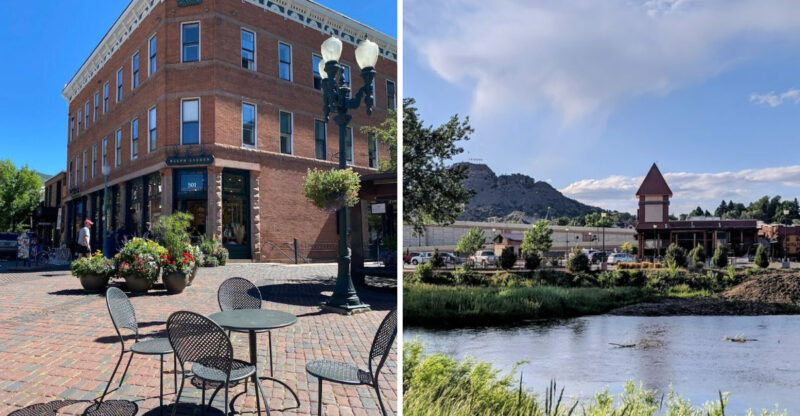
Life Feels Simpler, Slower, And Better In These 9 Colorado Towns
Colorado has two reputations, and most people only know one of them.
The first is the obvious one: ski resorts, mountain towns with boutique hotels, and real estate prices that make your eyes water.
The second is quieter and considerably more interesting.
It involves small towns where the coffee shop closes at two in the afternoon because that is simply how things work there and where the population fits comfortably inside a high school gymnasium.
These are the towns where life operates at a speed that feels almost radical by modern standards, and spending even a weekend in one of them recalibrates something in you, that you did not realize needed recalibrating.
Colorado has towns that do this particularly well, and every single one of them will make you question why you ever thought busy was better.
1. Salida
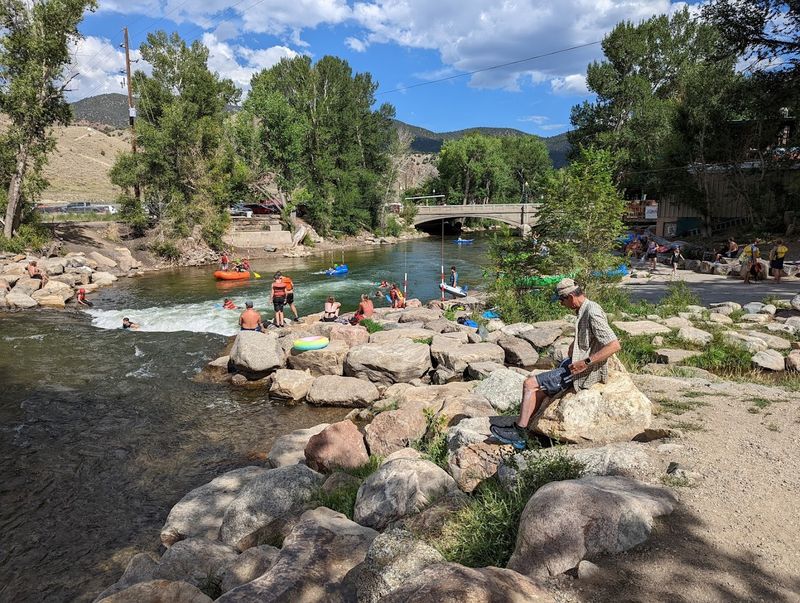
Salida has the kind of main street that makes you wonder why you ever liked cities in the first place.
The Arkansas River runs right through town, and on warm mornings, you can hear it from the sidewalk cafes where locals linger over coffee like they have nowhere better to be. They probably do not.
The arts scene here punches above its weight. Salida has more working artists per capita than almost any small town in Colorado, and the galleries along F Street feel genuine rather than staged for tourists.
You find yourself stopping in front of paintings and actually feeling something.
Outdoor life is the backbone of everything here. The Monarch Mountain ski area sits close by, and the hiking trails leading into the San Isabel National Forest offer routes for every skill level.
Kayakers come from across the state to run the Numbers section of the Arkansas River nearby.
What sticks with you about Salida is its lack of pretension. The restaurants are good without being fussy.
The locals are friendly without being performative.
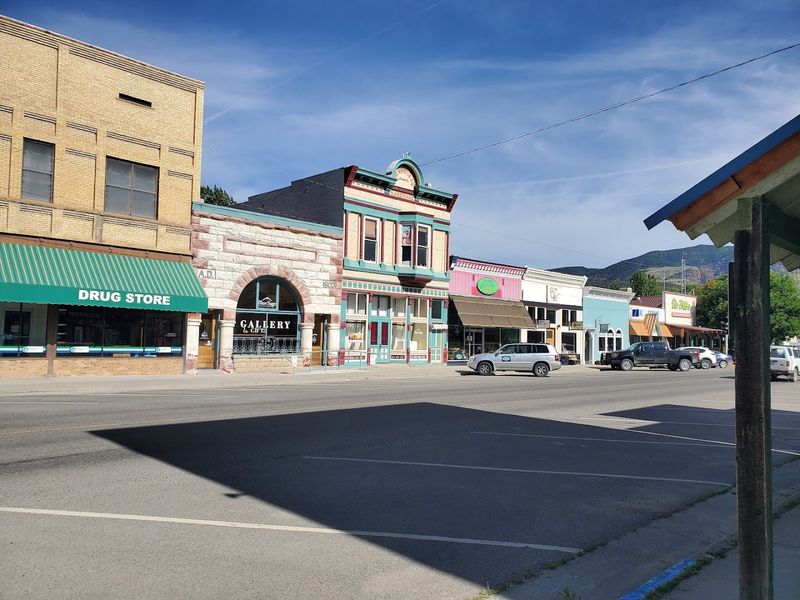
Even the old Victorian architecture downtown feels lived-in rather than preserved for show. It is a town that works for the people who live there, and visitors get to benefit from that happy accident.
2. Paonia
This town sits in the North Fork Valley like a place that decided it had enough of the modern world and quietly opted out.
Orchards stretch across the hillsides, farmers markets feel genuinely local, and the pace of life here is the kind of slow that actually feels earned rather than forced.
The town has a strong agricultural identity that shapes everything about daily life.
Cherries, peaches, apples, and pears grow in abundance, and during harvest season the whole valley smells like a fruit stand in the best possible way.
Locals take pride in what the land produces, and that pride shows up on every table in town.
Paonia also has a quiet creative streak. Artists, writers, and musicians have been quietly settling here for decades, drawn by cheap land, big skies, and a community that values thoughtful living.
The town supports a local radio station, a community theater, and more interesting conversations per square mile than most places twice its size.
The West Elk Wilderness sits just outside town, offering serious backcountry hiking and some of the most dramatic scenery in western Colorado.
For a town of roughly 1,500 people, Paonia carries a surprising amount of character. It rewards visitors who slow down enough to notice the details, and there are plenty of details worth noticing here.
3. Ridgway
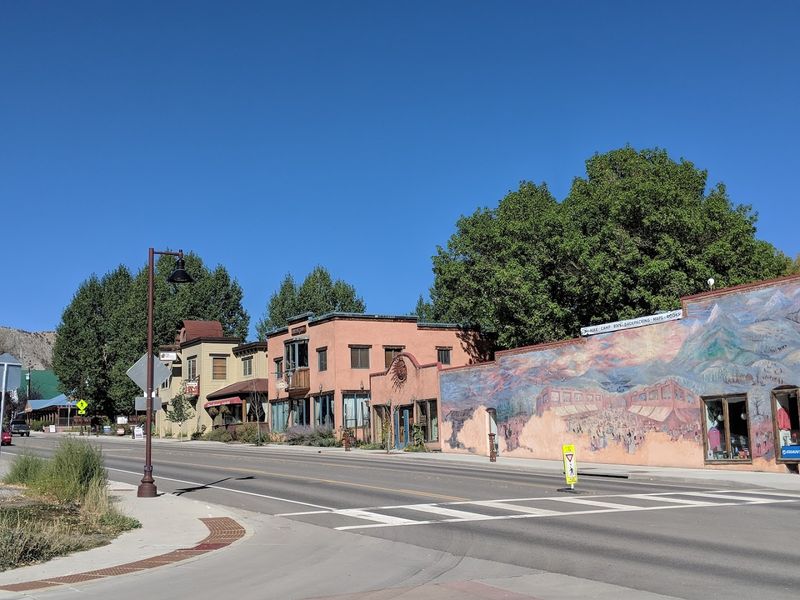
Ridgway is the kind of place that stops you mid-sentence. You are trying to describe it to someone and you realize words are not doing the job.
The San Juan Mountains frame the town on nearly every side, and the light in late afternoon turns the whole landscape into something that feels almost unreasonably beautiful.
The town itself is small, around 1,000 residents, but the streets have a lively, grounded energy.
Local shops, a solid farmers market, and a handful of excellent restaurants give it the feel of a community that actually functions rather than one that exists purely for tourism.
People here live full lives and visitors get to observe that from a respectful distance.
Ridgway State Park is a genuine highlight. The reservoir offers paddleboarding, fishing, and camping, and the views from the water looking back toward the mountains are the kind that end up as phone wallpapers for months.
The park stays busy in summer but never feels overcrowded compared to more famous Colorado destinations.
History buffs will appreciate knowing that Ridgway served as a filming location for the 1969 John Wayne film True Grit.
That western landscape has not changed much. Sitting on the town green on a quiet Tuesday morning, watching clouds move over the peaks, you understand exactly why someone chose this spot to tell a story worth remembering.
4. Creede
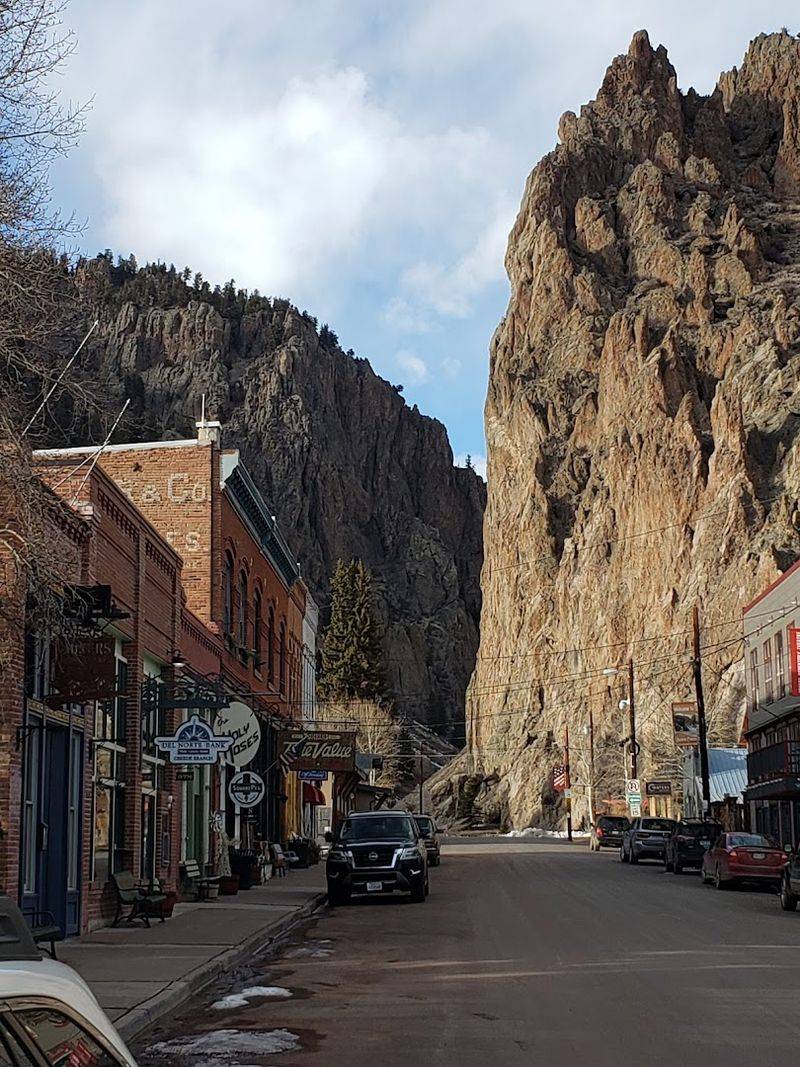
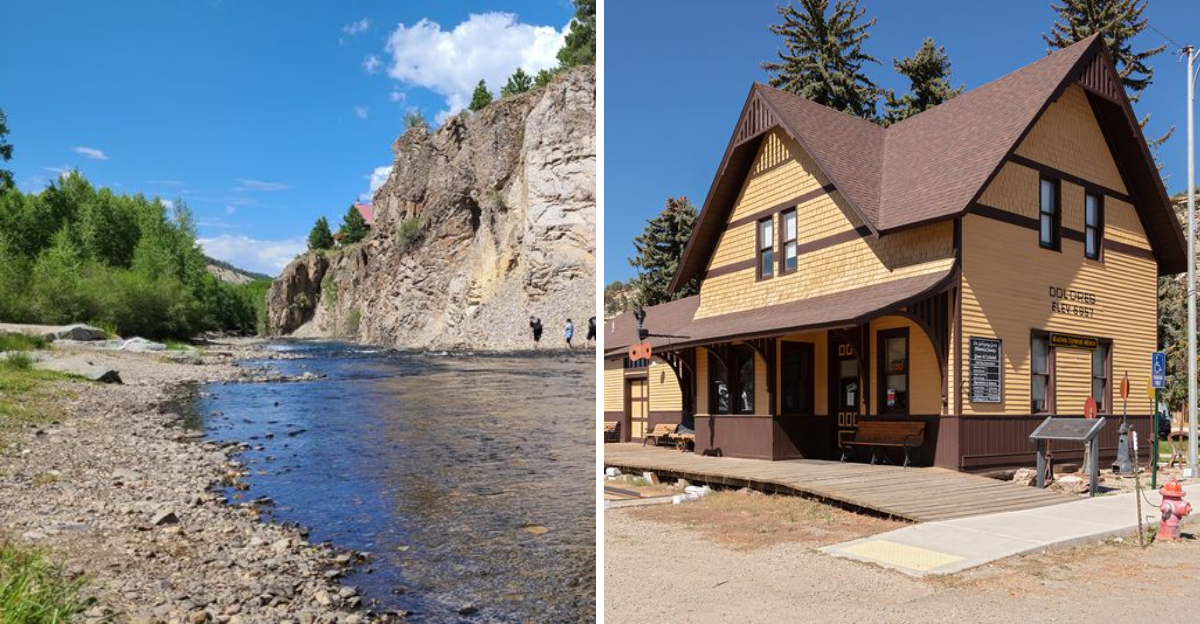
It is built inside a canyon, which is already a remarkable way to start a town.
The cliffs rise up on both sides of the main street, giving the whole place a theatrical quality, like the set of a western that never stopped filming. It is dramatic in the best possible way.
The town had a wild silver mining past in the 1890s, and some of that swagger still lingers in the architecture and the general attitude.
What replaced the mining boom, though, is something more sustainable: a genuinely thriving arts scene anchored by the Creede Repertory Theatre, which has been producing professional summer theater here since 1966.
Seeing a show in this canyon town is a genuinely memorable experience.
Fishing is almost a religion in Creede. The Rio Grande River runs nearby, and the stretches around town are considered some of the finest trout fishing in the state.
Even if you have never held a rod, watching experienced anglers work the river on a quiet morning is oddly meditative.
The surrounding San Juan Mountains offer hiking, off-roading, and scenic drives that reward curiosity.
The Bachelor Loop, a historic mining tour route above town, gives you a window into just how hard and strange life here once was.
Creede is a town where the past feels present, but never heavy, just interesting enough to make you want to stay another day.
5. Lake City
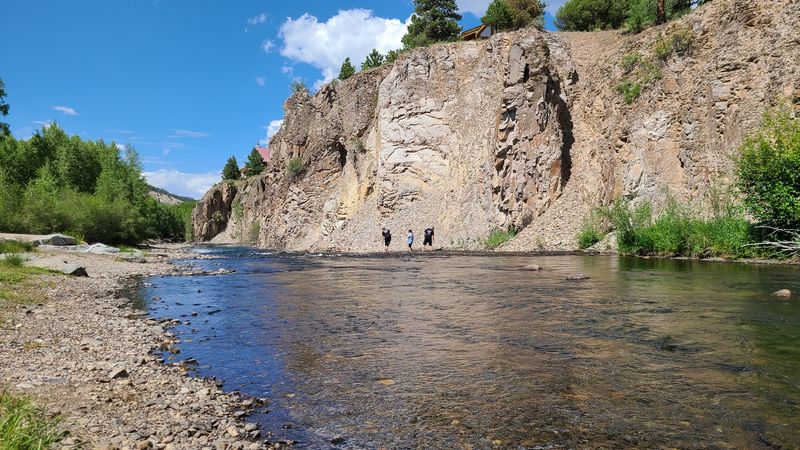
Lake City holds a distinction that most towns would brag about more loudly: it is the largest National Historic District in Colorado.
The Victorian-era buildings along Silver Street have been carefully preserved, and walking through town feels like stepping into a well-kept version of the past without any of the mustiness.
The town sits at 8,671 feet in a valley carved by the Lake Fork of the Gunnison River.
That geography means the scenery is consistently jaw-dropping, and the outdoor access is remarkable for such a small community of around 400 full-time residents.
Summer brings hikers, jeepers, and anglers in significant numbers, yet the town never loses its quiet character.
Alpine Loop Backcountry Byway connects Lake City to Ouray and Silverton through some of the highest and most stunning terrain in the state.
If you have a capable vehicle and a clear day, this drive belongs on any serious Colorado bucket list. The views from Engineer Pass are genuinely hard to describe without sounding like you are exaggerating.
Evenings in Lake City have a particular quality. The lack of major light pollution means the stars are extraordinary, and the absence of chain restaurants or big-box stores means dinner is always a local experience.
Small towns sometimes try too hard to be charming. Lake City simply is, and that effortlessness is what makes it worth the drive up the mountain.
6. Dolores
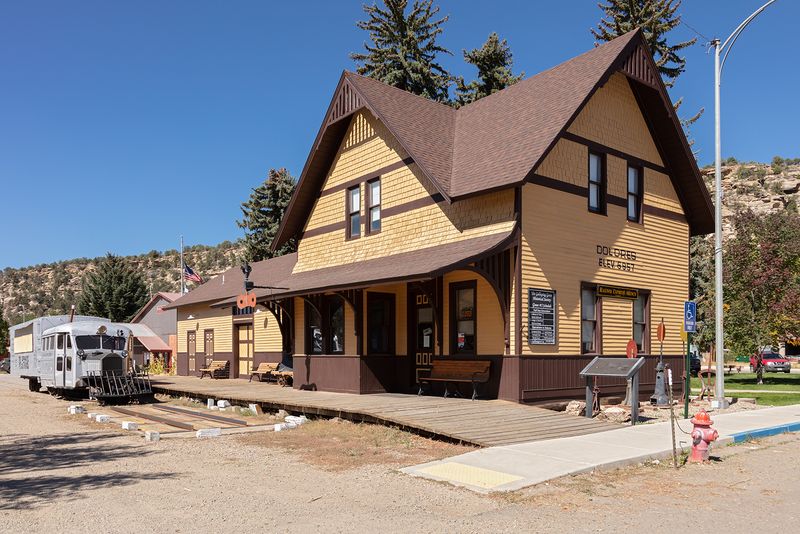
Most people drive past Dolores on the way to somewhere else. That is genuinely their loss.
The Dolores River canyon country surrounding the town has a raw, ancient quality that feels nothing like the mountain towns farther north, and that difference is exactly the point.
The town serves as a gateway to McPhee Reservoir, the second-largest body of water in Colorado.
The reservoir offers boating, fishing, and camping, and the red rock scenery around it is dramatically different from the alpine landscapes most people associate with the state.
It is Colorado wearing a completely different outfit, and it suits the place well.
Mesa Verde National Park is just a short drive away, making Dolores an excellent and far less crowded base for exploring one of the most significant archaeological sites in North America.
The Ancestral Puebloan cliff dwellings at Mesa Verde are genuinely awe-inspiring, and staying in Dolores means you can visit early in the morning before the crowds arrive.
The town itself has a relaxed, unpretentious quality.
The Dolores River Brewing Company draws a friendly local crowd, and the small shops along Central Avenue carry the kind of practical, locally-made goods that remind you real communities still exist.
Dolores is not trying to impress anyone. It is just being itself, and that turns out to be more than enough.
7. Antonito
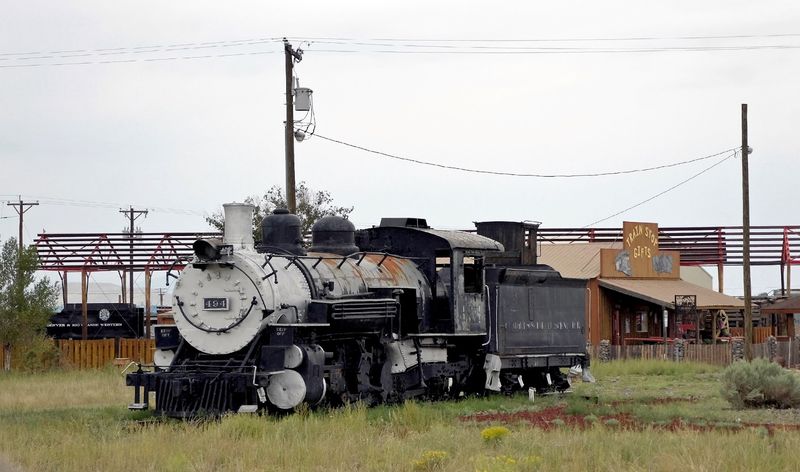
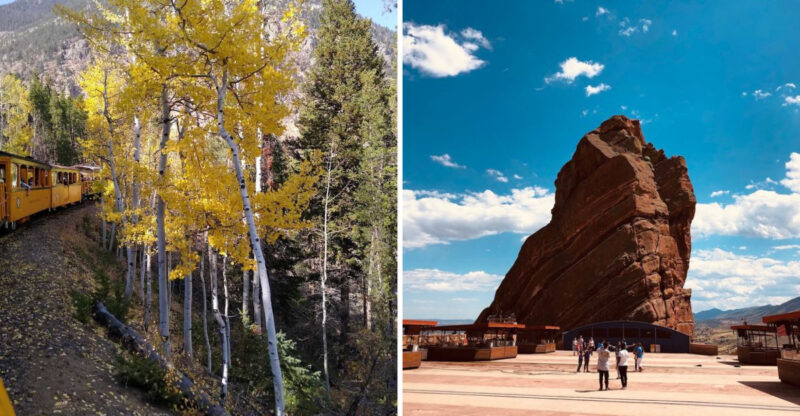
This might be the only town in Colorado where a steam locomotive is still a normal part of the morning.
The Cumbres and Toltec Scenic Railroad departs from here, hauling passengers through 64 miles of mountain terrain into New Mexico on a narrow-gauge line that has been operating since 1880.
Riding it feels like time travel, and not the stressful kind.
The town sits in the San Luis Valley near the New Mexico border, and the cultural identity here is deeply rooted in the area’s Hispanic heritage.
That history shows up in the food, the architecture, the festivals, and the easy warmth of the people you meet. Antonito does not feel like a tourist destination.
It feels like a real place with a real story, which is more valuable anyway.
The surrounding landscape is wide and open, with the Sangre de Cristo Mountains visible to the east and the Rio Grande cutting through the valley nearby.
The Conejos River, which flows close to town, is one of Colorado’s top fly-fishing destinations and sees far less pressure than more famous rivers to the north.
For travelers who want something genuinely different, Antonito delivers without trying.
The pace is unhurried, the scenery is underrated, and the sense that you have arrived somewhere with actual roots rather than a manufactured identity makes every hour spent here feel worthwhile.
This is Colorado history that is still very much alive.
8. Nucla
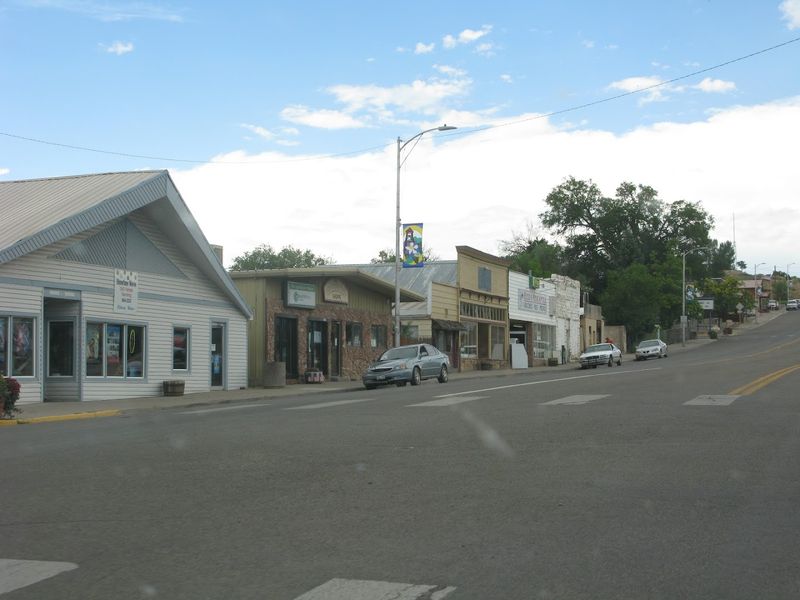
Nucla is the kind of town that does not show up on most travel lists, which is precisely why it belongs on this one.
Sitting on the Uncompahgre Plateau in western Colorado, the town has a sparse, honest quality that feels increasingly rare.
There are no boutique hotels here, no artisan coffee shops, just a community of about 700 people living life on their own terms.
The surrounding landscape is extraordinary for those willing to explore it without a guidebook.
The Uncompahgre Plateau offers hundreds of miles of hiking and mountain biking trails through terrain that shifts dramatically from pinon-juniper woodland to dense spruce and fir forest at higher elevations.
The solitude out here is not loneliness. It is space, and there is a real difference.
Nucla has a fascinating history as one of Colorado’s earliest cooperative communities.
Founded in 1904 by the Colorado Cooperative Company, the town was built on principles of shared labor and communal ownership, an unusual origin story that gives it a distinct character even today.
That background adds a layer of interest to what might otherwise seem like a simple agricultural town.
The nearby Dolores River canyon and Naturita Creek offer fishing and wildlife watching that sees almost no tourist traffic.
Mule deer, wild turkeys, and golden eagles are regular sights. Nucla is for travelers who genuinely want to get away, not just say they did.
9. Saguache
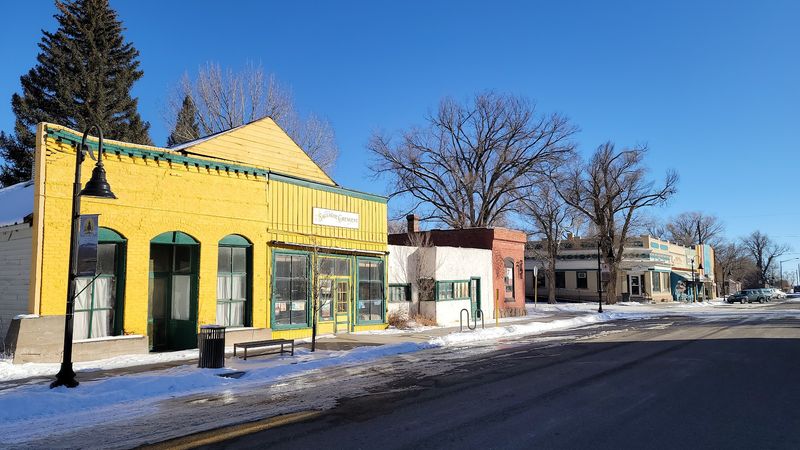
Saguache is a town that asks something of you. It asks you to slow down enough to see what is actually there, because the rewards are not immediately obvious from the highway.
Once you stop and look, though, the place has a quiet power that is hard to shake. The San Luis Valley spreads out in every direction, vast and flat and strangely moving.
The town itself has around 600 residents and a main street that reflects a working agricultural community rather than a curated visitor experience.
The old Saguache County Museum, housed in the former jail, offers a surprisingly engaging look at local history including the area’s role in early Colorado settlement and the life of Kit Carson, who spent time in the valley.
The Great Sand Dunes National Park is about an hour’s drive south, making Saguache a quieter and more affordable base than the tourist-heavy towns closer to the dunes.
Arriving at the dunes early from Saguache, before the day-trippers show up, is a genuinely different experience. The light on the sand at dawn is something photographs never quite capture.
Saguache County has some of the darkest night skies in the country, and the town occasionally hosts stargazing events that draw astronomers from across the region.
Standing outside on a clear night here, looking up at a sky so full of stars it seems almost crowded, you understand why some people never want to leave. Neither do I.