10 Little-Known Connecticut Attractions With A Seriously Spooky Side
Would you willingly visit a place after hearing the locals whisper about what supposedly happens there after dark?
That question gets a lot more entertaining when an ordinary roadside stop suddenly comes with eerie stories or a strange past you never expected.
The fun is in realizing how many unsettling little corners can hide behind perfectly normal-looking places.
Around Connecticut, several lesser-known attractions come with spooky reputations that make a daytime visit feel just a little more dramatic.
You may start out curious about the history and end up checking over your shoulder for absolutely no good reason. That is part of the appeal.
These spots are not all about jump scares or ghost tours. The real hook is the atmosphere and the stories people keep passing along.
If you like your day trips with a tiny shiver attached, this list should keep things interesting.
1. The Glebe House Museum & Gertrude Jekyll Garden, Woodbury
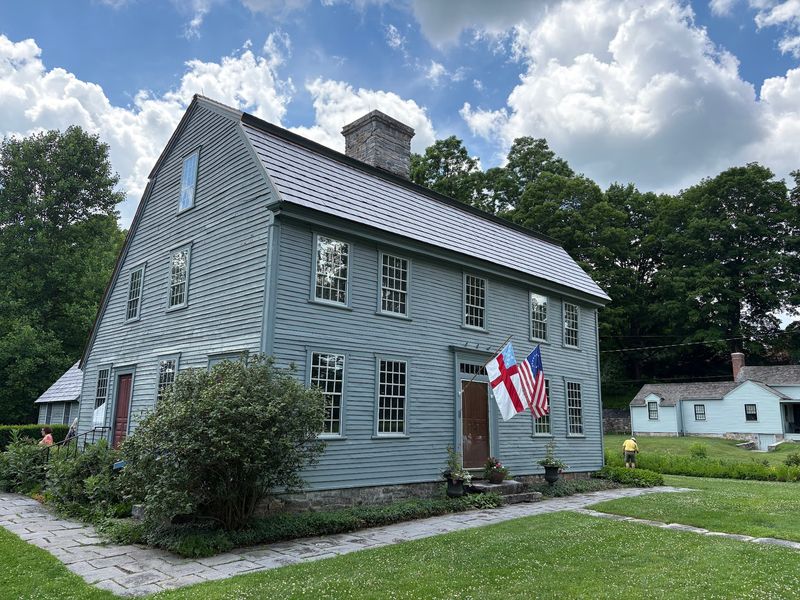
History gets surprisingly strange here. Built around 1740, the Glebe House combines gambrel and saltbox roof forms in one distinctive farmhouse.
From 1771 to 1786, it was home to Woodbury’s first Anglican minister, John Rutgers Marshall, his wife Sarah, and their large household.
Its biggest claim came just after the Revolution. In 1783, Anglican clergy met here and elected Samuel Seabury, a step that helped establish the Episcopal Church in the United States and gave the house its enduring religious significance.
Restored in 1923, the property opened to the public in 1925 as one of the country’s early historic house museums.
The atmosphere becomes more curious after the history lesson.
Paranormal investigators have visited over the years, while stories connected to the attic and other rooms have helped inspire the museum’s seasonal haunted programming for visitors curious about the house’s long-running spooky reputation.
The current 2026 calendar includes Haunted Hollow Tours in October, continuing that spooky tradition in a playful way.
The Glebe House Museum & Gertrude Jekyll Garden is at 49 Hollow Road, Woodbury, CT 06798. Outside, the garden follows plans created in 1926 by celebrated English designer Gertrude Jekyll and is undergoing restoration.
Visitors can explore it year-round from dawn to dusk, even while that work continues. The museum itself is open Fridays through Sundays during the 2026 season, with guided and self-guided visits scheduled on selected days.
2. Tarrywile Park, Danbury
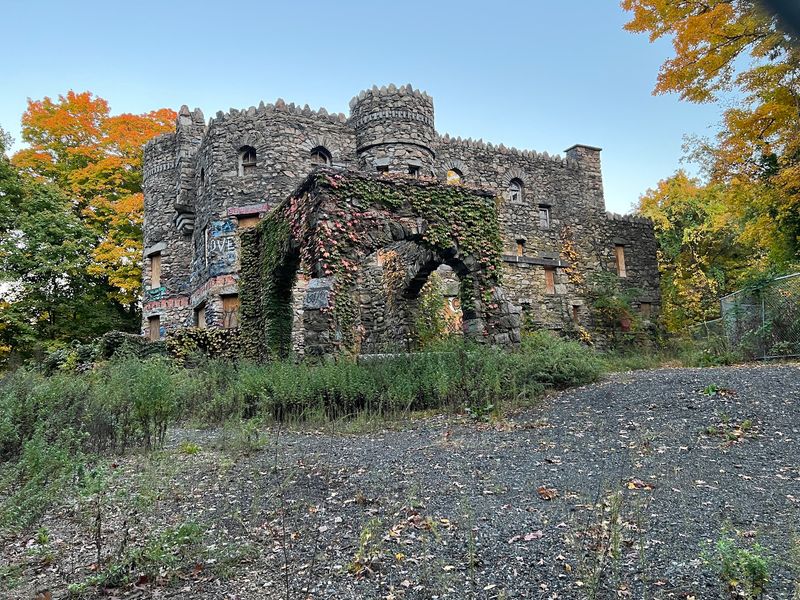
At 722 acres, Tarrywile is the largest municipally owned park in the state, and somewhere inside those woods sits the shell of a stone castle.
Hearthstone Castle was built between 1895 and 1899 for a wealthy New York City photographer and later passed to the Parks family. Today the abandoned structure stands in serious disrepair and has become a familiar name in stories about state’s supposedly haunted places.
Hikers describe shadowy shapes and glowing orbs in the empty windows, and a few swear unseen hands have tossed sticks at them along the trail. The castle’s first owner reportedly suffered severe eye damage after lightning struck his ship, a detail that keeps the legend humming.
Trespassing is strictly prohibited, so admire it from a safe distance.
The rest of the park is pure fresh air. Twenty-one miles of trails opened in 1994 wander past Parks Pond and up through rougher terrain, and the land was rescued from condominium development by residents in 1985 after decades as a dairy farm and orchard.
Nearby, the 1897 Shingle-style Tarrywile Mansion hosts community events and can be toured by appointment.
Entry at 70 Southern Blvd, Danbury, CT 06810 is free, sunrise to sunset, with plenty of parking. Bring sturdy shoes, a fishing license if you want to try Parks Pond, and a leash for your dog.
Winter brings cross-country skiers.
3. Center Church On The Green Crypt, New Haven
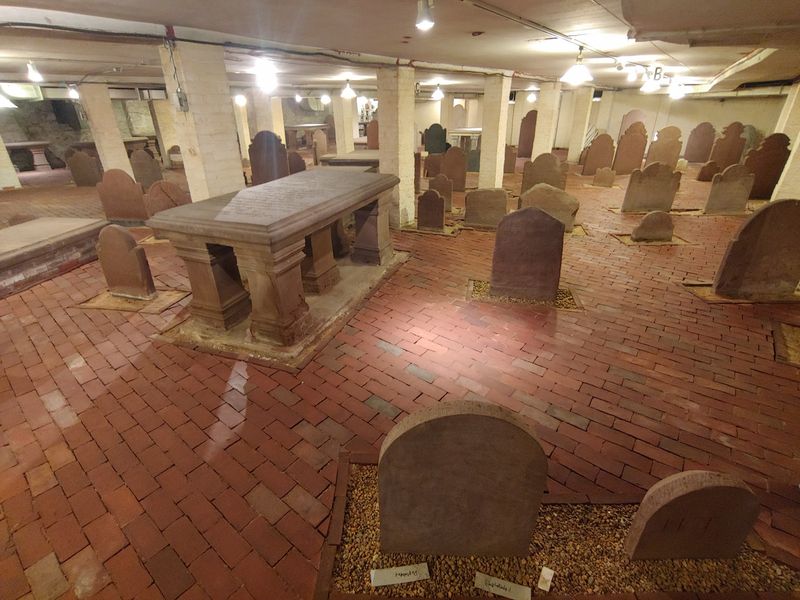
Imagine building a church directly over a graveyard and simply leaving the graves where they lay. That is exactly what happened in New Haven between 1812 and 1814.
When the congregation raised its fourth meeting house over part of the town’s original burial ground, the remains and headstones were not moved. The foundation sealed them into a chamber that survives today as one of New England’s most unusual colonial burial sites.
The congregation itself traces back to 1638 and the Puritan founding of the New Haven Colony.
Roughly 137 identified individuals rest below, plus an estimated thousand unidentified remains. The green above is thought to hold thousands more early settlers.
Among the named are Benedict Arnold’s first wife, a Yale College founder, relatives of a future U.S. president, and a 1687 gravestone that is the oldest dated marker in the crypt.
Descriptions of the space as musty, dank, and cramped are accurate, and that is precisely what makes it unforgettable. Bricks were laid without cement in 1990 to help protect the fragile stones from moisture.
Free tours led by church members leave from the narthex at 250 Temple St, New Haven, CT 06510 on the second Sunday of each month at 10:00 AM, first come, first served, for up to 30 people. Watch your head and your feet.
Small headstones are easy to trip over.
4. Milford Historical Society, Milford
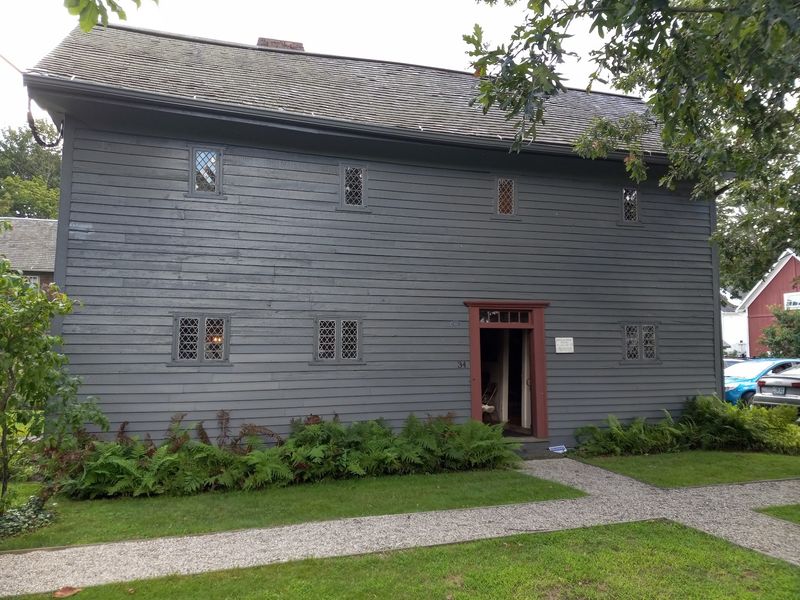
Ghost stories gather quickly here. On one compact historical society property, three colonial houses preserve very different chapters of Milford’s past.
Paranormal tales have followed all of them, giving ordinary house tours an extra layer of curiosity. The Milford Historical Society complex is at 34 High Street, Milford, CT 06460.
The Eells-Stow House, dating to around 1700, is considered the city’s oldest surviving home, although later framing research suggests portions may be closer to 1720.
Former resident Stephen Stow cared for roughly 200 American soldiers during a 1777 smallpox outbreak, and later ghost lore has included faint voices and the feeling of being watched.
Nearby, the Clark-Stockade House has an especially complicated timeline. Its earliest structure began around 1659, while the building seen today was reconstructed in 1780 using salvaged materials and moved to the property in 1974.
Stories attached to its rooms include unexplained footsteps and the sound of a baby crying.
The Bryan-Downs House arrived here after being dismantled and rebuilt in 1977. Visitors and paranormal investigators have also reported unexplained voices and gentle touches inside.
Those stories have brought ghost walks and organized paranormal investigations to the grounds over the years. In 2026, regular house tours run on non-holiday Saturdays and Sundays from June through September, generally from 1 to 4 PM.
Admission is free during regular visiting hours, and private group visits may be arranged separately.
5. The Bradley Playhouse, Putnam
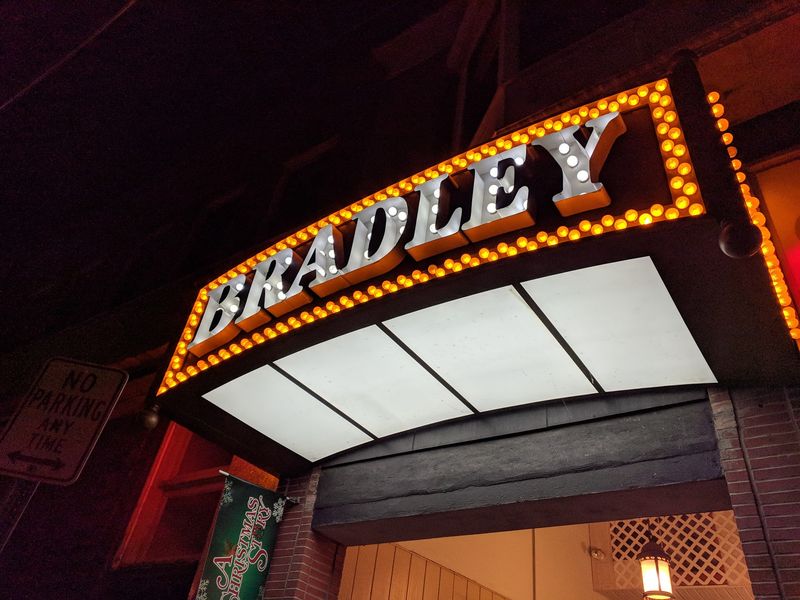
Opening night was January 29, 1901, and by most accounts the audience has never entirely left.
Putnam’s Bradley Playhouse began as a vaudeville house during the town’s mill boom, showing silent films and hosting traveling acts beneath ornate plasterwork and a sweeping balcony.
Over 120 years it survived the Great Flood of 1955, several fires including a 1937 blaze that damaged the stage area, and long stretches of financial trouble before restoration under the Theatre of Northeastern Connecticut.
The theater’s best-known spirit is called Victoria, described in early 1900s clothing up in the balcony after the house lights go down, sometimes accompanied by old-fashioned perfume and sudden cold patches drifting between seats.
Crew members talk about a stagehand whose heavy steps cross the boards during late rehearsals, tools that shift position, and a shadow behind the curtain.
Performers in the dressing rooms report soft murmurs and their own names whispered, and doors that swing shut unassisted. One investigation reportedly captured a man’s voice saying the show must go on.
Living theater is still the main event, with plays, musicals, comedy, and concerts on the calendar at 30 Front St, Putnam, CT 06260. A wheelchair lift, accessible restrooms, and assistive hearing devices are available.
Downtown Putnam has free public parking, though the lot behind the building requires a pass. Flash-free photography is generally fine.
6. Sheffield Island Lighthouse, Norwalk
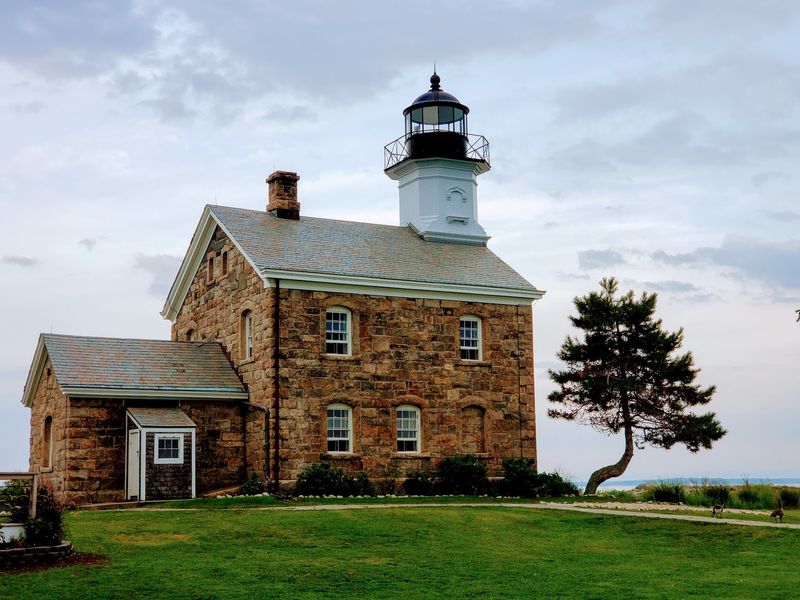
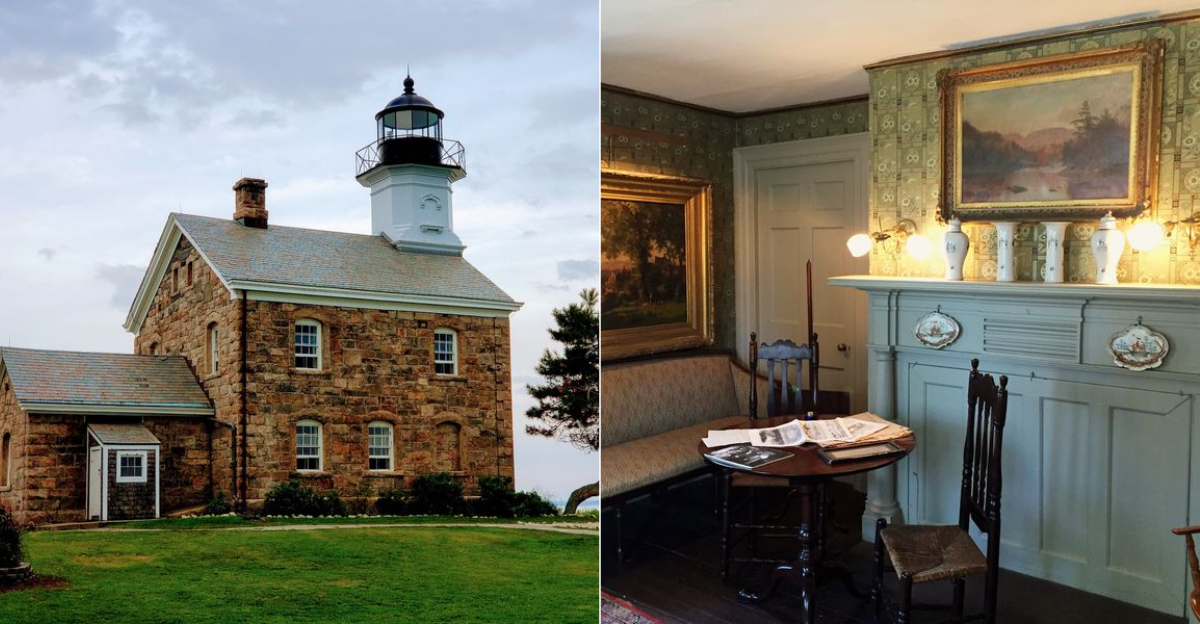
Getting here requires a boat, which is part of the appeal. The ferry to Sheffield Island leaves from 90 Water Street in Norwalk and the round trip runs about three hours, including a narrated cruise past other harbor lighthouses.
The stone lighthouse waiting at the end is a four-story, ten-room Victorian structure completed in 1868, replacing an earlier light from the late 1820s.
It was decommissioned in 1902 when Greens Ledge Light took over, then reactivated in 2011 with a solar-powered lamp after restoration by the Norwalk Seaport Association.
Island records reach back to a 1690 deed.
Odd reports have followed the place for decades. An archaeologist working here in 1991 described strange music with no source, faint foghorns, and cries for help from nowhere.
A 2006 investigation suggested three spirits remain, including a girl named Abby.
The phantom music is often pinned on the island’s namesake sea captain, remembered for his knack with instruments, and two keepers, in 1872 and 1972, reportedly passed suddenly without clear explanation.
Ferries to Sheffield Island generally run from late May through August; book ahead and arrive about 30 minutes early. Paid parking sits near, not at, the dock.
Ground-floor rooms interpreting a keeper’s life are open, though the tower itself is currently closed. Bring sunscreen and bug spray for the trails, beach, and wildlife refuge.
The official address is Sheffield Island Light, Norwalk, CT 06854.
7. Lockwood-Mathews Mansion Museum, Norwalk
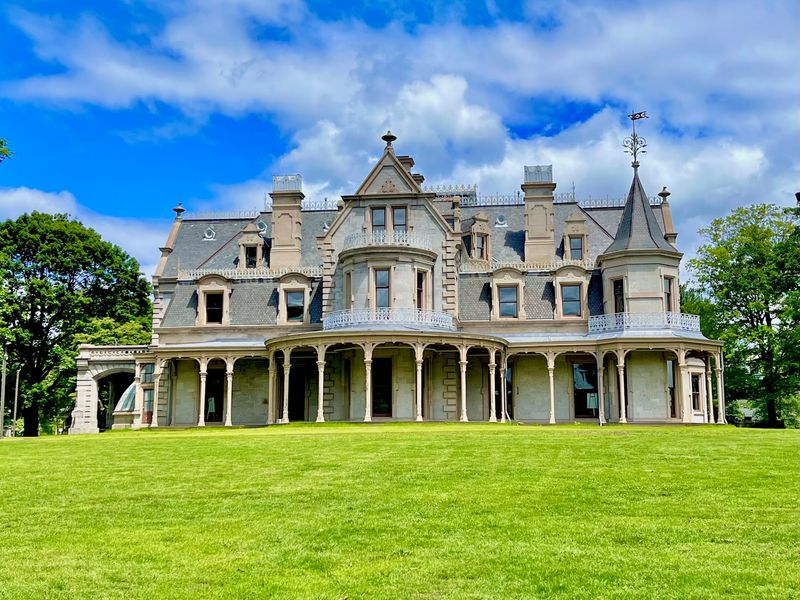
Sixty-two rooms. Forty-four thousand square feet. Fourteen bathrooms at a time when most American homes had none.
The Lockwood-Mathews Mansion went up between 1864 and 1868 for a railroad and banking magnate, designed by European-trained architect Detlef Lienau.
It is considered one of the earliest and finest surviving Second Empire houses in the country, and it earned National Historic Landmark status in 1978.
Inside are stenciled walls, inlaid woodwork, a grand staircase, and a two-story skylit rotunda that stops conversations. An internal speaking tube system once let the family call staff between floors.
The museum, now owned by the City of Norwalk, has fun with its darker reputation. Halloween programming built around Victorian ghost stories walks guests through reported sightings on the first and second floors, spirits said to be tied to rarely told chapters of the two families’ histories.
Because the Victorian era was obsessed with spiritualism and contacting the departed, the tours double as real social history. Past seasons have included basement tours through the building’s Civil War era underbelly, and lectures on grim subjects such as body snatching.
Guided tours run 45 or 90 minutes and are offered on scheduled days throughout most of the year, with advance tickets recommended because tours can sell out. Mathews Park surrounds the building at 295 West Ave, Norwalk, CT 06850, with easy walking paths outside.
8. Leffingwell House Museum, Norwich
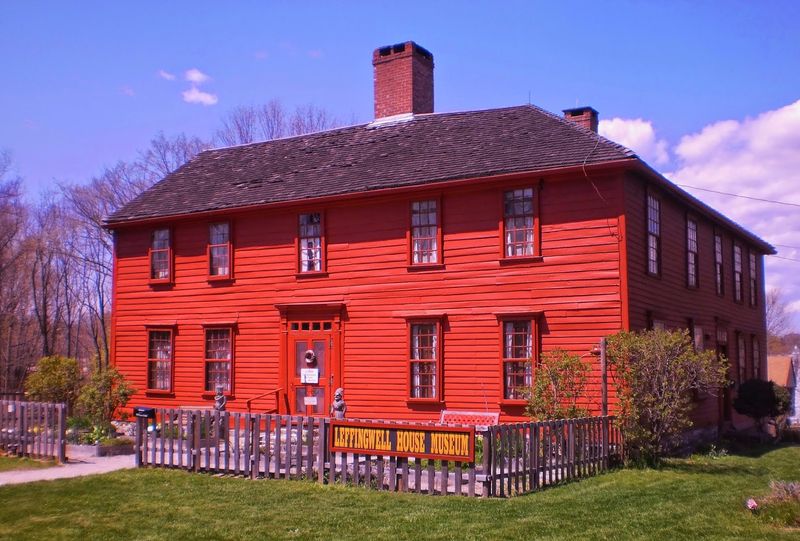
Ready for a history lesson with a spooky twist? What began around 1675 as a modest two-room home grew into an inn by 1701.
By 1776, it had become the refined townhouse of Norwich Patriot and industrialist Christopher Leffingwell. Its rooms now trace local history from the town’s 1659 founding through the Civil War, with period furnishings and carefully preserved artifacts bringing earlier generations into focus.
Today, the Leffingwell House Museum welcomes visitors at 348 Washington Street, Norwich, CT 06360.
Christopher Leffingwell supplied provisions to Revolutionary forces, including Benedict Arnold’s 1775 expedition, while historical accounts also connect George Washington with the property. A separate silversmith shop dating to the 1770s adds another piece of early Norwich history to the museum grounds.
The stranger stories come later. Paranormal investigators, including the TAPS Home Team, have examined the house, and reports over the years have included unexplained voices, knocks, footsteps, moving objects, and unusual activity around the attic.
Public ghost investigations and themed history events have also appeared on the museum calendar, giving curious visitors a different way to experience the old rooms.
Regular 2026 hours run Saturdays from 11 AM to 3 PM, April through October. Admission is currently $8 per person, while private tours can be arranged separately.
The preserved interiors make the house an especially intriguing stop for visitors who enjoy early American history with a mysterious side.
9. Butler-McCook House & Garden, Hartford
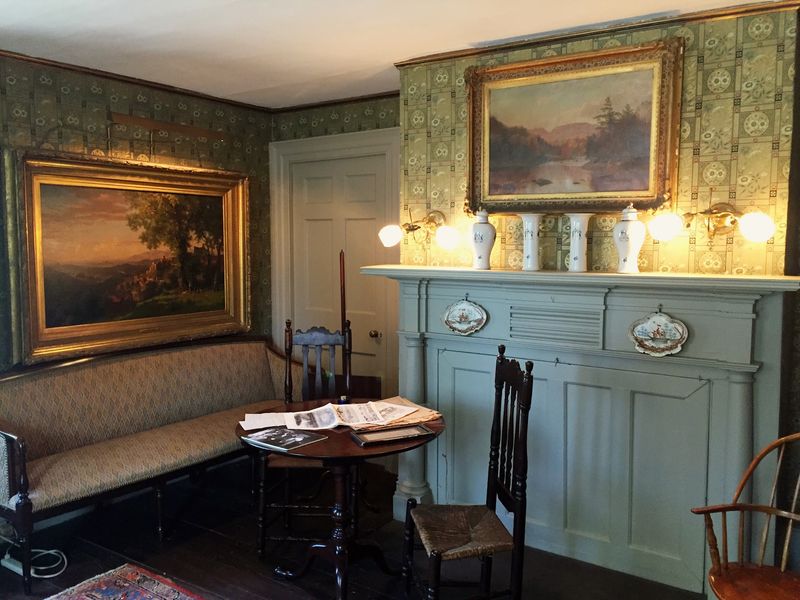
History feels unusually close here. Built in 1782, the Butler-McCook House is Hartford’s oldest surviving home and the only 18th-century residence left on Main Street.
Four generations of the same family called it home for 189 years, leaving behind an unusually complete record of everyday life across nearly two centuries.
That continuity gives the rooms their character. Original furnishings range from locally crafted colonial pieces to Victorian toys, while family paintings and Japanese samurai armor reveal how tastes changed over time.
Guided tours connect those belongings to the Butler and McCook families, whose story reaches beyond the house through medicine, art, education, travel, and social reform.
The mood grows more mysterious upstairs, where layers of family possessions and old-fashioned rooms have inspired plenty of paranormal folklore over the years.
The property even drew an investigation by the Ghosts of New England Research Society, adding another curious chapter to its history.
Outdoors, the restored Victorian ornamental garden offers a calmer change of pace, with design elements created by landscape architect Jacob Weidenmann in 1865.
The Butler-McCook House & Garden stands at 396 Main Street, Hartford, CT 06103. Public tours continue on selected Saturdays in 2026, with advance registration encouraged and additional visits available by reservation.
Seasonal walking tours and concerts also bring visitors onto the grounds. Altogether, the preserved rooms and deeply personal collection make this historic property feel remarkably intimate.
10. Nathan Hale Homestead Museum, Coventry
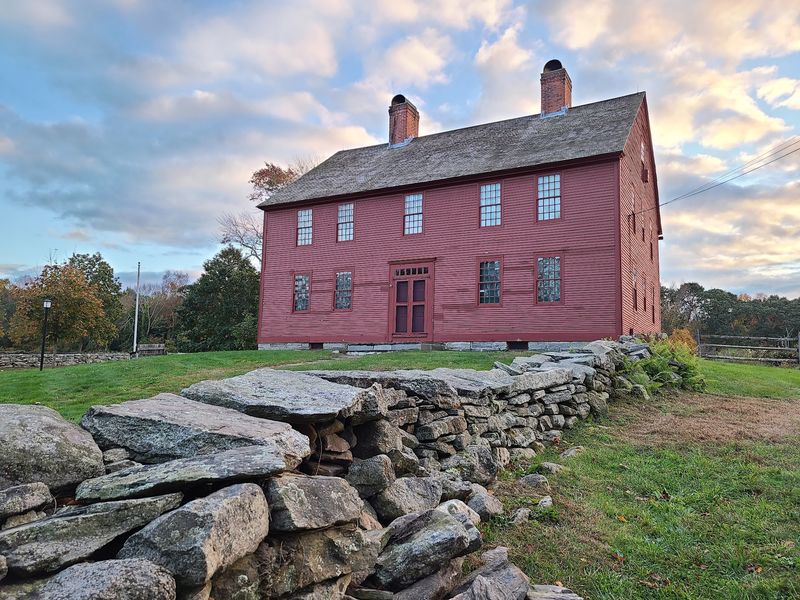
Here is the twist that surprises most visitors: the state hero never actually lived in the house that bears his name.
The Georgian farmhouse was finished in 1776 by Nathan Hale’s father, a deacon, about a month after the young schoolteacher and spy was executed by the British at age 21. His family moved into the expanded home without him.
Six of the deacon’s eight sons served in the Continental Army, and the household often held twelve to twenty people, including widows and children of men lost to war injuries.
A Hale enthusiast bought and restored the property in 1914, filling it with family possessions and period antiques. Today Connecticut Landmarks runs the 17-acre site, hemmed in by 1,500 acres of state forest, which gives the setting a genuinely remote feel.
Out front stands the Holy Grove, a triangular plot of maples planted in 1812 where neighbors once gathered to pray.
Ghost accounts here are specific. Nathan’s father has reportedly been seen at a window in Colonial dress, a lady in white believed to be a former servant is described sweeping floors, and a brother once held on a British prison ship is said to rattle chains in the basement.
The attic gets mentioned too, and the house has appeared on Ghost Hunters.
Visit 2299 South St, Coventry, CT 06238 May through October; grounds stay open dawn to dusk year-round.