Los Angeles, California Has A Bakery Hidden Inside A Historic Charlie Chaplin Building
The building had a story long before anybody lined up for croissants.
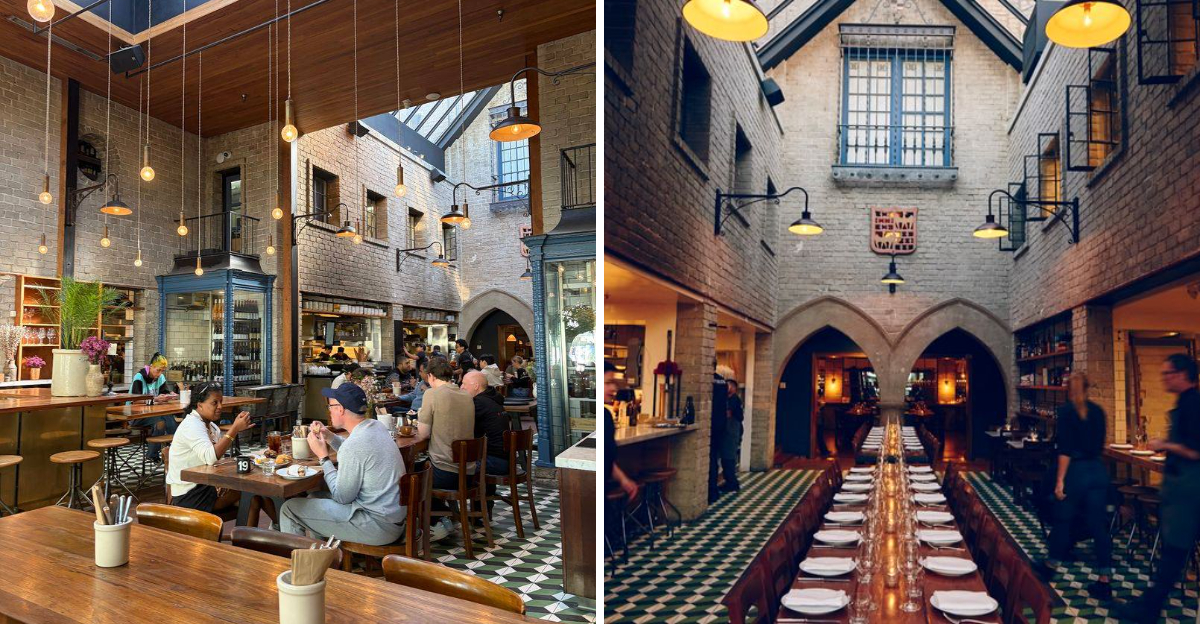
Its arched windows, old brick, and dramatic bones date back to the silent-film era, giving breakfast a backdrop that feels far more cinematic than the average bakery stop.
Then the pastry case takes over and history has to share the spotlight.
Los Angeles has a California bakery where old Hollywood architecture and serious French baking somehow make perfect sense together.
There is no need to choose which side of the experience matters more.
Come for the building if architecture pulls you in. Stay for the croissants, breads, and pastries if that is what actually gets you through the door. Either way, the contrast works.
A nearly century-old setting can easily feel formal. This one feels alive, busy, and completely at home in the present.
Step Inside A Building Commissioned By Charlie Chaplin
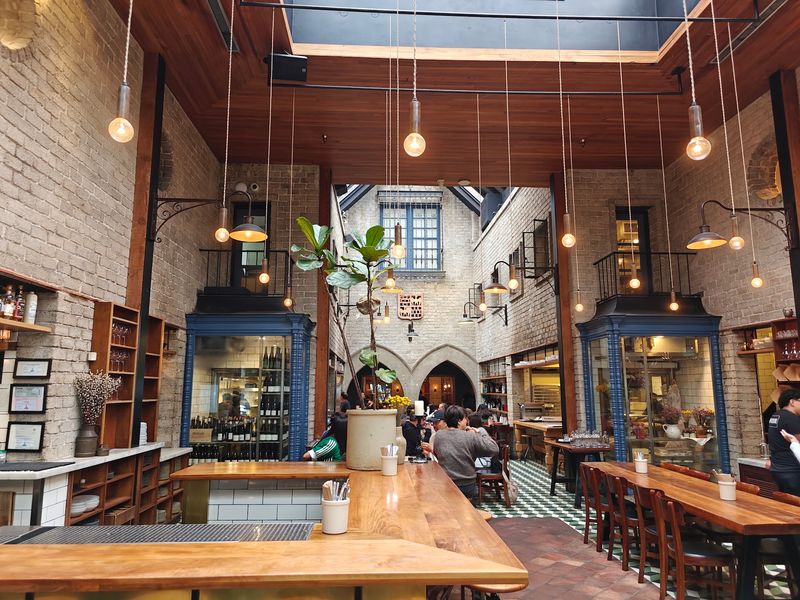
The building was commissioned by Charlie Chaplin in 1928, with architect Roy Seldon Price handling the design work.
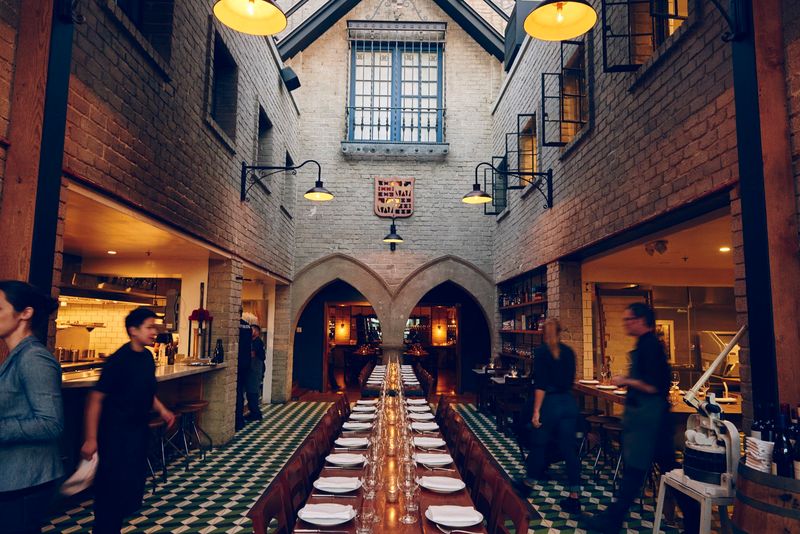
What went up was not a studio soundstage or a theater. Plans called for a mixed-use property, with shops on the ground floor and offices above, arranged around a tiled courtyard.
That layout explains a lot about how the space feels today.
Commercial buildings from the late 1920s were built for foot traffic, natural light, and open circulation, and those choices still shape the way visitors move through the front room.
Guests can find the property at 624 S. La Brea Avenue, Los Angeles, California 90036, where the brick facade sits close to the sidewalk.
The exterior gives only small hints of what the interior holds, so it helps to look up at the arches and ironwork before stepping through the door.
History buffs may appreciate that the Chaplin connection is not decoration added later for atmosphere. The building predates every restaurant that has occupied it, and the architecture came first.
Walking in with that context changes the visit. A morning pastry stop turns into a chance to stand inside a piece of 1920s Los Angeles that still functions much as it was designed to.
Look For The Original Brick, Tile And Ironwork
Renovation crews often cover things up, but the approach here went the other direction.
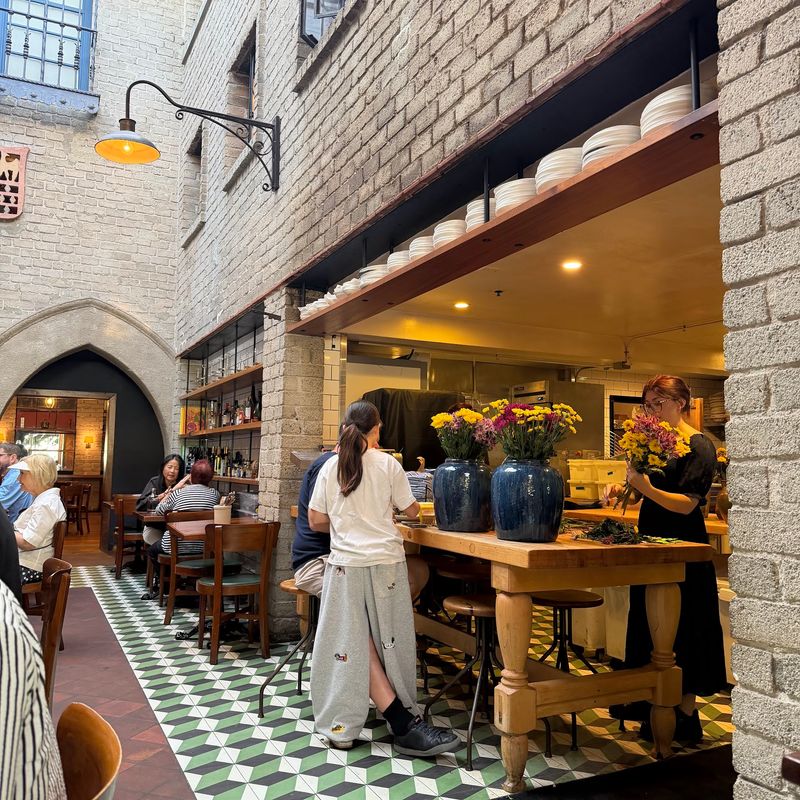
When the space was reworked for République, the design team stripped away later additions to reveal what the 1928 building already had underneath.
Out came the original brick, the tile, and the ironwork. The goal was to bring back the airy, open feel the property had when it was first built, rather than layering on a new look.
Visitors notice the difference right away. Brick walls carry the texture of age, arches frame the ceilings, and iron details hold their weight without trying to be a design statement.
Light plays a big role in how all of it reads. Skylights and tall ceilings let daylight travel deep into the room, which softens the brick and keeps the space from feeling closed in even when it is busy.
Anyone curious about old buildings will find plenty to study while waiting for an order. Floor tile patterns, window shapes, and metalwork all reward a slow look.
The restraint is part of the appeal. Rather than dressing the room in fake vintage touches, the renovation let real materials do the work, and the result feels honest rather than staged.
Follow The Building’s Remarkable Restaurant History
Restaurant buildings usually turn over quietly, but this one has a paper trail worth following.
Campanile opened here six months after La Brea Bakery and grew into one of the city’s notable restaurants, shaping the Los Angeles dining scene through the 1990s.
That run lasted more than two decades. Campanile occupied the building until closing in 2012, leaving behind a space with a strong culinary identity already attached.
République opened in 2013 and stepped into that history rather than erasing it. The new tenant kept the building’s food-focused purpose intact while adding a bakery and café at the front.
Continuity like that is rare. Many historic buildings get repurposed into offices or retail, and the fact that this address has stayed devoted to food for more than thirty-five years is part of what makes it interesting.
Diners today are sitting in a room that has fed the city under three different names. The walls stayed, the kitchens changed, and the reputation carried forward.
Understanding that timeline also explains the crowds. République inherited an address people already knew, and it built on that recognition instead of starting from scratch.
The layers make the visit feel bigger than a single meal, even for guests who only stop in for coffee and a pastry.
Make The Bread Part Of The Main Story
Bread is not a basket of filler here. The signature French baguette was developed earlier in the pastry chef’s career, and it remains central to how the bakery and café present themselves.
Menus reflect that priority openly. The café lists an item called This Morning’s Bread, a baguette served with French butter and jam.
Simple plates like that reveal a lot. There is nowhere to hide when bread, butter, and jam are the whole dish, so the quality of the loaf has to carry it.
Crust texture is the thing to pay attention to. A well-made baguette gives a little resistance before it yields, and the interior should feel open rather than dense.
Guests ordering a larger breakfast often find bread arriving alongside it as well, which keeps the bakery present even at the table. That overlap between bakery and kitchen is part of the identity.
For visitors watching their budget, bread and coffee make a reasonable stop without committing to a full breakfast plate. Prices at the counter run higher than a neighborhood bakery, though portions are generally substantial.
Taking loaves home is also an option, and the bakery counter handles that alongside dine-in orders. Availability depends on the day and how early the visit happens.
Save Room For The Pastry Counter
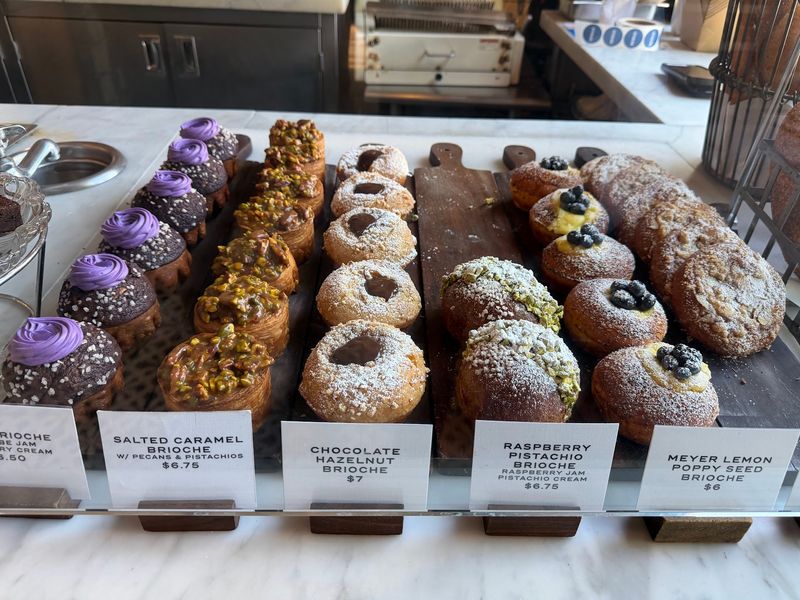
Position matters, and the bakery holds the best real estate in the building. Sitting at the front of République, the counter creates a far more casual experience than the formal dining area farther back.
Ordering works differently than a typical sit-down restaurant. Guests line up, order at the counter, and receive a number before finding a table, with food brought out when it is ready.
That rhythm keeps things moving even when the room fills. Lines can stretch during busy stretches, though they generally advance at a steady pace.
Pastries and breads have long been defining features of the place, and the case is worth studying rather than skimming. Selections change with seasonality, so the lineup is not fixed week to week.
Timing affects what is available. Arriving later in the day means a thinner display, since fresh bread and desserts can sell out before closing.
Early visits give the widest choice. Guests hoping for a specific item should plan for a morning stop rather than an afternoon one.
Grabbing pastries while waiting for a hot dish is a common approach, and it makes the wait feel shorter. Anyone taking items to go can skip the table hunt entirely, which helps on crowded weekend mornings.
Turn A Bakery Stop Into Breakfast
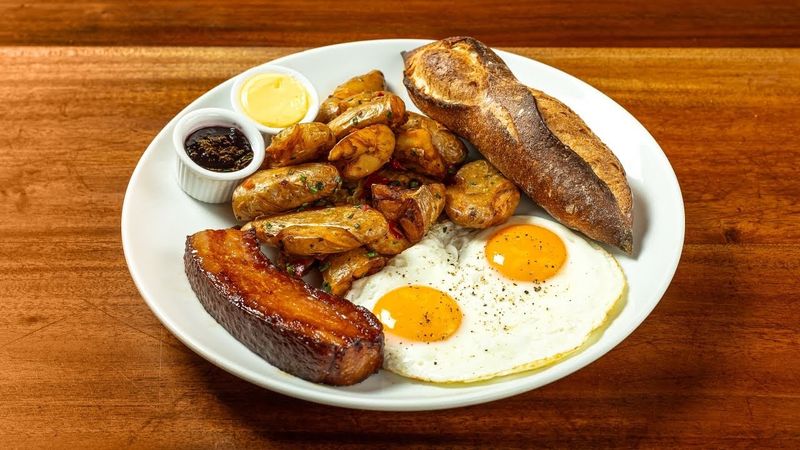
Anyone expecting a quick pastry-and-go counter will find a much broader kitchen operating behind it. The café menu covers a full range of breakfast dishes alongside the bread and pastry selection.
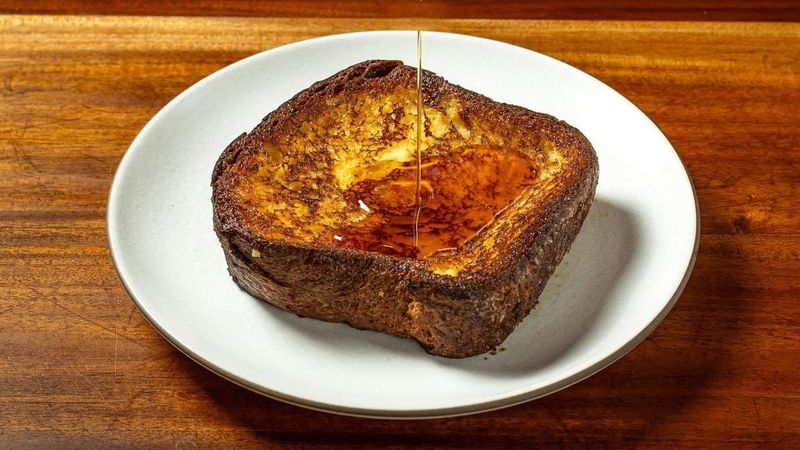
Sweet options include Brioche French Toast and a Cast Iron Buttermilk Pancake. Savory choices run through a Quiche Slice, Avocado Toast, Mushroom Toast, and a Short Rib Breakfast Burrito.
The menu also reaches beyond standard American breakfast. Kimchi Fried Rice, Mediterranean Eggs, and a Potato Pancake with smoked salmon appear among the offerings.
That variety makes group visits easier. Tables with different appetites can order across sweet and savory without anyone settling for a compromise.
Food is cooked to order, so hot dishes take time to reach the table after ordering at the counter. Building in that wait keeps expectations realistic, especially during peak hours.
Portions on several dishes run generous enough to share, which some guests use to sample more of the menu. Pairing a savory plate with a pastry between two people is a practical approach.
Seating includes communal tables, so parties may end up near strangers. The arrangement suits casual breakfasts better than quiet conversations, and the room carries noise when full.
Coffee is available alongside the food, rounding out the café side of the operation.
Come Back On The Weekend For Brunch
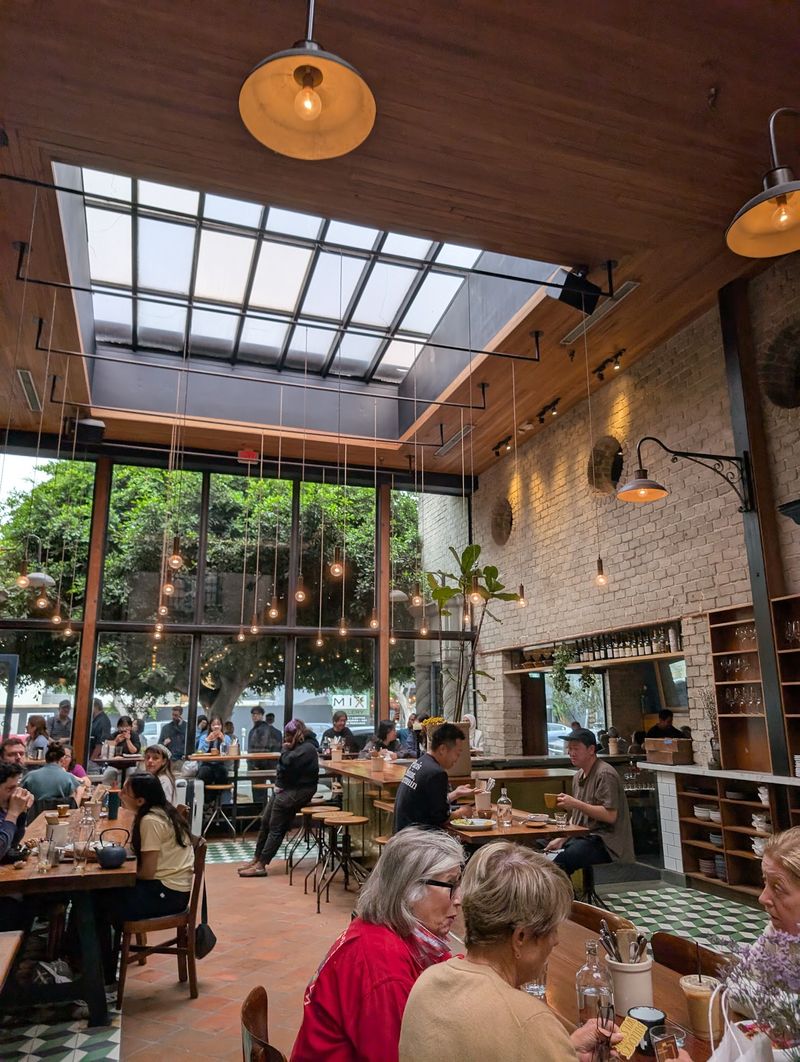
Weekends bring their own menu to the front room. A dedicated weekend brunch lineup extends well past pastries while keeping bread at the center of the experience.
Crowds also shift on Saturday and Sunday. Lines tend to be longer during peak brunch hours, and the room grows noticeably louder as tables fill.
Arriving close to opening is the simplest way to shorten the wait. The café and bakery operate daily from 8 a.m. to 2 p.m., which gives a fairly narrow window for weekend visits.
Later arrivals should expect a fuller room and a thinner bakery case. Both factors make an early start worthwhile for guests who want a calmer pace.
Reservations are not part of the daytime counter setup, so planning around timing matters more than booking ahead. Weekday mornings generally feel less pressed than weekend ones.
Groups can still work here, though larger parties may take longer to find seating together. Communal tables help, but they fill quickly during busy stretches.
Families visit as well, and the counter-service format allows for a flexible pace. Parents managing young children may find the ability to order and sit without waiting on a server useful.
Know Where To Find It Before You Go
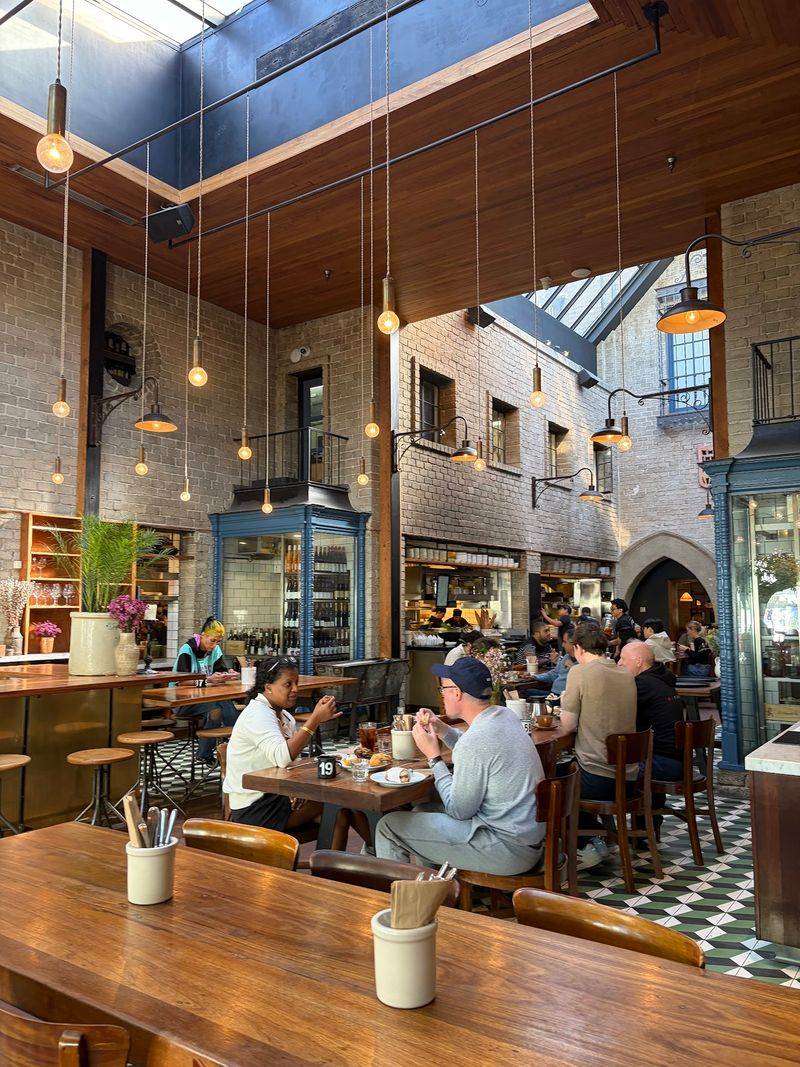
Planning the visit around the clock matters more than anything else here.
The daytime café and bakery run daily from 8 a.m. to 2 p.m., which makes morning or early afternoon the relevant window for the bakery side of the story.
République sits at 624 S. La Brea Avenue, Los Angeles, California 90036, on a busy commercial stretch.
The address places it within reach of nearby Mid-Wilshire attractions, which makes pairing a breakfast stop with other plans straightforward.
Street parking exists in the area, though availability varies by time of day. Valet service has also been offered, so checking options ahead of a visit is sensible.
Walking up close to opening usually means a shorter line than arriving at peak brunch hours. Weekday mornings generally move faster than weekends.
Ordering happens at the counter during café hours, so no reservation is needed for that portion of the day. Guests receive a number and find seating themselves.
Hours and menu items can change, and confirming details through the restaurant before heading over saves disappointment. Popular pastries and fresh bread may sell out later in the service window.
Arriving with flexible expectations tends to make the visit smoother than chasing one specific item.