Many People Don’t Know About This Gorgeous Half-Mile Tree Tunnel Hiding In California

A road can feel ordinary until the trees decide otherwise. One turn changes the mood fast.
Branches rise overhead. Light slips through in thin silver streaks.
Suddenly the drive feels less like a route and more like a secret someone forgot to lock away.
California still has places that make a short walk feel strangely cinematic. Quiet paths can do that when nature handles the drama without trying too hard.
The gorgeous tunnell has that rare kind of beauty that makes people slow down before they even know why.
No flashy signs are needed, and no big production waits at the end. Just a half-mile stretch of wind-shaped trees creating one of the most quietly magical scenes on the coast.
A Real Monterey Cypress Tunnel Worth Knowing About
Not every natural landmark gets the attention it deserves, and the Cypress Tree Tunnel is a perfect example of a place that quietly earns its reputation.
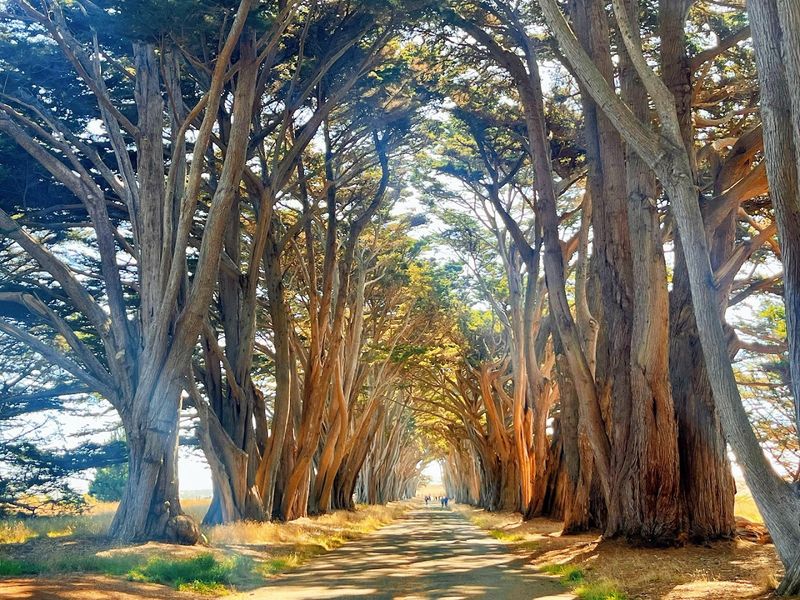
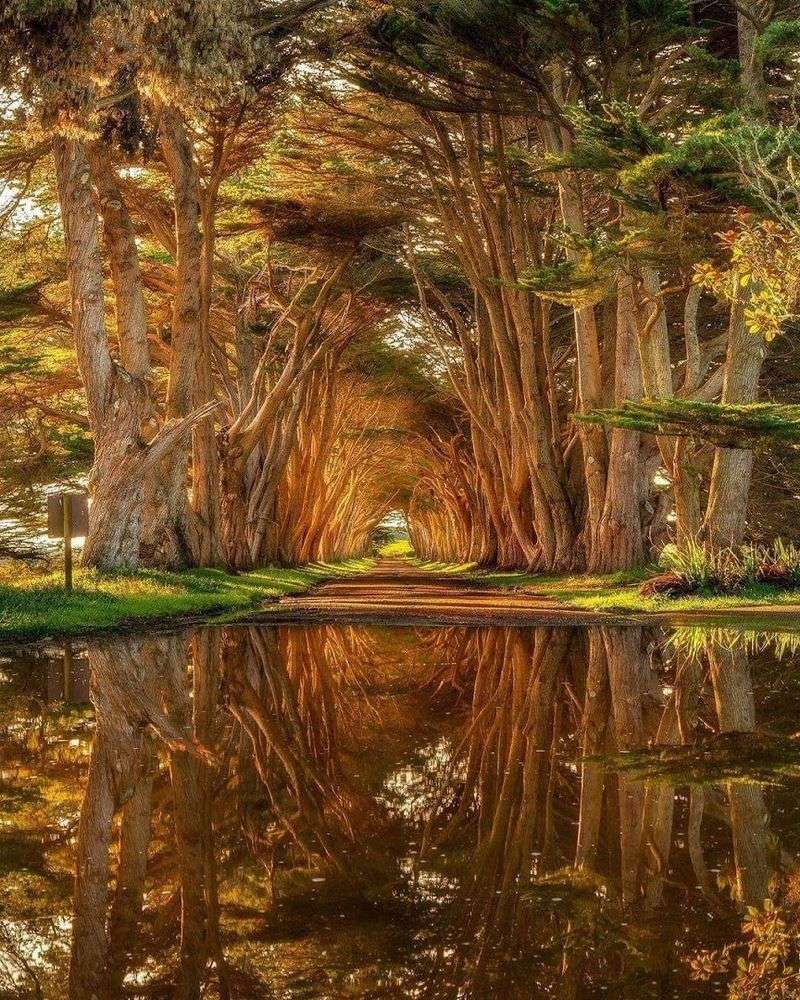
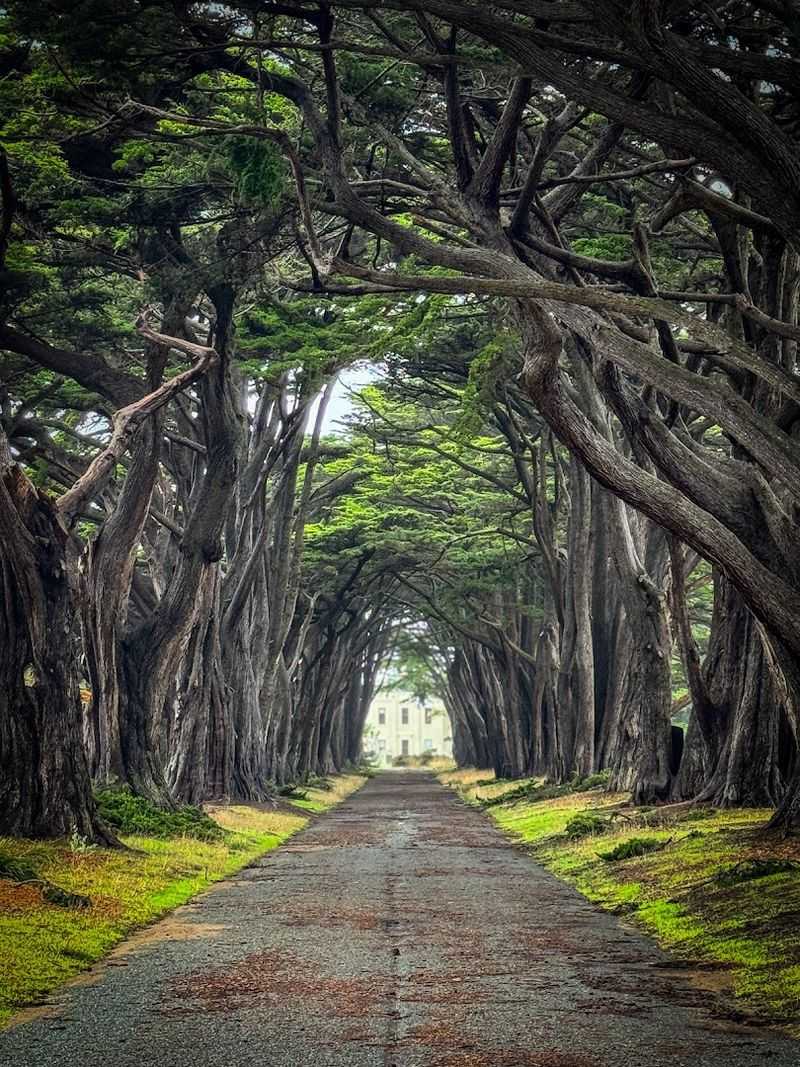
Planted around 1930, two parallel rows of Monterey cypress trees now stretch along a road inside Point Reyes National Seashore, their massive trunks rising on both sides before their upper branches twist and reach toward each other overhead.
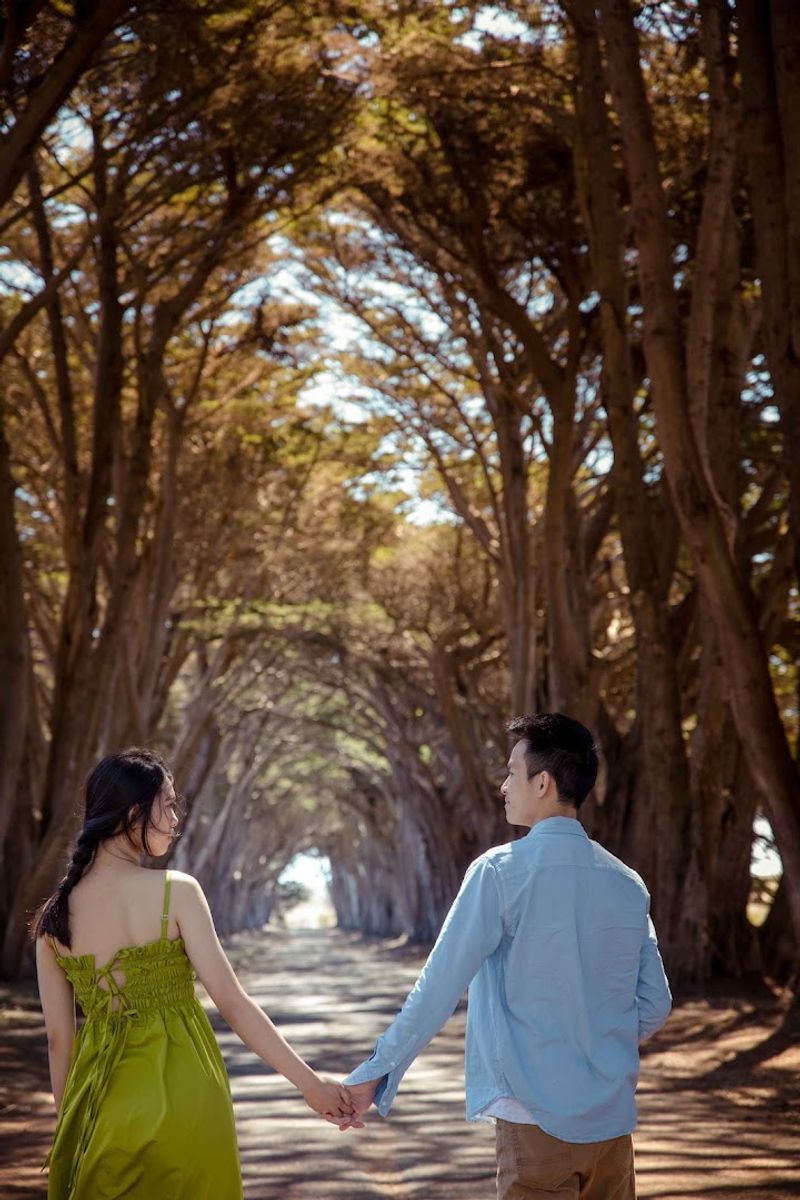
The result is a dense, living canopy that blocks out the sky and creates a corridor of shadow and filtered green light.
Coastal winds have shaped the branches over nearly a century, giving each tree a contorted, sculptural quality that no landscaper could replicate.
The foliage is thick and dark, and even on bright days the tunnel holds a certain quiet and shade that feels separate from the open grasslands surrounding it.
Monterey cypress trees were specifically chosen for their ability to handle the strong ocean winds and salt air that define Point Reyes weather.
Short Enough For A Quick Stop On Any Road Trip
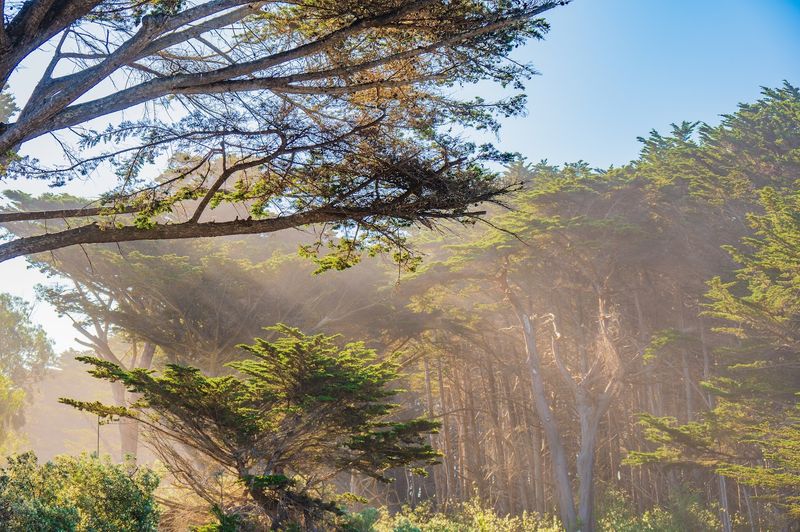
Road trips through Marin County tend to fill up fast with lighthouse views, coastal trails, and wildlife pullouts, so it helps to know that the Cypress Tree Tunnel does not demand a big chunk of the day.
The tree-lined road stretches roughly a quarter mile each way, making the full out-and-back walk closer to half a mile total, and most visitors spend around fifteen to thirty minutes at the site.
That kind of short, low-effort stop fits naturally between bigger destinations without feeling rushed.
Families with young children, visitors who prefer flat and easy terrain, or anyone just looking to stretch their legs between drives will find the pacing comfortable and relaxed.
There are no steep grades, no technical trail sections, and no gear requirements beyond comfortable walking shoes.
The simplicity of the walk is actually part of its appeal. Nothing competes for attention except the trees themselves, and that focused, unhurried quality gives the tunnel a calm that longer hikes sometimes lose.
Historic Radio Station Waiting At The End
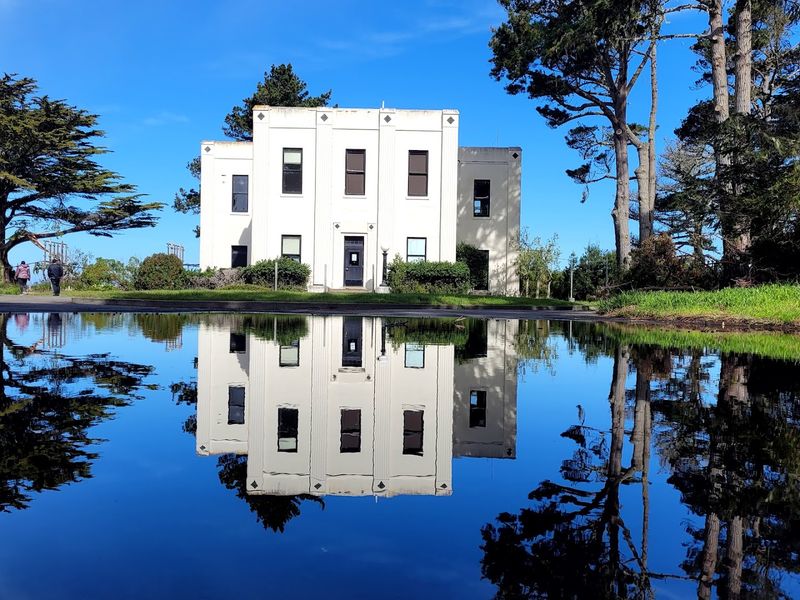
Walking through the tunnel leads somewhere genuinely interesting beyond just the trees.
At the far end of the cypress-lined road stands the KPH Maritime Radio Receiving Station, an Art Deco-style building constructed between 1929 and 1931 that once served as a critical hub for ship-to-shore communications via Morse code radio.
The building’s clean white exterior and geometric architectural details contrast sharply with the wild coastal landscape surrounding it.
The Maritime Radio Historical Society hosts Saturday guided tours of the station, offering visitors a chance to learn about its role in 20th-century maritime communications and the technology that once operated inside.
For visitors who arrive on a weekday or outside tour hours, the exterior and the surrounding grounds are still worth seeing.
The combination of a century-old radio facility and a dramatic tree-lined entrance creates an atmosphere that feels layered and historically textured in a way that most short nature stops do not.
Fog Makes The Tunnel Feel Like A Different World
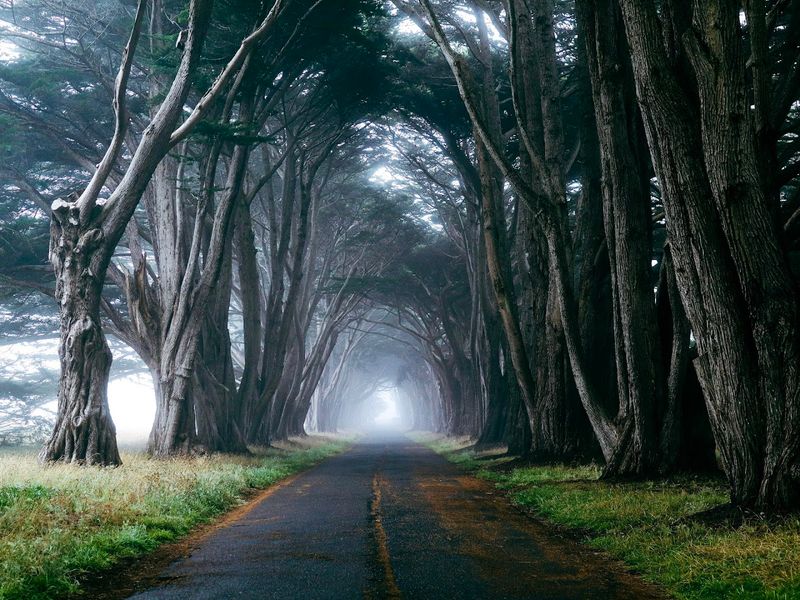
Point Reyes is one of the foggiest stretches of coastline in California, and that atmospheric quality transforms the Cypress Tree Tunnel depending on what the weather is doing. On clear mornings, soft coastal light slants through the branches and creates dappled patterns along the road surface.
On foggy days, the tunnel takes on a completely different character, with mist drifting between the trunks and the far end of the road disappearing into grey-green softness.
Neither condition is better than the other, just different in the kind of mood they create. Fog tends to muffle sound and slow the pace of a visit naturally, making the space feel quieter and more enclosed.
Clear days open up the contrast between the dark canopy and the bright coastal sky just beyond the tree line, giving photographers more defined light to work with.
Checking weather conditions before heading out is worth doing, since fog in the Point Reyes area can be unpredictable and may linger well into the afternoon during certain seasons.
Photography Opportunities That Are Hard To Replicate
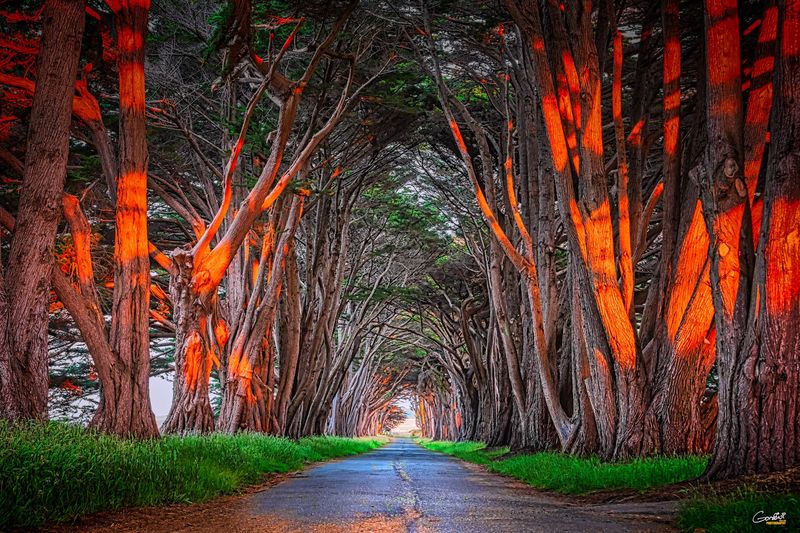
Few natural compositions offer the kind of built-in structure that the Cypress Tree Tunnel provides for photography.
The two rows of trees create strong leading lines that draw the eye straight down the road toward the vanishing point, and the overhead canopy frames the shot in a way that feels almost architectural.
Early morning and late afternoon light tend to produce the most visually compelling results, with warm tones filtering through the dense foliage.
Zoom lenses can compress the perspective and make the tunnel appear even more dramatic, while wide-angle lenses capture the full sweep of the canopy from a low angle.
Portrait photographers also use the tunnel as a backdrop because the naturally blurred green canopy creates a soft, textured background without any additional effort.
Arriving early on a weekday gives the best chance of having the tunnel mostly clear of other visitors, which makes composition much easier.
Finding The Tunnel Without Getting Lost
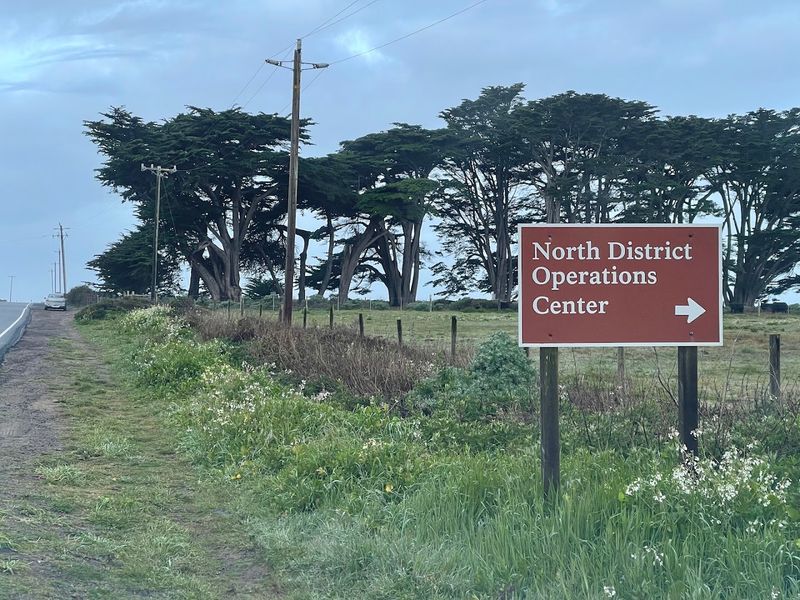
Spotting the turnoff for the Cypress Tree Tunnel takes a little attention because the road does not announce itself with dramatic scenery from the highway.
Drivers heading along Sir Francis Drake Boulevard should watch for signs pointing toward the North District Operations Center, which is the landmark that leads directly to the tunnel entrance.
Without that reference, the turn can be easy to miss, especially while taking in the broader landscape of rolling hills and open grassland.
Cell service in the Point Reyes area is genuinely limited, and relying on live navigation can be unreliable once past the town of Inverness.
Downloading an offline map before leaving a connected area is a practical step that removes a lot of guesswork.
The tunnel sits roughly halfway between the Bear Valley Visitor Center and the Point Reyes Lighthouse, which helps with general orientation even without a signal.
Planning the visit as part of a larger Point Reyes loop makes the navigation feel more manageable, since the tunnel connects naturally to other stops along the same road.
Parking Realities And What To Expect On Arrival
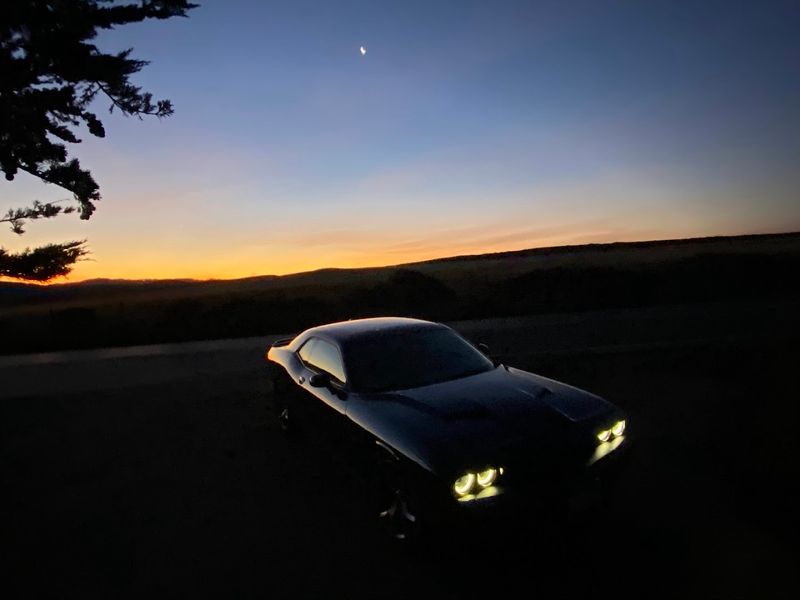
Parking at the Cypress Tree Tunnel is straightforward but does require some care.
Visitors typically pull off along the shoulder of Sir Francis Drake Boulevard near the tunnel entrance, and there is generally enough roadside space for several vehicles when the spot is not crowded.
A small lot at the end of the tunnel road may also be available depending on the day and whether the operations center is in use.
Parking directly beside the tree roots or along the driveway itself is something to avoid, since the root systems of century-old cypress trees are sensitive to compaction and disturbance.
Keeping vehicles on the paved shoulder and walking from there protects the trees and keeps the site in good condition for future visitors.
The site does not charge an entrance fee, and no reservation system is currently in place, so the visit remains spontaneous and accessible for anyone passing through the Point Reyes area.
Year-Round Appeal With Seasonal Variations
One of the practical advantages of visiting the Cypress Tree Tunnel is that it holds appeal across every season.
The site is listed as open year-round, with operating hours running from 6 AM to 5 PM daily, which gives visitors a reliable window for planning.
Unlike wildflower seasons or migratory wildlife windows, the tunnel does not depend on a specific time of year to deliver its main visual appeal.
Spring tends to bring greener surrounding grasslands and softer morning light, while summer mornings often arrive wrapped in coastal fog before clearing by midday.
Fall offers more stable weather and slightly fewer crowds compared to peak summer weekends. Winter visits carry a quieter, more solitary quality, with the tunnel taking on a deeper, darker tone under grey coastal skies that can actually enhance the moody atmosphere of the space.
In summer, the dry golden hills of Point Reyes frame the dark green cypress canopy in a striking contrast.
What Makes The Cypress Trees Themselves So Striking
Monterey cypress trees have a visual character that sets them apart from most other species found in California parks.
Their bark is deeply furrowed and grey-brown, their trunks often lean and twist under years of coastal wind pressure, and their canopies spread in dense, flat-topped masses of dark green foliage.
Up close, the branches have a sculptural quality that feels almost deliberate, shaped by decades of exposure to salt air and strong ocean gusts.
The trees lining the tunnel have had nearly a century to develop that character, which means no two trunks look quite the same.
Some lean slightly toward the road, some reach upward before bending back, and the interlocking of branches overhead creates a ceiling that shifts in texture and density as you walk beneath it.
That variation keeps the visual experience interesting from one end of the tunnel to the other rather than feeling repetitive.
How To Make The Most Of A Visit Here
Getting the most out of a visit to the Cypress Tree Tunnel comes down to timing and expectations.
The walk itself is short, so treating the stop as a focused, unhurried experience rather than a destination that needs filling with activity tends to work best.
Arriving early on a weekday morning, ideally before 11 AM, gives the best combination of soft light, manageable crowds, and a quieter atmosphere along the road.
Wearing layers is a practical choice since Point Reyes coastal weather can shift quickly, and wind is a consistent presence even on otherwise mild days.
Comfortable shoes handle the flat road surface easily, and bringing a camera or charged phone for photos is worth the small effort given how photogenic the space tends to be.
Cell service is limited in the area, so having the address saved offline before departure removes any last-minute navigation stress.
Combining the tunnel visit with a stop at the Point Reyes Lighthouse or a walk along one of the nearby coastal trails turns a quick fifteen-minute photo stop into a more complete half-day outing.