Maryland’s Rustic Restaurant And Craft Destination Feels More Like A Tiny Village Than A Dining Spot
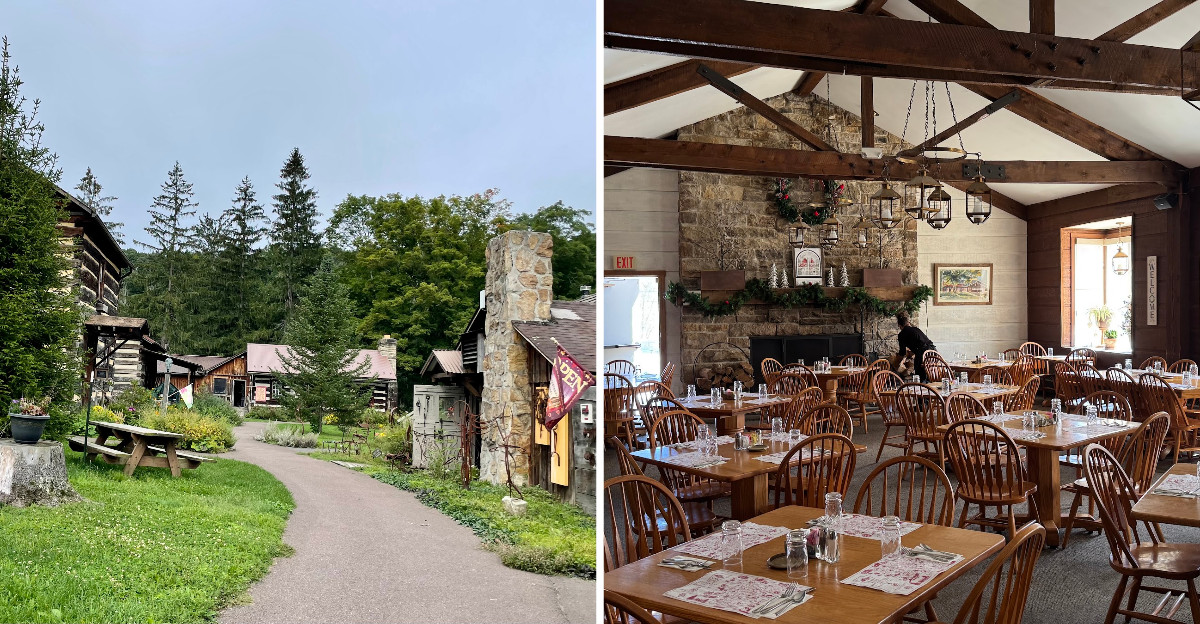
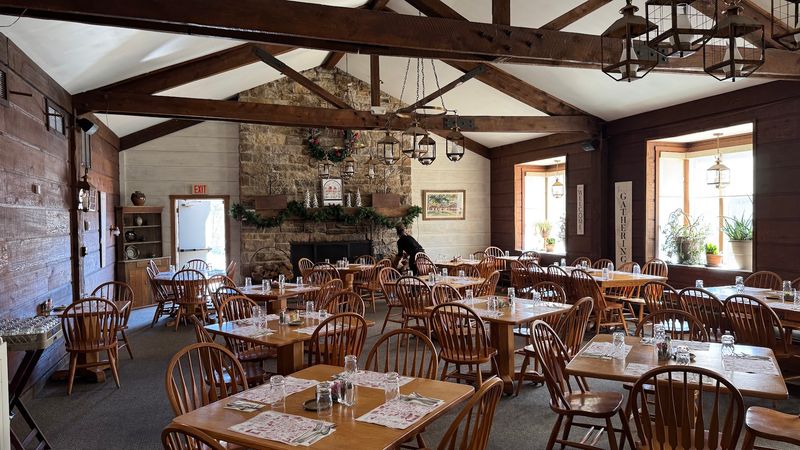
The dining room I keep thinking about started life as an 1818 log tavern.
Stagecoach travelers once stopped there on the National Pike. Today, people stop for fried chicken and blackberry cobbler instead.
That one detail tells the whole story.
Right next door, about a dozen historic log and frame buildings serve as working artist studios. Some of them date back to the Revolutionary War era.
So lunch here comes with a side of history, a stone bridge, and a 1797 gristmill. In western Maryland, that is a pretty generous plate.
How many restaurants can say their neighbors include a weaver, a potter, and a bird carver?
Lunch Comes With A Two-Century Head Start
Few restaurants can claim a stagecoach past, but Penn Alps Restaurant & Craft Shop can.
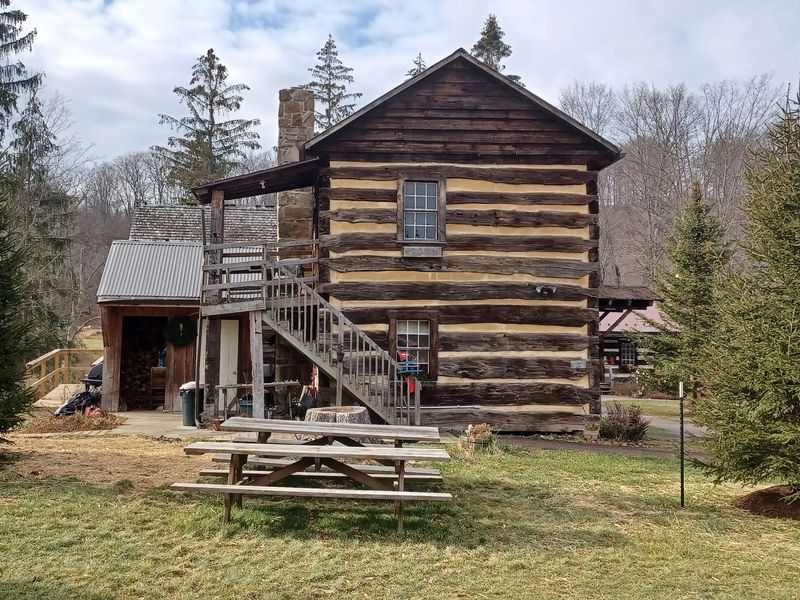
Its oldest section began as Little Crossings Inn, a log tavern built in 1818 beside the National Road near Grantsville.
Travelers once stopped at the inn while following the route through the mountains.
Its original logs remain within today’s much larger restaurant, and three dining rooms preserve portions of the former hospitality house.
The more recent story began in 1957, when educator Alta Schrock returned to the Alleghenies with plans to support regional handicrafts and create a gathering place for local culture.
The craft shop opened in 1958 and the restaurant in 1959.
Some dining rooms are named for the early inn, while a historic fireplace gives the Alpine Room extra warmth during cooler months.
People arrive for a country meal without necessarily realizing they’re sitting inside a building that has welcomed travelers for more than two centuries. That connection gives this Maryland stop a story beyond its menu.
Mountain Comfort Food That Fills The Plate And Then Some
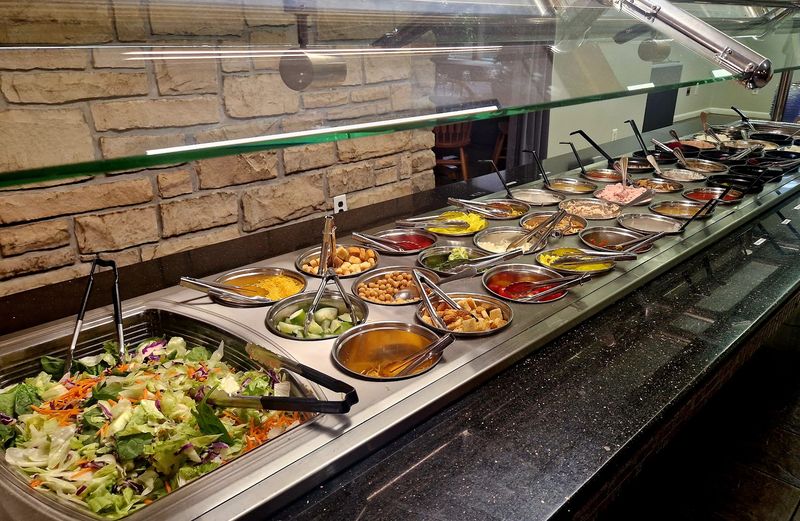
Fried chicken, ham, roast beef, and baked haddock can all show up on the same buffet line. That’s a lot of decisions for one hungry person.
Penn Alps serves country-style cooking inspired partly by the German-rooted traditions of the local Amish and Mennonite communities.
Friday’s buffet focuses on seafood and familiar favorites, with baked haddock, fried fish, shrimp, clam strips, chicken, ham, and sides such as macaroni and cheese, green beans, and mashed potatoes.
Saturday and Sunday have a different rhythm. Roast beef, fried chicken, and ham anchor the buffet, joined by another featured dish and traditional vegetables.
The soup, salad, and dessert selections accompany weekend service, letting diners mix fresh vegetables and sweets with the main dishes.
Monday through Thursday bring daily specials instead. Lasagna appears on Monday.
Tuesday offers tacos with the soup and salad spread, and Thursday features meatloaf with potatoes. The regular menu also includes roast turkey, salads, wraps, and sandwiches.
Which day you visit genuinely changes what lands on the table. It is worth checking the weekly specials before choosing between a relaxed weekday lunch and a longer buffet meal.
Save Room, Because The Cobbler Is Calling
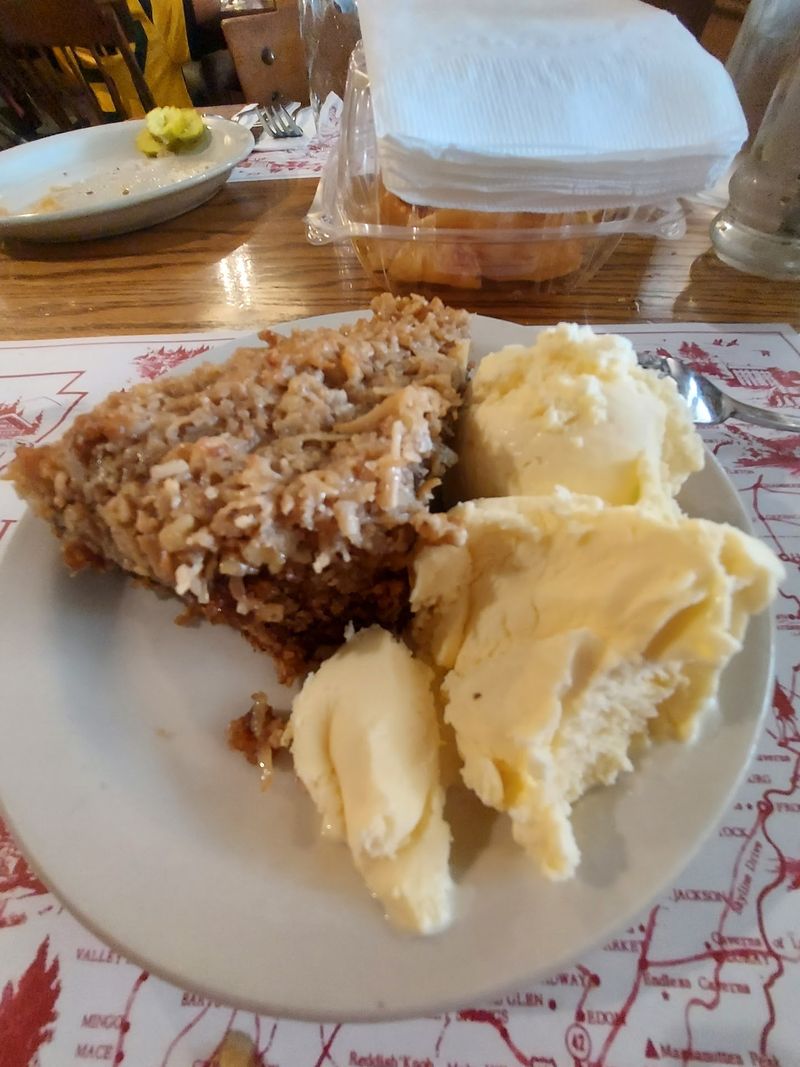
Blackberry cobbler has a permanent place on the dessert menu here, with a golden topping and the option of adding ice cream. That alone could justify saving a little room after lunch.
The other choices follow the restaurant’s home-style approach. Dutch chocolate cake, oatmeal cake, and nut brown pudding made with walnuts and raisins appear alongside ice cream.
There’s also a daily soup, salad, and dessert bar. Fresh vegetables, prepared salads, fruit, and egg custard are among the selections, with soups offering something warming before the main course.
The large spread makes it possible to build a lighter lunch instead of ordering a full hot entrée. It also accommodates groups with different appetites around the same table.
After a morning outdoors in the Alleghenies, a warm bowl feels particularly welcome.
I would leave the blackberry cobbler until the end. Between the baked topping and cold ice cream, it’s the kind of dessert worth slowing down for, even if the craft studios outside are calling.
Browse A Shop Stocked By Thousands Of Makers
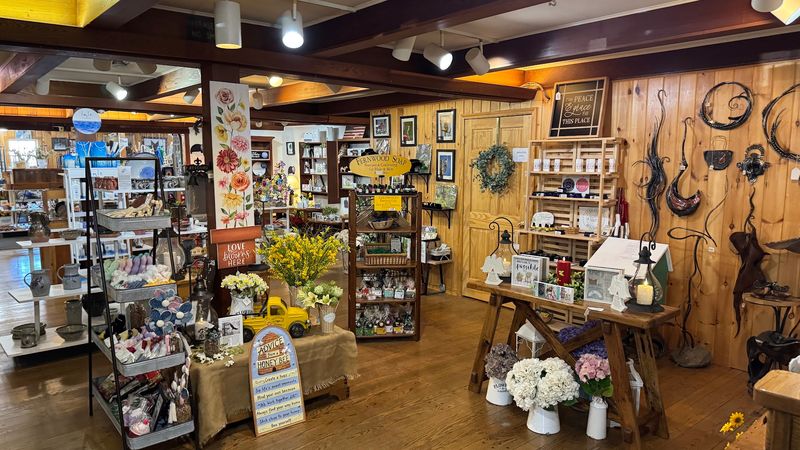
More than 2,500 craftspeople have sold their work through the Penn Alps Craft Shop since 1958.
That’s a remarkable amount of handiwork gathered under one roof over the decades.
The shop shares the expanded complex with the restaurant. Shelves and displays offer regional crafts, including pottery, carved wooden objects, woven pieces, quilts, soaps, metalwork, and decorative art.
Much of the work comes from makers across the Maryland-Pennsylvania-West Virginia region.
The original mission was practical as well as cultural. Founder Alta Schrock wanted a dependable outlet where people could sell goods made with traditional skills and support themselves through their work.
Her guiding idea was to help people help themselves.
A woven textile reveals its pattern one thread at a time, while a hand-carved bird depends on careful shaping and fine detail. Look for items that carry the maker’s own distinctive style.
Browsing can take as long as lunch, especially if you enjoy knowing that everyday objects began as materials in an artisan’s hands.
Next Door, Artists Are Hard At Work In Old Log Cabins
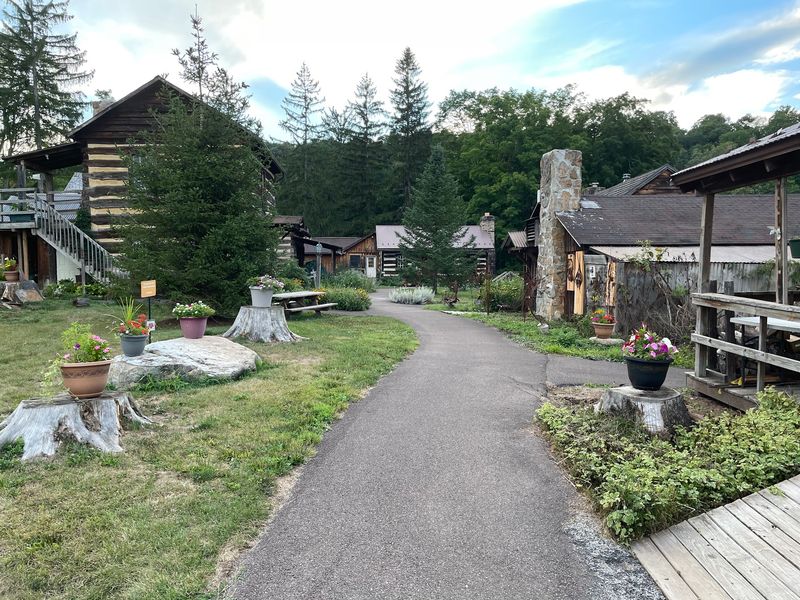
Step outside after lunch, and the tiny village part of this story comes alive. Spruce Forest Artisan Village stands next to the restaurant, with restored cabins serving as working studios.
This isn’t just a historic streetscape. Resident artists work in pottery, weaving, basket making, painting, metalwork, leatherwork, and bird carving, depending on who is in the studio that day.
Artists sell pieces where they make them, keeping the village connected to its original purpose of sustaining traditional crafts.
Depending on the day, you might find a potter shaping a vessel or a weaver working at a loom.
The village welcomes visitors from May 1 through October 31, normally 11 a.m. to 4 p.m. Monday through Thursday and 10 a.m. to 5 p.m. Friday and Saturday.
Individual studios follow their own schedules, and Sunday is a regular closing day. Browse the grounds at your own pace.
Give this part of the visit time. Seeing an object made by hand adds a different kind of appreciation to the finished work waiting in the shop next door.
Old Houses Took A Trip To Get Here
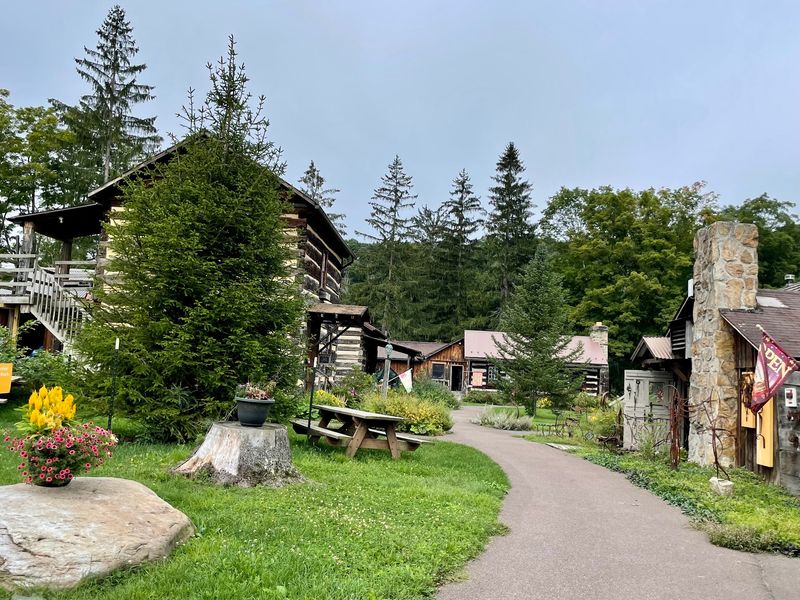
Moving a whole log house sounds like a wild weekend project. Yet that’s how much of Spruce Forest Artisan Village came together.
The Markley House dates to around 1775 and was taken apart and moved to the village in 1985.
Its thick timber walls now shelter a bird-carving studio, while the upper level holds space for historical interpretation when volunteers are present.
Another building, the Winterberg House, began as an early nineteenth-century stagecoach stop. Built around 1820, it was rescued and restored in 1967.
Its two original front doors recall the way the old business served travelers, and the property later became part of the village’s pottery tradition.
The Miller House tells a different story. Built in 1835 near Springs, Pennsylvania, it moved to the campus in 1986 and became a heritage center interpreting early Amish community life.
The restored Compton one-room schoolhouse adds another glimpse of everyday routines from an earlier era.
These weren’t built to imitate history. Their timbers actually traveled here, giving the artisans’ present-day work an authentic setting.
A Stone Bridge And A Gristmill Make Great Neighbors
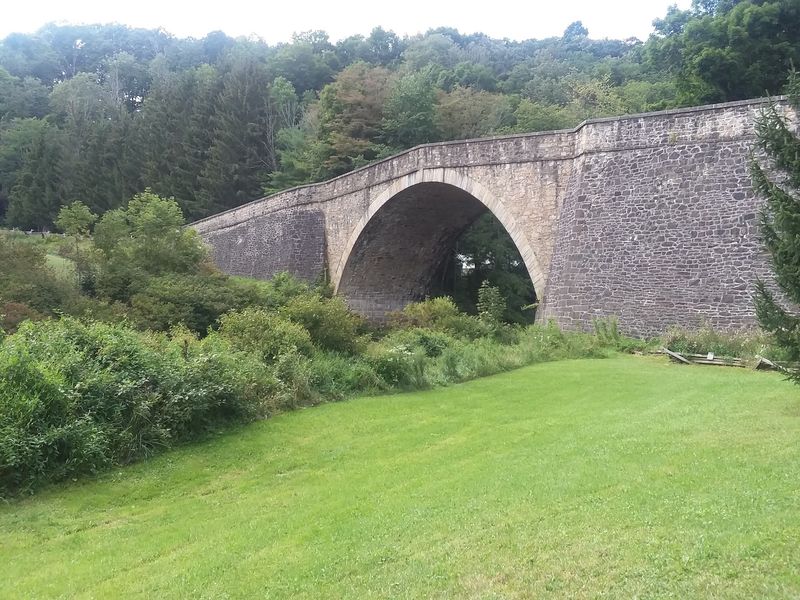
Once upon a time, the Casselman River Bridge was the longest single-span stone arch bridge in America. Built in 1813, its 80-foot arch carried travelers along the National Road for generations.
The historic structure stands close to Penn Alps, with Stanton’s Mill on the other side of the restaurant complex.
The mill dates to 1797 and once ground grain for surrounding communities. It continued operating into the 1990s before restoration returned much of its nineteenth-century character.
Demonstrations of grain grinding sometimes bring the historic machinery into use. Availability varies, so don’t assume the mill will be operating on every visit.
Wagon traffic once crossed the bridge’s broad stone arch, with the Casselman River flowing beneath.
The bridge and surrounding state park are currently closed for repairs, with fencing marking restricted areas. Enjoy the historic setting only from permitted public spaces and leave the bridge itself to the restoration team.
Together, the inn, mill, and crossing show how one small Maryland settlement once served people moving across the mountains. Their proximity is what makes the restaurant’s surroundings feel like a compact history district.
Plan Your Stop Around These Hours
Timing matters in the mountains, especially when cobbler is on the line. Penn Alps Restaurant & Craft Shop opens daily at 11 a.m., with the craft shop following the restaurant’s schedule.
The address is 125 Casselman Rd in Grantsville, close to the historic National Road and Interstate 68. During the main season, the dining room normally stays open until 8 p.m.
Winter hours are shorter: Monday through Thursday until 7 p.m., Friday and Saturday until 8 p.m., and Sunday until 6 p.m.
For the artisan village, continue to 177 Casselman Rd. The cabins have their own seasonal hours, with the regular studio season ending October 31. Visit earlier in the day if seeing working artists matters as much as the meal.
A summer music series has brought chamber and folk performances to this part of the complex, giving the property another role beyond lunch and shopping.
The closed bridge park should stay off your walking route until access is restored. Even so, the restaurant, craft shop, and open village studios offer plenty to explore together.
In western Maryland, one stop can easily stretch into a relaxed afternoon without needing to drive between activities.