More Than 200 Feet Of Cliff Wall Surround This Idaho Waterfall You Reach On An Easy Path
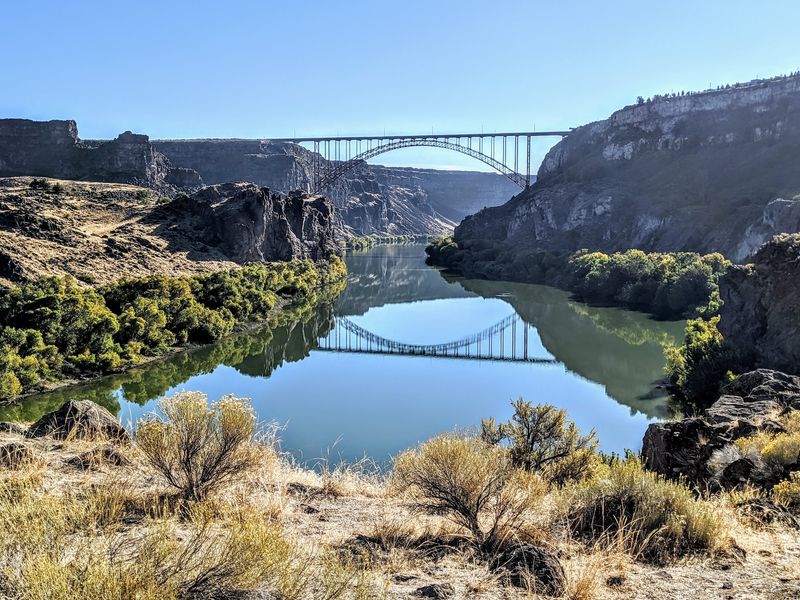
A roadside pullout with room for maybe five cars does not look like much in southern Idaho. Walk a few minutes down a rocky path, though, and a ribbon of water spills off a basalt cliff roughly 200 feet tall, and you can step right behind it.
It flows all year, costs nothing to visit, and sits minutes from one of the busiest tourist towns in the Magic Valley. Here is everything you need to plan a short stop that feels much bigger than it looks.
Water Spilling From The Rim
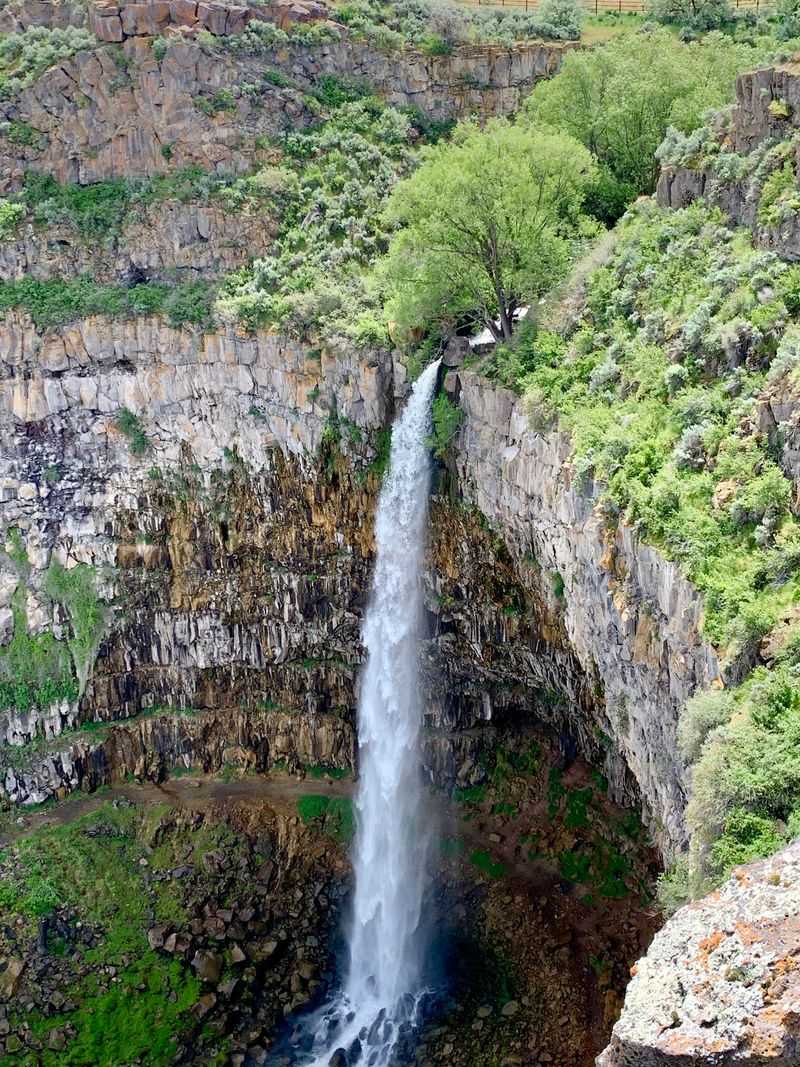
Water appears to pour straight out of solid rock along the south wall of the Snake River Canyon, dropping about 200 feet before hitting the boulders below. That’s Perrine Coulee Falls, a year-round waterfall on the edge of Twin Falls in south-central Idaho’s Magic Valley.
The falls sit in Twin Falls County, just below the city’s northern rim, close to Centennial Waterfront Park and within sight of the Perrine Bridge. Drivers heading down into the canyon pass right by it, and plenty of them never realize what’s waiting around the curve.
What makes it special is scale paired with ease. The canyon walls rise high on every side, yet the walk from the road takes only a few minutes.
Families on road trips, locals with a free afternoon, and hotel guests out for a stroll all end up in the same spot, craning their necks at the same ribbon of white.
It isn’t marked like a major attraction, and there’s no gate or ticket booth. You simply park, walk a short rocky path, and find yourself standing in the spray.
The rest of this guide covers how it got its name, why it never runs dry, and how to actually find it.
A Name Borrowed From Perrine
Long before anyone came here to walk behind a waterfall, I.B. Perrine was busy imagining farms where sagebrush grew.
He was a key figure in developing the Twin Falls area, and he helped push the irrigation systems that turned dry Snake River Plain ground into productive fields.
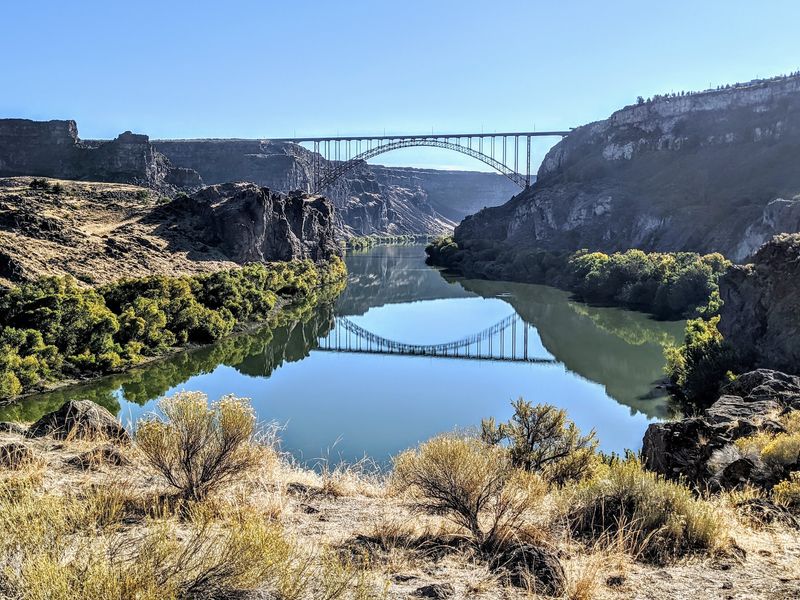
His name now shows up all over the canyon. The Perrine Bridge carries traffic high above the river, and the waterfall below the rim carries his name too.
It’s a fitting tribute, since water shaped both his legacy and this spot.
The second half of the name deserves a quick explanation. A coulee is a deep ravine or valley, usually carved out by moving water over a long stretch of time.
So the name roughly translates to Perrine’s water-cut ravine, which describes the setting pretty well.
For your map app, the general address is Idaho 83301, the Twin Falls ZIP code. That alone won’t get you to the trailhead, though, so keep reading for parking tips.
Knowing the story behind the name makes the view a little richer, since you’re looking at a piece of the same water story that built the modern Magic Valley.
Basalt Walls On Every Side
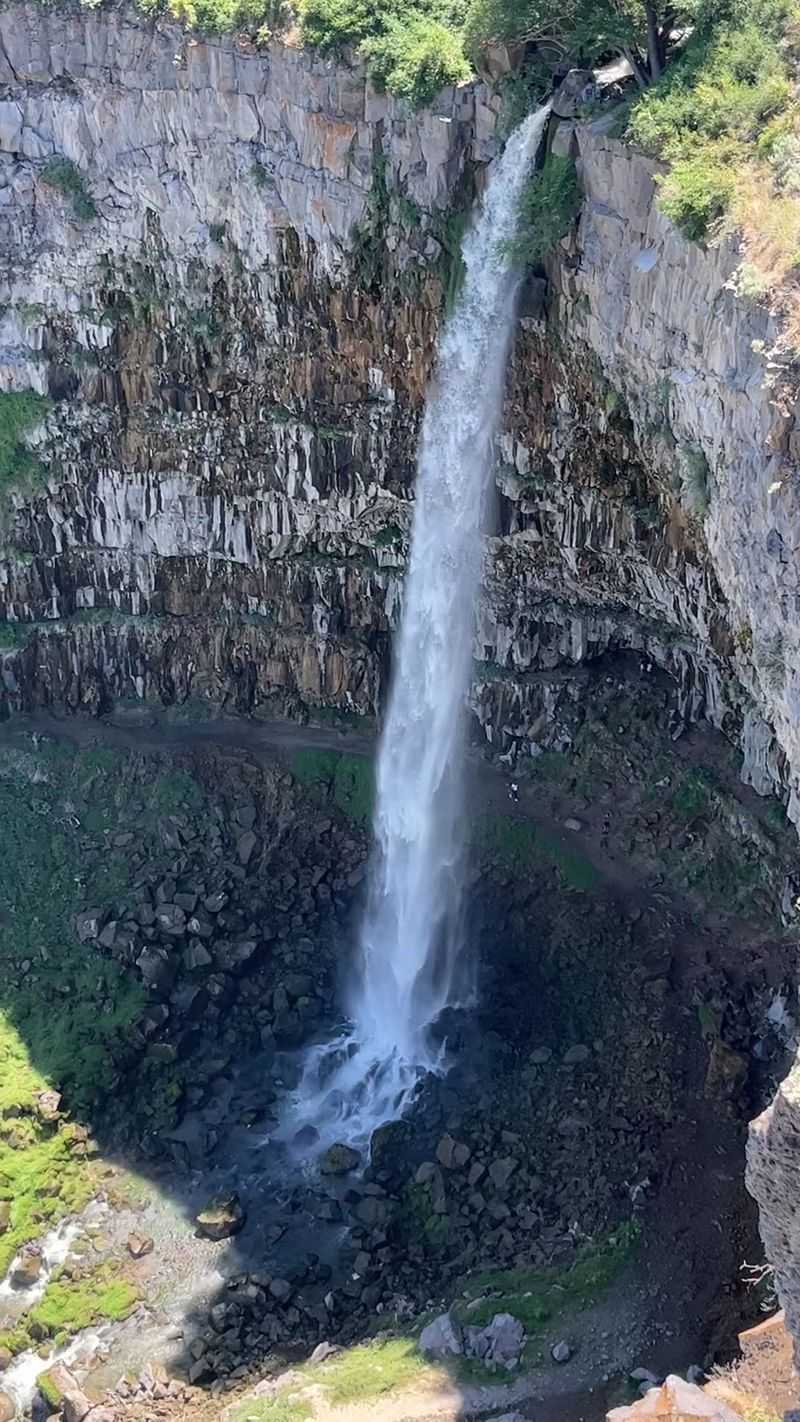
Charcoal-gray basalt rises in jagged columns around the falls, and the effect is a lot like standing inside a giant stone bowl. The cliffs here easily top 200 feet, and some sections of the Snake River Canyon climb as high as 500 feet from the canyon floor.
That rock came from ancient lava flows that spread across southern Idaho long ago. Over thousands of years, water worked its way through the layers, cutting the canyon deeper and carving the ledge the falls now tumble over.
Look closely and you’ll notice the texture changes as your eyes move upward. Near the bottom, wet boulders shine with spray and moss.
Higher up, the walls turn rough and blocky, with cracks and overhangs that catch shadows as the sun shifts.
The scale is hard to judge until you see a person standing near the base. Suddenly the whole scene makes sense, and the waterfall looks even taller.
Photos rarely capture it, a point visitors bring up again and again.
In fall, patches of gold and orange leaves soften the stone. In winter, ice can cling to the cliff face.
Either way, the rock is the frame that makes everything else stand out.
Behind The Falling Curtain
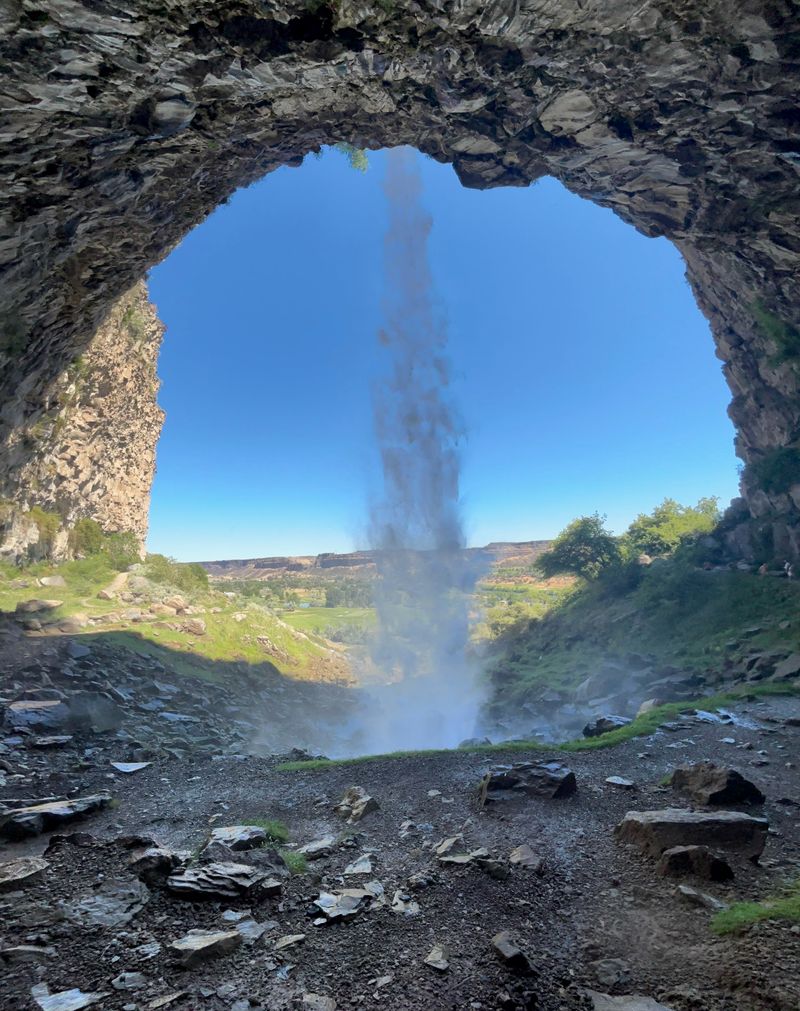
Few waterfalls let you trade places with the view. Here, a rocky trail curves under an overhang so you can walk right behind the water and watch it pour down in front of you like a moving window.
The path to that spot is short but a bit uneven. The first stretch drops down a slightly steep, rocky slope, so sturdy shoes help.
Once you reach the base, there’s plenty of room to move around and take pictures from nearly every angle.
Expect some mist. On a hot summer afternoon, the cool spray feels wonderful, and some people step close enough to get lightly splashed.
A rain jacket can keep you drier, but most visitors find it isn’t strictly necessary, and the sheltered base stays calm even on windy days.
The rock underfoot does stay wet and can be slippery near the water. Take your time and watch your footing, especially with kids.
Walking behind the falls comes up more than any other detail when people talk about this place. Few moments in the Magic Valley feel quite as fun as looking out through a wall of falling water toward the canyon beyond.
An Aquifer That Keeps Pouring
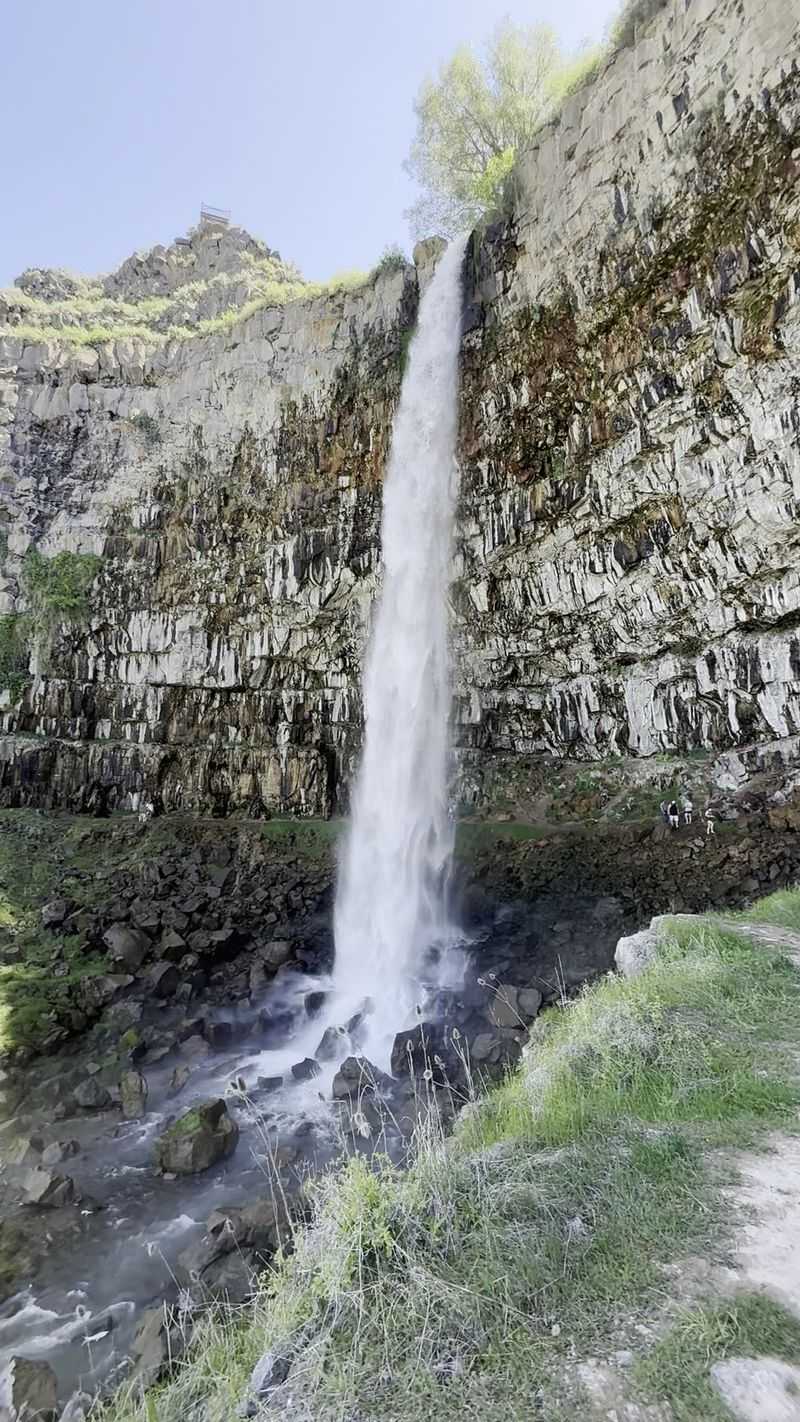
Shoshone Falls, just up the river, runs on a seasonal schedule and can slow down considerably later in the year. Perrine Coulee Falls plays by different rules.
Its water comes from the Snake River Plain aquifer, a huge underground reservoir beneath southern Idaho. The water seeps out of the basalt canyon walls, which is why the flow stays steady through every season.
Spring, summer, fall, and winter, there’s something to see.
That reliability makes it a smart pick when you’re planning around unpredictable conditions. If you’re in Twin Falls in late summer and the bigger falls look thin, this one still delivers a full curtain of white.
Winter brings its own look. Ice builds on the rocks and forms frozen cones around the spray zone, turning the whole scene into something that looks borrowed from a snow globe.
It’s gorgeous, but it changes the rules for visiting.
The shortcut path can turn into an icy slide, and chunks of ice may break loose from above. On frozen days, enjoy the view from the road or overlook instead of heading behind the water.
Check conditions before you go, and save the walk-behind experience for warmer months.
Canyon Views From Above
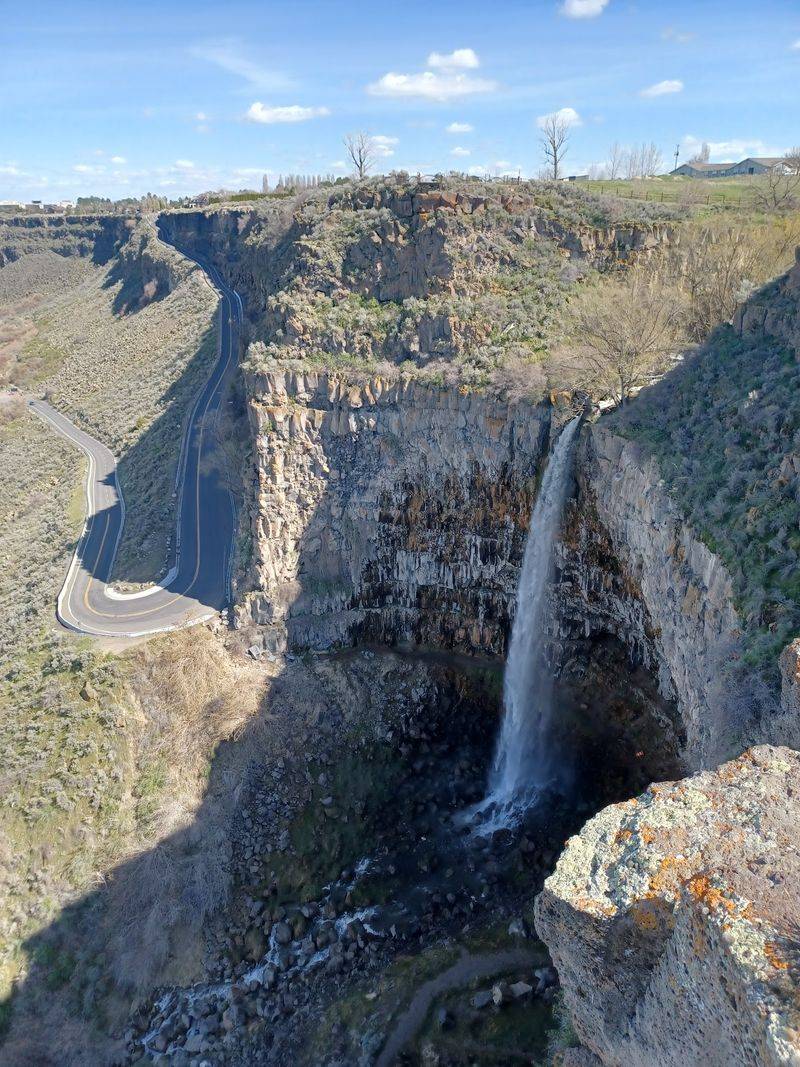
Stay up top and you’ll still get plenty. A paved walking trail near the rim gives a broad look down at the falls, and on clear days you can spot around six other smaller waterfalls spilling from the canyon walls.
From the overlook, the Perrine Bridge stretches across the gorge, and the Snake River glints far below. The bridge is well known for BASE jumping, so you might catch someone parachuting toward the water if your timing is lucky.
Walking down toward the river adds even more angles. Farther from the base, you can frame the falls against the cliffs with the bridge in the background, a shot that shows just how deep the canyon is.
Some trails in the area continue toward other waterfalls and the riverbank.
Fall brings bonus color. Leaves around the coulee turn yellow and orange, which contrasts nicely with the gray rock and white water.
Painted rocks have even turned up along the trail, small surprises left by earlier hikers.
The Snake River Canyon Rim Trail also offers views from above if you’d like to stretch your legs longer. Pair a rim walk with the falls, and you’ve got an easy half-day outing in south-central Idaho.
Quieter Than Its Famous Neighbor
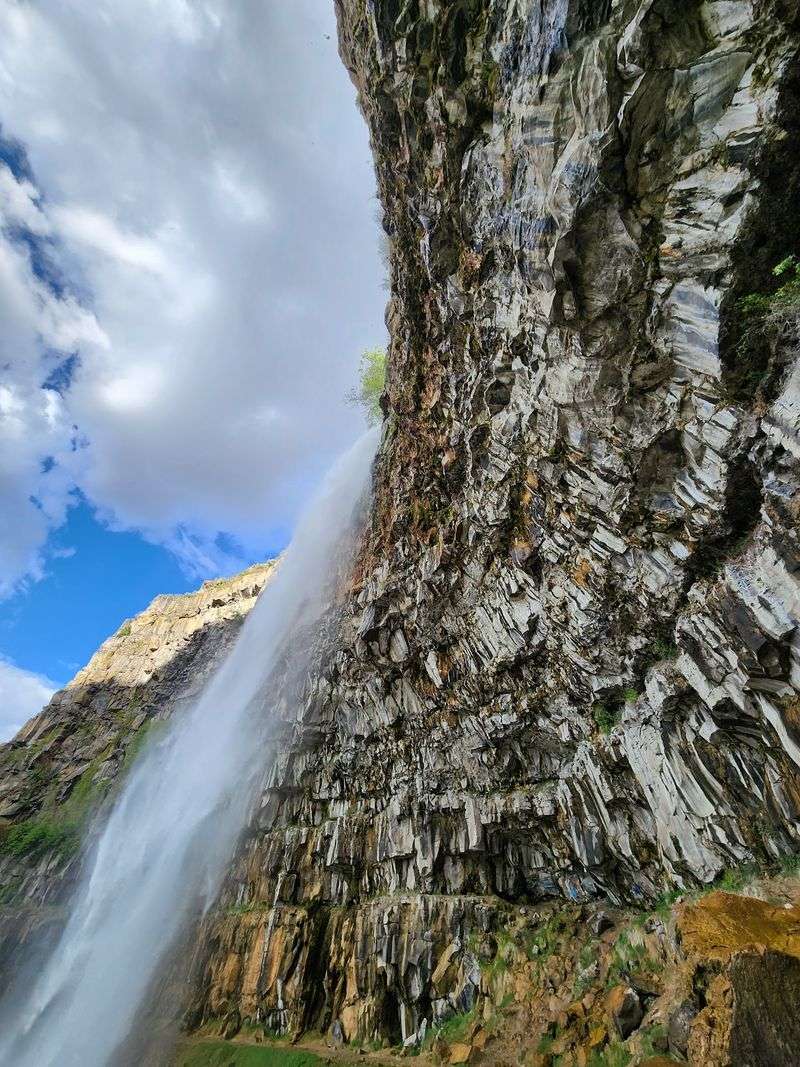
Crowds head to Shoshone Falls, often called the Niagara of the West, and for good reason. Yet plenty of travelers leave Twin Falls saying they liked this smaller stop even more.
The difference is mostly about crowds and closeness. At Perrine Coulee Falls, you might share the base with just a couple of other people.
There’s no big visitor center, no packed railings, just the sound of falling water bouncing off stone.
It suits a wide mix of people. Cross-country road trippers use it as a quick stretch break.
Photographers love the angles behind the water. Local families bring visiting relatives who’ve already seen the famous sights.
Even hotel guests in town have walked over in about ten minutes and found themselves surprised.
That said, the path isn’t for everyone. The rocky trail down may be tricky for folks with limited mobility, and very young children need close supervision.
Those visitors can still enjoy the view from the road or the paved overlook above.
The mood feels unhurried. You can linger in the mist, snap a few pictures, and still be back in the car before your coffee cools.
It’s a small pocket of calm inside a busy canyon.
Parking Along The Switchbacks
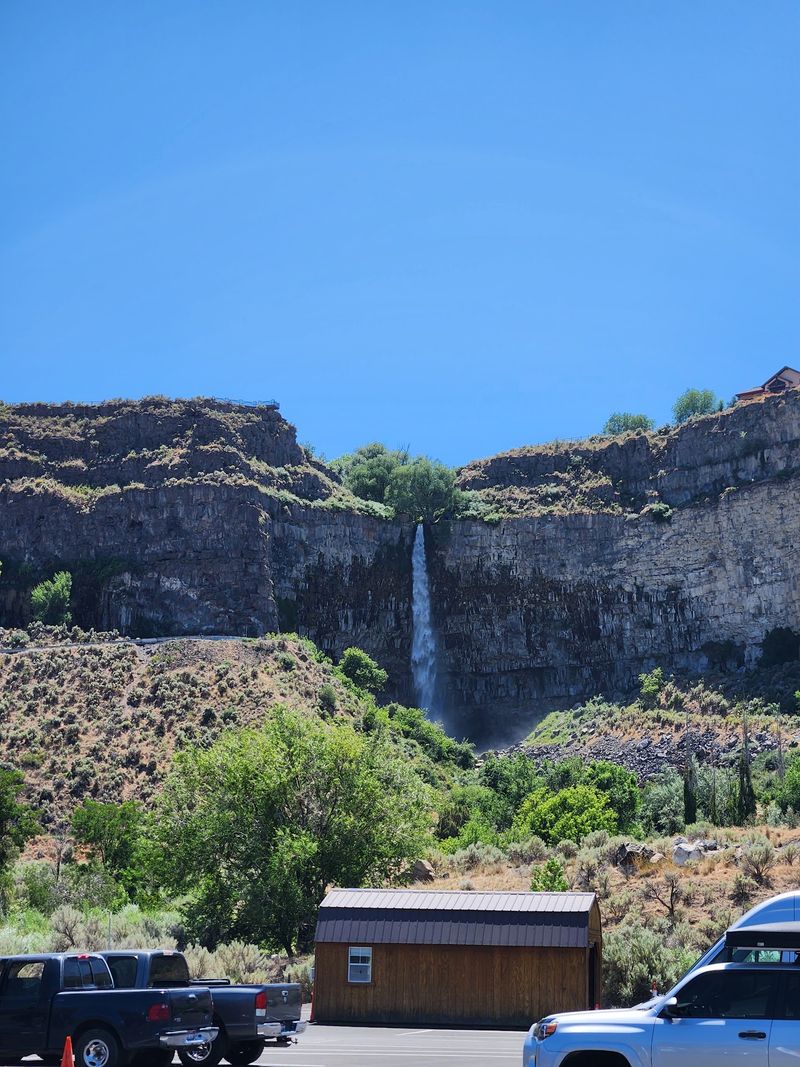
Finding the trailhead is the trickiest part. Typing just the waterfall’s name into a map app has led some visitors astray, so search for the trail or Canyon Springs Road instead.
Canyon Springs Road drops into the canyon on a steep grade of about 10 percent. The falls sit near the first hairpin turn.
Parking is limited to a small pullout along the side of the road with room for roughly four or five cars, and the marked spots are on the uphill side.
If you’re driving downhill, continue past the first switchback to the next one, where there’s room to turn around. Then head back up and park on the right.
Watch for posted no-parking signs, since some stretches are off-limits.
If the pullout is full, park farther up the road or at Centennial Waterfront Park and walk. The falls are free to visit, with no fee or ticket required.
Wear shoes with good grip, since the first section of trail is steep and rocky. Bring a light rain jacket if you’d rather stay dry, and check for ice before heading down in colder months.
Graffiti has marked some rocks, so pack out anything you bring and leave the canyon a little better.
Worth The Hairpin Detour
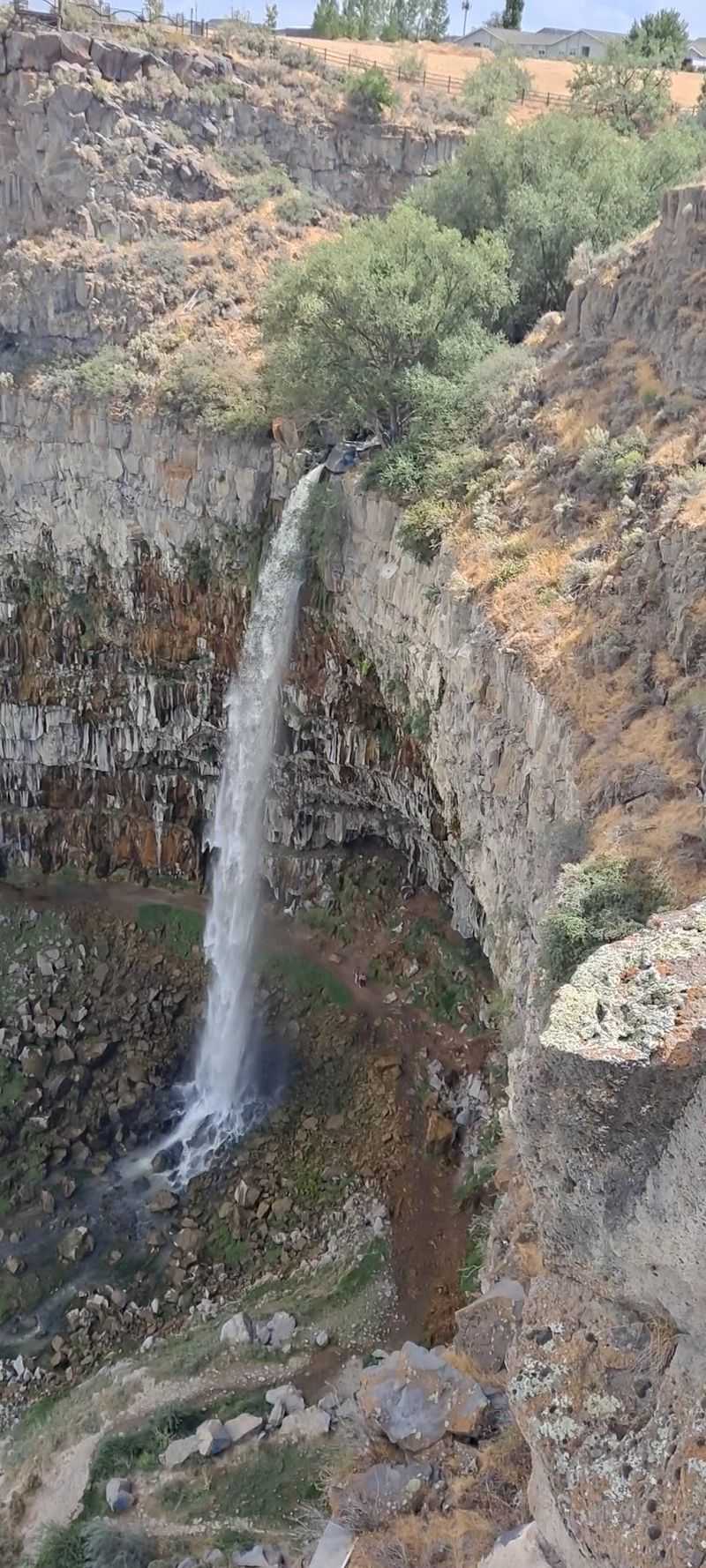
Ten minutes of walking, zero dollars, and a waterfall you can stand behind. That’s a pretty good trade for any afternoon in southern Idaho.
Perrine Coulee Falls doesn’t try to compete with the bigger names in the Magic Valley. It skips the gift shop and the viewing platforms and simply offers water, stone, and a short path.
For many visitors, that simplicity is exactly the appeal.
Timing is flexible, too. Because the aquifer keeps it flowing, you can visit in late summer when other falls slow down, or in autumn when the leaves turn.
Winter adds frozen sculptures, as long as you admire them from a safe spot.
Round out the trip with a look at the Perrine Bridge, a walk along the Canyon Rim Trail, or a stop at Shoshone Falls during its high-water season. Centennial Waterfront Park nearby offers a spot to relax by the river afterward.
If you grew up around Twin Falls, you may have driven past this curve a hundred times. If you’re just passing through on a road trip, it’s a worthy reason to exit the highway.
Either way, the cliffs will still be towering and the water will still be pouring when you arrive.