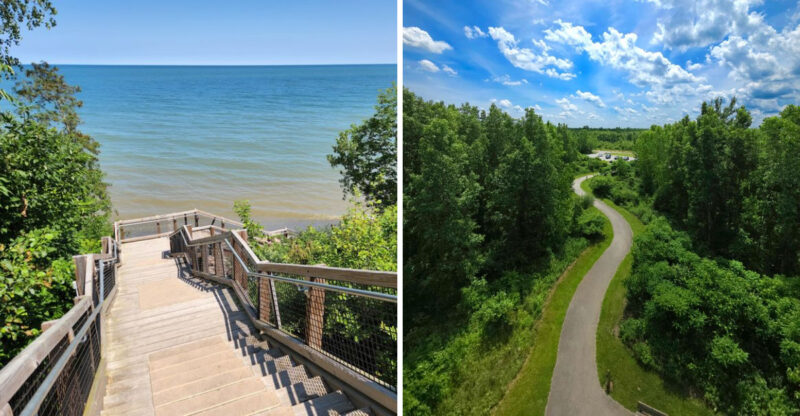
Most People Drive Past This Ohio Park Without Knowing What It Hides
Most people write off Ohio without a second thought. They imagine flat farmland and not much else. They are wrong.
Hear me out, away in the southeastern corner is a park that rewrites every assumption.
Ancient rock formations tower overhead. The air cools the moment you descend into the gorge.
Water echoes off stone walls in a way that is difficult to describe. There are waterfalls, caves, and forests that feel prehistoric.
The trails are short but the payoff is enormous. Families, solo hikers, and couples all find something worth loving here.
Go once. You will already be planning the return trip before you leave.
The Trail That Started It All
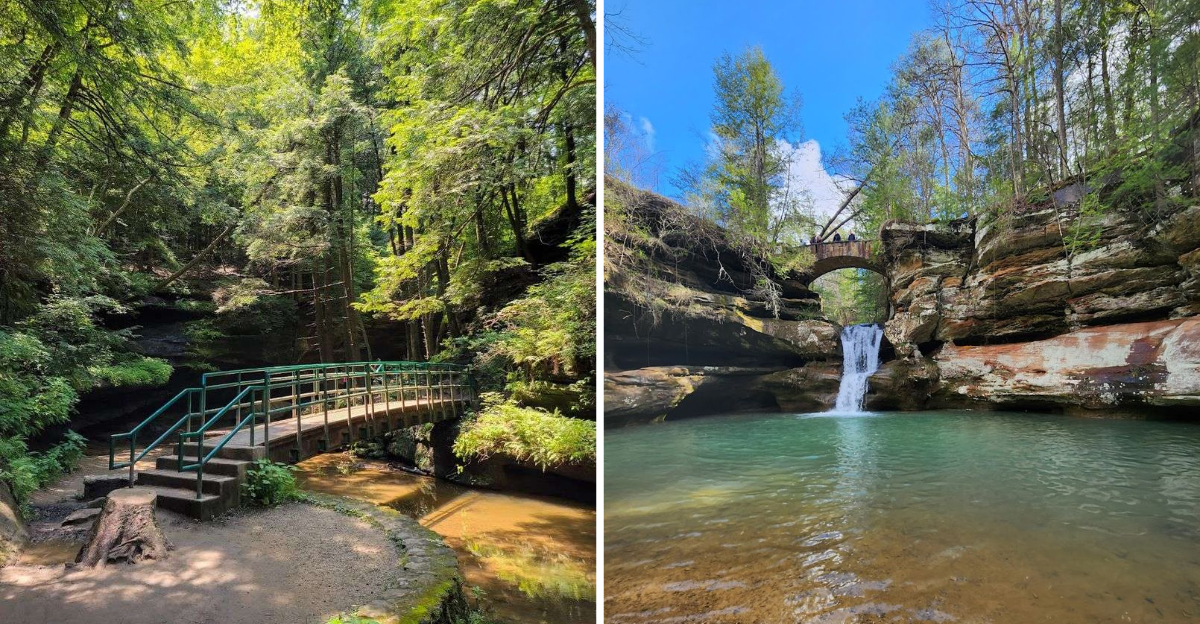
Most trails ease you in gently, but this one grabs your attention from the first step.
The main gorge trail at Hocking Hills State Park begins near the visitor center and immediately pulls you into a world that feels ancient and wild. The park sits in the heart of the Hocking Hills region of Ohio, about an hour southeast of Columbus.
The trail winds along a creek bed, dipping beneath overhanging cliffs and through narrow passageways carved by thousands of years of erosion.
You feel the temperature drop as you enter the gorge. The rock walls close in just enough to make you feel like you have discovered something secret.
I remember my first time here, walking slowly and looking up constantly. The sandstone formations are layered with color, ranging from deep rust to pale cream. Ferns and mosses cling to every crevice.
The sound of water grows louder as you move deeper into the gorge. This trail is not just a walk through nature.
It is a walk through geological history, and every turn reveals something worth pausing to appreciate fully.
The Star Of The Show
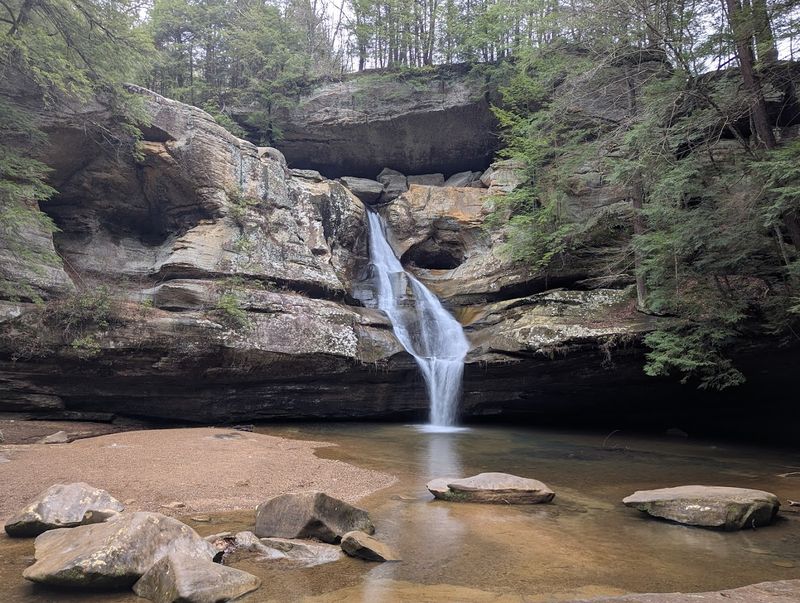
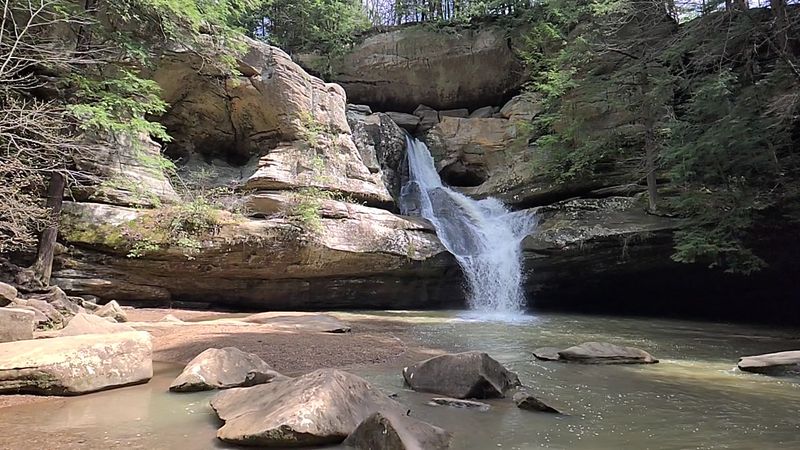
Cedar Falls is, personally, the most impressive waterfall in the entire park, and standing in front of it, I completely understood why.
The water tumbles over a wide sandstone ledge and crashes into a pool below with a deep, satisfying roar. It is the kind of waterfall that makes you stop talking mid-sentence just to watch it.
What makes Cedar Falls so special is its sheer volume. It is the largest waterfall by water volume in Ohio, which means even during drier months, there is almost always something flowing.
After a rainstorm, it transforms into a thundering curtain of white water that sends mist drifting across the trail.
The hike to reach Cedar Falls is moderate and very manageable. You descend a set of worn stone steps from the parking area and follow a valley trail for a short distance.
The surrounding forest is thick and quiet, broken only by birdsong and the sound of the falls growing closer. I arrived on a foggy morning, and the mist from the waterfall blended with the fog in a way that felt almost cinematic.
Layers Of Wonder
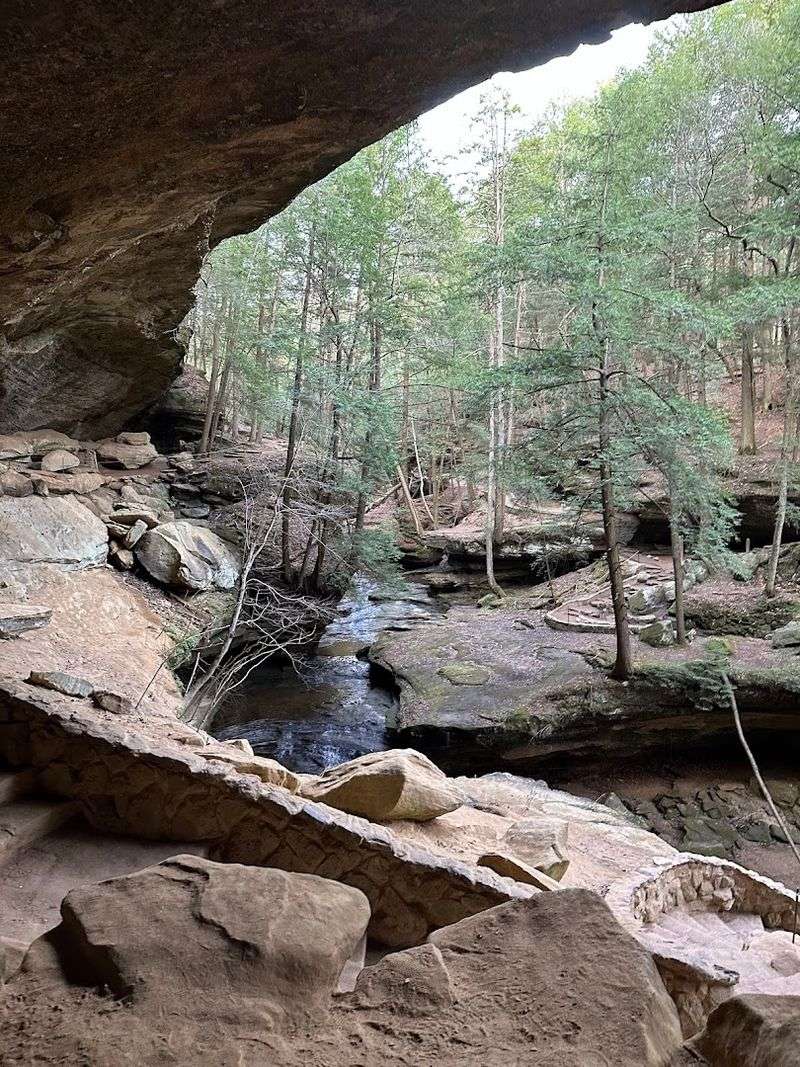
Few natural formations in Ohio pack as much drama into a single spot as Old Man’s Cave.
This massive recess cave is carved into the side of a sandstone cliff, and water constantly seeps and trickles down its face. The cave itself is not a true underground cavern but rather a deep overhang that shelters the trail below.
Walking beneath that overhang feels like the rock is breathing around you. The ceiling curves overhead in smooth, rippled layers that took millions of years to form.
On warm days, the air inside the recess is noticeably cooler than the surrounding forest, making it a natural resting spot on the trail.
The trail here became one-way to manage foot traffic, which actually improves the experience. You move at a steady pace without bottlenecks, and you get to see several small waterfalls along the route.
I counted three separate cascade points before even reaching the main cave. The trail crosses wooden bridges over a winding creek, and the whole loop feels like a carefully designed adventure.
Silent And Spectacular Cave
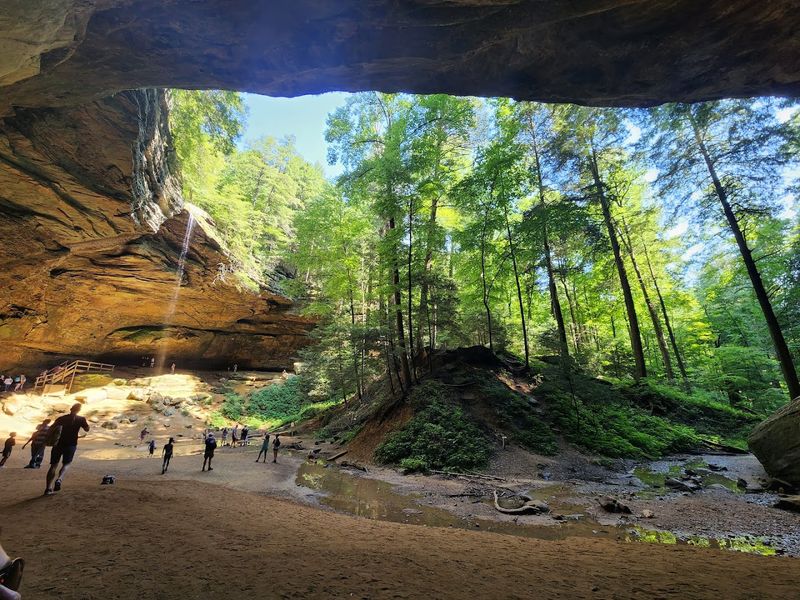
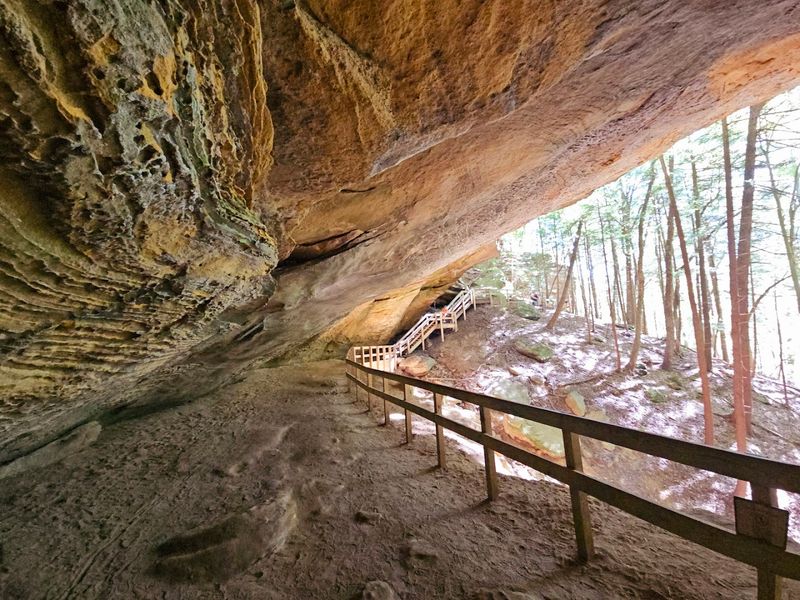
Nothing quite prepares you for the scale of Ash Cave. Walking down the wide, accessible boardwalk trail, you hear a faint trickle of water before the cave suddenly reveals itself around a bend.
The recess stretches roughly 700 feet wide and 100 feet deep, making it the largest recess cave in Ohio.
A slender waterfall drops from the lip of the cliff above and disappears into a shallow splash pool at the base. The cave floor is cool, flat, and covered in a fine layer of sand and ash, which is exactly where the name comes from.
Indigenous peoples used this shelter for centuries before European settlers arrived in the region.
I sat quietly at the base of the waterfall for almost twenty minutes, just taking in the scale of the space. The curved ceiling amplifies sound in a strange and beautiful way.
You can hear whispers from across the cave clearly, which gives the place an almost theatrical quality. The trail to reach Ash Cave is short and mostly flat, making it one of the most accessible spots in Hocking Hills State Park.
It rewards visitors of all ages and fitness levels with one of the most breathtaking natural shelters in all of Ohio.
Wildlife And Nature Along The Way
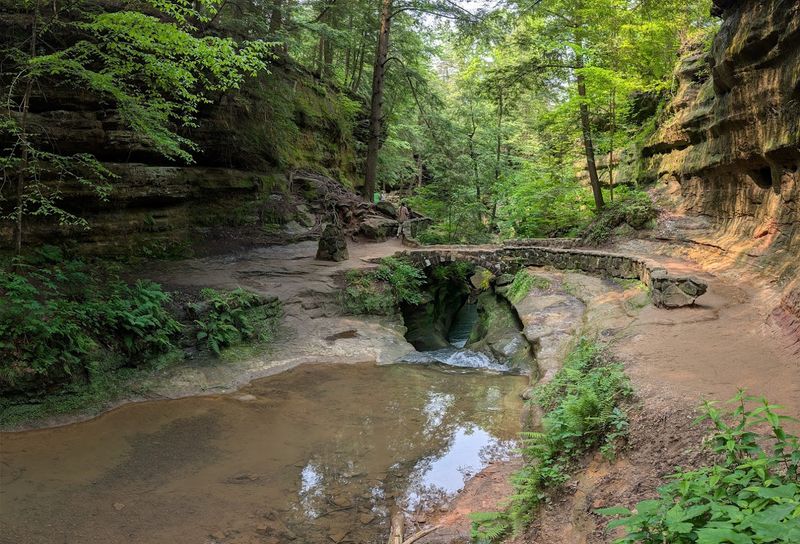
The trails at Hocking Hills State Park are not just geological wonders.
They are living ecosystems filled with wildlife that rewards patient and observant hikers. The park sits within a mixed forest of eastern hemlock, oak, and maple trees, creating a layered habitat that supports a wide range of species throughout the year.
White-tailed deer are common sightings along the gorge trails, especially in the early morning. Red-tailed hawks circle above the open ridgelines, and if you are lucky, you might spot a great blue heron wading in the creek near Cedar Falls.
Salamanders hide under flat rocks near the splash pools, and box turtles sometimes cross the path at the most unexpected moments.
I once stood perfectly still for several minutes watching a pileated woodpecker work its way up a dead hemlock near the Old Man’s Cave trail.
The bird was enormous, almost prehistoric-looking, and completely unbothered by my presence. The park also supports healthy populations of wild turkey and red fox.
Bringing a pair of binoculars is a small addition to your pack that pays off in big ways. The natural world here in Ohio operates on its own schedule, and the trails put you right in the middle of it.
Practical Tips For Trail Success
A little preparation goes a long way when you are planning a day at Hocking Hills State Park.
Arriving before 9 in the morning is the single best strategy for avoiding long waits and crowded viewpoints.
Footwear matters more here than on most trails. The sandstone surfaces get slippery when wet, and clay sections of the trail can turn into a muddy challenge after rain.
Waterproof hiking boots with good grip are the right choice. In winter, microspike traction devices are strongly recommended, as ice forms quickly on the shaded cliff faces and steps.
Carry more water than you think you need, especially in warmer months. Cell service in the gorges is limited, so downloading an offline trail map before you arrive is a smart move.
The park has restroom facilities near the main trailheads, though some remote areas rely on portable units. Dogs are welcome on the trails as long as they are kept on a leash.
Why This Trail Stays With You
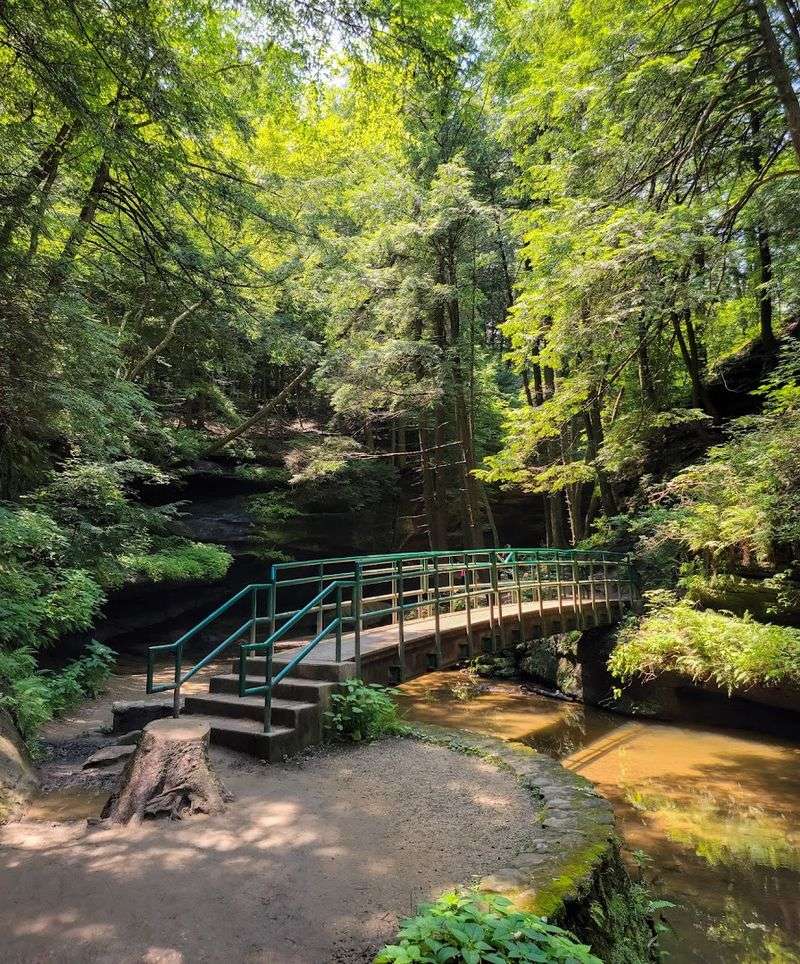
Some places leave a mark that is hard to explain after you have left them. Hocking Hills State Park is one of those places.
The combination of ancient rock, rushing water, and dense forest creates an atmosphere that feels removed from the noise of everyday life in a way that few parks can match.
I have recommended this trail to friends who rarely hike, and every single one of them came back talking about it for weeks.
There is something about standing beneath a waterfall inside a sandstone gorge that resets your perspective.
The scale of the cliffs, the coolness of the air, and the sound of water echoing off rock walls work together in a way that is genuinely hard to forget.
The park draws visitors from across the country and around the world, and it is easy to see why once you experience it firsthand. Ohio surprises people who expect flat farmland and not much else.
This park is the answer to every one of those assumptions.
Best Time To Visit The Park
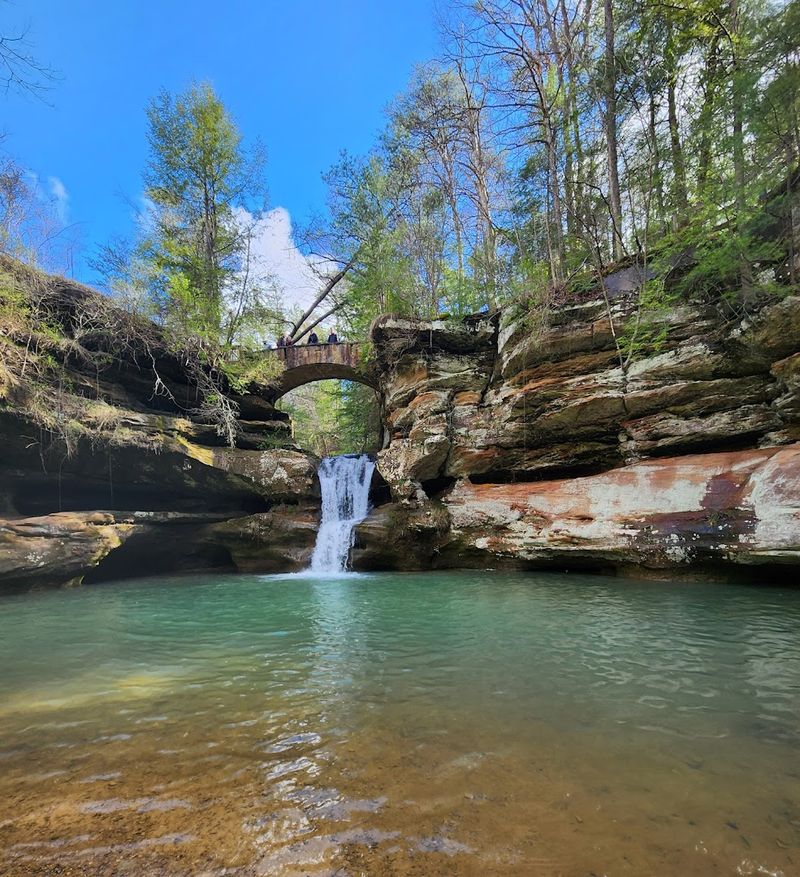
Timing your visit to Hocking Hills State Park can make a big difference in what you experience. Spring is one of the best seasons for waterfalls.
Snowmelt and spring rains fill the creeks and send Cedar Falls roaring at full power. The forest is bright green, wildflowers appear along the trails, and the air carries that clean, earthy smell that only happens after a good rain.
Fall is the most popular season, and for good reason. The hillsides surrounding the gorges turn brilliant shades of orange, red, and gold, and the contrast against the pale sandstone cliffs is striking.
Weekends in October can get extremely crowded, so arriving early in the morning is the smartest move you can make.
Summer brings lush greenery and warm temperatures, but the waterfalls can slow to a trickle during dry stretches. Winter is surprisingly magical when ice forms on the cliff faces and frozen curtains hang where waterfalls once flowed.
No matter when you go, Ohio delivers a version of this park that feels fresh and worth the trip every single time.