Most People In Idaho Have Never Walked This Gold Rush Cemetery Where Graves Are Scattered Across A Forest Floor
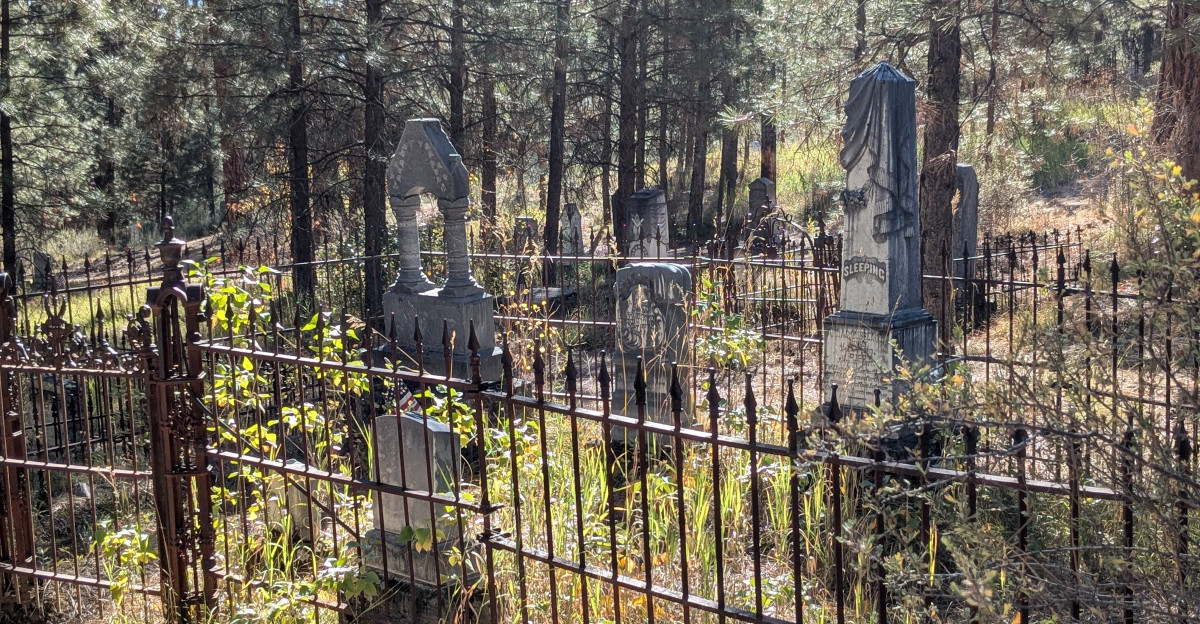
Only about 200 grave markers still stand in this cemetery, yet estimates of burials here run into the thousands.
Most of the rest were wooden and faded away long ago. Some were lost to fire.
None of the graves sit in neat rows either.
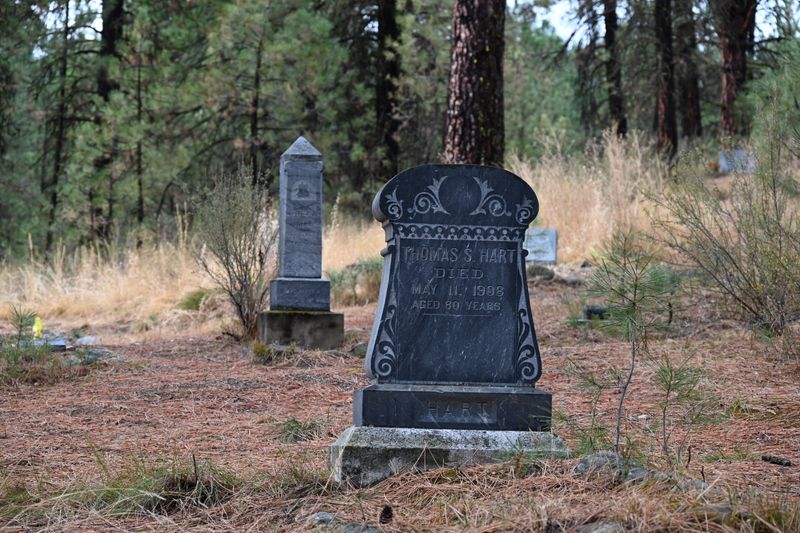
Headstones pop up between pine trunks, scattered across forty timbered acres like someone tossed them into the woods.
Some hide behind ornate iron gates. Others sit inside weathered wood pickets ringed with stones.
I like how the place refuses to look organized. It was born in a hurry during Idaho’s wildest gold rush, and it still shows.
Every winding path feels like a small detour into the 1860s.
So who were these people, and why did so many end up marked simply as Unknown? I believe the answers are worth a slow afternoon walk.
A Gold Camp Graveyard Sitting In The Boise Basin Woods
Head up Highway 21 from Boise and the road climbs into the Boise Basin, once the richest gold country in Idaho. Idaho City sits there now as a small mountain town with a very loud past.
Just outside the old business district lies the Idaho City Pioneer Cemetery. It covers a timbered hillside where pines and graves share the same ground.
The name sounds modest, but the scale is not. Forty acres of forest hold markers from the earliest days of the gold rush, scattered in every direction.
Most cemeteries feel planned from the front gate. The Idaho City Pioneer Cemetery feels discovered, like the forest is still deciding where the paths should go.
That makes it one of the more unusual history stops in Idaho. You aren’t viewing the past behind glass here, because you’re walking right through the middle of it.
The pairing with the town matters too. Idaho City still keeps historic buildings from its boom years, so the cemetery fits into a bigger story.
Think of it as the quiet chapter that the main street can’t fully tell.
The Boom Town That Needed A Burial Ground Almost Overnight
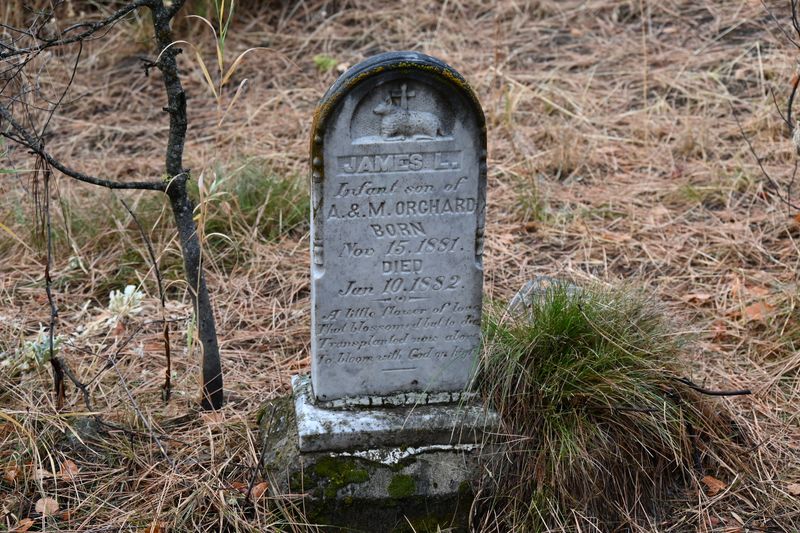
Gold turned up in the Boise Basin in 1862, and Idaho City sprang up almost immediately. Thousands of fortune seekers poured in within months.
A town that grows that fast runs into problems quickly. One of them was where to lay its people to rest, so the cemetery was established in early 1863.
That timing explains a lot about what you see today. Nobody had years to survey tidy plots or plan straight lanes, so the cemetery took shape on the land as it was.
Life in the camp was rugged. Mining was hard work, winters were harsh, and plenty of newcomers arrived with little more than tools and hope.
Many of them never made it back to the families they left behind. Their stories ended here, in a forest far from home, under markers that often said very little.
Standing among those graves gives the gold rush a human scale. The numbers in history books suddenly have names attached, or at least the outline of a person who once chased something big in Idaho.
Forty Acres Where The Pines Got There First
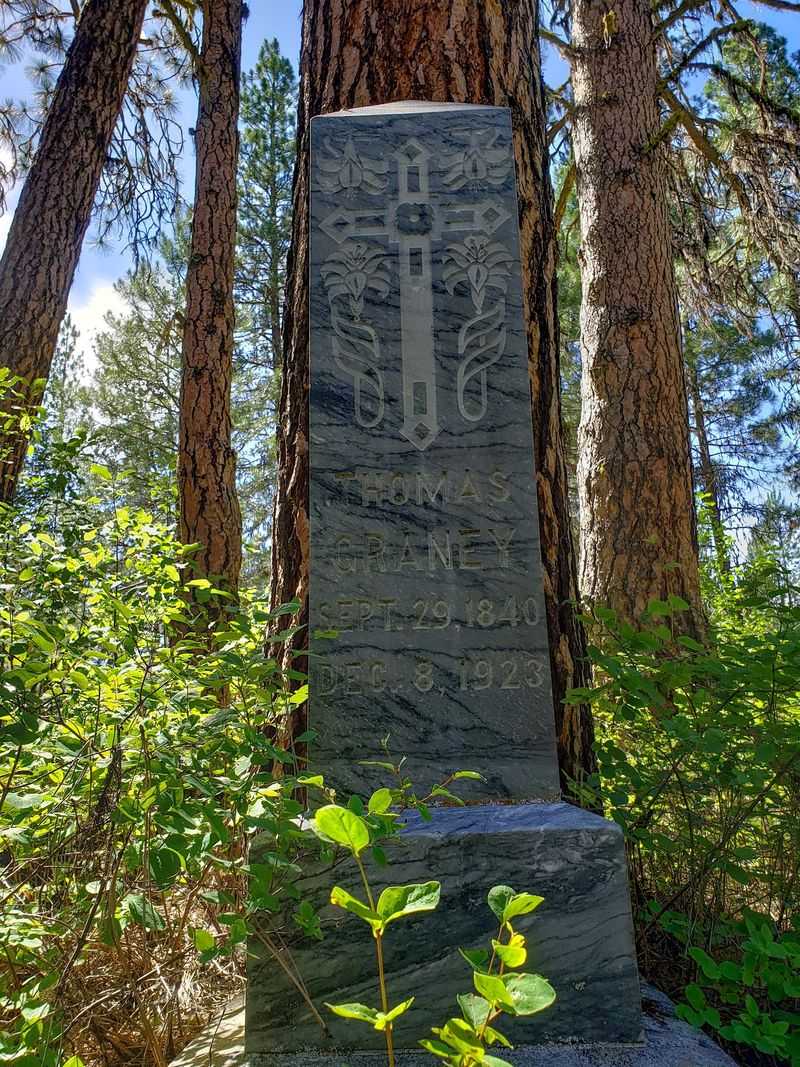
Forget the image of a lawn with straight rows of stones. Forty timbered acres make up the grounds, and the graves are spread through them with no grid in sight.
Some markers sit in small clusters. Others stand alone between tree trunks, as if they wandered off from the group.
The effect is quietly surprising. You round a bend in a path and find a headstone you didn’t see coming, half shaded by branches.
Trees aren’t decoration here. They’re the main structure of the place, framing every grave and turning the cemetery into a walk in the woods.
Paths wind instead of marching. That means the Idaho City Pioneer Cemetery rewards curiosity, because the best details often sit a few steps off the obvious route.
It also changes how the visit feels. A city cemetery can feel formal and fixed, while this one feels like the forest is gently holding onto its history.
Bring patience along with your camera. The layout asks you to slow down, look around corners, and notice what’s growing up next to each marker.
Why Only A Few Hundred Markers Still Stand
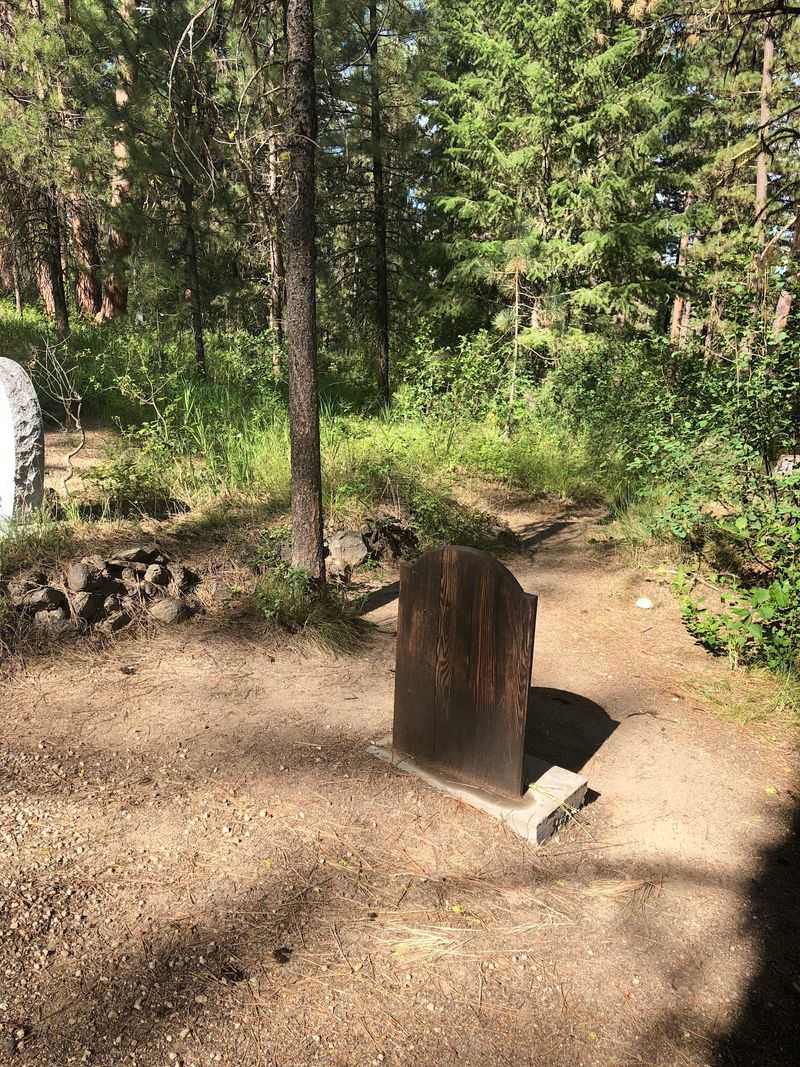
Roughly 200 grave markers still stand today. That sounds like plenty until you learn the total number of graves is estimated to be far higher.
So where did the rest go? Many early markers were made of wood, which was cheap and close at hand in a forest mining camp.
Wood doesn’t last forever in Idaho mountain weather. Snow, sun, and rot slowly took many of those markers apart over the decades.
Fire claimed others. A town built mostly of timber had good reason to fear flames, and the cemetery’s wooden markers were not spared.
What remains is a patchwork. Polished stone sits near simple wood, and open stretches of forest floor likely hold graves that no longer show any sign at all.
Keep that in mind as you walk. An empty patch between trees may not be empty, which is why staying on paths is the respectful choice.
Honestly, the gaps tell their own story. They show how quickly a frontier town could lose track of its own people.
Iron Gates And Picket Fences Guarding Tiny Plots
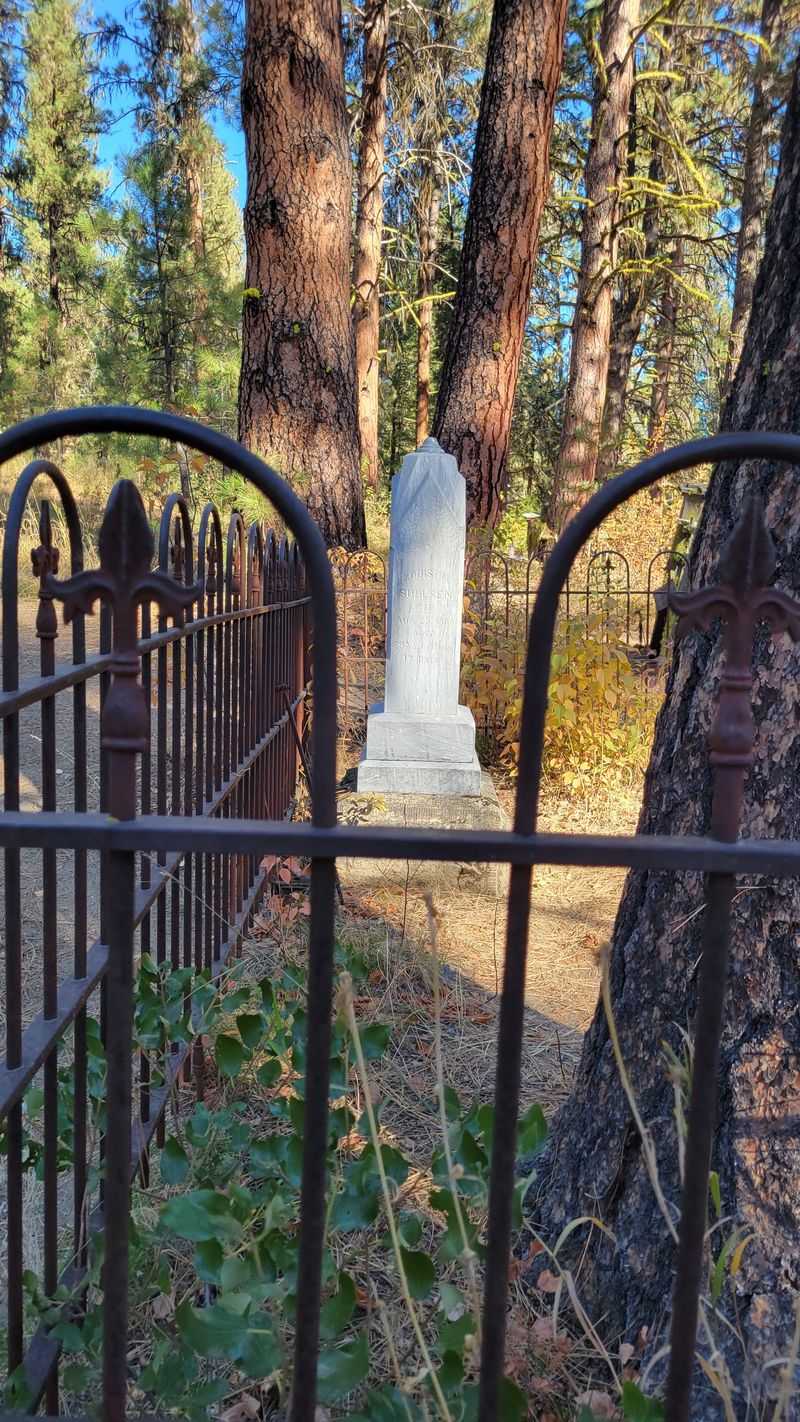
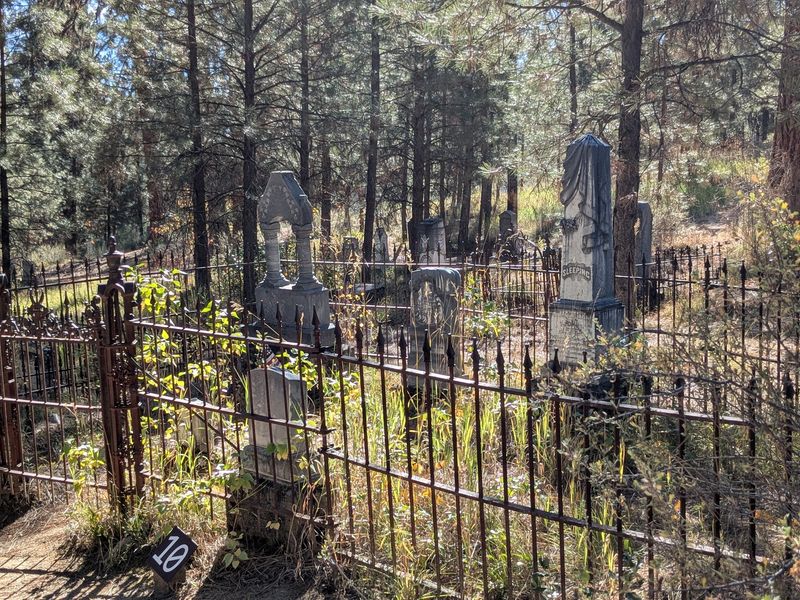
Ornamental ironwork shows up in the strangest place here: deep in the woods. Some graves sit inside fancy iron gates and fences that look made for a city parlor.
Others are surrounded by wooden pickets. Several of those wood enclosures are ringed with stones at the base, a simple and sturdy touch.
The contrast is the fun part. Elaborate metal sits a short walk from humble wood, and both share the same pine needles underfoot.
Families clearly wanted to set their loved ones apart. A fence marked a plot as cared for, even in a camp where most things were temporary.
These little enclosures are some of the most photographed details on the grounds. Their lines stand out against tree trunks, and the shadows shift through the day.
Look closely at the craftsmanship when you visit. The ironwork details and picket shapes vary from plot to plot, so no two feel quite alike.
Just admire with your eyes and lens. Leaning on fences or stepping inside enclosures isn’t a good idea at a site this old.
One Word You’ll Read Again And Again: Unknown
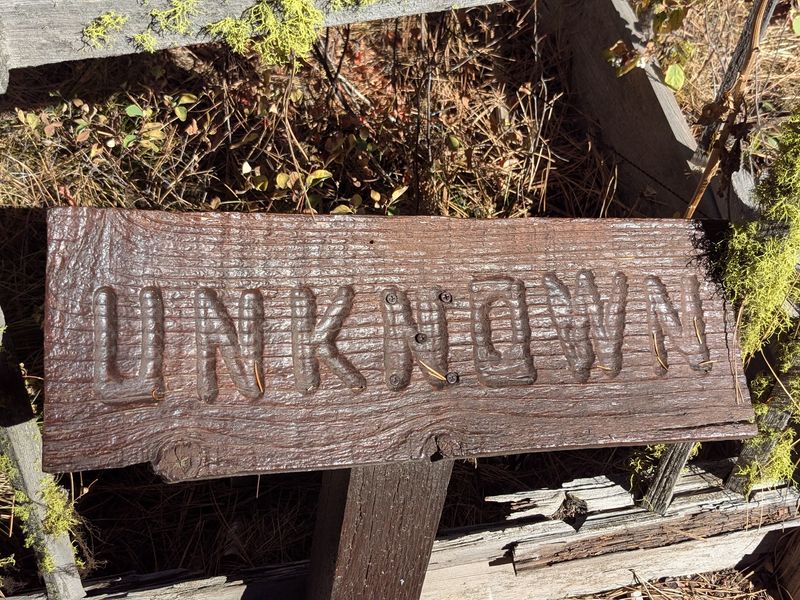
Plenty of markers here don’t carry a name at all. Numerous graves are marked simply as Unknown.
That single word lands harder than any long inscription. Each one stands for a person who traveled to Idaho chasing gold and ended up here without a name on record.
How does that happen? In a boom camp, people arrived alone, used nicknames, or had no family nearby to share details.
Records were thin, too. A fast-growing mining town didn’t always keep careful paperwork, and some of what existed didn’t survive.
Reading these markers changes the mood of a visit. Fancy headstones show who had money, but the Unknown markers show how many people simply slipped through history.
Some visitors leave the cemetery thinking about those markers more than any other. They’re a reminder that the gold rush wasn’t only about the lucky few.
Spend a minute at one of them. It’s a small gesture, but it feels right at the Idaho City Pioneer Cemetery, where so many stories ended without a closing line.
The Chinese Sections And A Long Journey Home
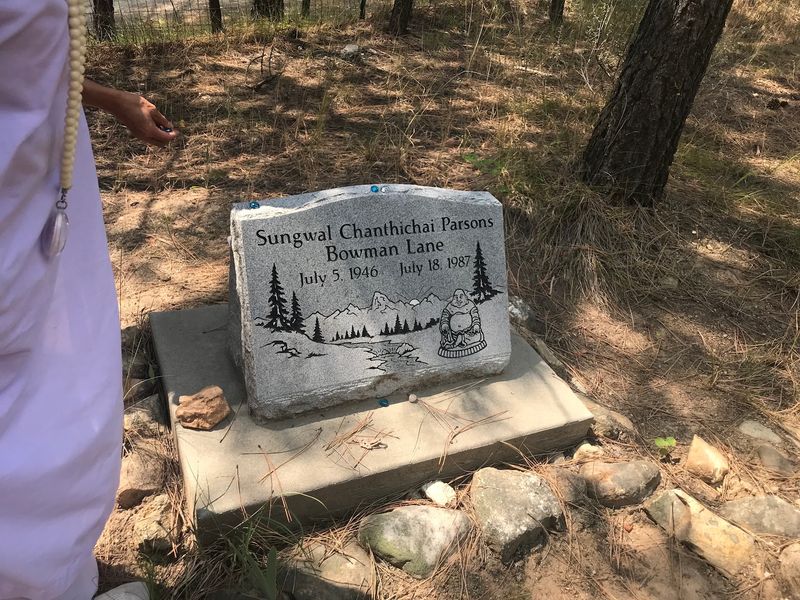
Chinese residents made up a significant share of Idaho City’s early population. Their presence in the gold rush is a big part of the town’s story.
The cemetery included specific sections for Chinese burials. Yet many of those graves were never meant to be permanent.
Custom called for remains to be returned to the homeland. After a period of time, bones were often exhumed and shipped back to China for final burial with family.
That practice explains why these sections can feel different from the rest of the grounds. Fewer lasting markers remain where remains were later sent home.
It also adds a layer most people never expect. A cemetery in the Idaho woods was part of a journey that stretched across an entire ocean.
The Chinese community left a lasting mark on the Boise Basin. Learning about these sections makes the town’s history feel more complete and more connected to the wider world.
Take a moment to find this area on the map. It’s quieter than the fenced plots, but its story is one of the most remarkable here.
Good Shoes, Fall Color, And Getting There
Footwear first. The cemetery sits on a hillside with natural terrain, so sturdy shoes make the walk far more comfortable.
That said, the ground is level enough in many places for a wheelchair. Not every corner will be easy, but plenty of areas are reachable.
The listed hours are generous, with the grounds shown as open 24 hours. Daylight is still the smart choice for reading markers and following the trails safely.
Fall is a lovely time to come. Autumn colors mix with the dark pines, giving the old stones a warm backdrop for photos.
For directions, set your map to Idaho City, ID 83631. The drive up Highway 21 from the Treasure Valley makes an easy Saturday or Sunday outing.
Mountain weather can change quickly in Idaho. Winter snow may cover paths and markers, so check conditions before heading up in colder months.
Pack water and a light layer, even in summer. Then pair the cemetery with a stroll through Idaho City’s historic streets to round out the day.