Most People Skip This California Ferry Ride, But It Leads To A Stunning Hidden State Park
Most visitors to the Bay Area spend their time snapping photos of the Golden Gate Bridge or waiting for Alcatraz, and they end up missing something far more rewarding.
A short ferry ride changes everything. The noise fades. The crowds disappear. The whole day starts to feel different.
Nothing about it screams for attention. That is exactly why it works. The experience unfolds slowly. One view leads to another. You stop checking the time without even realizing it.
Open trails stretch across the hills. Quiet corners show up when you least expect them. The skyline lingers in the distance, but it never feels close enough to interrupt the calm.
Days like this are what make California feel worth it.
Fresh air replaces the usual rush. Space opens up in every direction. Time slows down in a way that feels natural, not forced.
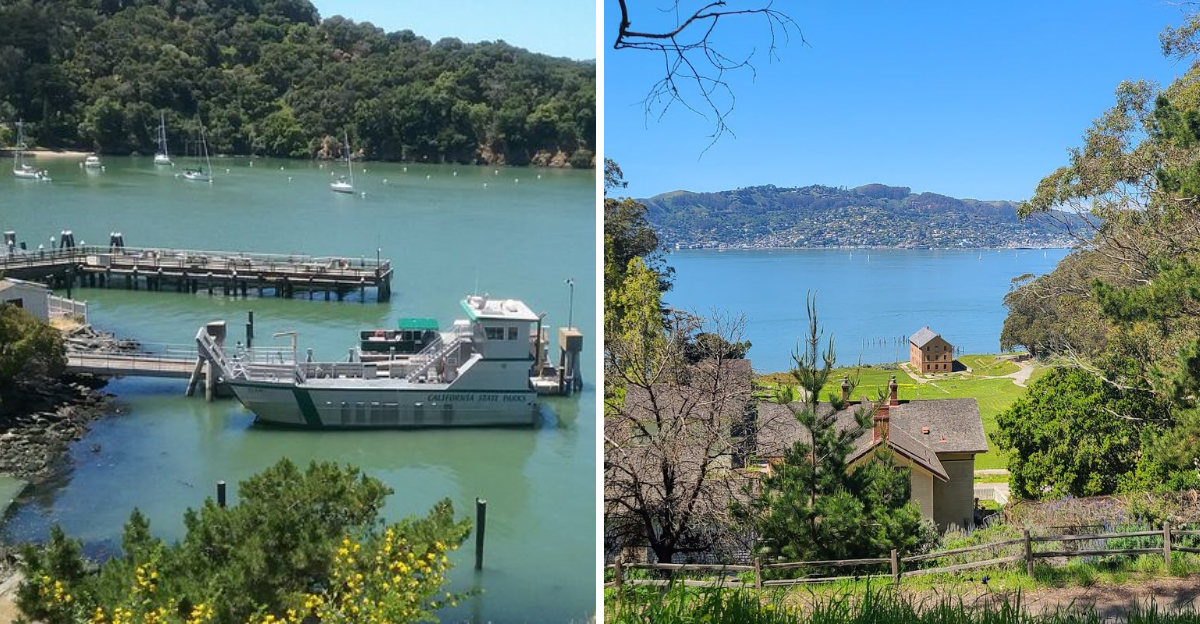
Out in the middle of San Francisco Bay, Angel Island State Park delivers the kind of escape people do not expect to find so close to the city.
Why This Ferry Ride Rarely Makes The Typical California Bucket List
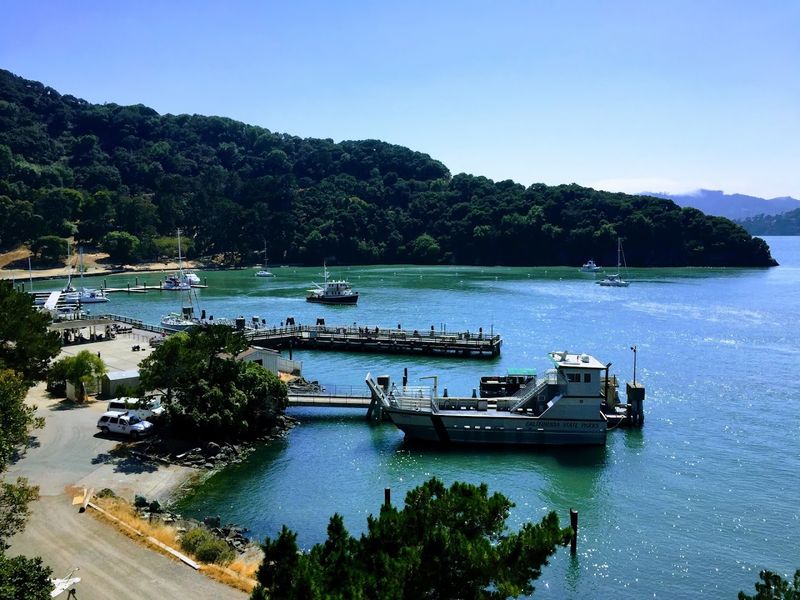
Most travelers visiting the Bay Area fill their itineraries with Fisherman’s Wharf, Alcatraz, and the Golden Gate Bridge, leaving Angel Island completely off the radar.
The island does not advertise itself loudly, and because reaching it requires a ferry ticket rather than a simple drive, many people assume the effort is not worth it.
The truth is that the ferry requirement is actually what keeps the island feeling calm and uncrowded compared to other popular spots nearby.
There are no cars on the island, no traffic noise, and no commercial strips, just trails, trees, history, and open sky.
Angel Island State Park in California tends to attract visitors who already know about it through word of mouth rather than mainstream travel guides.
That quiet reputation has helped preserve the atmosphere that makes it special.
For anyone who has ever felt like the best places are always the ones hardest to find, this island has a way of confirming that feeling almost immediately after stepping off the boat.
Where The Ferry Departs And What To Know Before You Go
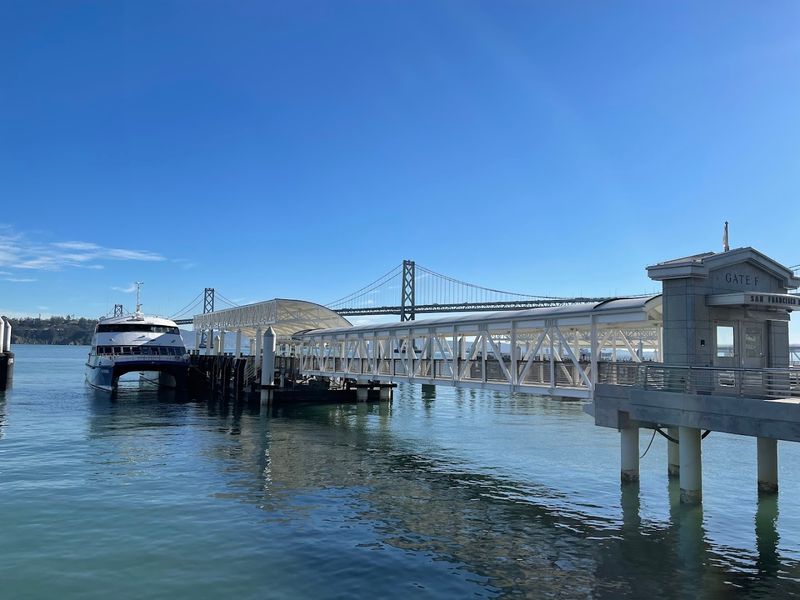
Two main ferry options connect visitors to Angel Island, and knowing which one fits your plans can save a lot of confusion on the day of your visit.
The Golden Gate Ferry operates service from the Golden Gate Ferry Terminal in San Francisco running seven days a week depending on the season, making it a convenient option for those already in the city.
The Angel Island Tiburon Ferry departs from the small waterfront town of Tiburon in Marin County and offers a shorter crossing with a more relaxed small-town vibe before you even set foot on the island.
Ferry tickets are sold as round-trip and may include park admission, so there is no separate gate fee to worry about upon arrival.
Checking the ferry schedule in advance is strongly recommended because service reduces during the off-season months from October through March.
Arriving a little early during busy weekends helps avoid the stress of a crowded boarding area.
Bringing a Clipper card may also offer discounts on certain ferry routes, so it is worth checking current fare options before heading out.
The Scenic Ride Across San Francisco Bay
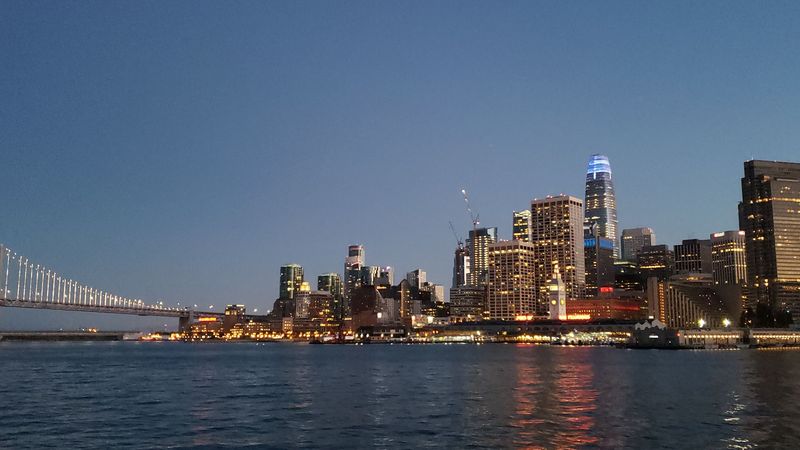
The ferry crossing to Angel Island is not just a mode of transportation, it is genuinely part of the experience.
Depending on which departure point is chosen, the ride can last anywhere from a few minutes from Tiburon to around thirty minutes from San Francisco, and the views during that time are remarkable.
The city skyline gradually shrinks behind the boat while the island grows larger ahead, framed by open water and shifting light.
On clear days the Golden Gate Bridge appears in the distance, and the combination of salt air and bay breezes makes the whole journey feel like a proper departure from everyday life.
Wildlife tends to make appearances during the crossing too, with pelicans, gulls, and the occasional harbor seal spotted near the water’s surface.
The ferry deck is a good place to stand for unobstructed views, though the interior cabin offers shelter on windier days.
Arriving by water gives the first impression of the island a cinematic quality that no parking lot entrance could ever replicate, and that feeling sets the tone for everything that follows once you step ashore.
First Impressions Upon Arriving On The Island
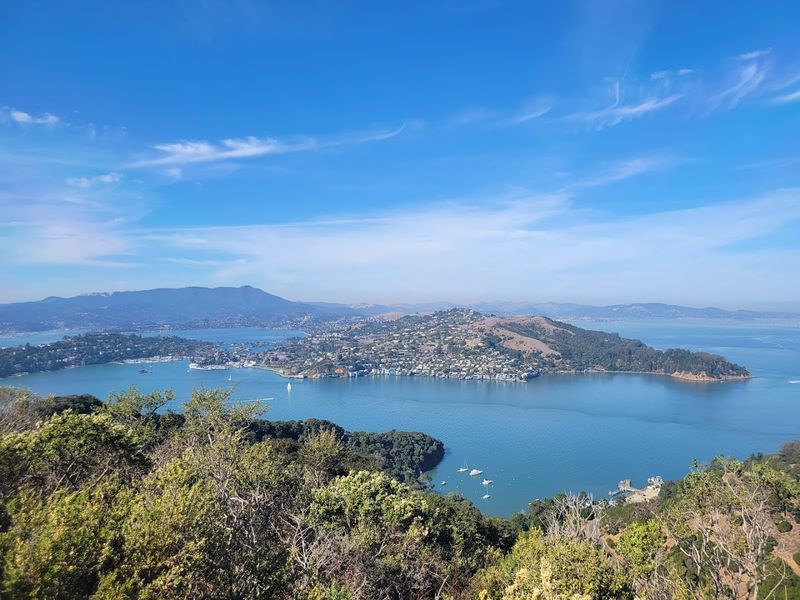
Stepping off the ferry at Ayala Cove, the first thing most visitors notice is how quiet it is.
The absence of car engines, honking, and urban noise creates an immediate sense of separation from the mainland that feels almost startling given how close the city actually is.
The cove area near the dock is welcoming and easy to navigate, with picnic tables, restrooms, a visitor center, and a small café that operates seasonally.
A helpful set of maps and informational signs near the landing area makes it straightforward to figure out which direction to head based on your interests, whether that means hiking, biking, exploring history, or simply finding a good spot to sit and take in the view.
The Visitor Center at Ayala Cove is worth a few minutes of time before heading out, as it offers exhibits on the island’s natural environment and layered human history.
Rangers stationed near the dock are generally approachable and knowledgeable, ready to answer questions about trail conditions and current points of interest.
The whole arrival experience tends to feel relaxed rather than rushed, which matches the overall pace of a day on the island.
The History That Makes This Park So Unique

Few state parks in California carry as many layers of human history as Angel Island does.
The island served as a seasonal hunting and gathering site for the Coast Miwok people over 3,000 years ago, and that deep connection to the land predates every structure standing on it today.
Later chapters brought a cattle ranch, a U.S. Army post, and most significantly the U.S. Immigration Station, which processed hundreds of thousands of immigrants between 1910 and 1940.
Many of those detained at the station, primarily from Asia, carved poetry into the wooden walls of the dormitories during their long waits, and those carvings are still visible today inside the preserved buildings.
Camp Reynolds at West Garrison and Fort McDowell at East Garrison offer additional military history that spans from the Civil War era through World War II.
Guided tours are available for groups during the warmer months, and self-paced exploration is always an option.
The Immigration Station museum charges a small fee to enter the Detention Barracks and Mess Hall, while the Immigration Museum in the former hospital building is free to enter, though it is always worth confirming current policies before visiting.
The Best Hiking Trails With Unmatched Bay Views
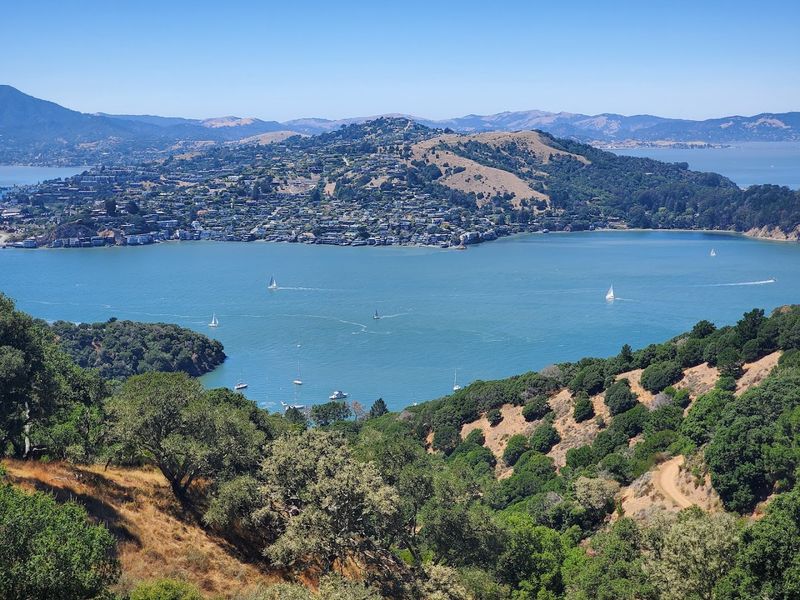
Hiking on Angel Island offers a range of experiences depending on how much effort and time a visitor wants to invest.
The Perimeter Road is a fully paved five-mile loop that circles the island at a lower elevation, making it accessible for most fitness levels while still delivering consistent views of the bay and surrounding hills.
For those willing to put in more effort, the trail to the summit of Mount Livermore rewards the climb with a full 360-degree panoramic view that stretches across San Francisco, Marin County, the East Bay, and both major bridges.
The North Ridge Trail and Sunset Trail combination creates a loop of roughly seven miles that takes in the summit along with varied terrain through eucalyptus groves and open hillsides.
Most trails are exposed to wind and sun, so bringing a hat and layers is a practical choice regardless of the season.
Informational plaques and distance markers appear at regular intervals along the routes, which helps with pacing and planning.
The trails tend to be well-maintained, and the mix of paved road and natural path means hikers can adjust their route based on energy level as the day unfolds.
Hidden Beaches And Quiet Picnic Spots To Find
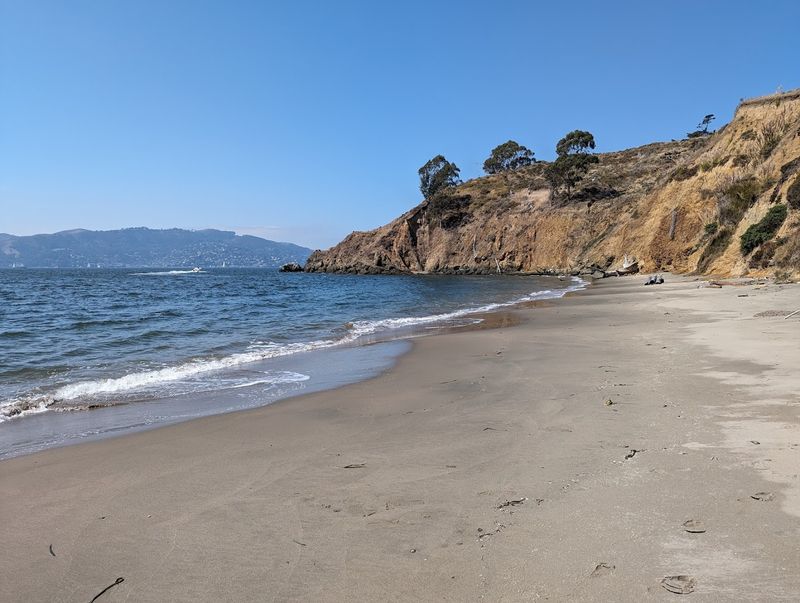
Angel Island has a handful of beaches tucked along its shoreline that most visitors walk right past without realizing they are there.
Quarry Beach and Perles Beach are two of the more accessible options, offering sandy stretches where visitors can sit, eat lunch, and watch the water without the noise and crowds typically associated with Bay Area beaches.
Swimming is technically allowed at these beaches, but the currents in San Francisco Bay can be strong and unpredictable, so caution is always warranted and most people choose to stay out of the water and simply enjoy the scenery from the shore.
The combination of calm water views, cool breezes, and relative solitude makes these spots genuinely pleasant for a mid-hike break.
Picnic tables are scattered throughout the island at various elevations, and some of the best ones are positioned with direct sightlines to the Golden Gate Bridge or the San Francisco skyline.
Bringing a packed lunch is a smart move since the on-island café operates seasonally and may not always be open.
Finding a quiet bench or table with a view and sitting with a meal while watching ferries cross the bay is one of the simpler pleasures the island offers.
Biking Around The Island Loop
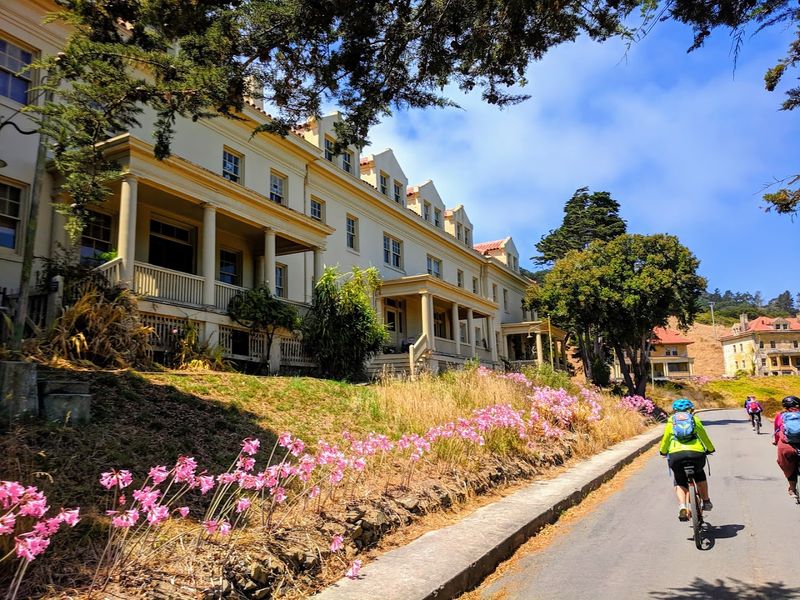
Biking is one of the most popular ways to explore Angel Island, and the five-mile Perimeter Road loop is well-suited for riders of most skill levels.
The paved surface makes the ride manageable, though there are some hills and steeper sections that require a bit of effort, especially on the eastern and northern sides of the island.
Bicycles can be brought aboard the ferry, which is a good option for those who want to use their own gear.
Rentals are also available seasonally on the island near the Ayala Cove landing area, though prices can vary and availability is not guaranteed, so checking ahead before the visit is a good habit.
Helmets are required for riders under 18 and strongly encouraged for everyone else.
One important note is that biking is restricted in certain areas, and riders are expected to walk their bikes on some sections of the trail network.
Signage throughout the island marks where biking is and is not permitted, so paying attention to those markers keeps the experience smooth.
For visitors who want to cover more ground than walking allows but still want to move at a relaxed pace, biking the perimeter loop tends to be a satisfying way to spend a few hours.
Wildlife And Natural Beauty Along The Way
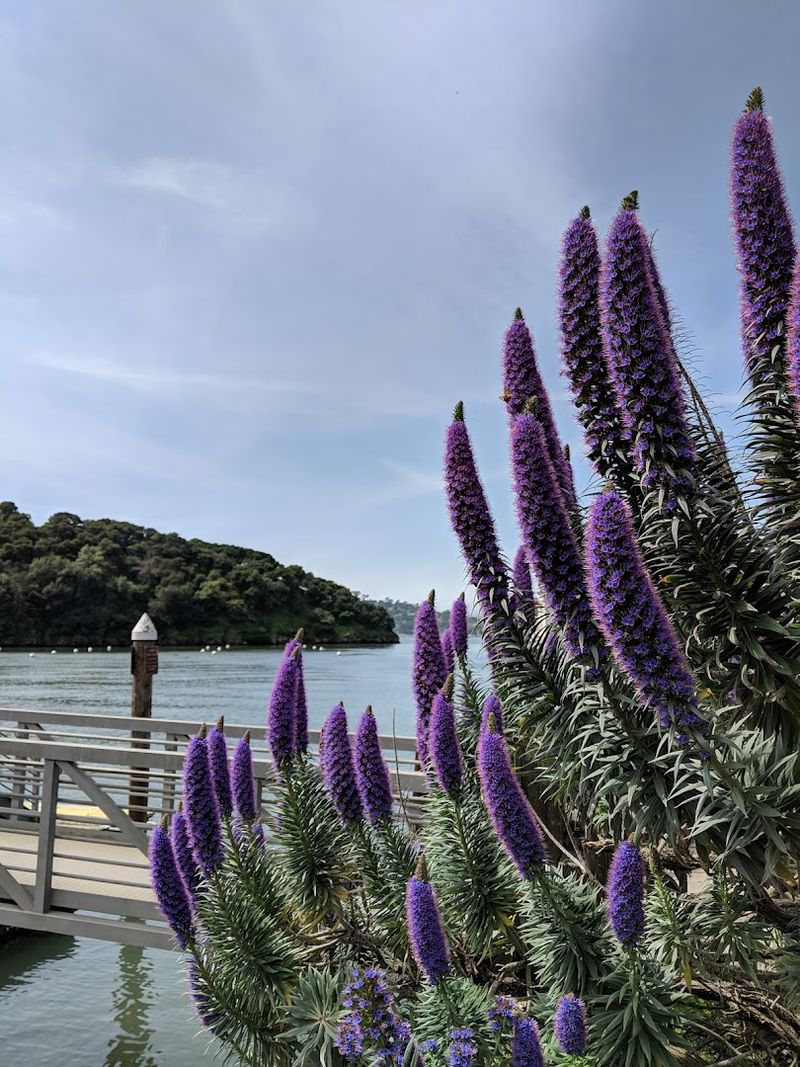
The wildlife on Angel Island tends to catch visitors off guard in the best possible way.
Black-tailed deer are regularly spotted grazing along the hillsides and near the trails, often close enough to observe without disturbing them.
Coyotes have also been seen on the island, adding a layer of wildness that feels unexpected given the urban skyline just across the water.
Birdwatching is particularly rewarding here, with species including scrub jays, hummingbirds, hawks, owls, egrets, herons, pelicans, and kingfishers all present depending on the season.
The mix of eucalyptus groves, open grassland, and coastal shoreline creates varied habitat that supports a surprisingly diverse range of species for an island of this size.
Seals are frequently spotted near the dock area and along the rocky shoreline, and watching them lounge or swim from a nearby bench is a genuinely entertaining way to pass time while waiting for the return ferry.
The natural environment of the island feels intact and unhurried, which makes wildlife sightings feel organic rather than staged.
Staying quiet on the trails and moving at a slower pace tends to increase the chances of spotting animals going about their day undisturbed.
The Most Photogenic Views Of The Golden Gate And Skyline
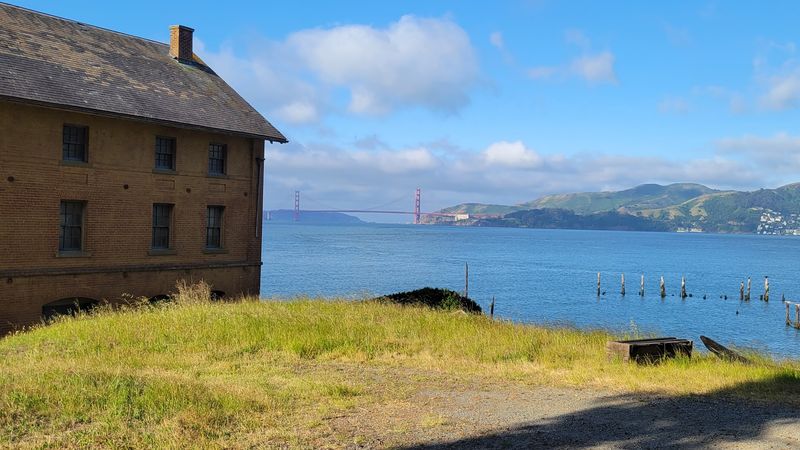
Angel Island offers some of the most unobstructed and varied views of the Golden Gate Bridge and San Francisco skyline available anywhere in the Bay Area.
Because the island sits in the middle of the bay, the perspective shifts constantly as visitors move around the perimeter, giving photographers and casual observers alike a rotating gallery of iconic sights.
The area around the old military batteries near the summit of Mount Livermore is especially well-regarded for its dual sightlines, where both the Golden Gate and the Bay Bridge can be seen from the same vantage point.
Early morning light tends to be soft and golden on clear days, while late afternoon can bring a warm haze that softens the skyline in a photogenic way.
Fog is a real factor in the Bay Area, and there are visits when the Golden Gate disappears entirely behind a grey curtain.
Checking weather forecasts before heading out helps set expectations, and even on foggy days the island has its own moody visual appeal with mist drifting through the eucalyptus trees.
Clear days between late spring and early fall tend to offer the most reliable visibility for those hoping to capture the classic Angel Island skyline shot.
What To Pack For A Perfect Day Trip
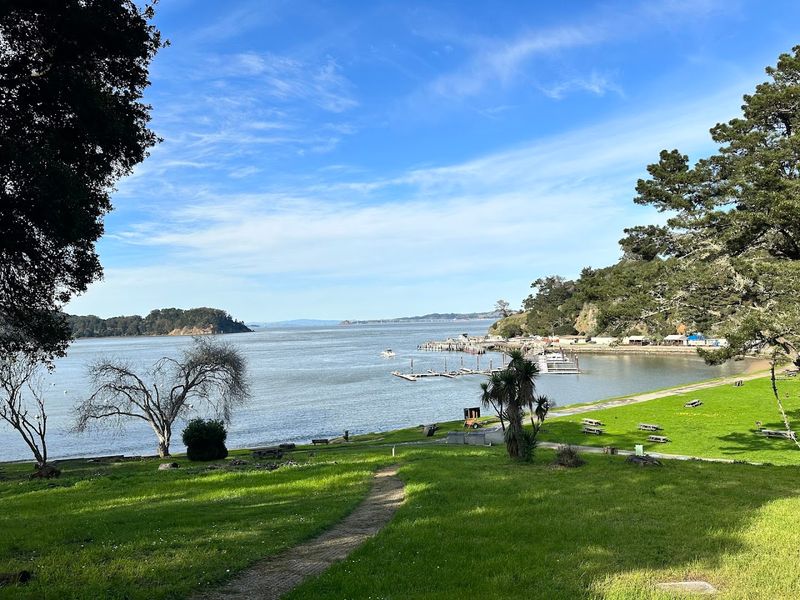
Packing thoughtfully for Angel Island makes the difference between a comfortable day and an uncomfortable one.
Water is essential because the island can be windy and exposed, and while there are a few refill stations near Ayala Cove, they may not be easily accessible once out on the trails.
Carrying at least one full water bottle per person is a reasonable baseline.
Layered clothing is strongly recommended because Bay Area weather can shift quickly, and what starts as a warm morning near the dock can turn noticeably cooler and windier at higher elevations or on the northern shore.
A light jacket or windbreaker takes up minimal space and earns its weight several times over during a full day on the island.
Bringing a packed lunch or snacks is a practical choice since the on-island café operates seasonally and has limited hours.
Sunscreen and a hat are useful for the exposed sections of trail, particularly on the Perimeter Road and near the summit.
Comfortable walking shoes with some grip handle both the paved loop and the natural trails well.
Wood fires are not permitted on the island, but charcoal fires are allowed at designated areas for those planning a longer stay, though charcoal must be brought from the mainland.
When To Visit For The Best Experience
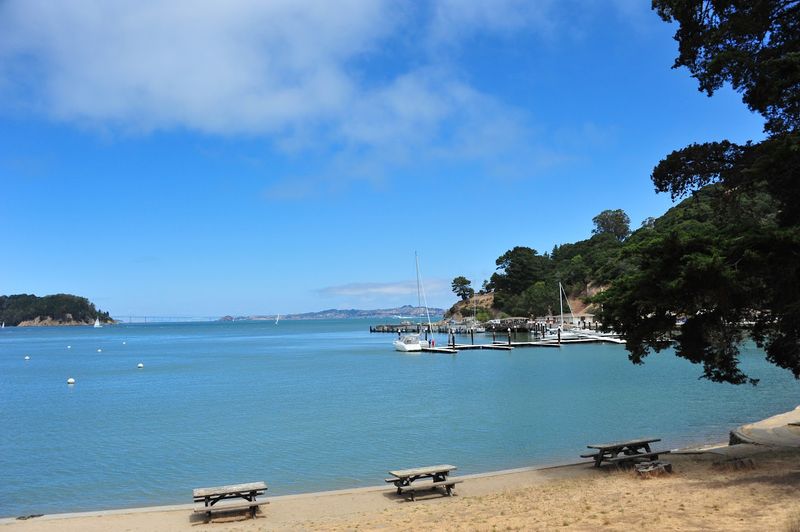
Spring and early fall are widely considered the most rewarding seasons to visit Angel Island.
From roughly April through October the weather tends to be more stable, the café and tram tours are operating, and the ferry runs on a fuller schedule that gives visitors more flexibility with arrival and departure times.
Summer weekends can bring larger crowds, particularly on holiday weekends when the ferry lines from San Francisco may be longer than usual.
Visiting on a weekday during summer or arriving on an early morning ferry tends to result in a noticeably quieter experience, with more breathing room on the trails and easier access to picnic spots.
Winter visits are possible but come with trade-offs.
Ferry schedules reduce from October through March, the café and tram tours may not be operating, and the weather can be cold and foggy.
That said, the island takes on a different kind of quiet beauty in the off-season, and hikers who enjoy solitude sometimes prefer it precisely because foot traffic drops considerably.
Checking the current ferry schedule and seasonal amenity availability before any visit is always a good idea regardless of the time of year.
Tips For Avoiding Crowds And Finding Solitude

Finding genuine solitude on Angel Island is more achievable than at most popular Bay Area attractions, but a little strategy helps.
Taking a weekday ferry rather than a weekend one is probably the single most effective way to arrive on an island that feels spacious rather than busy.
Holiday weekends in particular can bring significantly more visitors than a typical Saturday.
Once on the island, most casual visitors tend to stay close to the Ayala Cove area and the lower sections of the Perimeter Road.
Heading uphill toward Mount Livermore or exploring the quieter eastern and northern sections of the island usually means encountering far fewer people, even on busier days.
The beaches along the less-traveled sections of the shoreline, particularly those away from the main dock area, tend to offer pockets of real quiet where sitting and watching the water becomes a genuinely restorative experience.
Starting early on the first ferry of the day also helps, as the afternoon ferries tend to bring the bulk of day visitors.
Dogs are not permitted on the island except for service animals, which contributes to the calm atmosphere that sets Angel Island apart from many other outdoor recreation areas in the region.
Why This State Park Feels Like A Hidden Escape
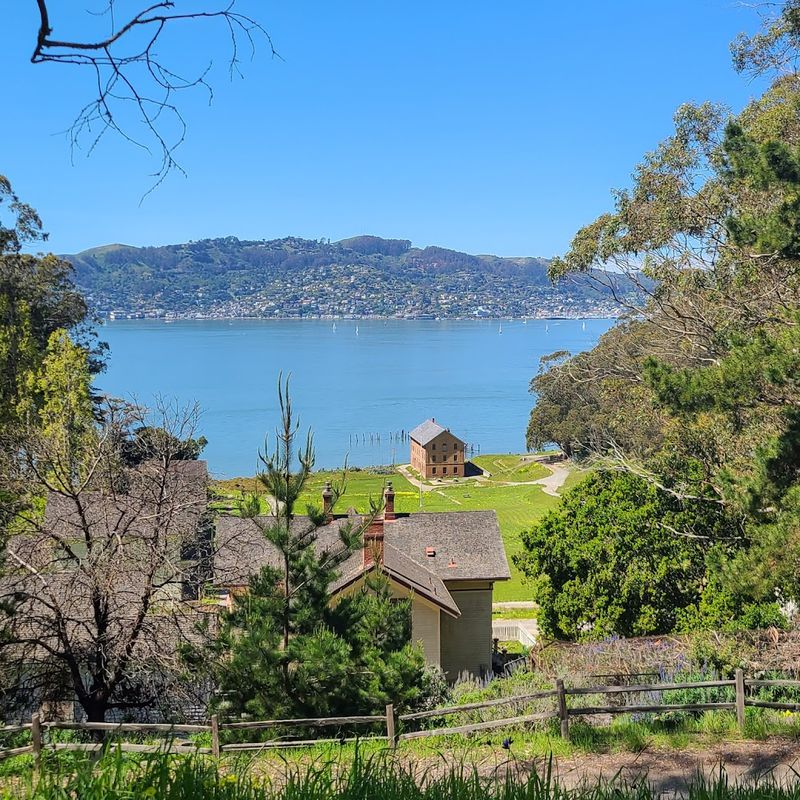
There is something genuinely unusual about standing on a hilltop with a 360-degree view of one of the world’s most recognizable cities while surrounded by birdsong, deer trails, and the smell of eucalyptus.
Angel Island creates that specific kind of contrast, where the urban world is fully visible but completely unreachable for a few hours.
No cars, no storefronts, no traffic signals, and no commercial noise mean the sensory experience of the island is fundamentally different from nearly every other accessible green space in the Bay Area.
The ferry ride enforces a kind of intentionality about the visit that a simple drive to a park does not, and that intentionality seems to shape how people behave once they arrive, slower, quieter, and more attentive to their surroundings.
The layered history adds emotional texture that purely natural parks sometimes lack.
Walking past dormitory walls carved with the words of detained immigrants, or standing inside a Civil War-era military garrison, gives the landscape a depth that lingers after the ferry ride home.
For a place so close to a major city, Angel Island manages to feel like a genuine departure, the kind of place that changes the pace of a day in ways that are hard to fully explain until experienced firsthand.
Planning Your Return Ferry And Departure
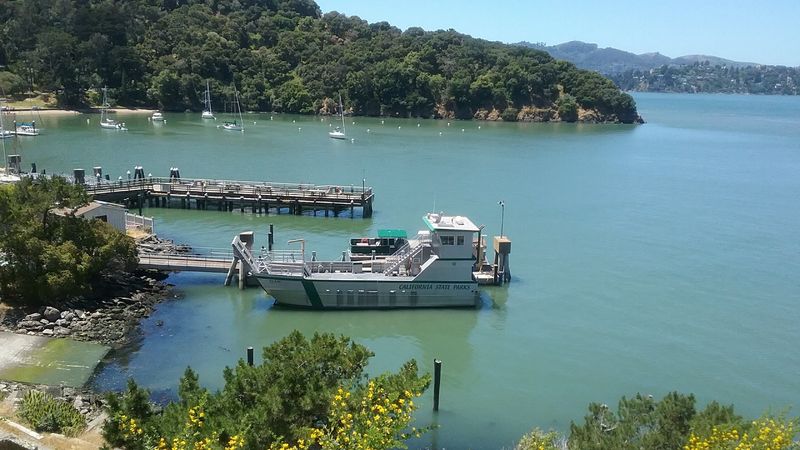
Keeping track of the return ferry schedule is one of the most practical things a visitor can do to avoid an unexpectedly long wait or a missed boat.
The last ferry of the day departs in the late afternoon, typically around 5:00 PM depending on the season and departure point, and missing it means either camping overnight or arranging a private water taxi, neither of which is ideal for an unplanned situation.
Signs posted throughout the island include time and distance estimates to the dock from various points on the trail, which makes it straightforward to gauge whether there is enough time to finish a particular route before the last boat leaves.
Building in a buffer of at least thirty minutes before the final departure is a sensible habit, especially if the day involved more exploring than originally planned.
The small gift shop near the dock closes before the last ferry, usually around 4:30 PM, so any souvenir shopping or last-minute snack purchases should happen earlier in the day.
Arriving back at Ayala Cove a bit early also provides a chance to watch the seals near the dock, grab something from the café if it is still open, and settle into the slower rhythm of waiting for the boat back to the mainland with the bay spread out all around.