Nebraska’s Capitol Tower Rises 400 Feet Over Lincoln And You Can Ride To The Observation Deck Free
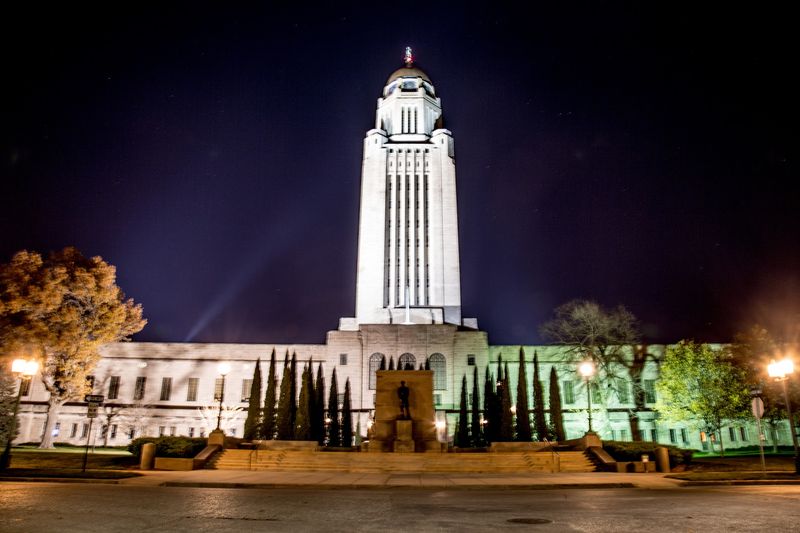
You can see it long before you reach it, a pale stone shaft standing alone above the flat Nebraska horizon like something that wandered off from another continent. Most people assume a building that tall and that ornate must charge admission, or at least ask you to book weeks ahead.
It does neither. Free tours, free entry, and an elevator that normally carries you up toward one of the widest views in the state.
A Limestone Tower on the Nebraska Prairie
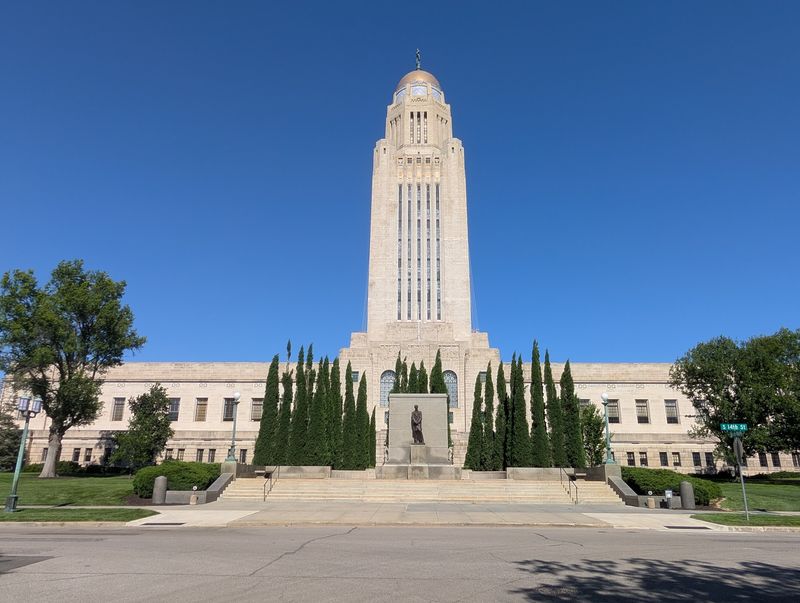
At 1445 K Street in downtown Lincoln, the ground floor of the Nebraska State Capitol sits only a few blocks from the University of Nebraska campus, close enough that students cut across the lawn on their way to class.
The building rises roughly 400 feet, which makes it visible from twenty to thirty miles out on a clear day. Drivers coming in on Highway 2 or I-80 often spot the tower before they spot the city around it.
Officially, this is a working state government office. Nebraska’s executive branch, judicial branch, and legislature all conduct business inside, and the halls fill with staff on weekday mornings.
What surprises people is how much of it stays open to the public. Anyone can walk in, wander the corridors, peek into courtrooms, and take a guided tour without paying a cent or reserving a spot.
Completed in 1932, it holds the distinction of being Nebraska’s third capitol on roughly the same patch of ground. The first two were replaced.
This one, built from Indiana limestone, was designed to outlast everything before it.
Bertram Goodhue’s Break From the Dome
Picture nearly every state capitol you have ever seen: a low, wide building with a rounded dome perched on top, borrowed more or less directly from Washington, D.C.
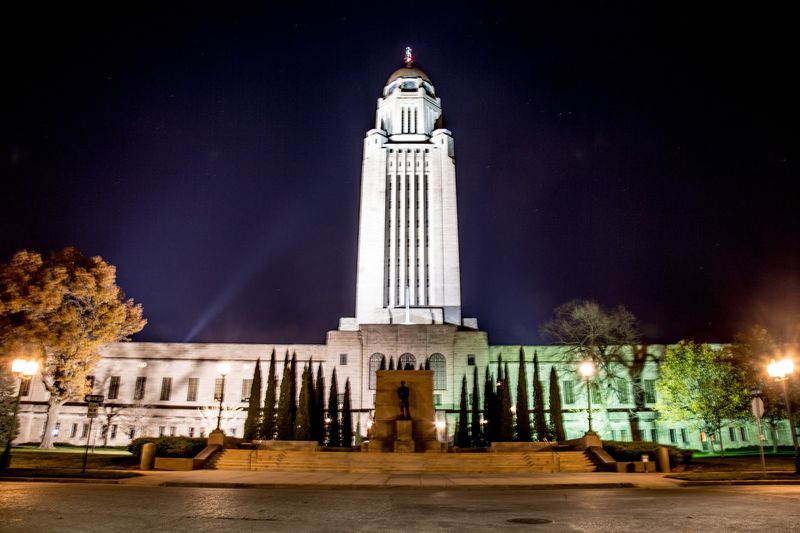
New York architect Bertram Grosvenor Goodhue threw that formula out. His 1920 design for Nebraska placed a functional tower at the center of a square base, making this the first state capitol in the country to integrate a working tower into its structure rather than a decorative dome.
Construction ran from 1922 to 1932, a full decade of stonework laid in phases so the state could pay as it went. The result reflects a government that watched its budget closely and still ended up with something extraordinary.
Only a handful of American capitols use the tower form. North Dakota and Louisiana took similar approaches, but Nebraska got there with a shape nobody had tried before.
Seen from the lawn, the tower reads almost like a cathedral bell tower that lost its church. The base spreads wide and low, then the shaft shoots straight up, capped by a gold-tiled dome.
The Sower Standing Watch Above It All
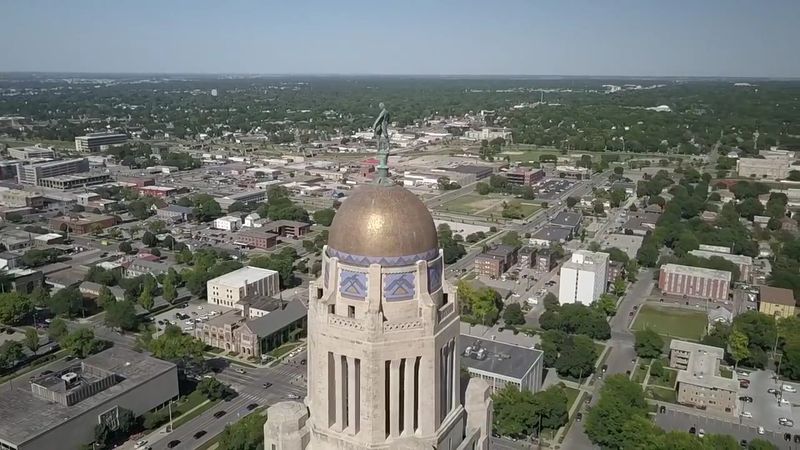
Nineteen feet of bronze stands at the very top, a farmer mid-stride with a seed bag slung across his shoulder, arm swinging out to scatter grain.
He is called The Sower, and he has been up there since the building’s completion, planting an imaginary field over Lancaster County. From the sidewalk he looks small.
He is taller than three grown adults stacked up.
Nebraska chose agriculture as its crowning symbol on purpose. No eagle, no goddess of liberty, no allegorical figure holding a torch.
Just a man doing the work that built the state.
The gold-tiled dome beneath him catches late afternoon light in a way that turns the whole crown warm and coppery. Photographers who know the building tend to show up an hour before sunset.
Fun detail worth knowing: the statue was cast in sections and hoisted up in pieces during construction. Getting him into position was its own engineering problem.
Look for him from the parking lot at Antelope Park or from residential streets across town, and he is still recognizable.
Riding to the Fourteenth Floor
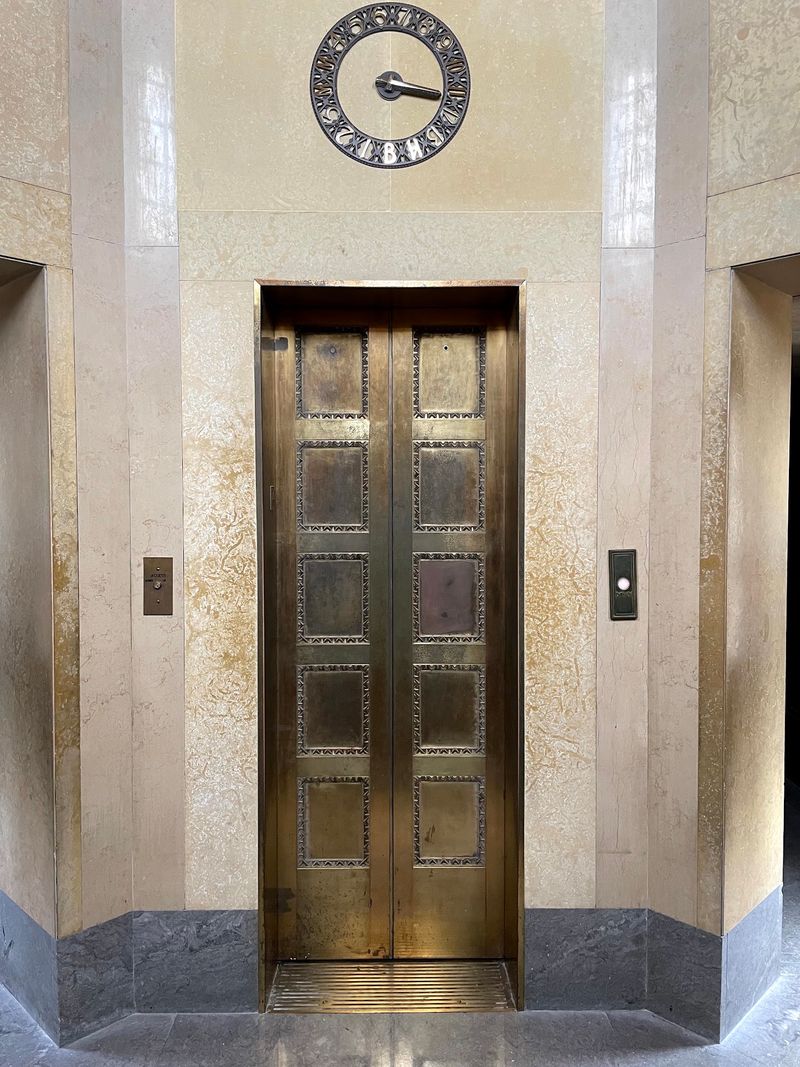
Elevators inside the tower carry passengers to the fourteenth floor, which sits about 245 feet above the sidewalk. That is the height of a twenty-story building, give or take.
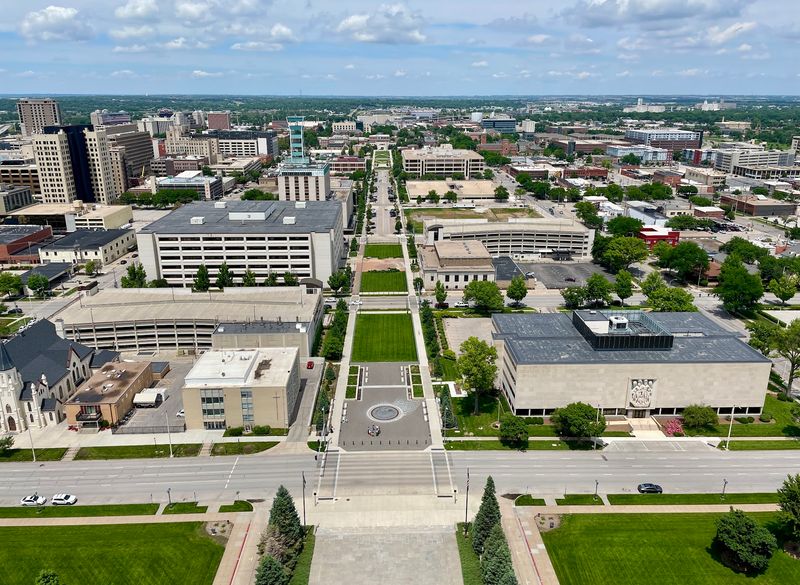
Up there, a corridor wraps the tower with openings on every side, delivering something close to a 360-degree look at Lincoln. Memorial Stadium, the university, the grid of downtown streets, and beyond all of it the farmland running out toward the horizon.
Mosaic work decorates the walls of the observation level itself, so even the ride’s destination has artwork built into it. Small doors open onto the outside air, and on breezy days the wind up there makes itself known immediately.
No ticket, no fee, no timed entry. The elevator ride and the view cost nothing.
An important note before planning a trip: the tower and observation decks are closed while HVAC construction continues in the building. Check the capitol’s current status before driving in, because the rest of the building has remained accessible during the work.
The second-floor outdoor balcony offers a lower but still wide downtown view.
Mosaics, Murals, and Floors You Keep Looking Down At
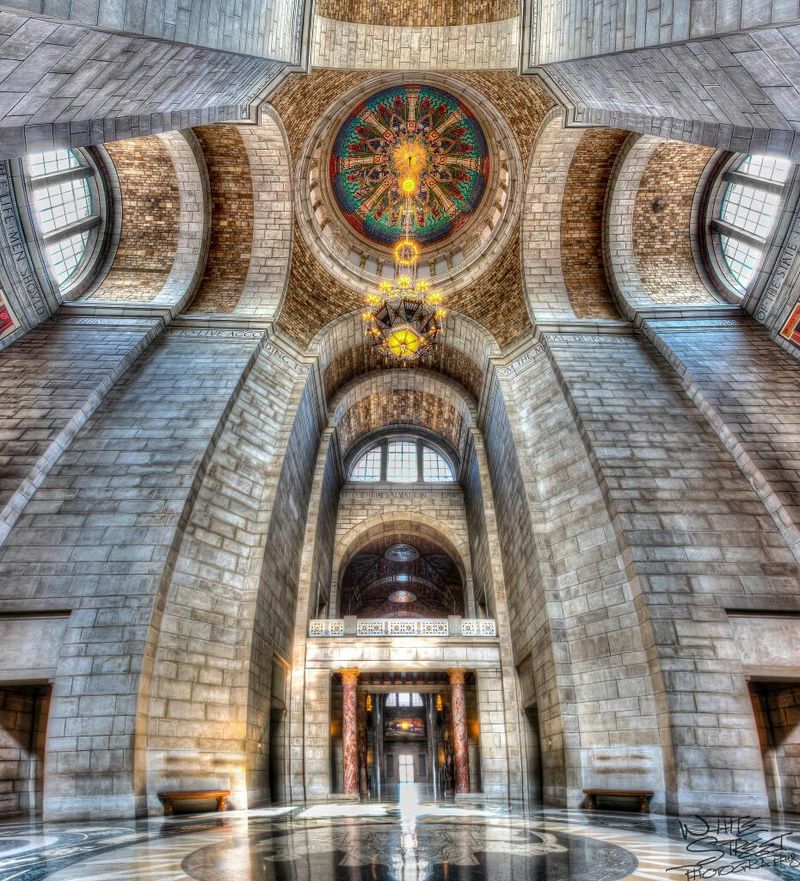
Walk in through the main north entrance and the first thing that pulls your attention is the floor, not the ceiling. Tile mosaics spread underfoot in patterns representing the natural history of the plains.
Then you look up, and the rotunda ceiling does the same thing in richer color. Artwork here was planned as a single symbolic program covering Nebraska’s natural, social, and political story, from prairie grasses to the framing of laws.
Murals fill wall panels throughout the corridors. Bas-relief stone carvings run above doorways and along the exterior, each one carrying meaning rather than decoration for its own sake.
The Senate chamber doors feature a Native American design that stops most people mid-step.
Guided tours explain what the images mean, which changes the experience considerably. Without context, it is beautiful tile.
With context, it is a hundred-year-old argument about what Nebraska values.
Printed guides are available at the front desk for anyone touring on their own schedule. Take one even if you plan to wander, because the symbolism is dense and easy to walk right past.
The Only One-House Legislature in America
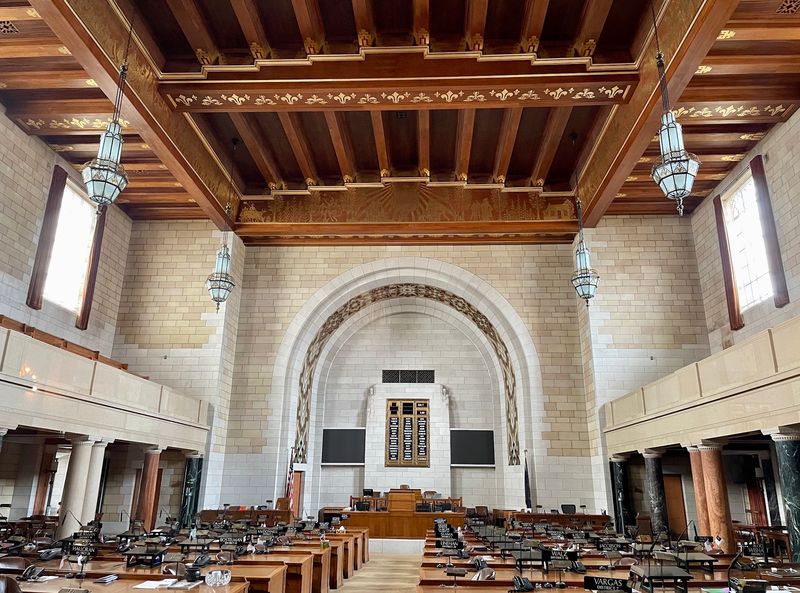
Forty-nine senators. One chamber.
No House, no Senate split, no conference committees hashing out differences behind closed doors.
Nebraska runs the only unicameral state legislature in the country, and the chamber where it meets is part of the standard tour route. Desks curve in a semicircle beneath a decorated ceiling, and when the body is in session the gallery stays open.
The setup has been in place since 1937, several years after the building opened, which means the room itself was originally designed for a two-house system and later adapted.
Watching debate from the gallery costs nothing and requires no reservation. Sessions typically run in winter and early spring, so a January or February visit raises the odds of catching actual lawmaking rather than an empty room.
The Supreme Court chamber sits nearby, wood-paneled and quiet, and it draws just as much attention as the legislative floor.
Both rooms stay unlocked to the public most of the time. Freedom to walk through working government space is unusual, and here it is simply how the building operates.
Four Hidden Courtyards Nobody Talks About
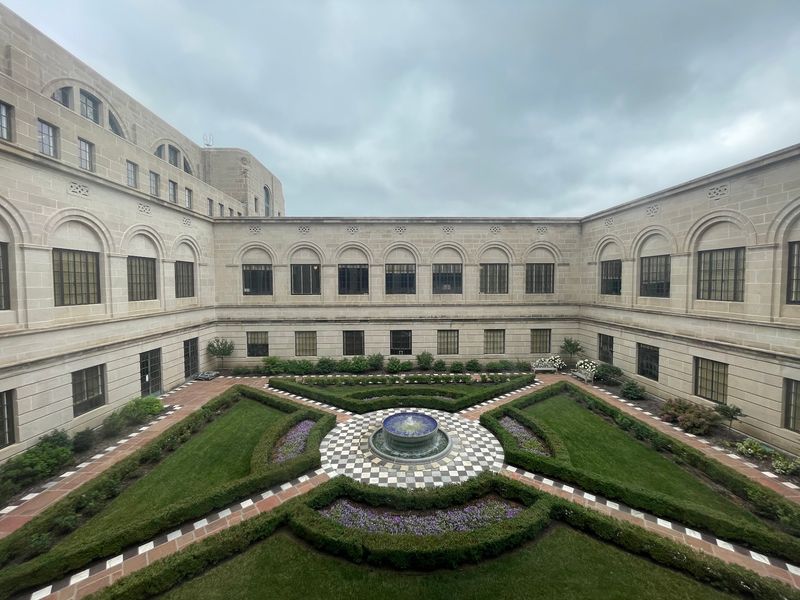
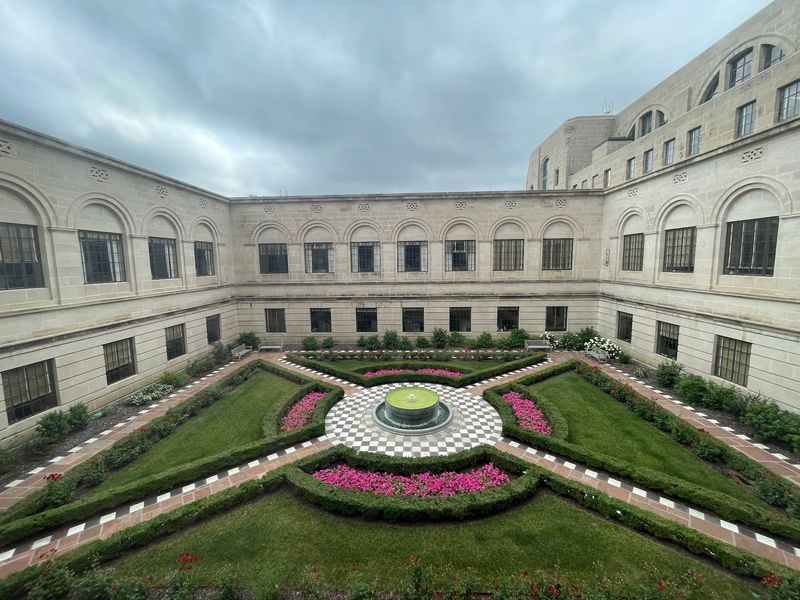
Tucked into each corner of the square base sits an open-air courtyard, and most people walk the halls above them without ever going down.
Each garden has a fountain finished in a different color of tile, plus benches and black-and-white checkered walkways. The design channels a breeze down into the space, and standing near the moving water drops the temperature noticeably on a hot afternoon.
Flowers begin blooming in April. By June the plantings fill in and the courtyards become the quietest corners of a very quiet building.
Upper-floor corridors line up with tall windows overlooking these gardens, so you can spot them from above while walking past rows of statues. That view alone convinces some people to go find the entrances.
They are among the least used parts of the whole complex, which makes them ideal for sitting alone with a book or letting kids burn off energy without echoing through a marble hallway.
Pack a snack, claim a bench, and you have a free downtown Lincoln picnic spot with better architecture than any park in the county.
The Law Library and Its Back Reading Room
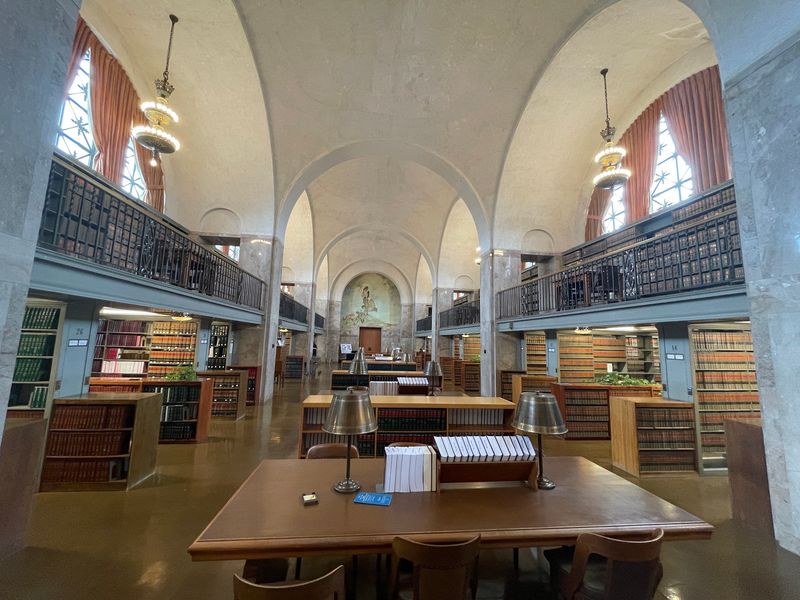
Third floor, past the courtrooms, sits the Nebraska State Library, and it rewards anyone willing to open the door.
Shelves of legal volumes line the main space, but the real find is a reading room toward the back that most people never reach. Wood, quiet, and light coming in from high windows.
Libraries inside government buildings often feel like storage. This one feels built for reading, which fits a structure where every corner received the same level of attention as the rotunda.
Nobody stops a visitor from stepping inside and looking around during regular hours. Keep your voice down, since attorneys and court staff use the space for actual work.
Also on this floor: the Nebraska Hall of Fame, where busts of notable figures from state history line a corridor. Reading the plaques takes maybe fifteen minutes and fills in names most Nebraskans half-recognize.
Between the library, the Hall of Fame, and the courtrooms, the third floor holds enough to justify a stop even when tower access is unavailable.
Ask at the desk if you cannot find the entrance.
Free Guided Tours and the Ground-Floor Fortress
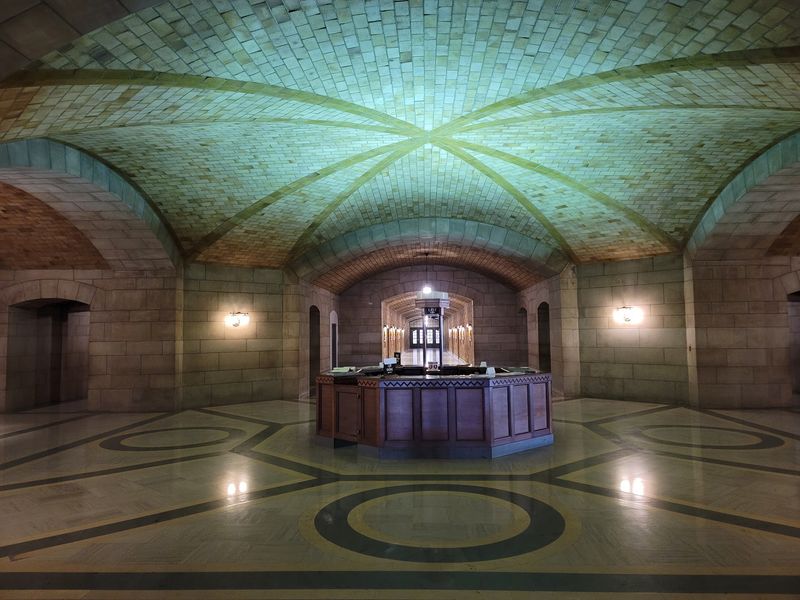
Guided tours run roughly every hour, cost nothing, and require no advance booking. Guides gather groups near the second-floor tour office, and the front desk posts the day’s schedule.
Down on the lower level, the atmosphere shifts entirely. Massive concrete arches carry the weight of everything above, and the corridors down there feel more like a fortress vault than a government office.
Guides walk through the symbolism in the artwork, the reasoning behind the tower design, and the century of history that unfolded inside these walls. Details that look decorative turn out to be deliberate once explained.
The information desk on the first floor is not always staffed, and entering through a side door makes the tour office harder to locate. Coming in the main north entrance solves that.
A gift shop opened relatively recently and carries a solid selection, from books on the building to Nebraska-themed items.
Groups tend to be small. Questions get answered.
For a completely free hour, the tour delivers more than plenty of paid attractions in the region.
Hours, Parking, and Practical Notes for Lincoln Visitors
Doors open Monday through Friday from 8 a.m. to 5 p.m., Saturdays and holidays from 10 a.m. to 5 p.m., and Sundays from 1 p.m. to 5 p.m.
Closures cover Thanksgiving Day, the Friday after Thanksgiving, Christmas Day, and New Year’s Day. Everything else on the calendar, the building is open and admission stays free.
Parking takes some planning. On-street metered spots sit a few blocks out, several accept coins, and a couple of dollars covers a few hours.
Some spaces near the front allow short free stays.
Approaching from the 14th Street side generally makes entry simpler. On busy legislative days, expect to walk farther than you would like.
The building is air-conditioned, which turns it into a genuinely comfortable stop during a July road trip across I-80. Restrooms are clean and easy to find.
Before you drive in, confirm whether tower access has reopened, since HVAC work has kept the observation decks closed and some floors restricted. The main level, courtyards, and chambers have stayed available throughout.
Why This Stop Earns the Drive
Hardly anything in Nebraska gives you a full morning of stone carving, mosaic ceilings, garden fountains, and a wide view over the capital city without asking for a dollar.
Set expectations correctly, though. This is not a bustling attraction with rides and food courts.
It is a quiet working building where the entertainment comes from looking closely and reading plaques.
Families with restless young kids may find the courtyards more useful than the corridors. History-minded travelers, architecture fans, and anyone curious about how the unicameral works could easily spend two hours and want more.
Outside, the grounds stay well kept, and a statue of Abraham Lincoln stands near the west entrance. Walking the lawn early in the morning, before staff arrive, has its own appeal.
Road-trippers crossing the state have made this a favorite break point, and the reason is simple: it beats a rest area by an enormous margin.
When the tower reopens, that elevator ride becomes the finish. Until then, the ten floors you can reach still justify the turn off the interstate.