Nebraska’s Platte River Valley Has A Pioneer Courthouse Where Settlers Once Filed Their Homestead Claims
The very first homestead claim in America sits right beyond a big window, and you can stare straight at it. A man named Daniel Freeman filed on those 160 acres in 1862, and the land is still there, waiting.
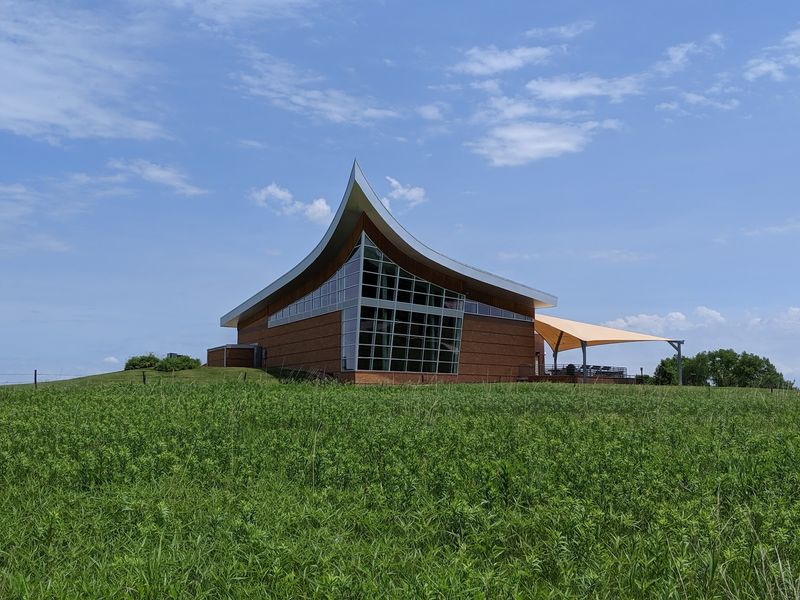
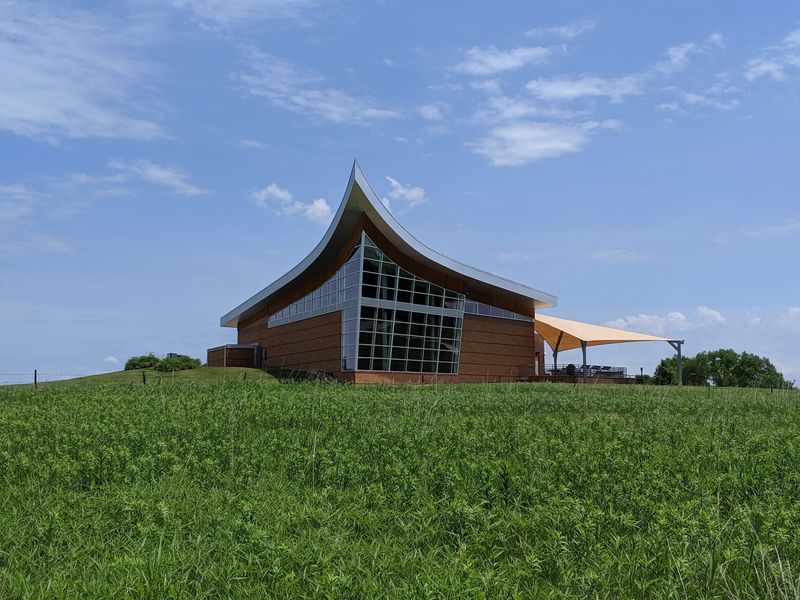
Today it belongs to a national park in southeast Nebraska, open every single day of the week. Admission is free, and the visitor center is shaped like an old plow.
I like how this place mixes big American history with a quiet prairie walk. You can read about families who arrived with almost nothing, then step outside onto restored tallgrass.
There’s even an upstairs computer search that checks whether your ancestors were homesteaders too. So how far back does your own family’s land story go, and did it start with a claim like this one?
America’s Very First Homestead Is Sitting Right Outside A Window
Some museums make you squint at a map to find where history happened. Homestead National Historical Park just points out the window.
The park sits near Beatrice in southeast Nebraska, on land tied to the first claim filed under the Homestead Act. Beyond the big window in the Heritage Center lies the very first land the U.S. government offered for homesteading.
That’s a pretty bold view for a Tuesday afternoon. Rangers love sharing it, and hearing the story while looking at the actual ground hits differently than reading it in a textbook.
The park is a museum, a historic site, and a stretch of restored tallgrass prairie all rolled into one. It covers the story of homesteading across most of the country, not just Nebraska.
That broader scope surprises plenty of first-timers. The Homestead Act shaped huge chunks of the American map, and this spot is where that whole wave started.
Highway signs along the interstate point the way, which is how many people stumble onto it. Once you know it’s here, though, you’ll probably wonder how you ever drove past without stopping.
One 1862 Law Handed Out Land To Anyone Brave Enough
Free land sounds like a scam today. In 1862, it was federal law.
The Homestead Act offered settlers a parcel of public land if they were willing to live on it and work it. That simple deal pulled families westward for decades and reshaped the country.
Homestead National Historical Park tells that story from start to finish. The exhibits follow the act from its beginning all the way to its end.
Here’s the catch the brochures of the era skipped. Homesteading was brutally hard, and the park doesn’t pretend otherwise.
You’ll learn how much was happening in the country between the 1840s and 1870s. The site lays real groundwork for understanding that whole era of American expansion.
Plenty of national park fans treat this stop as a key to the others. Once you grasp the Homestead Act, a lot of western history suddenly clicks into place.
And the story isn’t told from just one angle. The museum includes people who succeeded, people who struggled, and Native nations whose lives were upended by the land rush.
That honest, layered approach makes the history feel human. It’s less a victory lap and more a full, complicated picture.
Daniel Freeman Got Here First, And The Land Still Remembers
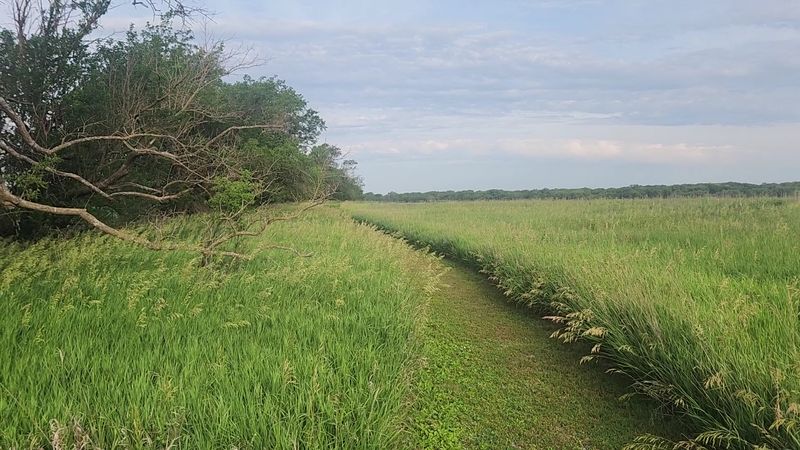
Talk about beating the rush. Daniel Freeman filed on these 160 acres in 1862, and his claim is known as the first homestead in America.
That one filing is the reason the park exists right here. Without Freeman, this would likely be just another stretch of Gage County farmland.
Instead, his land became the anchor for a national story. The park preserves the setting so you can stand where that first claim took shape.
I believe that’s the magic of the place. You aren’t learning about homesteading somewhere vaguely nearby, you’re learning about it on the original ground.
Rangers often connect Freeman’s claim to the millions of acres that followed. Hearing how one man’s paperwork kicked off a national movement gives the land a surprising weight.
The site spreads across roughly a mile, with a few separate areas to explore. Each piece adds a different layer to the Freeman story and the wider homestead era.
So when you look out over the grass, remember the timeline. Before the tractors, the towns, and the highways, there was one man, one claim, and a lot of hope.
A Visitor Center Built To Look Like An Old Plow
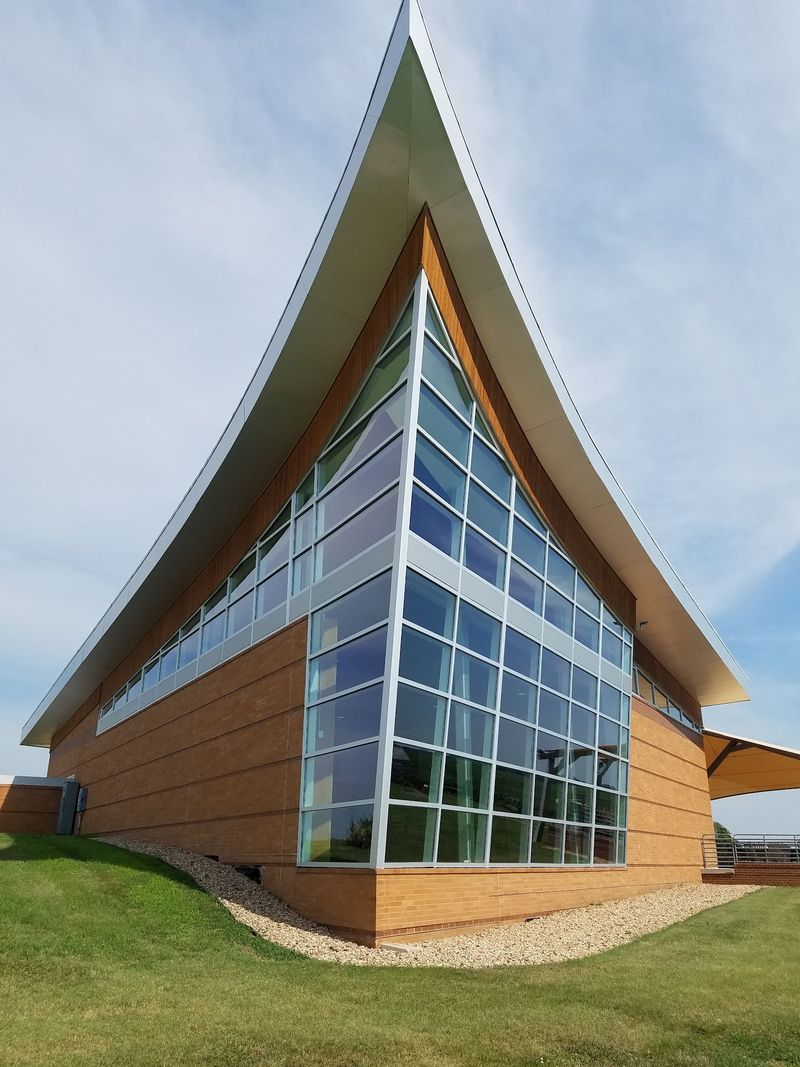
Architects usually go for sleek or grand. The Heritage Center went for farm equipment, and honestly, it works.
The building is designed to resemble an old plow. It’s a clever nod to the tool that turned prairie sod into homestead farms.
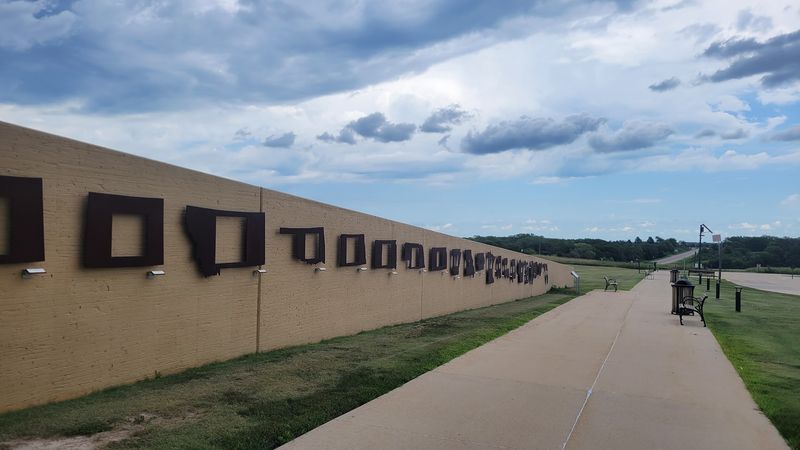
The fun starts before you even reach the door. The walkway up to the entrance shows the percentage of each state’s land that was given out through homesteading.
Go ahead and look for your home state. Some numbers are tiny, while others reveal just how much of a state was settled this way.
Inside, the Heritage Center holds the main museum, a store, and that famous window looking toward Freeman’s land. Plenty of benches and open space make it easy to take your time.
The building also connects you directly to the outdoors. A side door leads out toward a historic cabin and a wide prairie view.
That design choice keeps the visit flowing nicely. You go from reading about prairie life to standing in the prairie itself within a few steps.
For a building shaped like a plow, it plants the story pretty deep.
The Downstairs Exhibits Are Packed With Tools, Faces And Stories
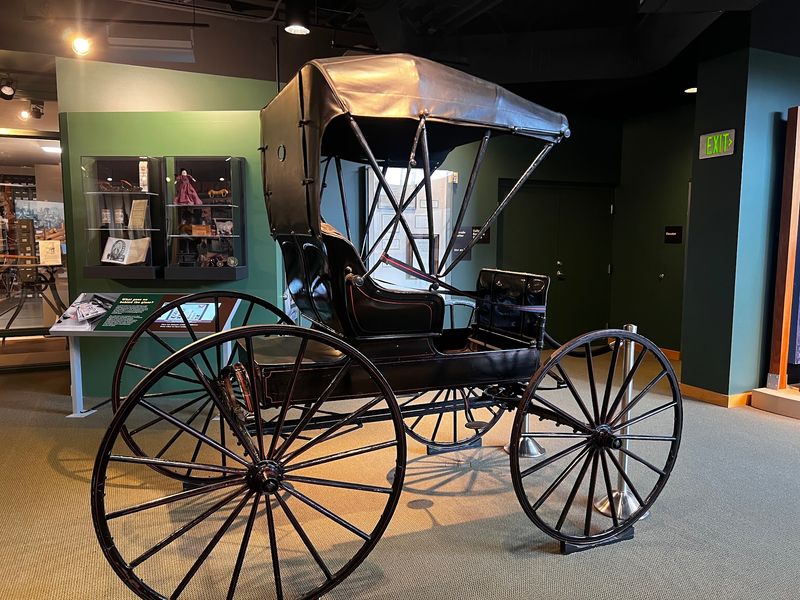
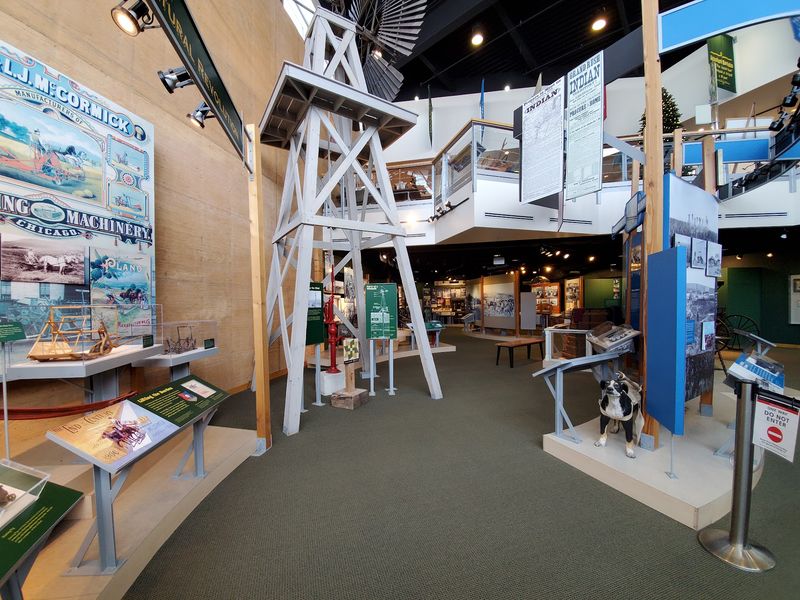
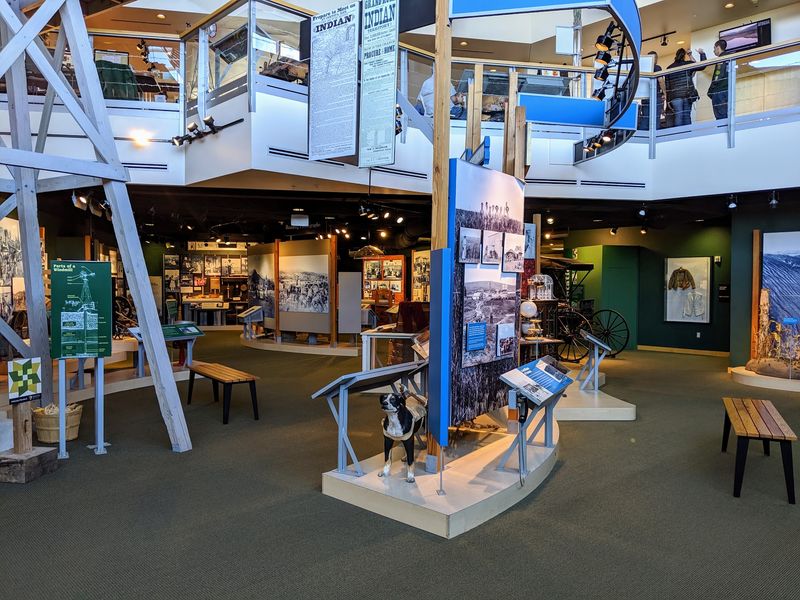
Old tools, old photos, and old promises fill the museum floor. Downstairs, the displays cover homesteading items, facts, people, and equipment from the era.
A large collection of photographs captures life during the homesteading boom. Seeing real faces from the time makes the challenges feel much more personal.
The exhibits don’t sugarcoat the experience. They explain how difficult homesteading was, and how many families struggled against weather, isolation, and poor luck.
One standout thread covers railroad advertising. Companies promised rich soil and an ideal climate, and the museum shows how those pitches affected settlers and Native people alike.
That’s a sharp bit of history worth slowing down for. Marketing hype, it turns out, is not a modern invention.
Signs and panels explain everything clearly, so you won’t need a history degree to follow along. Reading every panel takes a while, but the payoff is a much fuller picture.
Many visitors leave surprised at how big the homestead story really was. It touched nearly every corner of the country, far beyond the plains.
Take your time down here. The exhibits were put together with care, and they reward patient readers.
Your Great-Great-Grandparents Might Be Hiding In The Records Upstairs
Who knew a museum computer could start a family reunion? Upstairs in the Heritage Center, a search tool lets you check whether your ancestors were homesteaders.
Several computers are available for digging into names. It’s a simple idea that turns a general history lesson into something deeply personal.
For many Nebraska families, the odds aren’t bad. Homesteading pulled in so many settlers that a surprising number of people today trace roots back to a claim.
Kids especially seem to light up at this part. Learning that a real ancestor may have tried this hard life makes the exhibits feel less like homework.
Bring a few family names and maybe some rough dates before you go. Having that starting point can make the search quicker and more satisfying.
If a name pops up, the rest of the visit changes. Suddenly the photos, tools, and stories downstairs feel like they could belong to your own family.
And if nothing turns up, you still get a fun window into how records were kept. Either way, it’s one of the most memorable stops in the building, and it costs nothing to try.
Step Out The Side Door And Meet A Real Prairie Cabin
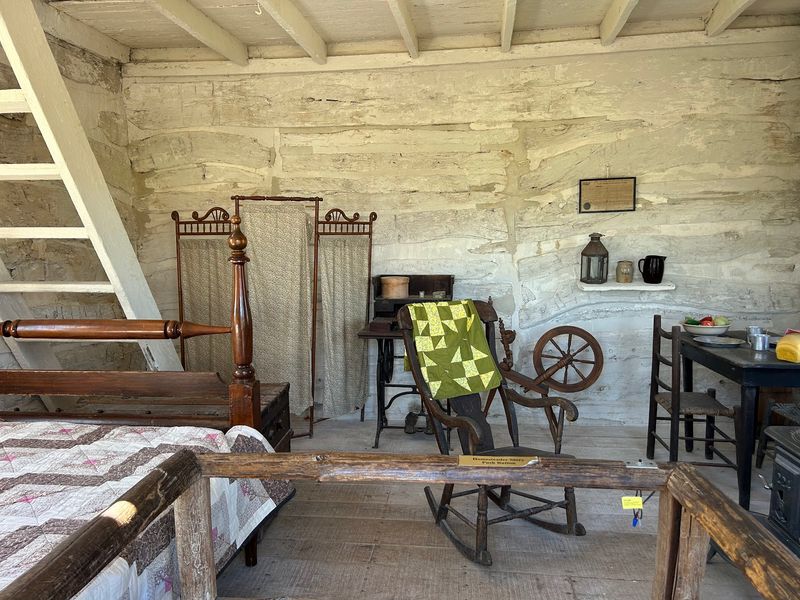
Exits are usually boring. This one drops you right into the 1800s.
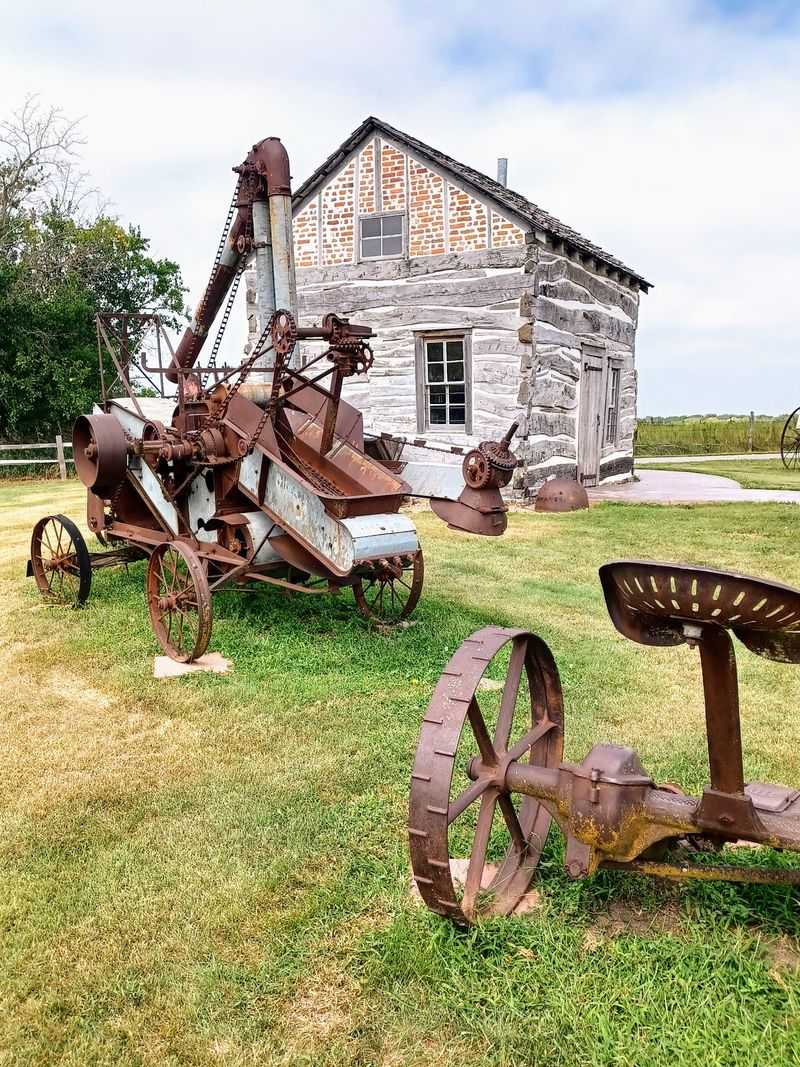
A side door from the museum leads out to a historic cabin with a sweeping view of the prairie. It’s a quick walk, and it gives the exhibits a real-world finish.
Standing beside a small cabin puts homestead life into scale fast. Families lived, cooked, and weathered seasons in spaces that would fit inside a modern garage.
The view beyond the cabin matters just as much. Looking across open grass, you get a taste of what early settlers faced in their new land.
No neighbors in sight. No shops, no roads, just sky, wind, and a lot of work ahead.
That contrast between the cozy cabin and the wide-open land tells a story on its own. It’s one of the best photo spots on the grounds, too.
I can’t imagine arriving here with only a wagon and a plan. Seeing the cabin makes that leap of faith feel much more real than any panel inside.
Linger a few minutes before heading to the trails. It’s a quiet, thoughtful pause in the middle of the visit.
A One-Room Schoolhouse That Kept Teaching Into The 1960s
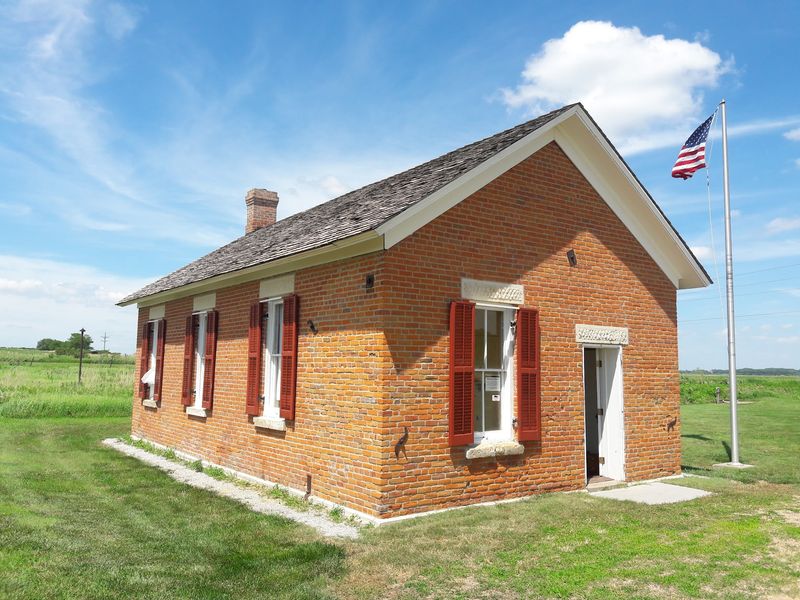
Recess here once meant open prairie as far as the eye could see. The Freeman School is a highlight of the park and a must-see for many visitors.
The schoolhouse stayed in operation until the 1960s. That’s a remarkably long run for a country school, and it links pioneer days to living memory.
Some of your own relatives may have attended a school just like it. One-room schoolhouses were the heart of many rural Nebraska communities for generations.
Ranger talks sometimes bring the building to life. Catching one is worth planning around, since the stories add plenty of color to the simple structure.
Even without a talk, the school is fun to see. It shows how education worked when one teacher handled every grade under one roof.
Picture the variety of lessons happening at once. Little kids learning letters, older students tackling arithmetic, and everyone sharing the same stove in winter.
The Freeman School adds a community angle to the homestead story. Settlers didn’t just build farms, they built towns, churches, and classrooms for their children.
It’s a small building with a big job, and it did that job for a very long time.
One Hundred Acres Of Tallgrass Prairie, Brought Back To Life
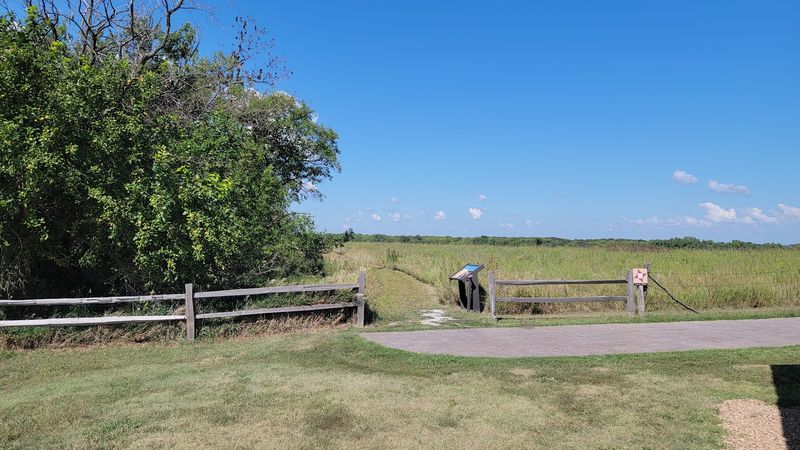
Before plows arrived, tallgrass prairie stretched across this region. The park now protects a 100-acre stretch of it, preserved and restored for visitors to explore.
Prairie restoration is one of the quieter stories here. It shows what the land looked like when homesteaders first saw it and decided to stay.
Walking through the grass gives you a feel for the challenge. Every acre of farmland once looked like this, and breaking that sod took enormous effort.
The prairie is also lively. Birds use the habitat, and bird watchers have spotted several species during a single walk.
Photographers find plenty to work with too. Big skies, shifting grasses, and the scattered historic buildings make for easy frames.
Benches sit along the way if you need a breather. It’s a relaxing place to pause and simply look out over the land.
The prairie changes with the seasons, so no two visits look quite the same. That makes it a fine excuse to return when the colors shift.
Standing here quietly can be oddly moving. The land carries the homestead story without saying a word, and that’s part of its appeal.
Lace Up For Trails That Mix Prairie, Woods And Quilt Blocks
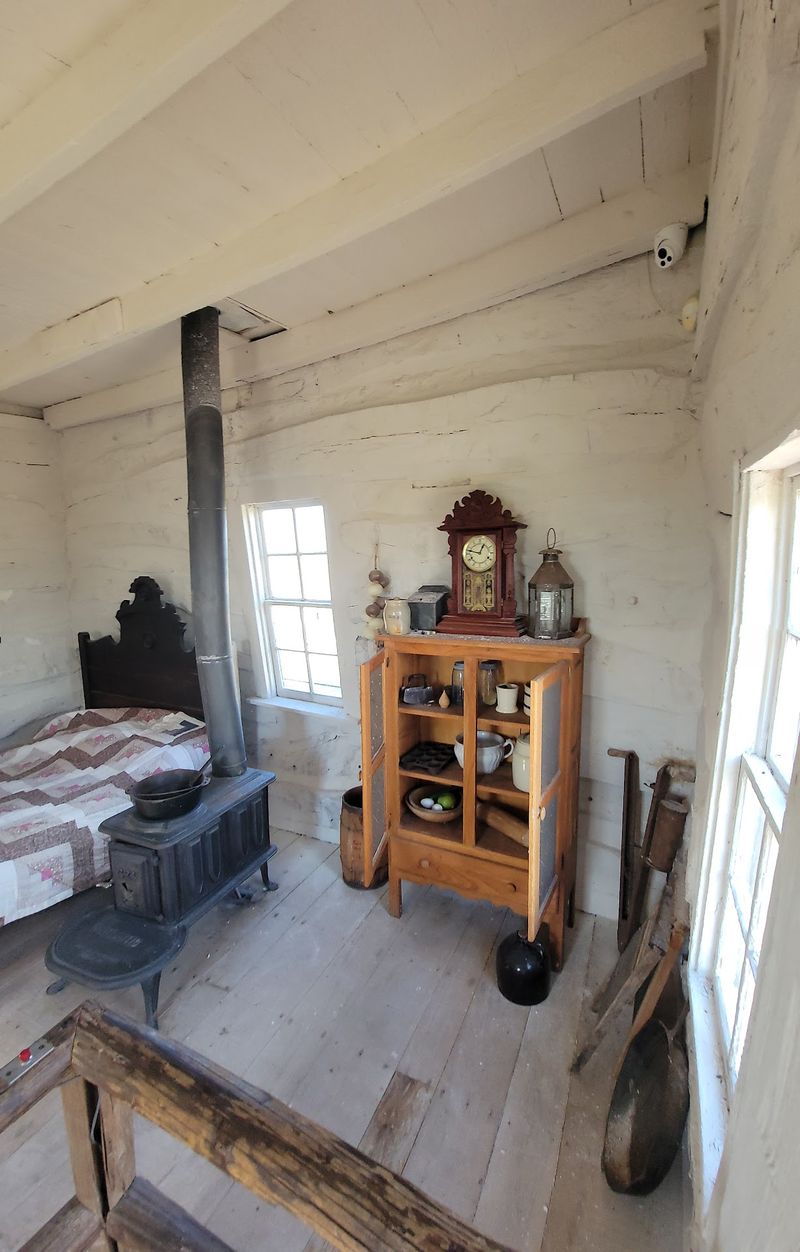
Hikers, this is your section. The trails are well maintained and easy to follow, winding through prairie and woodland.
One loop dips through the woods, which means welcome shade on hot days. The mix of open grass and trees keeps the scenery from feeling repetitive.
Look for the quilt block signs along the paths. They’re a playful touch that nods to the handcrafted traditions of homestead families.
You can keep a walk short or stretch it out for miles. Some folks loop the trails several times and log a serious workout.
Wildlife sightings are part of the fun. Bring binoculars if birds are your thing, since the trails pass through good habitat.
A quick practical note keeps the day pleasant. Ticks can be present in the grass and even near benches, so check yourself and the kids before leaving.
Long pants, closed shoes, and a little bug spray go a long way. A few seconds of checking beats bringing an unwanted souvenir home.
Once you’re set, the trails offer some of the most peaceful time in the park. It’s easy to see why so many visitors call them a favorite.
Antique Tractors And Picnic Tables Wait Just Down The Road
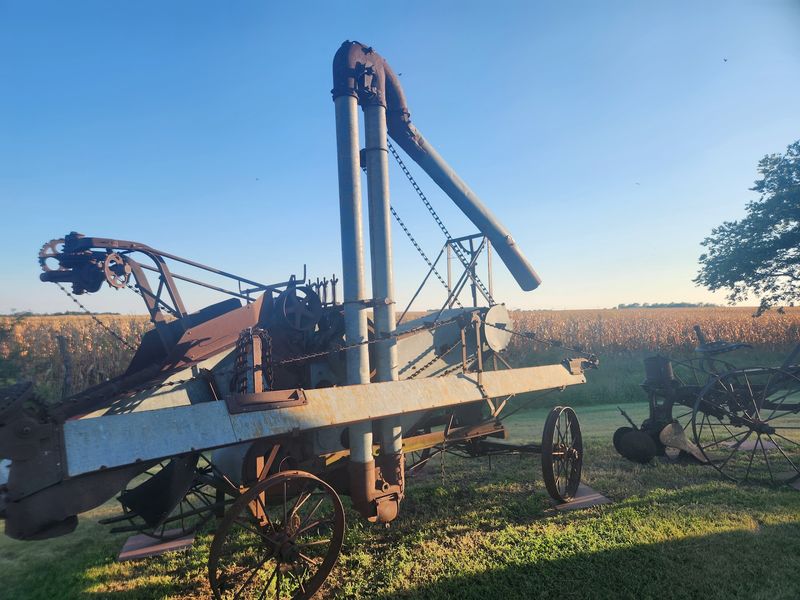
Don’t leave after the Heritage Center. A second learning center sits down the road, and it’s easy to miss if you’re in a hurry.
This part of the park focuses on farming equipment. Antique tractors show how machinery changed life after the earliest homestead years.
Tractor fans will be in heaven. Everyone else gets a clear look at how farming went from muscle and horses to engines and steel.
There’s a picnic area here too. Packing a lunch turns the visit into a relaxed half-day outing.
Local art displays round out the stop. They add a creative, community flavor to a site that’s otherwise heavy on history.
The education center pairs nicely with the schoolhouse and cabin. Together, they trace the homestead story from first shelter to working farm.
Think of it as the second act. The museum explains why people came, and this stop shows how they eventually made the land produce.
A quiet picnic with prairie views is a fine way to recharge. Then you can head back for more trails, or point the car toward town with a full afternoon behind you.
Friendly Rangers Turn History Lessons Into Real Conversations
A great ranger can make a fence post sound fascinating. Here, the knowledgeable and welcoming rangers are a big part of the experience.
They answer questions, share stories, and connect the exhibits to the land outside. Volunteers pitch in too, adding even more friendly faces.
School groups visit often, and rangers lead hands-on activities with the kids. Students leave understanding what the Homestead Act did and how tough it was for families.
That makes the park a strong pick for families with curious children. Kids can learn about the law, the land, and maybe even their own ancestors in one trip.
National park passport collectors, take note. You can get your passport book stamped at the visitor center.
The store inside offers books and gifts tied to the homestead story. It’s a handy place to grab something for a young history buff back home.
Retirees and road trippers find plenty to enjoy as well. The pace is easy, the setting is calm, and nobody is rushing you along.
It all adds up to a welcoming place for nearly anyone. The staff seems genuinely glad you showed up, and it shows.
Free Admission, Daily Hours, And A Detour You Won’t Regret
Good news for your wallet first. Admission is free, making this one of the easiest national park sites in Nebraska to fit into any budget.
The park sits at 8523 NE-4, Beatrice, NE 68310. It opens every day of the week during daytime hours, so weekend and weekday trips both work.
Plan on three to four hours if you want to hike the trails and read every sign. A shorter stop still covers the highlights if time is tight.
Parking is plentiful, and there’s some RV parking close to the building. Bigger rigs should use the pull-off near the entrance instead.
Nearby Beatrice makes a natural add-on. The town offers food and vintage shopping, which turns the visit into a full day out.
So is it worth the drive? For anyone who loves Nebraska history, prairie walks, or a free outing with real substance, the answer leans strongly yes.
Homestead National Historical Park takes a story that shaped the whole country and roots it in one quiet piece of ground. Few places let you look out a window at the exact spot where it all began.