Nebraska’s Tallest Waterfall Drops 63 Feet Through A Shady Canyon Along The Niobrara River
A waterfall drops 63 feet into a cool, shady canyon, and it sits in Nebraska. Yes, the state famous for flat, open prairie has a falls taller than a six-story building.
The canyon stays so cool that paper birch and spruce still grow there. Those trees are leftovers from the Ice Age, hanging on far from their usual neighbors.
Getting close takes no climbing gear at all. You cross a historic iron footbridge over a famous scenic river, then follow a boardwalk right up to the spray.
I like how the whole trip feels like a small secret the Sandhills kept for itself. I can’t imagine a better reason to point the car north this summer.
So how did a waterfall this tall end up hiding out in quiet cattle country?
The Sandhills Hide A Six-Story Waterfall Near Valentine
Most people don’t expect Nebraska to hide a waterfall taller than a six-story building. Smith Falls State Park holds exactly that, plus a cool canyon to keep it company.
The park sits about 12 miles east-northeast of Valentine in the north-central part of the state. Sparks is only about three miles away, if you’re counting tiny towns.
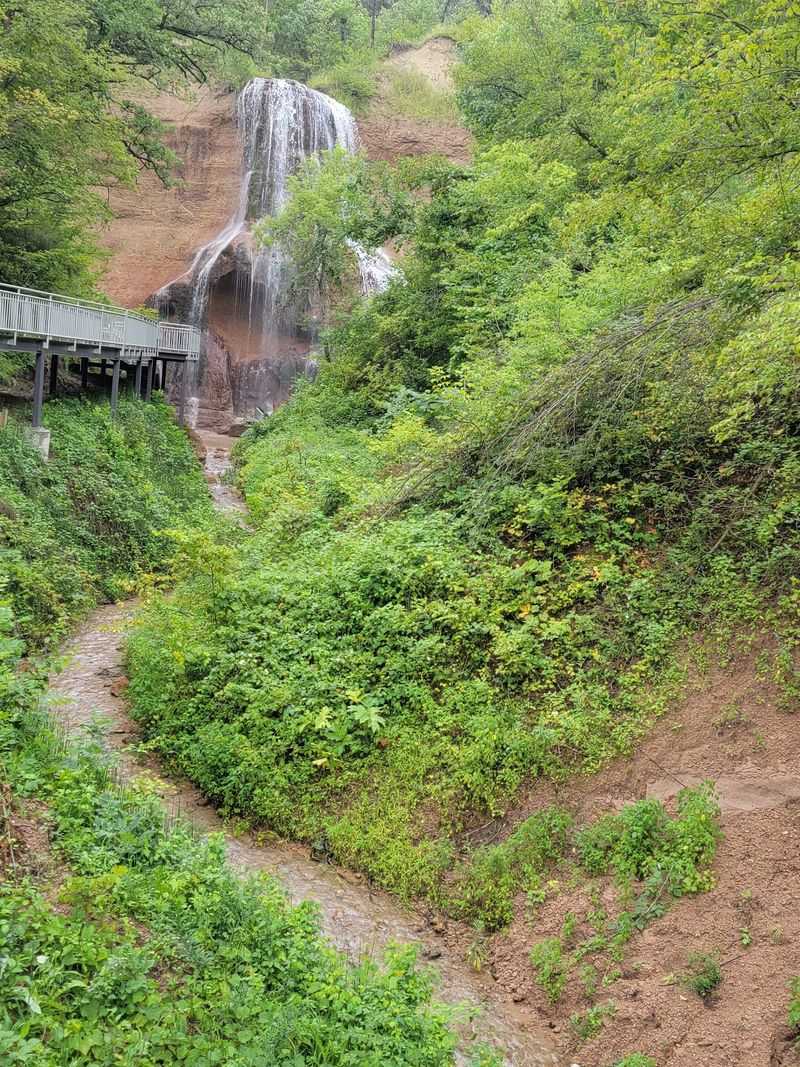
Smith Falls itself spills down the south side of the Niobrara River valley. The water drops 63 feet, which makes it the tallest waterfall in Nebraska.
Around it, the Sandhills roll on in every direction. Grass, cattle, sky, and then suddenly a ribbon of falling water in a shaded green slot.
That contrast is the whole fun of the place. One minute you’re on a ranch road, and the next you’re craning your neck at spray.
The park is open year-round, so the falls are always there waiting. Summer simply brings the most company, thanks to all the river traffic.
Valentine makes an easy base for the trip, with plenty of nearby river outfitters. Still, the falls deserve their own spot on the itinerary, not just a quick detour.
A Waterfall That Has Worn More Than One Name
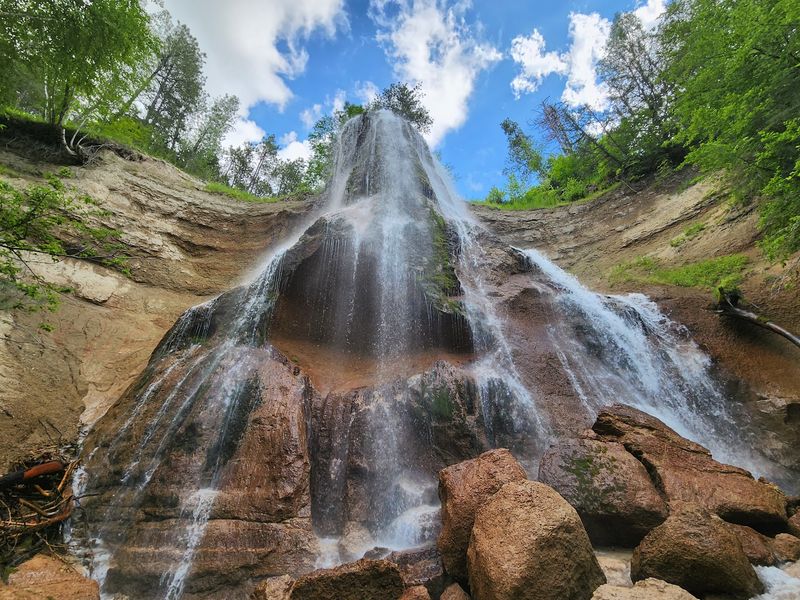
Long before anyone posted it online, this waterfall carried the name Arikaree Falls. That name honored the 21 Native American tribes who lived in the Niobrara River Valley.
The valley offered water, shelter, and a rich mix of plants and animals. It’s easy to see why so many peoples made a home along this river.
The current name arrived with the homestead era. Frederic Smith filed the first homestead patent on the land that included the falls in 1896.
Paperwork tends to stick around, and so did his name. Today the sign says Smith Falls, though the older name still pops up in local history.
I like knowing both names, because each one tells a different chapter. One points to the first people of the valley, and the other to a single homesteader’s claim.
That layered story fits a place where so many worlds overlap. Plants, people, and even the river itself have shifted here for thousands of years.
So when you stand at the base of the falls, you’re standing in a long, shared story. The water just keeps adding new pages every season.
One Ranch Family Kept The Gate Open For Decades
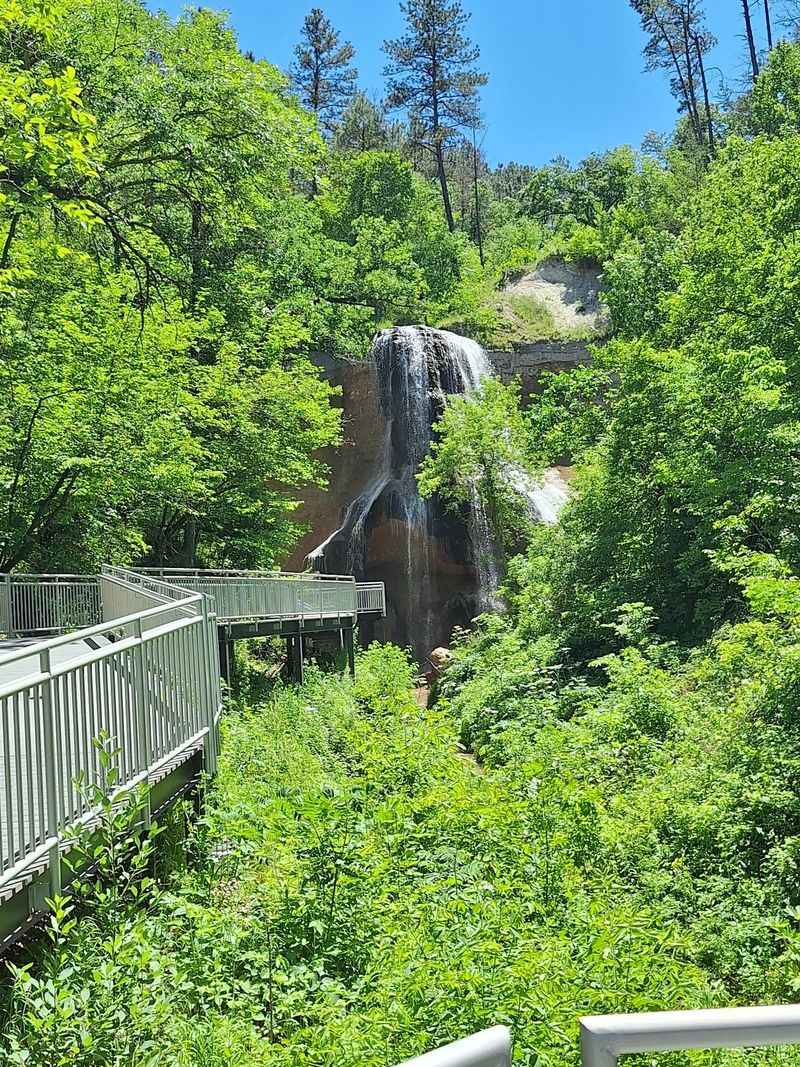
Plenty of Nebraskans don’t realize the park sits on land the state leases. The Krzyzanowski family has been part of this story since 1941.
That year, Fred Krzyzanowski bought the property that held the falls. As more people came to see it, he began adding picnic areas and a campground.
Think of it as an early version of hospitality, ranch style. Folks wanted to see the water, and the family made room for them.
In 1992, Smith Falls officially became a state park through a lease with the Nebraska Game and Parks Commission. The partnership kept access open while bringing in state care.
A new 25-year lease followed in 2018. That’s good news for anyone planning to bring grandkids here someday.
The ranch connection still shows. Cattle graze in the surrounding country, a reminder that this is working land as well as parkland.
I can’t help admiring a family that shared something this special for so long. Plenty of landowners might have simply closed the gate.
Instead, generations of travelers have crossed the river to reach the falls. The family’s choice back in the 1940s still shapes every visit today.
Sixty-Three Feet Of Water Looks Even Taller From The Bottom
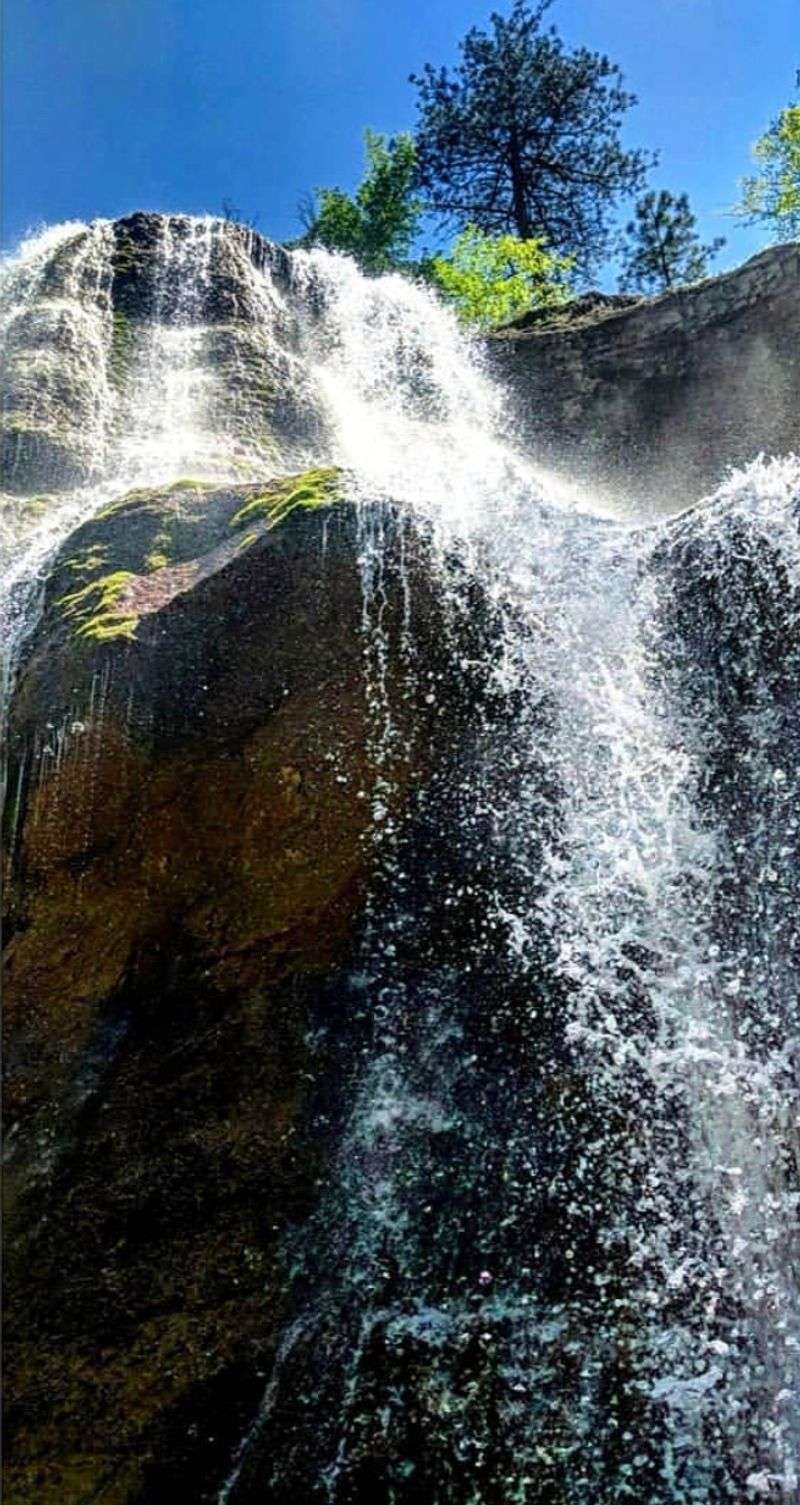
Sixty-three feet doesn’t sound huge until you’re standing at the base looking up. Then it feels like the canyon wall is pouring itself out.
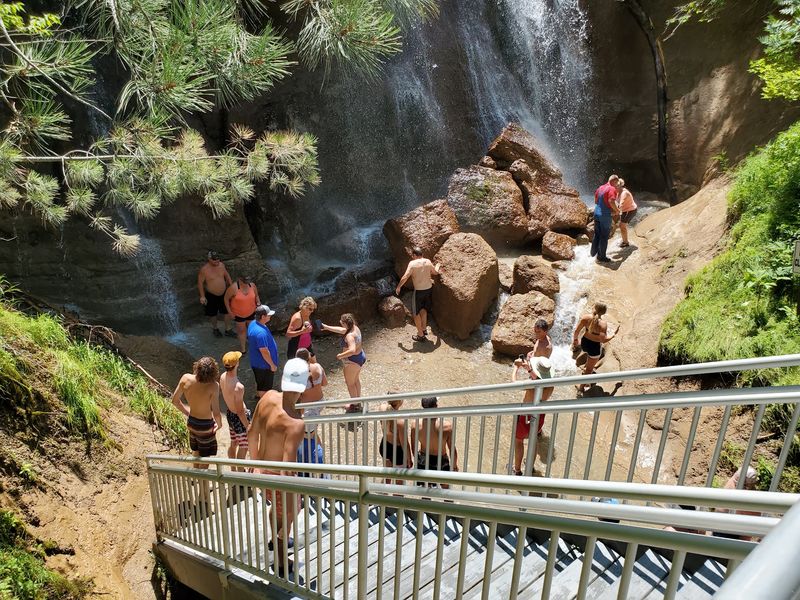
Smith Falls drops about 19 meters into a narrow, shady canyon. The water slides down rock and lands in a shallow pool at the bottom.
Wooden steps lead down near that pool, and a viewing platform sits right beside the falls. You get close enough to feel the cool spray on a warm day.
The shallow water invites a little wading for an even closer look. Shoes off, head tilted back, clouds peeking through the mist overhead.
Let’s be honest, nobody will confuse this with Niagara. Yet in a state known for wide prairie, a 63-foot plunge feels downright dramatic.
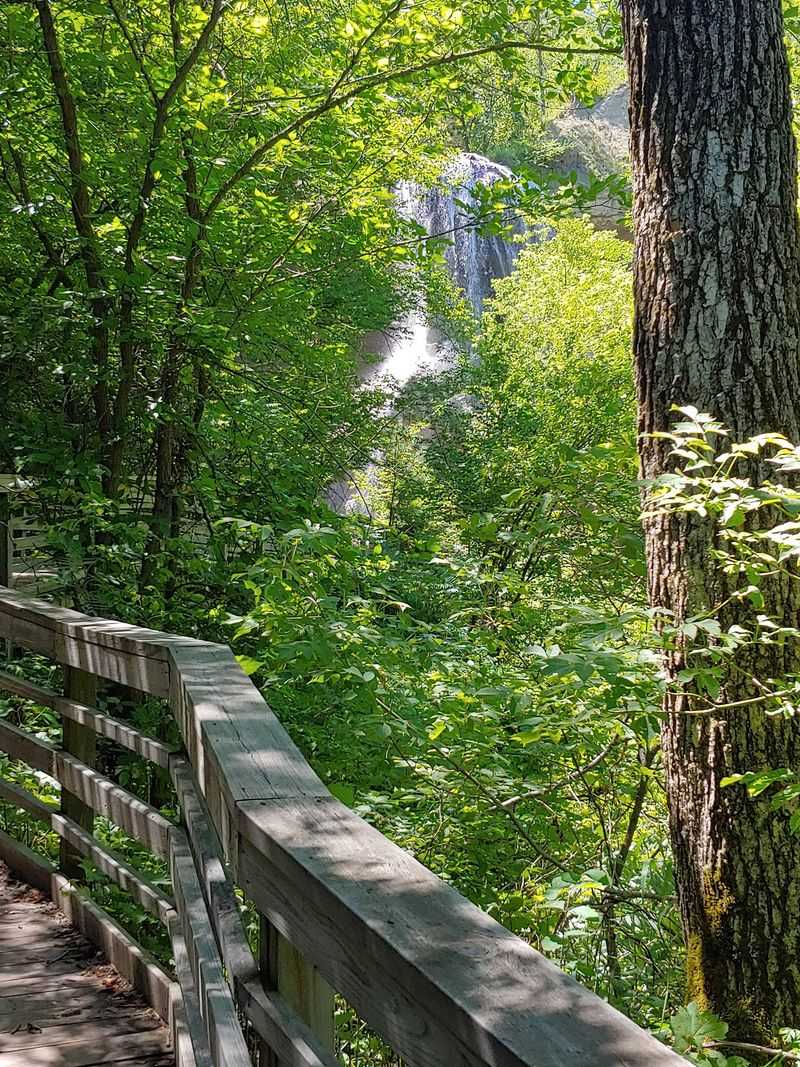
Birch and spruce on the canyon walls frame the water like a picture window. It’s a look you simply don’t expect this deep in the Sandhills.
Photographers will want a few extra minutes here. The shade softens the light, and the falling water gives every shot some motion.
Bring a phone with a decent battery and a little patience. Waiting for a clear moment at the platform pays off with a much better photo.
Ice Age Leftovers Still Grow In This Cool Canyon
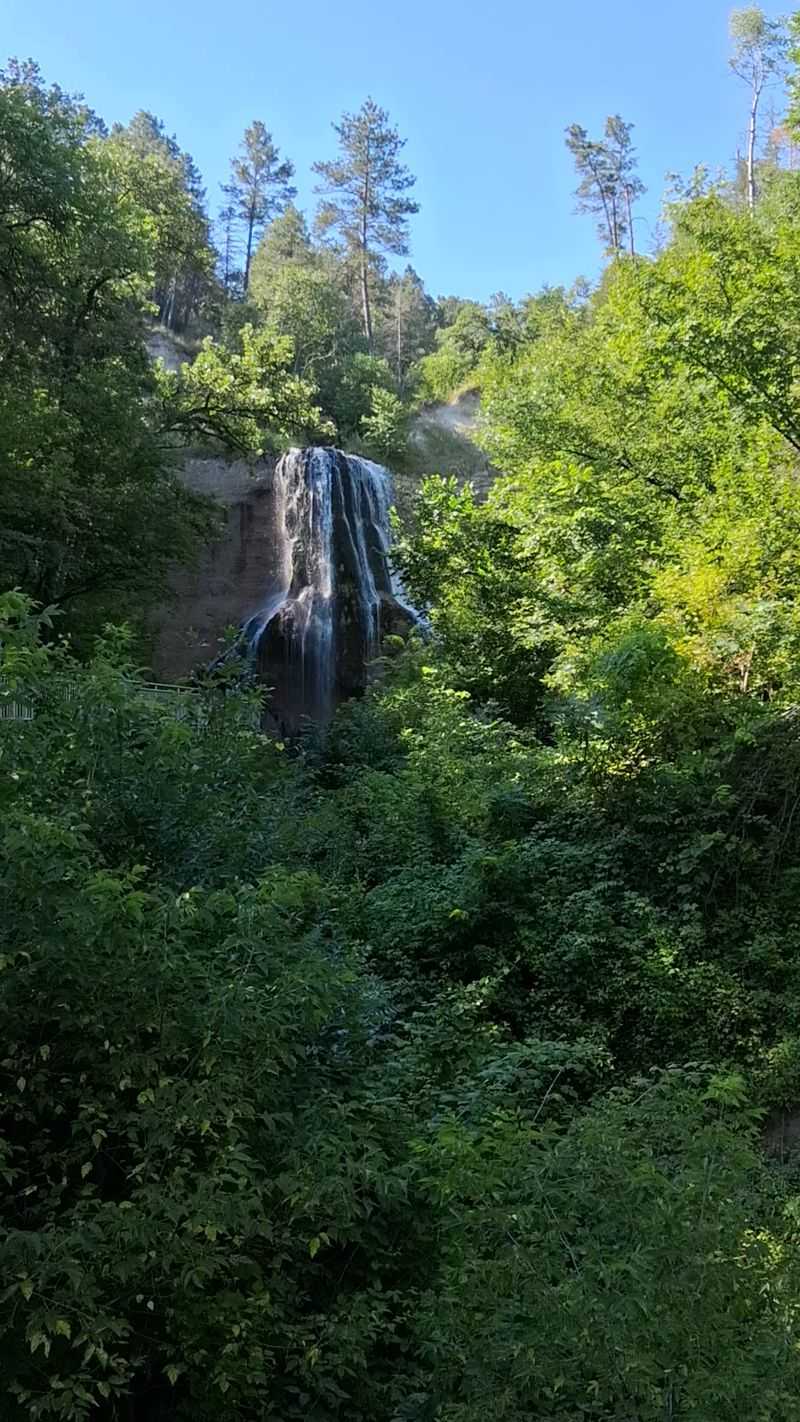
Paper birch in Nebraska? It sounds like a typo, but the canyon around Smith Falls proves otherwise.
The shady walls trap cool, moist air and create their own little microclimate. That pocket of shelter lets plants survive that normally grow much farther north.
Paper birch and spruce both grow here, along with an endemic hybrid aspen. These trees are remnants from the Ice Age, when the climate was much colder.
As the world warmed, most of their relatives retreated north. A few stubborn stands held on in places like this cool, sheltered canyon.
The area is often called a biological crossroads of the Great Plains. Six distinct ecosystems come together along this stretch of the Niobrara.
Eastern forest, northern boreal species, and western pine country all mingle nearby. Add the Sandhills prairie, and you get a mix found almost nowhere else.
I believe that’s the real treat behind the waterfall. The water grabs your eye, but the trees tell a far older story.
Take a moment on the boardwalk to look at the canyon walls. You’re looking at a living time capsule right here in Nebraska.
An Old Iron Bridge Got A Second Life Over The Niobrara
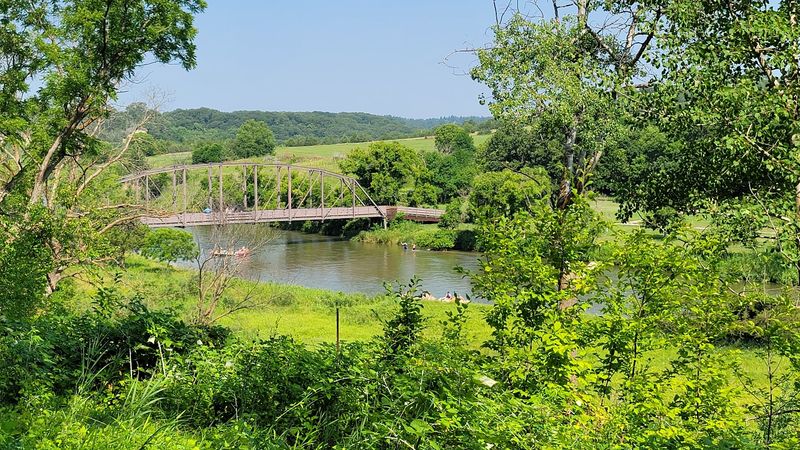
Before you reach the falls, you have to cross the river. Luckily, the crossing comes with its own history lesson.
A historic steel truss footbridge spans the Niobrara here. It once served as the Verdigre bridge, standing somewhere else entirely.
That bridge was dismantled in 1991, which could have been the end of its story. Instead, it was reconfigured and installed at the park in 1996.
Today it stretches about 160 feet across the water as a footbridge. Old iron trusses rise on both sides, giving the walk a sturdy, classic feel.
Repurposed Nebraska structures always win me over, and this one is a favorite. A bridge that once carried traffic now carries families toward a waterfall.
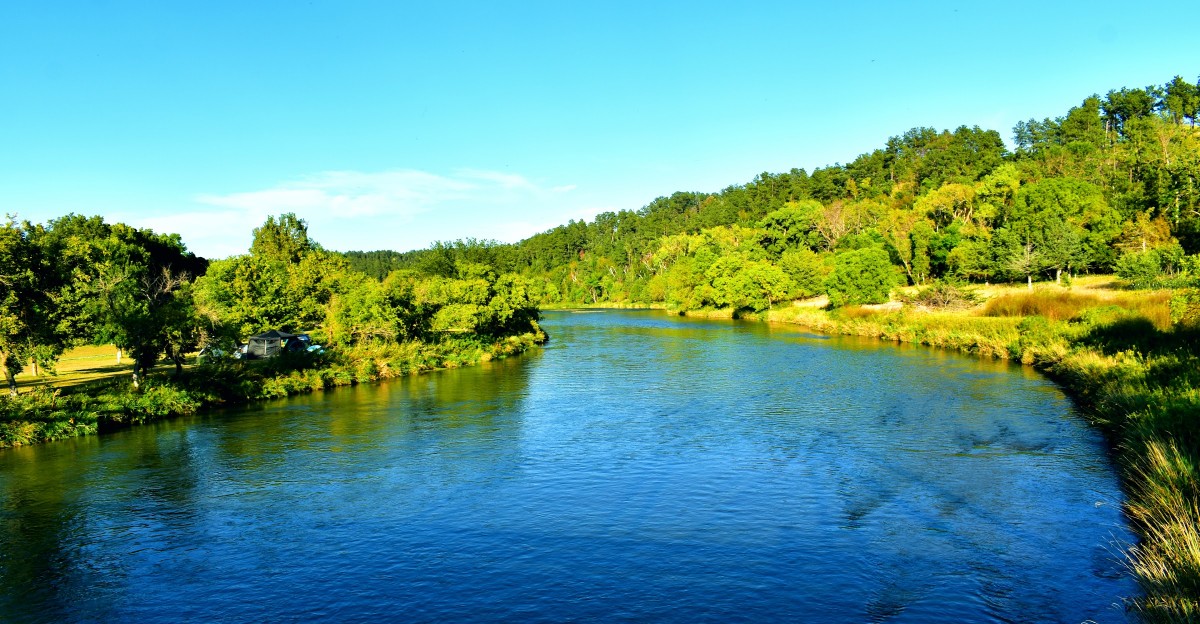
Pause in the middle for a look up and down the river. On summer days, canoes, kayaks, and tubes often drift right underneath.
The view also shows off the wide, sandy character of the Niobrara. It’s a nice contrast to the narrow, shaded canyon waiting on the other side.
Folks from the Verdigre area might enjoy spotting their old bridge in its new home. It’s proof that good iron never really retires.
Wheels, Walkers, And Wobbly Toddlers Can All Reach The Spray
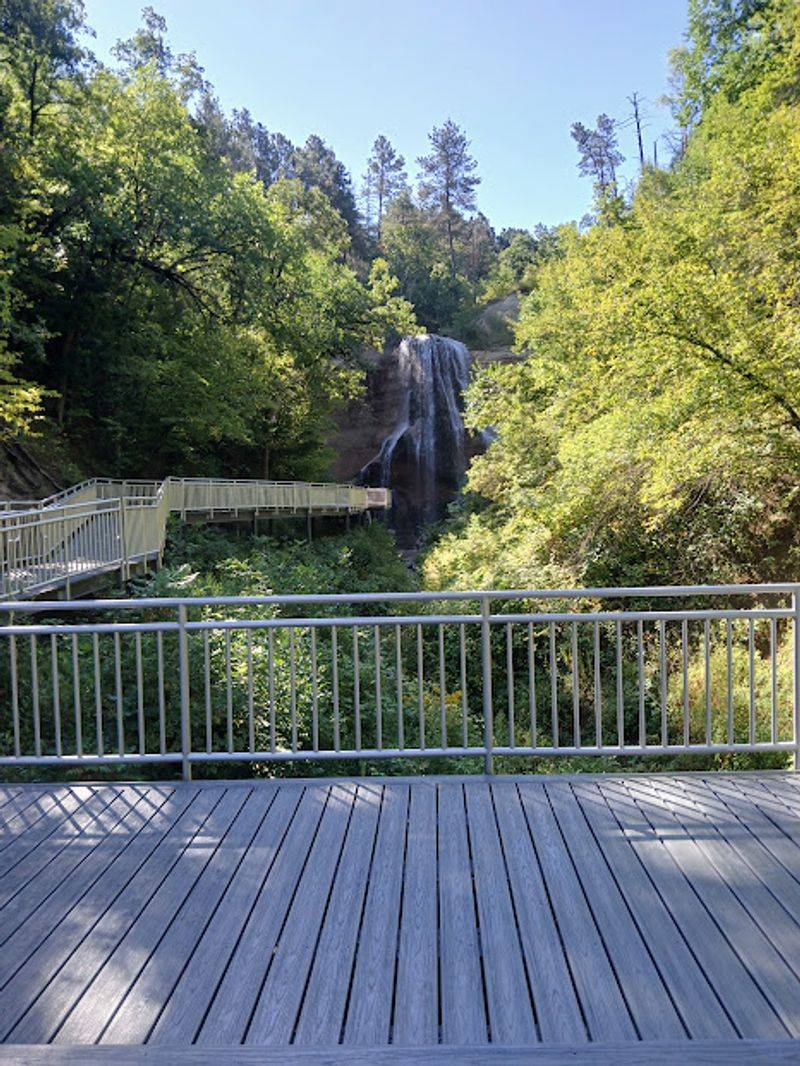
Not long ago, reaching the falls meant dirt paths and a bit of grit. Now the route is open to far more people, and that’s a big deal.
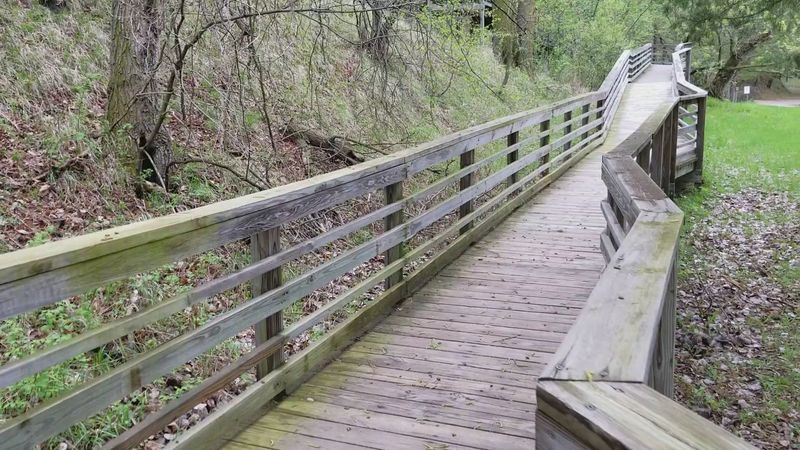
An ADA-accessible walking path was completed in 2023. From the footbridge, an accessible boardwalk and a gentle path lead toward the viewing platform.
The round trip runs roughly a mile, about a half mile each way. Paved and metal walkways cover much of the route, so the footing stays steady.
Here’s a detail I love. The park offers free all-terrain wheelchair rentals, called GRIT chairs, in both adult and child sizes.
Those chairs are available during visitor center hours. They can make the trip possible for someone who might otherwise wait back at the car.
Grandparents, little kids, and anyone with sore knees can share the same view. A waterfall feels better when the whole family gets to see it together.
On hot days, pace yourself and bring plenty of water. Shade helps in the canyon, but the open stretches near the river can still feel warm.
Take it slow and enjoy the walk itself. The falls are not going anywhere.
The River Below Might Steal The Show On A Summer Afternoon
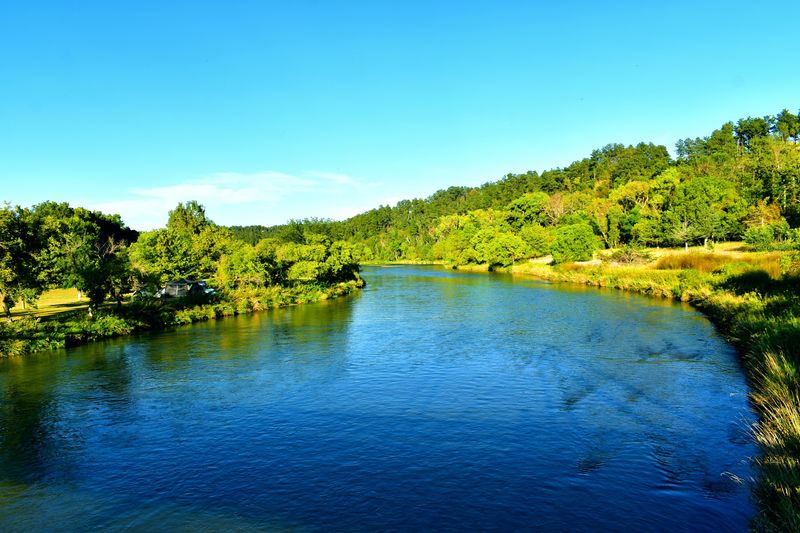
Plenty of people meet Smith Falls from the seat of a tube or a canoe. The Niobrara River makes the park a natural stopping point.
This stretch belongs to the Niobrara National Scenic River, designated in 1991. The protected section covers 76 miles of the river.
The Niobrara is known for clean water, lots of wildlife, and sandstone cliffs packed with fossils. It’s a river with more personality than most.
Canoeing, kayaking, tubing, and floating are the big draws here. Several outfitters nearby rent equipment and run shuttles for paddlers.
The park often serves as a handy take-out spot for river trips. That means you can float, climb out, and stroll to the falls.
River levels can change from year to year, so check conditions before you go. Shallow spots may mean a little scraping across the rocks.
Fishing along the riverbanks is another option for a slower afternoon. Bring your patience along with your bait.
I can’t imagine a better Nebraska summer combo than a lazy float and a waterfall stop. Cool water above, cool canyon spray at the end.
Sunscreen is a must for the open river. So is a dry bag for your phone.
Trails Wander Beyond The Main Attraction
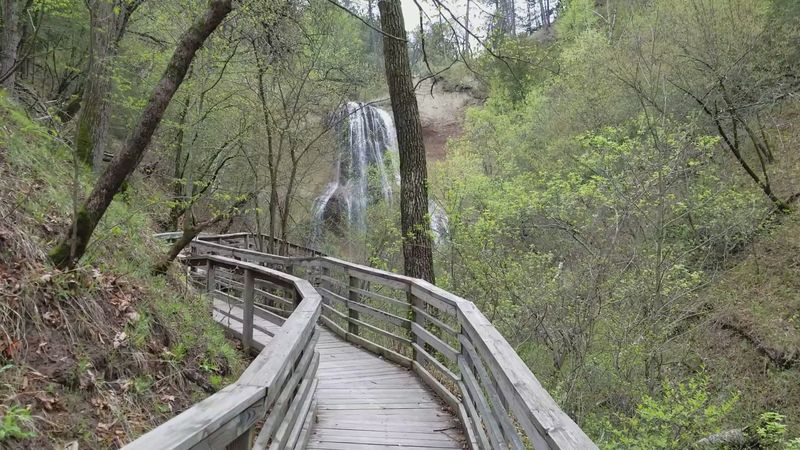
Once you’ve seen the falls, the park still has more ground to cover. Several trails branch out through the river valley.
The Jim MacAllister Nature Trail is one of the best known. It gives you a closer look at the plants and habitat around the park.
Other paths include the Niobrara River Overlook Trail and the Falls Access Loop. The River Valley Connector rounds out the options with its own views.
Lengths vary, so you can pick a short stroll or a longer wander. Most hikes here feel peaceful and family-friendly rather than grueling.
Keep an eye out while you walk. White-tailed deer and plenty of birds live in this valley.
Bird watching is a real bonus, thanks to all those overlapping ecosystems. Eastern and western species can both turn up in the same area.
Binoculars earn their spot in the bag. So does a small field guide if you like naming what you see.
The overlook views also show the river’s wide curves from above. It’s a nice change after staring up at the falls.
Wear comfortable shoes and pack water, even for a short loop. Sandhills weather can turn warm quickly.
Pitch A Tent Within Earshot Of The Niobrara
A day trip works fine, but staying overnight lets the river set your schedule. Smith Falls State Park offers basic campsites for tent camping.
The campground sits along the north side of the Niobrara River. From there, it’s an easy walk across the bridge to the falls.
Picnic tables, restrooms, and pay showers cover the essentials. Concessions sell firewood, ice, snacks, and beverages.
Reservations can be made online or by phone. Booking ahead makes sense in summer, when river season brings in the most campers.
Sites can feel close together during the busy months. Quieter seasons give you more elbow room and a calmer evening.
Not camping? The park also has numerous picnic sites and a reservable picnic pavilion.
That pavilion could be a handy spot for a family reunion or a group outing. Pack sandwiches, claim some shade, and let the kids burn off energy.
A campfire, a picnic table, and a river nearby make for a simple evening. Sometimes simple is exactly the point.
Just remember the basics of camping in the Sandhills. Bring bug spray, extra water, and layers for cooler nights.
Plan Ahead Before You Point The Car North
A little planning makes this trip much smoother. The park address is 90165 Smith Falls Rd, Valentine, NE 69201.
Smith Falls State Park sits about 12 miles east-northeast of Valentine. You’ll reach it by heading toward Sparks and turning onto Smith Falls Road.
A park entry permit is required for vehicles. Sort that out before you arrive so you’re covered.
The park stays open year-round. The visitor center runs from early May through the end of September, open Wednesday through Sunday.
Inside, you’ll find maps, park information, and history displays. Photographs and a fossil display add some fun context before the walk.
Stop there first if you can. Grabbing a map helps you choose a trail, and the GRIT chairs are available during center hours too.
Summer weekends bring the most traffic, especially with river floaters. An earlier start can mean a calmer walk to the falls.
Cell service may be patchy in parts of the Sandhills. Download maps before you leave town.
Spring and fall offer cooler hiking weather and fewer crowds. Summer is the season for floating and splashing in the shallow pool.
Nebraska’s Tallest Waterfall Earns Every Mile Of The Drive
Sixty-three feet of falling water won’t break any world records. In Nebraska, though, it’s a genuine showstopper worth the trip.
Smith Falls packs a surprising amount into one stop. There’s an Ice Age canyon, a rescued iron bridge, and a scenic river all together.
Families will like the easy, accessible path. River lovers get a perfect break between paddles, and history buffs get two names and a homestead story.
Campers can stretch the visit into a full weekend. Day trippers can still see the highlights in a single afternoon.
I like how the place rewards curiosity without demanding much effort. A short walk delivers a view most Nebraskans never expect to find at home.
The ranch family behind the land deserves some credit too. Their decades of sharing turned a private waterfall into a public favorite.
Pack water, sunscreen, and maybe a pair of sandals for wading. Leave room in the day for the trails and a slow walk across the bridge.
Then stand at the bottom of Smith Falls and look up. Cool spray, green walls, and a little Sandhills magic, all in one shady canyon.