This Nebraska Art Store Sells Donated Craft Supplies, So Every Visit Turns Into A Treasure Hunt
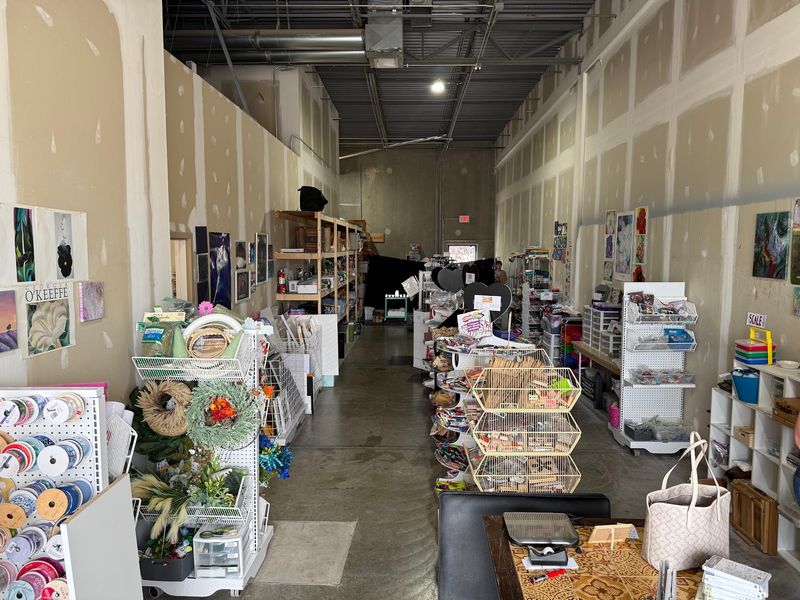
The storefront barely stands out, just a modest suite on an ordinary Nebraska street that most drivers pass without a glance. Step inside, though, and the room is packed with yarn, rubber stamps, fabric, paper, and stacks of little wooden boxes, all given away by people who no longer needed them.
Nothing on the racks stays the same from one week to the next, so a quick stop for a single roll of ribbon can turn into an hour of happy digging. For anyone who loves making things on a tight budget, it may be the most fun shopping trip in the state.
A Creative Reuse Shop on Lincoln’s Hill Street
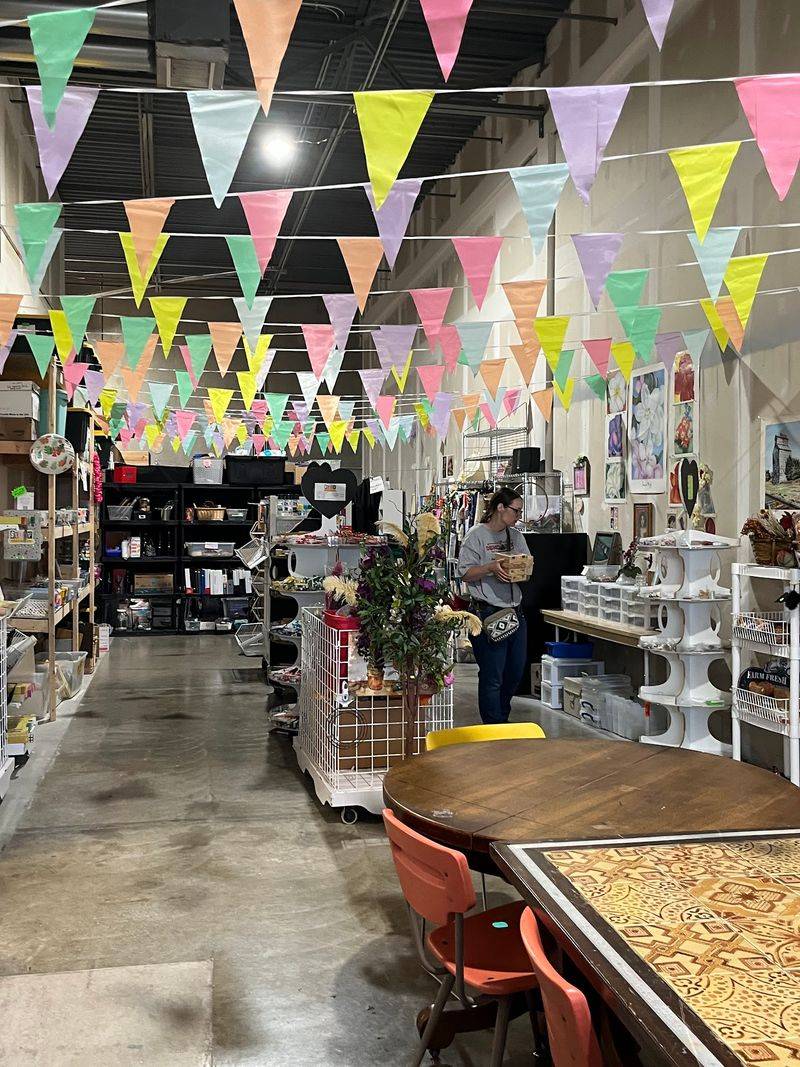
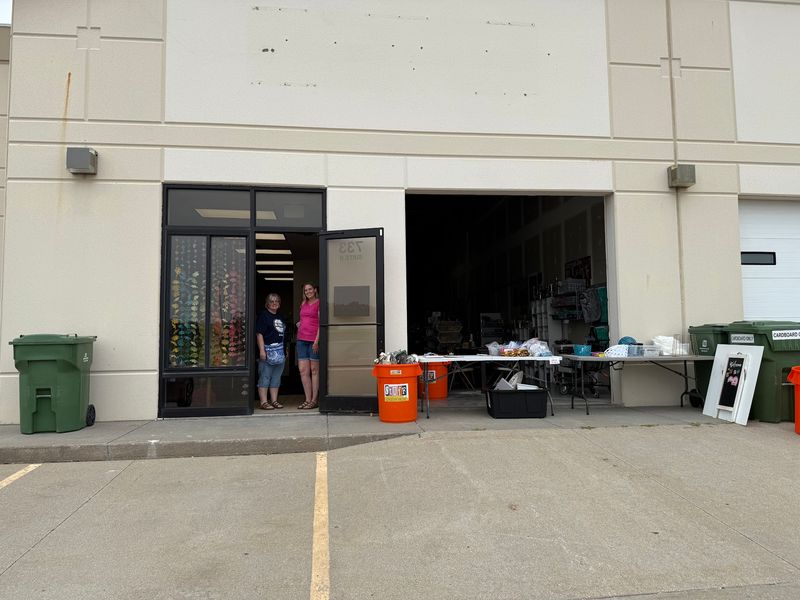
Picture a modest storefront on Hill Street in Lincoln, the kind of spot that is easy to drive past on the way somewhere else. Behind the door sits STUFF, a creative reuse store run as a nonprofit organization.
Its entire inventory comes from donated art and craft supplies that people no longer need.
So what does creative reuse mean in everyday terms? Leftover yarn, spare canvases, half-finished kits, and bins of beads get a second chance instead of a ride to the landfill.
Everything lands on organized racks at prices low enough that almost anyone can afford to start a project.
Stores built on this model are uncommon, and before STUFF opened, many Nebraska crafters had to cross state lines to find one. Now Omaha sits within an easy drive, which turns a trip here into a simple afternoon outing for people all over the eastern part of the state.
From the curb, it looks ordinary. From the inside, it feels more like a giant craft closet that someone finally sorted, labeled, and opened to the public, with a small price tag stuck on nearly everything.
Two Founders and a Landfill Problem
Every craft room eventually hits the same wall. Projects end, hobbies change, and the extra paint, paper, and fabric pile up with nowhere useful to go.
Kiley and Kashoan Ward saw that pile as an opportunity. The pair founded STUFF with a clear goal: keep usable art and craft materials out of the trash and put them into the hands of people who will use them.
Their nonprofit treats pre-owned supplies as valuable rather than disposable, and the whole business model rests on that idea.
Why does it matter so much? A single skein of yarn or a tube of acrylic paint seems small, but multiply that by every basement and closet in a city the size of Lincoln and the numbers add up quickly.
Giving those items a second home cuts waste and lowers the cost of creativity at the same time.
A board of directors helps steer the organization, and the energy behind it shows in the details. Materials are sorted with care, displays stay tidy, and the founders are often right there on the floor, chatting about projects and pointing shoppers toward the right bin.
From Donation Bin to Sales Floor
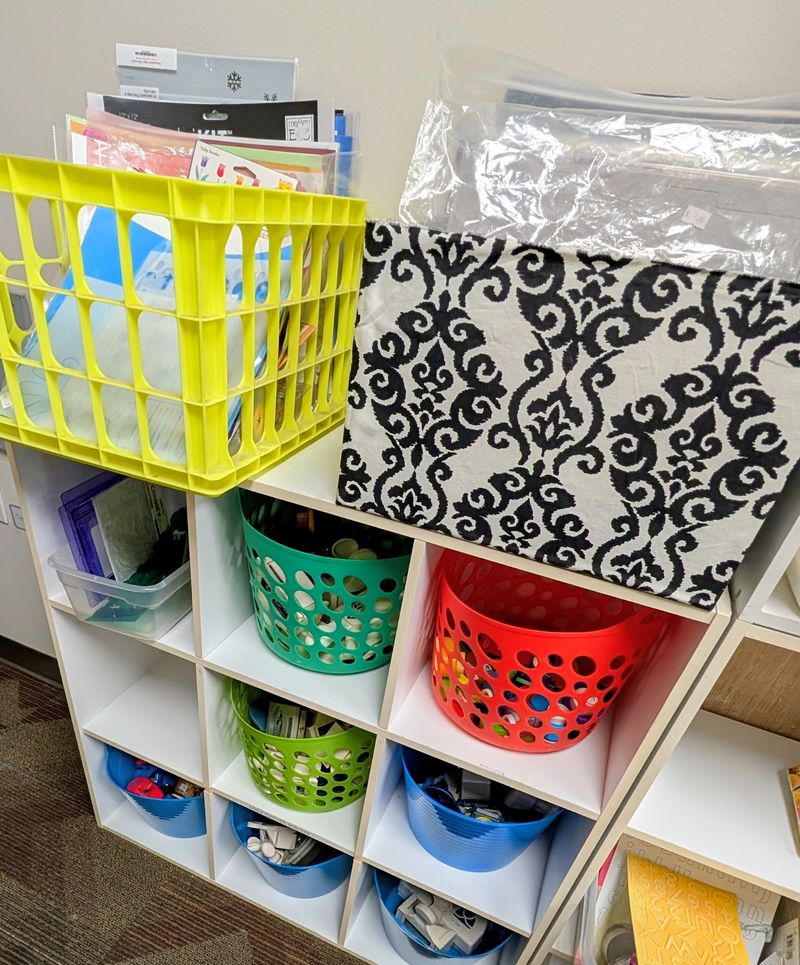
Cardboard boxes arrive filled with just about anything. One might hold embroidery floss and quilting fabric, while the next could contain old magazines, puzzles, and a handful of vinyl records.
The shop accepts clean, gently used craft supplies in a wide range. Yarn, large pieces of fabric, canvases, and paints are welcome, along with more specialized gear like quilling tools and embroidery kits.
Magazines, CDs, DVDs, and records also find a place, since collage artists and upcyclers can turn them into something new.
Once donations come through the door, they get sorted and priced before heading out to the floor. That step is what keeps the room from feeling like a jumble sale.
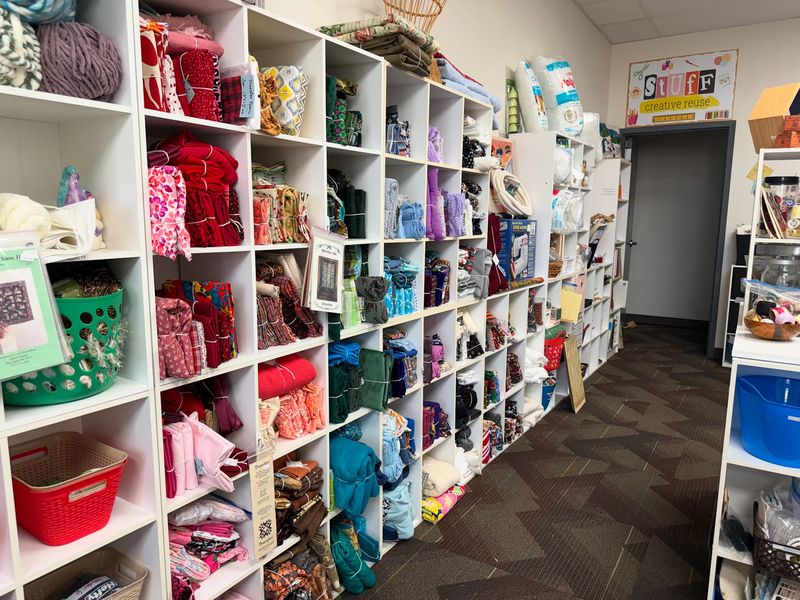
Paper goods sit with paper goods, fibers stay near fibers, and small odds and ends land in their own labeled containers.
Here is the part that surprises first-timers: donating feels just as satisfying as shopping. Anyone clearing out a craft room finally has a place to take those supplies, knowing they will be appreciated by another maker.
More than a few drop-off trips end with the donor leaving carrying a fresh bag of finds.
The Famous Wall of Bargain Yarn
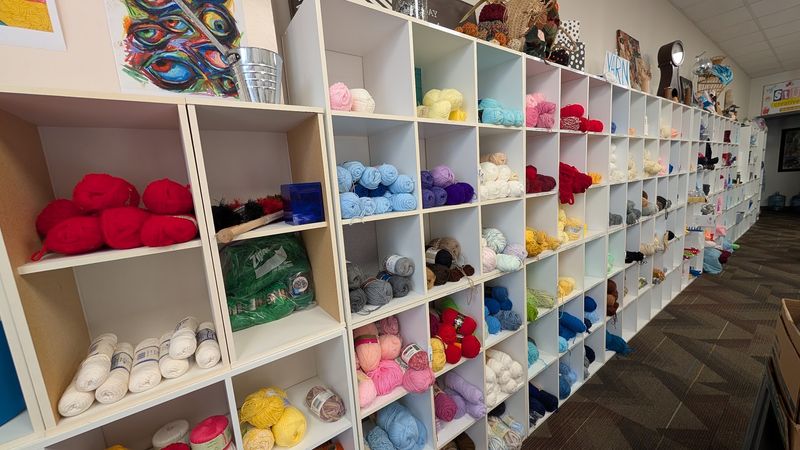
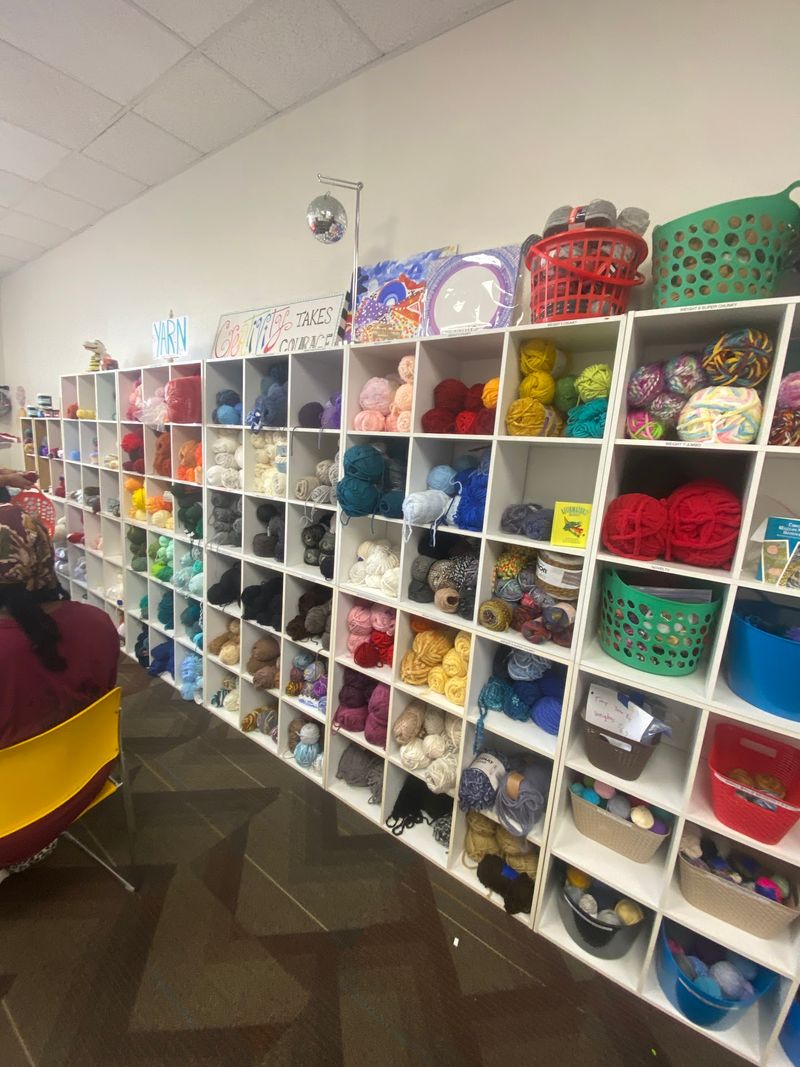
Color hits first. Rows of cubbies stretch up the wall, stuffed with skeins in every shade from pale oatmeal to electric lime, each one priced so low it barely registers at checkout.
Knitters and crocheters tend to lose track of time here. Some balls are nearly full, others are partial, and the mix of fiber weights and brands changes constantly depending on what came in that week.
A person hunting for one specific color might leave with enough odd skeins to make a scrappy blanket instead.
Is there a better way to try a new stitch without worrying about wasting good material? Low-cost yarn takes the pressure off practice projects, which makes this spot ideal for beginners learning the basics.
Seasoned makers use it to stock up on filler colors for amigurumi, granny squares, and pom-poms.
Pony beads, thread, and fabric sit close by, so fiber artists can build an entire project from one corner of the room. Every one of those skeins would otherwise have stayed buried in a closet or tossed out, and now it gets a fresh chance to become a hat, scarf, or stuffed animal.
Rubber Stamps, Stickers, and Paper Goods
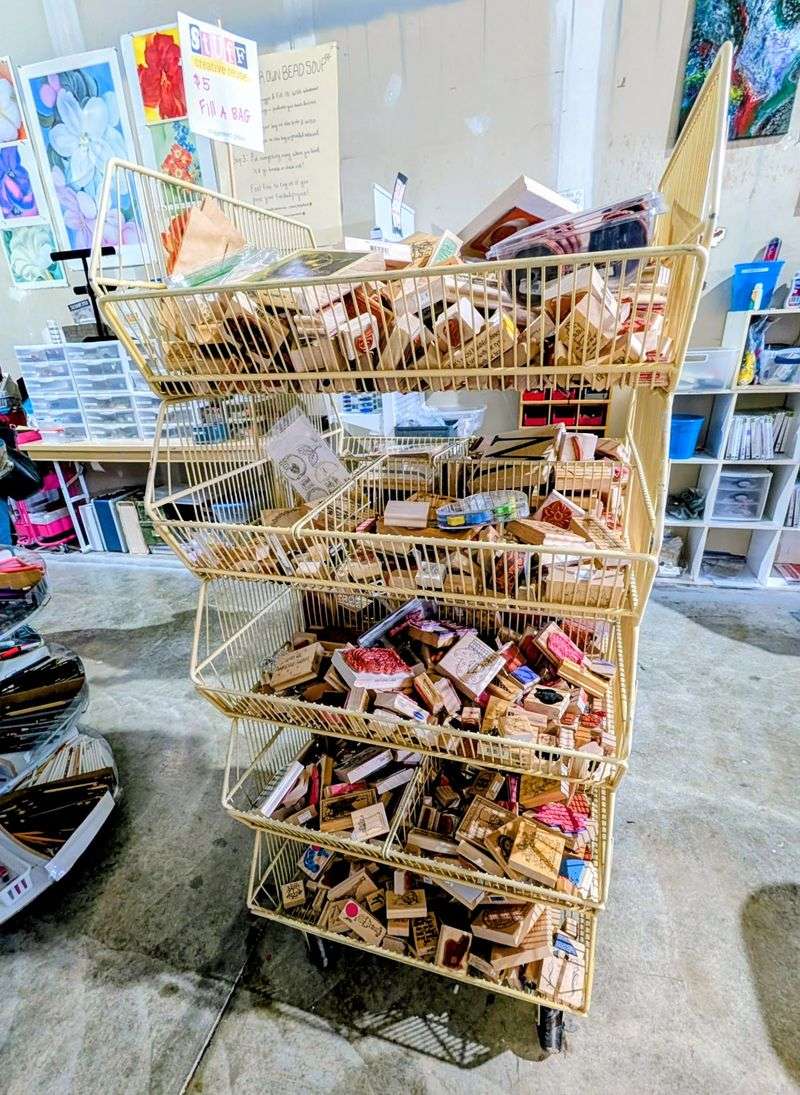
Card makers, listen up. Rubber stamps fill bins here in staggering numbers, covering every holiday and occasion imaginable, from birthday balloons to snowflakes to tiny pumpkins.
The store sometimes runs a fill-a-bag deal on stamps, where a single low price covers as many as can be crammed into one bag. Hand-picking through the piles becomes a game of its own.
It is easy to arrive for stamps and walk out with supplies for four other projects.
Paper lovers get plenty to sift through too. Postcards, sticker sheets, patterned paper, and stacks of magazines sit ready for journaling, scrapbooking, and collage work.
Brand-new coloring books appear on the shelves as well, alongside unused sketchbooks when the right donation lands.
Why do these items vanish so quickly? Paper crafts reward variety, and variety is the one thing a donation-based shop always has.
A junk journal needs a little bit of everything, and one browse through these racks delivers ephemera, textures, and vintage images that no big-box craft chain carries. Anyone into stamping or zine-making should plan on a slow, careful lap through this section before heading anywhere else.
Cigar Boxes, Puzzles, and Wonderful Oddballs
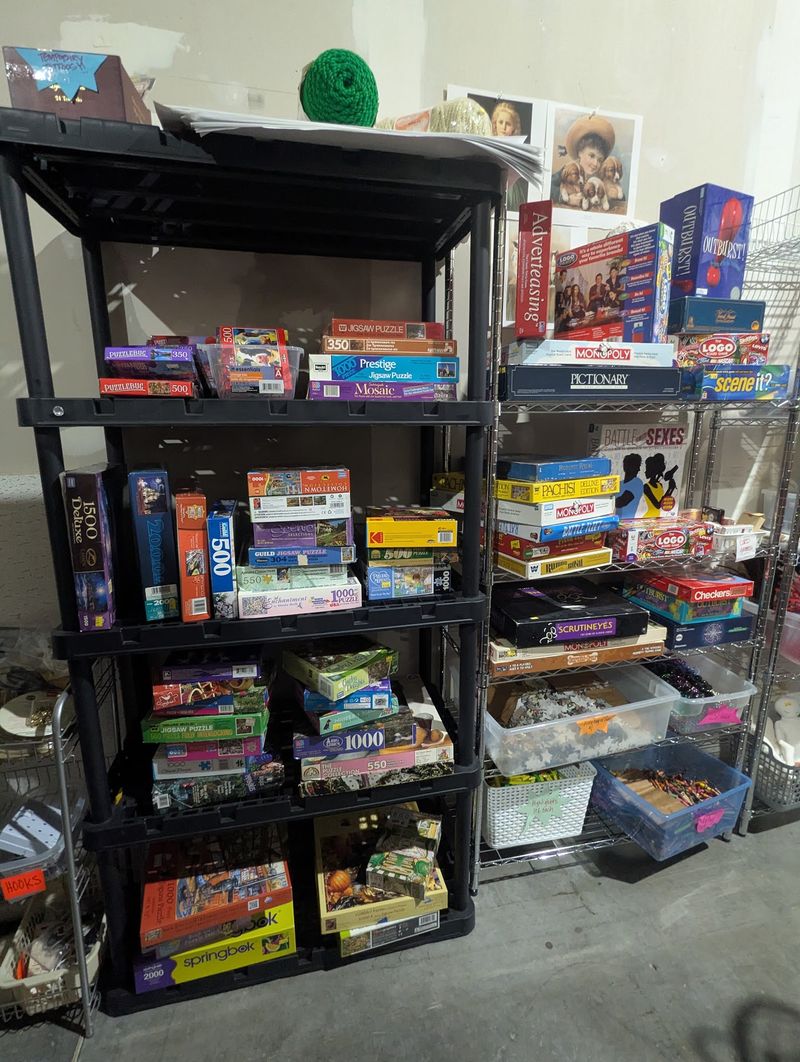
Nobody walks in expecting a small mountain of cigar boxes. Yet there they are, stacked high and waiting to become jewelry holders, shadow boxes, or tidy storage for loose paintbrushes.
Those wooden boxes are only the start of the oddball inventory. Secondhand jigsaw puzzles fill another shelf, and Cricut supplies show up for anyone who cuts vinyl or cardstock at home.
Old art books turn up too, including vintage animal illustration titles that are fun to page through even without a project in mind.
Quirky finds like these make the store different from a typical craft outlet. A regular retailer stocks what sells in bulk, but a reuse shop stocks whatever the community happened to have lying around.
The result is a mix that swings from practical to delightfully strange.
Think of it this way: a puzzle with a vintage image could be framed, a stack of old CDs could become a mosaic, and a cigar box might end up as a tiny diorama. Half the fun lies in figuring out what an object could be instead of what it was.
Creative minds thrive on that kind of open-ended material.
Why No Two Trips Look the Same
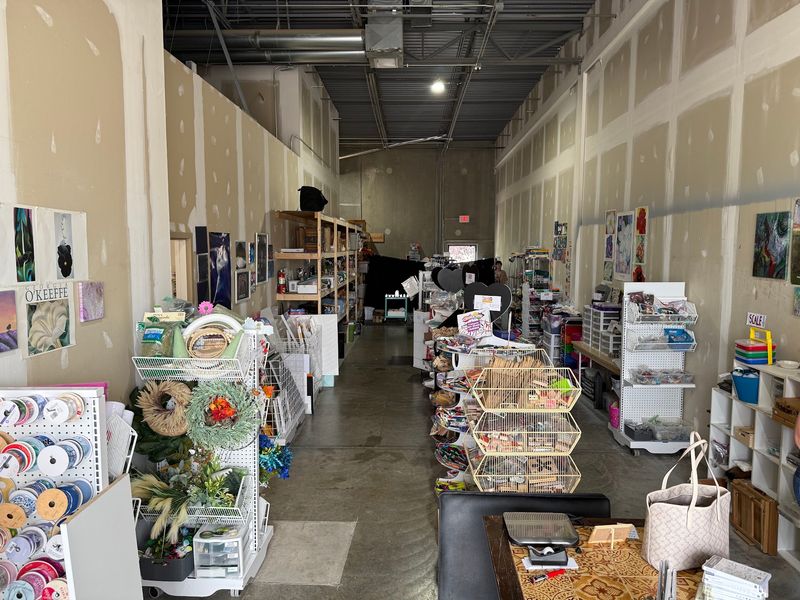
Last week, the front table might have held a pile of embroidery floss. This week, it could be fabric remnants, vintage pencils, or a box of watercolor pans that someone never opened.
Because every item arrives as a donation, the stock shifts constantly. There is no warehouse restocking the same product on a schedule.
What sits on the racks today reflects whatever came through the door in recent days, and once something sells, it may never appear again.
That unpredictability is the reason each visit feels like a treasure hunt. Turn around, and something new catches the eye.
It is common to discover a need for an item only after spotting it, which explains why so many quick trips stretch past an hour.
Here is a practical tip for serious browsers: go often and go with an open mind. Arriving with a rigid list can lead to frustration, but arriving curious nearly always pays off.
Regular stops also mean catching fresh donations before they disappear. Some of the most satisfying finds come from bins that look ordinary at first glance, so digging a little deeper is always part of the routine.
Prices That Make Crafting Possible for Everyone
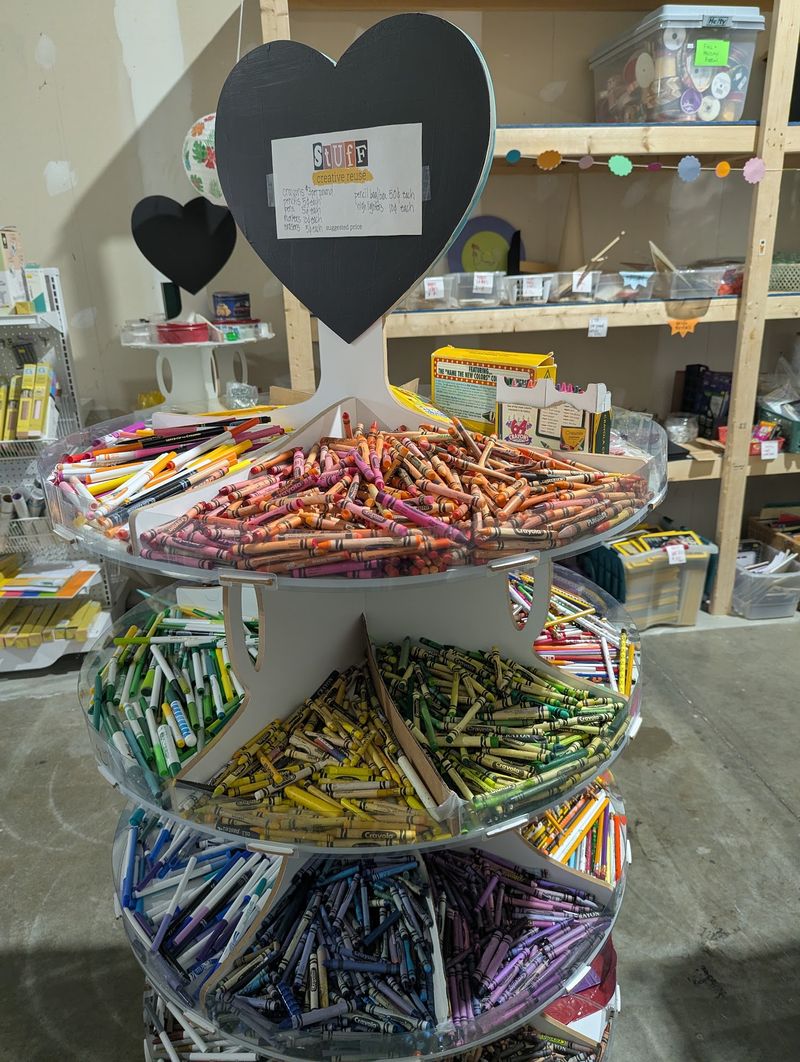
Anyone who has priced out a new hobby at a chain store knows the sticker shock. A basic starter set of paints, brushes, and canvases can cost more than a nice dinner out.
STUFF flips that math. Prices stay remarkably low across the board, which means a full bag of supplies often costs less than a single kit elsewhere.
The low cost opens the door for people who might otherwise talk themselves out of trying something new, whether that is quilting, card making, or painting.
What does that look like in real life? A family can gather enough materials for a weekend of kids’ art projects without worrying about the budget.
A college student can experiment with a new medium, and a retiree can pick up a forgotten hobby without buying everything brand new.
At the grand opening, some items even carried a name-your-price option, a playful touch that matched the mission. Whether or not that returns, the pricing philosophy stays clear.
Creativity should not depend on how much money is in someone’s wallet, and quality secondhand goods make that goal reachable for nearly anyone who walks in the door.
Craft Clubs, Socials, and Private Shopping Nights
A long table, a handful of strangers, and a pile of shared supplies. That simple setup describes the monthly craft clubs, where makers gather to work on projects side by side.
Events are a big part of the store’s personality. Along with the clubs, STUFF hosts a steady lineup of social gatherings designed to connect artists and hobbyists across skill levels.
Beginners pick up tips from experienced crafters, and longtime makers find new friends who share their obsessions.
Private shopping nights add another option. Groups can book exclusive access to the entire store, browsing at their own pace without a crowd.
It is an easy fit for a birthday outing, a scout troop activity, or a night out with a few crafty friends who like to take their time.
Community sits at the center of it all. Buying supplies here helps keep materials out of the trash, but it also builds connections between people from different walks of life.
Plenty of shoppers come for yarn and stay for the company, which turns a simple store into something closer to a creative clubhouse for Lincoln.
Warm Faces Behind the Counter
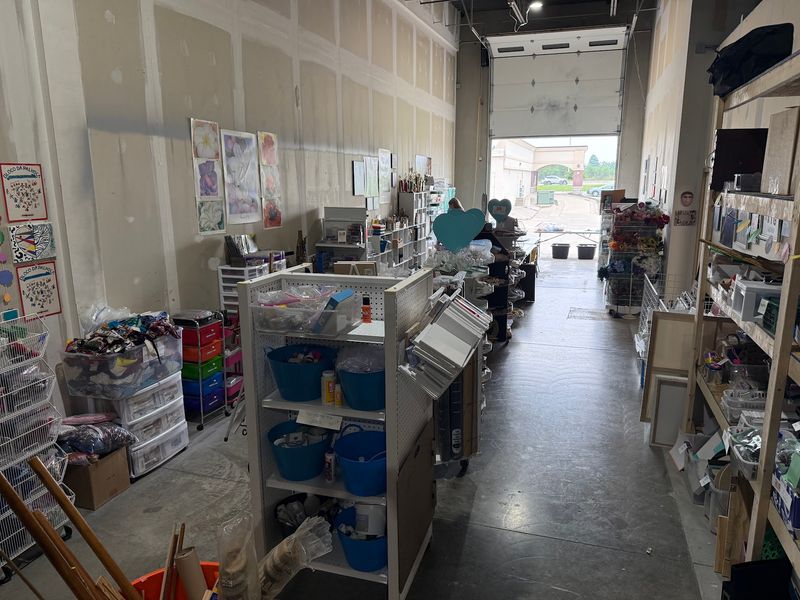
Walk in and someone will probably say hello within seconds. The greeting is not scripted or salesy, just friendly, and it sets the tone for everything that follows.
Staff and owners here are excited about crafting and eager to help. Ask where to find embroidery hoops or whether any watercolor paper came in, and the answer usually comes with a suggestion or two.
Kashoan, one of the founders, is often on hand, and that personal touch is a big reason people keep returning.
Good vibes matter more than most shoppers realize. A room full of secondhand supplies could easily feel chaotic or intimidating, but the relaxed atmosphere makes browsing feel like visiting a friend’s studio.
Nobody rushes anyone out, and questions never seem like an interruption.
There is also a sense that everyone involved believes in the work. The mission of reducing waste and widening access to art comes through in conversations at the register.
It is hard to leave without feeling a little more inspired than when you arrived, and maybe with a new idea for what to make with that odd little jar of buttons tucked into your bag.
Who Should Put This Nebraska Shop on Their List
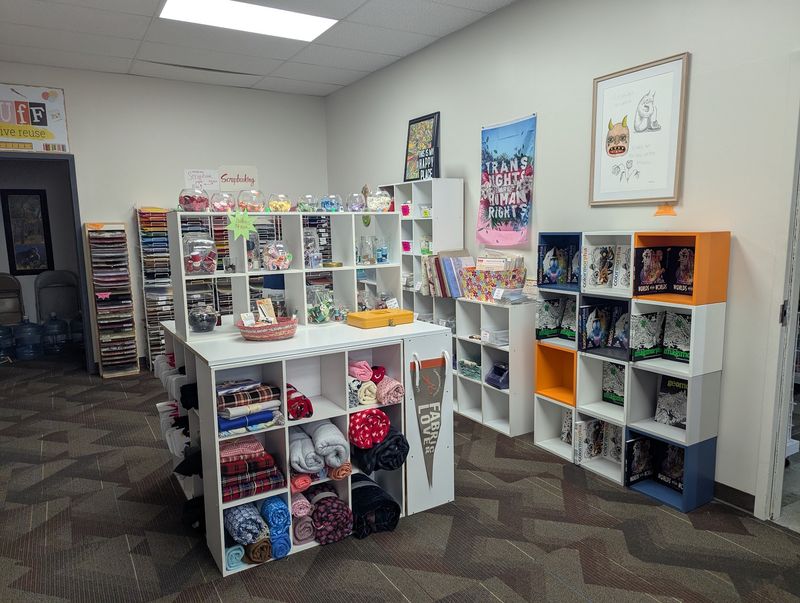
Teachers might be the biggest winners. Classroom budgets rarely stretch far, and a place stocked with low-cost paper, markers, and odds and ends can keep a whole semester of art lessons going.
Parents come next. Kids burn through craft supplies at an astonishing rate, and buying new every time adds up fast.
Here, a stack of coloring books, stickers, and pom-poms costs very little, so a rainy afternoon project never has to feel like a splurge.
Artists and hobbyists of every stripe fit right in, too. Painters, knitters, collage makers, card crafters, and scrapbookers all find something aimed at them.
Complete beginners benefit just as much, since trying a new craft with inexpensive materials removes the fear of wasting money.
Day-trippers from Omaha and other parts of eastern Nebraska should take note as well. Pairing a stop here with lunch in Lincoln makes for a satisfying half-day outing.
Sustainability fans will appreciate the reuse mission, and anyone quietly drowning in their own craft stash has an easy excuse to drop off donations while shopping. In short, curious people of nearly any age will feel at home.
Planning Your Visit: Timing, Bags, and Drop-Offs
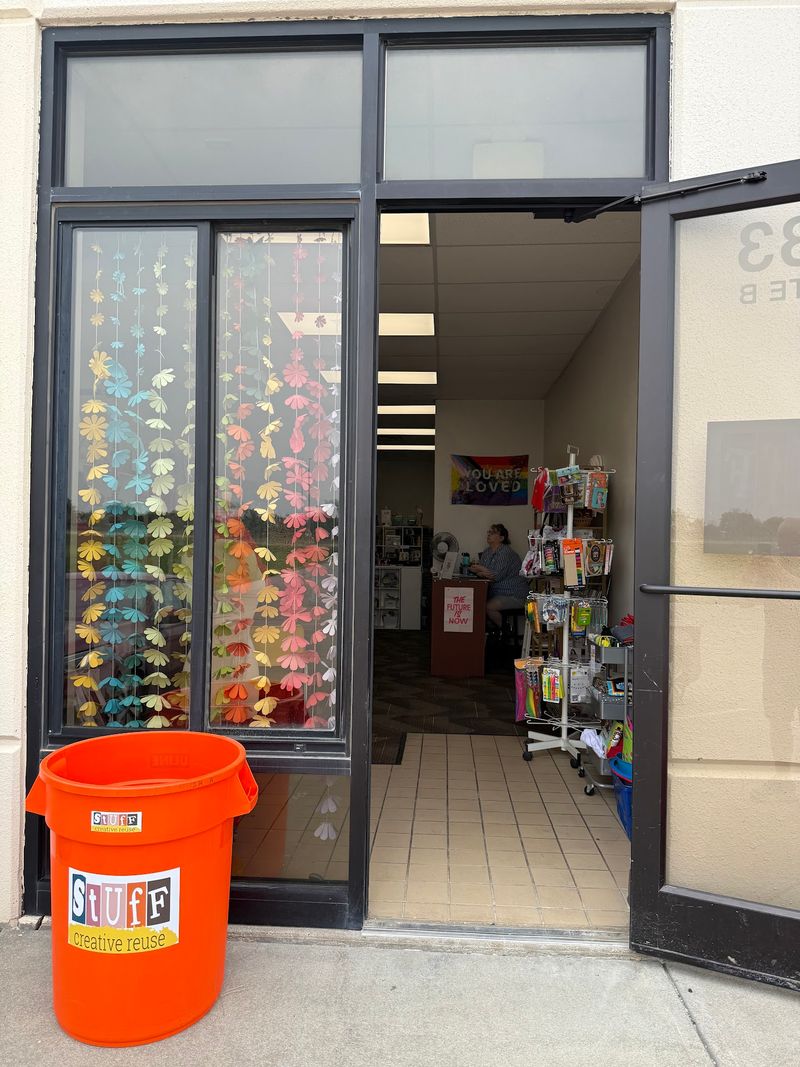
Timing takes a little planning, since this is not an all-day, every-day kind of store. STUFF opens for afternoon and early evening hours during the second half of the week, then shifts to late-morning through mid-afternoon hours on weekends.
It stays closed for a couple of days early in the week, so a Monday drive to Lincoln will end at a locked door. Checking the store’s current schedule before heading out is the smart move, especially for anyone traveling from Omaha or farther away.
Bring a reusable bag. The store encourages shoppers to carry their own totes, which fits the low-waste mission and makes hauling home a pile of finds much easier.
A larger bag is wise if a fill-a-bag promotion happens to be running.
Donors should pack supplies clean and gently used. Yarn, fabric, canvases, paint, stamps, puzzles, magazines, and craft kits all make good candidates.
Set aside extra time, too, because browsing can easily fill more than an hour. The address is 733 Hill Street, Suite B, in Lincoln, and parking the car is the easy part of the trip.
Why Lincoln Is Lucky to Have It
Some places feel like they should have existed all along. STUFF is one of them, filling a gap that crafters, teachers, and tidy-minded donors across Lincoln never quite knew how to solve.
The formula is simple. Unwanted supplies come in, get sorted with care, and go back out at prices almost anyone can manage.
Along the way, materials skip the landfill, new hobbies get a cheap start, and people who love making things find each other at club nights and events.
Could a regular craft chain ever compete with that? Not on surprise.
Big stores sell the same products in every aisle, while this shop offers a different mix each time the door swings open. That constant change is the draw, and it keeps the experience fresh month after month.
For Nebraskans who enjoy a good hunt, a small budget, and a friendly room full of possibilities, a stop on Hill Street makes a lot of sense. Come with an empty bag, a flexible plan, and maybe a box of your own leftovers to donate.
Chances are good you will leave with a project already forming in your head.