10 Of New Mexico’s Oldest Adobe Buildings Hold Centuries Of Stories Behind Their Walls
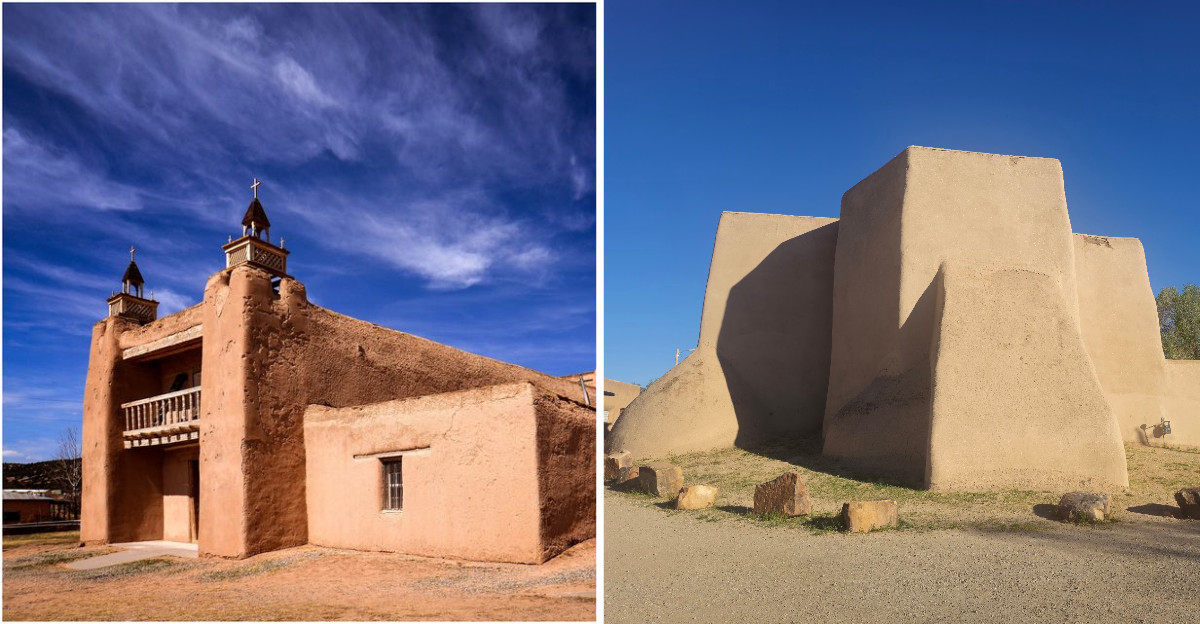
Touch an adobe wall and history suddenly feels less abstract.
Mud, straw, timber, and sun created buildings in New Mexico that have survived centuries of weather, conflict, worship, trade, and everyday life. That is remarkable when you really think about it.
Some began as chapels. Others became homes, trading places, civic buildings, or landmarks tied to stories that grew far beyond their walls.
The architecture may look simple from a distance, but simplicity is deceptive here.
Every thick wall and exposed beam carries evidence of adaptation and endurance.
These buildings did not merely witness history. They somehow managed to stay standing through it.
1. San Miguel Chapel, Santa Fe
I was so shocked when I learned how old this little church really is. It has been standing at the crossroads of major travel routes since the early seventeenth century.
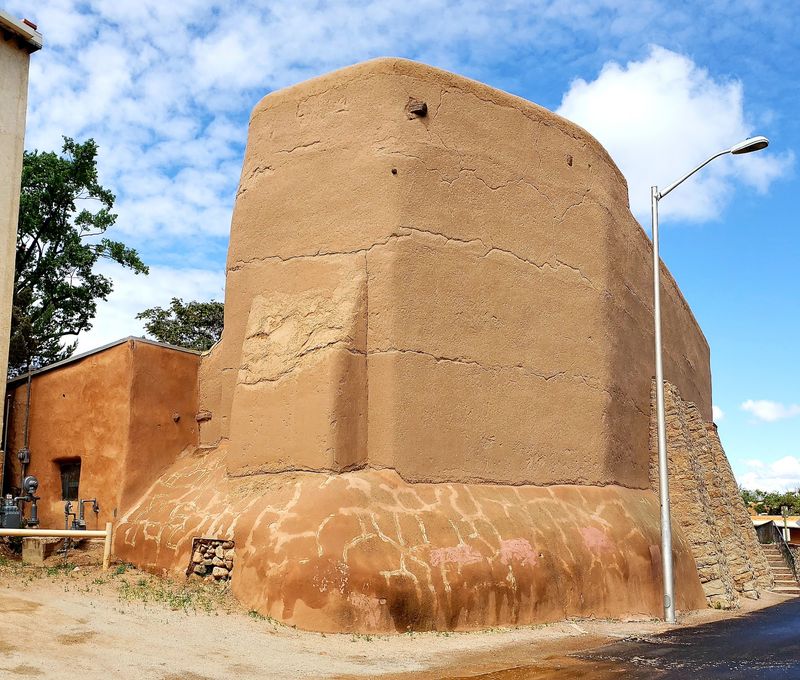
San Miguel Chapel in Santa Fe is widely recognized as the oldest surviving Catholic church structure in the continental United States.
Construction began around 1610, probably with Indigenous builders from Tlaxcala working under Franciscan direction. The first chapel was simple, with adobe walls, a dirt floor, and a mud roof.
Its foundation sits above an older Tewa pueblo dwelling dating to about 1300, adding another layer beneath the visible structure.
The chapel was heavily damaged during the upheaval of 1680 and was rebuilt by 1710. A carved and painted retablo added in 1798 still dominates the sanctuary.
Preservation remains an active process rather than a finished chapter. Adobe parapets need regular replastering, and modern caretakers continue repairing the mud structure with traditional materials.
Visitors can also see portions of the early floor through protective panels near the altar.
The chapel remains open to visitors on a regular weekly schedule and still hosts limited religious services and cultural programs throughout the year regularly. Photography is allowed when done respectfully.
Find it at 401 Old Santa Fe Trail. In New Mexico, few surviving buildings make four centuries of change feel this immediate.
2. Los Luceros Hacienda, Alcalde
Just imagine for a second a ranch with more than a thousand years of stories.
Cottonwoods rustle, orchards bloom, and the Rio Grande moves quietly beside the property.
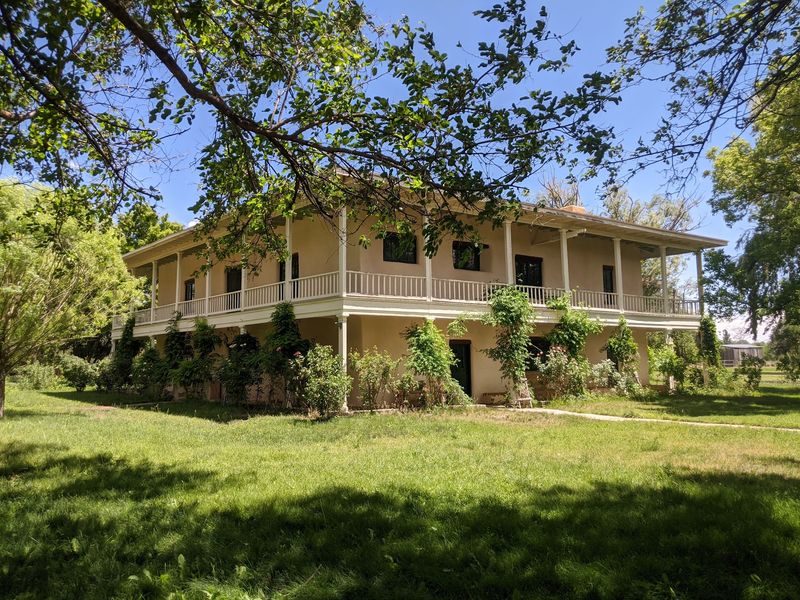
Los Luceros Historic Site near Alcalde covers 148 acres along the river.
People have used this landscape for centuries, and archaeological evidence suggests the main hacienda began with an Indigenous field house that was expanded during later Spanish Colonial, Territorial, and American periods.
The property includes the Territorial-style hacienda, an old chapel, a Victorian cottage, a guesthouse, farm buildings, orchards, irrigated fields, and bosque habitat.
The chapel is believed to have first been constructed in the early 1700s, while the cottage dates to the late nineteenth century.
Agriculture remains part of the story. Apple orchards, pastureland, acequias, and livestock connect the historic structures to the working landscape that supported generations of residents.
Walking the grounds also reveals how closely architecture and farming developed together in northern New Mexico.
One important 2026 update changes the visit: the main hacienda is currently closed for restoration.
The rest of the historic site remains open, and printed trail guides and a digital tour help visitors explore the accessible buildings and outdoor areas at a comfortably unhurried walking pace.
Los Luceros is open Wednesday through Sunday. The entrance is at 253 County Road 41, north of Alcalde.
3. Taylor-Mesilla Historic Site, Mesilla
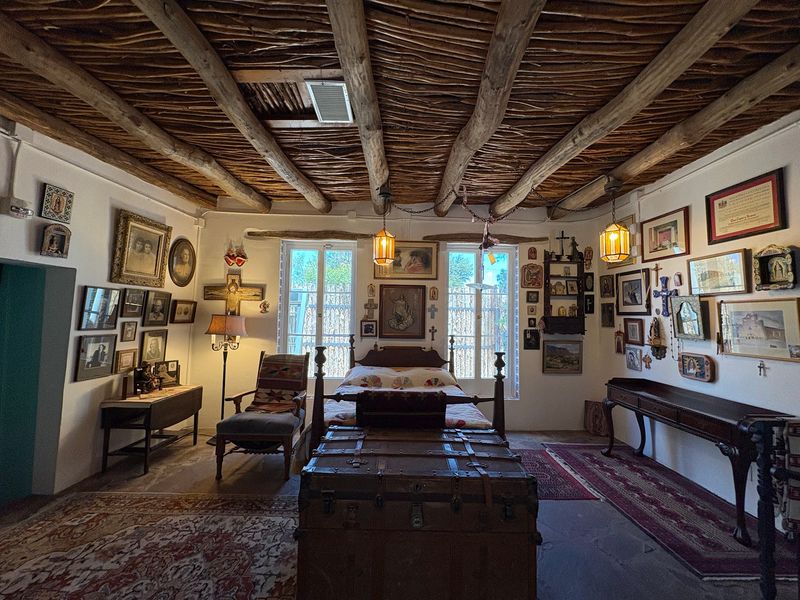
Let’s be real for a second, some homes are basically museums in disguise. Every room here seems packed with art, memories, and layers of plaza history.
Taylor-Mesilla Historic Site occupies the west side of Old Mesilla Plaza.
Its adobe complex includes two historic storefronts separated by a covered passage and a large residence behind them.
The oldest sections were built in the late 1850s as commercial spaces with residential rooms and outbuildings. Over time, separate structures were joined into the rambling house seen today.
A family acquired the property in the early 1950s and raised seven children there while assembling an extensive collection of Spanish Colonial, Mexican, and New Mexican art, textiles, furniture, and religious objects.
The site also helps explain why Mesilla mattered so much in the nineteenth century.
Trade, politics, migration, and community life converged around the plaza, and the town became part of the United States after the Gadsden Purchase was ratified in 1854.
Visitors in 2026 can enter the Reynolds Store Visitor Center, explore exhibits, and tour the residence through timed entry or scheduled guided visits.
Seasonal walking tours also use the surrounding plaza to connect the building with broader local history.
Set aside time for the square afterward. Shops, shaded walkways, and historic facades continue the story beyond the museum doors. The entrance is at 2350 Calle Principal in Mesilla.
4. Gutiérrez-Hubbell House, Albuquerque
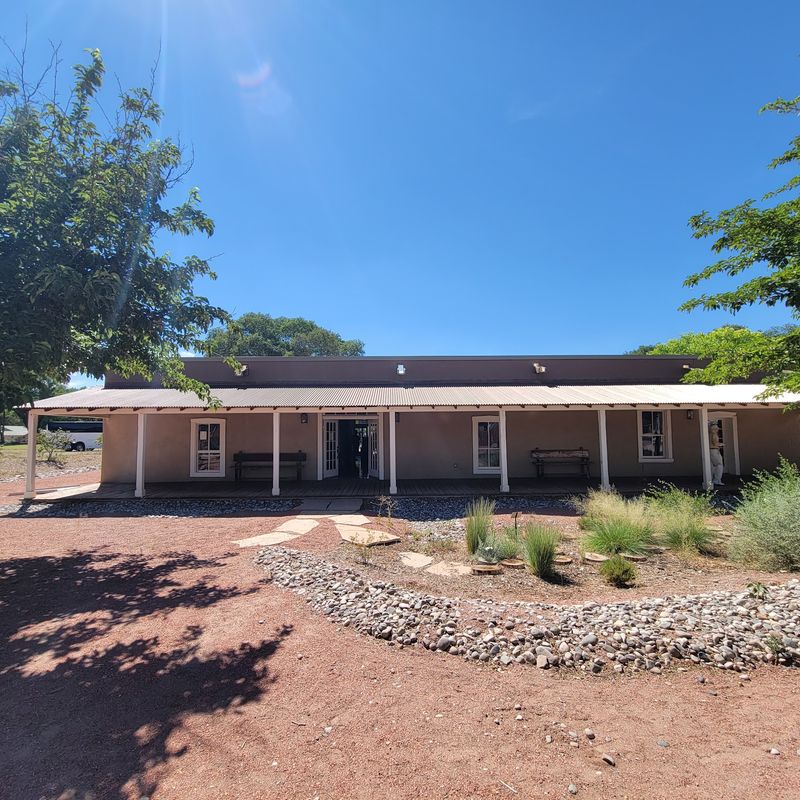
You took the words right out of my mouth if you guessed this house has layers. Its long history reflects trade, family life, farming, and the meeting of several cultural traditions.
The Gutiérrez-Hubbell House in Albuquerque is a large Territorial-style adobe associated with one of the South Valley’s prominent nineteenth-century families.
The National Park Service dates the main residence to 1868, while research indicates that portions of the property developed in earlier phases during the 1850s.
The house covers roughly 5,700 square feet. Its adobe walls are about 28 inches thick, and pine vigas support ceilings that rise close to 10 feet.
Those practical building choices helped regulate temperature while creating the broad interior rooms typical of a substantial hacienda.
Its location along El Camino Real de Tierra Adentro shaped much of its later use. The property served at different times as a residence, mercantile, trading post, stagecoach stop, and post office.
Today the house anchors a ten-acre public property with cultivated fields, gardens, acequia-side paths, and educational programs.
Guided house tours are offered on selected days, while the grounds and walking areas remain open more broadly.
The museum currently operates Thursday through Saturday, with trails and parking available daily from dawn to dusk. Admission to the museum and most programs is free. Find the site at 6029 Isleta Boulevard SW.
5. El Santuario De Chimayó
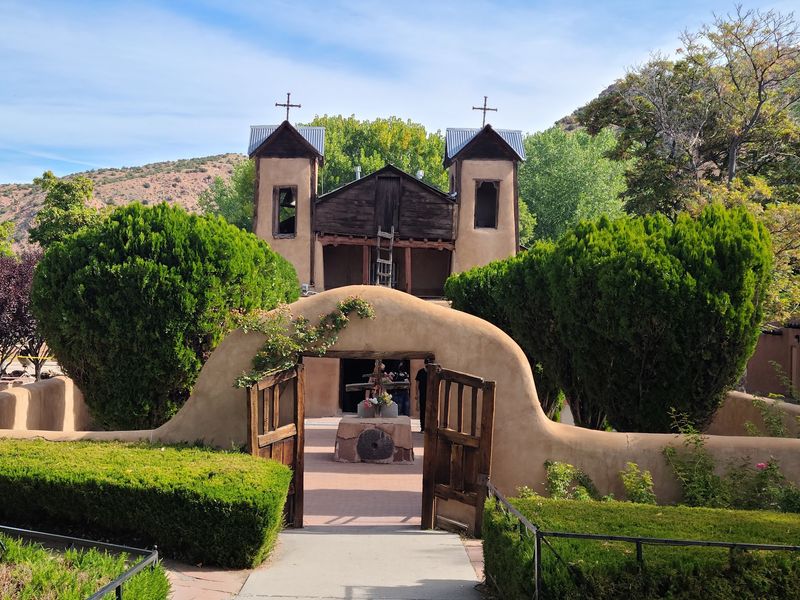
Food for thought: can a handful of dirt carry hope? Generations of pilgrims have come to Chimayó with that question in mind.
El Santuario de Chimayó is a small adobe shrine and National Historic Landmark in the Sangre de Cristo foothills.
The site had spiritual importance long before the current church, and local traditions connected the earth here with healing.
A popular early nineteenth-century story tells of a crucifix found near the site. Permission to build a chapel followed in 1813, and the present sanctuary was completed by 1816 as pilgrimage to the area increased.
The architecture remains compact and distinctive. Twin front towers, thick adobe walls, a walled courtyard, carved woodwork, santos, and painted religious art give the interior and exterior their Spanish Colonial character.
Beside the main worship space is the small room containing el pocito, a round opening filled with earth that pilgrims traditionally take in small amounts.
The custom remains part of the shrine’s identity, but visitors are asked to treat the space as an active place of worship rather than a novelty stop.
The sanctuary continues to welcome large numbers of pilgrims, especially during Holy Week each year. On ordinary days, the chapels are open for personal prayer, with seasonal schedules that can change throughout the calendar year.
Visit respectfully at 15 Santuario Drive in Chimayó.
6. Old Lincoln County Courthouse, Lincoln
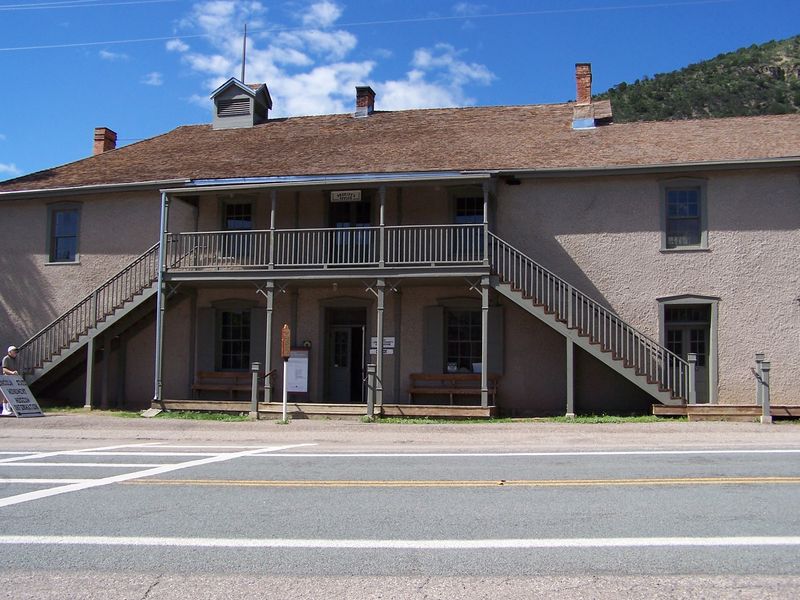
I had to do a double-take when I learned what this building used to be. Spoiler: a courthouse was not its first job.
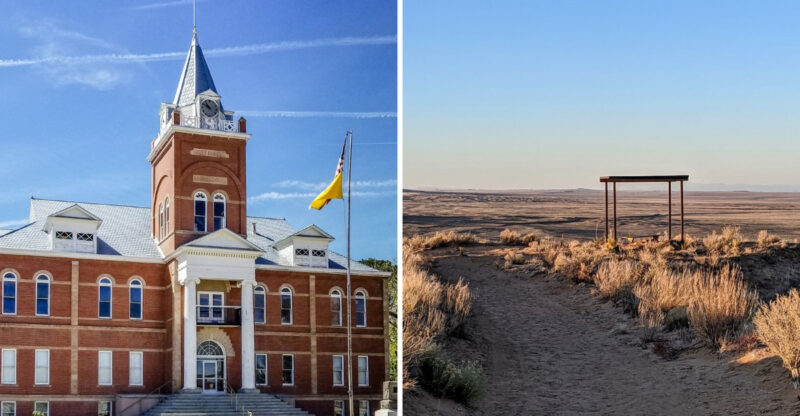
The Old Lincoln County Courthouse began as a commercial building known as the House in the 1870s.
It served as a store, residence, meeting space, and later a courthouse and jail after the county acquired the property.
Its two-story adobe construction reflects the Territorial-style architecture found throughout Lincoln Historic Site.
Thick earthen walls, wooden structural elements, and a straightforward rectangular form suited a building expected to handle several public and private functions.
The courthouse became closely tied to the famous events that made Lincoln nationally known in the late nineteenth century.
One of its best-known stories involves Billy the Kid’s escape from the upper floor in 1881, a moment still interpreted through exhibits inside the building.
Today the courthouse functions as a museum within a larger historic district. Lincoln Historic Site manages 17 structures and outbuildings, with several open year-round and others available seasonally.
The surrounding one-street community makes it easy to continue on foot to additional preserved buildings.
Current hours generally run Thursday through Monday, with Tuesday and Wednesday closures. Special programs appear throughout the year, so checking the calendar before traveling is useful.
Begin at Lincoln Historic Site, 988 Calle La Placita, just off US-380.
7. San Miguel Mission, Socorro
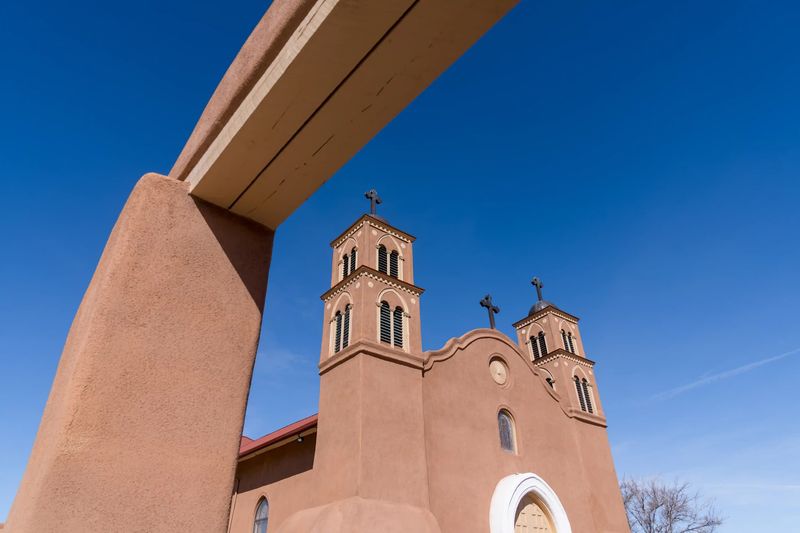
Correct me if I’m wrong, but a town named after kindness deserves a closer look. The word Socorro does indeed mean help or aid in Spanish.
The name reaches back to 1598, when Piro residents provided corn to a Spanish expedition crossing the difficult Jornada del Muerto.
Franciscan missionaries later established a mission in the area during the seventeenth century. That early church does not survive intact.
The present San Miguel Catholic Church developed after Socorro was resettled in the early nineteenth century, and the National Park Service places the current building’s main construction around 1821.
Later renovations added bell towers, a pitched roof, and other features.
One remarkable link to the earlier mission remains visible inside.
A surviving section of seventeenth-century adobe wall is protected behind glass near the altar, allowing visitors to see material from the predecessor structure without confusing it with the newer church around it.
Further restoration during the twentieth century shaped much of the appearance seen today. The building is also listed on the National Register of Historic Places and forms part of the El Camino Real de Tierra Adentro National Historic Trail.
San Miguel remains an active parish in central New Mexico, so visitors should work around services and use the interior respectfully throughout any visit.
The church stands at 403 El Camino Real in Socorro.
8. San Francisco De Asís Mission Church, Ranchos De Taos
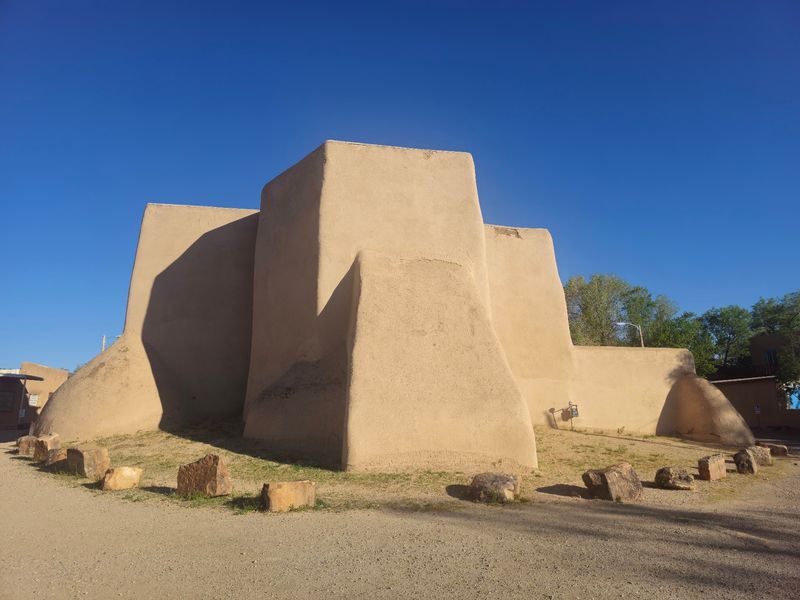
Have you given any thought to why painters keep chasing the same building? Here, the answer is all about curves, shadows, and massive adobe forms.
San Francisco de Asís Mission Church stands at the center of Ranchos de Taos Plaza.
Construction took place between 1772 and 1816, producing one of the best-preserved Spanish Colonial adobe churches in the region.
Twin bell towers frame the entrance, while broad sculpted buttresses support the rear and sides.
The rounded surfaces change dramatically with the angle of the sun, which helps explain why the church became such a persistent subject for twentieth-century artists. Georgia O’Keeffe painted it, and Ansel Adams photographed it.
Inside, vigas, carved corbels, a choir loft, religious artwork, and original Spanish woodworking continue the handcrafted character.
The well-known Mystery Painting is now kept in a controlled setting in the parish hall rather than hanging in the main church.
Preservation is unusually visible here. Each June, parishioners and community volunteers traditionally gather for the Enjarre, applying a fresh mixture of mud and straw to protect the adobe exterior from weather.
The church is both a National Historic Landmark and an active parish. Visitor hours are posted throughout the week, with worship schedules taking priority during active services and parish ceremonies.
Look for it at 60 St. Francis Plaza in Ranchos de Taos.
9. San José De Gracia Church, Las Trampas
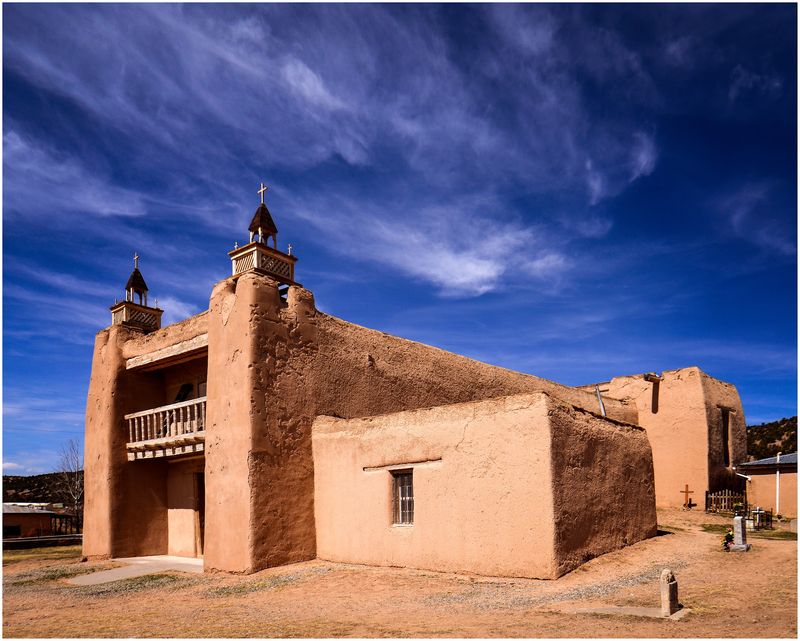
Here’s a crazy thought: being hard to reach can be a building’s best friend.
Relative isolation helped this mountain church retain an extraordinary amount of its eighteenth-century character.
San José de Gracia Church stands on the north side of the old plaza in Las Trampas along the High Road to Taos.
Twelve Spanish families established the village in 1751, and construction of the church began around 1760. By 1776, the community had grown considerably.
The building follows a traditional single-nave plan with transepts and an apse.
Thick plastered adobe walls rise about 34 feet, while wooden vigas and carved corbels support the roof. Buttresses flank the facade and support simple wooden belfries.
One of the most unusual features is the transverse clerestory window high in the nave. Its placement directs daylight toward the sanctuary, creating a practical lighting solution rarely found in surviving Spanish Colonial churches.
Much of the eighteenth-century interior decoration remains, along with wide wooden floors and painted religious art. Continued replastering has helped protect the adobe fabric through generations of changing weather.
The church and the surrounding Las Trampas Historic District are National Historic Landmarks. It remains under parish care rather than operating as a conventional museum, so interior access can vary around religious use.
Find it along NM-76 in Las Trampas and approach the historic plaza quietly.
10. Martinez Hacienda, Taos
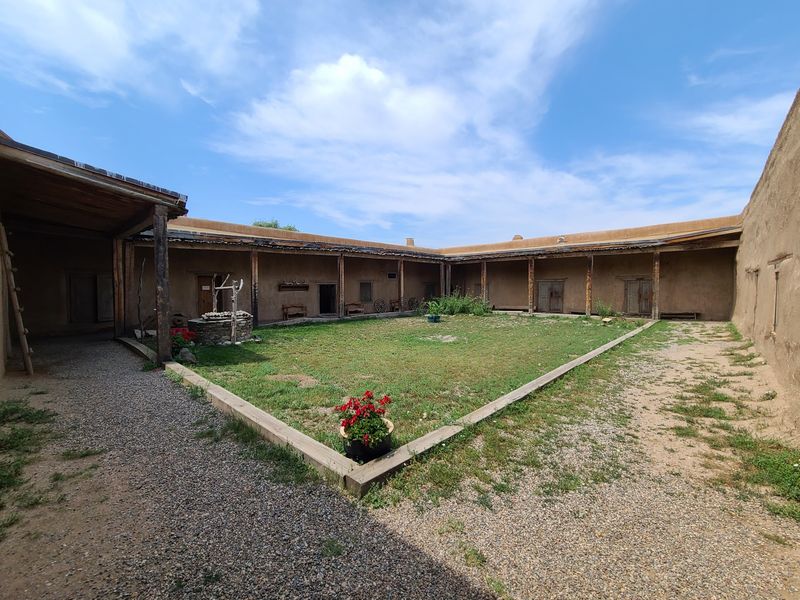
Call me crazy, but a house built like a fort sounds pretty awesome. This one even has two interior courtyards hidden behind its massive adobe exterior.
La Hacienda de los Martínez in Taos dates to 1804 and is one of the few surviving late Spanish Colonial great houses of the northern Southwest.
Twenty-one rooms surround two courtyards, creating an inward-facing layout that supported family life, storage, trade, farming, and craft work.
The property became an important commercial center near the northern reaches of El Camino Real de Tierra Adentro.
After trade patterns shifted in the nineteenth century, connections with Santa Fe Trail merchants expanded the range of goods moving through the household.
Adobe walls, vigas, covered portals, storerooms, work areas, and courtyard entrances reveal how many functions fit inside one compound.
The structure also served as the center of a large agricultural operation rather than simply a private residence.
One historically important family member later became a prominent educator and religious leader who helped establish an early coeducational school and introduced printing to Taos.
Those developments link the household to a broader chapter of New Mexico’s educational and cultural history.
Today the hacienda operates as a museum with period furnishings, artifacts, and occasional demonstrations of traditional crafts. It is currently open throughout the week, with shorter Sunday hours. Visit at 708 Hacienda Road in Taos.