10 New Mexico Tourist Spots I Tried To Avoid But Completely Changed My Mind About
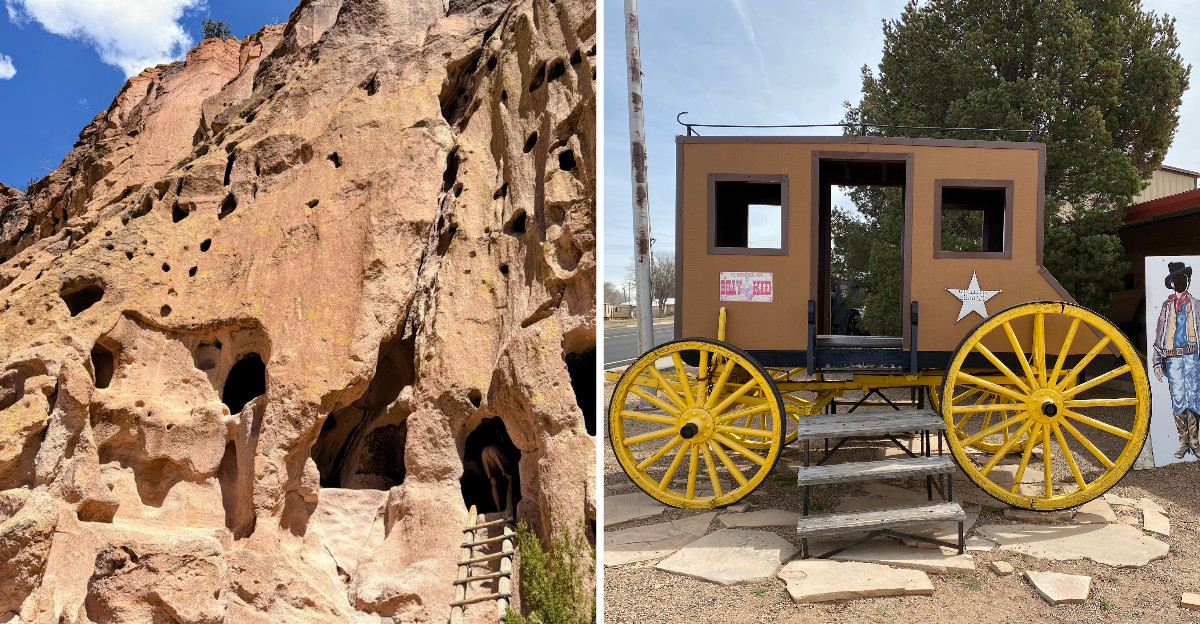
I went into this New Mexico trip with a mental list of places I thought I could safely skip. That list did not survive very long.
One stop surprised me with scenery, another pulled me in with history, and a few were far more fun than I expected.
I started the trip feeling skeptical and ended up eating my own words more than once!
The best surprises came from places I had already dismissed as overhyped or too touristy. That made every detour feel a little more satisfying.
If your own skip list is getting long, these stops might be the ones that change your mind.
1. Petroglyph National Monument, Albuquerque
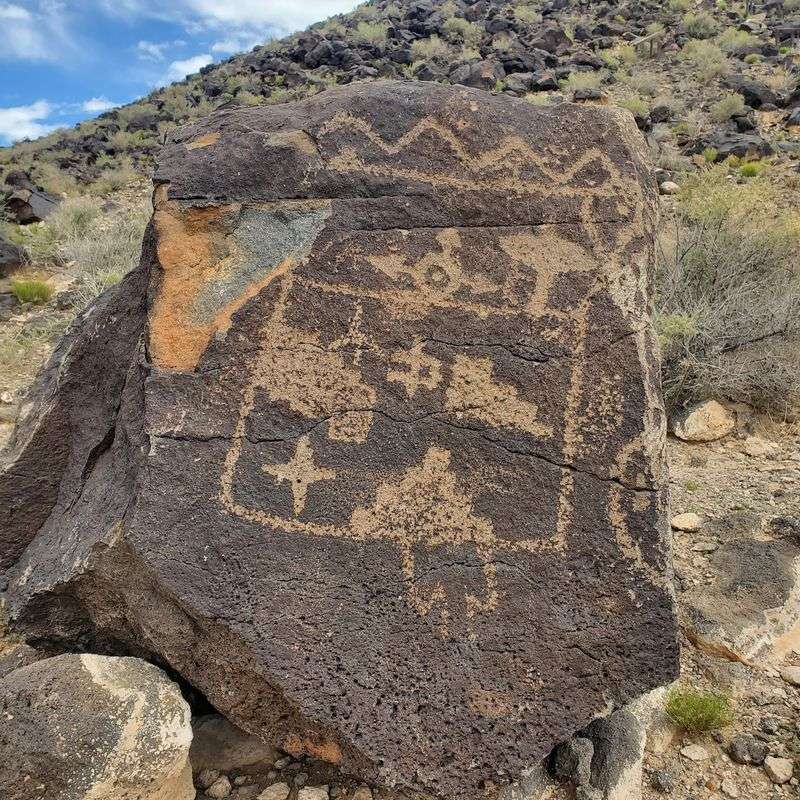
Would you believe me if I told you a city suburb hides ancient art? I nearly skipped it, thinking rocks were just rocks.
Petroglyph National Monument stretches for 17 miles along Albuquerque’s volcanic West Mesa escarpment.
Archaeologists estimate that more than 25,000 images were pecked into the dark basalt, making this one of the largest petroglyph concentrations in North America.
About 90 percent were created by ancestors of today’s Pueblo people, with most dating from roughly 1300 through the late 1600s.
A smaller number are much older, while Spanish settlers added later carvings. These images still carry cultural and spiritual meaning, so viewing them respectfully matters.
Boca Negra Canyon offers three short trails and roughly 100 visible petroglyphs in about an hour.
Rinconada Canyon is a 2.2-mile loop with hundreds of images, while Piedras Marcadas provides a 1.5-mile outing with another substantial concentration.
The monument also protects five volcanic cones and thousands of acres of desert landscape on New Mexico’s urban edge. Trails have little shade, so water, sun protection, and sturdy shoes are practical.
One useful detail: the visitor information center, at Unser Blvd NW and Western Trail in Albuquerque, has no petroglyph trail. Stop there for maps, then drive to the viewing area that fits your schedule.
2. Meow Wolf House Of Eternal Return, Santa Fe
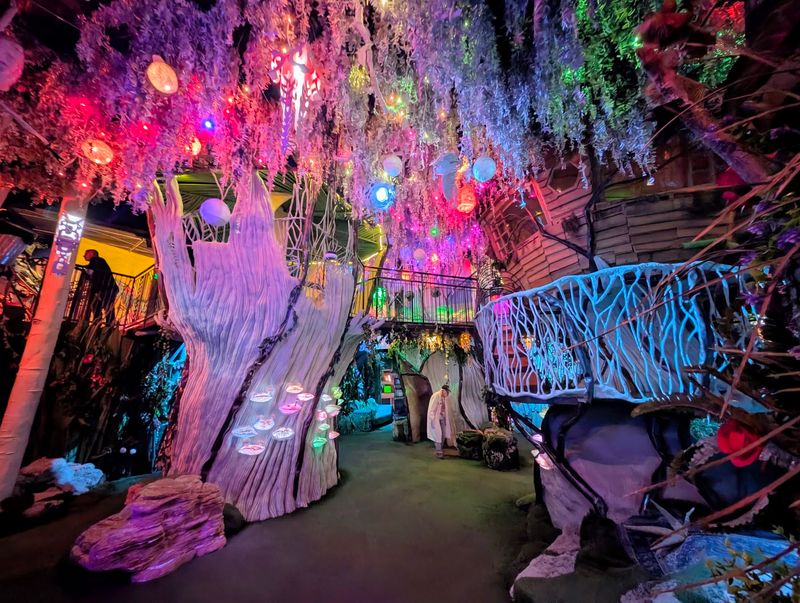
I’m still trying to wrap my head around walking through a refrigerator door. Honestly, I expected a trendy art show full of selfie sticks.
House of Eternal Return quickly makes that assumption hard to maintain.
The Santa Fe installation fills about 20,000 square feet with dozens of rooms, hidden passages, interactive objects, and a two-story Victorian-style house at the center of its story.
A refrigerator can become a portal, ordinary rooms can open into glowing spaces, and musical installations reward experimentation.
Visitors can follow the fictional family mystery woven through documents and environmental clues, or ignore the narrative and explore at their own pace.
The building at 1352 Rufina Cir in Santa Fe began as a bowling alley before the art collective transformed it into an immersive attraction that opened in 2016.
That unusual shell helps explain why the interior can shift so dramatically from domestic rooms to large-scale fantasy environments.
Some optional passages require crawling or climbing, but they are not necessary to experience the exhibition. Comfortable clothing and shoes still make sense because the visit involves walking.
Personal photography is allowed, but selfie sticks, tripods, and professional lighting equipment are prohibited. Large bags and strollers also face restrictions.
3. White Sands National Park, Alamogordo
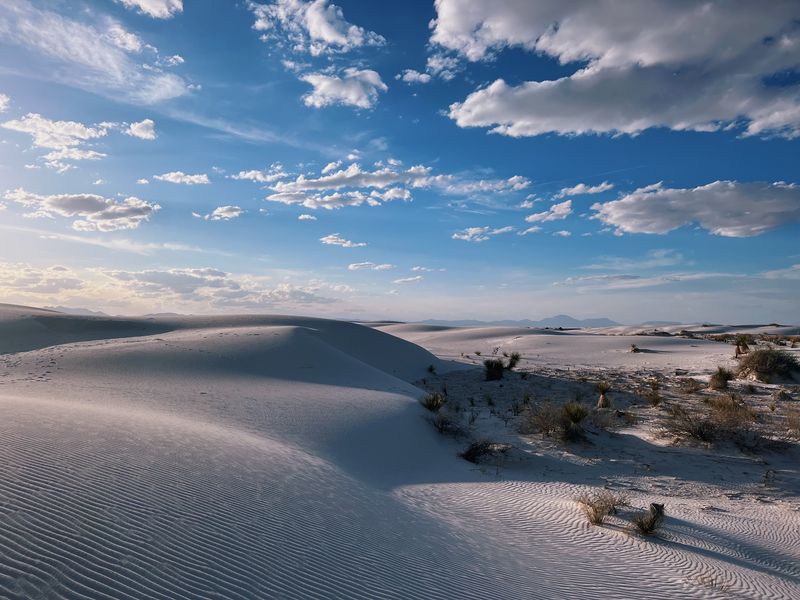
Just imagine for a second sledding downhill in the desert with no snow. I avoided this stop because sand sounded hot, boring, and itchy.
White Sands National Park protects part of the world’s largest gypsum dunefield, an expanse covering 275 square miles of the Tularosa Basin.
The landscape is bright enough to look snowy from a distance, yet the rolling surface is mineral sand shaped by wind.
Sledding remains one of the easiest ways to enjoy it. Waxed plastic saucers work best, and the park advises choosing a gentle slope with a clear, level runout away from roads and vegetation.
Hiking ranges from quick dune walks to the strenuous five-mile Alkali Flat Trail, which repeatedly climbs tall dunes.
The normally accessible Interdune Boardwalk is currently closed because of an active safety corridor, so check current trail conditions before building a route around it.
The dune system formed as gypsum carried from surrounding mountains collected in ancient Lake Otero, later crystallized, and gradually broke into fine grains. Plants and animals have adapted to that shifting environment in surprising ways.
White Sands is one New Mexico stop where sunglasses, water, and flexible plans matter. The main park entrance is at 19955 Highway 70 W near Alamogordo.
4. International UFO Museum & Research Center, Roswell
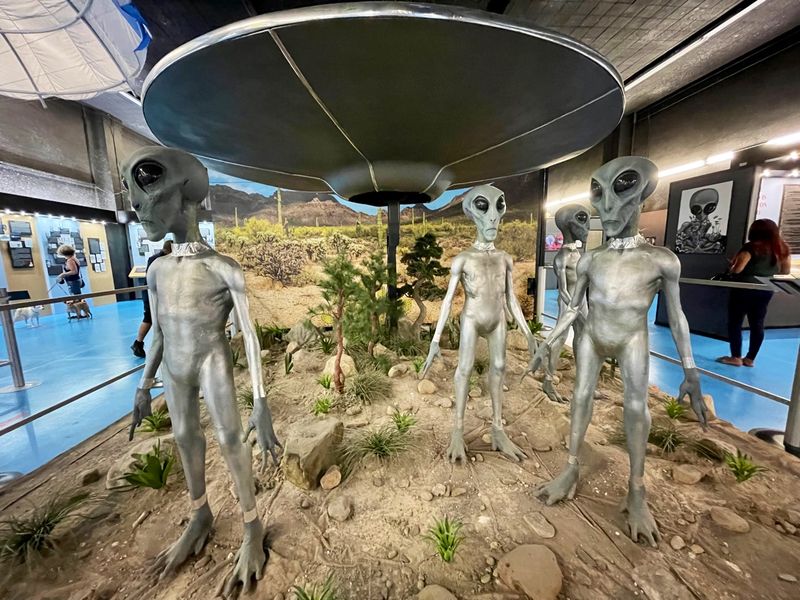
Call me skeptical, but I figured this stop would be pure cheesy gimmicks. Alien balloons on every corner did not help my first impression.
Right in downtown Roswell at 114 N Main St, the International UFO Museum & Research Center gives the 1947 Roswell Incident much more structure than the roadside theme might suggest.
Its nonprofit mission centers on collecting and preserving written, audio, and visual material connected with the incident and broader UFO research.
Inside, archival displays, newspaper coverage, witness accounts, photographs, models, and interpretive material present the story that made Roswell internationally recognizable.
The emphasis is less about demanding one conclusion and more about showing why the event generated decades of questions and competing explanations.
The museum occupies the former Plains Theater, an Art Deco-style building dating to around 1940. That setting gives the exhibits more room than the storefront exterior initially suggests.
A research center supports deeper browsing for visitors who want more than display cases, while lighter visual elements keep the experience approachable for people arriving mainly out of curiosity.
The museum is currently open daily from 9 a.m. to 5 p.m., with holiday exceptions. Downtown Roswell also hosts its annual UFO Festival each summer, turning the surrounding blocks into a much larger themed celebration.
5. Carlsbad Caverns National Park
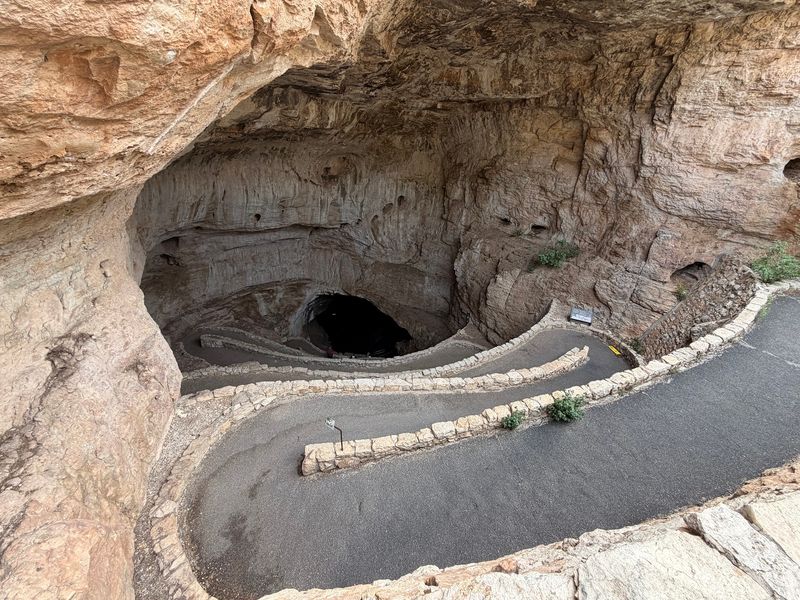
It makes you wonder, doesn’t it, what hides deep under a dusty desert? I nearly passed, since caves seemed dark, damp, and cramped.
Carlsbad Caverns National Park changes that idea almost immediately today.
The main cavern opens into enormous chambers filled with columns, draperies, stalagmites, and other formations created through a long geological process involving limestone and sulfur-rich groundwater.
The Big Room is the easiest centerpiece to understand. Its self-guided trail runs about 1.25 miles and crosses the largest single cave chamber by volume in North America.
Visitors can reach it by elevator or connect it with the much steeper Natural Entrance route.
Ranger-guided options currently include the King’s Palace tour when staffing allows and a scheduled Lower Cave tour on Wednesdays. Availability is limited, so the day’s schedule matters more than an old itinerary found online.
From April through October, the evening Bat Flight Program adds a completely different experience near the Natural Entrance. Electronic devices are not permitted in the viewing area, keeping attention on the program itself.
The cavern stays near 56 degrees year-round, making a light layer useful even when the surface is warm.
Timed entry reservations are required for cavern access, and entrance hours end well before evening. The visitor complex is reached at 727 Carlsbad Caverns Hwy outside Carlsbad.
6. Taos Pueblo
Some places teach you to slow down. I worried this stop would feel like a stiff museum exhibit.
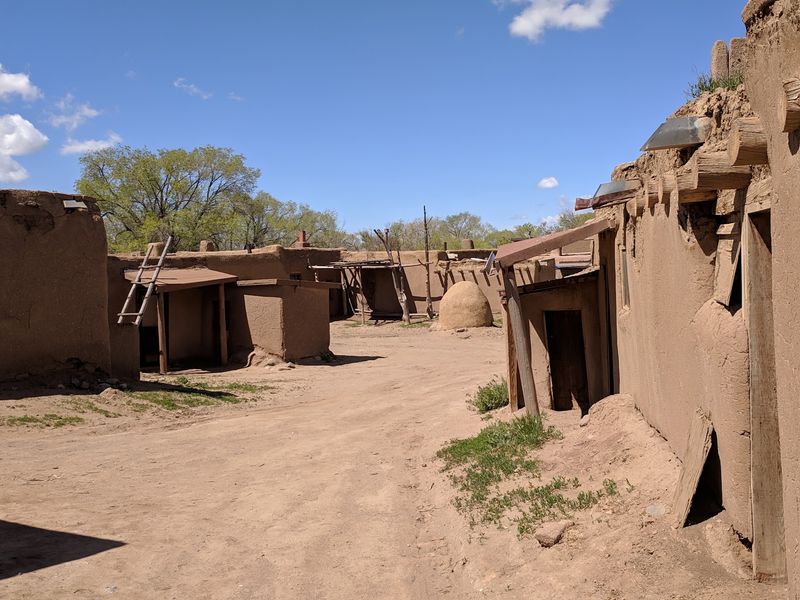
Taos Pueblo is a living Indigenous community, not a preserved display.
Its multi-story adobe homes have been maintained for more than a thousand years, and the village remains an active cultural center for Taos Pueblo families.
The North House and South House rise in terraced tiers as high as five stories. Adobe is made from earth, water, and straw, while large timber beams support roofs built from layered natural materials.
Regular replastering keeps the earthen walls protected. Within the traditional walled village, electrical power lines and piped water are intentionally absent.
A stream flowing through the settlement remains an important water source, and visitors are asked not to enter it.
San Geronimo Chapel remains part of the community’s spiritual life. Photography is not permitted inside, and visitors should never enter homes unless they are clearly marked as businesses.
Permission is also required before photographing tribal members.
Visitors approach the community from 120 Veterans Hwy in Taos. Taos Pueblo holds both UNESCO World Heritage Site and National Historic Landmark status.
When open, tourism hours generally run from 9 a.m. to 4 p.m., with guided tours available and schedule changes possible for community activities.
7. Cumbres & Toltec Scenic Railroad, Chama
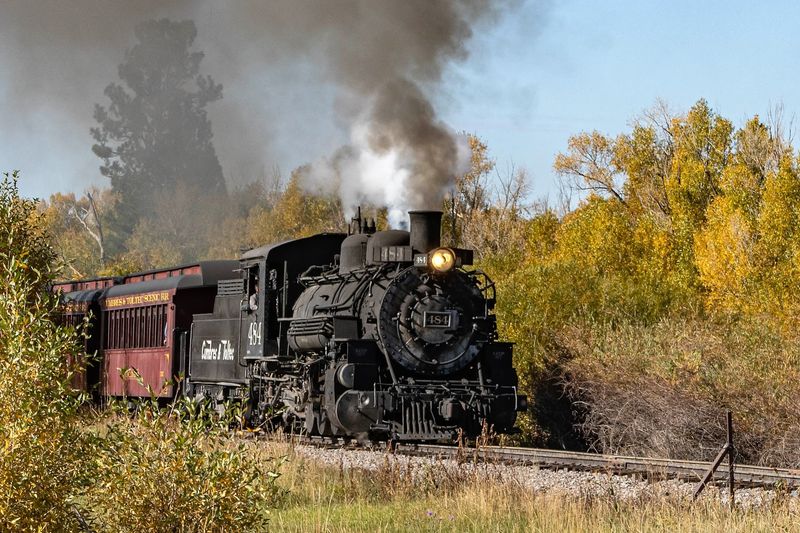
You would take the words right out of my mouth by calling trains slow. Eight hours on one sounded like a long nap waiting to happen.
The Cumbres & Toltec Scenic Railroad makes the pace part of the appeal.
Its historic narrow-gauge line runs 64 miles between Chama and Antonito, climbing through mountain scenery and crossing the Colorado-New Mexico state line 11 times.
Travelers boarding from New Mexico start at the Chama depot at 500 S Terrace Ave. Tracks were laid in 1880 as part of a narrow-gauge extension through the San Juan Mountains.
Today the railroad is a National Historic Landmark jointly owned by two states, with preserved steam-era equipment and historic structures still central to the experience.
Cumbres Pass is the high point at 10,015 feet. Along the route, views shift between aspen groves, open meadows, steep gorges, trestles, and broad mountain valleys.
Full-line excursions take most of the day and usually include a meal stop at Osier Station. Shorter options from Chama are available for travelers who want the steam experience without committing to the entire route.
Every regular train includes access to an open-air gondola, which is excellent for scenery but also exposes riders to wind and cinders.
The 2026 operating season began June 9, with eligible excursions continuing through October 25 and additional special trains scheduled later.
8. Billy The Kid Museum, Fort Sumner
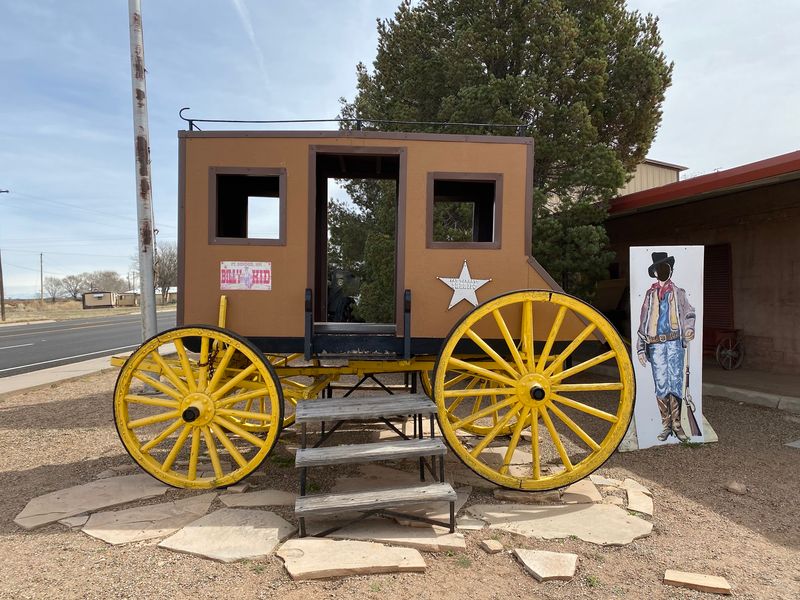
It came completely out of left field how much history fits in a tiny town. I expected a dusty room and a single faded poster.
The Billy the Kid Museum in Fort Sumner is broader than its name suggests.
The family-run collection began in 1953 and has grown to 60,000 relics connected with regional life in the nineteenth and early twentieth centuries.
Items associated with Billy the Kid include documented personal objects such as chaps and spurs.
The museum also holds wagons, buggies, automobiles, household pieces, ranch equipment, and memorabilia connected with the original Fort Sumner post.
That range keeps the galleries from becoming a single-subject attraction. One room may focus on transportation, while another shifts toward daily household work, local trade, or the material culture of the surrounding plains.
The museum’s strength is accumulation rather than polished minimalism. Cases are densely packed, labels reward slow reading, and unusual objects appear beside larger displays.
Visitors interested in the wider area can pair the stop with Fort Sumner Historic Site, which interprets the region through a cultural lens, including the experiences of Navajo and Mescalero Apache communities.
The Billy the Kid Museum remains at 1435 E Sumner Ave, about two miles east of downtown Fort Sumner. Allowing around two hours gives the collection breathing room without turning the visit into a rushed scan of labels.
9. Bandelier National Monument, Los Alamos
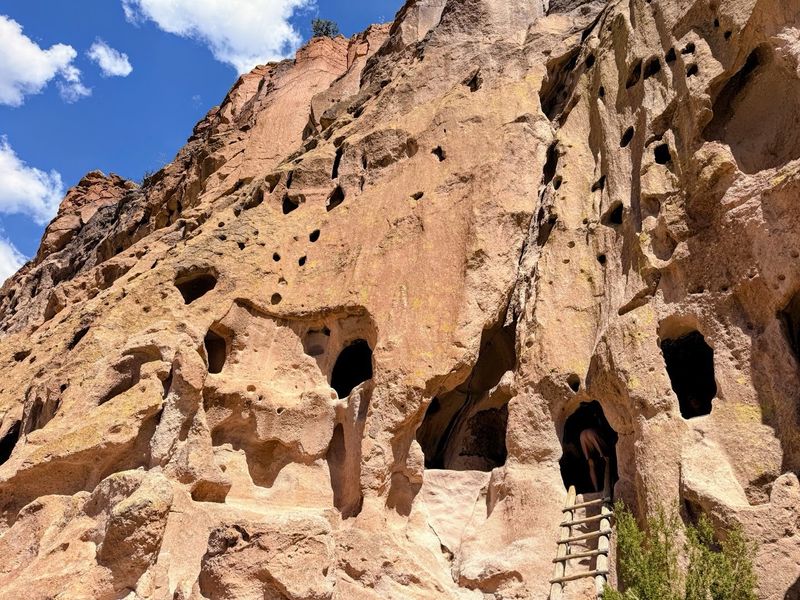
I had to do a double-take seeing homes carved right into cliffs. My plan was to skip it for a lazy afternoon instead.
From the main entrance at 15 Entrance Rd near Los Alamos, Bandelier National Monument protects more than 33,000 acres of canyons and mesas, along with evidence of human activity reaching back over 11,000 years.
The best introduction is the 1.4-mile Pueblo Loop Trail in Frijoles Canyon.
That route passes Tyuonyi, a large ancestral village, along with masonry remains and cavates carved into volcanic tuff.
Ladders provide access to several cavates, while interpretive stops connect the architecture to the Pueblo communities whose traditions remain tied to this landscape.
The soft tuff formed from volcanic ash deposited more than a million years ago. Its workable surface allowed natural openings to be enlarged into rooms while stone structures rose along the canyon floor.
For a bigger challenge, continue to Alcove House. The site sits 140 feet above the canyon floor and requires four wooden ladders plus narrow stone stairs. It is optional, so the main archaeological route still works for visitors who prefer to stay lower.
Abert’s squirrels, mule deer, ponderosa pines, and Frijoles Creek add a natural layer to the outing.
The 2026 seasonal shuttle runs intermittently through October 14 and is no longer automatically mandatory unless canyon parking fills.
10. Blue Hole, Santa Rosa
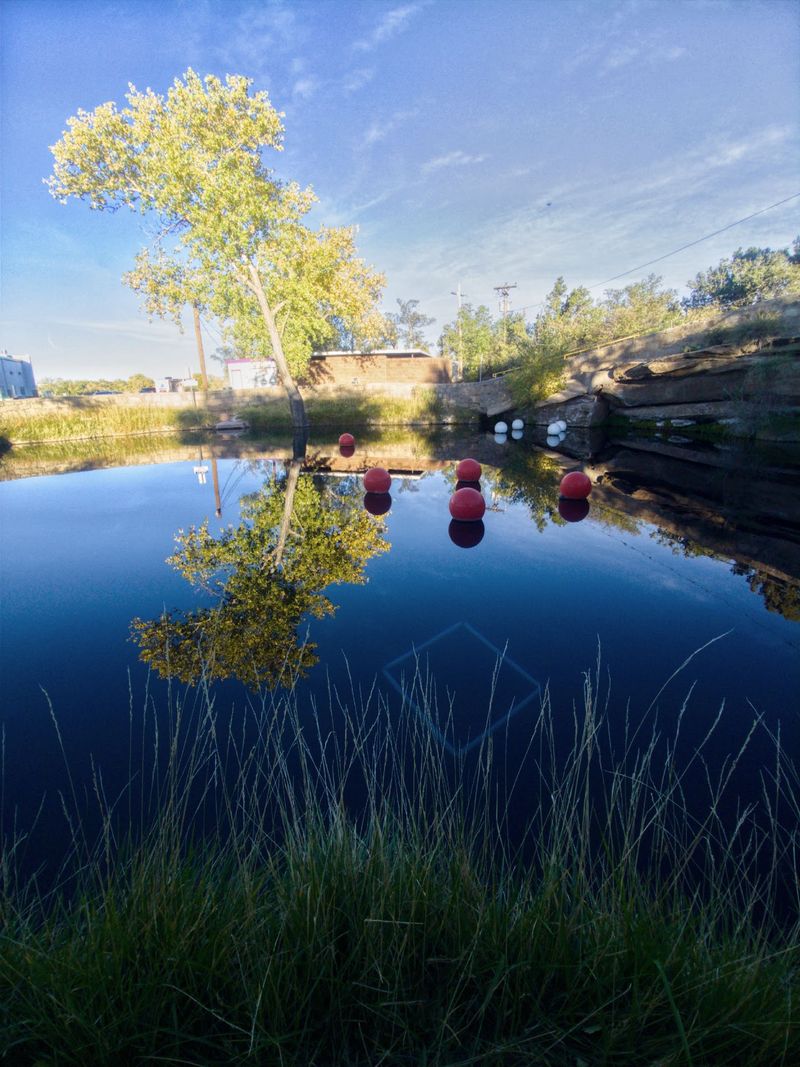
It’s a bit of a stretch, don’t you think, finding scuba divers in dry ranch country? I assumed a roadside pool was the last thing I needed.
Blue Hole in Santa Rosa is a bell-shaped spring-fed pool about 80 feet deep.
Clear water and a constant temperature near 61 degrees make it a year-round training site for scuba divers as well as a refreshing swimming stop.
The water rises from an underground source and moves through the pool continuously. That steady flow helps maintain the clarity that makes the site so useful for dive instruction.
Santa Rosa has earned a reputation as a scuba hub of the Southwest, and divers need the required permit before entering with scuba equipment.
The cold water is the main surprise. Even on a warm afternoon, entering slowly and knowing your limits is smarter than treating the ledges like a dare. Posted safety rules should guide every swim.
At 1085 Blue Hole Rd in Santa Rosa, picnic tables, changing facilities, showers, and nearby parking make the stop easy to build into a Route 66 day. The pool is compact, so it does not require hours unless swimming or diving is the main plan.
New Mexico scenery is usually associated with mesas and desert horizons, which makes this blue water feel even more unexpected.