Nobody Warns You How Impressive This Massive Virginia Truck Museum Is Until You Walk Inside
“Wait… there’s MORE?” That thought hits pretty quickly inside this enormous Virginia museum.
What looks manageable from outside opens into more than 130,000 square feet of restored trucks, tractors, classic cars, old gas station signs, miniature models, and roadside memorabilia. It is wonderfully excessive.
A shiny bumper pulls you one way, a vintage radio catches you somewhere else, and then you realize there is even a diner tucked inside.
You do not need to be a gearhead to get sucked in. The scale alone is entertaining.
Come expecting old vehicles, and you may leave wondering how three hours disappeared so easily.
A Collection Born From Passion
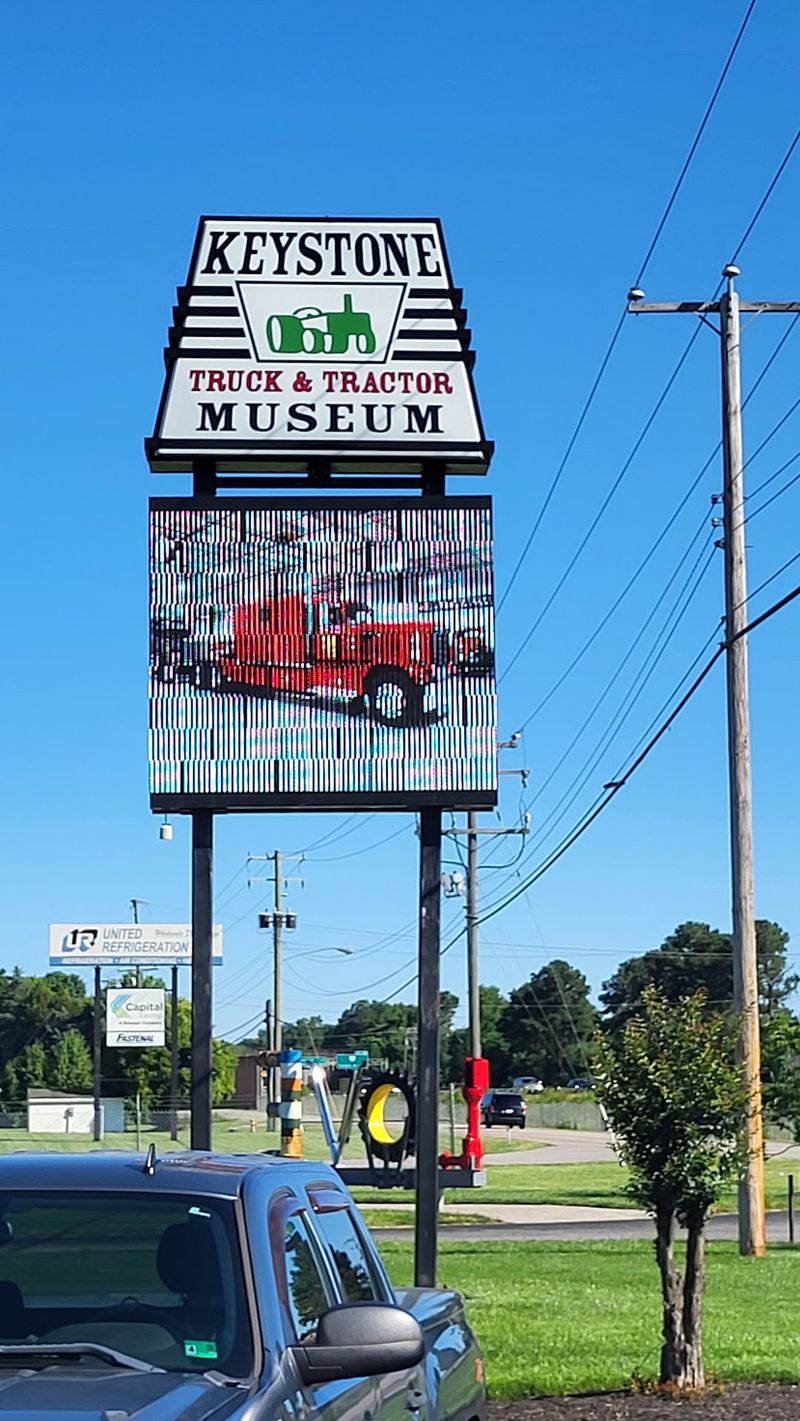
Every great museum starts with one small spark, isn’t that right? Here, that spark was a 1950 John Deere M tractor purchased in 1987.
The museum’s founder had learned to drive a truck at thirteen while growing up in south-central Virginia.
Life around sawmills, lumber hauling, and a family service station created an early connection to working machinery.
Restoring that first tractor led to years of collecting antique farm equipment and road trucks. Before the museum opened, much of the growing collection was stored away rather than displayed publicly.
The collection finally gained a permanent public home in 2010. Since then, tractors have been joined by trucks, classic cars, memorabilia, radios, and other pieces of industrial history.
The museum now spans more than 130,000 square feet and continues to preserve machinery from different periods of American transportation and agriculture.
Its large indoor layout makes it possible to move from farm equipment to highway rigs without leaving the building.
You can find the Keystone Antique Truck and Tractor Museum at 880 W Roslyn Rd, Colonial Heights.
Rows Of Green Farm Giants
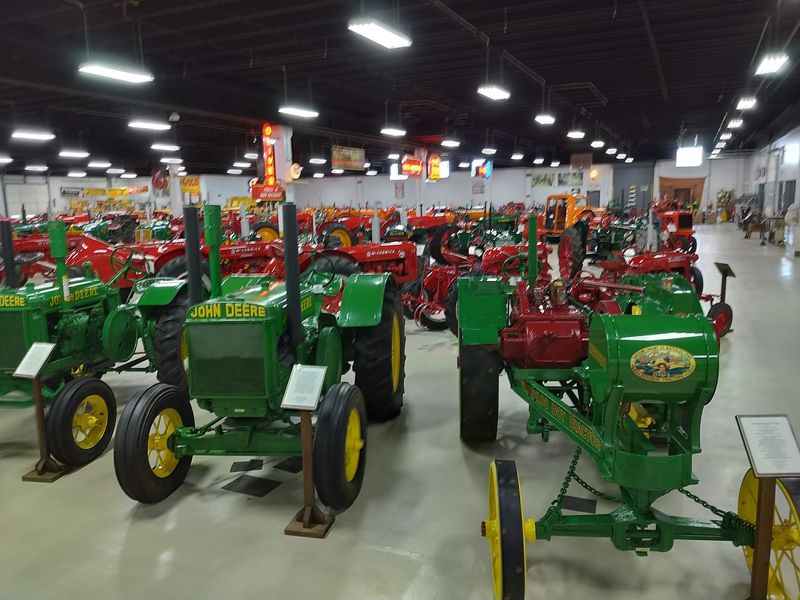
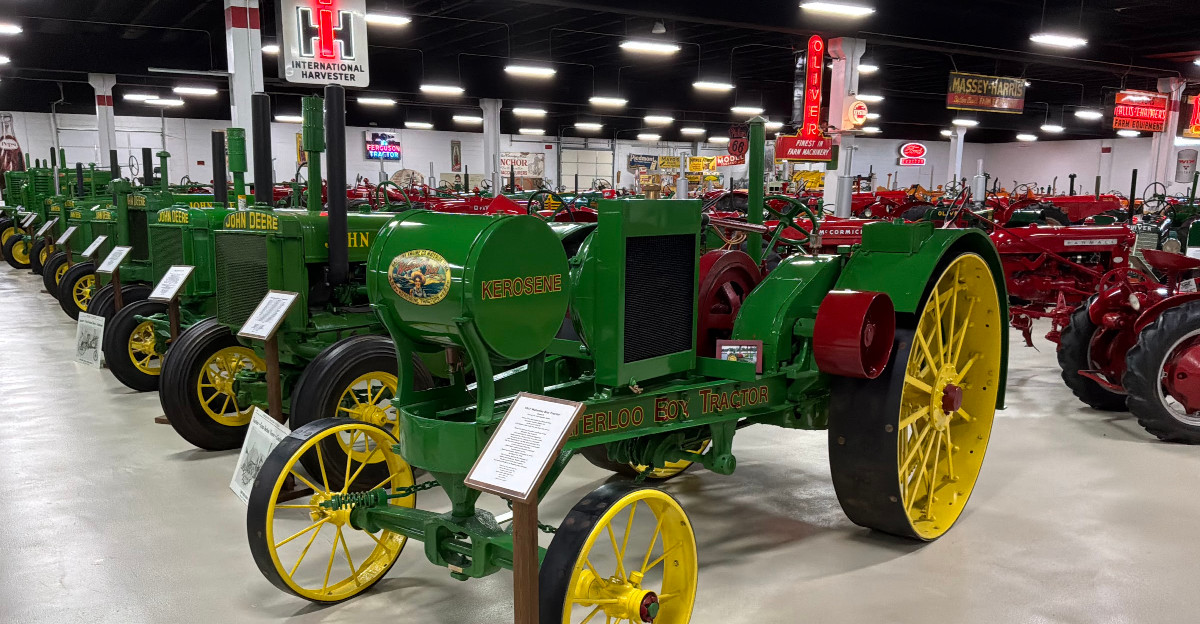
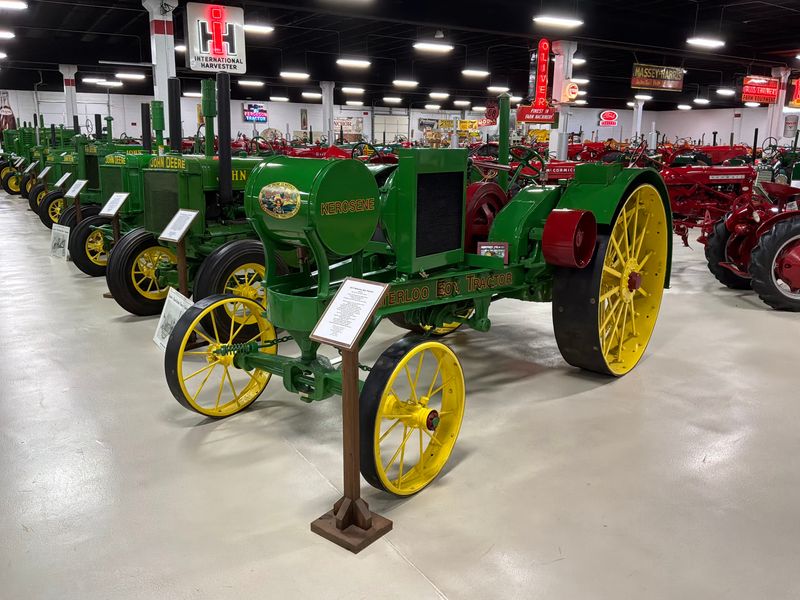
Green and yellow machines make a strong first impression in the tractor collection.
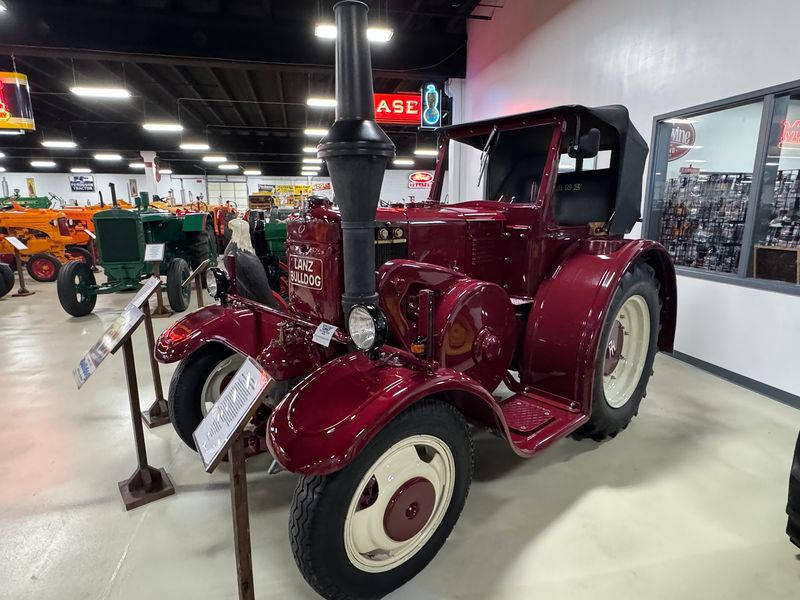
More than 50 John Deere two-cylinder tractors are displayed here, including the familiar machines often nicknamed Johnny Poppers because of their distinctive engine sound.
Those rows show how tractor design changed as farming became increasingly mechanized.
Grilles, wheels, seating, engines, and body shapes vary across generations, making the collection useful for comparing how practical needs shaped each model.
John Deere is only part of the story.
Tractors from International Harvester, Allis-Chalmers, Oliver, Massey Harris, Ford, Ferguson, and other manufacturers broaden the display. Machines from outside the United States add another layer to the collection.
Some tractors reflect the equipment once used on Virginia farms, while others show approaches developed for very different landscapes and agricultural systems.
Early gasoline-powered machines sit near later models that helped reshape modern farm work.
The size of the collection makes slow looking worthwhile. Small mechanical differences become easier to notice when so many examples are gathered in one place.
Big Rigs With Big Personalities
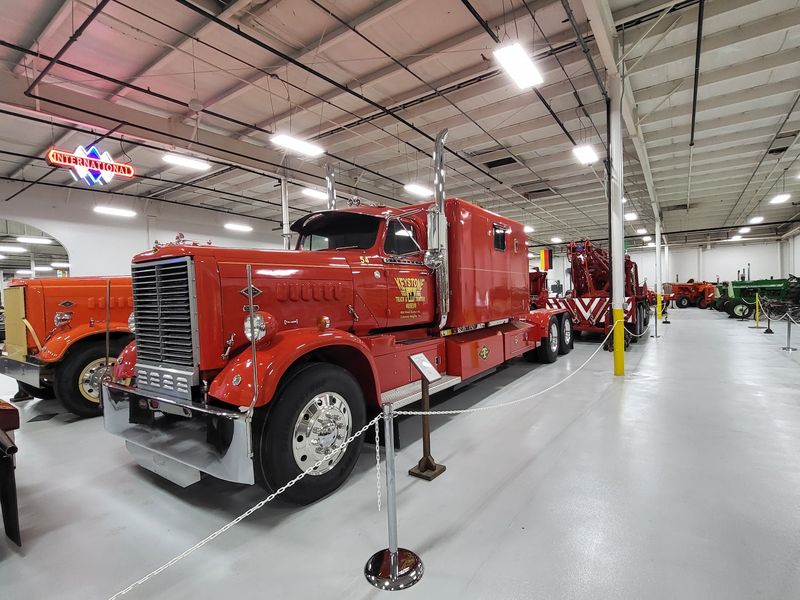
The road-truck section shifts the focus from fields to highways.
Vintage rigs from Mack, Ford, Chevrolet, Dodge, Diamond T, Kenworth, and other major manufacturers fill long stretches of the museum.
The collection reaches beyond tractor-trailers. Tow trucks, delivery trucks, buses, and other commercial vehicles show how specialized machines handled different jobs in towns, on highways, and around industrial sites.
Older models reveal how much truck design changed over time. Cab shapes, controls, engine layouts, cargo equipment, and driver accommodations evolved as transportation demands increased.
Company markings and period graphics add another historical layer. They connect the vehicles to the businesses and routes that once depended on them.
This part of the museum also makes the scale of older equipment easy to appreciate.
Standing beside the trucks gives a clearer sense of the mechanical size and engineering involved than photographs can provide.
Together, the vehicles trace a broad story of commercial transportation and the machines that helped move goods across the country.
Classic Cars And Shiny Surprises
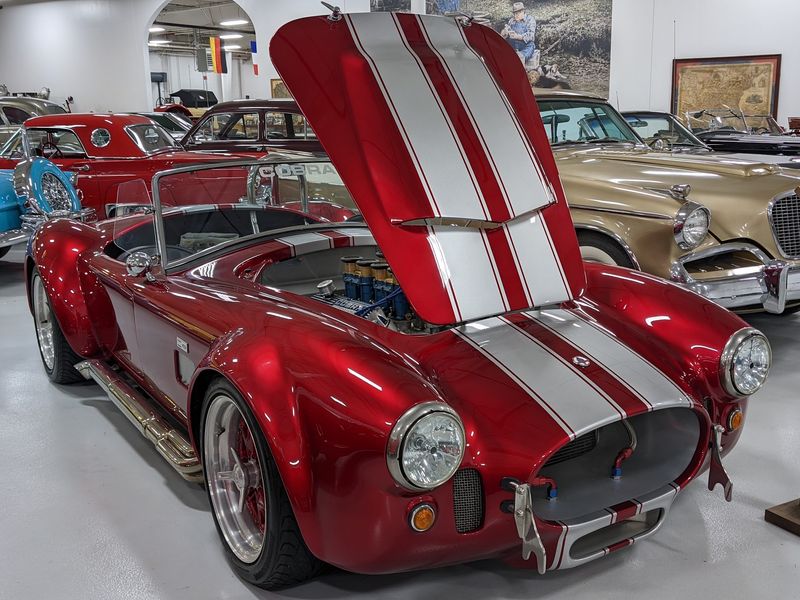
A restored Shelby Cobra is one of the unexpected sights among the heavier machinery.
The car collection adds another chapter to the museum’s look at American transportation.
Ford, Chevrolet, Dodge, and other manufacturers appear throughout the galleries.
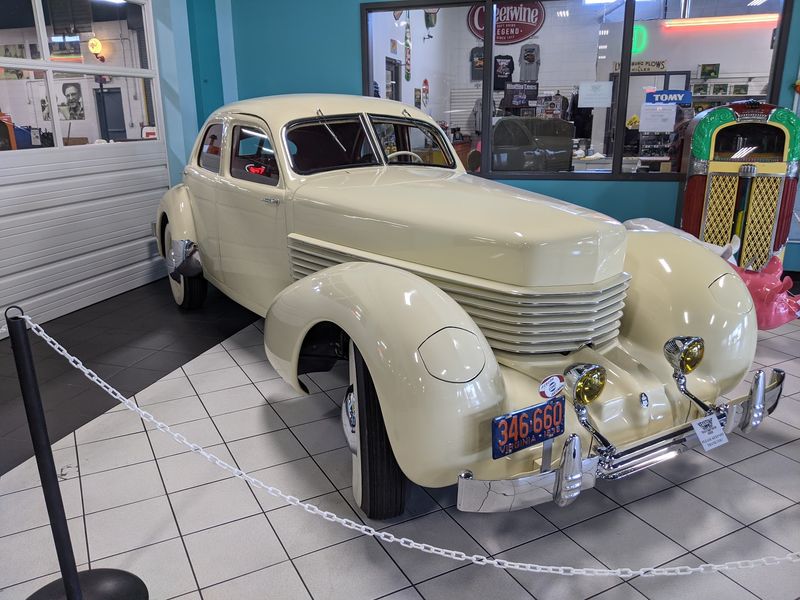
The mix ranges from older roadsters to later performance cars, showing how styling and engineering changed alongside the country’s driving habits. Cord automobiles are another standout.
Their distinctive shapes look noticeably different beside more familiar American designs, and a restored 1936 Cord 810 Westchester is displayed prominently near the museum entrance.
Motorcycles and other smaller vehicles add variety between the larger displays. Moving from heavy trucks to compact machines makes the range of transportation history especially clear.
The vehicles are restored for close viewing, so details such as dashboards, trim, body lines, badges, wheels, and interior fittings are easy to examine.
This section can take longer than expected because the collection does not follow a single type or era. A slower pace makes the differences between the vehicles much easier to notice.
Signs, Sodas, And Old Stores
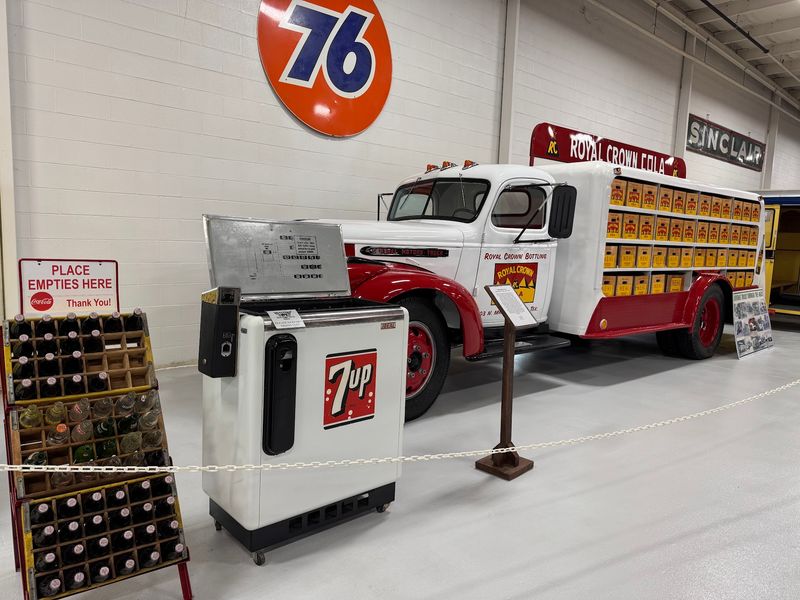
Vintage signs and product displays fill the spaces between many of the vehicles.
Gas station, soft drink, farm supply, road, and brand signs turn the walls into a second collection above the machinery.
Shelves of soda bottles and period packaging show how everyday products were marketed when small stores and roadside stops played a larger role in community life.
Their shapes, lettering, and colors change noticeably from one era to another.
Old store displays also provide context for the trucks and tractors nearby. The vehicles moved products and equipment, while the signs and packaging show where many of those goods eventually appeared.
A large collection of Virginia-made products adds a regional connection to the broader industrial story.
These objects link the museum’s national transportation themes with manufacturing and commerce closer to home.
There is good reason to look above eye level while moving through this section.
Many of the largest signs hang high on the walls, where they can be easy to overlook when attention stays on the vehicles below.
Tiny Trucks And Home Treasures
More than 1,800 Winross trucks and other miniature vehicles form one of the museum’s most detailed collections.
Tiny trailers, company logos, wheels, and cab designs echo the full-sized equipment elsewhere in the building.
Model tractors appear alongside them, extending the same collecting tradition into agricultural machinery.
The contrast between miniature replicas and full-sized vehicles gives the displays a different sense of scale.
Some models also preserve branding and equipment styles that have long since disappeared from modern roads. That makes the cases useful records of how commercial vehicles changed across different eras. Household history appears here too.
Antique washing machines and other everyday machines show how mechanical innovation changed chores beyond farms and highways.
These smaller artifacts help widen the museum’s story. Transportation may dominate the floor, but the collection also looks at the tools and objects that shaped ordinary routines.
The cases reward a slower pace because much of their detail is concentrated into a small space.
Visitors can compare logos, body styles, and equipment without covering much ground.
The gift shop continues the miniature theme with die-cast toys, collectibles, books, apparel, and other transportation-related keepsakes.
Tuning Into Radio History
Long before screens filled American homes, radio connected families with entertainment and information.
The museum’s Golden Age of Radio exhibit follows that story from early telegraph and wireless technology into the network broadcasting era.
Programs from the 1930s through the late 1950s brought drama, comedy, news, and music into homes across the country.
The equipment on display shows the technology that carried those broadcasts.
Crystal sets and cat-whisker receivers appear beside early battery-powered tube radios.
Sets from Atwater Kent, Crosley, Radiola, Freshman, Grebe, FADA, and other manufacturers document a period when home radio technology was changing quickly.
Telegraph instruments, amateur-radio equipment, station gear, and broadcast microphones broaden the timeline.
The collection includes equipment associated with both professional broadcasting and private radio communication.
Wooden cabinets and early controls make the technology feel especially tangible.
Instead of presenting radio as an abstract invention, the exhibit shows the physical machines people tuned, repaired, and used.
The display has continued to grow, adding another major subject to a museum already centered on mechanical history.
Planning Your Perfect Visit
Timing matters when a museum covers more than 130,000 square feet.
Most visitors spend about one to two hours exploring, but a longer visit leaves more room for the smaller displays and information stands.
The museum is open every day from 9 AM to 5 PM.
It is designed as a self-guided experience, with information stands providing details about many of the objects throughout the galleries. A 1950s-style diner sits inside the building.
Keystone Grill serves breakfast and lunch every day from 7 AM to 3 PM, making it possible to eat before, during, or after a museum visit. Parking is free and spread across two large lots.
Cars, buses, RVs, large trucks, and trailers can all be accommodated, and accessible spaces are available near both entrances.
The museum also keeps three wheelchairs available on a first-come basis. Its broad indoor layout makes the collection easier to explore at an individual pace.
The collection includes more than 1,000 artifacts, and restoration and exhibit work continue over time.
This Virginia stop sits only minutes from Interstate 95, making it easy to include on a longer road trip.