8 North Carolina Coastal Spots Where Sea Turtle Season Makes August Nights Extra Special
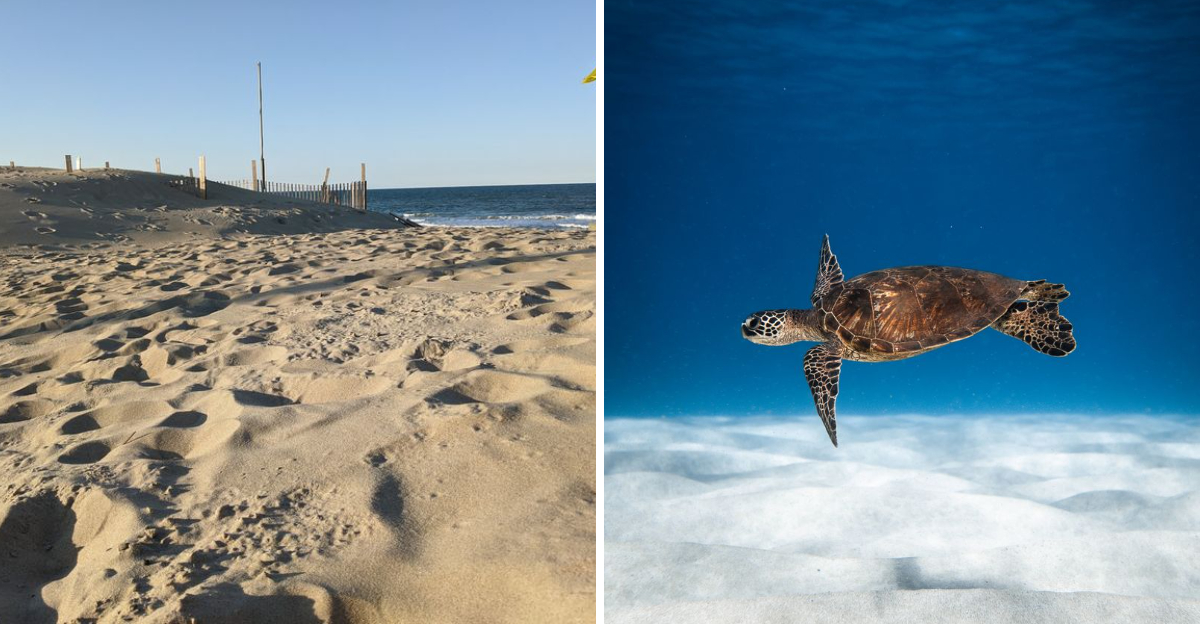
Duuude, sunset is when the beach shift changes.
All day, humans have been splashing around and leaving footprints everywhere. Then darkness settles over the North Carolina coast and the real locals start making moves.
Tiny loggerhead hatchlings emerge from the sand with one mission: ocean. No GPS.
No tiny luggage. Just instinct and a whole lot of determination packed into something roughly the size of your palm.
That is when everyone else needs to chill.
Lights stay low, voices drop, and roped-off nests get plenty of breathing room while trained volunteers keep watch nearby. Seeing those little flippers work toward the surf can make an ordinary August night feel enormous.
And yes, the temptation to cheer is very real. Just keep it quiet, dude.
These eight coastal spots offer a chance to experience turtle season responsibly while soaking up one of summer’s coolest natural moments.
The hatchlings have places to be. Mostly east.
8. Cape Hatteras National Seashore, Hatteras Island
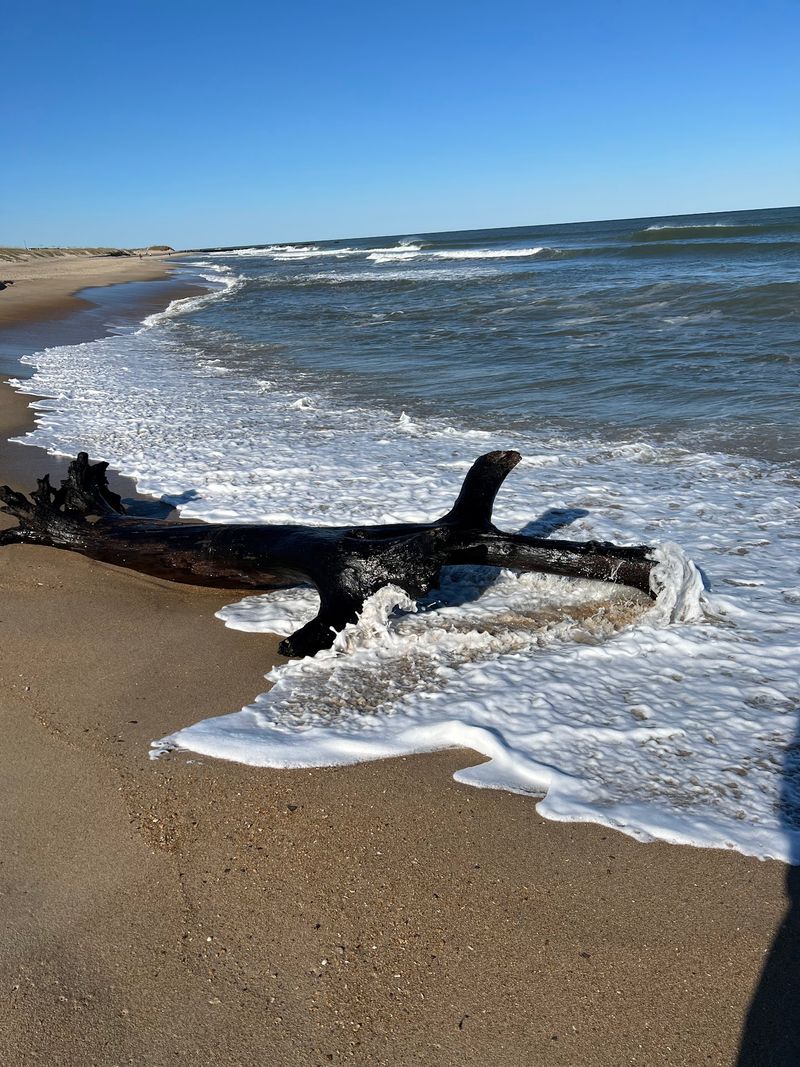
Sixty-plus miles of open sand, almost no neon, and a lighthouse painted in black spirals: Hatteras Island sets the stage for August like nowhere else on the Outer Banks.
Nesting here typically stretches from May into September, and by late summer the beaches shift from egg-laying to hatching.
Park biologists lead nest excavations after a nest boils, gently counting shells and unhatched eggs while explaining what each finding means. Rangers often join in, answering questions from families sitting cross-legged in the sand.
Daylight hours belong to other pleasures. The Cape Hatteras Lighthouse grounds remain open in Buxton, but the tower itself is closed for climbing throughout 2026 while restoration work continues.
Surfers, kiteboarders, and kayakers share the water, while anglers work the surf at dawn. Horseback riding along the shoreline is possible in certain seasons, and the wind rarely quits.
Mid-August brings the Outer Banks Pirate’s Festival to nearby Nags Head, complete with living history camps and games for kids.
The Hatteras Island Arts and Craft Guild Summer Show fills tables with pottery and paintings, and Avon’s farmers market smells like ripe peaches and warm bread.
Practical tip: bring a red-filtered flashlight for evening walks, keep beach gear off the sand overnight, and fill any holes you dig. Hatchlings navigate by the faint glow over the ocean, and a single bright porch light can send them the wrong direction entirely.
7. Ocracoke Island Beaches, Ocracoke
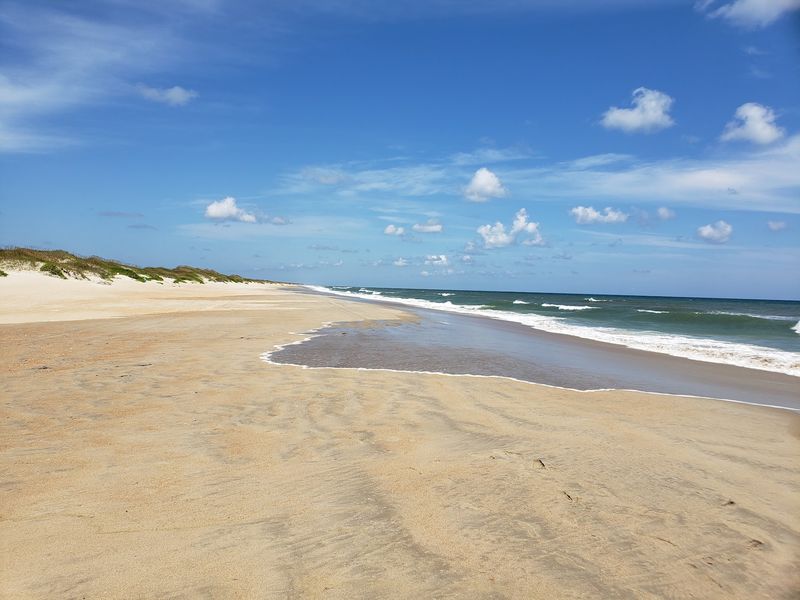
Getting to Ocracoke requires a ferry, and that slow crossing does something to your pace. By the time you step off, the hurry is gone and the island’s unpaved edges feel like the whole point.
Few places along the Outer Banks record more nesting success. Wide, dark, lightly developed beaches give loggerheads exactly what they want, and the Cape Hatteras National Seashore staff who steward this stretch mark and monitor each nest carefully.
Mother turtles come ashore under cover of night, mostly from mid-May through August. That same month, the earliest nests start boiling, sending hatchlings scrambling toward the surf in a burst that lasts only minutes.
Public nest excavations run by rangers and biologists let visitors watch the science up close. You will hear how sand temperature shapes the hatchlings and why an empty eggshell tells a hopeful story.
Back in the village, the food leans hard into a boat-to-table tradition. Pony Island Restaurant, the island’s oldest, serves hearty breakfasts that fuel long bike rides, while SmacNally’s Waterfront Bar and Grill plates burgers and fried seafood beside Silver Lake harbor.
You will not find a single national chain here, which locals mention with quiet pride. Menus change with what the boats bring in, so shrimp one day may become drum the next.
Evenings are gloriously dark. Skip the phone flashlight, watch your step, and let your eyes adjust to the stars instead.
6. Bodie Island Beaches, Nags Head Area
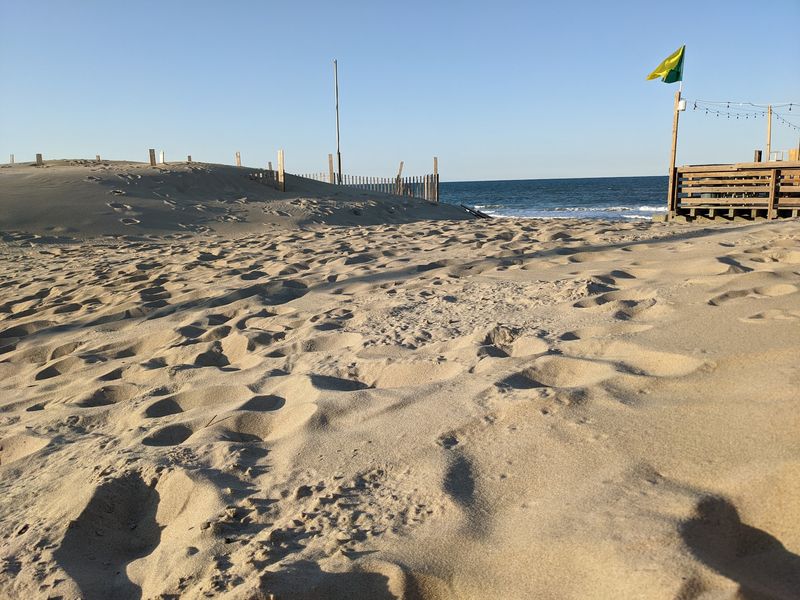
Horizontal black and white bands, 156 feet of brick, and 214 steps to the top: the Bodie Island Lighthouse anchors the northern doorway to Cape Hatteras National Seashore just south of Nags Head.
Climb it and the whole barrier island system spreads out below, ocean on one flank, sound on the other, maritime forest stitched between.
The beaches beneath that view do serious work each summer. Loggerheads nest here from mid-May through August, and hatching runs from late July into October.
Newborn turtles read the natural glow of moon and stars bouncing off the water. Anything brighter confuses them, which is why beachfront lights matter so much during these weeks.
A visitor center at the lighthouse keeps exhibits on shipwrecks, keepers, and the treacherous shoals offshore. The boardwalk out over the marsh is a fine spot to watch egrets stalk the shallows at dusk.
Nearby, Jockey’s Ridge State Park piles up the tallest natural sand dunes on the Atlantic coast, best climbed barefoot in early morning before the sand heats.
Duck Donuts hands over warm rings dipped to order, maple and cinnamon sugar being the popular picks.
Roanoke Island sits a short drive west, where the aquarium’s Sea Turtle Rescue exhibit shows the rehab side of the story. Seeing a recovering turtle glide past the glass makes the roped-off nests on the beach feel a lot more personal.
5. Cape Lookout National Seashore, Carteret County
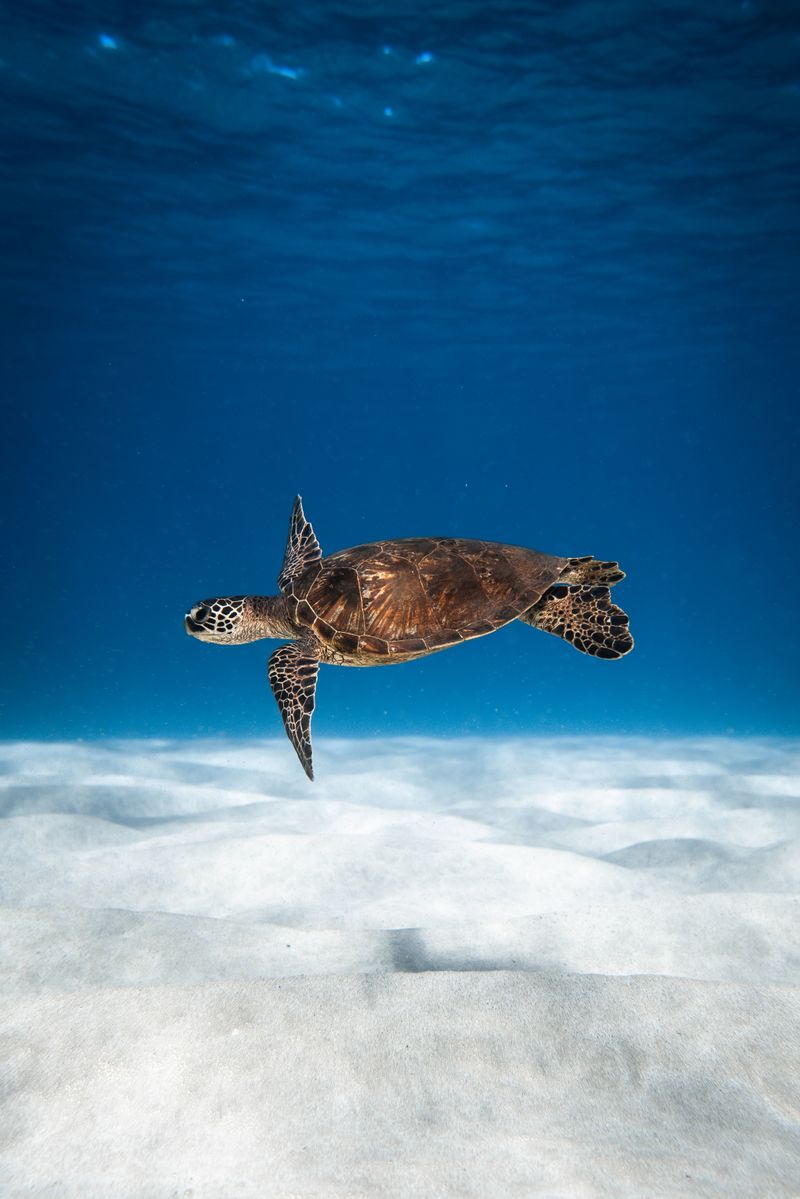
Fifty-six miles of barrier island, no roads, no shops, and a lighthouse wearing black and white diamonds. Reaching Cape Lookout means booking a ferry, and that effort filters out the crowds beautifully.
North Core Banks, South Core Banks, and Shackleford Banks together host loggerheads plus green, leatherback, and Kemp’s ridley turtles.
Nesting can begin in May and run all the way into November, which makes August a busy overlap of laying and hatching.
Staff walk the beaches daily, marking nests with PVC pipes and covering them with plastic screens that stop raccoons and foxes without blocking hatchlings. The seashore’s sea turtle program runs August through November.
Attendees watch biologists inventory nests that recently boiled. Nature sets the schedule, so live hatchlings are never guaranteed, but any found during an inventory are released right there on the sand.
The lighthouse grounds and the Keeper’s Quarters are open for exploring even when the tower itself closes for maintenance.
Shackleford Banks, meanwhile, is home to more than 100 wild horses descended from Spanish stock, grazing among the dunes at a respectful distance.
Pack like you mean it. There are no restaurants or stores within the seashore, so bring water, food, sunscreen, and bug spray; Harkers Island has provisions and a picnic area with lighthouse views.
One more reason to stay late: this is a certified International Dark Sky Park, and the Milky Way here is genuinely startling.
4. Bald Head Island, Brunswick County
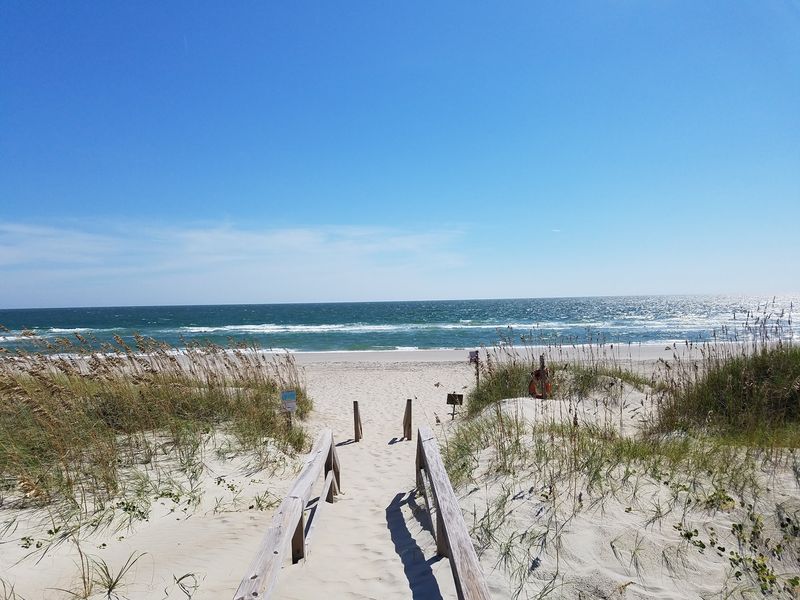
Cars stay on the mainland here. Golf carts hum along shaded lanes, and the quiet that results is part of why loggerheads keep choosing this island in Brunswick County.
It ranks among the most active loggerhead nesting sites on the entire East Coast. Season runs May through October, peaking in midsummer, with hatchlings emerging from August onward.
The Bald Head Island Conservancy runs the show. Staff and interns monitor nests through the night, escort hatchlings, and teach visitors what a false crawl looks like.
Nighttime Turtle Walks, often reserved for members, offer the rare chance to watch a mother excavate her nest or see a boil erupt. Sea Turtle Ride Alongs pull back the curtain on the daily dawn patrol.
Rules here have real teeth. Ocean-facing lights must be off or covered after dark during turtle season, red-filtered flashlights are the norm on the beach, and every chair, tent, and dug hole has to be cleared each night.
Old Baldy, first raised in 1795 and rebuilt in 1816, stands as the state’s oldest surviving lighthouse and makes for a satisfying climb before dinner.
Eating well is easy. Jailhouse Provisions occupies the former police station, Jules’ Salty Grub and Island Pub overlooks the marina, the Boat House BHI near the ferry landing does diner classics, and Copper’s Wood-Fired Kitchen at the Maritime Market pulls blistered pizzas from the oven.
3. Topsail Island, Surf City And Topsail Beach
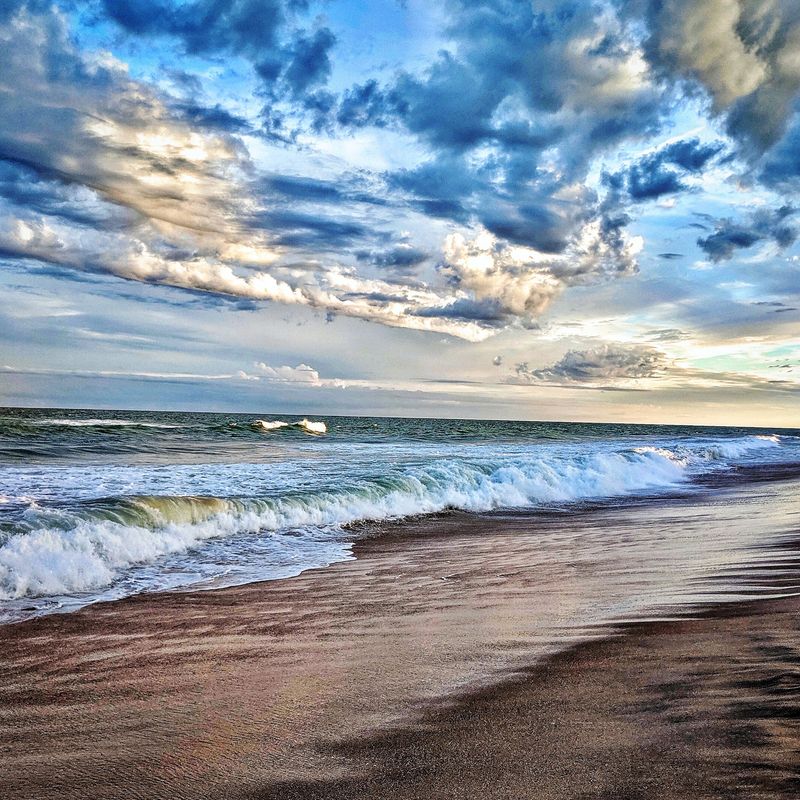
Twenty-six miles of shoreline, officially designated a sea turtle sanctuary, and a volunteer crew that treats sunrise like a sacred appointment. Topsail Island has been protecting nests longer than most beaches have been counting them.
Loggerheads do most of the nesting, though greens, leatherbacks, hawksbills, and the critically endangered Kemp’s ridley occasionally appear.
Nesting generally runs mid-May through August, with hatching continuing into October.
Every morning, Topsail Turtle Project volunteers walk assigned stretches looking for the tractor-tread pattern a mother leaves behind. Found nests get staked, signed, and logged before most vacationers finish their coffee.
Surf City is also home to the Karen Beasley Sea Turtle Rescue and Rehabilitation Center, a working turtle hospital that offers guided public tours. Their free Turtle Talks run Mondays and Tuesdays through August 31 at rotating locations.
The guidance visitors hear is refreshingly simple: dark, clean, and flat. Lights off, gear packed up, holes filled in.
When you are not turtle-minded, the Surf City Ocean Pier delivers sunrises worth setting an alarm for, plus fishing and long ocean views.
Soundside Park keeps families busy with a playground and picnic tables, and summer Sip, Shop, and Stroll evenings bring vendors and live music.
Dinner leans Carolina. Daddy Mac’s Beach Grille serves oceanfront plates, Sears Landing Grill and Boat Docks keeps it casual, and hushpuppies alongside shrimp and grits show up on menus all over the island.
2. Wrightsville Beach, New Hanover County
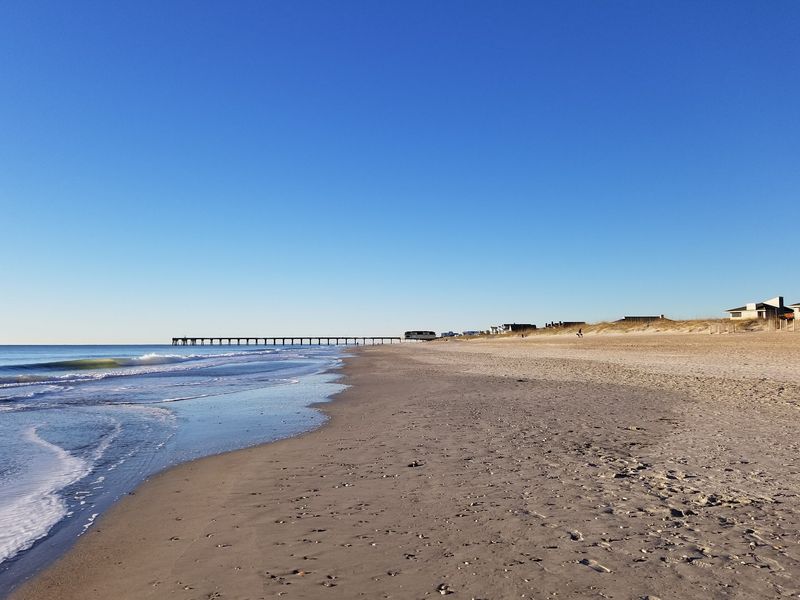
Clear blue-green water, a surf culture that starts before breakfast, and a nesting season that runs May 1 through October 31. Wrightsville Beach manages to be lively and turtle-friendly at the same time, which takes real coordination.
Loggerheads dominate the nest count. August brings a double dose of drama as late-arriving mothers still crawl ashore while the earliest hatchlings scramble seaward.
Volunteers with the Wrightsville Beach Sea Turtle Project patrol at first light in partnership with the town. Once they spot tracks, the nest is roped off as federally protected ground, and injured turtles are transferred to the Karen Beasley center up the coast.
Free family Turtle Talks happen Tuesday evenings in June, July, and August at the North Carolina Coastal Federation building. Kids learn to read tracks; adults learn why a forgotten beach chair can trap a hatchling.
The rules echo across every barrier island: ocean-facing lights off after dark, gear removed, holes filled.
Daytime here is generous. Johnny Mercer Pier draws anglers and walkers, and Masonboro Island Reserve, the longest undisturbed barrier island in the southern part of the state, invites kayak trips through winding tidal creeks and eco-tours led by naturalists.
Sea-to-table is not a slogan here so much as a habit. Oceanic serves dinner on its historic pier with waves rolling underneath, while Bluewater Waterfront Grill looks out over the Intracoastal Waterway and its parade of boats.
1. Kure Beach And Fort Fisher, New Hanover County
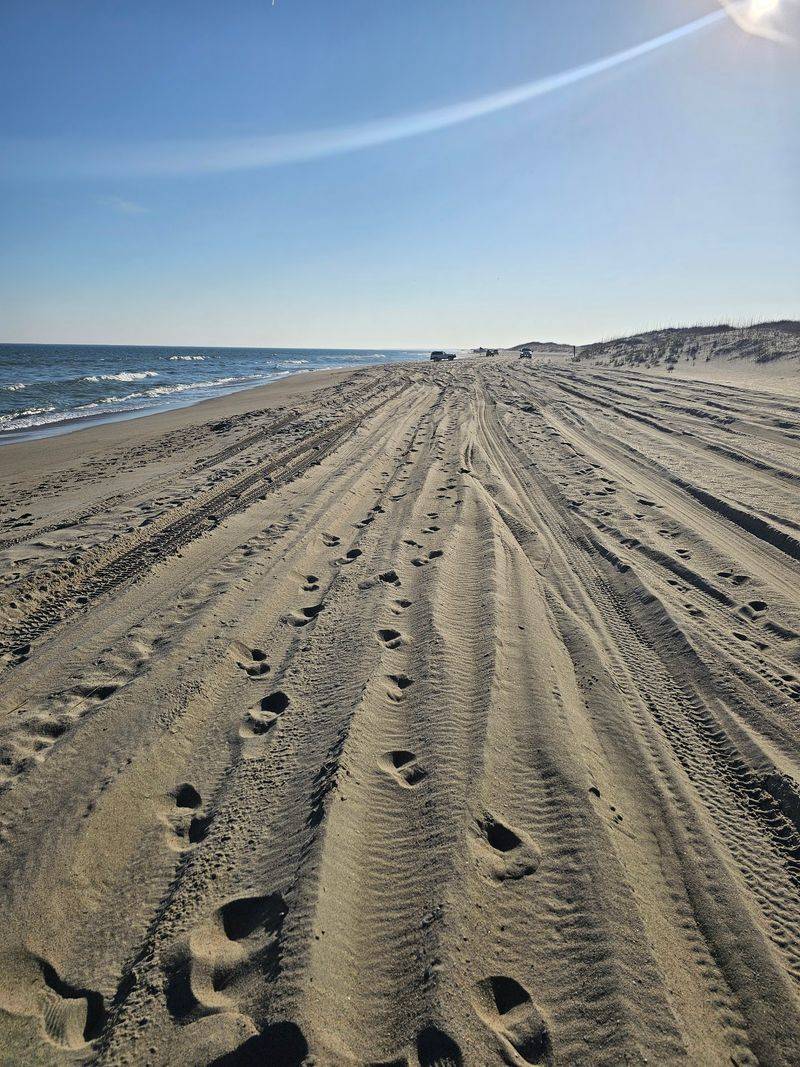
Civil War earthworks, a four-wheel-drive beach, and hatchlings racing the tide: the southern end of Pleasure Island layers history and wildlife in a way few shorelines manage. Kure Beach and Fort Fisher share both the crowds and the conservation duty.
Loggerheads nest most often, joined now and then by greens and Kemp’s ridleys. Nesting typically runs May through August, so late summer is thick with incubating eggs and first emergences.
Pleasure Island Sea Turtle Project volunteers cover the sand daily, from Kure Beach’s southern tip up to the north end of Carolina Beach.
Turtle Talks run on Monday evenings during summer; check the Town of Kure Beach calendar before visiting because published 2026 end dates currently differ between local tourism and town sources.
Just down the road, the North Carolina Aquarium at Fort Fisher rehabilitates hatchlings that never made it to open water, raising some for a year or more before release. Sea Turtle Exploration programs explain the species differences and the hazards each one faces.
Fort Fisher State Recreation Area holds the only four-wheel-drive beach access in the state park system, a favorite among surf anglers. A marsh trail leads to an observation deck overlooking Zeke’s Island and the Cape Fear River.
At the Fort Fisher State Historic Site, grassy mounds mark one of the war’s fiercest coastal battles. Afterward, Big Daddy’s plates Calabash-style seafood near the pier, Jack Mackerel’s Island Grill adds Caribbean spice, and Beach House Burgers keeps things simple.