One California Ramen Spot Is Getting The Flavor Just Like Japan Every Time
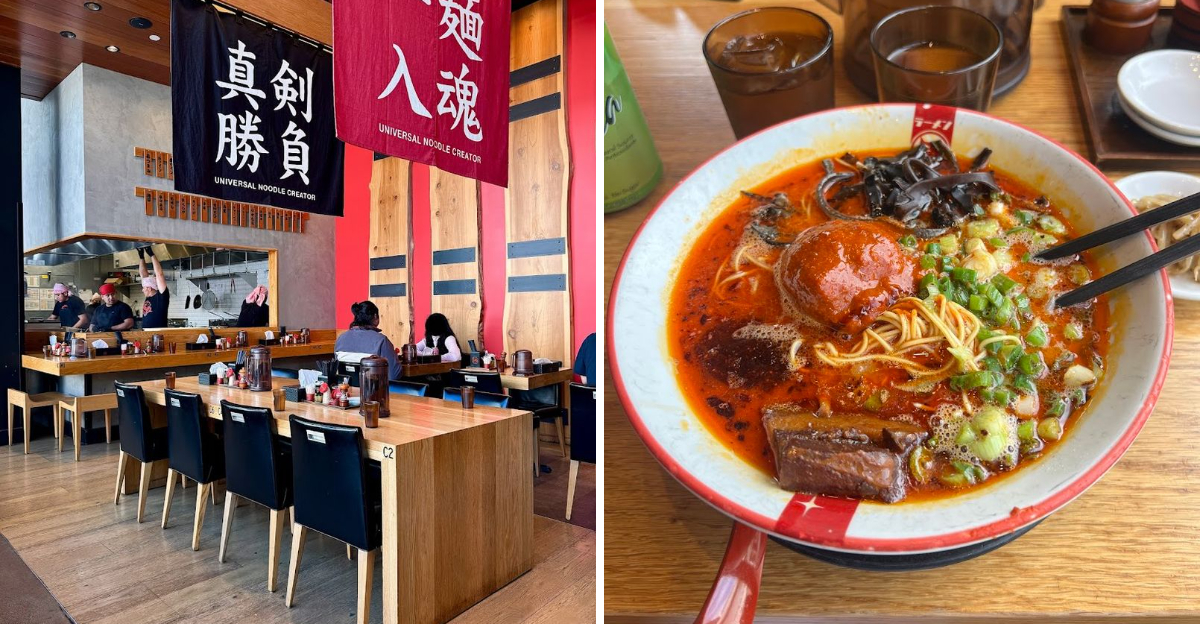
The line tells you everything before the first bite.
People wait. Phones stay down. The focus shifts to what is coming next. A bowl lands in front of you and the aroma hits immediately. Rich. Deep. Familiar in a way that feels hard to explain.
Good ramen does not try to impress with extras. It builds from the base up. Broth carries weight. Noodles hold texture.
Every element feels intentional rather than adjusted for trends. That kind of balance shows up fast and keeps your attention.
There is a reason ramen like this stands out in California right now.
One visit can turn into a habit without much thought. Flavors stay with you. Cravings come back quicker than expected. That is usually how people end up returning.
That experience stays consistent, delivering bowls that feel close to what people are searching for, and that alone makes it worth the wait.
A Tokyo-Born Legacy That Traveled Well
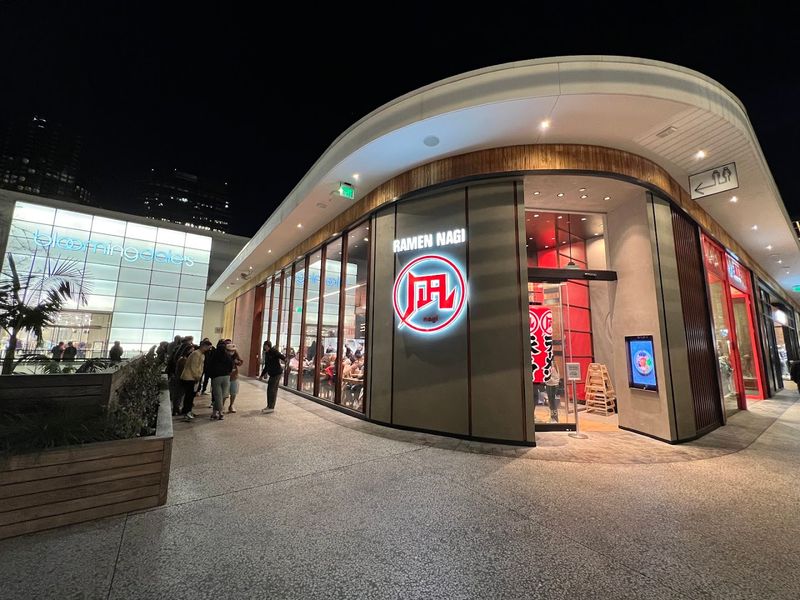
Back in 2004, a ramen chef in Tokyo set out to create something that would stand apart from every other bowl on the block.
Chef Satoshi Ikuta founded Ramen Nagi with a clear mission: build a broth so deep in flavor that one sip would tell the whole story.
That original vision has traveled across oceans and landed in Los Angeles with its integrity fully intact.
The LA location sits inside Westfield Century City Mall at 10250 Santa Monica Blvd, Suite 2850, Los Angeles, CA 90067, bringing a piece of Tokyo’s ramen culture directly into one of the city’s most visited shopping destinations.
The concept that launched in Japan now serves the same carefully developed recipes to diners in California, and the consistency is something worth noting.
What makes the origin story compelling is not just the chef’s background but the discipline behind the brand.
Ramen Nagi did not expand rapidly by cutting corners or adjusting flavors for new markets.
The commitment to the original Tokyo recipe is what keeps the experience grounded and honest, and that foundation is still clearly felt in every bowl served at the LA location today.
The 24-Hour Broth That Makes Everything Click
Not every restaurant is willing to commit a full day to a single pot of broth, but that is exactly what Ramen Nagi does.
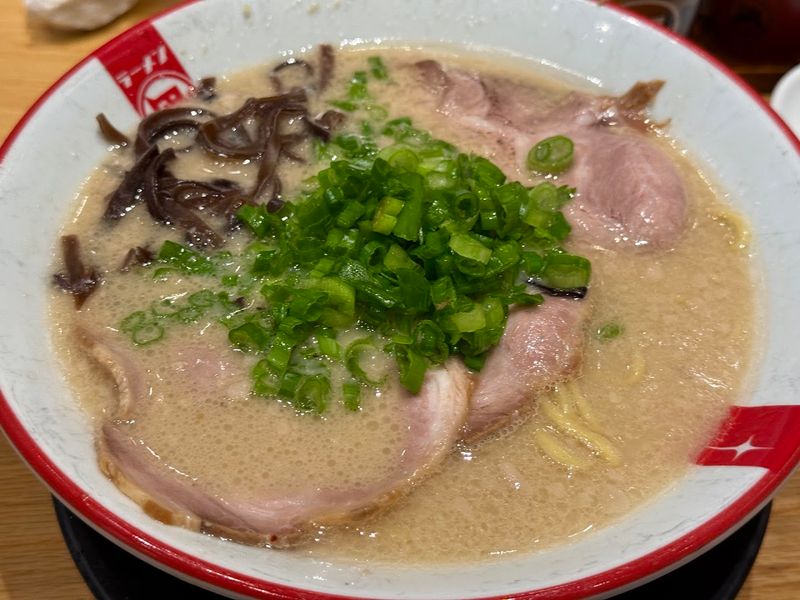
The tonkotsu base is simmered for 24 hours straight, allowing the pork bones to release their collagen slowly and steadily until the liquid transforms into something thick, silky, and genuinely complex in flavor.
That kind of patience produces a broth that tastes earned rather than assembled.
Tonkotsu ramen has a distinct character that separates it from other ramen styles.
The long cook time breaks down the fat and marrow from the bones, creating a broth that coats the noodles rather than just surrounding them.
The result is a richness that lingers in the best possible way, warming the whole bowl from the inside out.
Some diners who are new to tonkotsu may find the flavor bold or even oily at first, and that is actually a sign of authenticity rather than a flaw.
The style is naturally rich and hearty, and Ramen Nagi does not dilute it to appeal to a broader crowd.
The broth at the LA location tastes like the real thing because it is prepared the real way, no shortcuts included.
Four Kings And One Menu Worth Memorizing
The menu at Ramen Nagi is refreshingly focused, and that focus is part of what makes it work so well.
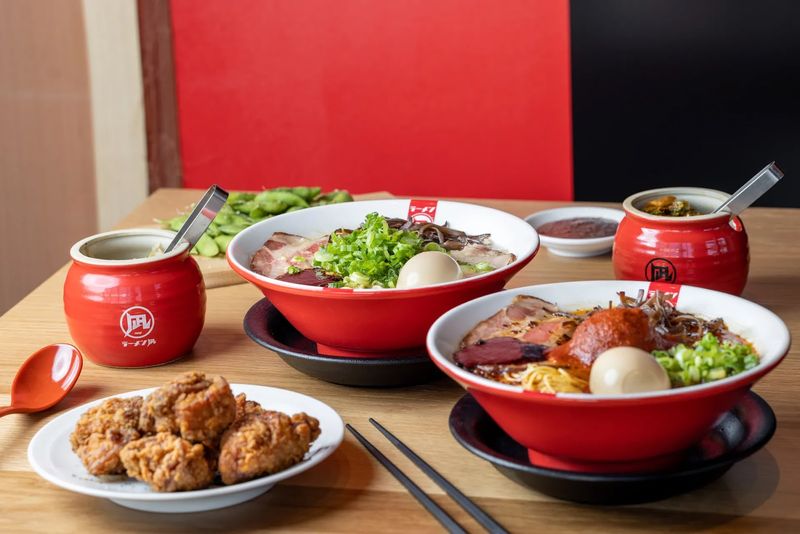
Rather than overwhelming diners with dozens of options, the restaurant centers its offerings around four signature ramen styles known as the Kings.
Each one brings a distinct personality to the table while sharing the same carefully developed tonkotsu base underneath.
The Original King is the classic tonkotsu bowl that started it all, clean and rich with a flavor profile that feels familiar yet deeply satisfying.
The Black King adds roasted garlic and squid ink to the broth, giving it a striking dark color and an earthy, garlicky depth that surprises first-timers in a good way.
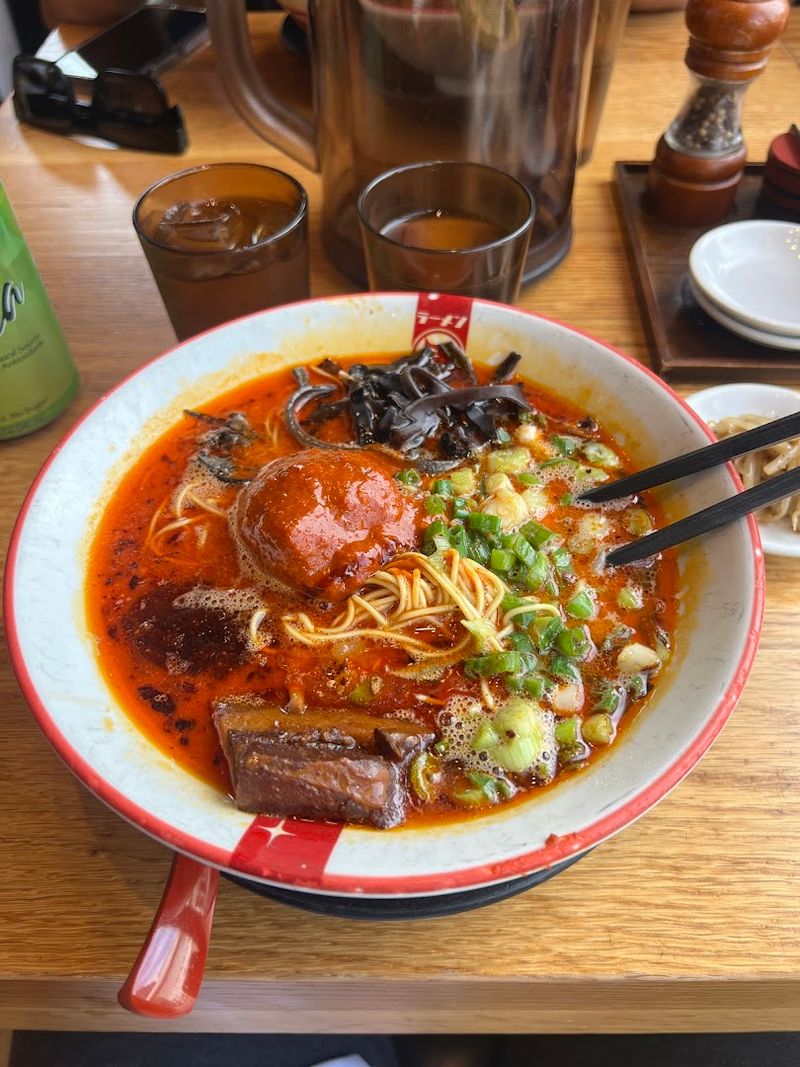
The Red King brings heat through a special chili blend that builds gradually without overwhelming the savory base, and the Green King swaps in a basil-forward broth that feels lighter and more herbaceous than the others.
A rotating Limited King option also appears at certain locations, offering something seasonal or experimental for regulars who have already worked through the core four.
Keeping the menu tight means the kitchen can focus entirely on quality rather than volume, and that discipline shows clearly in what arrives at the table.
Customization That Actually Changes The Bowl
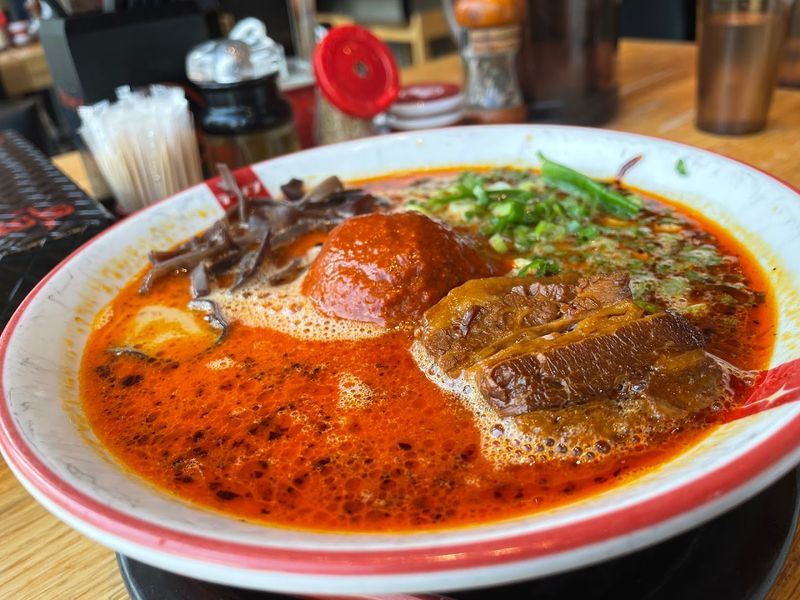
Ordering at Ramen Nagi involves a paper form that diners fill out while waiting in line, and that small sheet of paper gives each person real control over what ends up in the bowl.
The customization options cover noodle thickness, noodle firmness, broth richness, oil level, garlic amount, and spice level.
Each choice genuinely affects the final result rather than just offering the illusion of personalization.
Thin noodles tend to absorb the broth more quickly and feel lighter in texture, while thicker noodles hold their chew longer and carry more weight with each bite.
Choosing extra-firm noodles means they arrive with a satisfying snap, which many ramen enthusiasts consider the ideal texture for tonkotsu.
Broth richness can be dialed up or down depending on personal preference, making the bowl accessible to first-timers and rewarding for those who know exactly what they want.
The garlic option is worth paying attention to because the roasted garlic adds a nutty, slightly sweet depth that complements the pork-based broth without overpowering it.
For anyone visiting for the first time, following the chef’s recommended settings marked on the form is a practical starting point that tends to produce a well-balanced bowl across all four ramen styles.
Side Dishes That Hold Their Own
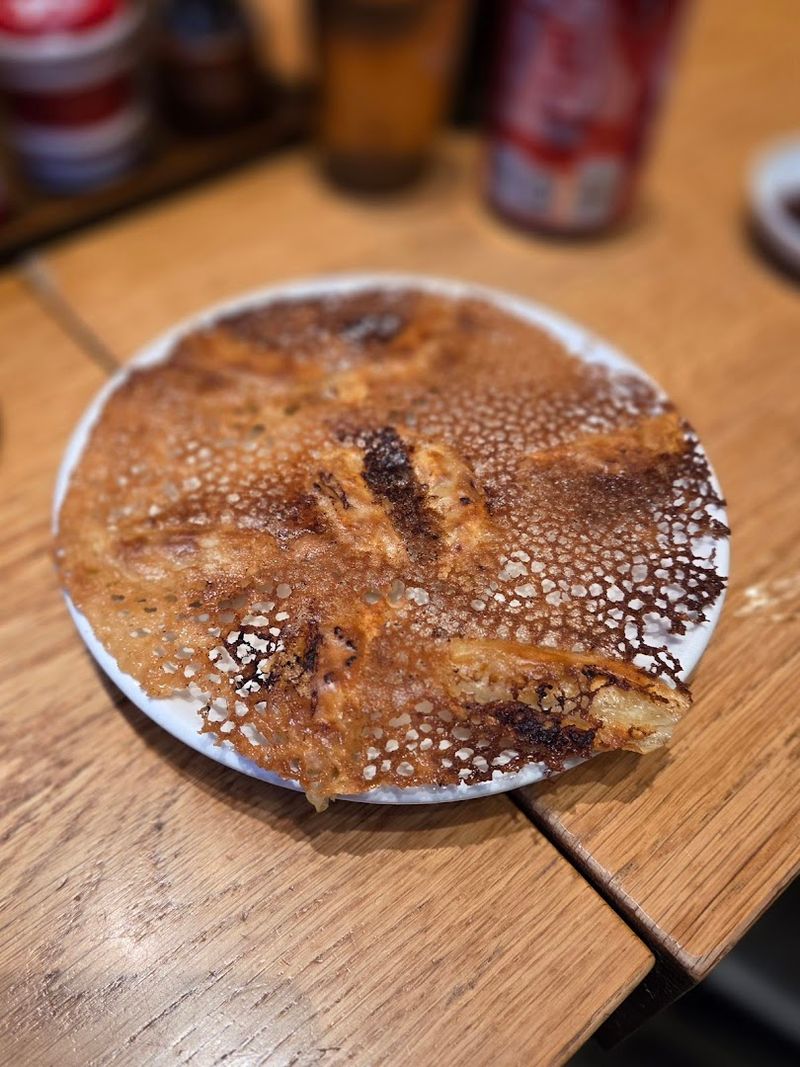
Ramen tends to dominate the conversation at most noodle spots, but the side dishes at Ramen Nagi deserve their own moment.
Chicken karaage, the Japanese-style fried chicken, comes out with a crispy exterior and juicy interior that holds up well even as the ramen cools slightly beside it.
The marinade used for the chicken gives it a savory depth that pairs naturally with the richness of the tonkotsu broth.
Gyoza, the pan-fried dumplings, offer a satisfying contrast in texture with their crisp bottom and soft, filled top.
The filling tends to be seasoned simply, letting the natural flavor of the pork and vegetables come through without too much distraction.
A small amount of dipping sauce accompanies the gyoza, though the dumplings are flavorful enough to stand on their own.
One detail that many regulars appreciate is the dashi-seasoned bean sprouts placed on each table as a complimentary side.
The sprouts are lightly dressed and peppery, adding a crunchy and refreshing break between spoonfuls of rich broth.
Asking the server for a refill on the bean sprouts is completely acceptable and a practical tip worth keeping in mind, especially during a longer visit when the richness of the main bowl starts to build up.
The Dine-In Only Policy And What It Signals
Ramen Nagi does not offer takeout or delivery, and that policy is not an oversight.
The restaurant operates exclusively as a dine-in experience, and the reasoning behind it connects directly to how ramen is meant to be eaten.
A bowl of tonkotsu ramen sitting in a to-go container for twenty minutes is a fundamentally different product from one served fresh at the table, and the kitchen clearly prioritizes the latter.
It is worth noting that some locations have offered limited takeout at times.
Noodles continue to absorb broth after the bowl is assembled, which means timing matters more than most people realize.
Eating ramen at the counter or table while the noodles are still firm and the broth is still steaming produces a noticeably better result than eating it reheated or lukewarm.
The dine-in policy enforces that standard without exception.
There is also something to be said for the atmosphere that a sit-down ramen experience creates.
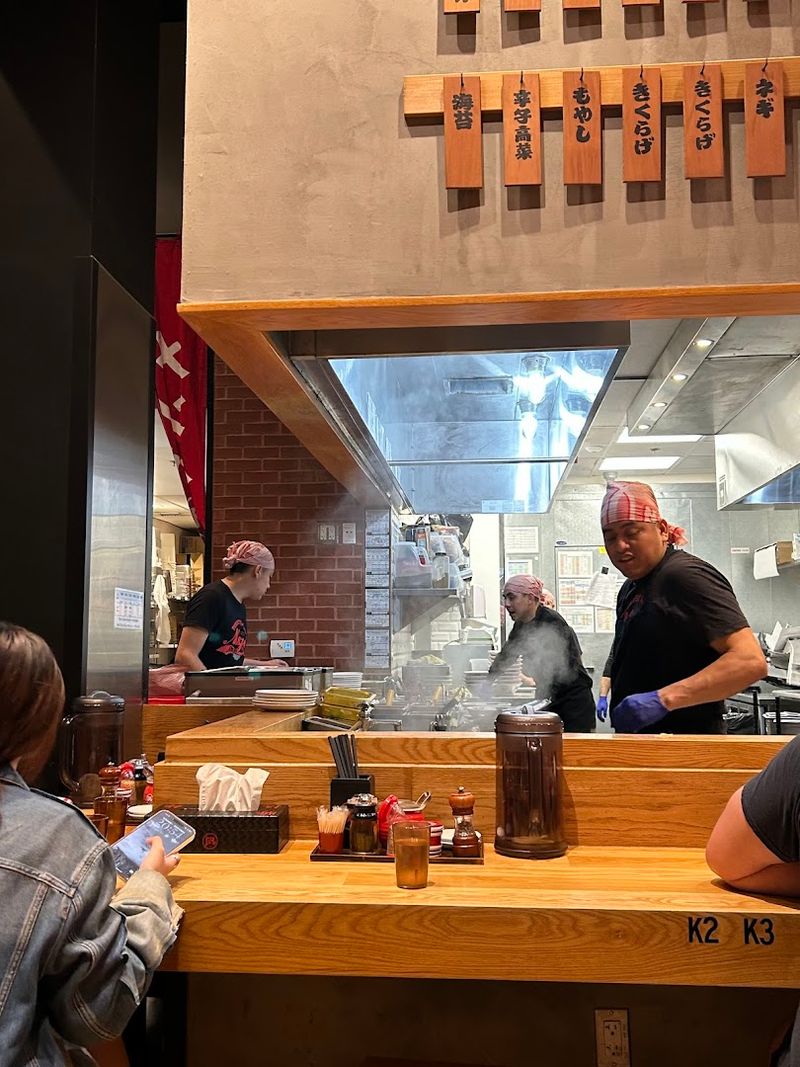
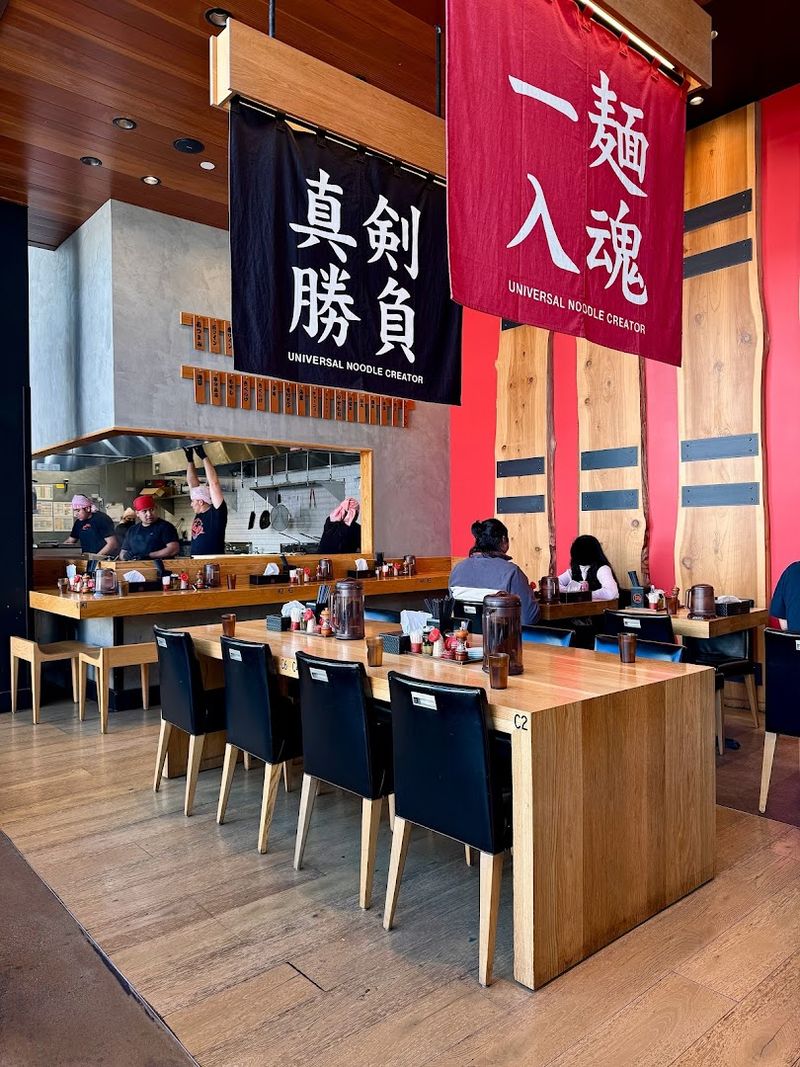
The open kitchen layout at the LA location lets diners watch the action from certain seats, and the energy of the space adds to the meal in a way that a takeout bag simply cannot replicate.
Choosing a seat near the counter, when available, tends to offer the most engaging view of how the kitchen operates during a busy service, which adds an extra layer of interest to the visit.
The Atmosphere Inside The LA Location
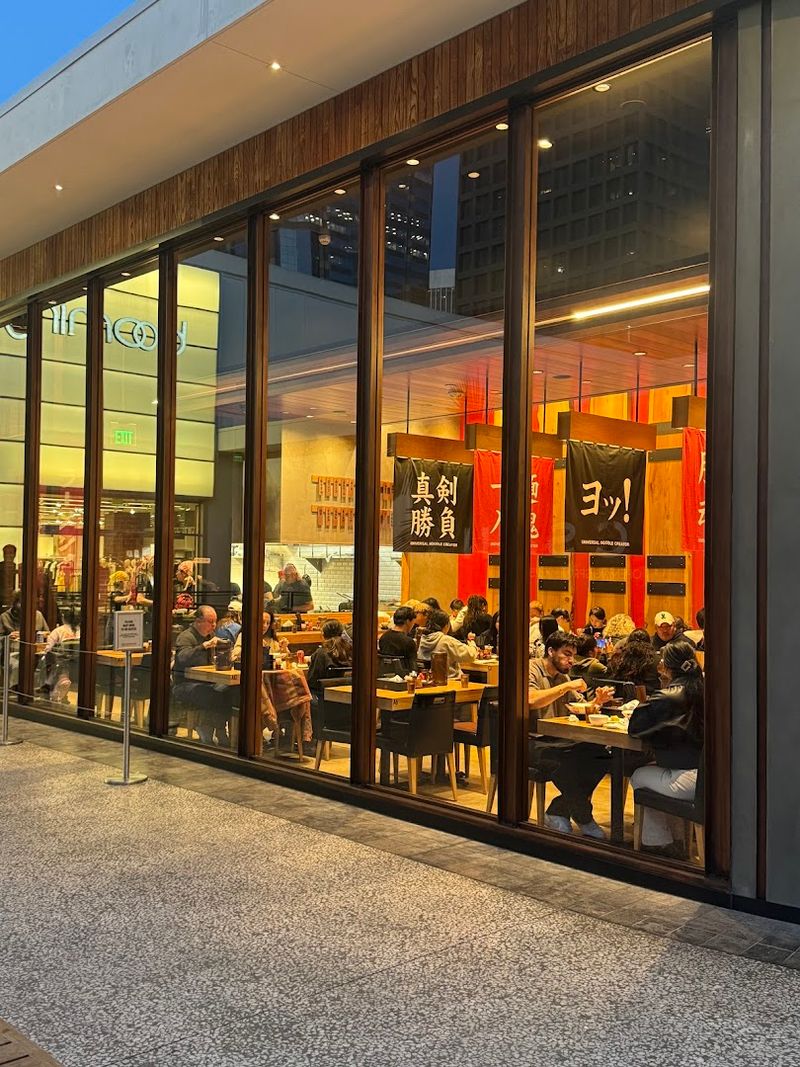
Stepping inside the LA location feels noticeably different from the usual mall dining experience.
Large glass windows let natural light pour into the space during daytime hours, giving the interior a clean and open quality that keeps the mood relaxed rather than cramped.
The design leans toward a modern Japanese aesthetic with minimal clutter and an emphasis on the food rather than the decor.
Counter seating along the open kitchen gives solo diners a front-row view of the cooking process, which adds a lively and engaging dimension to the meal.
The noise level tends to reflect the popularity of the spot, meaning the space can feel lively and energetic during peak hours, but not uncomfortably loud.
The overall vibe sits somewhere between casual and focused, which matches the no-frills approach to the menu.
During busier periods, the seating feels tight because the restaurant is not especially large and the line outside moves at a steady pace.
Groups larger than four may find the layout challenging since the space prioritizes efficient turnover rather than extended gatherings.
Visiting during off-peak hours on a weekday tends to allow for a more relaxed experience with a shorter wait and more breathing room once seated at the table.
How The Line System Actually Works
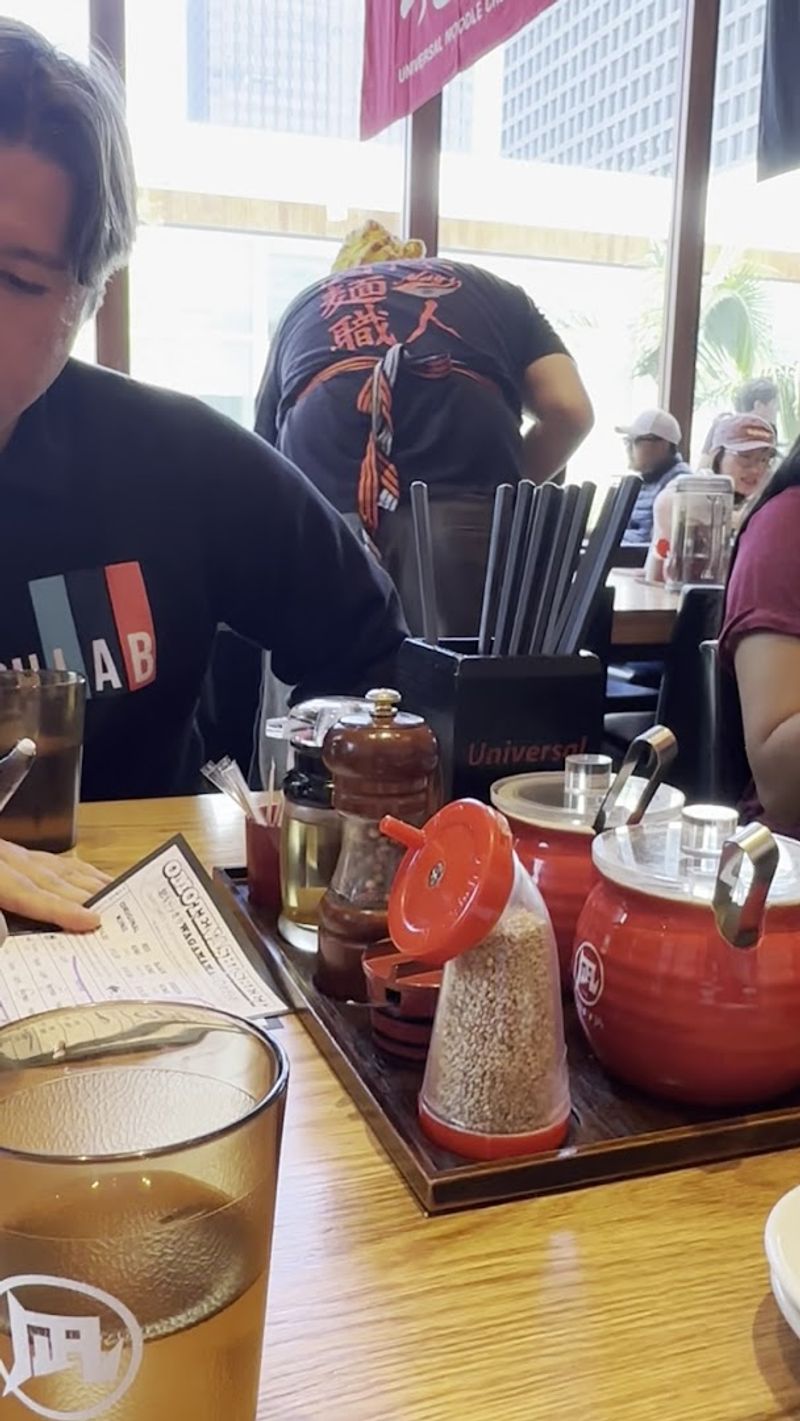
The line outside Ramen Nagi has become part of the experience rather than just an obstacle.
During peak meal hours the queue can stretch noticeably, but the restaurant manages it with a system designed to keep things moving.
A staff member walks along the line to explain the menu and hand out order forms before diners even reach the door, which cuts down significantly on decision-making time once seated.
Filling out the order form while waiting means the kitchen can begin preparing the bowl almost immediately after a table opens up.
That efficiency is part of why food tends to arrive quickly after seating, often within just a few minutes.
The system mirrors the fast-paced counter culture of ramen shops in Japan, where the goal is to get a perfect hot bowl in front of the diner as efficiently as possible.
Arriving slightly before peak hours, such as early for lunch around 11 AM on a weekday or just after the dinner service opens at 5 PM, tends to result in a shorter wait.
The restaurant closes between lunch and dinner service, so checking the current hours before visiting is a practical step that can save unnecessary waiting time outside a temporarily closed door.
Operating Hours And The Split-Service Schedule
One detail that catches some first-time visitors off guard is the split-service schedule that Ramen Nagi follows at the LA location.
The restaurant does not stay open continuously throughout the day, which means arriving during the mid-afternoon gap can result in finding a closed door even though the mall around it remains fully active.
Knowing the schedule in advance makes the visit much smoother.
On weekdays from Monday through Friday, the kitchen runs from 11 AM to 2:30 PM for the lunch service and reopens at 5 PM for dinner, closing again at 9 PM.
Weekend hours shift slightly, with the Saturday and Sunday schedule running from 11:30 AM through 9 PM with a break in the afternoon as well.
Hours are always subject to change so checking the restaurant’s current schedule directly before visiting is the most reliable approach.
The split-service format is common in Japanese ramen culture, where the kitchen staff uses the break between services to prep ingredients, restock the broth, and reset the space.
That gap is not downtime in the traditional sense but rather an active preparation period that contributes directly to the quality of the next service.
Planning around the schedule rather than against it makes the overall visit significantly more enjoyable and stress-free.
Why The Flavor Holds Up Against Japan’s Best
The question that follows any internationally expanded ramen chain is whether the flavor survives the move.
For Ramen Nagi in LA, the answer appears to be yes based on the consistency that the kitchen maintains across its core menu.
The tonkotsu broth carries the same richness and depth that the Tokyo original built its reputation on, and the noodles are sourced and prepared with the same attention to texture that defines a proper Japanese ramen experience.
Part of what keeps the flavor honest is the limited menu structure.
Fewer dishes mean the kitchen can focus its energy on getting each bowl exactly right rather than spreading attention across a sprawling list of options.
The customization system adds variety without asking the kitchen to reinvent the broth for every preference, keeping the foundation stable while allowing individual adjustments at the surface level.
Diners who have eaten ramen in Japan and then tried the LA location often note a recognizable similarity in the experience, from the speed of service to the texture of the noodles to the weight of the broth.
That consistency across such a significant geographical distance is not accidental but reflects a deliberate commitment to the original recipe.
For ramen enthusiasts in California, that kind of reliability is genuinely hard to find and well worth the trip to Century City.