One Connecticut Orchard Grows Unusual Apple Varieties Most Shoppers Usually Never See
The supermarket apple aisle has been keeping secrets from us. Once you realize how many varieties exist beyond the familiar handful, those neat grocery displays suddenly seem a little less exciting.
One Connecticut orchard gives curious apple fans a chance to discover varieties that rarely make it onto ordinary shopping lists.
That could mean an apple with a flavor you were not expecting or one carrying a name you have never heard before. Either way, choosing fruit becomes much more interesting than simply reaching for the usual bag.
It also makes you wonder what else we have been missing all these years.
Orchards like this keep lesser-known varieties in the conversation instead of letting the most commercially familiar apples take over completely. That alone gives an autumn visit a fun little sense of discovery.
You may think you already know exactly what an apple tastes like. A few unusual varieties can happily mess with that assumption.
1. Rare Apples Give This Orchard Its Unusual Edge
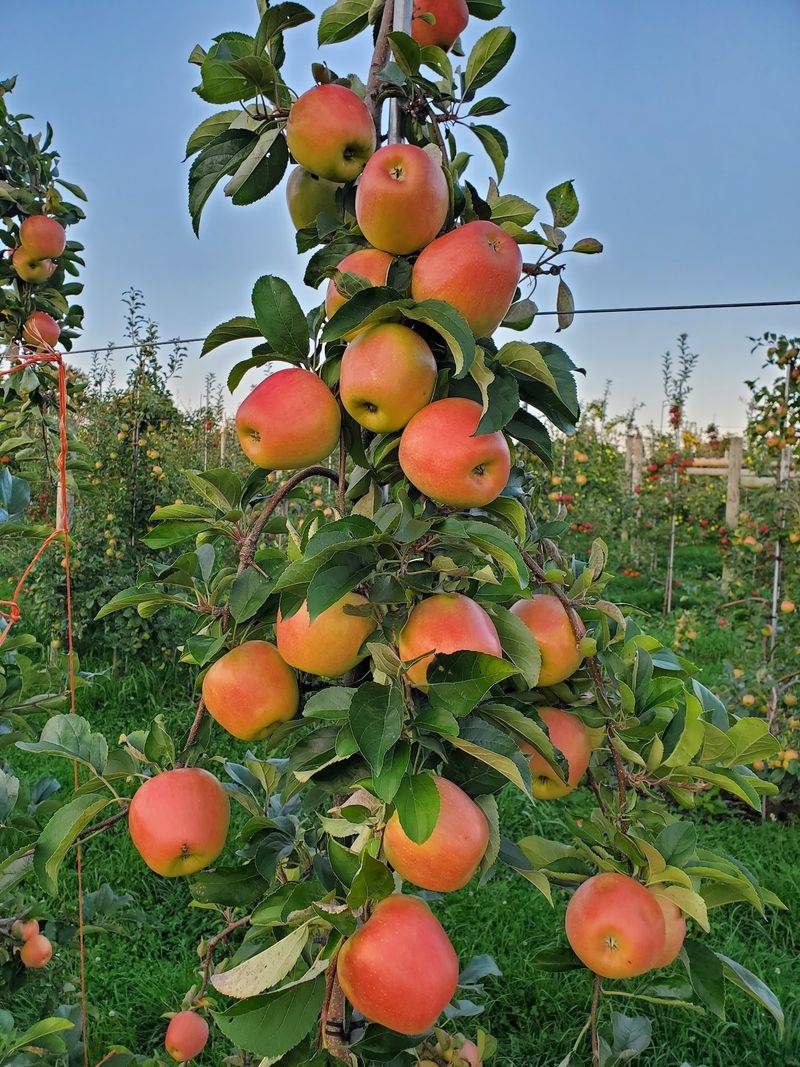
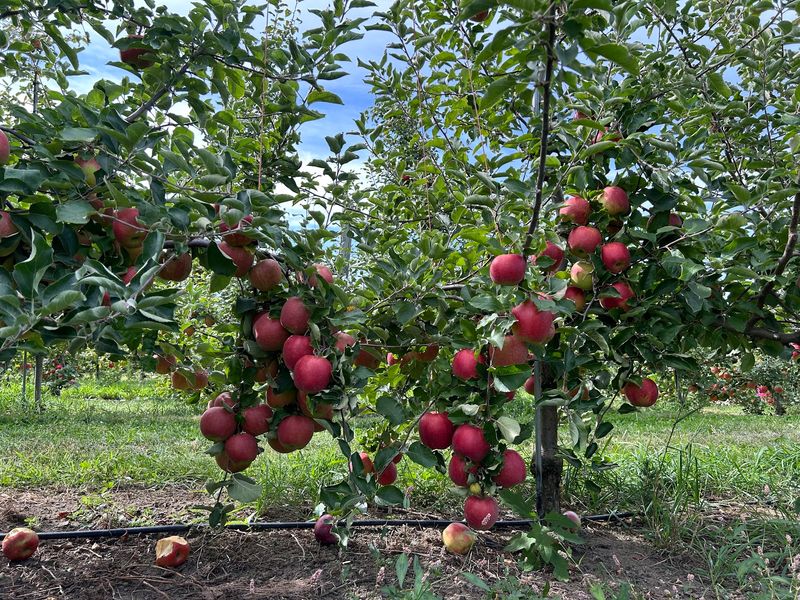
Six acres does not sound like much until you learn how many trees fit inside them. Hidden Gem Orchard packs roughly 4,000 apple trees onto its land, all grafted onto dwarfing rootstock so they stay short enough to pick from the ground.
The planting system is called Vertical Axe, and it shapes each tree into a narrow cone. Skinny trees planted close together catch more sunlight across more surface area, which means better color and better flavor in the fruit.
The orchard itself is young by New England standards. It was established in 2017 on land that had once been part of the Southbury Training School farm, so the trees have only recently hit their productive stride.
What sets the place apart is the deliberate choice to grow apples that are hard to sell commercially. Small growers can take risks that large distributors cannot, because nobody has to ship these apples across the country or worry whether shoppers recognize the name.
That freedom is exactly why the variety list looks so unusual. Visitors regularly describe the operation as well managed and refreshingly non-commercial, with the fruit doing the talking instead of attractions built around it.
2. Heritage Varieties Grow Alongside Modern Favorites
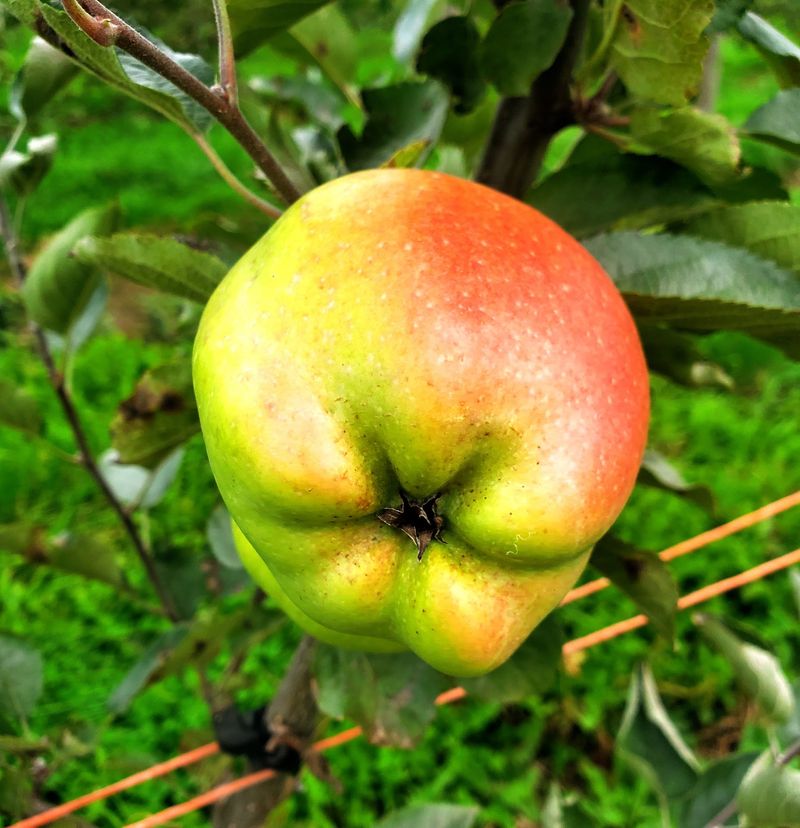
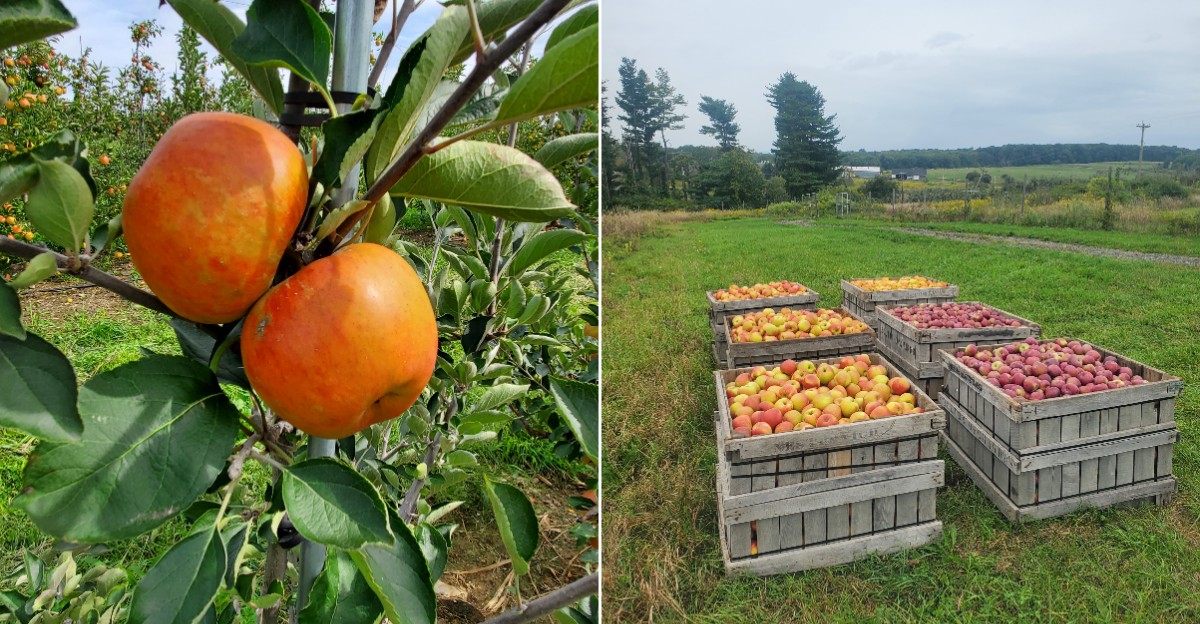
Thirty-eight to thirty-nine varieties currently grow here, with new ones added most years. Familiar names are part of the lineup, including Honeycrisp, Gala, McIntosh, and Fuji, so nobody leaves empty-handed.
The interesting stuff sits beside them. Esopus Spitzenburg, a dark red apple speckled with freckles, was famously Thomas Jefferson’s favorite and once grew at Monticello.
Pink Pearl surprises people when it is cut open, revealing bright red flesh instead of white.
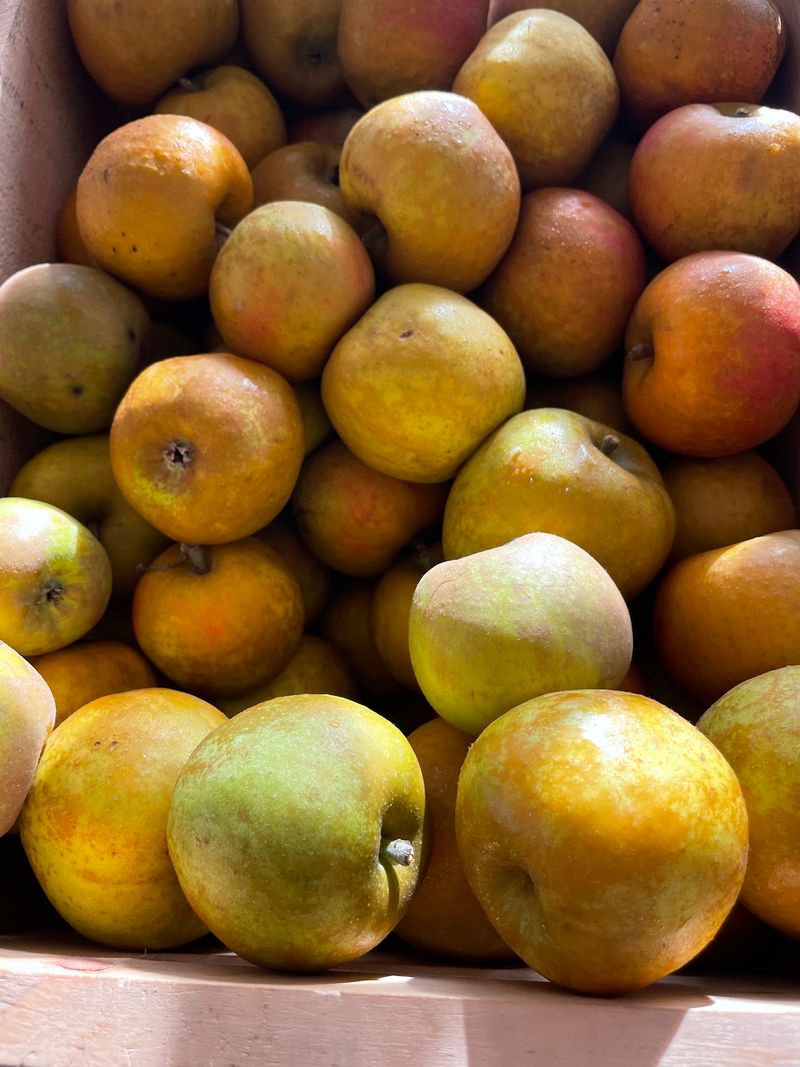
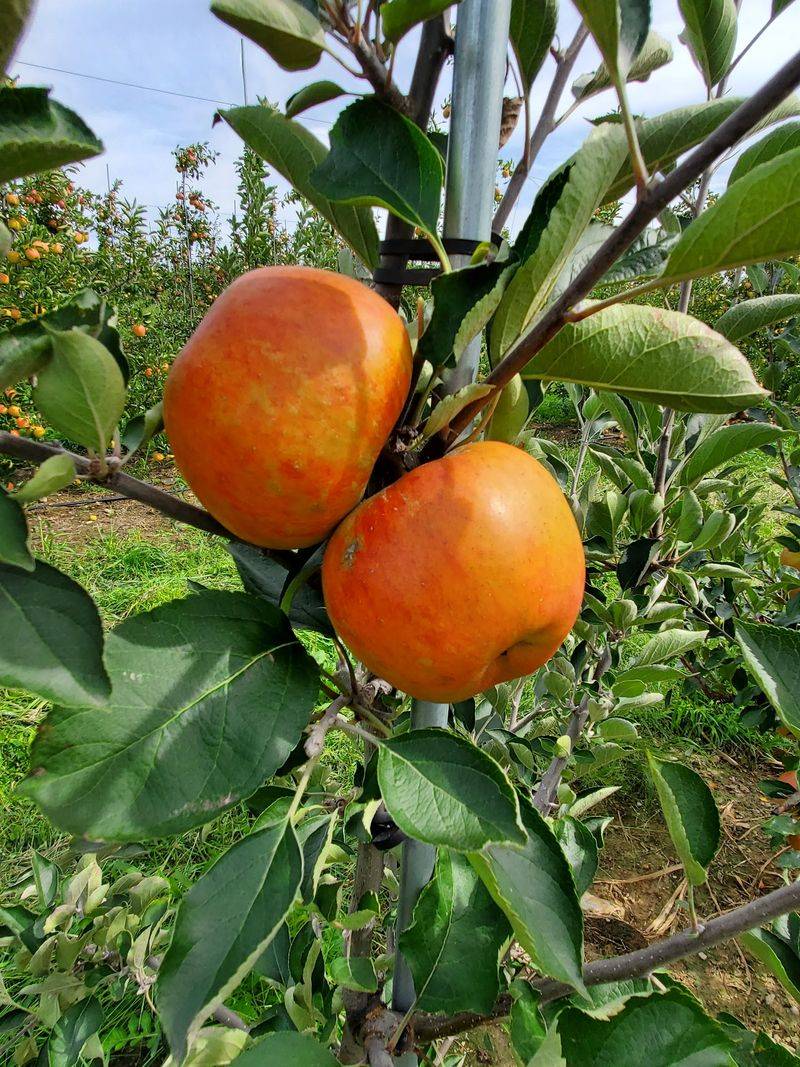
Hudson Golden Gem barely reads as an apple at first glance, with a russeted skin and a flavor that leans toward pear. English antiques appear too, including Ashmead’s Kernel from the 1700s, prized for its aromatic tartness and lemony bite.
Calville Blanc traces back to sixteenth-century France and has long been treated as a gourmet baking apple. Wickson goes the opposite direction, tiny in size but intensely concentrated in flavor.
Modern breeding gets equal attention. Firecracker and Cordera are recent releases from Cornell’s apple breeding program, the first balancing sharp acidity against sweetness with a firm crunch, the second growing larger with a rounder sweet-tart profile.
Put together, the collection reads like a timeline of apple history stretching from Renaissance Europe to last decade.
3. Purchase Brook Road Leads Into The Southbury Countryside
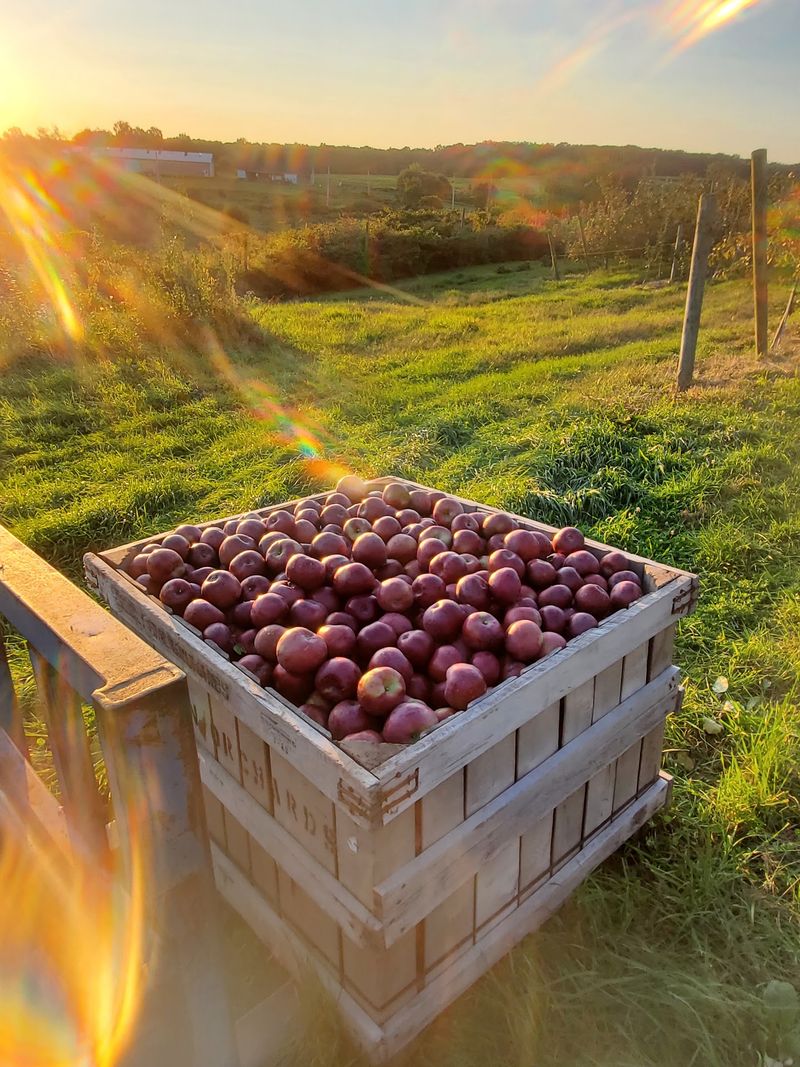
Some fall stops feel wonderfully uncomplicated. Apples are the main event here, and the countryside does plenty of the decorating.
Hidden Gem Orchard spreads across six acres in Southbury’s Purchase section, with thousands of dwarf apple trees covering the rolling property.
The orchard specializes in varieties that can be surprisingly difficult to spot in an ordinary supermarket. Familiar names like Honeycrisp and McIntosh grow alongside antique and unusual apples, including Pink Pearl, Esopus Spitzenburg, Hudson Golden Gem, and Golden Russet.
The farm currently grows dozens of varieties, with the selection changing as the harvest progresses.
Pick-your-own season brings visitors directly among the trees, while Saturday and Sunday hay wagon rides make the trip between the parking area and orchard easier. The hillside setting adds wide-open views, especially once autumn colors begin filling the surrounding landscape.
No reservations are required, and parking is free.
For GPS directions, the orchard uses 2500 Purchase Brook Road in Southbury, near the intersection with Spruce Brook Road.
The farm stand adds another reason to linger, with pre-picked apples and seasonal treats available during harvest time. It is a refreshingly simple outing where discovering an apple you have never tasted before can become the best part of the day.
4. Unfamiliar Apples Turn Shopping Into A Taste Test
Picking apples here works less like grocery shopping and more like a tasting flight. With nearly forty varieties on the property, many visitors are likely to encounter names they have never heard before, making this Connecticut orchard especially fun to explore.
Rows are labeled by variety and numbered, which turns wandering the hillside into a kind of scavenger hunt. Staff know the fruit well and will steer you toward the right apple depending on whether you want to snack, bake, or press cider.
Pick-your-own guests are welcome to eat one fresh apple straight off the tree, and that single bite often changes the whole plan. Tasting the difference between a modern release and a centuries-old English variety in real time is more convincing than any description.
Description cards for the varieties get mentioned often by returning visitors, who use them to decide what to try next. An Apple of the Week series highlights one variety at a time with its history, flavor, and best uses.
Further signage next to individual varieties is planned, spelling out flavor notes and ideal applications. Many regulars build mixed bags on purpose so the week ahead tastes different every day.
5. Each Variety Brings Its Own Flavor And Texture
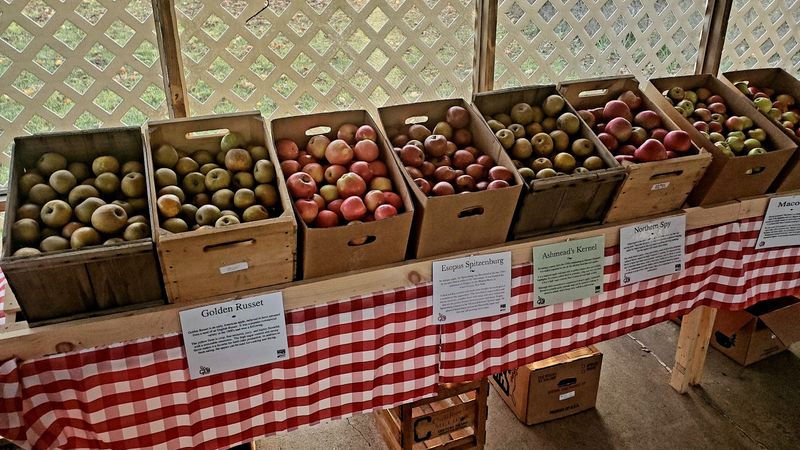
One bite can surprise you. The next might taste completely different.
That is part of the fun at Hidden Gem Orchard, where unusual apples turn a familiar fall fruit into something worth comparing.
Some varieties are perfect for eating straight from the hand. Honeycrisp delivers its famous juicy crunch, while Gala leans sweeter and Fuji brings firm flesh with plenty of natural sweetness.
Other apples offer flavors that are harder to predict before that first bite.
Baking changes the game. Cortland apples hold up well in pies and resist browning after slicing, while McIntosh softens considerably during cooking, making it particularly useful for applesauce.
Jonagold works nicely both fresh and cooked, so it is an easy choice when one bag needs to handle several jobs.
Then things get more unusual. Calville Blanc d’Hiver is an old French variety long prized for cooking, while Ashmead’s Kernel is known for a strong, distinctive flavor.
Ribston Pippin brings another historic apple into the mix.
Cider varieties add even more character. Golden Russet and other apples grown for pressing can contribute acidity, sweetness, and richer flavor.
Mixing several varieties can also make homemade pies more interesting, giving each slice different levels of sweetness, tartness, texture, and aroma.
6. Fall Harvests Keep The Selection Constantly Changing
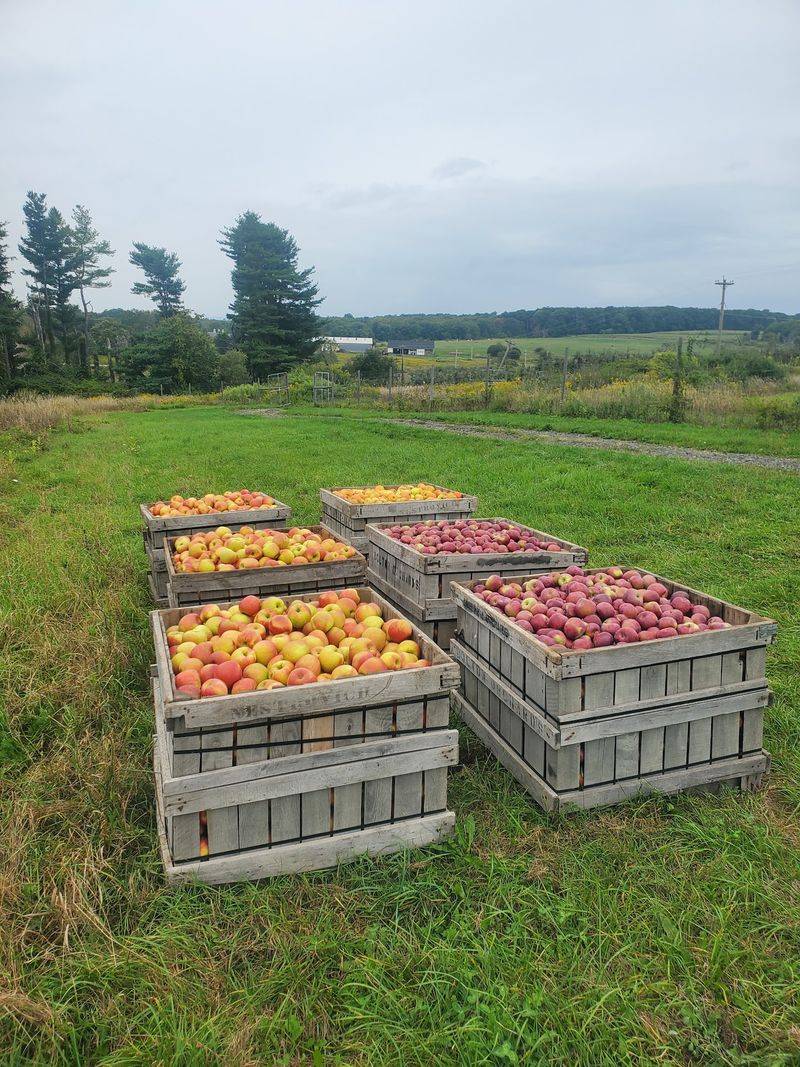
Come twice in one season and you will pick from two different orchards, essentially. Varieties ripen on their own schedules across September and October, so the list of what is available shifts week by week rather than staying fixed.
Pick-your-own generally runs Friday through Sunday from 10 AM to 5 PM during the season, though hours and openings can change, so checking the weekly update before driving out is the smart move.
On weekends, a hay wagon carries guests to and from the orchard rows, a short ride that regulars mention fondly.
Grapes joined the lineup as well, with several table varieties including seedless types and Concord appearing at the farm stand starting around mid-September.
The farm stand stays open after pick-your-own ends, operating Fridays through Sundays until November 29 with fresh-picked apples and other seasonal items. That extended window is handy for holiday baking, when good storage apples matter most.
Bag pricing is based on group size rather than separate charges for parking or wagon rides, which keeps the math simple at the register.
Early arrivals on weekend mornings have the best odds at the baked goods, including cider donuts and hand pies that tend to sell out.
7. Lesser-Known Fruit Rewards Curious Apple Fans
Self-described apple snobs have found their place. Several returning visitors say they simply stopped buying supermarket apples once they discovered how much flavor range exists outside the standard four or five names.
The appeal is partly about scarcity. Many of the varieties grown here are difficult or impossible to find in mainstream stores, because they bruise easily, ripen unevenly, or look too strange to sell in a bin.
Learning comes with the fruit. The orchard shares the background of individual varieties, so a Spitzenburg is not just a red apple but a piece of early American agricultural history you can eat.
Deliberate simplicity defines the atmosphere. There are no corn mazes or petting areas, no midway of attractions, just a modest farm stand, the trees, and the hillside.
Visitors who prefer that setup say so consistently, praising the uncrowded pace and the friendly, knowledgeable help at the stand. Questions sent ahead of a visit tend to get answered quickly.
Facilities are minimal, which is worth planning around before you leave home. Dogs are not permitted in the orchard rows, so four-legged family members should sit this particular outing out.
8. Orchard Visits Feel Like Exploring An Apple Library
Ever tasted an apple with a story? How about one whose roots stretch back centuries?
Hidden Gem Orchard makes apple picking feel more like discovery, with rows devoted to distinctive varieties carrying their own flavors, histories, and quirks.
The dwarf trees keep everything comfortably within reach while opening up views across the gently sloping orchard. Instead of disappearing beneath tall branches, visitors can wander between clearly arranged rows and focus on what is growing around them.
The real fun comes from slowing down. One apple might be intensely sweet, while another delivers unexpected tartness or a flavor completely unlike supermarket standards.
Labels help identify varieties, making it tempting to stop, compare, and add something unfamiliar to the bag.
Weekend wagon rides bring another enjoyable element during pick-your-own season. The ride carries guests between the parking area and orchard while offering a chance to take in the surrounding countryside before choosing fruit.
This is not an orchard built around an enormous lineup of attractions. Apples get the spotlight instead, and that simplicity suits the place.
Anyone curious about old, unusual, or simply delicious varieties can leave with more than fresh fruit. Remembering which apple became the surprise favorite is part of what makes the visit so much fun.