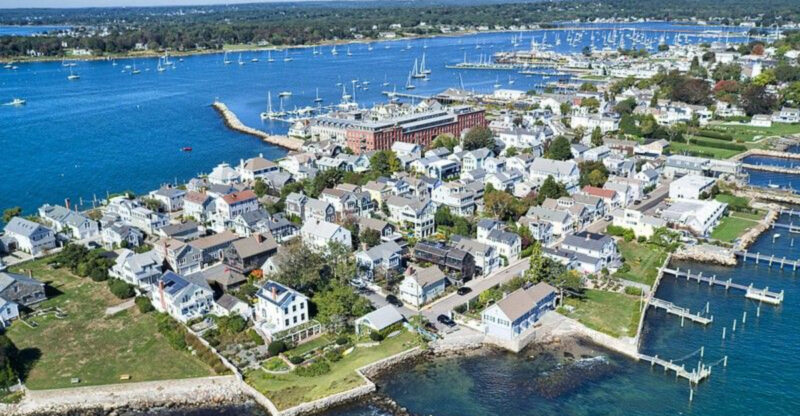
One Connecticut Town Is Home To One Of The State’s Highest-Rated Public High Schools
Strong schools can shape the way people think about an entire town, especially when one campus keeps appearing near the top of statewide rankings.
In Connecticut, this community is home to a public high school currently ranked among the state’s best by Niche.
That reputation is not built on one number alone. The school also scores highly for college preparation and teaching, which helps explain why families pay attention to it.
The surrounding town has plenty going for it beyond academics, but the school remains one of its strongest calling cards.
That kind of recognition can influence everything from local pride to the way newcomers evaluate the area.
It also gives the town a little extra bragging power. A high ranking does not tell the entire story of any school, of course.
Still, when a public high school lands near the top of a statewide list, people notice.
And this one keeps giving them a reason to.
1. Strong Academics Have Built This School A Statewide Reputation
Academic ambition runs deep here. Curiosity gets plenty of room too.
Greenwich High School offers a broad college-preparatory program with extensive Advanced Placement and honors opportunities.
Students can move well beyond standard subjects, exploring fields such as marine biology, computer programming, music production, and advanced science research.
That range gives students room to follow interests that may eventually shape college plans or careers. Science students can pursue specialized laboratory work, while technology courses progress from introductory programming into advanced computer science.
Recognition has followed the school’s academic focus. Greenwich High earned Gold status on the College Board’s 2025 AP School Honor Roll for the second consecutive year.
Its current profile also reports 62 National Merit Commended Students in the Class of 2026.
Research has become another standout area. Three seniors were named Regeneron Science Talent Search scholars in 2024, placing them among 300 students selected nationwide.
Each earned $2,000, with matching awards going to the school.
The opportunities extend beyond traditional academics, with strong programs in music and visual arts adding more ways for students to challenge themselves.
2. The 54-Acre Campus Sits In A Busy Suburban Community
This campus feels more like a small district than a single school. There is room to spread out.
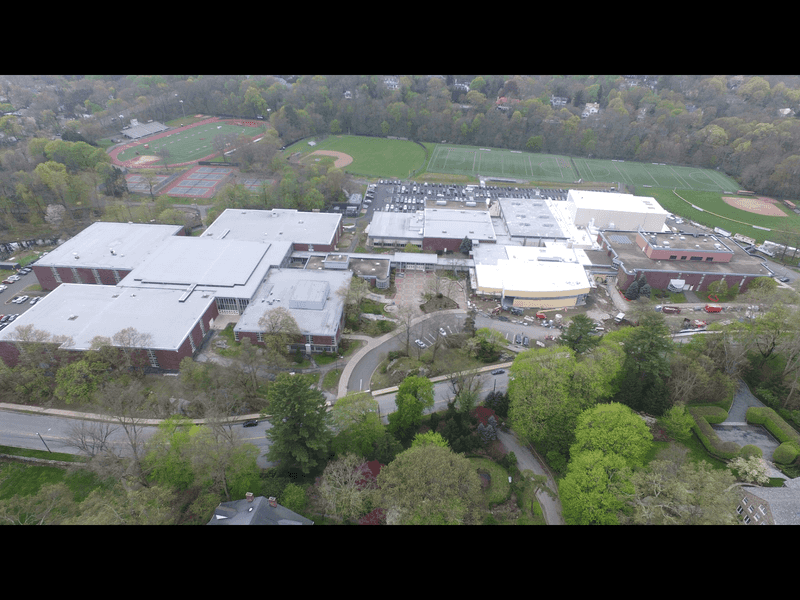
Greenwich High School covers 54 acres, giving students space to move between classrooms, athletic areas, parking lots, and other facilities throughout the day. The current campus opened in 1970, replacing the school’s earlier downtown home.
Today, roughly 2,600 students attend, and the scale shows in both the buildings and the programs. Athletic facilities include Cardinal Stadium, tennis courts, a pool, gym spaces, and multiple playing fields used for practices and competition.
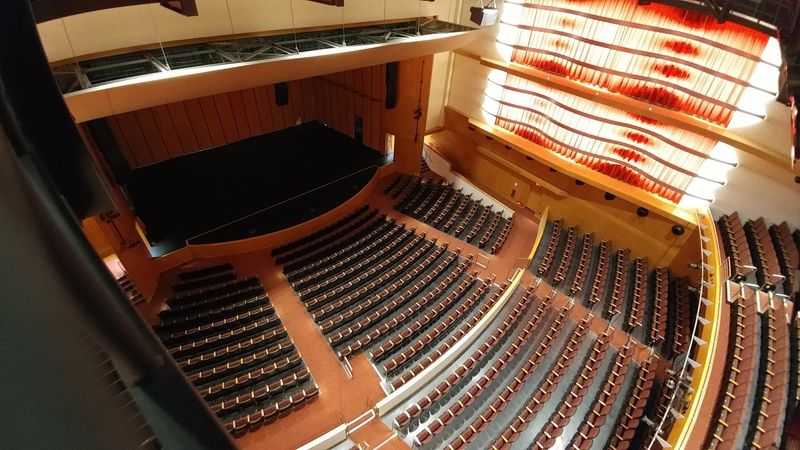
The arts have their own strong presence too. A dedicated Performing Arts Center hosts school productions and events, giving music and theater a polished home on campus.
The surrounding area keeps the setting suburban while still feeling connected to a busy town. New York City is also within easy reach, which adds another layer to the school’s location.
Greenwich High School is at 10 Hillside Road, Greenwich, CT 06830, with visitor parking arranged near the main entrance. The grounds make the school feel surprisingly open for a campus serving thousands of students.
Even after decades of use, the site still has the scale to support a wide range of student life.
3. Five Student Houses Give The Large School Structure
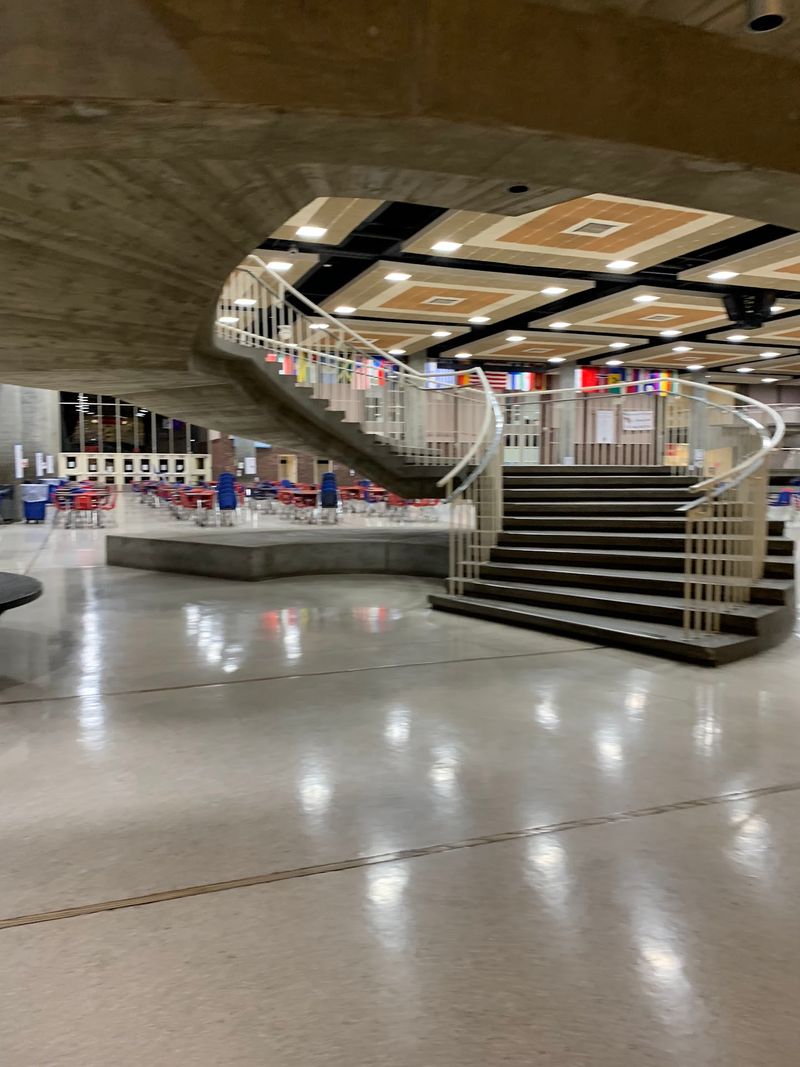
Big schools can feel overwhelming, and Greenwich High School solves that problem with a house system that has been part of its identity for years.
Every incoming student is randomly assigned to one of five houses: Bella, Cantor, Clark, Folsom, or Sheldon. That assignment shapes daily life, because each house works like a smaller school inside the larger one.
Support staff come with the package. Each house has its own House Administrator, school counselors, a social worker, and a psychologist, so students have familiar adults who know their names and track their progress.
House Administrators handle a mix of responsibilities, from monitoring academic progress to organizing house activities and managing discipline, which keeps decisions close to the students they affect.
The result is often described as a small college atmosphere inside a large high school, with the personalized attention that phrase suggests.
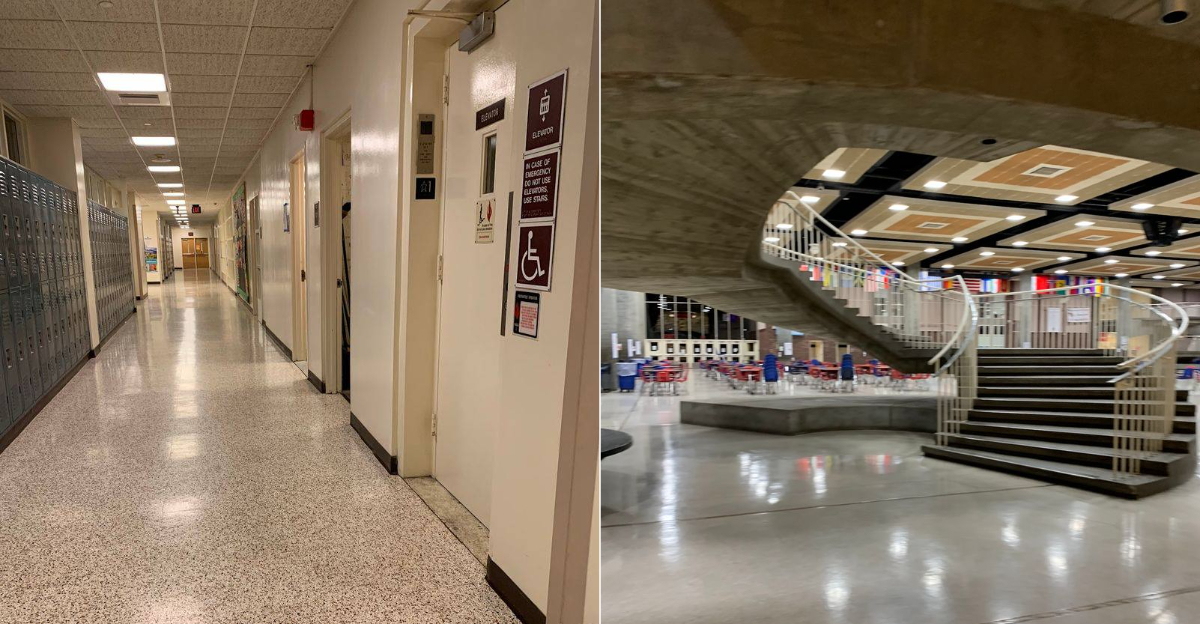
All five houses connect to a one-acre enclosed space called the Student Center. It works as a cafeteria, a meeting hall, and a spot to relax between classes, and it functions as the social crossroads of the whole building.
Each house also runs its own English and social studies learning center, giving students a nearby place to get help without crossing the entire campus.
4. More Than 350 Courses Fill The Academic Program
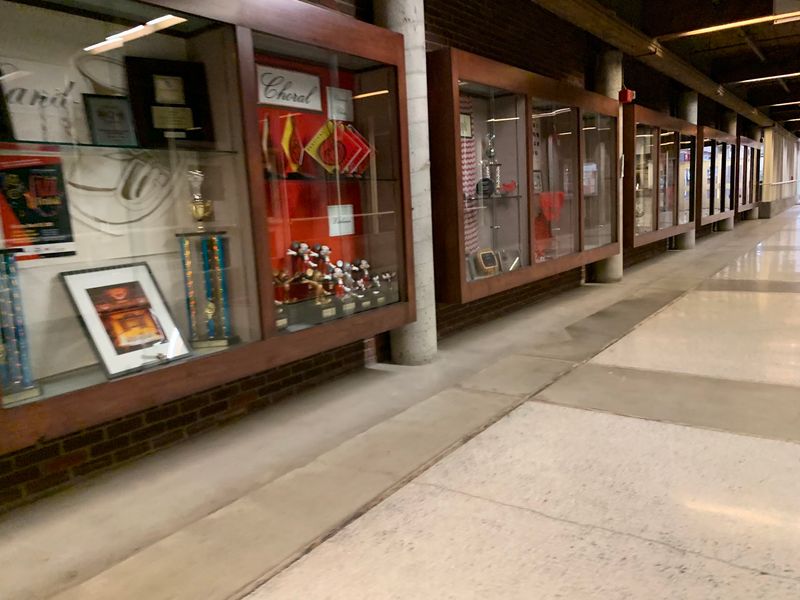
Three hundred and fifty is the number that tends to stop people mid-sentence. That is how many separate courses fill the program here, spread across core subjects, electives, and co-curricular offerings.
Advanced Placement classes appear in science, math, history, English, world languages, and elective fields. The list includes English Literature and Composition, Calculus AB and BC, Statistics, Computer Science A and Principles, Biology, Chemistry, Environmental Science, Physics, European History, Economics, and languages such as Chinese, French, German, Italian, and Spanish.
Graduation requires 22 credits total: four each in English and math, three each in science and social studies, two in a foreign language, plus credits in art or business, physical education and wellness, a STEM elective, and additional electives.
Science credits must include one biological science and one physical science such as chemistry or physics. Ninth and tenth graders need to pass at least six credits a year to move ahead on schedule.
Honors and AP courses carry weighted grades in the GPA calculation.
Dual enrollment partnerships with CT State Norwalk, UCONN, Southern CT State, and Quinnipiac University let students earn college credit early. A large Library Media Center supports every program, and each student receives a Chromebook for classroom work.
5. Around 150 Clubs Keep Life Busy After Class
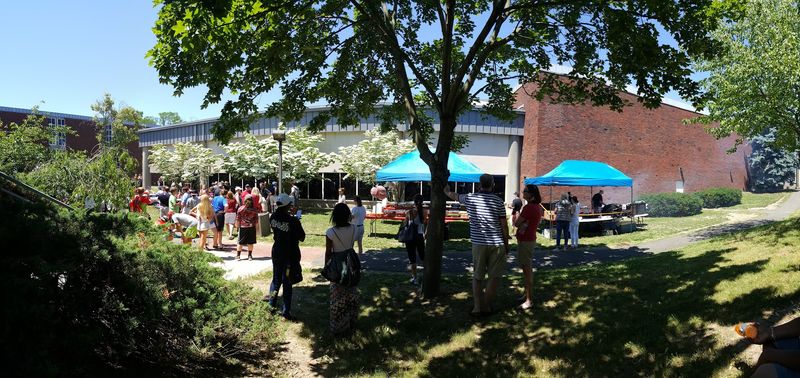
The final bell here is less an ending than a shift change. With roughly 150 clubs on the roster, the hallways stay lively long after academic classes wrap up.
Interests run in every direction. Student government, academic teams, international and cultural groups, service organizations, athletics, and specialty clubs all have a place on the activity list.
Familiar names show up among them, including Art Club, Band, Drama, the student newspaper, Student Council, Yearbook, and Future Business Leaders of America.
What makes the system genuinely useful is how open it is. A student with an idea for something that does not yet exist can start a new club by showing that classmates are interested, finding a faculty advisor willing to support it, and meeting with the Director of Student Activities.
That process turns a passing thought into a real organization, and it explains why the club count stays high year after year.
For newcomers, the practical advice is simple: try two or three groups early in ninth grade before narrowing down. Clubs are also where many students meet friends from other houses, which helps a school of 2,700 feel considerably smaller by the end of freshman year.
6. Dozens Of Varsity Teams Add Another Big Tradition
Over 40 varsity teams compete across fall, winter, and spring seasons, which is a remarkable number even for a school this size.
The lineup covers the classics and then keeps going: football, soccer, basketball, cheerleading, ice hockey, field hockey, track and field, cross country, swimming, water polo, rugby, golf, bowling, baseball, softball, volleyball, wrestling, gymnastics, lacrosse, fencing, dance, sailing, skiing, squash, and crew.
County, state, and regional championships have piled up over the decades, giving the athletic program a tradition that older graduates still talk about.
Many sports also field junior varsity and freshman squads, so a student who is still developing skills has somewhere to play rather than being cut from the picture entirely.
One program deserves special mention. The Unified Sports program, started in November 2010, brings together athletes with and without disabilities to train and compete on the same teams.
It is the largest program of its kind in Connecticut, drawing more than 60 participants each season across soccer, basketball, and track and field, with every season finishing at a tournament.
Recently renovated fields and a refreshed stadium give all of these teams a solid home, and game nights pull families from across town.
7. Most Graduates Continue On To Higher Education
Numbers tell a clear story about what happens after senior year. Roughly 94 percent of graduates continue their education in some form once they leave.
For the class of 2025, 86 percent enrolled directly in a four-year college. The graduation rate for the class of 2023 was 94.6 percent, which sits comfortably above what many districts report.
Test results back up the pattern. Mean SAT scores for the 2025 graduating class came in at 585 for Evidence-Based Reading and Writing and 572 for Math.
Advanced Placement participation is widespread too. Among seniors in the class of 2024, 61 percent earned a score of 3 or higher on at least one AP exam, a benchmark many colleges accept for credit.
One policy worth knowing for families comparing schools: Greenwich High School does not rank students or report decile placement, so college applications go out without a class rank attached.
The surrounding community reinforces the college-going culture, since a high share of Greenwich residents hold college degrees and work in professional or business fields.
Graduates generally see strong acceptance rates at the colleges they most want to attend, which reflects years of preparation rather than any single senior-year push.
8. Statewide Rankings Keep The School Near The Top
That is quite a jump. The latest rankings put Greenwich High School near the very top.
U.S. News & World Report ranked the school No. 2 statewide for 2026-2027, moving it up from No. 9 in the previous cycle.
Nationally, it landed at No. 194 and earned an overall score of 98.92 out of 100.
The ranking considers far more than test results. College readiness carries the most weight, while state assessment performance and proficiency also shape the score.
Graduation rates and access to advanced coursework factor into the calculation as well.
Niche offers another strong showing. Its 2026 rankings place the school third among the state’s best college-prep public high schools.
It also ranks fifth among public high schools overall.
Academic performance helps explain the attention. Niche reports that 79 percent of students meet or exceed proficiency in reading, while 64 percent reach that mark in math.
The student-teacher ratio stands at 13 to 1. Rankings can always move again. For now, Greenwich High School is enjoying one of its strongest national and statewide placements in recent years.