One Man’s Collection Of 50,000 Antiques Fills 26 Buildings At Pioneer Village In Minden, Nebraska
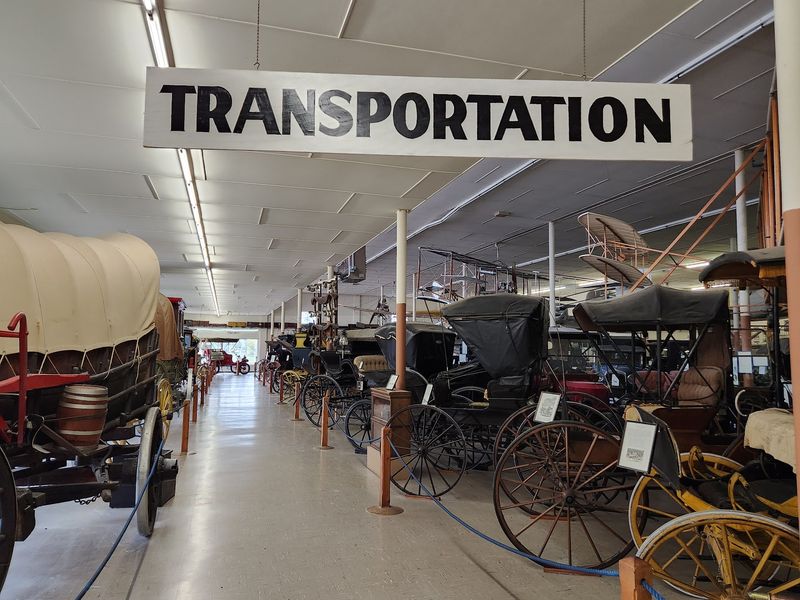
Some places in Nebraska look like nothing at all from the highway, and then swallow your entire afternoon. A low cluster of buildings, a gravel lot, a sign you have driven past a dozen times without slowing down.
Inside sits one of the largest private collections of American objects anywhere, assembled by a farm kid who never stopped buying back the world he grew up in. Bring comfortable shoes, because two hours will not cover it.
A Twenty-Acre Museum Beside Highway 6
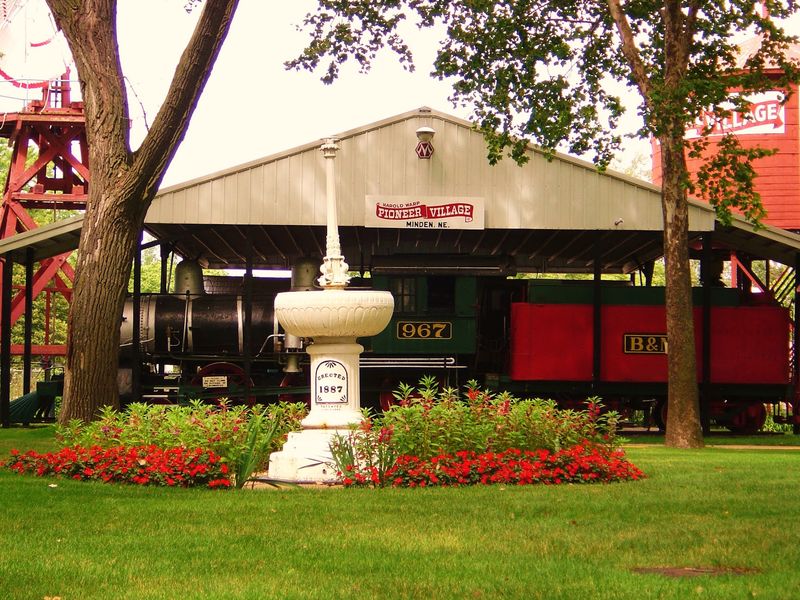
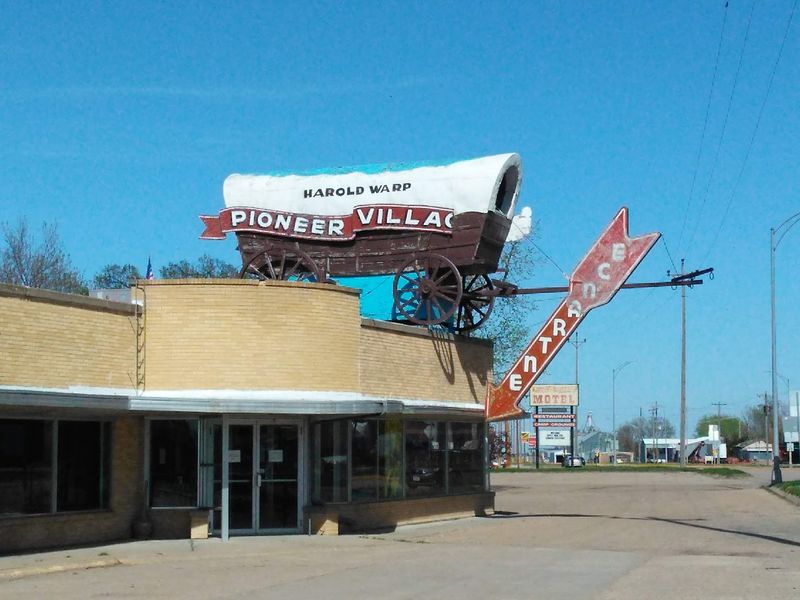
Twenty-six buildings sit shoulder to shoulder on twenty acres in Kearney County, arranged around a central green like a small town that quit growing. From the road it reads as plain: white walls, wide doors, a big parking lot built for people towing something.
Harold Warp Pioneer Village holds more than 50,000 artifacts, and the count of buildings shifts depending on who is doing the counting and what has been added. Cars, aircraft, tractors, kitchens, locomotives, a sod house, a church, a general store.
What separates it from a standard county museum is the organizing idea. Everything is laid out chronologically, so a single walk carries you from 1830 through the twentieth century in the order things actually changed.
The place calls itself a Museum of Progress, and that is not marketing fluff. You watch a plow become a tractor, a buggy become a Cadillac, a candle become a lightbulb.
Set aside three to five hours. People who allot two end up rushing, then talking about coming back.
From a Sod House to Flex-O-Glass: Harold Warp’s Story
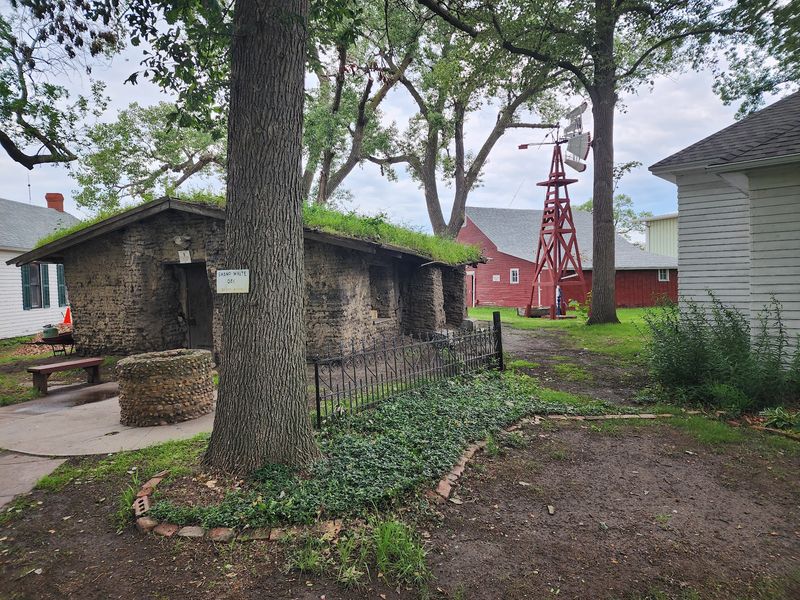
Born in 1903 in a sod house near Minden, Harold Warp was the youngest of twelve in a Norwegian immigrant family. Hard start, small farm, one-room school.
He left for Chicago and made his fortune on a plastic film called Flex-O-Glass, the stuff farmers stretched over chicken coop windows to keep out the cold. The invention worked, the business grew, and Warp ended up wealthy enough to indulge an unusual instinct.
In 1948 his childhood schoolhouse came up for sale. Rather than watch it go, he bought it.
That single purchase is the seed of everything on the grounds today.
Five years later, in 1953, the village opened to the public with a stated mission of documenting how America grew. Warp kept buying, kept arranging, kept writing.
His notes on the collection ran long enough to fill a 500-page book, one entry at a time, 50,000 objects deep. He passed in 1994, and a 501(c)(3) foundation has carried the work forward since.
The address, for planning purposes, is 138 US-6 in Minden.
Over 350 Antique Cars Parked in Order of Invention
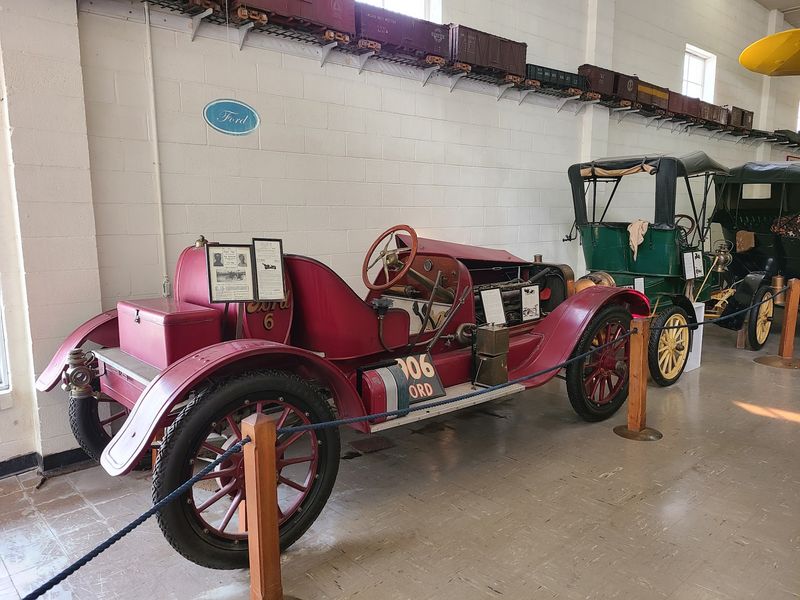
Rows of automobiles stretch down the hall in one unbroken line, brass lamps and wooden spokes at one end, chrome and tailfins at the other. More than 350 vehicles, and not one of them parked randomly.
A 1902 Cadillac sits near a 1903 Ford built under Henry Ford’s own direction. Keep walking and the wheels get rounder, the bodies lower, the engines bigger, until you reach machines your grandparents drove to work.
Because the sequencing is strict, the hall functions as a timeline you move through with your feet. You can watch the steering wheel migrate, the headlamp evolve, the fender swell and then flatten.
Trucks share the space, along with a homemade motor home built roughly a decade before anybody manufactured them commercially. Somebody in America wanted to live on the road before the industry caught up.
Car people tend to lose track of time in here. Everyone else notices something subtler: how fast the whole thing happened, from horse to highway inside a single lifetime.
Seventeen Flying Machines Under One Roof
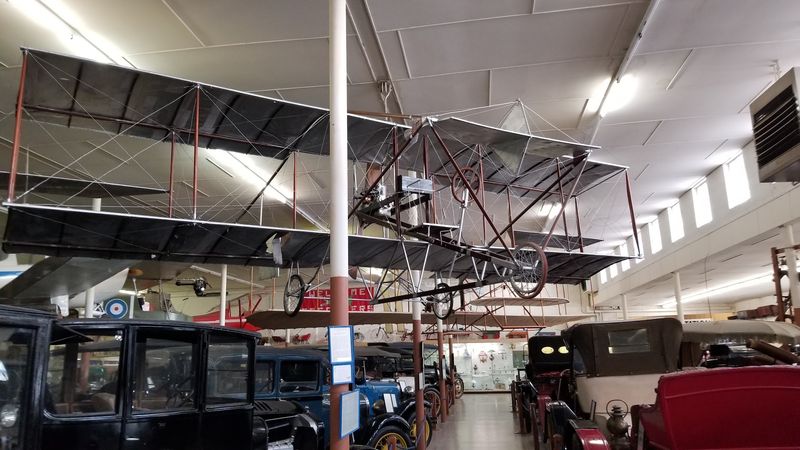
Fabric wings, wooden propellers, wire bracing you could pluck like a guitar string. Seventeen historic aircraft occupy the aviation building, some suspended overhead, others resting on the floor where you can stand close enough to see the stitching.
Aviation is the exhibit that surprises people most at a Nebraska farm-country museum. The story runs from fragile early gliders through military planes and into helicopters, again in order, again showing the leap from curiosity to everyday machine.
Alongside them sit roughly 100 antique tractors, which makes for an odd and pleasing pairing under the same broad theme of engines changing how people lived.
Farm equipment runs deeper than the tractors, too. Sod cutters, horse-drawn harvesters, and some genuinely rare corn-picking contraptions that only make sense once you read the placard.
Anybody who spent time on a Nebraska farm will recognize half of it and argue about the other half. The agricultural hall rewards slow walking more than almost any other building on the grounds.
The Sod House, the Pony Express Station, and Buffalo Bill’s Saddle
Walls three feet thick, cut from eleven acres of prairie sod, stacked like bricks of earth and grass. The sod house on the grounds is the real thing, not a plywood approximation, and the temperature drop when you step inside explains why settlers built this way.
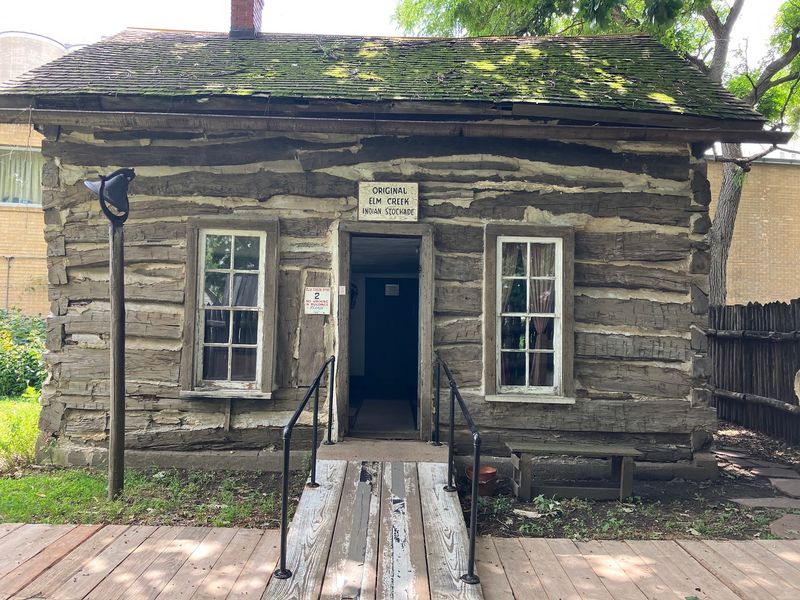
Nearby stands a Pony Express station, with Buffalo Bill’s saddle among the pieces on display. The relay riders crossed this part of the state, so the connection is geographic, not decorative.
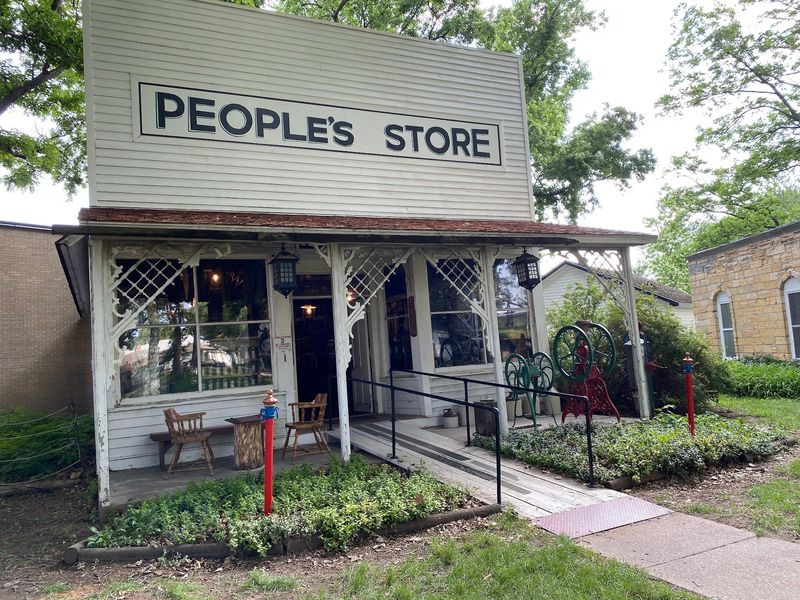
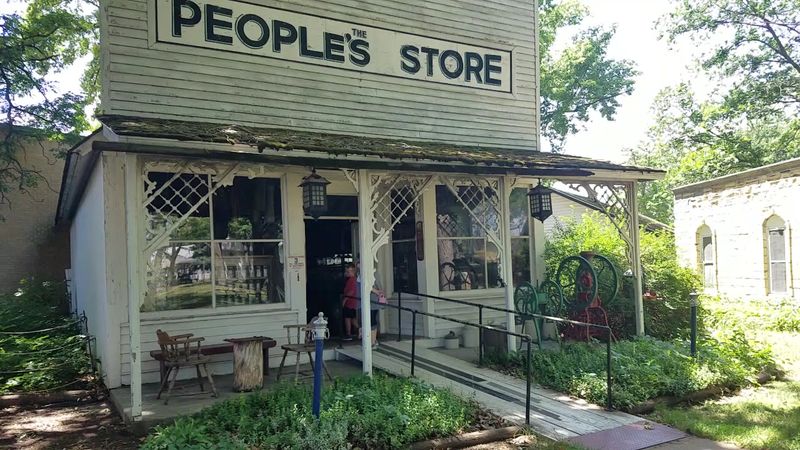
A church, a one-room schoolhouse, a train depot with early locomotives, and a general store stocked with goods from its era round out the original structures. Many have been restored to working order rather than sealed behind glass.
The general store is the one that tends to hold people longest. Shelves of tins, boxes, and bottles with labels nobody has printed in a century.
Walking between these buildings is the closest the village comes to feeling like an actual settlement instead of a collection.
Kitchens, Bedrooms, and How American Homes Changed
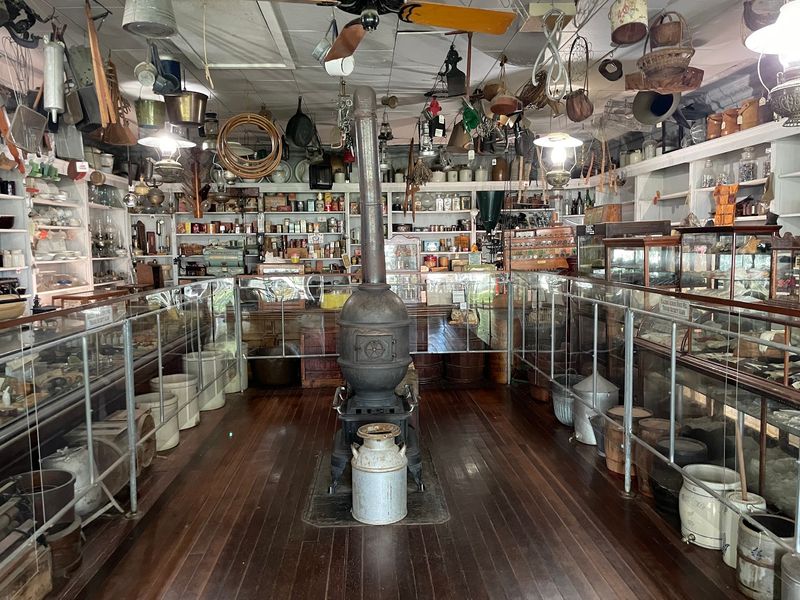
Picture a 1880s kitchen, then the same room forty years later, then again after the war. Full-size room vignettes line one section of the village, each furnished down to the dishes, the wallpaper, and the tools sitting on the counter.
Bedrooms, parlors, and kitchens run in sequence from 1830 forward. Lighting shifts from flame to filament.
Iceboxes give way to refrigerators. Washing goes from a tub and a board to a machine with a wringer.
Domestic history rarely gets this much floor space anywhere, and it is often the part that grabs people who came for the cars.
Smaller collections fill the gaps in ways that border on obsessive. Hundreds of pens.
Antique fire extinguishers. Radios, cameras, musical instruments, Currier and Ives prints, and Rogers statues.
Warp’s thinking seems to have been that nothing was too ordinary to save, because ordinary things vanish first. A recent addition covers the history of computing, tracing machines from room-size to desktop.
A Steam Carousel That Runs Again
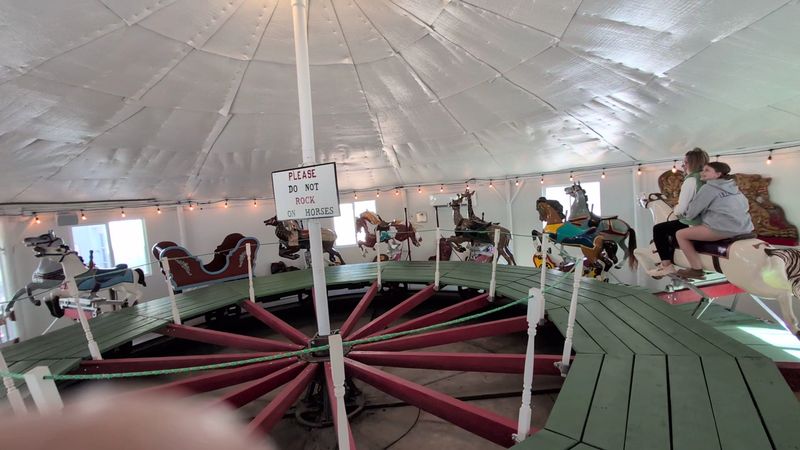
Painted horses, brass poles, and a band organ. The village’s antique carousel sat quiet for years, and it now turns again after restoration work, which changed the character of a visit for families considerably.
Riding a century-old carousel in the middle of a Nebraska museum is a strange and lovely thing. Kids who trudged past the tractor hall suddenly have a reason to care.
Live demonstrations add the other half of that energy. A blacksmith works the forge.
Broom making and rug weaving happen on site, with the finished goods coming off the equipment in front of you.
Watching a broom get made takes about as long as your attention holds, which is the correct length for a demonstration.
Demonstration schedules vary by season and staffing, so call ahead if a specific one matters to your trip. The carousel and the blacksmith shop have proven to be the two things that keep teenagers and six-year-olds equally occupied, which is not a common outcome.
The Comeback: A Foundation Takes Over
Roofs leak. Paint fades.
A collection this size needs constant attention, and for a stretch the village did not get enough of it. Exhibits dulled, buildings showed wear, and the whole operation felt like it was coasting.
The 501(c)(3) foundation now running Pioneer Village has been reversing that. Roof work, cleaning, exhibit refreshing, and the carousel restoration all belong to the same push.
Progress is visible and incomplete at the same time. Some halls look sharp; others still wear their age openly, and the contrast tells you exactly where the effort has landed so far.
Honest framing helps here: this is a private collection displayed by a private collector’s logic, not a professionally curated institution with a big budget. That is a large part of its appeal.
The on-site Valentine Diner, a small prefabricated dining car of the kind once shipped across the country, has been brought back into service as part of the same work. Food service operates on limited hours, so check before counting on lunch.
Planning the Drive and What to Expect Inside
Minden sits in Kearney County, a short hop south of Interstate 80 and within easy reach of Kearney, Hastings, and Holdrege. Coming from Lincoln or Omaha, it is a straightforward drive west.
Admission is modest by museum standards, and the ticket covers everything. Staff stamp your hand so you can leave for lunch in town and come back to finish.
Several of the buildings are unheated and uncooled, which matters. A July afternoon in a metal-roofed hall full of tractors is rough going, so spring and fall make for better conditions.
Budget time honestly. Three to five hours covers a solid visit; two means skimming.
People who want to read the placards, and there are placards on nearly everything, stretch it across two days.
An RV campground sits right beside the grounds, which makes the two-day plan simple. Hours and seasonal schedules shift, so confirm before you load the car.
The address is 138 US-6, Minden, Nebraska.
Why This Nebraska Stop Sticks With People
Fifty thousand objects is a number that does not compute until you are standing in the fourth building and realize you have not reached the halfway point. Scale is the thing here.
Scale, and the stubbornness behind it.
One man decided that the ordinary machinery of American life deserved saving, and then spent decades and a plastics fortune proving he meant it.
The result is uneven in places, dense everywhere, and organized with a clarity most museums never attempt. Chronological order turns a warehouse of stuff into an argument about how quickly everything changed.
Families do well here because there is something for every age: the carousel for little ones, the blacksmith for the restless, the cars and planes for anyone mechanically inclined, and the household rooms for people who remember the originals.
Minden also lights its courthouse with thousands of bulbs each December, earning it the Christmas City name, which makes a winter trip a two-for-one.
Go once and you will understand why people keep coming back.