One Of Arizona’s Most Fascinating Ancient Ruins Still Flies Under The Radar
Arizona has a talent for hiding extraordinary things in plain sight, and I say that as someone who has driven past more than a few of them before finally paying attention.
This one stopped me completely, on a dusty road I had no particular reason to be on, at a structure I had heard almost nothing about and was entirely unprepared to find so genuinely astonishing.
I pulled over for what I told myself would be five minutes and a quick photo.
I was still standing there an hour later, reading every available piece of information and sending messages to people that started with the words “why did nobody tell me about this.”
Here is what gets me. This thing has been standing in the Arizona desert for centuries.
It has outlasted civilizations, survived heat that would flatten most modern construction, and somehow ended up as one of the state’s best kept secrets.
That is not a gap in the travel guides. That is a full oversight, and this is me correcting it.
The Big House That Refused To Fall
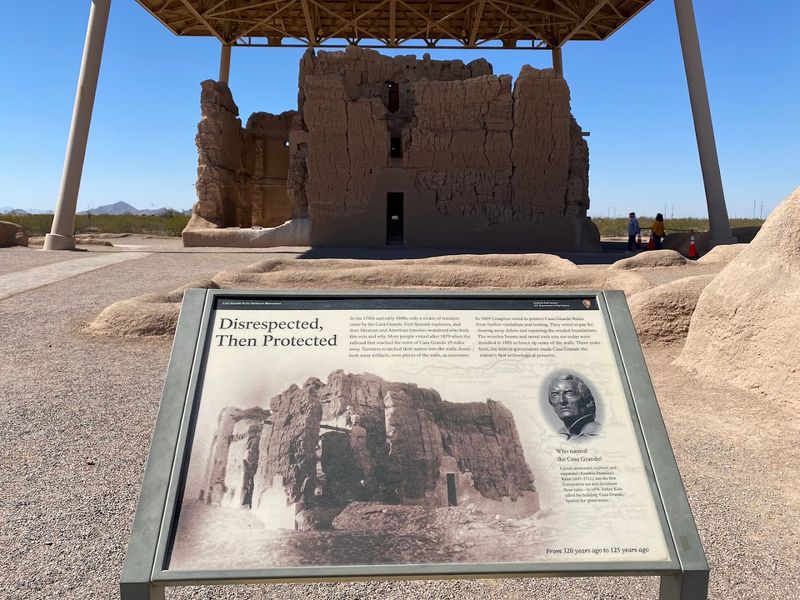
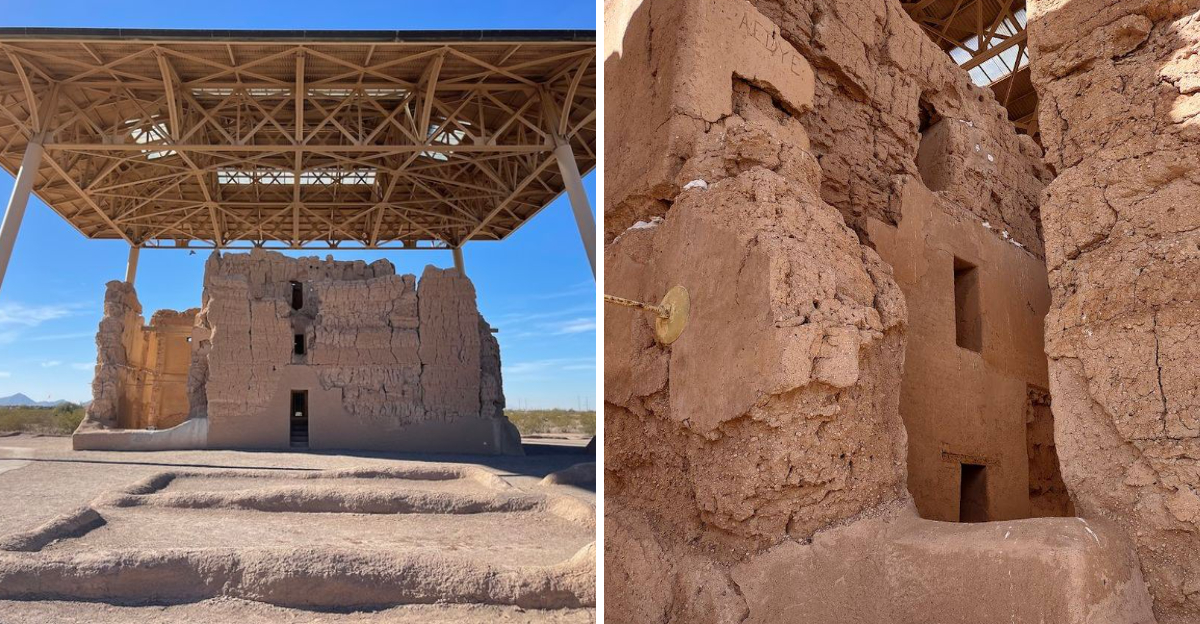
Casa Grande Ruins National Monument is one of those places that rewires your brain a little. You are looking at a four-story structure built from caliche mud around 700 years ago, and it is still standing.
No steel beams, no concrete, just ancient engineering and a whole lot of determination from the Ancestral Sonoran Desert People who built it.
The structure rises about 35 feet into the Arizona sky, which sounds modest until you are standing right next to it. Then it feels enormous.
The walls are nearly five feet thick in some places, which kept the interior cool during brutal desert summers.
Archaeologists still debate exactly what the building was used for. Some believe it served as an astronomical observatory, since certain openings align with the sun and moon at specific times of year.
Others suggest it was a ceremonial or administrative center. Nobody knows for certain, and honestly that mystery makes it even more compelling to visit it at 1100 W Ruins Dr, Coolidge, Arizona.
A Roof With A Surprisingly Interesting Story
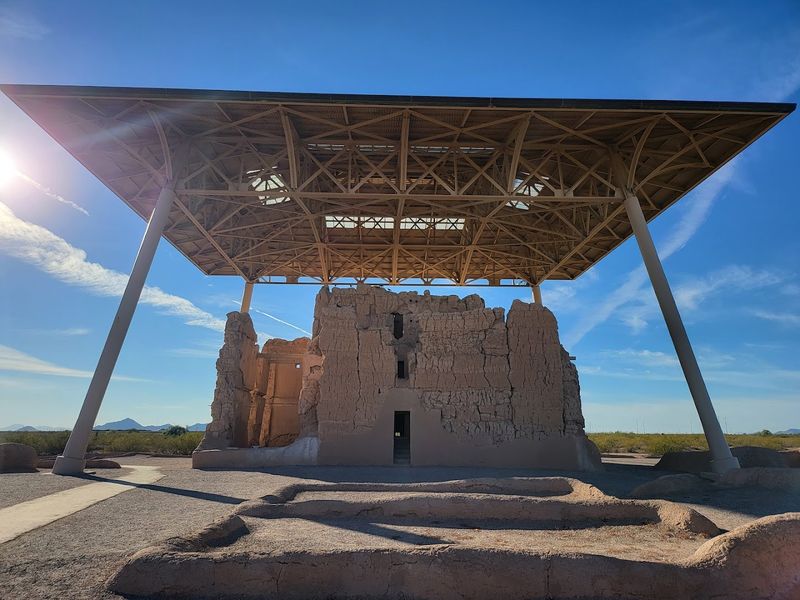
The giant metal roof hovering over the ruins looks a little out of place at first, like someone parked a flying saucer over a sandcastle. But that canopy has been protecting the structure since 1932, and it has a story worth knowing.
The original shelter was built because the ruins were deteriorating fast from rain and sun exposure.
Before the canopy existed, visitors and even early settlers did serious damage to the site. People carved their names into the walls, took chunks as souvenirs, and camped inside the structure without a second thought.
The monument was actually established in 1892, making it one of the first prehistoric and cultural reserves in the United States.
The current canopy is not the original one. It was replaced and upgraded over the decades as preservation techniques improved.
Rangers will tell you that maintaining the balance between protecting the structure and allowing visitors to experience it authentically is a constant challenge.
Standing underneath it, looking up at the ancient walls through that industrial frame, feels unexpectedly moving.
Builders Who Shaped An Entire Desert Civilization
Calling the Hohokam skilled is like calling the Grand Canyon a decent hole in the ground.
These people built one of the most sophisticated irrigation systems in the ancient Americas, stretching hundreds of miles across the Sonoran Desert.
They farmed corn, beans, and cotton in one of the driest environments on the continent, and they did it successfully for centuries.
The Hohokam occupied this region from roughly 1 AD to 1450 AD. At their peak, their canal network covered over 500 miles in the Phoenix Basin alone.
Modern Phoenix still uses some of the same routes for its own water systems today, which is a fact that tends to make people go quiet for a moment.
Casa Grande was constructed during what archaeologists call the Classic Period, around 1350 AD.
By then the Hohokam had developed complex social structures, trade networks reaching as far as present-day Mexico, and a rich ceremonial life.
Why they eventually abandoned the site remains one of archaeology’s most debated questions. Drought, conflict, and social upheaval have all been suggested, but no single answer has settled the debate.
Building With What The Desert Gave You
Most ancient builders worked with stone or wood. The Hohokam had a different idea.
They built Casa Grande using caliche, a naturally occurring hardened calcium carbonate layer found just below the desert surface.
They mixed it with water to create a thick, workable material, then poured it into forms and let it harden layer by layer.
Researchers estimate that constructing the Great House required moving roughly three thousand tons of caliche. There were no machines, no draft animals for hauling, and no modern tools.
Every load was carried by hand across the desert floor, which makes the finished structure feel almost impossible when you stand in front of it.
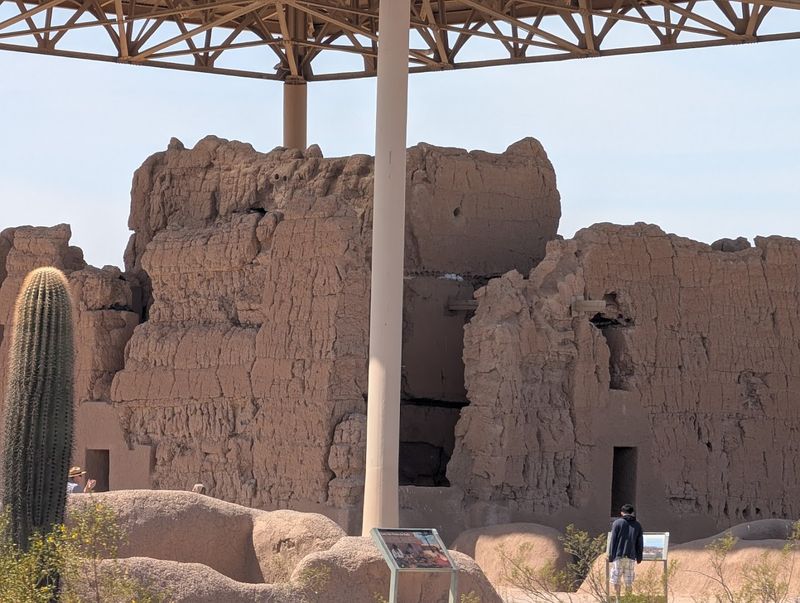
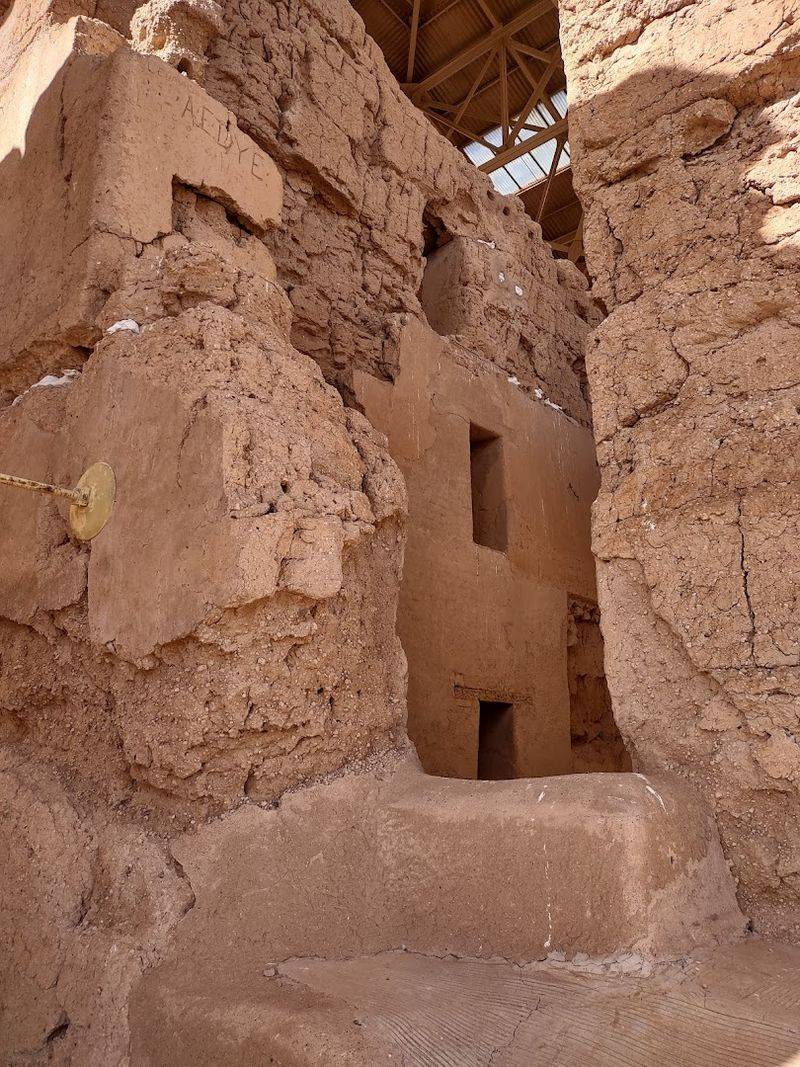
The walls were built up in horizontal courses, each layer allowed to dry before the next was added. You can actually see these layers in the walls today, like growth rings on a massive tree.
Some walls show evidence of repair and reconstruction over the decades, suggesting the building was actively maintained and valued by the community long after its initial construction.
It is genuinely one of the most impressive feats of desert engineering you will ever see up close.
The Ancient Sky-Watchers Of The Sonoran Desert
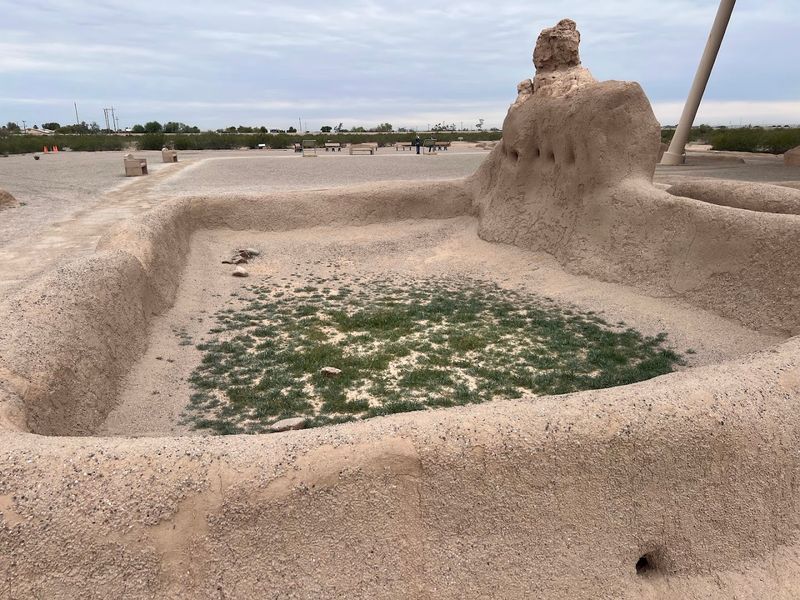
Some researchers think Casa Grande was the ancient world’s answer to a calendar app.
Several openings in the upper walls of the structure align with the sun and moon during the summer solstice, winter solstice, and spring equinox.
Whether this was intentional design or a fascinating coincidence has been argued by archaeologists for decades.
One circular hole near the top of the east wall is particularly striking. At sunrise on the spring equinox, sunlight passes directly through this opening and hits the opposite wall.
For a farming community dependent on knowing exactly when to plant and harvest, that kind of solar tracking would have been genuinely valuable, not just symbolic.
Standing inside the ruins during a ranger-led tour and hearing this explained feels like a small revelation. These were not simple people building simple shelters.
They were observing the sky with precision and encoding that knowledge directly into their architecture.
The idea that a structure made of mud in the middle of the Arizona desert might have functioned as both a building and an observatory is the kind of detail that stays with you long after you drive home.
The Visitor Center And Museum
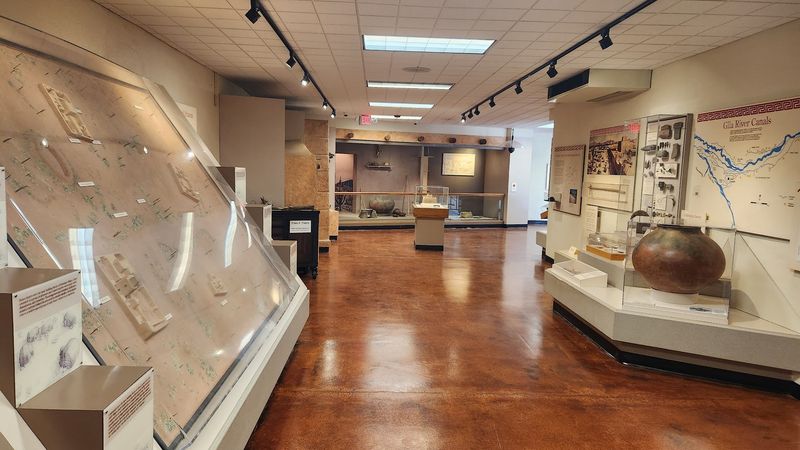
Before you walk out to the ruins themselves, the visitor center earns its own thirty minutes of your time.
The museum inside holds a solid collection of Hohokam pottery, tools, and jewelry recovered from excavations at the site.
The craftsmanship on some of those ceramic pieces is genuinely beautiful, decorated with fine geometric patterns that look surprisingly modern.
The exhibits walk you through Hohokam history in a clear, well-organized way that does not feel like homework.
There are timelines, maps of the ancient canal system, and explanations of how archaeologists pieced together what daily life looked like at this site. Kids tend to get surprisingly engaged here, especially near the hands-on sections.
Rangers at the monument are notably enthusiastic and knowledgeable. Ask them a question and you will likely get a ten-minute answer filled with details that are not in any brochure.
The park service has done a thoughtful job of presenting this site with both historical accuracy and genuine respect for the descendant communities connected to the Hohokam.
That care comes through clearly in how the space is presented and maintained throughout the property.
What To Know Before You Make The Drive
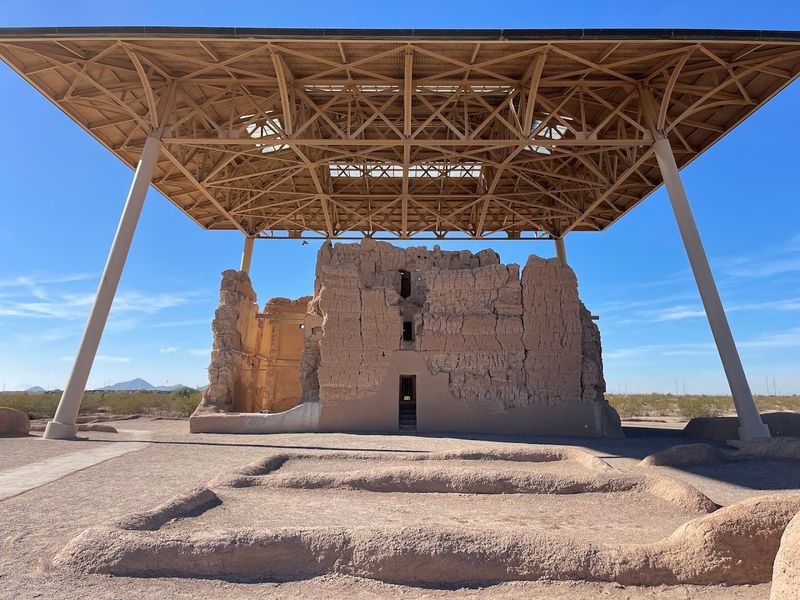
Getting to Casa Grande Ruins is straightforward from most parts of central Arizona. From Phoenix, the drive runs about an hour south on Interstate 10, then east on Arizona State Route 87.
The roads are smooth and the scenery gets genuinely interesting as you approach Coolidge.
The monument charges a small entrance fee per person, and annual national park passes are accepted.
Hours vary by season, so checking the National Park Service website before you go saves potential frustration.
Morning visits are strongly recommended, especially between April and October, when afternoon temperatures in the Sonoran Desert are not subtle.
Wear comfortable shoes because the grounds involve walking on uneven packed earth paths. Bring water, more than you think you need.
There is some shade near the canopy structure, but the open areas get direct sun. The entire site can be comfortably explored in about two hours, making it a realistic half-day trip rather than a full-day commitment.
Weekday visits tend to be quieter, which improves the experience of standing near the ruins considerably.
Why This Place Deserves Far More Attention Than It Gets
Sedona gets the Instagram traffic. The Grand Canyon fills the parking lots.
But Casa Grande Ruins sits quietly in Coolidge and receives a fraction of the visitors those places see, despite being genuinely older and arguably more mysterious than either of them.
That imbalance is hard to explain once you have actually been there.
There is something about standing next to a structure that predates European contact in the Americas by over a century that recalibrates your sense of time. You are not looking at a replica or a reconstruction.
The actual walls, built by actual people using actual desert mud, are right in front of you. That physical reality hits differently than any museum diorama.
Arizona has no shortage of remarkable places, but this one earns a special kind of respect. It is not flashy, it does not have a gift shop selling neon cactus magnets, and the drive to Coolidge is not glamorous.
But the monument itself is quietly extraordinary in a way that lingers. If you have been skipping it because you assumed it was just another roadside stop, that assumption deserves a second look.
Go on a cool morning and bring a curious mind.